7 Results for "

Amprolium hydrochloride

" in MedChemExpress (MCE) Product Catalog:
Products (7)

7 Results for "Amprolium hydrochloride" in MCE Product Catalog:

Cat. No.: HY-B0937A
CAS No.: 137-88-2
Research Areas:  

Infection

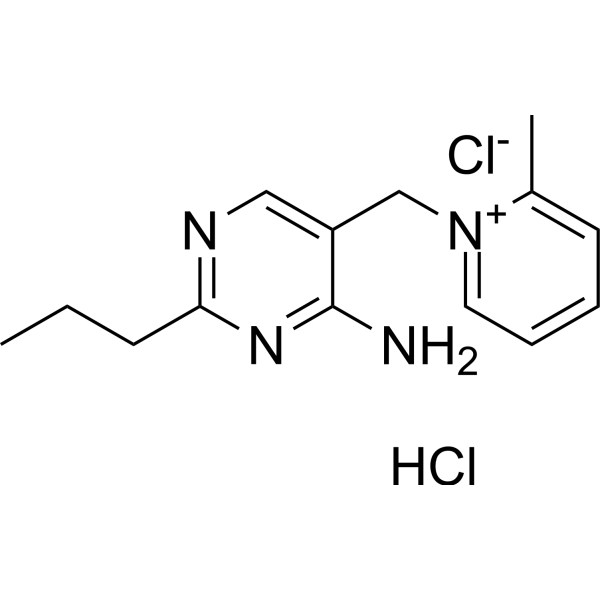
Amprolium hydrochloride is a thiamine transporter inhibitor and antiparasitic agent with oral activity and blood-brain barrier penetration. Amprolium hydrochloride blocks thiamine transport at the blood-brain barrier and intestine, and competitively inhibits thiamine pyrophosphokinase, inducing thiamine pyrophosphate deficiency and impairing carbohydrate synthesis. Amprolium hydrochloride induces oxidative stress, alters antioxidant enzyme activity, and inhibits acetylcholinesterase (AchE) activity. Amprolium hydrochloride disrupts reproductive organs and gametogenesis, and causes histopathological and ultrastructural damage to multiple organs. Amprolium hydrochloride induces thiamine deficiency, reduces body weight gain in mice, and causes psychomotor behavioral changes and nephropathy. Amprolium hydrochloride exhibits molluscicidal activity against the terrestrial snail Eobania vermiculata, and reduces the shedding of Eimeria meleagrimitis oocysts in feces and litter. Amprolium hydrochloride can be used for research on thiamine deficiency and coccidiosis .
loading...
    loading...
1
1 Cited Publications
Cat. No.: HY-B2138
CAS No.: 59-06-3
Synonyms: Ethyl pabate
Target:  

Parasite

Research Areas:  

Infection

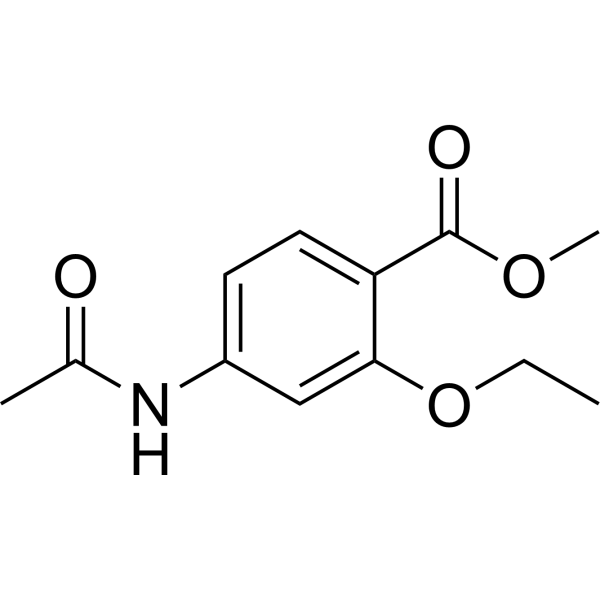
Ethopabate (Ethyl pabate) is an orally active antiparasitic agent. Ethopabate is often used in combination with Amprolium hydrochloride (HY-B0937A) and others to prevent and treat poultry coccidiosis, leucosis, and other diseases .
loading...
    loading...
Cat. No.: HY-B0937
CAS No.: 121-25-5
Research Areas:  

Infection

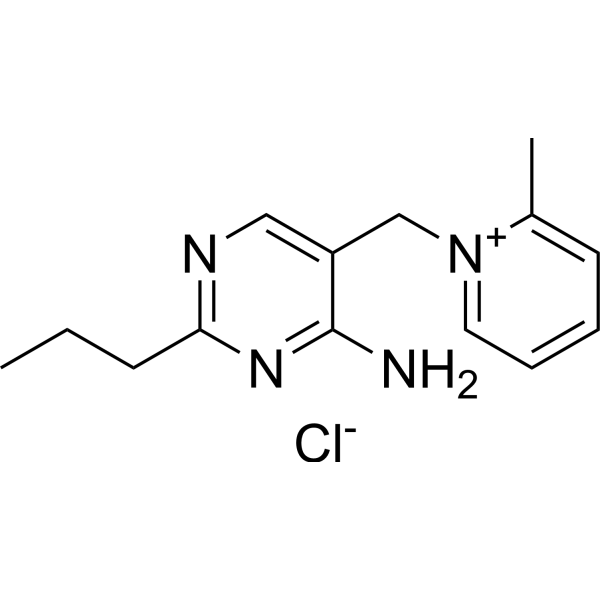
Amprolium is a thiamine transporter inhibitor and antiparasitic agent with oral activity and blood-brain barrier penetration. Amprolium blocks thiamine transport at the blood-brain barrier and intestine, and competitively inhibits thiamine pyrophosphokinase, inducing thiamine pyrophosphate deficiency and impairing carbohydrate synthesis. Amprolium induces oxidative stress, alters antioxidant enzyme activity, and inhibits acetylcholinesterase (AchE) activity. Amprolium disrupts reproductive organs and gametogenesis, and causes histopathological and ultrastructural damage to multiple organs. Amprolium induces thiamine deficiency, reduces body weight gain in mice, and causes psychomotor behavioral changes and nephropathy. Amprolium exhibits molluscicidal activity against the terrestrial snail Eobania vermiculata, and reduces the shedding of Eimeria meleagrimitis oocysts in feces and litter. Amprolium can be used for research on thiamine deficiency and coccidiosis .
loading...
    loading...
Cat. No.: HY-B0937AR
CAS No.: 137-88-2
Amprolium (hydrochloride) (Standard) is the analytical standard of Amprolium (hydrochloride) (HY-B0937A). This product is intended for research and analytical applications. Amprolium hydrochloride is a thiamine transporter inhibitor and antiparasitic agent with oral activity and blood-brain barrier penetration. Amprolium hydrochloride blocks thiamine transport at the blood-brain barrier and intestine, and competitively inhibits thiamine pyrophosphokinase, inducing thiamine pyrophosphate deficiency and impairing carbohydrate synthesis. Amprolium hydrochloride induces oxidative stress, alters antioxidant enzyme activity, and inhibits acetylcholinesterase (AchE) activity. Amprolium hydrochloride disrupts reproductive organs and gametogenesis, and causes histopathological and ultrastructural damage to multiple organs. Amprolium hydrochloride induces thiamine deficiency, reduces body weight gain in mice, and causes psychomotor behavioral changes and nephropathy. Amprolium hydrochloride exhibits molluscicidal activity against the terrestrial snail Eobania vermiculata, and reduces the shedding of Eimeria meleagrimitis oocysts in feces and litter. Amprolium hydrochloride can be used for research on thiamine deficiency and coccidiosis .
loading...
    loading...
Cat. No.: HY-B0937S
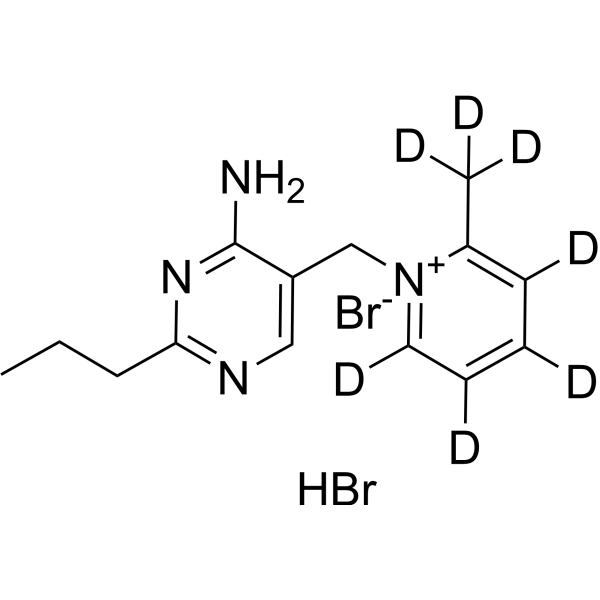
Amprolium-d7 (bromide hydrobromide) is the deuterated-labeled Amprolium (HY-B0937). Amprolium is a thiamine transporter inhibitor and antiparasitic agent with oral activity and blood-brain barrier penetration. Amprolium blocks thiamine transport at the blood-brain barrier and intestine, and competitively inhibits thiamine pyrophosphokinase, inducing thiamine pyrophosphate deficiency and impairing carbohydrate synthesis. Amprolium induces oxidative stress, alters antioxidant enzyme activity, and inhibits acetylcholinesterase (AchE) activity. Amprolium disrupts reproductive organs and gametogenesis, and causes histopathological and ultrastructural damage to multiple organs. Amprolium induces thiamine deficiency, reduces body weight gain in mice, and causes psychomotor behavioral changes and nephropathy. Amprolium exhibits molluscicidal activity against the terrestrial snail Eobania vermiculata, and reduces the shedding of Eimeria meleagrimitis oocysts in feces and litter. Amprolium can be used for research on thiamine deficiency and coccidiosis .
loading...
    loading...
Cat. No.: HY-B2138R
CAS No.: 59-06-3
Synonyms: Ethyl pabate (Standard)
Research Areas:  

Infection

Ethopabate (Standard) is the analytical standard of Ethopabate (HY-B2138). This product is intended for research and analytical applications. Ethopabate (Ethyl pabate) is an orally active antiparasitic agent. Ethopabate is often used in combination with Amprolium hydrochloride (HY-B0937A) and others to prevent and treat poultry coccidiosis, leucosis, and other diseases .
loading...
    loading...
Cat. No.: HY-W702966
CAS No.: 2469244-16-2
Synonyms: Ethyl pabate-d5
Ethopabate-d5 (Ethyl pabate-d5) is the deuterium labeled Ethopabate (HY-B2138). Ethopabate (Ethyl pabate) is an orally active antiparasitic agent. Ethopabate is often used in combination with Amprolium hydrochloride (HY-B0937A) and others to prevent and treat poultry coccidiosis, leucosis, and other diseases .
loading...
    loading...

