


Search Result
Results for "
Biotin-PEG3400-Biotin
" in MedChemExpress (MCE) Product Catalog:
8
Biochemical Assay Reagents
| Cat. No. |
상품명 |
Target |
연구분야 |
Chemical Structure |
-
- HY-P11307
-
|
|
Proteasome
|
Cancer
|
|
Biotin-epoxomicin is a Proteasome subunit binder. Biotin-epoxomicin serves as an affinity reagent for identifying proteasomal catalytic subunits, and facilitates affinity purification of active proteasomal subunits for LC-MS identification. Biotin-epoxomicin can be used to study solid tumors derived from B16 melanoma .
|
-
-
- HY-P11306
-
|
|
Proteasome
NF-κB
|
Inflammation/Immunology
|
|
Biotin-(Oaa)3-epoxomicin is a biotin-labeled form of Epoxomicin (HY-13821), prepared by conjugating Epoxomicin with biotin via three hydrophilic oxaacetyl amino acid (Oaa) linkers. Biotin-(Oaa)3-epoxomicin is primarily used in proteomic studies for the capture, identification and target validation of proteasome complexes, to determine the intracellular targets of epoxomicin. Epoxomicin acts as a proteasome inhibitor and NF-κB inhibitor, which effectively blocks inflammatory responses in mouse ear edema assays. It inhibits proteasome activity via covalent binding to catalytic subunits including LMP7, X, MECL1 and Z, with the strongest inhibitory effect on chymotrypsin-like activity, and does not interfere with non-proteasomal proteases such as trypsin and papain .
|
-
-
- HY-140656C
-
|
|
PROTAC Linkers
|
Cancer
|
|
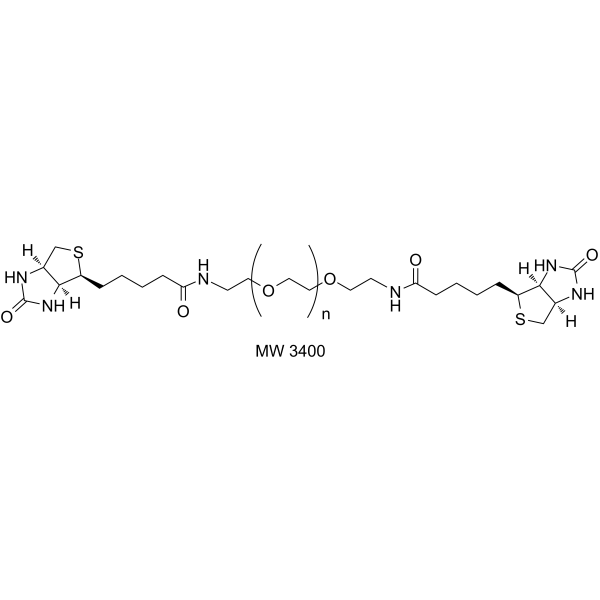
Biotin-PEG3400-Biotin is a PEG-based PROTAC linker that can be used in the synthesis of PROTACs .
|
-
-
- HY-P10620
-
|
|
Bacterial
|
Others
|
|
GGGYK-Biotin is a substrate peptide designed to study the substrate specificity of Sortase A. GGGYK-Biotin can be used to develop Sortase A variants with different substrate specificities .
|
-
-
- HY-P3576A
-
-
-
- HY-P2546
-
|
|
Neurokinin Receptor
|
Neurological Disease
|
|
Biotin-Substance P is the biotin tagged Substance P. Substance P (Neurokinin P) is a neuropeptide, acting as a neurotransmitter and as a neuromodulator in the CNS. The endogenous receptor for substance P is neurokinin 1 receptor (NK1-receptor, NK1R) .
|
-
-
- HY-P5112A
-
|
Azido-PEG3-FLAG TFA
|
Biochemical Assay Reagents
|
Others
|
|
Azido-PEG3-DYKDDDDK (azide-PEG3-FLAG) TFA is a multifunctional fusion tag for the purification of recombinant proteins. Azido-PEG3-DYKDDDDK TFA is a click chemistry reagent, it contains an Azide group and can undergo copper-catalyzed azide-alkyne cycloaddition reaction (CuAAc) with molecules containing Alkyne groups. It can also undergo strain-promoted alkyne-azide cycloaddition (SPAAC) reactions with molecules containing DBCO or BCN groups .
|
-
-
- HY-P10886
-
|
|
Gap Junction Protein
Claudin
|
Inflammation/Immunology
|
|
Zifogaptide is a gap junction protein channel regulator. Zifogaptide mimics the PDZ-binding motif at the C-terminal of Claudin C and competitively interferes with the interaction between Claudin–TJP1 (ZO-1) scaffold. Zifogaptide can promote epithelial cell migration, reduce scar formation, and accelerate wound healing. Zifogaptide can be used for radiation dermatitis, skin injuries, etc .
|
-
-
- HY-P5351A
-
|
|
Transmembrane Glycoprotein
|
Inflammation/Immunology
Cancer
|
|
Hyaluronan-binding peptide, biotin labeled TFA is a biological active peptide. (This peptide is a hyaluronan-binding peptide biotinylated through a C-terminal GGGSK linker. Hyaluronan (HA) is a nonsulfated glycosaminoglycan expressed in the extracellular matrix and on cell surfaces. HA plays a role in fertilization, embryonic development, wound healing, angiogenesis, leukocyte trafficking to inflamed tissues, and cancer metastasis. This peptide has been shown to block HA binding to CD44 receptors and inhibit T cell proliferation.) .
|
-
-
- HY-P2491
-
|
|
Fluorescent Dye
|
Cardiovascular Disease
Endocrinology
|
|
Atrial Natriuretic Peptide (1-28), human, porcine, Biotin-labeled, one of three mammalian natriuretic peptides (NPs), has endocrine effects on fluid homeostasis and blood pressure. Atrial Natriuretic Peptide has the potential for cardiovascular diseases research .
|
-
-
- HY-P2136F
-
|
|
Apoptosis
|
Neurological Disease
Inflammation/Immunology
Cancer
|
|
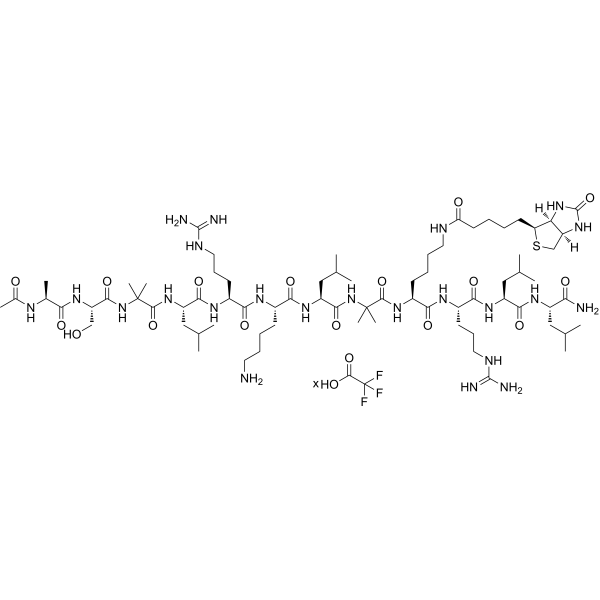
Biotin-COG1410 TFA is a biotin labled COG1410 (HY-P2136). COG1410 is an apolipoprotein E-derived peptide and an apoptosis inhibitor. COG1410 exerts neuroprotective and antiinflammatory effects in a murine model of traumatic brain injury (TBI). COG1410 can be used for the research of neurological disease .
|
-
-
- HY-W440886
-
|
|
Liposome
|
Others
|
|
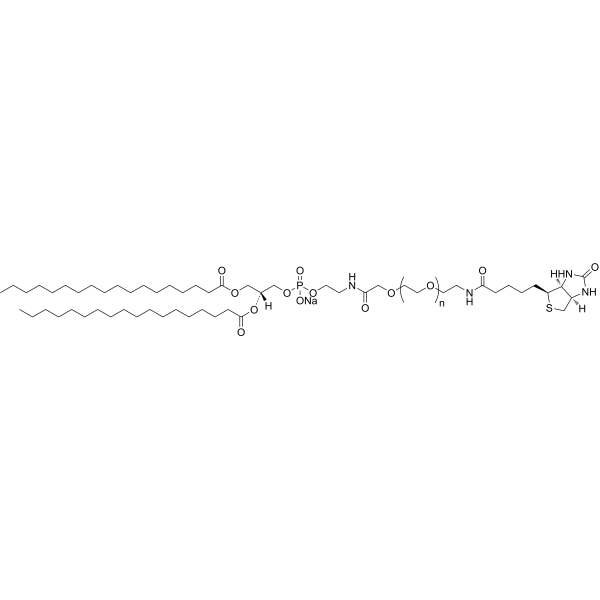
DSPE-PEG3400-Biotin is a phospholipid PEG for biotinylation. The amphiphilic property of the DSPE-PEG is useful for precision drug delivery and cancer therapy.
|
-
-
- HY-P11118A
-
|
CAPture peptide, Biotin-CCDC61 (334-366) TFA
|
Biochemical Assay Reagents
|
Others
|
|
Biotinylated CCDC61 peptide (CAPture peptide, biotin-CCDC61 (334-366)) TFA is a biotinylated peptide derived from the centrosomal protein CCDC61. Biotinylated CCDC61 peptide TFA specifically isolates intact centrosomes .
|
-
-
- HY-P5112
-
|
Azido-PEG3-FLAG
|
Biochemical Assay Reagents
|
Others
|
|
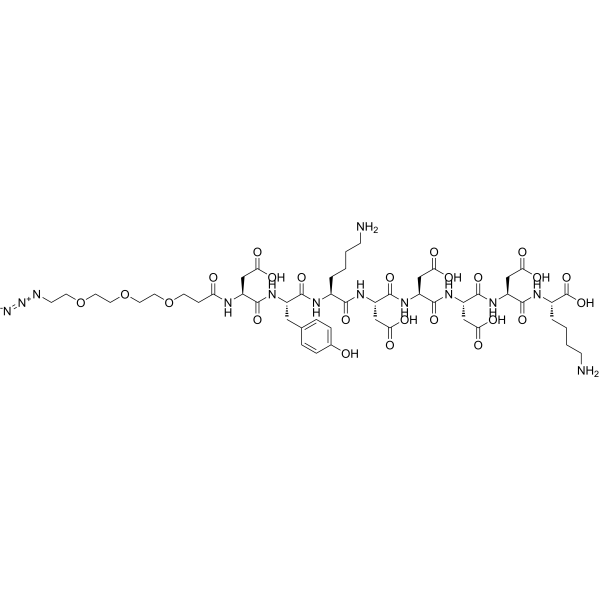
Azido-PEG3-DYKDDDDK (azide-PEG3-FLAG) is a multifunctional fusion tag for the purification of recombinant proteins. Azido-PEG3-DYKDDDDK is a click chemistry reagent, it contains an Azide group and can undergo copper-catalyzed azide-alkyne cycloaddition reaction (CuAAc) with molecules containing Alkyne groups. It can also undergo strain-promoted alkyne-azide cycloaddition (SPAAC) reactions with molecules containing DBCO or BCN groups .
|
-
-
- HY-169089
-
|
|
Drug Derivative
|
Cancer
|
|
RP-182-PEG3-K palmitic acid-NH2 (Compound 1a) is a fatty acid derivative of the immunomodulatory peptide RP-182. RP-182-PEG3-K palmitic acid-NH2 inhibits CD206 high M2-like macrophage (IC50 of 3.2 μM) and induces phagocytosis. RP-182-PEG3-K palmitic acid-NH2 exhibits antitumor efficacy in mouse B16 melanoma allografts .
|
-
-
- HY-P3844
-
-
-
- HY-P2549
-
-
-
- HY-P11270
-
|
BGM0504; BG128
|
Insulin Receptor
GLP Receptor
|
Metabolic Disease
|
|
Relsipatide (BG128) is a dual gastric inhibitory polypeptide (GIP) and glucagon-like peptide 1 (GLP-1) receptor agonist. Enicepatide can be studied in antidiabetic research .
|
-
-
- HY-147207B
-
|
|
Liposome
|
Others
|
|
Phospholipid-PEG3400-Biotin is a phospholipid PEG derivative that has a biotin and a phospholipid bridged by a linear PEG linker. Phospholipid-PEG3400-Biotin can interact with avidinylated antibodies. Phospholipid-PEG3400-Biotin can be used to modify liposome and cells surface, and pancreatic islets for cell transplantation .
|
-
-
- HY-P2510
-
|
|
Thyroid Hormone Receptor
|
Metabolic Disease
|
|
Parathyroid Hormone (1-34), human, biotinylated is a probe for the parathyroid hormone receptor, can be used for analyzing the interaction between parathyroid hormone and parathyroid hormone receptors in living cells and for purifying hormone-receptor complexes with affinity columns .
|
-
-
- HY-P10569
-
|
|
EGFR
|
Cancer
|
|
Biotin HER-2 substrate peptide is a substrate of Her4 and Her2/neu tyrosine kinase with a Km value of 60 μm for Her2/neu kinase domain .
|
-
-
- HY-13443F
-
|
Lys27(Biotin)-Exendin 4
|
GCGR
|
Others
|
|
Exendin 4, biotin labeled is a biotin labeled Exendin 4 (HY-13443). Exendin 4 is a long-acting GLP-1 receptor agonist .
|
-
-
- HY-W440712
-
|
|
Biochemical Assay Reagents
|
Others
|
|
Cholesterol-PEG3400-Biotin is a cholesterol PEG derivative that can form micelles through molecular self-assembly and has a longer half-life in vivo. Cholesterol-PEG3400-Biotin can be used in drug delivery research .
|
-
-
- HY-D2842C
-
|
|
Fluorescent Dye
|
Others
|
|
FITC-PEG3400-biotin is a fluorescent dye composed of polyethylene glycol (PEG), FITC (HY-66019) and a Biotin (HY-B0511). FITC-PEG3400-biotin can be used for fluorescent labeling and imaging .
|
-
-
- HY-169089A
-
|
|
Drug Derivative
|
Cancer
|
|
RP-182-PEG3-K(palmitic acid)-NH2 (Compound 1a) TFA is a fatty acid derivative of the immunomodulatory peptide RP-182. RP-182-PEG3-K(palmitic acid)-NH2 TFA inhibits CD206 high M2-like macrophage (IC50 of 3.2 μM) and induces phagocytosis. RP-182-PEG3-K(palmitic acid)-NH2 TFA exhibits antitumor efficacy in mouse B16 melanoma allografts .
|
-
-
- HY-P10319
-
|
|
PKA
|
Cardiovascular Disease
Cancer
|
|
RI-STAD-2 is a high-affinity interfering peptide that regulates the subunit RI of protein kinase A (PKA). RI-STAD-2 interferes with the binding of AKAPs and PKA-RI by simulating the interaction between AKAPs' α-helix domain and PKA-RI's dimerization/anchoration (D/D) domain, thereby affecting PKA activity and intracellular localization. RI-STAD-2 can be used to study the role of AKAPs interaction with PKA-RI in pathological processes such as cardiovascular disease and cancer .
|
-
-
- HY-130809C
-
|
|
Biochemical Assay Reagents
|
Others
|
|
DBCO-PEG3400-Biotin is a click chemistry biotinylation that can enable copper-free click chemistry with azide molecules to form a stable triazole linkage .
|
-
-
- HY-P2551
-
|
|
Amyloid-β
|
Neurological Disease
|
|
Biotin-β-Amyloid (17-40) is a N-terminal-labelled biotinylated amyloid-β(1-40) peptide. β-Amyloid (17-40) is a 24-residue fragment of the Aβ protein via post-translational processing of amyloid precursor protein (APP) .
|
-
-
- HY-P11118
-
|
CAPture peptide, Biotin-CCDC61 (334-366)
|
Biochemical Assay Reagents
|
Others
|
|
Biotinylated CCDC61 peptide (CAPture peptide, biotin-CCDC61 (334-366)) is a biotinylated peptide derived from the centrosomal protein CCDC61. Biotinylated CCDC61 peptide specifically isolates intact centrosomes .
|
-
-
- HY-P2504
-
|
|
Syk
|
Others
|
|
Syk Kinase Peptide Substrate, Biotin labeled is a biotin-labled Syk kinase peptide substrate.
|
-
-
- HY-P3576
-
-
-
- HY-D2889D
-
|
Rhodamine B-PEG3400-Biotin
|
Fluorescent Dye
|
Others
|
|
RB-PEG3400-Biotin (Rhodamine B-PEG3400-Biotin) is a fluorescent dye composed of Rhodamine B (HY-Y0016), PEG and a Biotin. Biotin can bind with high affinity to streptavidin or avidin. RB-PEG3400-Biotin plays an important role in the specific capture and detection of biomolecules (Ex/Em=546/610 nm) .
|
-
-
- HY-P10566
-
|
|
BCL6
|
Cancer
|
|
BCOR(498-514), biotinylated is the minimal BCL6 binding domain with an KD value of 1.32 µM. BCOR(498-514), biotinylated blocks BCL6-mediated transcriptional repression and kills lymphoma cells .
|
-
-
- HY-P10372
-
|
|
Src
|
Cancer
|
|
pFYN peptide is a biotin-labled phosphorylated peptide substrate derived from FYN (a Src family kinase) .
|
-
-
- HY-183170B
-
|
|
Biochemical Assay Reagents
|
Others
|
|
DSG-PEG3400-Biotin is a conjugate composed of DSG, PEG chains, and biotin. DSG-PEG3400-Biotin combines the membrane compatibility of phospholipids with the high affinity of biotin for avidin/streptavidin, enabling applications such as targeted drug delivery systems and nanoparticle modification.
|
-
-
- HY-183160B
-
|
|
Biochemical Assay Reagents
|
Others
|
|
Glucose-PEG3400-Biotin is a conjugate composed of glucose, PEG chains, and biotin. Glucose-PEG3400-Biotin combines the targeted recognition capabilities of glucose with the high-affinity binding ability of biotin to avidin/streptavidin, enabling applications such as targeted drug delivery systems and nanoparticle modification.
|
-
-
- HY-174884C
-
|
|
Biochemical Assay Reagents
|
Others
|
|
Acrylate-PEG3400-Biotin is a PEG derivative that contains an acrylate functional group, a PEG chain, and a biotin group. The biotin group can be used for specific binding to streptavidin, etc .
|
-
-
- HY-182981B
-
|
|
Biochemical Assay Reagents
|
Others
|
|
Mannose-PEG3400-Biotin is a conjugate composed of mannose, PEG chains, and biotin. Mannose-PEG-Biotin combines the targeting recognition ability of mannose with the high affinity of biotin to bind avidin/link avidin, and is used for applications such as constructing targeted drug delivery systems and nanoparticle modification.
|
-
-
- HY-P11461
-
|
Biotin-corticotropin releasing factor
|
Drug Derivative
|
Neurological Disease
|
|
Biotin-CRF, human, rat is a biotin-conjugated CRF (human, rat). CRF (human, rat) is a corticotropin-releasing hormone, paraventricular hypothalamic nucleus marker .
|
-
-
- HY-P11488
-
|
|
Radionuclide-Drug Conjugates (RDCs)
Somatostatin Receptor
PSMA
|
Cancer
|
|
JR11-PEG3-DOTA-PSMA-03 (Compound 2) is an RDC-related compound containing the chelating agent DOTA (HY-W053583), the JR11 peptide (SSTR2 antagonist), and the PSMA ligand. JR11-PEG3-DOTA-PSMA-03 shows SSTR2-binding affinities and PSMA-binding affinities, with IC50 s of 94.0 nM, 81.8 nM, respectively. JR11-PEG3-DOTA-PSMA-03 can be radiolabeled with [ 68Ga]. [ 68Ga] radiolabeled JR11-PEG3-DOTA-PSMA-03 can be used in diagnostic studies of neuroendocrine differentiated prostate cancer .
|
-
-
- HY-P11485
-
|
|
Radionuclide-Drug Conjugates (RDCs)
Somatostatin Receptor
PSMA
|
Cancer
|
|
JR11-PEG3-HBED-CC-PSMA-03 (Compound 1) is an RDC-related compound containing the chelating agent HBED-CC, the JR11 peptide (SSTR2 antagonist), and the PSMA ligand. JR11-PEG3-HBED-CC-PSMA-03 shows SSTR2-binding affinities and PSMA-binding affinities, with IC50 s of 59.2 nM, 57.0 nM, respectively. JR11-PEG3-HBED-CC-PSMA-03 can be radiolabeled with [ 68Ga]. [ 68Ga] radiolabeled JR11-PEG3-HBED-CC-PSMA-03 can be used in diagnostic studies of neuroendocrine differentiated prostate cancer .
|
-
-
- HY-D2842C
-
|
|
Fluorescent Dyes
|
|
FITC-PEG3400-biotin is a fluorescent dye composed of polyethylene glycol (PEG), FITC (HY-66019) and a Biotin (HY-B0511). FITC-PEG3400-biotin can be used for fluorescent labeling and imaging .
|
-
- HY-D2889D
-
|
Rhodamine B-PEG3400-Biotin
|
Fluorescent Dyes
|
|
RB-PEG3400-Biotin (Rhodamine B-PEG3400-Biotin) is a fluorescent dye composed of Rhodamine B (HY-Y0016), PEG and a Biotin. Biotin can bind with high affinity to streptavidin or avidin. RB-PEG3400-Biotin plays an important role in the specific capture and detection of biomolecules (Ex/Em=546/610 nm) .
|
-
- HY-W440886
-
|
|
Biochemical Assay Reagents
|
|
DSPE-PEG3400-Biotin is a phospholipid PEG for biotinylation. The amphiphilic property of the DSPE-PEG is useful for precision drug delivery and cancer therapy.
|
-
- HY-147207B
-
|
|
Biochemical Assay Reagents
|
|
Phospholipid-PEG3400-Biotin is a phospholipid PEG derivative that has a biotin and a phospholipid bridged by a linear PEG linker. Phospholipid-PEG3400-Biotin can interact with avidinylated antibodies. Phospholipid-PEG3400-Biotin can be used to modify liposome and cells surface, and pancreatic islets for cell transplantation .
|
-
- HY-W440712
-
|
|
Biochemical Assay Reagents
|
|
Cholesterol-PEG3400-Biotin is a cholesterol PEG derivative that can form micelles through molecular self-assembly and has a longer half-life in vivo. Cholesterol-PEG3400-Biotin can be used in drug delivery research .
|
-
- HY-130809C
-
|
|
Biochemical Assay Reagents
|
|
DBCO-PEG3400-Biotin is a click chemistry biotinylation that can enable copper-free click chemistry with azide molecules to form a stable triazole linkage .
|
-
- HY-183170B
-
|
|
Biochemical Assay Reagents
|
|
DSG-PEG3400-Biotin is a conjugate composed of DSG, PEG chains, and biotin. DSG-PEG3400-Biotin combines the membrane compatibility of phospholipids with the high affinity of biotin for avidin/streptavidin, enabling applications such as targeted drug delivery systems and nanoparticle modification.
|
-
- HY-183160B
-
|
|
Biochemical Assay Reagents
|
|
Glucose-PEG3400-Biotin is a conjugate composed of glucose, PEG chains, and biotin. Glucose-PEG3400-Biotin combines the targeted recognition capabilities of glucose with the high-affinity binding ability of biotin to avidin/streptavidin, enabling applications such as targeted drug delivery systems and nanoparticle modification.
|
-
- HY-174884C
-
|
|
Biochemical Assay Reagents
|
|
Acrylate-PEG3400-Biotin is a PEG derivative that contains an acrylate functional group, a PEG chain, and a biotin group. The biotin group can be used for specific binding to streptavidin, etc .
|
-
- HY-182981B
-
|
|
Biochemical Assay Reagents
|
|
Mannose-PEG3400-Biotin is a conjugate composed of mannose, PEG chains, and biotin. Mannose-PEG-Biotin combines the targeting recognition ability of mannose with the high affinity of biotin to bind avidin/link avidin, and is used for applications such as constructing targeted drug delivery systems and nanoparticle modification.
|
| Cat. No. |
상품명 |
Target |
Research Area |
-
- HY-P11307
-
|
|
Proteasome
|
Cancer
|
|
Biotin-epoxomicin is a Proteasome subunit binder. Biotin-epoxomicin serves as an affinity reagent for identifying proteasomal catalytic subunits, and facilitates affinity purification of active proteasomal subunits for LC-MS identification. Biotin-epoxomicin can be used to study solid tumors derived from B16 melanoma .
|
-
- HY-P11306
-
|
|
Proteasome
NF-κB
|
Inflammation/Immunology
|
|
Biotin-(Oaa)3-epoxomicin is a biotin-labeled form of Epoxomicin (HY-13821), prepared by conjugating Epoxomicin with biotin via three hydrophilic oxaacetyl amino acid (Oaa) linkers. Biotin-(Oaa)3-epoxomicin is primarily used in proteomic studies for the capture, identification and target validation of proteasome complexes, to determine the intracellular targets of epoxomicin. Epoxomicin acts as a proteasome inhibitor and NF-κB inhibitor, which effectively blocks inflammatory responses in mouse ear edema assays. It inhibits proteasome activity via covalent binding to catalytic subunits including LMP7, X, MECL1 and Z, with the strongest inhibitory effect on chymotrypsin-like activity, and does not interfere with non-proteasomal proteases such as trypsin and papain .
|
-
- HY-P10620
-
|
|
Bacterial
|
Others
|
|
GGGYK-Biotin is a substrate peptide designed to study the substrate specificity of Sortase A. GGGYK-Biotin can be used to develop Sortase A variants with different substrate specificities .
|
-
- HY-P3576A
-
-
- HY-P10244F
-
|
|
Peptides
|
Infection
|
|
Biotin-YVAD-FMK is an inhibitor for vacuolar processing enzyme (VPE), with a 64% inhibition at 5 μM. Biotin-YVAD-FMK is an irreversible substrate for caspase 1 .
|
-
- HY-P2546
-
|
|
Neurokinin Receptor
|
Neurological Disease
|
|
Biotin-Substance P is the biotin tagged Substance P. Substance P (Neurokinin P) is a neuropeptide, acting as a neurotransmitter and as a neuromodulator in the CNS. The endogenous receptor for substance P is neurokinin 1 receptor (NK1-receptor, NK1R) .
|
-
- HY-P5112A
-
|
Azido-PEG3-FLAG TFA
|
Biochemical Assay Reagents
|
Others
|
|
Azido-PEG3-DYKDDDDK (azide-PEG3-FLAG) TFA is a multifunctional fusion tag for the purification of recombinant proteins. Azido-PEG3-DYKDDDDK TFA is a click chemistry reagent, it contains an Azide group and can undergo copper-catalyzed azide-alkyne cycloaddition reaction (CuAAc) with molecules containing Alkyne groups. It can also undergo strain-promoted alkyne-azide cycloaddition (SPAAC) reactions with molecules containing DBCO or BCN groups .
|
-
- HY-P10886
-
|
|
Gap Junction Protein
Claudin
|
Inflammation/Immunology
|
|
Zifogaptide is a gap junction protein channel regulator. Zifogaptide mimics the PDZ-binding motif at the C-terminal of Claudin C and competitively interferes with the interaction between Claudin–TJP1 (ZO-1) scaffold. Zifogaptide can promote epithelial cell migration, reduce scar formation, and accelerate wound healing. Zifogaptide can be used for radiation dermatitis, skin injuries, etc .
|
-
- HY-P5351A
-
|
|
Transmembrane Glycoprotein
|
Inflammation/Immunology
Cancer
|
|
Hyaluronan-binding peptide, biotin labeled TFA is a biological active peptide. (This peptide is a hyaluronan-binding peptide biotinylated through a C-terminal GGGSK linker. Hyaluronan (HA) is a nonsulfated glycosaminoglycan expressed in the extracellular matrix and on cell surfaces. HA plays a role in fertilization, embryonic development, wound healing, angiogenesis, leukocyte trafficking to inflamed tissues, and cancer metastasis. This peptide has been shown to block HA binding to CD44 receptors and inhibit T cell proliferation.) .
|
-
- HY-P2491
-
|
|
Fluorescent Dye
|
Cardiovascular Disease
Endocrinology
|
|
Atrial Natriuretic Peptide (1-28), human, porcine, Biotin-labeled, one of three mammalian natriuretic peptides (NPs), has endocrine effects on fluid homeostasis and blood pressure. Atrial Natriuretic Peptide has the potential for cardiovascular diseases research .
|
-
- HY-P2136F
-
|
|
Apoptosis
|
Neurological Disease
Inflammation/Immunology
Cancer
|
|
Biotin-COG1410 TFA is a biotin labled COG1410 (HY-P2136). COG1410 is an apolipoprotein E-derived peptide and an apoptosis inhibitor. COG1410 exerts neuroprotective and antiinflammatory effects in a murine model of traumatic brain injury (TBI). COG1410 can be used for the research of neurological disease .
|
-
- HY-P11118A
-
|
CAPture peptide, Biotin-CCDC61 (334-366) TFA
|
Biochemical Assay Reagents
|
Others
|
|
Biotinylated CCDC61 peptide (CAPture peptide, biotin-CCDC61 (334-366)) TFA is a biotinylated peptide derived from the centrosomal protein CCDC61. Biotinylated CCDC61 peptide TFA specifically isolates intact centrosomes .
|
-
- HY-P5112
-
|
Azido-PEG3-FLAG
|
Biochemical Assay Reagents
|
Others
|
|
Azido-PEG3-DYKDDDDK (azide-PEG3-FLAG) is a multifunctional fusion tag for the purification of recombinant proteins. Azido-PEG3-DYKDDDDK is a click chemistry reagent, it contains an Azide group and can undergo copper-catalyzed azide-alkyne cycloaddition reaction (CuAAc) with molecules containing Alkyne groups. It can also undergo strain-promoted alkyne-azide cycloaddition (SPAAC) reactions with molecules containing DBCO or BCN groups .
|
-
- HY-169089
-
|
|
Drug Derivative
|
Cancer
|
|
RP-182-PEG3-K palmitic acid-NH2 (Compound 1a) is a fatty acid derivative of the immunomodulatory peptide RP-182. RP-182-PEG3-K palmitic acid-NH2 inhibits CD206 high M2-like macrophage (IC50 of 3.2 μM) and induces phagocytosis. RP-182-PEG3-K palmitic acid-NH2 exhibits antitumor efficacy in mouse B16 melanoma allografts .
|
-
- HY-P3844
-
-
- HY-P2549
-
-
- HY-P11270
-
|
BGM0504; BG128
|
Insulin Receptor
GLP Receptor
|
Metabolic Disease
|
|
Relsipatide (BG128) is a dual gastric inhibitory polypeptide (GIP) and glucagon-like peptide 1 (GLP-1) receptor agonist. Enicepatide can be studied in antidiabetic research .
|
-
- HY-P2510
-
|
|
Thyroid Hormone Receptor
|
Metabolic Disease
|
|
Parathyroid Hormone (1-34), human, biotinylated is a probe for the parathyroid hormone receptor, can be used for analyzing the interaction between parathyroid hormone and parathyroid hormone receptors in living cells and for purifying hormone-receptor complexes with affinity columns .
|
-
- HY-P10569
-
|
|
EGFR
|
Cancer
|
|
Biotin HER-2 substrate peptide is a substrate of Her4 and Her2/neu tyrosine kinase with a Km value of 60 μm for Her2/neu kinase domain .
|
-
- HY-P5351
-
|
|
Peptides
|
Others
|
|
Hyaluronan-binding peptide, biotin labeled is a biological active peptide. (This peptide is a hyaluronan-binding peptide biotinylated through a C-terminal GGGSK linker. Hyaluronan (HA) is a nonsulfated glycosaminoglycan expressed in the extracellular matrix and on cell surfaces. HA plays a role in fertilization, embryonic development, wound healing, angiogenesis, leukocyte trafficking to inflamed tissues, and cancer metastasis. This peptide has been shown to block HA binding to CD44 receptors and inhibit T cell proliferation.)
|
-
- HY-13443F
-
|
Lys27(Biotin)-Exendin 4
|
GCGR
|
Others
|
|
Exendin 4, biotin labeled is a biotin labeled Exendin 4 (HY-13443). Exendin 4 is a long-acting GLP-1 receptor agonist .
|
-
- HY-169089A
-
|
|
Drug Derivative
|
Cancer
|
|
RP-182-PEG3-K(palmitic acid)-NH2 (Compound 1a) TFA is a fatty acid derivative of the immunomodulatory peptide RP-182. RP-182-PEG3-K(palmitic acid)-NH2 TFA inhibits CD206 high M2-like macrophage (IC50 of 3.2 μM) and induces phagocytosis. RP-182-PEG3-K(palmitic acid)-NH2 TFA exhibits antitumor efficacy in mouse B16 melanoma allografts .
|
-
- HY-P10319
-
|
|
PKA
|
Cardiovascular Disease
Cancer
|
|
RI-STAD-2 is a high-affinity interfering peptide that regulates the subunit RI of protein kinase A (PKA). RI-STAD-2 interferes with the binding of AKAPs and PKA-RI by simulating the interaction between AKAPs' α-helix domain and PKA-RI's dimerization/anchoration (D/D) domain, thereby affecting PKA activity and intracellular localization. RI-STAD-2 can be used to study the role of AKAPs interaction with PKA-RI in pathological processes such as cardiovascular disease and cancer .
|
-
- HY-P2551
-
|
|
Amyloid-β
|
Neurological Disease
|
|
Biotin-β-Amyloid (17-40) is a N-terminal-labelled biotinylated amyloid-β(1-40) peptide. β-Amyloid (17-40) is a 24-residue fragment of the Aβ protein via post-translational processing of amyloid precursor protein (APP) .
|
-
- HY-P11118
-
|
CAPture peptide, Biotin-CCDC61 (334-366)
|
Biochemical Assay Reagents
|
Others
|
|
Biotinylated CCDC61 peptide (CAPture peptide, biotin-CCDC61 (334-366)) is a biotinylated peptide derived from the centrosomal protein CCDC61. Biotinylated CCDC61 peptide specifically isolates intact centrosomes .
|
-
- HY-P2504
-
|
|
Syk
|
Others
|
|
Syk Kinase Peptide Substrate, Biotin labeled is a biotin-labled Syk kinase peptide substrate.
|
-
- HY-P3576
-
-
- HY-P4078
-
|
|
Peptides
|
Others
|
|
(Arg)9 biotin labeled is a cell-permeable peptide. (Arg)9 biotin labeled can be used for drug delivery. (Arg)9 biotin labeled can traverse the plasma membrane of eukaryotic cells .
|
-
- HY-P10566
-
|
|
BCL6
|
Cancer
|
|
BCOR(498-514), biotinylated is the minimal BCL6 binding domain with an KD value of 1.32 µM. BCOR(498-514), biotinylated blocks BCL6-mediated transcriptional repression and kills lymphoma cells .
|
-
- HY-P10372
-
|
|
Src
|
Cancer
|
|
pFYN peptide is a biotin-labled phosphorylated peptide substrate derived from FYN (a Src family kinase) .
|
-
- HY-P11461
-
|
Biotin-corticotropin releasing factor
|
Drug Derivative
|
Neurological Disease
|
|
Biotin-CRF, human, rat is a biotin-conjugated CRF (human, rat). CRF (human, rat) is a corticotropin-releasing hormone, paraventricular hypothalamic nucleus marker .
|
-
- HY-P11488
-
|
|
Radionuclide-Drug Conjugates (RDCs)
Somatostatin Receptor
PSMA
|
Cancer
|
|
JR11-PEG3-DOTA-PSMA-03 (Compound 2) is an RDC-related compound containing the chelating agent DOTA (HY-W053583), the JR11 peptide (SSTR2 antagonist), and the PSMA ligand. JR11-PEG3-DOTA-PSMA-03 shows SSTR2-binding affinities and PSMA-binding affinities, with IC50 s of 94.0 nM, 81.8 nM, respectively. JR11-PEG3-DOTA-PSMA-03 can be radiolabeled with [ 68Ga]. [ 68Ga] radiolabeled JR11-PEG3-DOTA-PSMA-03 can be used in diagnostic studies of neuroendocrine differentiated prostate cancer .
|
-
- HY-P11485
-
|
|
Radionuclide-Drug Conjugates (RDCs)
Somatostatin Receptor
PSMA
|
Cancer
|
|
JR11-PEG3-HBED-CC-PSMA-03 (Compound 1) is an RDC-related compound containing the chelating agent HBED-CC, the JR11 peptide (SSTR2 antagonist), and the PSMA ligand. JR11-PEG3-HBED-CC-PSMA-03 shows SSTR2-binding affinities and PSMA-binding affinities, with IC50 s of 59.2 nM, 57.0 nM, respectively. JR11-PEG3-HBED-CC-PSMA-03 can be radiolabeled with [ 68Ga]. [ 68Ga] radiolabeled JR11-PEG3-HBED-CC-PSMA-03 can be used in diagnostic studies of neuroendocrine differentiated prostate cancer .
|
| Cat. No. |
상품명 |
|
Classification |
-
- HY-P5112A
-
|
Azido-PEG3-FLAG TFA
|
|
Azide
|
|
Azido-PEG3-DYKDDDDK (azide-PEG3-FLAG) TFA is a multifunctional fusion tag for the purification of recombinant proteins. Azido-PEG3-DYKDDDDK TFA is a click chemistry reagent, it contains an Azide group and can undergo copper-catalyzed azide-alkyne cycloaddition reaction (CuAAc) with molecules containing Alkyne groups. It can also undergo strain-promoted alkyne-azide cycloaddition (SPAAC) reactions with molecules containing DBCO or BCN groups .
|
-
- HY-P5112
-
|
Azido-PEG3-FLAG
|
|
Azide
|
|
Azido-PEG3-DYKDDDDK (azide-PEG3-FLAG) is a multifunctional fusion tag for the purification of recombinant proteins. Azido-PEG3-DYKDDDDK is a click chemistry reagent, it contains an Azide group and can undergo copper-catalyzed azide-alkyne cycloaddition reaction (CuAAc) with molecules containing Alkyne groups. It can also undergo strain-promoted alkyne-azide cycloaddition (SPAAC) reactions with molecules containing DBCO or BCN groups .
|
-
- HY-130809C
-
|
|
|
DBCO
|
|
DBCO-PEG3400-Biotin is a click chemistry biotinylation that can enable copper-free click chemistry with azide molecules to form a stable triazole linkage .
|
| Cat. No. |
상품명 |
|
Classification |
-
- HY-W440886
-
|
|
|
Pegylated Lipids
Fluorescent Lipids
|
|
DSPE-PEG3400-Biotin is a phospholipid PEG for biotinylation. The amphiphilic property of the DSPE-PEG is useful for precision drug delivery and cancer therapy.
|
-
- HY-147207B
-
|
|
|
Pegylated Lipids
|
|
Phospholipid-PEG3400-Biotin is a phospholipid PEG derivative that has a biotin and a phospholipid bridged by a linear PEG linker. Phospholipid-PEG3400-Biotin can interact with avidinylated antibodies. Phospholipid-PEG3400-Biotin can be used to modify liposome and cells surface, and pancreatic islets for cell transplantation .
|
-
- HY-W440712
-
|
|
|
Pegylated Lipids
|
|
Cholesterol-PEG3400-Biotin is a cholesterol PEG derivative that can form micelles through molecular self-assembly and has a longer half-life in vivo. Cholesterol-PEG3400-Biotin can be used in drug delivery research .
|
Your information is safe with us. * Required Fields.
Inquiry Information
- 상품명:
- Cat. No.:
- 수량:
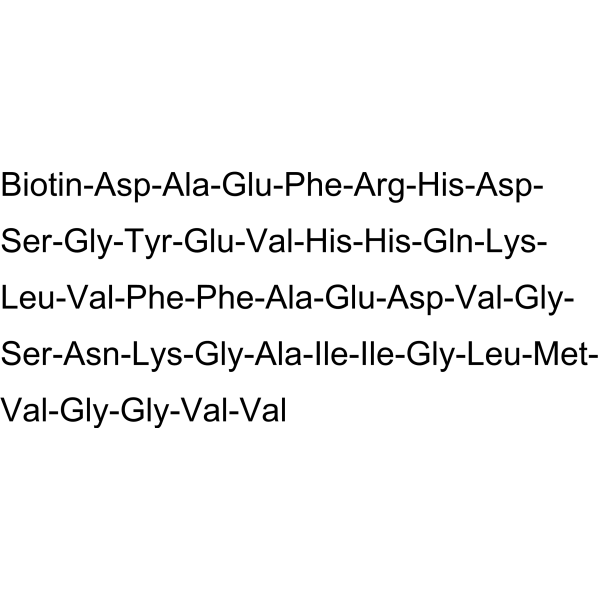
- MCE Japan Authorized Agent:

