Search Result
Results for "
CDK1-IN-1
" in MedChemExpress (MCE) Product Catalog:
2
Isotope-Labeled Compounds
| Cat. No. |
Product Name |
Target |
Research Areas |
Chemical Structure |
-
- HY-12529
-
|
|
CDK
Apoptosis
|
Cancer
|
|
Ro-3306 is a potent and selective inhibitor of CDK1, with Kis of 20 nM, 35 nM and 340 nM for CDK1, CDK1/cyclin B1 and CDK2/cyclin E, respectively.
|
-
-
- HY-15777
-
Ribociclib
Maximum Cited Publications
80 Publications Verification
LEE011
|
CDK
|
Neurological Disease
Cancer
|
|
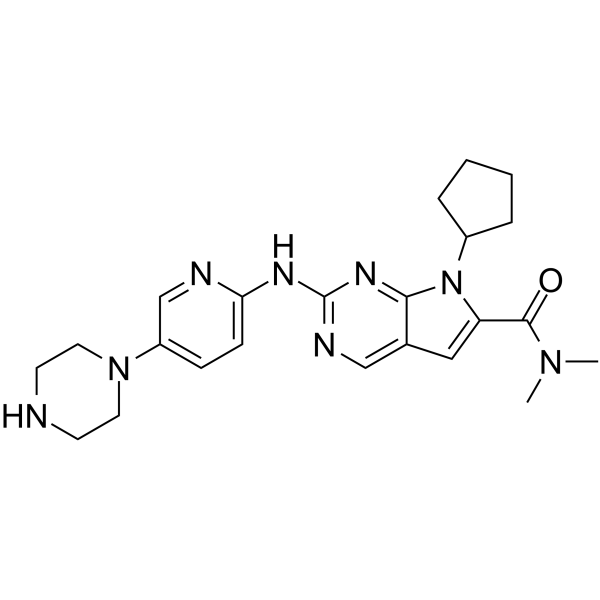
RRibociclib (LEE011) is an ATP-competitive and orally active CDK4/6 inhibitor that crosses the blood-brain barrier with IC50 values of 10 nM and 39 nM, respectively, and is over 1,000-fold less potent against the cyclin B/CDK1 complex .
|
-
-
- HY-10580
-
|
6-BromoINdirubIN-3'-oxime; BIO; MLS 2052
|
GSK-3
CDK
Apoptosis
|
Cancer
|
|
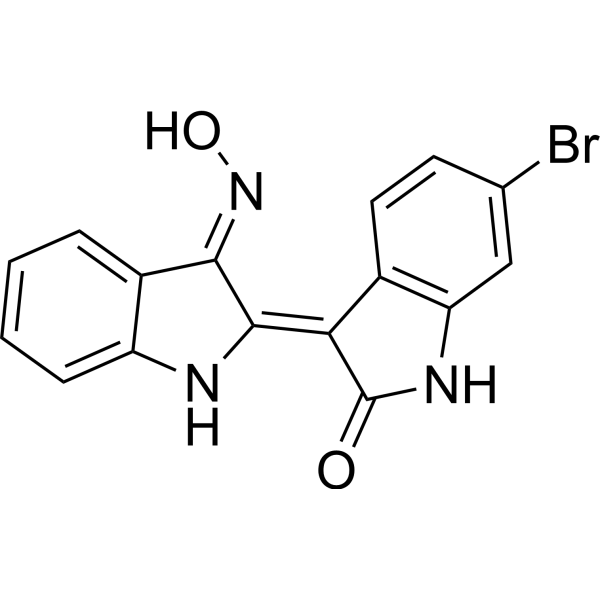
GSK 3 Inhibitor IX (6-Bromoindirubin-3'-oxime; BIO) is a potent, selective, reversible and ATP-competitive inhibitor of GSK-3α/β and CDK1-cyclinB complex with IC50s of 5 nM/320 nM/80 nM for (GSK-3α/β)/CDK1/CDK5, respectively.
|
-
-
- HY-15777A
-
|
LEE011 hydrochloride
|
CDK
|
Neurological Disease
Cancer
|
|
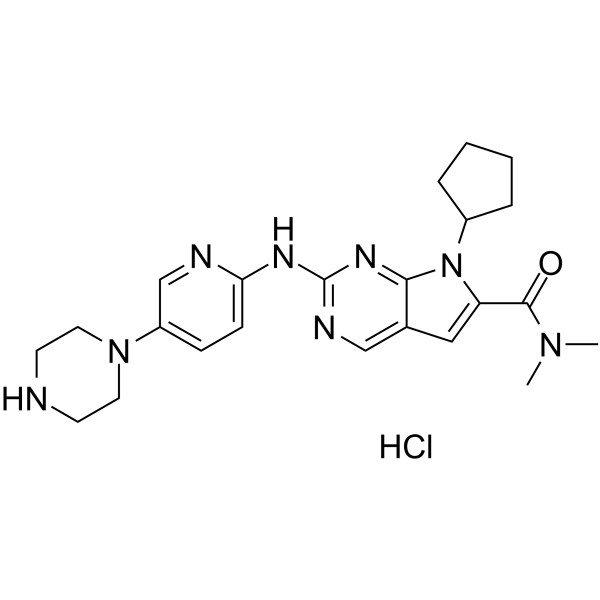
RRibociclib (LEE011) hydrochloride is an ATP-competitive and orally active CDK4/6 inhibitor that crosses the blood-brain barrier with IC50 values of 10 nM and 39 nM, respectively, and is over 1,000-fold less potent against the cyclin B/CDK1 complex .
|
-
-
- HY-15777B
-
|
LEE011 succINate
|
CDK
|
Neurological Disease
Cancer
|
|
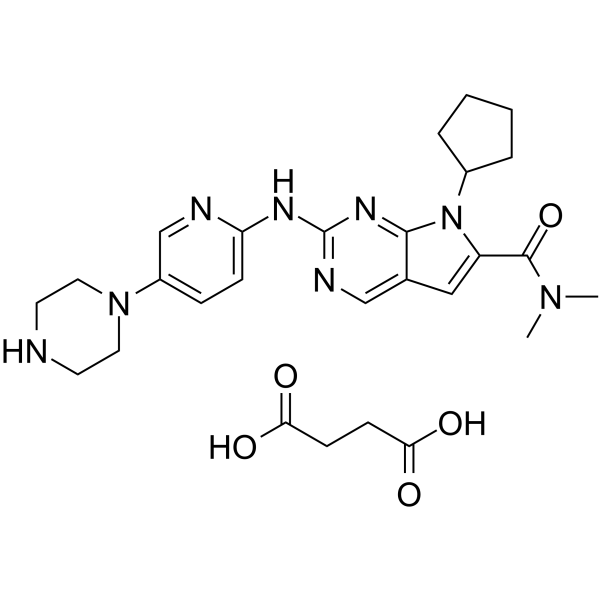
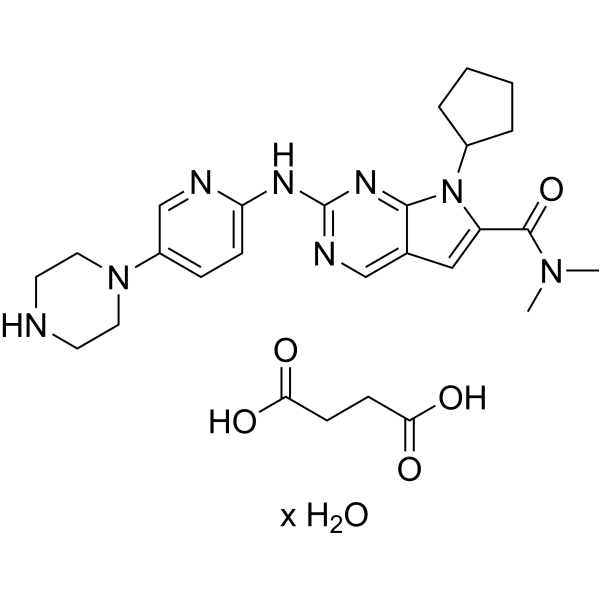
RRibociclib (LEE011) succinate is an ATP-competitive and orally active CDK4/6 inhibitor that crosses the blood-brain barrier with IC50 values of 10 nM and 39 nM, respectively, and is over 1,000-fold less potent against the cyclin B/CDK1 complex .
|
-
-
- HY-18340
-
|
CR8, (R)-Isomer
|
Molecular Glues
CDK
Apoptosis
|
Neurological Disease
Cancer
|
|
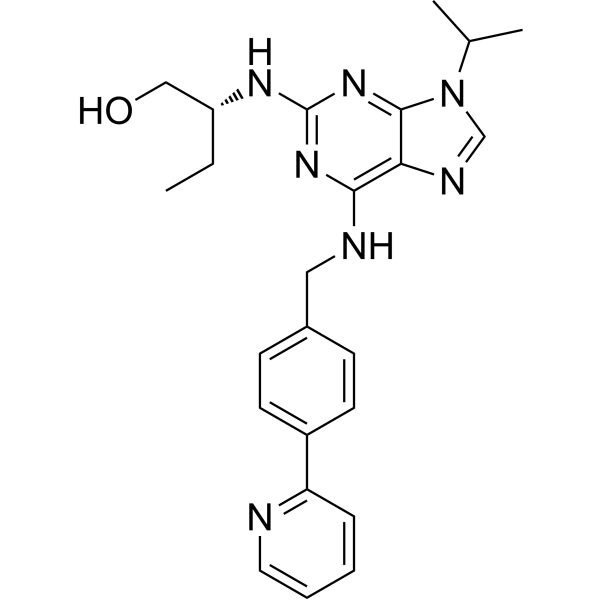
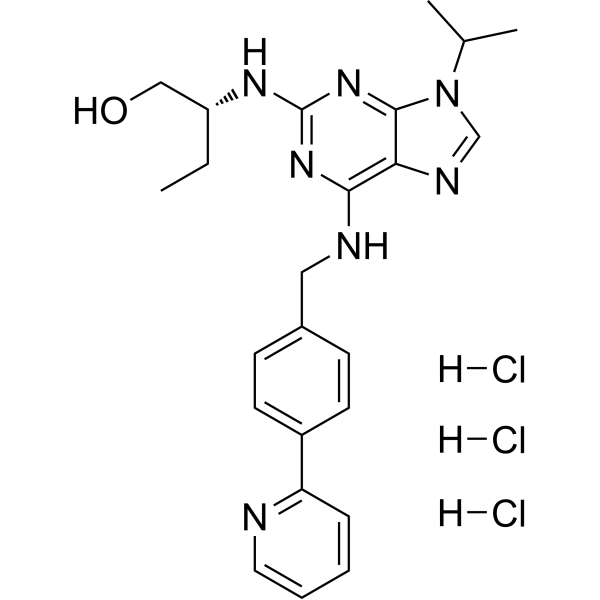
(R)-CR8, a second-generation analog of Roscovitine, is a potent CDK1/2/5/7/9 inhibitor. (R)-CR8 inhibits CDK1/cyclin B (IC50=0.09 μM), CDK2/cyclin A (0.072 μM), CDK2/cyclin E (0.041 μM), CDK5/p25 (0.11 μM), CDK7/cyclin H (1.1 μM), CDK9/cyclin T (0.18 μM) and CK1δ/ε (0.4 μM). (R)-CR8 induces apoptosis and has neuroprotective effect . (R)-CR8 acts as a molecular glue degrader that depletes cyclin K .
|
-
-
- HY-12214A
-
|
|
CDK
Apoptosis
|
Cancer
|
|
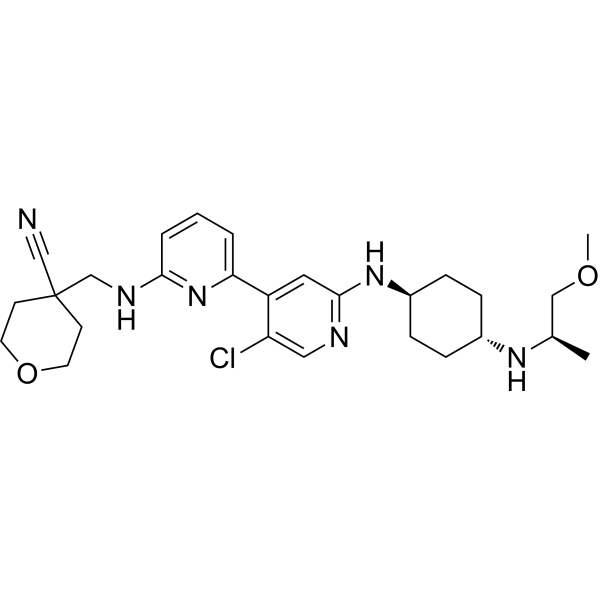
NVP-2 is a potent and selective ATP-competitive cyclin dependent kinase 9 (CDK9) probe, inhibits CDK9/CycT activity with an IC50 of 0.514 nM. NVP-2 displays inhibitory effcts on CDK1/CycB, CDK2/CycA and CDK16/CycY kinases with IC50 values of 0.584 μM, 0.706 μM, and 0.605 μM, respectively. NVP-2 induces cell apoptosis.
|
-
-
- HY-12302
-
|
9-Bromopaullone; NSC-664704
|
CDK
GSK-3
|
Cancer
|
|
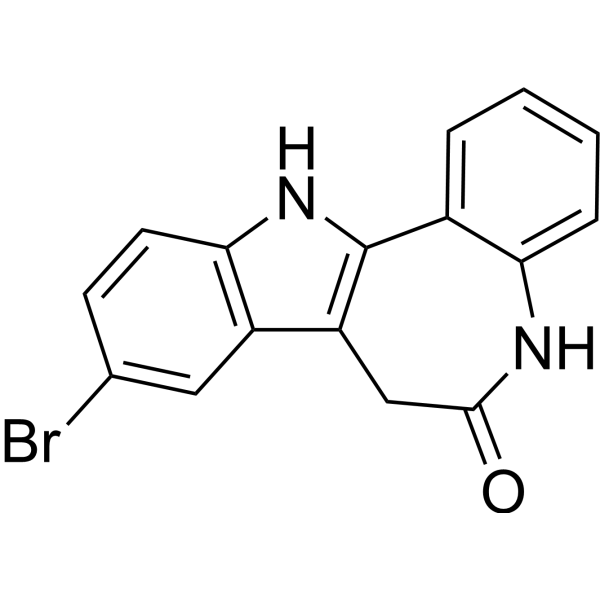
Kenpaullone is a potent inhibitor of CDK1/cyclin B and GSK-3β, with IC50s of 0.4 μM and 23 nM, and also inhibits CDK2/cyclin A, CDK2/cyclin E, and CDK5/p25 with IC50s of 0.68 μM, 7.5 μM, 0.85 μM, respectively. Kenpaullone, a small molecule inhibitor of KLF4, reduces self-renewal of breast cancer stem cells and cell motility in vitro.
|
-
-
- HY-11012
-
|
GSK-3β INhibitor I; NP 01139
|
GSK-3
|
Cancer
|
|
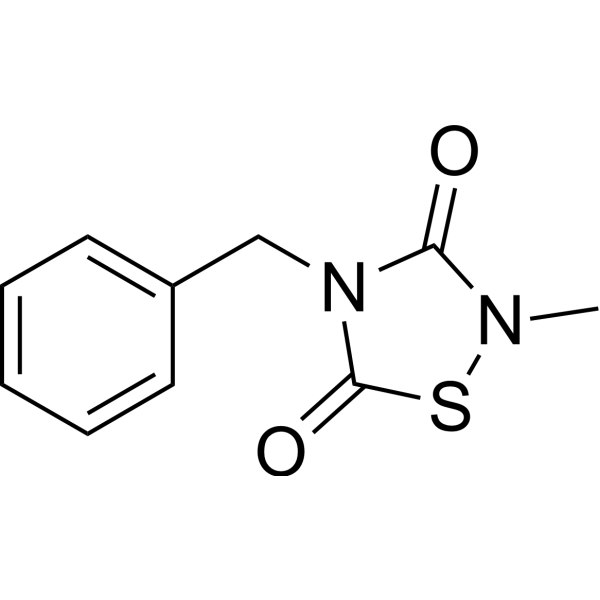
TDZD-8 is an inhibitor of GSK-3β, with an IC50 of 2 μM; TDZD-8 shows less potent activities against Cdk-1/cyclin B, CK-II, PKA, and PKC, with all IC50s of >100 μM.
|
-
-
- HY-10014
-
R547
2 Publications Verification
|
CDK
GSK-3
Apoptosis
|
Cancer
|
|
R547 is a potent, selective and orally active ATP-competitive CDK inhibitor, with Kis of 2 nM, 3 nM and 1 nM for CDK1/cyclin B, CDK2/cyclin E and CDK4/cyclin D1, respectively .
|
-
-
- HY-19807
-
|
INdirubIN-3'-oxime
|
GSK-3
CDK
Lipoxygenase
|
Cancer
|
|
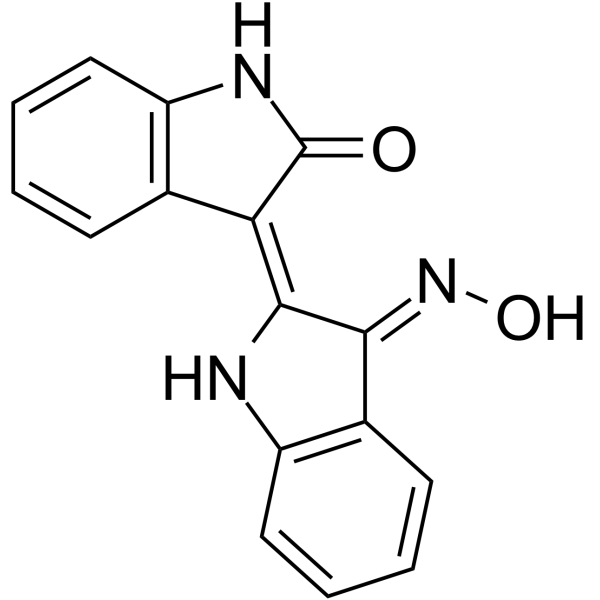
Indirubin-3'-monoxime is a potent GSK-3β inhibitor, and weakly inhibits 5-Lipoxygenase, with IC50s of 22 nM and 7.8-10 µM, respectively; Indirubin-3'-monoxime also shows inhibitory activities against CDK5/p25 and CDK1/cyclin B, with IC50s of 100 and 180 nM.
|
-
-
- HY-15569
-
|
|
CDK
|
Cancer
|
|
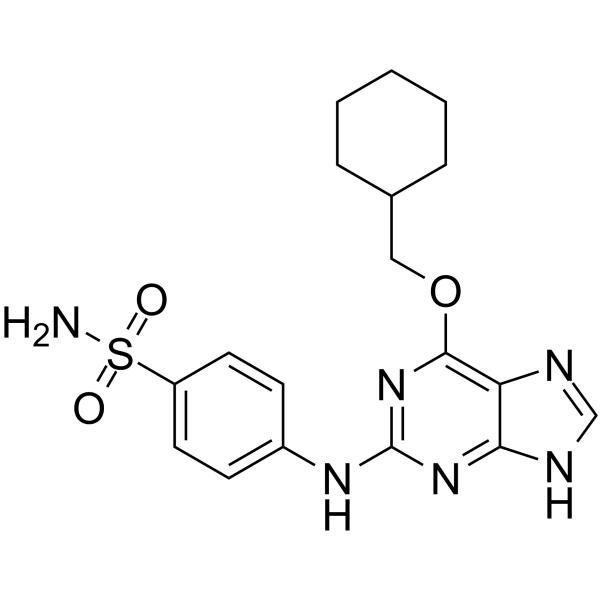
NU6102 is a potent CDK1 and CDK2 inhibitor with IC50s of 9.5 nM and 5.4 nM for CDK1/cyclinB and CDK2/cyclinA3, respectively. NU6102 shows selectivity for CDK1/CDK2 over CDK4 (IC50 of 1.6 μM), DYRK1A (IC50 of 0.9 μM), PDK1 (IC50 of 0.8 μM) and ROCKII (IC50 of 0.6 μM) .
|
-
-
- HY-108359
-
|
9-Nitropaullone; NSC 705701
|
CDK
GSK-3
Apoptosis
|
Cancer
|
|
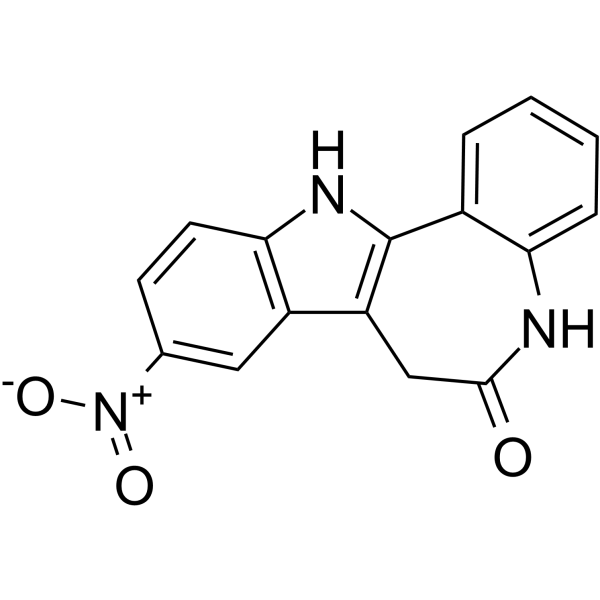
Alsterpaullone (9-Nitropaullone) is a potent CDK inhibitor, with IC50s of 35 nM, 15 nM, 200 nM and 40 nM for CDK1/cyclin B, CDK2/cyclin A, CDK2/cyclin E and CDK5/p35, respectively. Alsterpaullone also competes with ATP for binding to GSK-3alpha/GSK-3beta with IC50s of both 4 nM. Alsterpaullone has antitumor activity, and possesses potential for the study in neurodegenerative and proliferative disorders . Alsterpaullone induces apoptosis in leukemia cell line .
|
-
-
- HY-117535
-
|
|
CDK
|
Cancer
|
|
CDK2-IN-4 (compound 73) is a potent and selective CDK2 inhibitor with an IC50 of 44 nM for CDK2/cyclin A, shows 2,000-fold selectivity over CDK1/cyclin B (IC50=86 uM) .
|
-
-
- HY-11009
-
|
|
CDK
PKC
|
Cancer
|
|
CGP60474, a highly potent anti-endotoxemic agent, is a potent cyclin-dependent kinase (CDK) inhibitor (IC50 values are 26, 3, 4, 216, 10, 200 and 13 nM for CDK1/B, CDK2/E, CDK2/A, CDK4/D, CDK5/p25, CDK7/H and CDK9/T, respectively). CGP60474 is a selective and ATP-competitive PKC inhibitor .
|
-
-
- HY-115924
-
|
|
CDK
|
Cancer
|
|
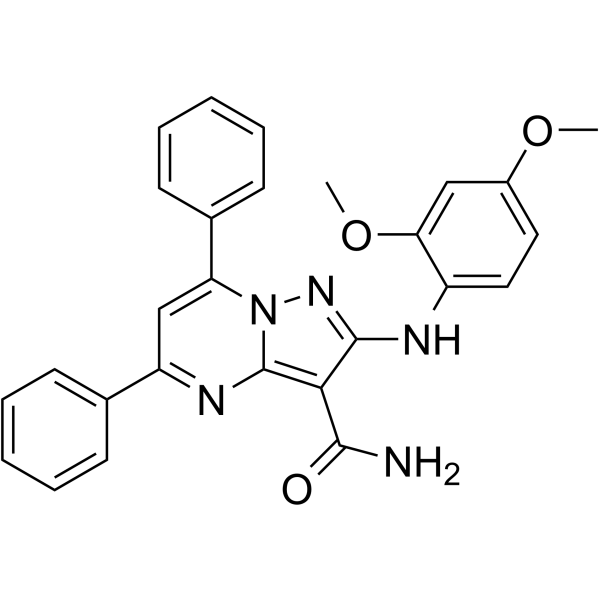
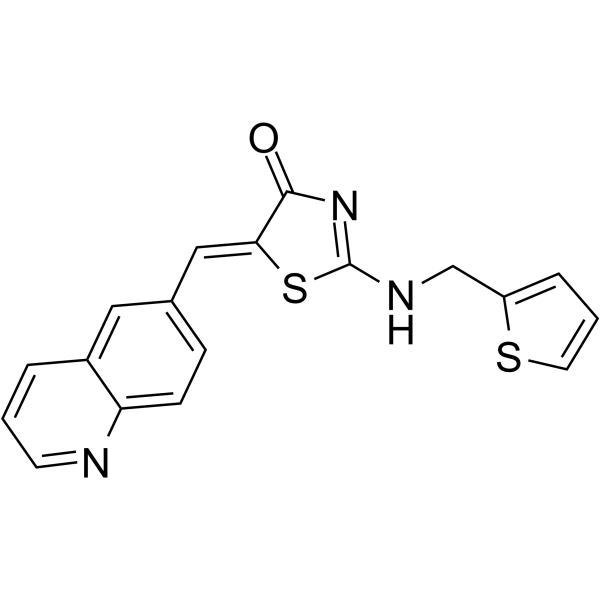
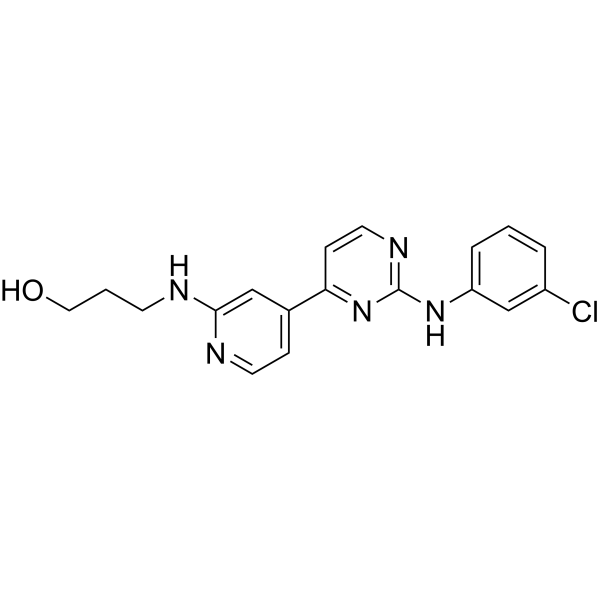
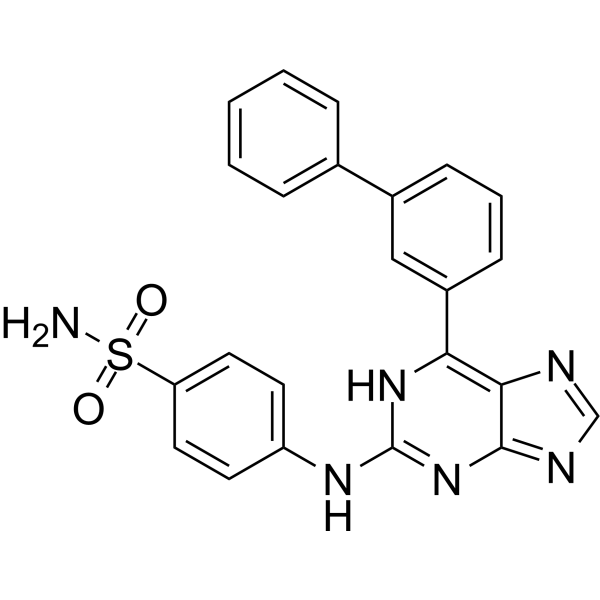
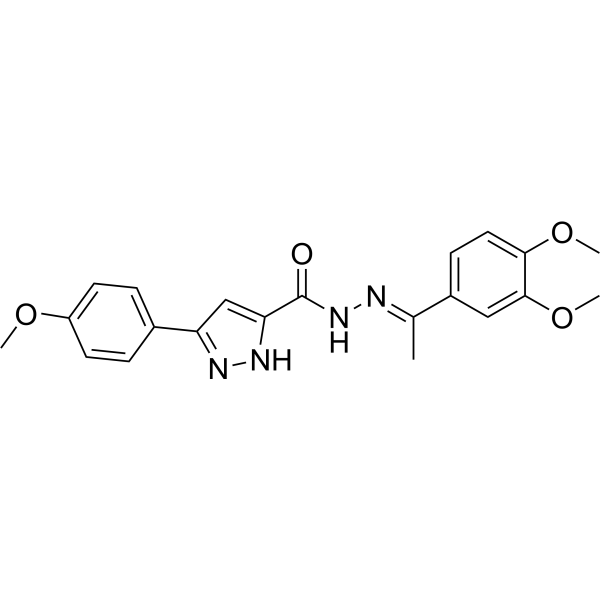
CDK1-IN-1 is a potent CDK1 inhibitor (CDK1/CycB IC50=161.2 nM) with potential antiproliferative activity and selectivity for cancer tissues. CDK1-IN-1 induces apoptosis in p53 dependent manner through the intrinsic apoptotic pathway. CDK1-IN-1 is a potential targeted antitumor agent .
|
-
-
- HY-15777S
-
|
LEE011-d6
|
CDK
|
Cancer
|
|
Ribociclib-d6 (LEE011-d6) is a deuterium labeled Ribociclib (HY-15777). Ribociclib is a highly specific CDK4/6 inhibitor with IC50 values of 10 nM and 39 nM, respectively, and is over 1,000-fold less potent against the cyclin B/CDK1 complex .
|
-
-
- HY-16559
-
|
P276-00
|
CDK
Apoptosis
|
Cancer
|
|
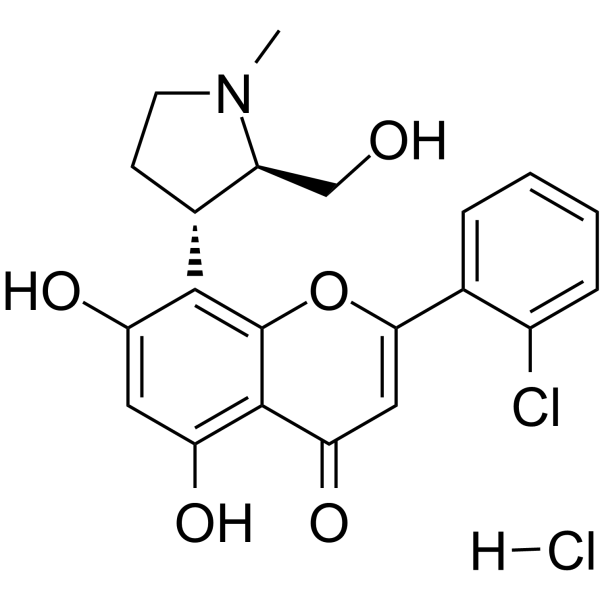
Riviciclib hydrochloride (P276-00) is a potent cyclin-dependent kinase (CDK) inhibitor, which inhibits CDK9-cyclinT1, CDK4-cyclin D1, and CDK1-cyclinB with IC50s of 20 nM, 63 nM, and 79 nM, respectively .
Riviciclib hydrochloride (P276-00) shows antitumor activity on cisplatin-resistant cells .
|
-
-
- HY-103647
-
|
|
CDK
VEGFR
GSK-3
|
Cancer
|
|
K00546 is a potent CDK1 and CDK2 inhibitor with IC50s of 0.6 nM and 0.5 nM for CDK1/cyclin B and CDK2/cyclin A, respectively. K00546 is also a potent CDC2-like kinase 1 (CLK1) and CLK3 inhibitor with IC50s of 8.9 nM and 29.2 nM, respectively .
|
-
-
- HY-12892
-
SKI-178
1 Publications Verification
|
SphK
Apoptosis
|
Cancer
|
|
SKI-178 is a potent sphingosine kinase-1 (SphK1) and SphK2 inhibitor. SKI-178 is cytotoxic at IC50 concentrations ranging from 1.8 to 0.1 μM in both agent sensitive and multi-agent resistant cancer cell lines (i.e., MTR3, NCI-ADR and HL60/VCR cells). SKI-178 induces apoptosis in a CDK1-dependent manner in human acute myeloid leukemia cell lines .
|
-
-
- HY-103221
-
-
-
- HY-114779
-
|
|
CDK
|
Cancer
|
|
N9-Isopropylolomoucine is a mitotic cyclin dependent kinase (CDK) inhibitor. N9-Isopropylolomoucine targets CCNB 1/CDK1 and can be used for cancer research .
|
-
-
- HY-15777C
-
|
LEE011 succINate hydrate
|
CDK
|
Cancer
|
|
RRibociclib (LEE011) succinate hydrate is an ATP-competitive and orally active CDK4/6 inhibitor that crosses the blood-brain barrier with IC50 values of 10 nM and 39 nM, respectively, and is over 1,000-fold less potent against the cyclin B/CDK1 complex .
|
-
-
- HY-15777R
-
|
LEE011 (Standard)
|
Reference Standards
CDK
|
Cancer
|
|
Ribociclib (Standard) is the analytical standard of Ribociclib. This product is intended for research and analytical applications. Ribociclib (LEE01) is a highly specific CDK4/6 inhibitor with IC50 values of 10 nM and 39 nM, respectively, and is over 1,000-fold less potent against the cyclin B/CDK1 complex .
|
-
-
- HY-111930
-
|
|
GSK-3
CDK
|
Cancer
|
|
5-Iodo-indirubin-3'-monoxime is a potent GSK-3β, CDK5/P25 and CDK1/cyclin B inhibitor, competing with ATP for binding to the catalytic site of the kinase, with IC50s of 9, 20 and 25 nM, respectively .
|
-
-
- HY-115565
-
|
|
CDK
Apoptosis
|
Cancer
|
|
CGP-74514 (Compound 13) is a highly selective cyclin-dependent kinase 1 (CDK1) inhibitor (IC50=25 nM). CGP-74514 inhibits CDK1/cyclin B complex activity, arrests the cell cycle at G2/M phase and induces tumor cell apoptosis. CGP-74514 is promising for research of bladder cancer .
|
-
-
- HY-18340A
-
|
CR8, (R)-Isomer trihydrochloride
|
Molecular Glues
CDK
Apoptosis
|
Neurological Disease
Cancer
|
|
(R)-CR8 (CR8) trihydrochloride, a second-generation analog of Roscovitine, is a potent CDK1/2/5/7/9 inhibitor. (R)-CR8 trihydrochloride inhibits CDK1/cyclin B (IC50=0.09 μM), CDK2/cyclin A (0.072 μM), CDK2/cyclin E (0.041 μM), CDK5/p25 (0.11 μM), CDK7/cyclin H (1.1 μM), CDK9/cyclin T (0.18 μM) and CK1δ/ε (0.4 μM). (R)-CR8 trihydrochloride induces apoptosis and has neuroprotective effect . (R)-CR8 trihydrochloride acts as a molecular glue degrader that depletes cyclin K .
|
-
-
- HY-15777AS
-
|
LEE011-d6 hydrochloride
|
Isotope-Labeled Compounds
CDK
|
Cancer
|
|
Ribociclib-d6 (LEE011-d6) hydrochloride is a deuterium labeled Ribociclib. Ribociclib is a highly specific CDK4/6 inhibitor with IC50 values of 10 nM and 39 nM, respectively, and is over 1,000-fold less potent against the cyclin B/CDK1 complex .
|
-
-
- HY-112462
-
|
|
CDK
|
Cancer
|
|
Cdk1/2 Inhibitor III (compound 3n) is a highly potent and selective Cdk1/cyclin B and Cdk2/cyclin A inhibitor of with IC50s of 0.6 nM and 0.5 nM, respectively. Cdk1/2 Inhibitor III shows selectivity over VEGF-R2 (IC50 of 32 nM), GSK-3β (IC50 of 140 nM), and a other kinases. Cdk1/2 Inhibitor III inhibits in cell proliferation with IC50s of 20 nM, 35 nM and 92 nM for HCT-116, HeLa, and A375 cells, respectively .
|
-
-
- HY-147646
-
|
|
CDK
Apoptosis
|
Cancer
|
|
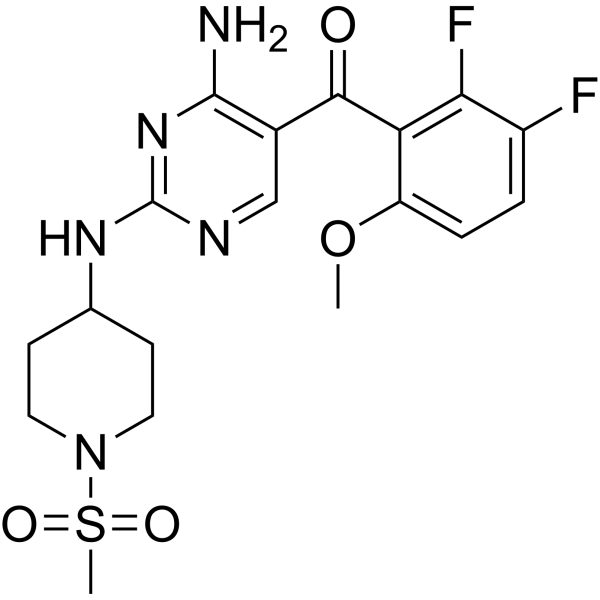
CDK1/Cyc B-IN-1 (Compound 5) is a selective CDK1/Cyc B complex inhibitor with an IC50 of 97 nM. CDK1/Cyc B-IN-1 triggers apoptosis and G2/M cell cycle arrest. CDK1/Cyc B-IN-1 shows broad-spectrum cytotoxic action against cancer cell lines .
|
-
-
- HY-15612
-
|
|
CDK
|
Cancer
|
|
CDK4 inhibitor is a novel and specific CDK4/Cyclin D1 inhibitor with an IC50 of 10 nM; 1500 and 500 fold than CDK1/Cyclin B (IC50>15 uM) and CDK2/Cyclin A (IC50=5.265 uM) respectively.
|
-
-
- HY-114903
-
|
GSK-3 INhibitor X
|
GSK-3
CDK
|
Neurological Disease
Metabolic Disease
Cancer
|
|
(E/Z)-BIO-acetoxime (GSK-3 Inhibitor X) is a potent and selective GSK-3α/β inhibitor, with an IC50 of 10 nM. (E/Z)-BIO-acetoxime shows more than 200-flod selectivity over CDK5/p25, CDK2/cyclin A and CDK1/cyclin B (IC50=2.4, 4.3, 63 μM) .
|
-
-
- HY-P2480
-
|
|
CDK
|
Others
|
|
Histone H1-derived Peptide is a phosphopeptide and the peptide substrates containes a sequence in accordance with the optimal recognition motif for CDK, can be used to detecting CDK1-cyclinB1 enzyme activity .
|
-
-
- HY-E70653
-
|
|
CDK
|
Cancer
|
|
CDK1 is a cyclin-dependent kinase that functions as a serine/threonine protein kinase, and is a key player in cell cycle regulation. CDK1/CycB1 Recombinant Human Active Protein Kinase is an ortholog of CDK1. CDK1/cyclin B1 complexes initiates mitotic entry by phosphorylating a multitude of proteins to condense chromosomes, disrupt the nuclear envelope, and enable microtubules polymerization to attach and to segregate the chromosomes .
|
-
-
- HY-112336
-
|
|
CDK
GSK-3
|
Neurological Disease
|
|
Aloisine RP106 (compound 38) is a potent inhibitor of Cdk1/cyclin B, Cdk5/p25, and GSK3 with IC50s of 0.70µM, 1.5µM, 0.92 µM, respectively .
|
-
-
- HY-118976
-
|
CGP-74514A
|
CDK
Apoptosis
|
Cancer
|
|
CGP-74514 hydrochloride is a highly selective cyclin-dependent kinase 1 (CDK1) inhibitor (IC50: 25 nM). CGP-74514 hydrochloride inhibits CDK1/cyclin B complex activity, arrests the cell cycle at G2/M phase and induces tumor cell apoptosis. CGP-74514 hydrochloride is promising for research of bladder cancer .
|
-
-
- HY-16559A
-
|
P276-00 free base
|
CDK
|
Cancer
|
|
Riviciclib (P276-00 free base) is a potent cyclin-dependent kinase (CDK) inhibitor, which inhibits CDK9-cyclinT1, CDK4-cyclin D1, and CDK1-cyclinB with IC50s of 20 nM, 63 nM, and 79 nM, respectively .
Riviciclib shows antitumor activity on cisplatin-resistant cells .
|
-
-
- HY-112450
-
|
|
CDK
|
Cancer
|
|
Olomoucine II is a potent CDK inhibitor with IC50 values of 0.06, 0.1, 0.45, 7.6, 19.8 µM for CDK9/cyclin T, CDK2/cyclin E, CDK7/cyclin H, CDK1/cyclin B, CDK4/cyclin D1, respectively. Olomoucine II shows antiproliferative activity .
|
-
-
- HY-112371
-
|
|
CDK
|
Cancer
|
|
(S)-CR8 is the S-isomer of CR8. (S)-CR8 is a potent and selective CDK inhibitor with IC50s of 0.060, 0.080, 0.11, 0.12, and 0.15 μM for CDK2/cyclin E, CDK2/cyclin A, CDK9/cyclin T, CDK5/p25, and CDK1/cyclin B, respectively. (S)-CR8 reduces SH-SY5Y cells survival (IC50 0.40 μM) .
|
-
-
- HY-164906
-
|
|
CDK
PROTACs
|
Cancer
|
|
TMX-2138 is a CDKs PROTAC degrader, with IC50s of 8.7 nM, 10.9 nM, 7.0 nM and 25.7 nM for CDK1/cyclinB, CDK2/cyclinA, CDK5/p25 and CDK9/cyclinT1, respectively. TMX-2138 promotes ubiquitination and degradation of CDKs. TMX-2138 can be used for the research of ovarian cancer (Pink: CDKs ligand (HY-151071); Blue: E3 ligase CRBN ligand (HY-14658); Black: linker (HY-W008352)) .
|
-
-
- HY-112363
-
|
RP107
|
CDK
GSK-3
ERK
JNK
CFTR
|
Inflammation/Immunology
Cancer
|
|
Aloisine A (RP107) is a a potent cyclin-dependent kinase (CDK) inhibitor with IC50s of 0.15 μM, 0.12 μM, 0.4 μM, 0.16 μM for CDK1/cyclin B, CDK2/cyclin A, CDK2/cyclin E, CDK5/p35, respectively. Aloisine A ininhibits GSK-3α (IC50=0.5 μM) and GSK-3β (IC50=1.5 μM). Aloisine A stimulates wild-type CFTR and mutated CFTR, with submicromolar affinity by a cAMP-independent mechanism. Aloisine A has the potential for CFTR-related diseases, including cystic fibrosis research .
|
-
-
- HY-103383
-
|
|
CDK
Casein Kinase
|
Neurological Disease
Cancer
|
|
(R)-DRF053 dihydrochloride is a potent casein kinases 1 (CK1), CDK1/cyclin B and CDK5/p25 inhibitor with IC50s of 14 nM, 220 nM and 80 nM, respectively. (R)-DRF053 dihydrochloride prevents the CK1-dependent production of amyloid-beta in a cell model .
|
-
-
- HY-110359
-
|
|
CDK
Apoptosis
|
Cancer
|
|
CGP-74514 dihydrochloride is a highly selective cyclin-dependent kinase 1 (CDK1) inhibitor (IC50=25 nM). CGP-74514 dihydrochloride inhibits CDK1/cyclin B complex activity, arrests the cell cycle at G2/M phase and induces tumor cell apoptosis. CGP-74514 dihydrochloride is promising for research of bladder cancer .
|
-
-
- HY-161521
-
|
|
Polo-like Kinase (PLK)
|
Cancer
|
|
PLK1-IN-10 (Compound 4Bb) is an orally active PLK1 PBD (polo-box domain) inhibitor. PLK1-IN-10 blocks the interaction of PLK1 with the cell division regulator protein 1 (PRC1) and decreases the protein expression of the CDK1-Cyclin B1 complex. PLK1-IN-10 reacts with glutathione (GSH) to increase cellular oxidative stress, ultimately leading to cell death .
|
-
-
- HY-111932
-
|
|
CDK
GSK-3
|
Cancer
|
|
Indirubin-5-sulfonate is a cyclin-dependent kinase (CDK) inhibitor, with IC50 values of 55 nM, 35 nM, 150 nM, 300 nM and 65 nM for CDK1/cyclin B, CDK2/cyclin A, CDK2/cyclin E, CDK4/cyclin D1, and CDK5/p35, respectively . Indirubin-5-sulfonate also shows inhibitory activity against GSK-3β .
|
-
-
- HY-147901
-
|
|
Histone Demethylase
CDK
Apoptosis
Caspase
|
Cancer
|
|
KDM1/CDK1-IN-1 (compound 4) is a potent KDM1 and CDK1 inhibitor, with IC50 values of 0.096 and 0.078 μM, respectively.KDM1/CDK1-IN-1 induces cell cycle arrest at G2/M phase and apoptosis in HOP-92 cells. KDM1/CDK1-IN-1 exhibits potent cytotoxic activity against the CCRF-CEM, HOP-92 and Hep-G2 cells, with IC50 values of 16.34, 3.45 and 7.79 μM, respectively .
|
-
-
- HY-E70651
-
|
|
CDK
|
Cancer
|
|
CDK1 is a cyclin-dependent kinase that functions as a serine/threonine protein kinase, and is a key player in cell cycle regulation. CDK1/CycA1 Recombinant Human Active Protein Kinase is an ortholog of CDK1 .
|
-
-
- HY-E70654
-
|
|
CDK
|
Cancer
|
|
CDK1 is a cyclin-dependent kinase that functions as a serine/threonine protein kinase, and is a key player in cell cycle regulation. CDK1/CycA1 Recombinant Human Active Protein Kinase is an ortholog of CDK1 .
|
-
-
- HY-112394
-
|
|
GSK-3
CDK
|
Cancer
|
|
2-Cyanoethylalsterpaullone (compound 7) is an Alsterpaullone (HY-108359) derivative, which exhibits potent and selective inhibitory activities against CDK1/Cyclin B and GSK-3β (GSK-3β: IC50=0.8 nM; CDK1/Cyclin B: IC50=0.23 nM) .
|
-
-
- HY-P11028
-
|
|
CDK
|
Cancer
|
|
M1-20 is a CDK1 inhibitor. M1-20 promotes CDK1 ubiquitination by CUL4-DDB1-DCAF1 complexes and degradation through the proteasome pathway. M1-20 abolishes the formation of CDK1/CCNB1 complexes. M1-20 has significant anticancer activity of spontaneous breast cancer in FVB/N MMTV-PyVT mice model .
|
-
- HY-E70656
-
|
|
CDK
|
Cancer
|
|
CDK1 is a cyclin-dependent kinase that functions as a serine/threonine protein kinase, and is a key player in cell cycle regulation. CDK1/CycO Recombinant Human Active Protein Kinase is an ortholog of CDK1 .
|
-
- HY-111260
-
|
|
CDK
GSK-3
Apoptosis
|
Cancer
|
|
R547 mesylate is a potent, selective and orally active ATP-competitive CDK inhibitor, with Kis of 2 nM, 3 nM and 1 nM for CDK1/cyclin B, CDK2/cyclin E and CDK4/cyclin D1, respectively .
|
-
- HY-11012R
-
|
GSK-3β INhibitor I (Standard); NP 01139 (Standard)
|
GSK-3
Reference Standards
|
Cancer
|
|
TDZD-8 (Standard) is the analytical standard of TDZD-8. This product is intended for research and analytical applications. TDZD-8 is an inhibitor of GSK-3β, with an IC50 of 2 μM; TDZD-8 shows less potent activities against Cdk-1/cyclin B, CK-II, PKA, and PKC, with all IC50s of >100 μM.
|
-
- HY-123279
-
|
|
Aurora Kinase
CDK
|
Cancer
|
|
OM137 is an aurora kinase inhibitor, with an IC50 of 21.7 μM (Aurora A kinase) and 2.4 μM (Aurora B kinase). OM137 also inhibits Cdk1/cyclinB and Cdk5/p25 with an approximate IC50 of 20 μM. OM137 reduces spindle checkpoint-signaling proteins (Mad2 and BubR1) at the kinetochores of chromosomes .
|
-
- HY-136841
-
|
|
CDK
|
Cancer
|
|
SLM6 is a sangivamycin-like molecule. SLM6 is a CDK9 inhibitor. SLM6 inhibits CDK9/cyclin K and CDK9/cyclin T1 kinase activity with IC50s of 280 nM and 133 nM, respectively. SLM6 also inhibits CDK1/cyclin B and CDK2/
cyclin A with IC50s of less than 300 nM. SLM6 induces apoptosis in multiple myeloma (MM) cells .
|
-
- HY-123034
-
|
|
CDK
Bcl-2 Family
Apoptosis
|
Cancer
|
|
CDKI-83 is a potent CDK9 and CDK1 inhibitor with Ki values of 21 nM and 72 nM for CDK9/T1 and CDK1/B, respectively. CDKI-83 demonstrates effective anti-proliferative activity in human tumour cell lines with a GI50<1 μM. CDKI-83 effectively induces apoptosis in A2780 human ovarian cancer cells. CDKI-83 reduces phosphorylation at Ser-2 of RNA polymerase II (RNAPII) by inhibiting cellular CDK9 activity, and down-regulates Mcl-1 and Bcl-2. CDKI-83 has the potential for anti-cancer research .
|
-
- HY-141685
-
|
|
CDK
GSK-3
VEGFR
FGFR
|
Cancer
|
|
3-Methylthienyl-carbonyl-JNJ-7706621 is a potent and selective inhibitor of cyclin-dependent kinase (CDK), with IC50s of 6.4 nM and 2 nM for CDK1/cyclin B and CDK2/cyclin A, respectively. 3-Methylthienyl-carbonyl-JNJ-7706621 also shows potent inhibition of GSK-3 (IC50=0.041 μM) and modest potency against CDK4, VEGF-R2, and FGF-R2 (IC50=0.11, 0.13, 0.22 μM, respectively). 3-Methylthienyl-carbonyl-JNJ-7706621 can be used for the research of cancer .
|
-
- HY-123238
-
|
|
CDK
|
Cancer
|
|
AG-024104 is a CDK inhibitor with Ki values of 2.3 nM (CDK1/cyclinB), 1.8 nM (CDK2/cyclinA), and 0.67 nM (CDK4/cyclinD). AG-024104 functionally inhibits kinase activity of CDK1/cyclinB, CDK2/cyclinA, and CDK4/cyclinD. AG-024104 serves as a negative control for peripheral leukocyte toxicity studies in preclinical development .
|
-
- HY-103221R
-
|
|
Reference Standards
Aryl Hydrocarbon Receptor
GSK-3
CDK
|
Others
|
|
MeBIO (Standard) is the analytical standard of MeBIO (HY-103221). This product is intended for research and analytical applications. MeBIO is a potent AhR (aryl hydrocarbon receptor) agonist, with IC50 of 44 μM (GSK-3) and 55 μM (CDK1/cyclin B), respectively .
|
-
- HY-183854
-
|
|
CDK
|
Cancer
|
|
AG-12286 is a pan-CDK inhibitor with an IC50 value of 2 nM against cdk1/cyclin B, 6 nM against cdk2/cyclin E, and 12 nM against cdk4/cyclin D. AG-12286 is 1000-fold more selective for the CDK family than for PKC. AG-12286 can be used in cancer research .
|
-
- HY-10014R
-
|
|
CDK
Reference Standards
GSK-3
Apoptosis
|
Cancer
|
|
R547 (Standard) is the analytical standard of R547 (HY-10014). This product is intended for research and analytical applications. R547 is a potent, selective and orally active ATP-competitive CDK inhibitor, with Kis of 2 nM, 3 nM and 1 nM for CDK1/cyclin B, CDK2/cyclin E and CDK4/cyclin D1, respectively .
|
-
- HY-103647R
-
|
|
Reference Standards
CDK
VEGFR
GSK-3
|
Cancer
|
|
K00546 (Standard) is the analytical standard of K00546 (HY-103647). This product is intended for research and analytical applications. K00546 is a potent CDK1 and CDK2 inhibitor with IC50s of 0.6 nM and 0.5 nM for CDK1/cyclin B and CDK2/cyclin A, respectively. K00546 is also a potent CDC2-like kinase 1 (CLK1) and CLK3 inhibitor with IC50s of 8.9 nM and 29.2 nM, respectively .
|
-
- HY-10580R
-
|
6-BromoINdirubIN-3'-oxime (Standard); BIO (Standard); MLS 2052 (Standard)
|
Reference Standards
GSK-3
CDK
Apoptosis
|
Cancer
|
|
GSK 3 Inhibitor IX (Standard) is the analytical standard of GSK 3 Inhibitor IX (HY-10580). This product is intended for research and analytical applications. GSK 3 Inhibitor IX (6-Bromoindirubin-3'-oxime; BIO) is a potent, selective, reversible and ATP-competitive inhibitor of GSK-3α/β and CDK1-cyclinB complex with IC50s of 5 nM/320 nM/80 nM for (GSK-3α/β)/CDK1/CDK5, respectively.
|
-
- HY-180820
-
|
|
Drug Derivative
MDM-2/p53
CDK
Reactive Oxygen Species (ROS)
Apoptosis
Bcl-2 Family
Caspase
|
Cancer
|
|
Dimethyl bisphenolate (Compound DMB) is a natural neolignan derivative with orally active anti-tumor activity. Dimethyl bisphenolate can inhibit cancer cells proliferation, invasion and migration. Dimethyl bisphenolate can activate the p53 signaling pathway, upregulate the expression of p21 protein, inhibit the activity of the CDK1-cyclin B1 complex, and cause cells to stall at the G2/M phase. Dimethyl bisphenolate can induce ROS production, upregulate pro-apoptotic proteins Noxa and Bim, downregulate anti-apoptotic protein Bcl-2, activate caspase-9 and caspase-3, and ultimately induce cell apoptosis. Dimethyl bisphenolate can be used for research of glioblastoma .
|
-
| Cat. No. |
Product Name |
Target |
Research Area |
-
- HY-P2480
-
|
|
CDK
|
Others
|
|
Histone H1-derived Peptide is a phosphopeptide and the peptide substrates containes a sequence in accordance with the optimal recognition motif for CDK, can be used to detecting CDK1-cyclinB1 enzyme activity .
|
-
- HY-P11028
-
|
|
CDK
|
Cancer
|
|
M1-20 is a CDK1 inhibitor. M1-20 promotes CDK1 ubiquitination by CUL4-DDB1-DCAF1 complexes and degradation through the proteasome pathway. M1-20 abolishes the formation of CDK1/CCNB1 complexes. M1-20 has significant anticancer activity of spontaneous breast cancer in FVB/N MMTV-PyVT mice model .
|
| Cat. No. |
Product Name |
Chemical Structure |
-
- HY-15777S
-
|
|
|
Ribociclib-d6 (LEE011-d6) is a deuterium labeled Ribociclib (HY-15777). Ribociclib is a highly specific CDK4/6 inhibitor with IC50 values of 10 nM and 39 nM, respectively, and is over 1,000-fold less potent against the cyclin B/CDK1 complex .
|
-
-
- HY-15777AS
-
|
|
|
Ribociclib-d6 (LEE011-d6) hydrochloride is a deuterium labeled Ribociclib. Ribociclib is a highly specific CDK4/6 inhibitor with IC50 values of 10 nM and 39 nM, respectively, and is over 1,000-fold less potent against the cyclin B/CDK1 complex .
|
-
Your information is safe with us. * Required Fields.
Inquiry Information
- Product Name:
- Cat. No.:
- Quantity:
- MCE Japan Authorized Agent:

