Search Result
Results for "
CEM
" in MedChemExpress (MCE) Product Catalog:
1
Biochemical Assay Reagents
| Cat. No. |
Product Name |
Target |
Research Areas |
Chemical Structure |
-
- HY-17593
-
|
CEM-101; OP-1068
|
Bacterial
Antibiotic
|
Infection
|
|
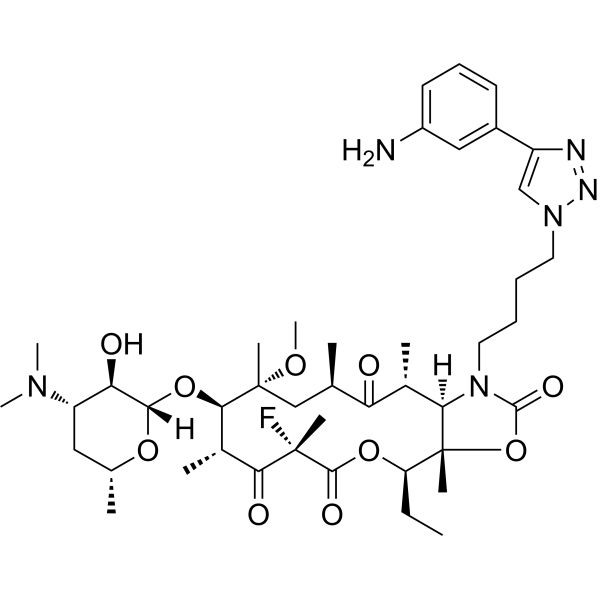
Solithromycin (CEM-101) is an orally bioavailable, effective antimicrobial agent, with IC50s for inhibition of cell viability, protein synthesis, and growth rate are 7.5 ng/mL, 40 ng/mL, and 125 ng/mL for Streptococcus pneumonia, Staphylococcus aureus, and Haemophilus influenzae, respectively. Solithromycin binds to the large 50S subunit of the ribosome and inhibits protein biosynthesis .
|
-
-
- HY-N13022
-
|
|
Environmental Pollutants
Bacterial
SOD
|
Inflammation/Immunology
Cancer
|
|
Humic acid is an important component of organic matter in soil and water, and serves as a plant regulator. Humic acid has multiple reactive activities such as surface adsorption, ion exchange, and complexation. Humic acid can enhance pyrene degradation by Mycobacterium NJS-1. Humic acid can inhibit the activity of superoxide dismutase and scavenge hydroxyl radicals. Humic acid is also toxic to CEM cells .
|
-
-
- HY-W009783
-
|
|
HIV
Influenza Virus
|
Infection
Cancer
|
|
1-Deoxymannojirimycin hydrochloride is a selective class I α1,2-mannosidase inhibitor with an IC50 of 20 μM. 1-Deoxymannojirimycin hydrochloride is also a N-linked glycosylation inhibitor. 1-Deoxymannojirimycin hydrochloride has antiviral activity against HIV‐1 strains . 1-Deoxymannojirimycin hydrochloride increases high mannose structures. 1-Deoxymannojirimycin hydrochloride can be used for the study of liver cancer and colon cancer .
|
-
-
- HY-113074
-
|
Glycolithocholate sulfate; Sulfolithocholylglycine; SLCG
|
HIV
Endogenous Metabolite
|
Infection
Inflammation/Immunology
|
|
Glycolithocholic acid 3-sulfate (SLCG) is a cholic acid derivative and a metabolite of glycolithocholic acid. Glycolithocholic acid 3-sulfate inhibits replication of HIV-1 in vitro. Glycolithocholic acid 3-sulfate can be used for the research of HIV infection and gallbladder disease .
|
-
-
- HY-W008469
-
|
|
DNA/RNA Synthesis
|
Cancer
|
|
2-Fluoroadenine is a toxic purine bases. 2-Fluoroadenine has toxicity in nonproliferating and proliferating tumor cells. 2-Fluoroadenine can be used for researching anticancer .
|
-
-
- HY-N1365
-
|
6-Hydroxy-7-methoxycoumarin
|
HBV
p38 MAPK
NF-κB
STAT
Akt
ERK
JNK
|
Infection
Inflammation/Immunology
Cancer
|
|
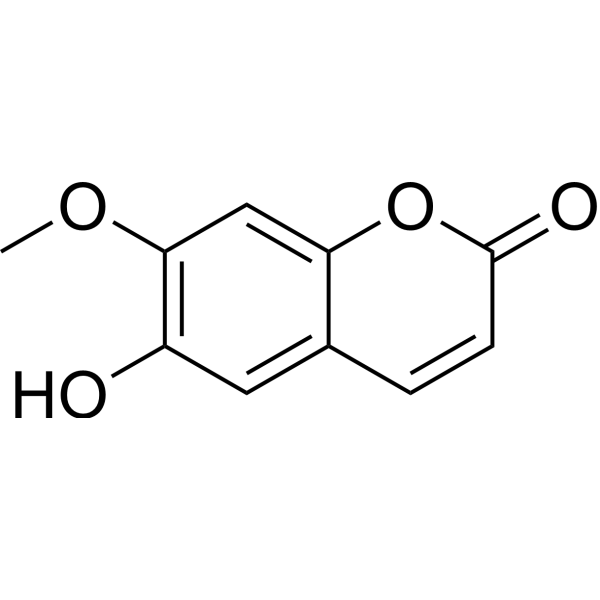
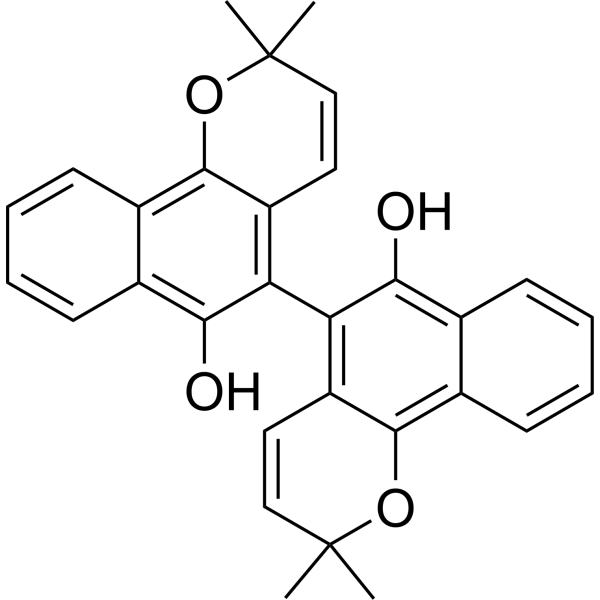
Isoscopoletin (6-Hydroxy-7-methoxycoumarin) is an active constituent in Artemisia argyi leaves. Isoscopoletin shows substantial inhibition against cell proliferation, with IC50s of 4.0 μM and 1.6 μM for human CCRF-CEM leukaemia cells and multidrug resistant subline CEM/ADR5000, respectively . Isoscopoletin (6-Hydroxy-7-methoxycoumarin) possesses inhibitory activity against HBV replication . Isoscopoletin exhibits anti-inflammatory activity through inhibition of MAPK/NF-κB/STAT/AKT signaling pathway .
|
-
-
- HY-146980
-
|
|
Apoptosis
GLUT
|
Cancer
|
|
GLUT4-IN-2 is a potent and selective GLUT4 inhibitor with IC50s of 11.4 µM and 6.8 µM for GLUT1 and GLUT4, respectively. GLUT4-IN-2 induces cell apoptosis and cell cycle arrest at G0/G1phase. GLUT4-IN-2 shows potent antitumor activity .
|
-
-
- HY-P1732
-
|
|
Biochemical Assay Reagents
|
Cancer
|
|
Transportan is an amphipathic cell-penetrating peptide containing 12 functional amino acids from the amino terminus of the neuropeptide galanin and mastoparan in the carboxyl terminus, connected via a lysine. Transportan interacts with galanin receptors and G-proteins, modulates GTPase activity, enters cells via direct translocation and endocytic pathways, accumulates in cytoplasmic, nuclear, and membranous structures, and delivers cargo including peptides, PNAs, proteins, siRNA, and liposomes [12].
|
-
-
- HY-101248
-
|
|
5-HT Receptor
|
Cancer
|
|
GR-46611 is a 5-HT1D receptor agonist. GR-46611 can be used in the research of bladder hyperactivity, leukemia .
|
-
-
- HY-149906
-
|
GEM91
|
HIV
|
Infection
|
|
Trecovirsen is an antiviral agent targeting HIV gag mRNA, which hybridizes with complementary HIV gag mRNA at the initiation site. Trecovirsen induces a reversible, dose-dependent prolongation of activated partial thromboplastin time via its polyanionic properties. Trecovirsen is applicable to research related to HIV infection .
|
-
-
- HY-147385
-
|
|
CCR
|
Inflammation/Immunology
|
|
CCR4 antagonist 3 is a potent chemokine receptor 4 (CCR4) antagonist with an IC50 value of 1.7 μM for [ 125I]TARC (thymus and activation regulated chemokine). CCR4 antagonist 3 inhibits binding of radiolabeled TARC and macrophage-derived chemokine (MDC) to CCR4 receptors on the surface of CEM cells. CCR4 antagonist 3 also inhibits the in vitro migration of CEM cells mediated by TARC (IC50 = 6.4 μM) .
|
-
-
- HY-N1365R
-
|
6-Hydroxy-7-methoxycoumarin (Standard)
|
Reference Standards
HBV
p38 MAPK
NF-κB
STAT
Akt
ERK
JNK
|
Infection
Inflammation/Immunology
Cancer
|
|
Isoscopoletin (Standard) is the analytical standard of Isoscopoletin. This product is intended for research and analytical applications. Isoscopoletin (6-Hydroxy-7-methoxycoumarin) is an active constituent in Artemisia argyi leaves. Isoscopoletin shows substantial inhibition against cell proliferation, with IC50s of 4.0 μM and 1.6 μM for human CCRF-CEM leukaemia cells and multidrug resistant subline CEM/ADR5000, respectively . Isoscopoletin (6-Hydroxy-7-methoxycoumarin) possesses inhibitory activity against HBV replication . Isoscopoletin exhibits anti-inflammatory activity through inhibition of MAPK/NF-κB/STAT/AKT signaling pathway .
|
-
-
- HY-N11690
-
-
-
- HY-N7634
-
|
|
Farnesyl Transferase
Parasite
|
Infection
Cancer
|
|
Tectol, isolated from Lippia sidoides, exhibits significant activity against human leukemia cell lines HL60 and CEM . Tectol is a farnesyltransferase (FTase) inhibitor with IC50s of 2.09 and 1.73 μM for human and T. brucei FTase, respectively. Tectol inhibits drug-resistant strain of P. falciparum (FcB1) with an IC50 of 3.44 μM .
|
-
-
- HY-10819
-
|
|
Antifolate
|
Cancer
|
|
AG2034 is an inhibitor of glycinamide ribonucleotide formyltransferase (GARFT), with a Ki of 28 nM against human GARFT, and it binds with high affinity to the folate receptor (Kd of 0.0042 nM). Additionally, AG2034 is a substrate for rat liver folylpolyglutamate synthetase, with a Km of 6.4 µM. AG2034 inhibits the growth of L1210 and CCRF-CEM cells, with IC50 values of 4 nM and 2.9 nM, respectively, and it has demonstrated antitumor activity in xenograft models such as 6C3HED .
|
-
-
- HY-157343
-
|
|
Apoptosis
Mitochondrial Metabolism
Caspase
|
Neurological Disease
Cancer
|
|
GD3 Ganglioside is an Apoptosis inducer and a biomarker for mouse neural stem cells. GD3 Ganglioside expresses in neural stem cells and the subventricular zone of the adult mouse brain. GD3 Ganglioside targets the mitochondrial permeability transition pore complex, induces pore opening, dissipates mitochondrial transmembrane potential, triggers Mitochondrial swelling, releases pro-apoptotic factors, and activates Caspase-9. GD3 Ganglioside is applicable to research related to glioblastoma .
|
-
-
- HY-116048
-
|
|
HIV Protease
HIV
|
Infection
|
|
LY-326188 is a HIV-1 protease inhibitor, with an IC50 of 0.42 nM. LY326188 exhibits potent protection of HIV-1 infected cells .
|
-
-
- HY-W105741
-
|
|
HIV
|
Infection
|
|
12-Bromododecanoic acid is a bromo fatty acid. 12-Bromododecanoic acid can be used in the synthesis of clickable forms of myristic acid. 12-Bromododecanoic acid inhibits HIV replication in CEM-SS T cells (EC50 = 38 µM) .
|
-
-
- HY-18626
-
|
|
Topoisomerase
|
Cancer
|
|
NK 314 is an inhibitor for topoisomerase IIα, which generates the break of DNA double-strand. NK 314 arrests the cell cycle at G2 phase in human acute myeloid leukemia cells, inhibits the proliferation of CEM with IC90 of 55 nM .
|
-
-
- HY-178940
-
|
|
Apoptosis
Checkpoint Kinase (Chk)
CDK
DNA/RNA Synthesis
Bcl-2 Family
Caspase
|
Cancer
|
|
Apoptosis inducer 49 is a selective apoptosis inducer with high specificity against CCRF-CEM leukemia cells (IC50 = 2.68 μM). Apoptosis inducer 49 enhances RNA synthesis and replication stress, activates the Chk1-p21 axis, leading to S-phase arrest. Apoptosis inducer 49 can inhibit Bcl-2 and activate caspase-3. Apoptosis inducer 49 can be used for the study of Leukemia .
|
-
-
- HY-17593R
-
|
CEM-101 (Standard); OP-1068 (Standard)
|
Reference Standards
Bacterial
Antibiotic
|
Infection
|
|
Solithromycin (Standard) is the analytical standard of Solithromycin. This product is intended for research and analytical applications. Solithromycin (CEM-101) is an orally bioavailable, effective antimicrobial agent, with IC50s for inhibition of cell viability, protein synthesis, and growth rate are 7.5 ng/mL, 40 ng/mL, and 125 ng/mL for Streptococcus pneumonia, Staphylococcus aureus, and Haemophilus influenzae, respectively. Solithromycin binds to the large 50S subunit of the ribosome and inhibits protein biosynthesis .
|
-
-
- HY-106611
-
|
SR 33287
|
Phospholipase
|
Cancer
|
|
Brinazarone (SR 33287) is an inhibitor for acid lysosomal sphingomyelinase, and leads to cellular lipidosis. Brinazarone potentiates the cytotoxic effects of anti-Thy 1.2 AT15E RTA-IT on T2 cells and anti-CD5 T101 on CEM cells .
|
-
-
- HY-106872
-
|
9-Cl-TIBO
|
Reverse Transcriptase
HIV
DNA/RNA Synthesis
|
Infection
|
|
R82913 (9-Cl-TIBO) is a potent and high selective inhibitor of HIV-1 reverse transcriptase with antiviral activity on both an RNA template (negative strand synthesis) and a DNA template (positive strand synthesis). R82913 inhibits the replication of different strains of HIV-I in CEM cells with a median IC50 value of of 0.15 μM .
|
-
-
- HY-N8386
-
|
|
Antibiotic
|
Infection
Cancer
|
|
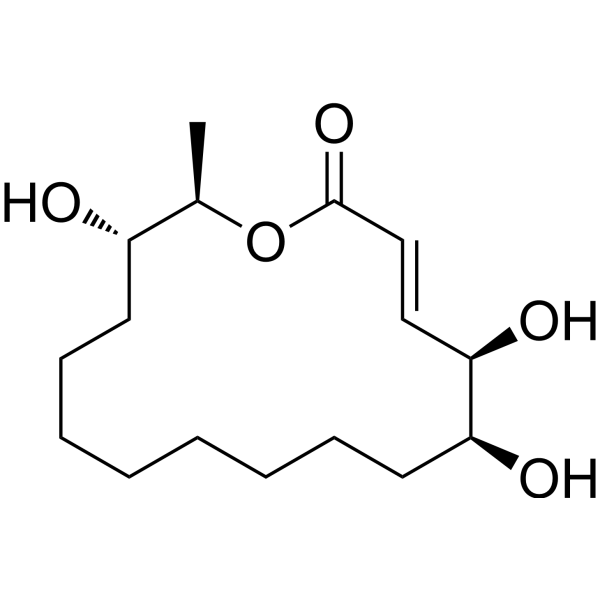
Berkeleylactone F is an antibiotic macrolide compound. Berkeleylactone F showed modest inhibition of CCRF-CEM leukemia cells .
|
-
-
- HY-157464
-
|
|
Drug Derivative
|
Cancer
|
|
[Ru(phen)2(4-Me-Sal)]BF4 (compound 10), a Ru(II)-based polypyridyl complexe, displays outstanding antiproliferative activity against drug-sensitive CCRF-CEM and multidrug-resistant CEM/ADR5000 leukemia cells (IC50=0.52 μM and 5.56 μM, respectively) .
|
-
-
- HY-N1665
-
|
|
Others
|
Cancer
|
|
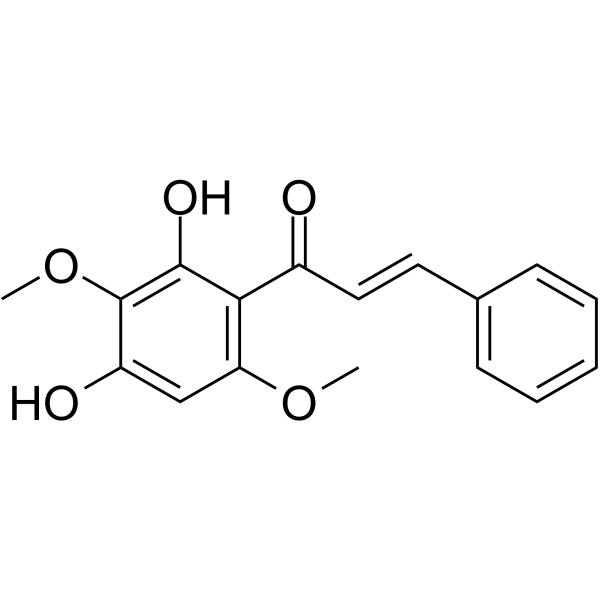
2',4'-Dihydroxy-3',6'-dimethoxychalcone is a natural product that can be isolated from Polygonum Lapathifolium. 2',4'-Dihydroxy-3',6'-dimethoxychalcone inhibits the growth of CCRF-CEM leukaemia cells and CEM/ADR5000 cells, with IC50 values of 10.67 and 18.60 μM, respectively .
|
-
-
- HY-123415
-
|
|
HIV Protease
Renin
|
Infection
|
|
PD 134922 is a potent renin and HIV-1 protease inhibitor with an IC50 of 15 nM against HIV-1 protease .
|
-
-
- HY-N8272
-
|
|
Others
|
Cancer
|
|
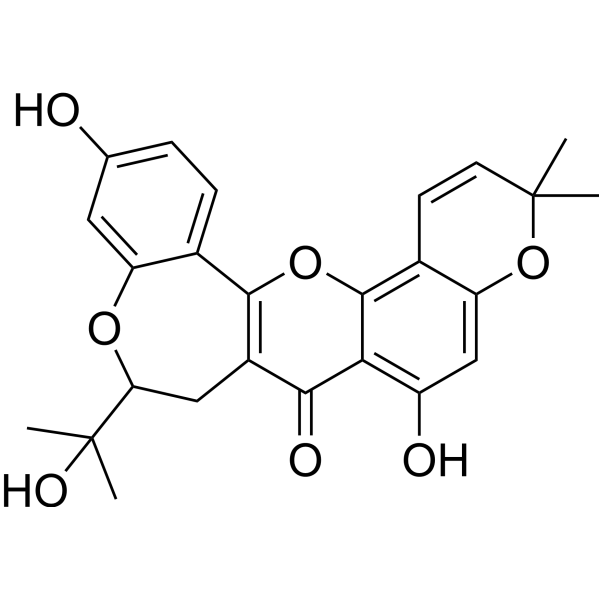
Neocyclomorusin (compound 6) is a flavonoid. Neocyclomorusin can be isolated from Erythrina sigmoidea. Neocyclomorusin inhibits the CCRF-CEM cell line with an IC50 value of 59.02 μM .
|
-
-
- HY-160057
-
|
|
DNA Alkylator/Crosslinker
|
Cancer
|
|
GMT 8 aptamer sodium is a nucleic acid aptamer targeting different glioblastoma cell lines and exhibits high affinity. GMT 4 aptamer sodium also shows high binding affinity to the T lymphocyte cell line CCRF-CEM .
|
-
-
- HY-P5738
-
|
|
Bacterial
|
Infection
|
|
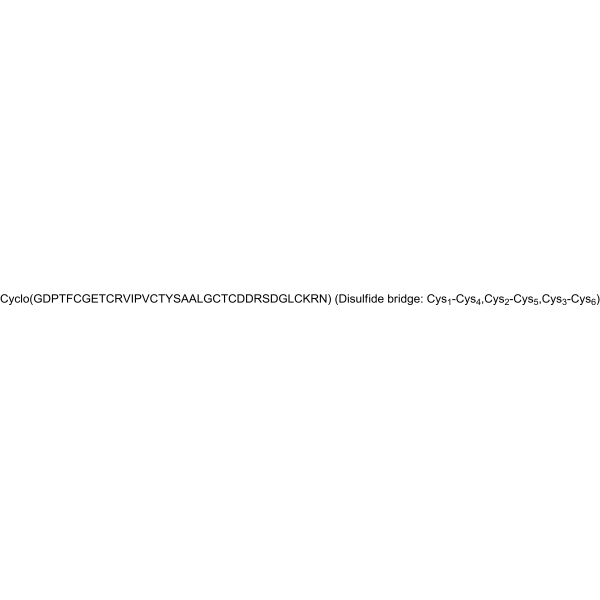
Palicourein is a 37 amino acid cyclic polypeptide. Palicourein inhibits the in vitro cytopathic effects of HIV-1RF infection of CEM-SS cells with an EC50 value of 0.1 μM and an IC50 value of 1.5 μM .
|
-
-
- HY-117105
-
|
|
HIV
|
Infection
|
|
DAPD-NHc-pr (compound 12) is an HIV inhibitor with EC50/EC90 values of 0.85 μM and 13 μM, respectively. DAPD-NHc-pr shows no toxicity to normal cells (PBM, CEM, VERO) .
|
-
-
- HY-156775
-
|
|
Drug Derivative
|
Cancer
|
|
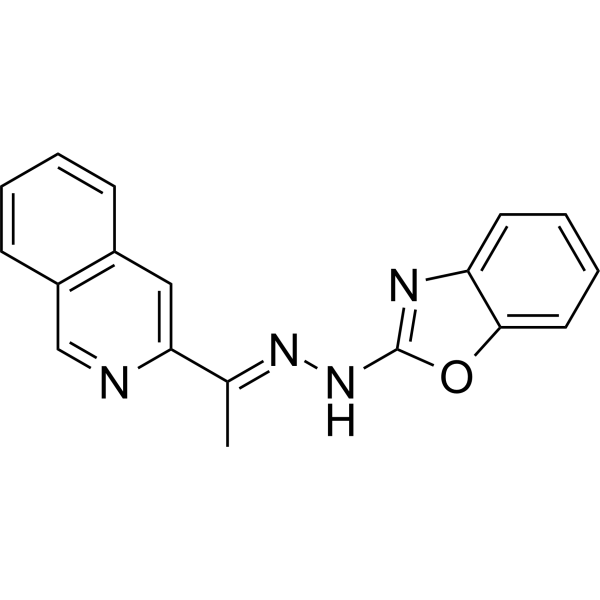
Antitumor agent-119 (compound 13K) is a 2-benzoxazolyl hydrazone derivative with anticancer activities. Antitumor agent-119 inhibits the cell growth of Butkitt, CCRF-CEM, HeLa, and HT-29 with IC50 values of 30 nM, 140 nM, 100 nM, and 40 nM, respectively .
|
-
-
- HY-147520
-
-
-
- HY-163177
-
|
|
HIV
|
Infection
|
|
HIV-1 inhibitor-63 (compound S17) is a potent HIV-1 inhibitor. HIV-1 inhibitor-63 inhibits integrase-Ku70 complex formation with an IC50 value of 12 µM. HIV-1 inhibitor-63 inhibits HIV-1 post-integration DNA repair .
|
-
-
- HY-W008469R
-
|
|
Reference Standards
DNA/RNA Synthesis
|
Cancer
|
|
2-Fluoroadenine is a toxic purine bases. 2-Fluoroadenine has toxicity in nonproliferating and proliferating tumor cells. 2-Fluoroadenine can be used for researching anticancer .
|
-
-
- HY-147514
-
|
|
Apoptosis
Caspase
PARP
Bcl-2 Family
|
Cancer
|
|
Anticancer agent 64 (compound 5m) shows cytotoxic activity in CCRF-CEM cells, with IC50 of 2.4 μM. Anticancer agent 64 shows good anticancer activity through apoptosis induction. Anticancer agent 64 induces caspase 3 and 7 activation and PARP cleavage. Anticancer agent 64 induces significant effect of mitochondria depolarization .
|
-
-
- HY-146316
-
|
|
Topoisomerase
|
Cancer
|
|
Topoisomerase II inhibitor 6 (Compound 5), a tryptanthrin derivative, is a potent and selective inhibitor of topoisomerase II. Topoisomerase II inhibitor 6 exhibits antiproliferative activity on different tumor cell lines. Topoisomerase II inhibitor 6 blocks the cell cycle of CCRF-CEM in the G2 phase and induces DNA DSB. Topoisomerase II inhibitor 6 has the potential for the research of cancer diseases .
|
-
-
- HY-168517
-
|
|
Pim
Casein Kinase
Apoptosis
|
Cancer
|
|
PIM-1/CK2-IN-2 (compound 3aA) is a PIM-1/CK2 inhibitor. PIM-1/CK2-IN-2 can induce the mitochondrial apoptotic pathway in CCRF-CEM cells. PIM-1/CK2-IN-2 can be used in cancer research .
|
-
-
- HY-163435
-
|
|
Apoptosis
Caspase
PARP
Bcl-2 Family
|
Cancer
|
|
Anticancer agent 201 (Compound 2f) has IC50 values in the low micromolar range for multiple tumor cell lines. Anticancer agent 201 is highly cytotoxic to CCRF-CEM cells in vitro, inducing apotosis by activating caspase-3 in the intrinsic mitochondrial pathway and lysis of PARP, as well as reducing the expression of Bcl-2 and Bcl-XL proteins. Anticancer agent 201 can be used in cancer research .
|
-
-
- HY-P10596
-
|
|
Bacterial
Fungal
|
Infection
Cancer
|
|
Lasioglossin-III is an antimicrobial peptide that can be isolated from the venom of wild bees. Lasioglossin-III has high antibacterial activity against Gram-positive and Gram-negative bacteria, antifungal activity and antitumor activity. Lasioglossin-III has certain cytotoxicity against three cancer cell lines (HeLa S3, CRC SW 480 and CCRF-CEM T) with IC50 values of 4, 18 and 5 μM, respectively .
|
-
-
- HY-W009783A
-
|
|
HIV
Influenza Virus
|
Infection
Cancer
|
|
Deoxymannojirimycin hydrochloride is a selective class I α1,2-mannosidase inhibitor with an IC50 of 20 μM. Deoxymannojirimycin hydrochloride is also a N-linked glycosylation inhibitor. Deoxymannojirimycin hydrochloride has antiviral activity against HIV‐1 strains . Deoxymannojirimycin hydrochloride increases high mannose structures. Deoxymannojirimycin hydrochloride can be used for the study of liver cancer and colon cancer .
|
-
-
- HY-113074R
-
-
-
- HY-151190
-
|
S1024
|
Histone Demethylase
|
Cancer
|
|
cis-4-Br-2,5-F2-PCPA (S1024) is a selective inhibitor of lysine-specific demethylase 1 (LSD1), with a Ki value of 94 nM instead of 8.4 μM for LSD2. There is aberrant expression of LSD1 in cancer stem cells, cis-4-Br-2,5-F2-PCPA inhibits LSD1 cell proliferation and by increasing the level of dimethylated histone H3 at K4 (H3K4) in CCRF-CEM cells .
|
-
-
- HY-120075
-
|
|
Apoptosis
|
Cancer
|
|
TJ191 is a potent and specific anti-cancer agent that targets low TβRIII-expressing malignant T-cell leukemia/lymphoma cells. TJ191 has no affects on the proliferation of other cancer cells or normal fibroblasts or immune cells. TJ191 can be used for cancer research .
|
-
-
- HY-147901
-
|
|
Histone Demethylase
CDK
Apoptosis
Caspase
|
Cancer
|
|
KDM1/CDK1-IN-1 (compound 4) is a potent KDM1 and CDK1 inhibitor, with IC50 values of 0.096 and 0.078 μM, respectively.KDM1/CDK1-IN-1 induces cell cycle arrest at G2/M phase and apoptosis in HOP-92 cells. KDM1/CDK1-IN-1 exhibits potent cytotoxic activity against the CCRF-CEM, HOP-92 and Hep-G2 cells, with IC50 values of 16.34, 3.45 and 7.79 μM, respectively .
|
-
-
- HY-N16507
-
|
|
Microtubule/Tubulin
|
Cancer
|
|
Bruceoside D is a cytotoxic quassinoid glucoside found in Brucea javanica. Bruceoside D is a microtubule polymerization inhibitor. Bruceoside D demonstrates inhibitory activity against leukemia (CCRF-CEM), non-small cell lung cancer (A549), and ovarian cancer (OVCAR-3) cell lines. Bruceoside D is promising for research of cancers .
|
-
-
- HY-117007
-
|
|
Apoptosis
|
Others
|
|
Glycidyl methacrylate exhibits concentration-dependent cytotoxicity and genotoxicity against human peripheral blood lymphocytes and CCRF-CEM leukemia cells. Glycidyl methacrylate can induce DNA strand breaks, base oxidative damage, and apoptosis through oxidative stress mechanisms, but the induced DNA damage can be effectively cleared by the cellular repair system within 2 hours (>90%). Glycidyl methacrylate can be used in dental composite restorative materials .
|
-
-
- HY-165513
-
|
|
HIV
|
Infection
|
|
Niruriside is a HIV REV/RRE complex inhibitor. Niruriside specifically inhibits the binding interaction between HIV REV protein and RRE RNA, with an IC50 of 3.3 μM, and shows no significant activity against the unrelated R17 capsid protein/operator RNA binding system. At the tested concentrations, Niruriside fails to protect CEM-SS cells from acute HIV-1 infection. Niruriside can be used in the research of human immunodeficiency virus (HIV) infection .
|
-
-
- HY-180566
-
|
|
HIV
|
Infection
|
|
HIV-IN-13 (compound 7) is a potent HIV inhibitor with low cellular toxicity. HIV-IN-13 inhibits HIV in CEM-SS cells with an EC50 of 1.38 μM. HIV-IN-13 displays antiviral activity in hPBMCs infected with different HIV strains (EC50 = 2.01-10.7 μM), while showing low cellular toxicity (TC50 >100 μM). HIV-IN-13 can be used for HIV-infection research .
|
-
-
- HY-182081
-
|
|
Microtubule/Tubulin
Interleukin Related
|
Cancer
|
|
Tubulin polymerization-IN-90 is a tubulin polymerization inhibitor. Tubulin polymerization-IN-90 disrupts tubulin polymerization by binding to the nocodazole-binding site on β-tubulin. Tubulin polymerization-IN-90 induces the release of extracellular vesicles marked by the tetraspanin CD63. Tubulin polymerization-IN-90 induces the release of IL-8 from cells. Tubulin polymerization-IN-90 reduces the viability of cancer cells. Tubulin polymerization-IN-90 can be used in the research of cancers such as acute T-lymphoblastic leukemia .
|
-
- HY-W009783R
-
|
|
Reference Standards
HIV
Influenza Virus
|
Infection
Cancer
|
|
1-Deoxymannojirimycin (hydrochloride) (Standard) is the analytical standard of 1-Deoxymannojirimycin (hydrochloride) (HY-W009783). This product is intended for research and analytical applications. 1-Deoxymannojirimycin hydrochloride is a selective class I α1,2-mannosidase inhibitor with an IC50 of 20 μM. 1-Deoxymannojirimycin hydrochloride is also a N-linked glycosylation inhibitor. 1-Deoxymannojirimycin hydrochloride has antiviral activity against HIV‐1 strains . 1-Deoxymannojirimycin hydrochloride increases high mannose structures. 1-Deoxymannojirimycin hydrochloride can be used for the study of liver cancer and colon cancer .
|
-
- HY-N11060A
-
|
(±)-PBI 344
|
Others
|
Cancer
|
|
(±)-Dehydrovomifoliol ((±)-PBI 344) is a norisoprenoid found in the rhizomes of Sinomenium acutum. (±)-Dehydrovomifoliolshows no significant cytotoxic activity against cancer cells .
|
-
- HY-126773
-
|
|
Biochemical Assay Reagents
|
Infection
|
|
Dp2mT is a non-cytotoxic control compound, with an IC50 of >3 μM for HIV-1 transcription inhibition and an IC50 of >10 μM for cytotoxicity. Dp2mT does not bind to intracellular iron pools. Dp2mT does not inhibit CDK9 activity .
|
-
- HY-125494A
-
|
SC-55389A free base
|
HIV
HIV Protease
|
Infection
|
|
Droxinavir (SC-55389A) free base is an HIV-1 protease inhibitor and antiviral agent. Droxinavir binds to the S2 and S2' subsites of HIV-1 protease, and this interaction is regulated by protease amino acid residue 88, where the N88S mutation confers viral resistance. Droxinavir can be used in studies related to human immunodeficiency virus type 1 infection .
|
-
- HY-182566
-
|
|
HIV
|
Infection
|
|
ITI-367 is a HIV-1 inhibitor that targets the nuclear localization signal 1 (NLS-1) of HIV-1 matrix protein and the interaction between HIV-1 pre-integration complex (PIC) and importin-β. ITI-367 inhibits HIV-1 replication at the pre-integration stage, reduces the formation of 2-LTR circles, and sequesters viral DNA in the cytoplasm. ITI-367 can be used for the research of HIV infection .
|
-
| Cat. No. |
Product Name |
Type |
-
- HY-W009783A
-
|
|
Biochemical Assay Reagents
|
|
Deoxymannojirimycin hydrochloride is a selective class I α1,2-mannosidase inhibitor with an IC50 of 20 μM. Deoxymannojirimycin hydrochloride is also a N-linked glycosylation inhibitor. Deoxymannojirimycin hydrochloride has antiviral activity against HIV‐1 strains . Deoxymannojirimycin hydrochloride increases high mannose structures. Deoxymannojirimycin hydrochloride can be used for the study of liver cancer and colon cancer .
|
| Cat. No. |
Product Name |
Target |
Research Area |
-
- HY-P1732
-
|
|
Biochemical Assay Reagents
|
Cancer
|
|
Transportan is an amphipathic cell-penetrating peptide containing 12 functional amino acids from the amino terminus of the neuropeptide galanin and mastoparan in the carboxyl terminus, connected via a lysine. Transportan interacts with galanin receptors and G-proteins, modulates GTPase activity, enters cells via direct translocation and endocytic pathways, accumulates in cytoplasmic, nuclear, and membranous structures, and delivers cargo including peptides, PNAs, proteins, siRNA, and liposomes [12].
|
-
- HY-P5738
-
|
|
Bacterial
|
Infection
|
|
Palicourein is a 37 amino acid cyclic polypeptide. Palicourein inhibits the in vitro cytopathic effects of HIV-1RF infection of CEM-SS cells with an EC50 value of 0.1 μM and an IC50 value of 1.5 μM .
|
-
- HY-P10596
-
|
|
Bacterial
Fungal
|
Infection
Cancer
|
|
Lasioglossin-III is an antimicrobial peptide that can be isolated from the venom of wild bees. Lasioglossin-III has high antibacterial activity against Gram-positive and Gram-negative bacteria, antifungal activity and antitumor activity. Lasioglossin-III has certain cytotoxicity against three cancer cell lines (HeLa S3, CRC SW 480 and CCRF-CEM T) with IC50 values of 4, 18 and 5 μM, respectively .
|
| Cat. No. |
Product Name |
Category |
Target |
Chemical Structure |
| Cat. No. |
Product Name |
|
Classification |
-
- HY-149906
-
|
GEM91
|
|
Antisense Oligonucleotides
|
|
Trecovirsen is an antiviral agent targeting HIV gag mRNA, which hybridizes with complementary HIV gag mRNA at the initiation site. Trecovirsen induces a reversible, dose-dependent prolongation of activated partial thromboplastin time via its polyanionic properties. Trecovirsen is applicable to research related to HIV infection .
|
-
- HY-160057
-
|
|
|
Aptamers
|
|
GMT 8 aptamer sodium is a nucleic acid aptamer targeting different glioblastoma cell lines and exhibits high affinity. GMT 4 aptamer sodium also shows high binding affinity to the T lymphocyte cell line CCRF-CEM .
|
-
- HY-160055
-
|
|
|
Aptamers
|
|
GMT 4 aptamer sodium is a nucleic acid aptamer targeting different glioblastoma cell lines and exhibits high affinity. GMT 4 aptamer sodium also shows high binding affinity to the T lymphocyte cell line CCRF-CEM .
|
Your information is safe with us. * Required Fields.
Inquiry Information
- Product Name:
- Cat. No.:
- Quantity:
- MCE Japan Authorized Agent: