



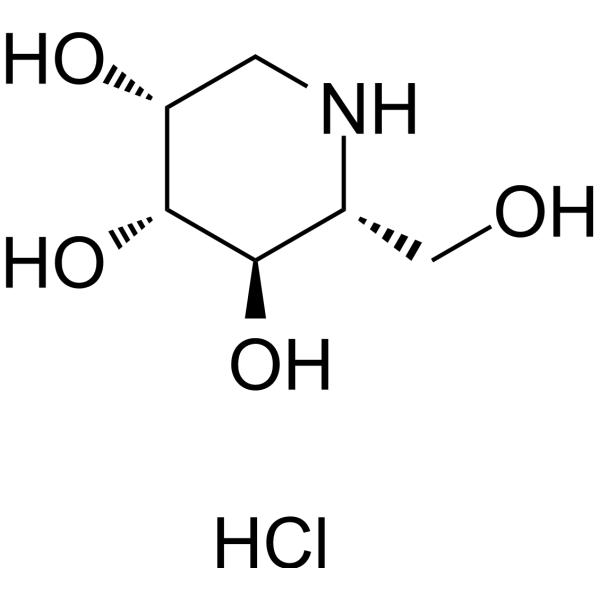
1-Deoxymannojirimycin hydrochloride
Based on 1 publication(s) in Google Scholar
1-Deoxymannojirimycin hydrochloride is a selective class I α1,2-mannosidase inhibitor with an IC50 of 20 μM. 1-Deoxymannojirimycin hydrochloride is also a N-linked glycosylation inhibitor. 1-Deoxymannojirimycin hydrochloride has antiviral activity against HIV‐1 strains . 1-Deoxymannojirimycin hydrochloride increases high mannose structures. 1-Deoxymannojirimycin hydrochloride can be used for the study of liver cancer and colon cancer.
For research use only. We do not sell to patients.
- Purity : 99.85%
- CAS No.: 73465-43-7
- Formula: C6H14ClNO4
- Molecular Weight:199.63
-
Storage:
4°C, sealed storage, away from moisture
* In solvent : -80°C, 6 months; -20°C, 1 month (sealed storage, away from moisture)

To place orders, for customer services and technical support, please contact: MedChemExpress USA
Tel: 609-228-6898 E-mail: [email protected] [email protected]


-
 Biological Activity
-
Chemical Information
-
Solvent & Solubility
- Purity & Documentation
- References
-
 Help & FAQs


-
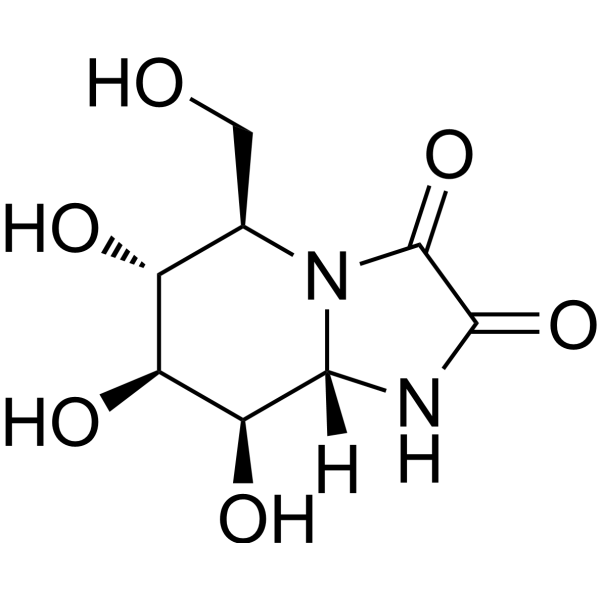
HY-19332
Kifunensine -
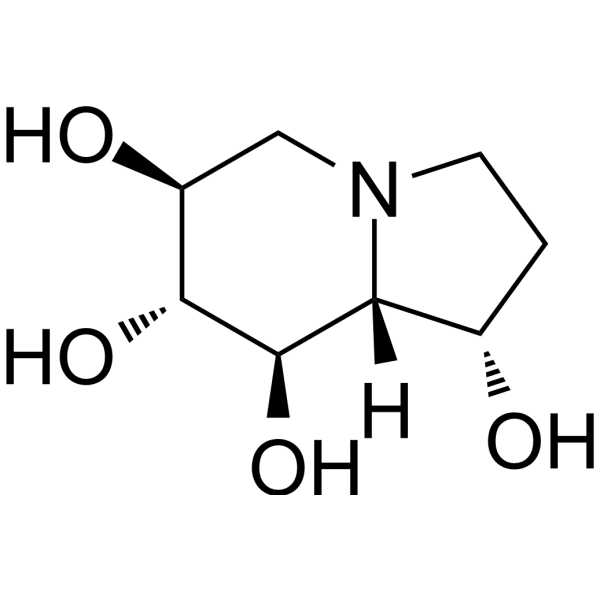
HY-N2022
Castanospermine -
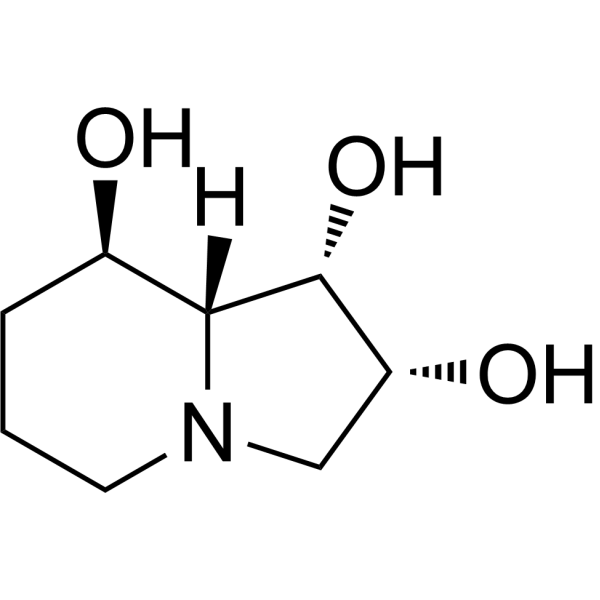
HY-N6722
Swainsonine -
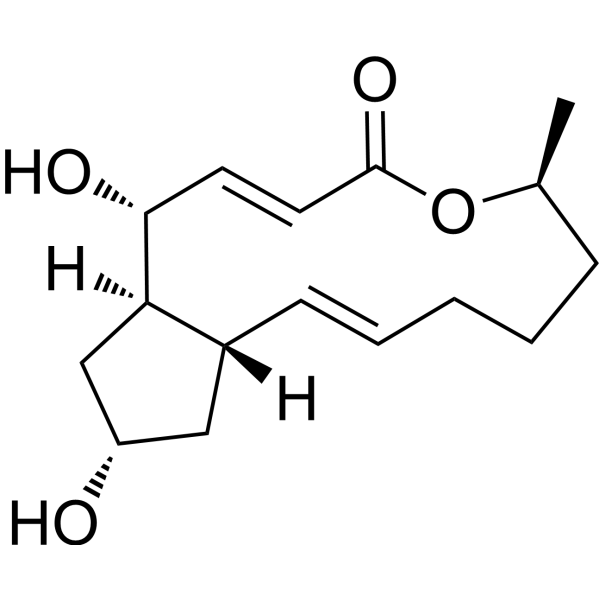
HY-16592
Brefeldin A -
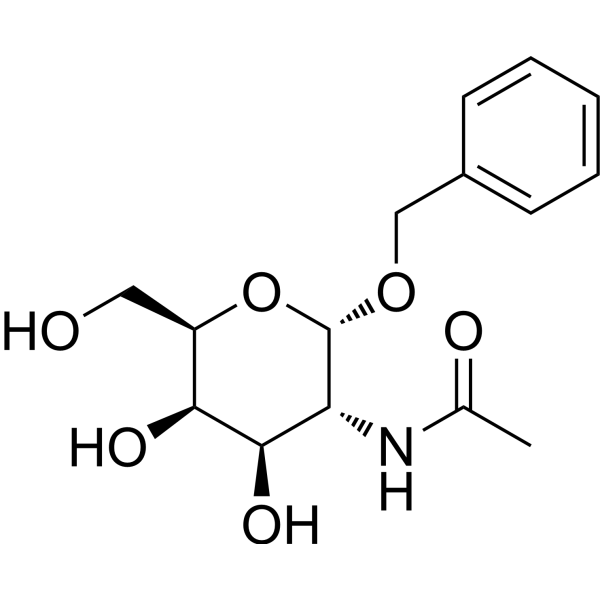
HY-129389
Benzyl-α-GalNAc -
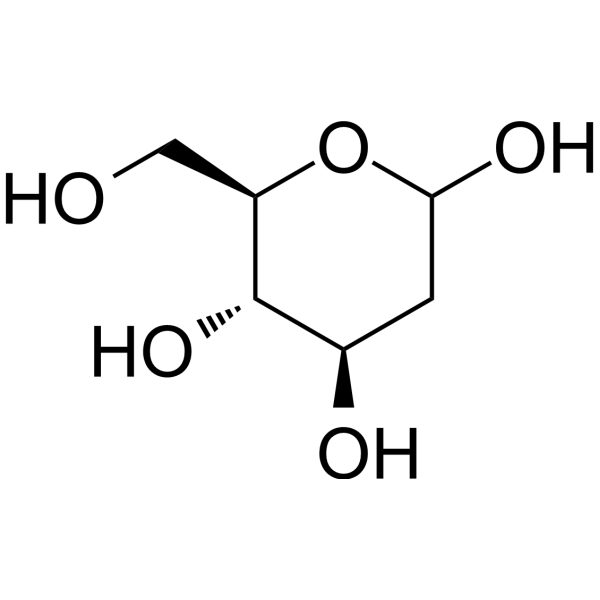
HY-13966
2-Deoxy-D-glucose -

HY-W009783R
1-Deoxymannojirimycin hydrochloride (Standard) -
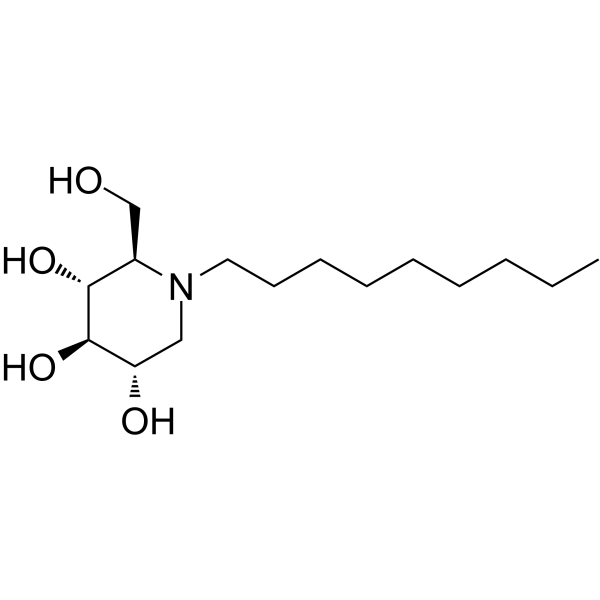
HY-107532
N-Nonyldeoxynojirimycin -

HY-N2022R
Castanospermine (Standard) -

HY-19332R
Kifunensine (Standard) -

HY-107532R
N-Nonyldeoxynojirimycin (Standard)
Publications Citing Use of MedChemExpress (MCE) 1-Deoxymannojirimycin hydrochloride
More

Biological Activity
Description
IC50 & Target
IC50: 20 μM (α1,2-mannosidase I)[1]
N-linked glycosylation[2]
HIV‐1[2]
In Vitro
1-Deoxymannojirimycin (2 mM; 24 h) hydrochloride inhibits Golgi α-mannosidase I and leads to an increase in high mannose structures in P815 and EL-4 cells[1].
1-Deoxymannojirimycin (4-5 days) hydrochloride shows antiviral efficacy against mutant HIV-1 strains in CEM cell cultures, with EC50 values ranging between 90 and 155 μM[2].
1-Deoxymannojirimycin (100-250 μM) hydrochloride potentiates the antiviral efficacy of CBAs (HHA and GNA) against wild-type HIV-1 replication in CEM cell cultures[2].
1-Deoxymannojirimycin (1 mM; 8 h) hydrochloride induces the activation and up-regulation of key molecules of ER stress-UPR, such as GRP78/Bip and XBP1, in human hepatocarcinoma 7721 cells[3].
1-Deoxymannojirimycin (150 μM; 15 h) hydrochloride causes the accumulation of Man8GlcNAc2 on 97-kDa HMG-CoA reductase in UT-1 cells[4].
1-Deoxymannojirimycin (2 mM) hydrochloride completely inhibits α-mannosidase I activity in both differentiated and undifferentiated HT-29 cells[5].
MedChemExpress (MCE) has not independently confirmed the accuracy of these methods. They are for reference only.


Chemical Information
-
CAS No. 73465-43-7
-
Appearance Solid
-
Molecular Weight 199.63
-
Formula C6H14ClNO4
-
Color Off-white to gray
-
SMILES
O[C@H]1[C@@H](O)[C@H](O)[C@@H](CO)NC1.Cl
-
Structure Classification
-
Initial Source
-
Shipping
Room temperature in continental US; may vary elsewhere.
-
Storage
4°C, sealed storage, away from moisture
* In solvent : -80°C, 6 months; -20°C, 1 month (sealed storage, away from moisture)


Publications (1)
-
Journal Impact Factor
-
Most Recent
-
Adv Healthc Mater
Regulation of T Cell Glycosylation by MXene/β-TCP Nanocomposite for Enhanced Mandibular Bone Regeneration. [Abstract]2025 Mar;14(6):e2404015. PMID: 39764719


Solvent & Solubility
In Vitro:
H2O : 100 mg/mL (500.93 mM; Need ultrasonic)
DMSO : 50 mg/mL (250.46 mM; Need ultrasonic; Hygroscopic DMSO has a significant impact on the solubility of product, please use newly opened DMSO)
Please refer to the solubility information to select the appropriate solvent. Once prepared, please aliquot and store the solution to prevent product inactivation from repeated freeze-thaw cycles.
Storage method and period of stock solution: -80°C, 6 months; -20°C, 1 month (sealed storage, away from moisture). When stored at -80°C, please use it within 6 months. When stored at -20°C, please use it within 1 month.
* Note: If you choose water as the stock solution, please dilute it to the working solution, then filter and sterilize it with a 0.22 μm filter before use.
Please refer to the solubility information to select the appropriate solvent. Once prepared, please aliquot and store the solution to prevent product inactivation from repeated freeze-thaw cycles.
Storage method and period of stock solution: -80°C, 6 months; -20°C, 1 month (sealed storage, away from moisture). When stored at -80°C, please use it within 6 months. When stored at -20°C, please use it within 1 month.
* Note: If you choose water as the stock solution, please dilute it to the working solution, then filter and sterilize it with a 0.22 μm filter before use.
Concentration (start) × Volume (start) = Concentration (final) × Volume (final)
In Vivo:
Select the appropriate dissolution method based on your experimental animal and administration route.
- For the following dissolution methods, please ensure to first prepare a clear stock solution using an In Vitro approach and then sequentially add co-solvents:
- To ensure reliable experimental results, the clarified stock solution can be appropriately stored based on storage conditions. As for the working solution for In Vivo experiments, it is recommended to prepare freshly and use it on the same day.
- The percentages shown for the solvents indicate their volumetric ratio in the final prepared solution. If precipitation or phase separation occurs during preparation, heat and/or sonication can be used to aid dissolution.
Add each solvent one by one: 10% DMSO 40% PEG300 5% Tween-80 45% Saline
Solubility: ≥ 3.5 mg/mL (17.53 mM); Clear solution
This protocol yields a clear solution of ≥ 3.5 mg/mL (saturation unknown).
Taking 1 mL working solution as an example, add 100 μL DMSO stock solution (35.0 mg/mL) to 400 μL PEG300, and mix evenly; then add 50 μL Tween-80 and mix evenly; then add 450 μL Saline to adjust the volume to 1 mL.
Preparation of Saline: Dissolve 0.9 g sodium chloride in ddH₂O and dilute to 100 mL to obtain a clear Saline solution.
Add each solvent one by one: 10% DMSO 90% (20% SBE-β-CD in Saline)
Solubility: ≥ 3.5 mg/mL (17.53 mM); Clear solution
This protocol yields a clear solution of ≥ 3.5 mg/mL (saturation unknown).
Taking 1 mL working solution as an example, add 100 μL DMSO stock solution (35.0 mg/mL) to 900 μL 20% SBE-β-CD in Saline, and mix evenly.
Preparation of 20% SBE-β-CD in Saline (4°C, storage for one week): 2 g SBE-β-CD powder is dissolved in 10 mL Saline, completely dissolve until clear.
For the following dissolution methods, please prepare the working solution directly:
It is recommended to prepare fresh solutions and use them promptly within a short period of time.
The percentages shown for the solvents indicate their volumetric ratio in the final prepared solution. If precipitation or phase separation occurs during preparation, heat and/or sonication can be used to aid dissolution.
Add each solvent one by one: PBS
Solubility: 100 mg/mL (500.93 mM); Clear solution; Need ultrasonic
In Vivo Dissolution Calculator
Please enter the basic information of animal experiments:
-
-
-
-
Recommended: Prepare an additional quantity of animals to account for potential losses during experiments.
Working solution concentration: 0.22 mg/mL
This product has good water solubility, please refer to the measured solubility data in water/PBS/Saline for details.


Purity & Documentation
-
Data Sheet (279 KB)
-
SDS (393 KB)
- English - EN (393 KB)
- Français - FR (393 KB)
- Deutsch - DE (393 KB)
- Norwegian - NO (393 KB)
- Español - ES (393 KB)
- Swedish - SV (393 KB)
- Italian - IT (393 KB)
- Korean - KR (393 KB)
- Portuguese - PT (393 KB)
-
Handling Instructions (2659 KB)
References
[1]. Bagriaçik EU, et al. Glycosylation of native MHC class Ia molecules is required for recognition by allogeneic cytotoxic T lymphocytes. Glycobiology. 1996 Jun;6(4):413-21. [Content Brief]
[2]. Balzarini J. The alpha(1,2)-mannosidase I inhibitor 1-deoxymannojirimycin potentiates the antiviral activity of carbohydrate-binding agents against wild-type and mutant HIV-1 strains containing glycan deletions in gp120. FEBS Lett. 2007 May 15;581(10):2060-4. [Content Brief]
[3]. Lu Y, et al. 1-Deoxymannojirimycin, the alpha1,2-mannosidase inhibitor, induced cellular endoplasmic reticulum stress in human hepatocarcinoma cell 7721. Biochem Biophys Res Commun. 2006 May 26;344(1):221-5. [Content Brief]
[4]. Bischoff J, et al. The use of 1-deoxymannojirimycin to evaluate the role of various alpha-mannosidases in oligosaccharide processing in intact cells. J Biol Chem. 1986 Apr 5;261(10):4766-74. [Content Brief]
[5]. Ogier-Denis E, et al. Dual effect of 1-deoxymannojirimycin on the mannose uptake and on the N-glycan processing of the human colon cancer cell line HT-29. J Biol Chem. 1990 Apr 5;265(10):5366-9. [Content Brief]
[6]. F Vallee, et al. Structural Basis for Catalysis and Inhibition of N-glycan Processing Class I Alpha 1,2-mannosidases. J Biol Chem. 2000 Dec 29;275(52):41287-98. [Content Brief]


Complete Stock Solution Preparation Table
Please refer to the solubility information to select the appropriate solvent. Once prepared, please aliquot and store the solution to prevent product inactivation from repeated freeze-thaw cycles.
Storage method and period of stock solution: -80°C, 6 months; -20°C, 1 month (sealed storage, away from moisture). When stored at -80°C, please use it within 6 months. When stored at -20°C, please use it within 1 month.
| Optional Solvent | Concentration Solvent Mass | 1 mg | 5 mg | 10 mg | 25 mg |
|---|---|---|---|---|---|
| DMSO / H2O | 1 mM | 5.0093 mL | 25.0463 mL | 50.0927 mL | 125.2317 mL |
| 5 mM | 1.0019 mL | 5.0093 mL | 10.0185 mL | 25.0463 mL | |
| 10 mM | 0.5009 mL | 2.5046 mL | 5.0093 mL | 12.5232 mL | |
| 15 mM | 0.3340 mL | 1.6698 mL | 3.3395 mL | 8.3488 mL | |
| 20 mM | 0.2505 mL | 1.2523 mL | 2.5046 mL | 6.2616 mL | |
| 25 mM | 0.2004 mL | 1.0019 mL | 2.0037 mL | 5.0093 mL | |
| 30 mM | 0.1670 mL | 0.8349 mL | 1.6698 mL | 4.1744 mL | |
| 40 mM | 0.1252 mL | 0.6262 mL | 1.2523 mL | 3.1308 mL | |
| 50 mM | 0.1002 mL | 0.5009 mL | 1.0019 mL | 2.5046 mL | |
| 60 mM | 0.0835 mL | 0.4174 mL | 0.8349 mL | 2.0872 mL | |
| 80 mM | 0.0626 mL | 0.3131 mL | 0.6262 mL | 1.5654 mL | |
| 100 mM | 0.0501 mL | 0.2505 mL | 0.5009 mL | 1.2523 mL |
* Note: If you choose water as the stock solution, please dilute it to the working solution, then filter and sterilize it with a 0.22 μm filter before use.


1-Deoxymannojirimycin hydrochloride Related Classifications
HY-W009783 Related Classifications
 Powered by Bioz