1. Search Result
Search Result
Results for "

Cap

" in MedChemExpress (MCE) Product Catalog:

241

Inhibitors & Agonists

1

Fluorescent Dye

17

Biochemical Assay Reagents

6

Peptides

3

MCE Kits

2

Inhibitory Antibodies

10

Natural
Products

20

Recombinant Proteins

21

Isotope-Labeled Compounds

52

Antibodies

1

Click Chemistry

72

Oligonucleotides

Cat. No. Product Name Target Research Areas Chemical Structure
  • HY-148771
    MTX-23
    1 Publications Verification

    PROTAC AR-V7 degrader-2

    PROTACs Androgen Receptor Apoptosis Cancer
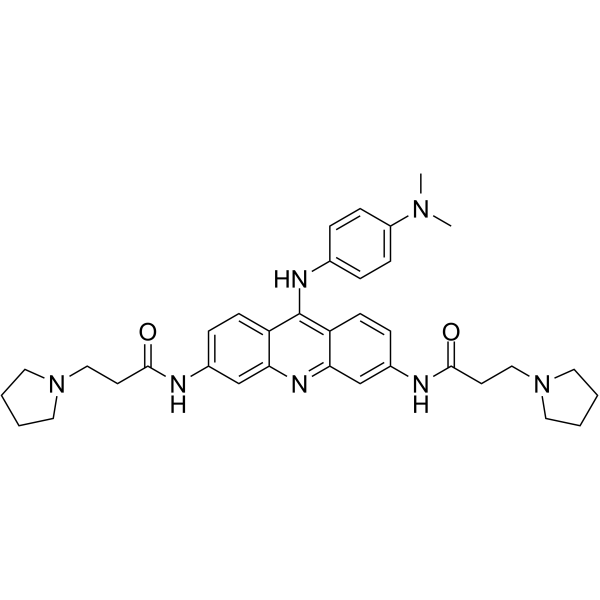
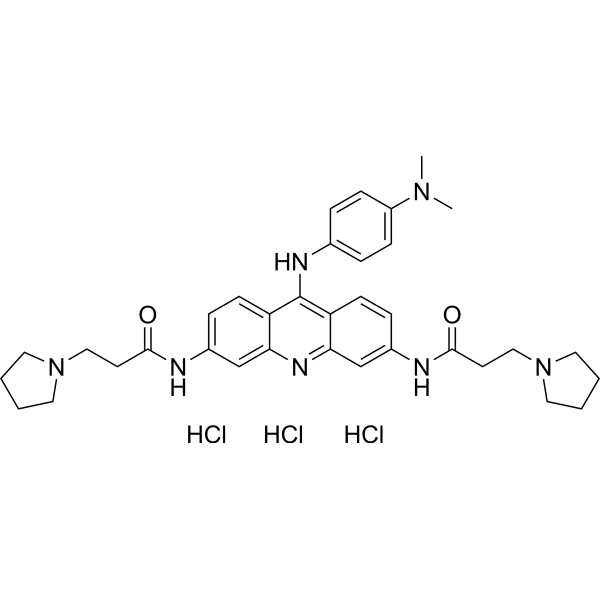
    MTX-23 is an AR-based PROTAC. MTX-23 inhibits CaP cellular proliferation by degrading AR-V7 and AR-FL. MTX-23 induces apoptosis .
    MTX-23
  • HY-145974A

    m7G(5')ppp(5')(2'OMeA)pG ammonium

    DNA/RNA Synthesis Eukaryotic Initiation Factor (eIF) Others
    m7GpppAmpG ammonium (m7G(5')ppp(5')(2'OMeA)pG ammonium) is a trinucleotide 5′ end cap analog. m7GpppAmpG ammonium binds to eIF4E with a KD value of 45.6 nM. m7GpppAmpG ammonium caps RNA with a capping efficiency of 90%. m7GpppAmpG ammonium enhances mRNA stability and translation efficiency. m7GpppAmpG ammonium is used in mRNA therapeutic research .
    m7GpppAmpG ammonium solution (100 mM)
  • HY-D0869

    N-Cyclohexyl-3-aminopropanesulfonic acid

    Biochemical Assay Reagents Others Cancer
    CAPS, cyclohexylaminopropane sulfonic acid, is a surfactant. CAPS can be used as biological buffer (0.05 M, pH 11) for dialysis .
    CAPS
  • HY-P991224

    CCR Inflammation/Immunology Cancer
    CAP-100 is a monoclonal antibody that targets CCR7. CAP-100 neutralizes the ligand-binding site and signaling of CCR7. CAP-100 strongly inhibits CCR7-induced migration, extravasation, homing, and survival in chronic lymphocytic leukemia (CLL) samples. CAP-100 triggers potent tumor cell killing, mediated by host immune mechanism. CAP-100 shows a favorable toxicity profile on relevant hematopoietic subsets. CAP-100 is involved in research on anti-tumor and disease such as CLL .
    CAP-100
  • HY-107823

    Cholesterol 3-acetate; Cholesterin acetate; Cholesterol 3β-acetate

    Endogenous Metabolite Others
    Cholesteryl acetate (Cholesterol 3-acetate) is a cholesterol ester that is exported from Saccharomyces cerevisiae via a Pry1-dependent mechanism. Cholesteryl acetate binds to the CAP superfamily protein Pry1 via interactions dependent on Pry1’s caveolin-binding motif .
    Cholesteryl acetate
  • HY-153108

    ARCA Cap solution (100 mM)

    DNA/RNA Synthesis Others
    3'-O-Me-m7G(5')ppp(5')A (ARCA cap) solution (100 mM), anti-reverse cap analog, has a special RNA cap structure. 3'-O-Me-m7G(5')ppp(5')A solution (100 mM) improves mRNA translation efficiency and stability, reduces translational inhibition by proteins such as IFIT1, and enables stronger and longer-lasting expression of the target protein. The RNA cap structure is a common feature of mRNAs in some RNA viruses and eukaryotes, and it serves as a signal for translation initiation .
    3'-O-Me-m7G(5')ppp(5')A solution (100 mM)
  • HY-141472

    7-Methyl-GDP sodium; m7GDP sodium

    Endogenous Metabolite Others
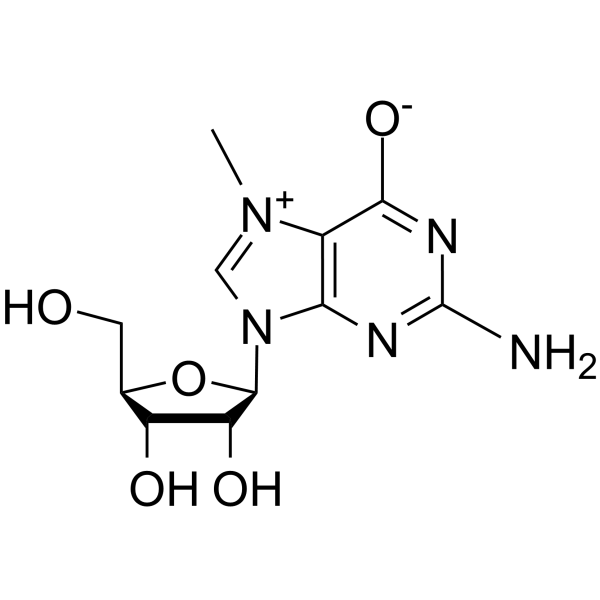
    7-Methylguanosine 5'-diphosphate (7-Methyl-GDP) sodium, a cap analog, can be used in the synthesis of mRNA cap analogues .
    7-Methylguanosine 5'-diphosphate sodium
  • HY-160957

    DNA/RNA Synthesis Others
    Cap A (Acetonitrile/Acetic Anhydride, 80/20 v/v) is a capping reagent that can be used in DNA/RNA synthesis .
    Cap A (Acetonitrile/Acetic Anhydride, 80/20 v/v)
  • HY-105172

    Cap-232; TLN-232

    Somatostatin Receptor Inflammation/Immunology Cancer
    TT-232 (CAP-232), a somatostatin derivative, is a peptide SSTR1/SSTR4 agonist. TT-232 inhibits cancer cell proliferation and induces apoptosis. TT-232 is also a broad-spectrum anti-inflammatory and analgesic agent .
    TT-232
  • HY-145969A

    3’-O-Me-m7G(5')ppp(5')G triammonium

    DNA/RNA Synthesis Eukaryotic Initiation Factor (eIF) Cancer
    β-S-ARCA (3'-O-Me-m7G(5')ppp(5')G) triammonium is a mRNA 7-methylguanosine (m7G) cap analog carrying a phosphorothioate (PS) moiety. β-S-ARCA triammonium binds eIF4E via electrostatic interactions between its β-sulfur atom and positively charged Arg and Lys residues in the protein binding site. β-S-ARCA triammonium prevents the decapping by Dcp2, increases the mRNA half-life, enhances cap-dependent translation, and increases protein expression in cells. β-S-ARCA triammonium has been applied in researching experimental mRNA-based anticancer vaccines .
    β-S-ARCA triammonium
  • HY-145973A

    m7(3'OMeG)(5')ppp(5')(2'OMeA)pG ammonium solution (100 mM)

    DNA/RNA Synthesis Others
    3'OMe-m7GpppAmpG ammonium solution (100 mM) is a trinucleotide Cap analogue. 3'OMe-m7GpppAmpG ammonium shows a significant translational efficiency. 3'OMe-m7GpppAmpG ammonium can be used as a potential molecular biology tool in the field of mRNA vaccines and mRNA transfection, such as protein production, gene therapy and anti-cancer immunization .
    3'OMe-m7GpppAmpG ammonium solution (100 mM)
  • HY-160958

    Biochemical Assay Reagents Others
    Cap B (Acetonitrile/N-methylimidazole /pyridine, 50/20/30 v/v/v) is a biochemical reagent, which contains 50% Acetonitrile, 20 N-methylimidazole and 30% pyridine. Cap B (Acetonitrile/N-methylimidazole /pyridine, 50/20/30 v/v/v) is utilized as capping agent in oligonucleotide synthesis .
    Cap B Acetonitrile/N-methylimidazole /pyridine, 50/20/30 v/v/v
  • HY-E70081

    Biochemical Assay Reagents Others
    mRNA Cap 2'-O-methyltransferase uses S-adenosylmethionine (SAM) as a methyl donor to add a methyl group at the 2'-O position of the first nucleotide at the 5’ end of Cap-0 mRNA, resulting in Cap-1 structure. Cap-1 structure promotes translation efficiency, increasing subsequent protein expression .
    mRNA Cap 2'-O-methyltransferase
  • HY-145977A

    m7G(5')ppp(5')(2'OMeG)pG ammonium

    DNA/RNA Synthesis Others
    m7GpppGmpG ammonium is a trinucleotide 5′ cap analog with the capping efficiencies for the obtained RNAs of 86% .
    m7GpppGmpG ammonium solution (100 mM)
  • HY-145974

    m7G(5')ppp(5')(2'OMeA)pG

    DNA/RNA Synthesis Eukaryotic Initiation Factor (eIF) Others
    m7GpppAmpG (m7G(5')ppp(5')(2'OMeA)pG) is a trinucleotide 5′ end cap analog. m7GpppAmpG binds to eIF4E with a KD value of 45.6 nM. m7GpppAmpG caps RNA with a capping efficiency of 90%. m7GpppAmpG enhances mRNA stability and translation efficiency. m7GpppAmpG is used in mRNA therapeutic research .
    m7GpppAmpG
  • HY-143744

    GP681; Cap-dependent endonuclease-IN-3

    Endonuclease Influenza Virus Infection
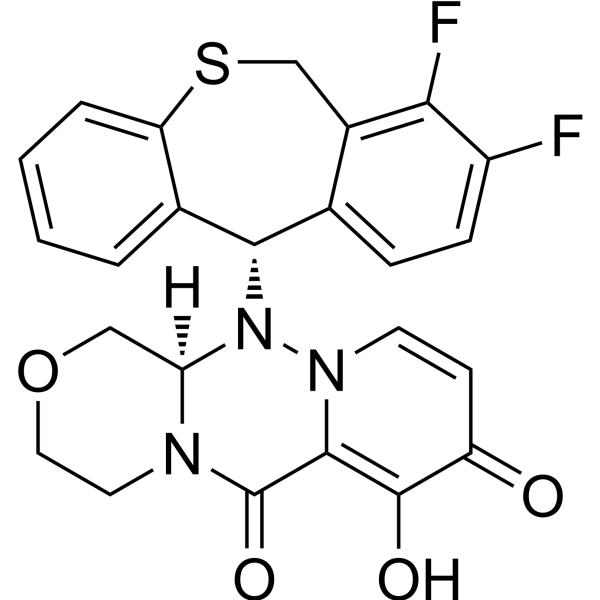
    Suraxavir marboxil (GP681; Cap-dependent endonuclease-IN-3) is a PA subunit cap-dependent endonuclease inhibitor with antiviral activity. Suraxavir marboxil inhibits PA subunit cap-dependent endonuclease activity and inhibits influenza A and/or influenza B viral replication. Suraxavir marboxil can be used alone or in combination with other anti-influenzal agents for the prevention of influenza A and/or influenza B viral infectious diseases. Suraxavir marboxil can be used for the research of influenza A and/or influenza B viral infectious diseases .
    Suraxavir marboxil
  • HY-157504

    Nucleoside Antimetabolite/Analog Others
    2’-O-Methyl-5’-O-phosphonoadenylyl-(3’→5’)-guanosine (TEA) is a trinucleotide cap analogue that regulates protein expression in living cells .
    2′-O-Methyl-5′-O-phosphonoadenylyl-(3′→5′)-guanosine TEA
  • HY-P3911

    Bacterial Infection
    CAP 37 (20-44) is a peptide based on amino acid residues 20 through 44 of CAP37. CAP37, a Cationic antimicrobial protein of 37 kDa, is a multifunctional protein .
    CAP 37 (20-44)
  • HY-145977

    DNA/RNA Synthesis Others
    m7GpppGmpG is a trinucleotide 5′ cap analog with the capping efficiencies for the obtained RNAs of 86% .
    m7GpppGmpG
  • HY-145980

    Nucleoside Antimetabolite/Analog Others
    m7GpppUpG, an oligonucleotide, is an M 7GpppNpG trinucleotide cap analogue. m7GpppUpG can be used as a chemical tool enabling manufacturing of RNA featuring either cap 0 or cap 1 structures .
    m7GpppUpG
  • HY-145982

    Nucleoside Antimetabolite/Analog Others
    m7GpppCmpG, an oligonucleotide, is an M 7GpppNpG trinucleotide cap analogue. m7GpppCmpG can be used as a chemical tool enabling manufacturing of RNA featuring either cap 0 or cap 1 structures .
    m7GpppCmpG
  • HY-145979

    Nucleoside Antimetabolite/Analog Others
    m7GpppUmpG, an oligonucleotide, is an M 7GpppNpG trinucleotide cap analogue. m7GpppUmpG can be used as a chemical tool enabling manufacturing of RNA featuring either cap 0 or cap 1 structures .
    m7GpppUmpG
  • HY-145981

    Nucleoside Antimetabolite/Analog Others
    m7GpppCpG, an oligonucleotide, is an M 7GpppNpG trinucleotide cap analogue. m7GpppCpG can be used as a chemical tool enabling manufacturing of RNA featuring either cap 0 or cap 1 structures .
    m7GpppCpG
  • HY-109659

    Biochemical Assay Reagents DNA Alkylator/Crosslinker Others
    1-(3-Aminopropyl)-4-methylpiperazine is a capping agent. The 1-(3-Aminopropyl)-4-methylpiperazine-capped Poly (β-amino ester) (PBAE) poly (1,4-butanediol diacrylate-co-4-amino-1-butanol) undergoes electrostatic interactions with anionic molecules such as DNA and exhibits low cytotoxicity. The 1-(3-Aminopropyl)-4-methylpiperazine-capped Poly (1,4-butanediol diacrylate-co-4-amino-1-butanol) PBAE effectively delivers nucleic acids in various systems .
    1-(3-Aminopropyl)-4-methylpiperazine
  • HY-178145

    Drug-Linker Conjugates for ADC Topoisomerase Cancer
    Mc-Lys(PEG12)-Cap-Ala-Ala-PABC-exatecan (compound 12) is a Drug-Linker Conjugate for ADC. Mc-Lys(PEG12)-Cap-Ala-Ala-PABC-exatecan contains the ADC linker (Mc-Lys(PEG12)-Cap-Ala-Ala-PABC) (HY-178146) and a DNA topoisomerase I inhibitor Exatecan (HY-13631). Mc-Lys(PEG12)-Cap-Ala-Ala-PABC-exatecan can be used for the development of ADC targeting HER2-positive breast cancer .
    Mc-Lys(PEG12)-Cap-Ala-Ala-PABC-exatecan
  • HY-145976

    Nucleoside Antimetabolite/Analog Others
    m7GpppGpG, an oligonucleotide, is an M 7GpppNpG trinucleotide cap analogue. m7GpppGpG prevents premature degradation by 5′-exonucleases and recruits proteins required for pre-mRNA splicing, mRNA transport and initiation of protein biosynthesis .
    m7GpppGpG
  • HY-79096

    Biochemical Assay Reagents Drug Intermediate Others
    Boc-L-phenylalanine is a Boc-protected L-phenylalanine that can be used in the synthesis of other active compounds. Boc-L-phenylalanine is also a capping agent .
    Boc-L-phenylalanine
  • HY-116229

    SB-265805; LB20304

    Antibiotic Bacterial Infection
    Gemifloxacin, a fluoroquinolone, is a potent and orally active antipneumococcal agent. Gemifloxacin shows bactericidal activity against highly quinolone-resistant pneumococci.Gemifloxacin can be used for the research of respiratory infections, such as community-acquired pneumonia (CAP) and acute exacerbation of chronic bronchitis (AECB) .
    Gemifloxacin
  • HY-145973

    m7(3'OMeG)(5')ppp(5')(2'OMeA)pG

    DNA/RNA Synthesis Others
    3'OMe-m7GpppAmpG is a trinucleotide Cap analogue. 3'OMe-m7GpppAmpG shows a significant translational efficiency. 3'OMe-m7GpppAmpG can be used as a potential molecular biology tool in the field of mRNA vaccines and mRNA transfection, such as protein production, gene therapy and anti-cancer immunization .
    3'OMe-m7GpppAmpG
  • HY-178672

    Anti-Reverse Cap analog; m2 7,3′O GpppG

    DNA/RNA Synthesis Cancer
    ARCA (Anti-Reverse cap analog) is a 5′- cap analogue. ARCA caps mRNA. ARCA can be used in protein expression studies .
    ARCA
  • HY-113897

    Bacterial Infection
    Chloramphenicol 3-acetate is the main intermediate in the biodegradation of CAP, formed by the acetylation of the 3-hydroxy group of CAP through chloramphenicol acetyltransferase, this is a common resistance mechanism that microbes have against chloramphenicol .
    Chloramphenicol 3-acetate
  • HY-143769

    Cap-dependent endonuclease-IN-15

    Influenza Virus Infection
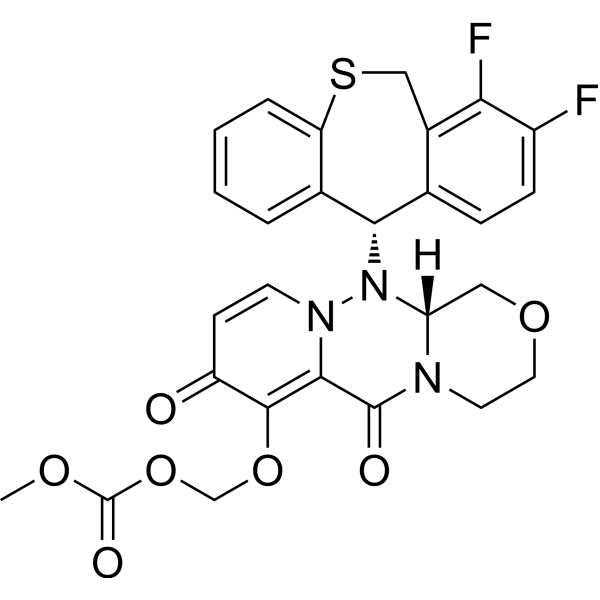
    Sebaloxavir marboxil (Cap-dependent endonuclease-IN-15) (Compound c-1) is a potent inhibitor of cap-dependent endonuclease (CEN). Sebaloxavir marboxil inhibits the replication of influenza virus. Sebaloxavir marboxil has the potential for the research of viral infections caused by influenza viruses .
    Sebaloxavir marboxil
  • HY-W129441

    N-Ac-4-S-Cap

    DNA/RNA Synthesis Tyrosinase Thymidylate Synthase Others
    N-Acetyl-4-S-mercaptoaminophenol (N-Ac-4-S-CAP) is a compound that is selectively cytotoxic to melanocytes of black mouse hair follicles. It can cause 98% depigmentation of black mouse hair follicles. N-Ac-4-S-CAP can produce visible changes in hair follicle melanocytes 4 hours after intraperitoneal injection, including aggregation of melanin granules and nuclear condensation. Electron microscopy observations showed that it caused progressive destruction of melanocytes, including swelling of membranous organelles, nuclear condensation, and cytoplasmic vacuolation, ultimately leading to complete cell necrosis. N-Ac-4-S-CAP has a specific cytotoxic effect on melanocytes that actively produce eumelanin, but may not affect precursor or dormant melanocytes. These properties suggest that N-Ac-4-S-CAP may have potential application value in the treatment of melanoma or skin whitening.
    N-Acetyl-4-S-cysteaminylphenol
  • HY-178146

    ADC Linker Cancer
    Mc-Lys(PEG12)-Cap-Ala-Ala-PABC is a linker of MC-Gly-Gly-Phe-Gly-(R)-Cyclopropane-Exatecan (HY-178146) .
    Mc-Lys(PEG12)-Cap-Ala-Ala-PABC
  • HY-W112199

    Biochemical Assay Reagents Others
    9-anthracenamine is an end-capping agent. 9-anthracenamine caps both ends of polyrotaxanes and free PPG chains to avoid dethreading .
    9-Anthracenamine
  • HY-RS01880

    Small Interfering RNA (siRNA) Others

    CAP1 Human Pre-designed siRNA Set A contains three designed siRNAs for CAP1 gene (Human), as well as a negative control, a positive control, and a FAM-labeled negative control.

    CAP1 Human Pre-designed siRNA Set A
    CAP1 Human Pre-designed siRNA Set A
  • HY-115693

    Bacterial Infection
    CAP 3 is a cholic acid-peptide conjugate (CAP) antimicrobial agent. CAP 3 effectively inhibits Gram-negative bacteria, with MIC99 (minimum inhibitory concentration for 99% bacterial killing) values of 8 μM, 16 μM, and 16 μM against E. coli, Klebsiella pneumoniae and Acinetobacter baumannii, respectively. CAP 3 exerts its antibacterial effects by disrupting the structural integrity of the bacterial lipopolysaccharide (LPS) outer membrane. CAP 3 rapidly kills bacteria, inhibits biofilm formation, and effectively combats drug-resistant strains and persistent bacterial infections .
    CAP 3
  • HY-123702

    Polo-like Kinase (PLK) Cancer
    CAP-53194 is a selective Plk1 inhibitor with potential anticancer activity. CAP-53194 was identified by a high-throughput virtual screening approach using molecular docking, showing 100-fold selectivity for Plk1 over Plk2-4 and other cell cycle kinases. CAP-53194 is able to effectively exploit subtle differences between the binding sites of Plk1 and other Ser/Thr kinases, thereby enhancing their inhibitory effects. CAP-53194 meets the Lipinski compound analog criteria and passes other ADMET filters, indicating good compound compatibility. CAP-53194 belongs to a new class of potential Plk1 inhibitors suitable for subsequent compound development and testing .
    CAP-53194
  • HY-159855

    Cholesterol-amino-phosphate 2 hydrochloride

    Liposome Others
    CAP 2 (Cholesterol-amino-phosphate 2) hydrochloride is Cholesterol-amino-phosphate (CAP) lipid. CAP 2 can be used to synthesize lipid nanoparticles (LNP) for delivering mRNA and other payloads .
    CAP 2 hydrochloride
  • HY-143770

    Influenza Virus Infection
    Cap-dependent endonuclease-IN-16 is a potent inhibitor of cap-dependent endonuclease (CEN). Cap-dependent endonuclease-IN-16 is a pyridone polycyclic derivative. Cap-dependent endonuclease-IN-16 has the potential for the research of influenza (extracted from patent CN112778330A, compound 15A) .
    Cap-dependent endonuclease-IN-16
  • HY-143776

    Influenza Virus Infection
    Cap-dependent endonuclease-IN-22 is a potent cap-dependent endonuclease (CEN) inhibitor .
    Cap-dependent endonuclease-IN-22
  • HY-143781

    Influenza Virus Infection
    Cap-dependent endonuclease-IN-26 is a cap-dependent endonuclease (CEN) inhibitor with an IC50 of 286 nM. Cap-dependent endonuclease-IN-26 shows antiviral activity against many influenza A and B strains .
    Cap-dependent endonuclease-IN-26
  • HY-144065

    DNA/RNA Synthesis Influenza Virus Infection
    Cap-dependent endonuclease-IN-19 is a potent inhibitor of cap-dependent endonuclease (CEN). Cap-dependent endonuclease-IN-19 is a spirocyclic pyridone derivative. Cap-dependent endonuclease-IN-19 has strong inhibitory effect on RNA polymerase activity of A virus (extracted from patent CN111410661A, compound 1) .
    Cap-dependent endonuclease-IN-19
  • HY-143768

    Influenza Virus Infection
    Cap-dependent endonuclease-IN-14 is a potent inhibitor of cap-dependent endonuclease (CEN). Cap-dependent endonuclease-IN-14 inhibits the replication of influenza virus. Cap-dependent endonuclease-IN-14 has the potential for the research of viral infections caused by influenza viruses (extracted from patent CN113620948A, compound 1-c) .
    Cap-dependent endonuclease-IN-14
  • HY-144068

    Influenza Virus Infection
    Cap-dependent endonuclease-IN-25 is a potent inhibitor of cap-dependent endonuclease (CEN). Cap-dependent endonuclease-IN-25 is a macrocyclic pyridotriazine derivative. Cap-dependent endonuclease-IN-25 has the potential for the research of viral infections caused by viruses belonging to the Orthomyxoviridae family (extracted from patent WO2020075080A1, compound 4) .
    Cap-dependent endonuclease-IN-25
  • HY-143749

    Influenza Virus Infection
    Cap-dependent endonuclease-IN-6 (compound 13) is a cap-dependent endonuclease (CEN) inhibitor. Cap-dependent endonuclease-IN-6 shows inhibition against influenza virus (EC50=38.21 nM) .
    Cap-dependent endonuclease-IN-6
  • HY-P2458

    Bacterial Infection
    CAP18 (rabbit) is a 37 amino acids antimicrobial peptide originally isolated from rabbit granulocytes. CAP18 (rabbit) has broad antimicrobial activity against both Gram-positive (IC50, 130-200 nM) and Gram-negative (IC50, 20-100 nM) bacteria. CAP18 (rabbit) has the potential for bacterial sepsis research .
    CAP18 (rabbit)
  • HY-143762

    Influenza Virus Infection
    Cap-dependent endonuclease-IN-12 (EXP-35) is a potent Cap-dependent endonuclease inhibitor with low cytotoxicity. Cap-dependent endonuclease-IN-12 shows inhibitory activity against H1N1 .
    Cap-dependent endonuclease-IN-12
  • HY-143750

    Influenza Virus Infection
    Cap-dependent endonuclease-IN-7 is a potent inhibitor of cap-dependent endonuclease (CEN). Cap-dependent endonuclease-IN-7 Inhibits the synthesis of viral mRNA and eventually inhibits virus proliferation. Cap-dependent endonuclease-IN-7 has the potential for the research of viral infections (including influenza A, influenza B and influenza C) (extracted from patent WO2020177715A1, compound 5)
    Cap-dependent endonuclease-IN-7
  • HY-162242

    Influenza Virus Infection
    Cap-dependent endonuclease-IN-27 (Compound 8) is an orally active potent cap-dependent endonuclease (CEN) inhibitor. Cap-dependent endonuclease-IN-27, an antiviral agent, shows activity against influenza B virus. Cap-dependent endonuclease-IN-27 has inhibitory activity against IFV A/WSN/33 (H1N1) polymerase (EC50 = 12.26 nM) .
    Cap-dependent endonuclease-IN-27

Inquiry Online

Your information is safe with us. * Required Fields.

Salutation


Country or Region *

Applicant Name *


Organization Name *

Department *


Email Address *


Product Name *

Cat. No.


Requested quantity *

Phone Number *


Remarks

Inquiry Online

Inquiry Information

Product Name:
Cat. No.:
Quantity:
MCE Japan Authorized Agent:

