1. Search Result
Search Result
Pathways Recommended: Stem Cell/Wnt Cell Cycle/DNA Damage
Results for "

Cell Proliferation Inhibitor

" in MedChemExpress (MCE) Product Catalog:

2691

Inhibitors & Agonists

7

Screening Libraries

6

Fluorescent Dyes

19

Biochemical Assay Reagents

104

Peptides

75

Inhibitory Antibodies

403

Natural
Products

100

Isotope-Labeled Compounds

13

Click Chemistry

19

Oligonucleotides

4

GMP Molecules

Cat. No. Product Name Target Research Areas Chemical Structure
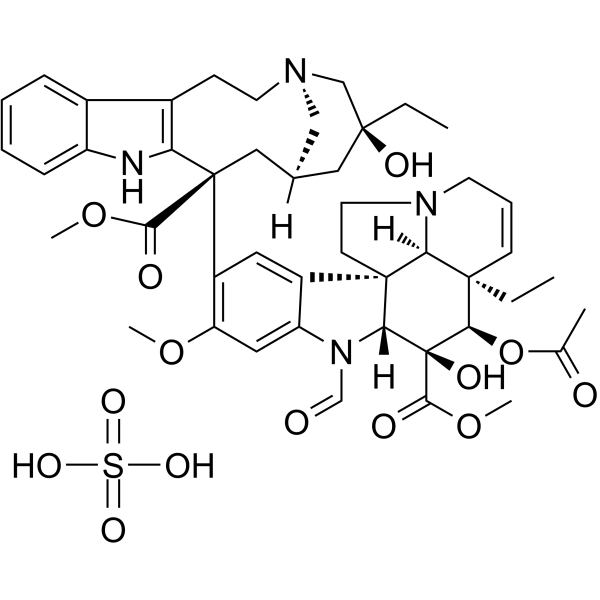
  • HY-12053A
    Vinorelbine ditartrate
    20+ Cited Publications

    KW-2307; Nor-5'-anhydrovinblastine ditartrate

    Microtubule/Tubulin Autophagy Neurological Disease Cancer
    Vinorelbine (ditartrate) is an anti-mitotic agent which inhibits the proliferation of Hela cells with IC50 of 1.25 nM.
    Vinorelbine ditartrate
  • HY-15405
    Teriflunomide
    10+ Cited Publications

    A77 1726

    Drug Metabolite Inflammation/Immunology
    Teriflunomide is the active metabolite of leflunomide, an approved therapy for rheumatoid arthritis. It inhibits pyrimidine synthesis and therefore potently decreases T cell and B cell proliferation.
    Teriflunomide
  • HY-Q45780
    ZINC00640089
    5+ Cited Publications

    Akt Cancer
    ZINC00640089 is a specific Lipocalin-2 (LCN2) inhibitor. ZINC00640089 inhibits cell proliferation, cell viability and reduces AKT phosphorylation levels in SUM149 cells. ZINC00640089 has good potential for research in inflammatory breast cancer (IBC) .
    ZINC00640089
  • HY-13442A
    Eribulin mesylate
    5+ Cited Publications

    B1939 mesylate; E7389 mesylate; ER-086526 mesylate

    Microtubule/Tubulin Apoptosis Cancer
    Eribulin mesylate is an inhibitor for microtubule. Eribulin mesylate inhibits the proliferation of cancer cell LM8 and Dunn, inhibits the cell migration of LM8, arrests the cell cycle at G2/M phase, and induces apoptosis in LM8. Eribulin mesylate exhibits antitumor efficacy in mouse model .
    Eribulin mesylate
  • HY-N0644
    Carnosic acid
    5+ Cited Publications

    Apoptosis Bacterial Inflammation/Immunology Cancer
    Carnosic acid is an orally active lipid absorption inhibitor. Carnosic acid has demonstrated inhibition of oxidative stress and inflammation, suppression of cell proliferation, and antibacterial activity.
    Carnosic acid
  • HY-107430
    Oxythiamine
    3 Publications Verification

    Hydroxythiamin

    Apoptosis Endogenous Metabolite Cancer
    Oxythiamine (Hydroxythiamin), an analogue of anti-metabolite, can suppress the non-oxidative synthesis of ribose and induce cell apoptosis. Oxythiamine is a thiamine antagonist and inhibits transketolase (TK). Oxythiamine inhibits cancer cell apoptosis and inhibits cell proliferation .
    Oxythiamine
  • HY-16661
    Skp2 Inhibitor C1
    5+ Cited Publications

    SKPin C1

    E1/E2/E3 Enzyme Cancer
    Skp2 Inhibitor C1 (SKPin C1) is an S-phase kinase-related protein 2 (Skp2) inhibitor with an inhibitory effect on metastatic melanoma cells. Skp2 Inhibitor C1 slows the cell cycle, inhibits cell proliferation, and triggers apoptosis .
    Skp2 Inhibitor C1
  • HY-50909
    Perifosine
    Maximum Cited Publications
    19 Publications Verification

    KRX-0401; NSC 639966; D21266

    Akt Autophagy Apoptosis Cancer
    Perifosine is an oral Akt inhibitor which inhibits proliferation of different tumor cell lines with IC50s of 0.6-8.9 μM.
    Perifosine
  • HY-148364
    ZINC00784494
    2 Publications Verification

    Lipocalin Family Akt Cancer
    ZINC00784494 is a specific Lipocalin-2 (LCN2) inhibitor. ZINC00784494 inhibits cell proliferation, cell viability and reduces AKT phosphorylation levels in SUM149 cells. ZINC00784494 has good potential for research in inflammatory breast cancer (IBC) .
    ZINC00784494
  • HY-21972
    BCI-121
    5 Publications Verification

    Histone Methyltransferase Cancer
    BCI-121 is a SMYD3 inhibitor that impairs the proliferation of cancer cell.
    BCI-121
  • HY-101055
    Kinetin riboside
    3 Publications Verification

    N6-Furfuryladenosine

    Apoptosis Cancer
    Kinetin riboside, a cytokinin analog, can induce apoptosis in cancer cells. It inhibits the proliferation of HCT-15 cells with an IC50 of 2.5 μM.
    Kinetin riboside
  • HY-107430A
    Oxythiamine chloride hydrochloride
    3 Publications Verification

    Hydroxythiamine chloride hydrochloride

    Apoptosis Endogenous Metabolite Cancer
    Oxythiamine (Hydroxythiamine) chloride hydrochloride, an analogue of anti-metabolite, can suppress the non-oxidative synthesis of ribose and induce cell apoptosis. Oxythiamine chloride hydrochloride is a thiamine antagonist and inhibits transketolase (TK). Oxythiamine chloride hydrochloride inhibits cancer cell apoptosis and inhibits cell proliferation .
    Oxythiamine chloride hydrochloride
  • HY-136383
    AZA1
    1 Publications Verification

    Rac1/Cdc42-IN-1

    Ras Apoptosis Cancer
    AZA1 is a potent dual inhibitor of Rac1 and Cdc42. AZA1 induces prostate cancer cells apoptosis and inhibits prostate cancer cells proliferation, migration and invasion .
    AZA1
  • HY-106381

    PKC Inflammation/Immunology Cancer
    Aurothiomalate sodium is a potent and selective oncogenic PKCι signaling inhibitor. Aurothiomalate sodium inhibits tumor cell proliferation and not cell apoptosis. Aurothiomalate sodium is a potent thioredoxin reductase (TrxR) inhibitor. Aurothiomalate sodium, an anti-rheumatoid agent, exhibits potent anti-tumor activity .
    Aurothiomalate sodium
  • HY-19337
    Ketodarolutamide
    1 Publications Verification

    BAY 1896953; ORM-15341

    Androgen Receptor Cancer
    Ketodarolutamide (ORM-15341) is a potent, high-affinity nonsteroidal competitive full antagonist of androgen receptor (AR). Ketodarolutamide displays a Ki value of 8 nM for rat wild-type AR and an IC50 value of 38 nM in AR-HEK293 cells . Ketodarolutamide inhibits testosterone-induced nuclear translocation of the AR and antagonizes both overexpressed and mutant ARs . Ketodarolutamide specifically suppresses the proliferation of AR-dependent prostate cancer cells and exhibits antitumor activity in models of castration-resistant prostate cancer (CRPC) . Ketodarolutamide is suitable for the mechanistic and therapeutic research of prostate cancer .
    Ketodarolutamide
  • HY-13495
    ML281
    2 Publications Verification

    STK33 PKA Aurora Kinase Bcl-2 Family Apoptosis Metabolic Disease Cancer
    ML281 is a highly selective inhibitor of serine/threonine kinase 33 (STK33) with an IC50 value of 14 nM. ML281 shows 700-fold selectivity over PKA and 550-fold over AurB. ML281 exerts core mechanism by inhibiting STK33: in small cell lung cancer, ML281 downregulates RPS6/BAD signaling phosphorylation, induces apoptosis, and suppresses proliferation, invasion . ML281 reduces STK33-mediated 4-hydroxyphenylpyruvate dioxygenase (HPD) phosphorylation in tyrosinemia . ML281 is suitable for research on STK33 function, KRAS mutation-related cancers (pancreatic cancer, colon cancer, lung adenocarcinoma, etc.), small cell lung cancer, and tyrosinemia-related damage
    ML281
  • HY-112914
    mTOR inhibitor-1
    3 Publications Verification

    mTOR Autophagy Cancer
    mTOR inhibitor-1 (Compound C-4) is an ATP-Competitive mTOR inhibitor which can suppress cells proliferation and inducing autophagy .
    mTOR inhibitor-1
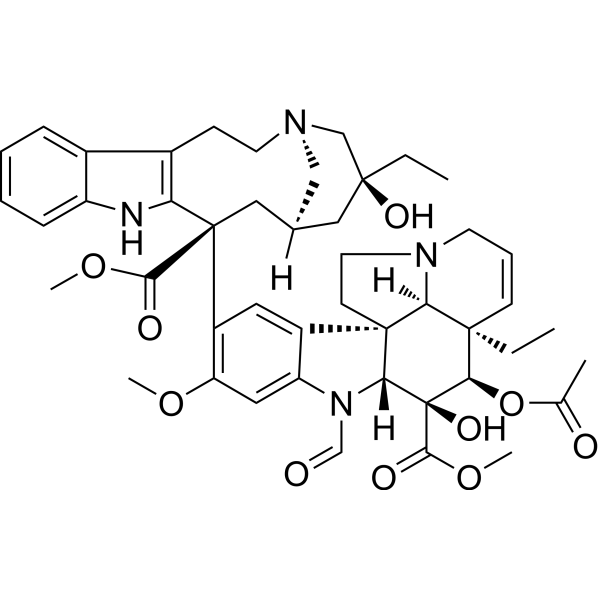
  • HY-12053

    KW-2307 base

    Microtubule/Tubulin Autophagy Cancer
    Vinorelbine is an anti-mitotic agent which inhibits the proliferation of Hela cells with IC50 of 1.25 nM.
    Vinorelbine
  • HY-100395

    Apoptosis Cancer
    F16 is a potent growth inhibitor of the neu-overexpressing cells and also selectively inhibits proliferation of mammary epithelial as well as a variety of mouse mammary tumor and human breast cancer cell lines.
    F16
  • HY-160020

    Androgen Receptor Cancer
    ET516 is a potent inhibitor of Androgen Receptor. ET516 significantly inhibits the proliferation and tumor growth of prostate cancer cells expressing AR-resistant mutants .
    ET516
  • HY-144448
    FAK-IN-2
    1 Publications Verification

    FAK Apoptosis Cancer
    FAK-IN-2 is a potent and orally active focal adhesion kinase (FAK) inhibitor, with anticancer activity (FAK IC50= 35 nM). FAK-IN-2 covalently inhibits the autophosphorylation of FAK in a dose-dependent manner, and inhibits the clone formation and migration of tumor cells, inducing apoptosis .
    FAK-IN-2
  • HY-110245
    DMH2
    1 Publications Verification

    VU364849

    Apoptosis Cancer
    DMH2 is a potent BMP receptor antagonist. DMH2 downregulates the expression of Id1 and Id3 proteins, and inhibits the proliferation and induces cell death of lung cancer cell lines .
    DMH2
  • HY-18965

    PKC Cardiovascular Disease
    TAS-301 is an inhibitor of smooth muscle cell migration and proliferation, and inhibits PKC activation induced by PDGF.
    TAS-301
  • HY-150412

    Phospholipase Cancer
    VU0364739 is a selective PLD2 inhibitor (IC50: 22 nM). VU0364739 decreases cancer cell proliferation .
    VU0364739
  • HY-N4053

    Nuclear Factor of activated T Cells (NFAT) Inflammation/Immunology
    Heraclenin, a natural furanocoumarin, significantly inhibits T cell receptor-mediated proliferation in human primary T cells in a concentration-dependent manner by targeting nuclear factor of activated T-cells (NFAT) .
    Heraclenin
  • HY-W011044
    CID 5951923
    1 Publications Verification

    KLF Cancer
    CID 5951923 is a potent inhibitor of Krüppel-like factor 5 (KLF5), with an IC50 of 603 nM. CID 5951923 can inhibit proliferation of cancer cells in vitro .
    CID 5951923
  • HY-13973A
    GSK-3 inhibitor 1
    1 Publications Verification

    GSK-3 Metabolic Disease
    GSK-3 inhibitor 1 (compound core 3) is a GSK-3 inhibitor that induces stem/progenitor cell self-renewal (e.g. induces stem/progenitor cell proliferation while maintaining the ability to differentiate into tissue cells in the progeny) .
    GSK-3 inhibitor 1
  • HY-N1260

    (-)-Scutebarbatine A

    Apoptosis Cancer
    Scutebarbatine A inhibits the proliferation of HCC cells and triggers their apoptosis via the activation of MAPK and ER stress .
    Scutebarbatine A
  • HY-160859

    DNA/RNA Synthesis Cancer
    WRN inhibitor 8 is an inhibitor of WRN helicase with an IC50 value of 48 nM. WRN inhibitor 8 can inhibit the proliferation of tumor cells and be used in the study of cancer .
    WRN inhibitor 8
  • HY-N1516

    Apoptosis Cancer
    Ganoderenic acid D is a triterpene identified from the effective compounds of Ganoderma lucidum extract (GLE). Ganoderenic acid D inhibits the proliferation of cancer cells by inducing cell cycle arrest and apoptosis .
    Ganoderenic acid D
  • HY-18969

    CDK Cancer
    LDC3140 is a selective CDK7 inhibitor (IC50<5 nM). By inhibiting the activity of CDK7, LDC3140 affects the regulation of the cell cycle, leading to cell cycle arrest and thus inhibiting the proliferation of tumor cells. LDC3140 can be used in the research of cancer treatment .
    LDC3140
  • HY-N15194A

    Bacterial Apoptosis Infection Cancer
    Inostamycin A sodium is an inhibitor of cytidine-5'-diphosphate-1,2-diacyl-sn-glycerol (CDP-DG):inositol transferase. Inostamycin A sodium reduces phosphatidylinositol turnover, and inhibits cell proliferation and transformation. Inostamycin A sodium inhibits cancer cell proliferation, induces apoptosis, and prevents tumor recurrence. Inostamycin A sodium exhibits antibacterial activity. Inostamycin A sodium is applicable to research related to infection and cancer .
    Inostamycin A sodium
  • HY-107430B

    Hydroxythiamine chloride

    Apoptosis Cancer
    Oxythiamine (Hydroxythiamine) chloride, an analogue of anti-metabolite, can suppress the non-oxidative synthesis of ribose and induce cell apoptosis. Oxythiamine is a thiamine antagonist and inhibits transketolase (TK). Oxythiamine chloride inhibits cancer cell apoptosis and inhibits cell proliferation .
    Oxythiamine chloride
  • HY-148468

    METTL3 Cancer
    METTL3-IN-2 (compound 28) is a METTL3 inhibitor with an IC50 value of 6.1 nM. METTL3-IN-2 inhibits cell proliferation of Caov3 cancer cells .
    METTL3-IN-2
  • HY-100498A
    GSK-2256098 hydrochloride
    5+ Cited Publications

    FAK Apoptosis Cancer
    GSK-2256098 hydrochloride is a focal adhesion kinase (FAK) inhibitor that exhibits potential antiangiogenic and antineoplastic activities. GSK-2256098 hydrochloride targets FAK to inhibit tumor cell growth by regulating cell adhesion, migration, proliferation, and survival.
    GSK-2256098 hydrochloride
  • HY-N15953

    Drug Metabolite Cancer
    27-Hydroxy oncosterone is a metabolite that inhibits breast cancer (BC) cell proliferation and blocks oncosterone and 27-Hydroxycholesterol (HY-N2371)-induced proliferation in BC cells .
    27-Hydroxy oncosterone
  • HY-118054

    Orphan Nuclear Receptor Cancer
    LRH-1 Inhibitor-3 is a small molecule that inhibits LRH-1 transcriptional activity, thereby decreasing the expression of target genes associated with cell growth and proliferation. LRH-1 Inhibitor-3 has shown potential in reducing cancer cell proliferation in human pancreatic, colon, and breast adenocarcinoma cell lines. LRH-1 Inhibitor-3 serves as a molecular probe for investigating the role of LRH-1 in various malignancies.
    LRH-1 Inhibitor-3
  • HY-118612

    p38 MAPK Others
    RO3201195 (compound 1) is an inhibitor of p38 MAPK. RO3201195 inhibits WS cell proliferation with IC50 value of 190 nM .
    RO3201195
  • HY-P3995

    VEGFR Cardiovascular Disease
    Scospondistatin is an anti-angiogenic peptide that can inhibit proliferation and migration of human umbilical vein endothelial cells in vitro .
    Scospondistatin
  • HY-P10851

    Apoptosis Inflammation/Immunology Cancer
    HVEM(14-39) is a B- and T-lymphocyte attenuator (BTLA) peptide inhibitor. HVEM (14-39) can be combined with BTLA with a KD of 0.102 μM. HVEM(14-39) enhances the activation and proliferation of T cells by regulating the expression of BTLA and HVEM in T cells, and promotes the transformation of cells into effector memory T cells. HVEM(14-39) inhibits tumor cell proliferation and promotes late apoptosis. HVEM(14-39) has immunomodulatory effects and can be used in the study of cancer .
    HVEM(14-39)
  • HY-N12023

    Bacterial Fungal Infection Cancer
    Deacetylnomilin can be isolated from Citrus reticulata and has antibacterial and antifungal activity. Deacetylnomilin is a potent inhibitor of cell proliferation with an IC50 value of 0.005 ug/mL against estrogen receptor-positive (ER+) cells .
    Deacetylnomilin
  • HY-159009

    NAMPT Ligands for Target Protein for PROTAC Cancer
    MS7 is a potent inhibitor of nicotinamide phosphoribosyltransferase (NAMPT). NAMPT is overexpressed in many cancer cells to meet the continuous replenishment of NAD + required for rapid proliferation. MS7, as a NAMPT target protein ligand, can be used to synthesize PROTAC A7, which is an effective NAMPT degrader. MS7 can be used in cancer research .
    MS7
  • HY-161886

    SWI/SNF Complex Epigenetic Reader Domain Cancer
    SMARCA2-IN-7 (compound 12), a dual inhibitor of BRM and BRG1 (IC50 < 0.005 for both), has an anti-tumor proliferation effect that inhibits BRG1-deleted SKMEL5 tumor proliferation with a cell proliferation activity AAC50 of 13 nM in SKMEL5. The cell proliferation activity AAC50 of KRT880 in H1299 cells was 42 nM .
    SMARCA2-IN-7
  • HY-W021291

    Biochemical Assay Reagents Cancer
    Butyl isothiocyanate inhibits the proliferation of breast cancer cells. Butyl isothiocyanate can inhibit carcinogen activating phase I enzymes and inhibits cancer cell proliferation through altering the telomerase activity, dynamics of microtubules as well as expression of histone deacetylases. Butyl isothiocyanate can be studied in anti-cancer research .
    Butyl isothiocyanate
  • HY-163620

    FGFR Apoptosis Cancer
    LHQ490 is a selective FGFR2 inhibitor, with an IC50 of 5.2 nM. LHQ490 efficiently inhibits the proliferation of BaF3-FGFR2 cells with an IC50 value of 1.4 nM. LHQ490 inhibits FGFR2-driven cancer cell proliferation and induces apoptosis of FGFR2-driven cancer cells .
    LHQ490
  • HY-N8835

    p38 MAPK Neurological Disease
    Cannabisin D inhibits proliferation and migration of glioblastoma cells through MAPKs signaling .
    Cannabisin D
  • HY-N10304

    Apoptosis Cancer
    Isodispar B is an anticancer agent that inhibits the proliferation of nasopharyngeal carcinoma and breast cancer cells and induces cell apoptosis. Isodispar B is cytotoxic to a wide range of cancer cell lines .
    Isodispar B
  • HY-N0093A

    Cyclocytidine; Cyclo-CMP

    DNA/RNA Synthesis CMV Autophagy Cancer
    Ancitabine is the precursor of the anticancer agent Cytarabine (HY-13605), which targets targets related to cell metabolism and proliferation. Ancitabine can inhibit tumor cell proliferation, interfere with the DNA synthesis process of tumor cells, and prevent cell division. Under alkaline pH conditions, Ancitabine can be quantitatively converted into Cytarabine and can be used in the study of cancers such as colorectal cancer .
    Ancitabine
  • HY-117690A

    PROTACs Epigenetic Reader Domain Cancer
    dBRD9 dihydrochloride is a selective BRD9 PROTAC degrader. dBRD9 dihydrochloride inhibits proliferation of AML cell lines .
    dBRD9 dihydrochloride
  • HY-157979

    Aquaporin Cancer
    AQP3-IN-1 (compounds 3) is an AQP3 inhibitor with a IC50 value of 8.91 μM. AQP3-IN-1 inhibits cell proliferation of melanoma cells .
    AQP3-IN-1

Inquiry Online

Your information is safe with us. * Required Fields.

Salutation


Country or Region *

Applicant Name *


Organization Name *

Department *


Email Address *


Product Name *

Cat. No.


Requested quantity *

Phone Number *


Remarks

Inquiry Online

Inquiry Information

Product Name:
Cat. No.:
Quantity:
MCE Japan Authorized Agent:

