1. Search Result
Search Result
Pathways Recommended: Cell Cycle/DNA Damage
Results for "

Cell-cycle arrest

" in MedChemExpress (MCE) Product Catalog:

1573

Inhibitors & Agonists

3

Fluorescent Dye

14

Biochemical Assay Reagents

18

Peptides

9

Inhibitory Antibodies

297

Natural
Products

41

Isotope-Labeled Compounds

8

Click Chemistry

6

Oligonucleotides

1

GMP Molecules

Cat. No. Product Name Target Research Areas Chemical Structure
  • HY-N0168
    Hesperetin
    20+ Cited Publications

    p38 MAPK Autophagy Apoptosis Reactive Oxygen Species (ROS) NF-κB Bcl-2 Family Neurological Disease Cancer
    Hesperetin is a natural flavanone that can be found in citrus, and acts as a potent and orally active broad-spectrum inhibitor against human UGT activity. Hesperetin induces apoptosis via p38 MAPK activation. Hesperetin displays a range of bioactivities including antioxidant, anti-inflammatory, and anti-cancer. Hesperetin is found to induce cell-cycle arrest at G2/M phase. Hesperetin can reduce Bcl-2 and enhance BaxM. Hesperetin induces apoptosis through inhibiting NF-κB receptor .
    Hesperetin
  • HY-13605A
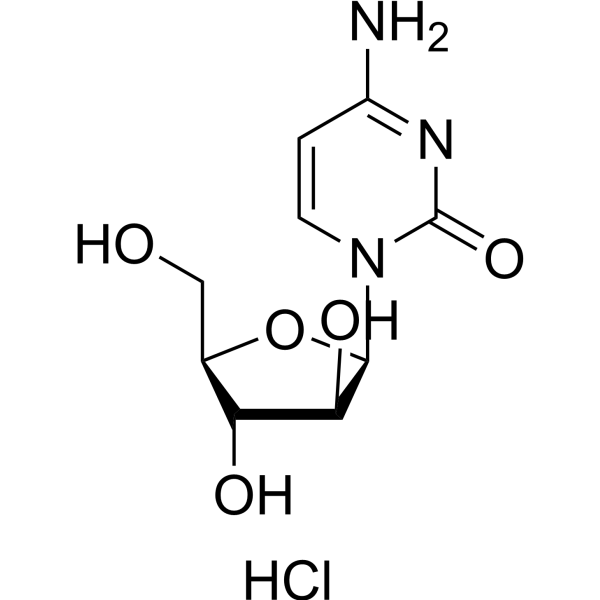
    Cytarabine hydrochloride
    90+ Cited Publications

    Cytosine β-D-arabinofuranoside hydrochloride; Cytosine Arabinoside hydrochloride; Ara-C hydrochloride

    DNA/RNA Synthesis Nucleoside Antimetabolite/Analog HSV Autophagy Infection Cancer
    Cytarabine hydrochloride, a nucleoside analog, causes S phase cell cycle arrest and inhibits DNA polymerase. Cytarabine inhibits DNA synthesis with an IC50 of 16 nM. Cytarabine hydrochloride has antiviral effects against HSV.
    Cytarabine hydrochloride
  • HY-150231
    SU056
    2 Publications Verification

    YB-1 Cancer
    SU056 is a YB-1 inhibitor. SU056 induces cell-cycle arrest, apoptosis, and inhibits cell migration in ovarian cancer cells. SU056 interacts with YB-1 and inhibits and its associated downstream proteins and pathways. SU056 can enhance the cytotoxic effects of Paclitaxel (HY-B0015) .
    SU056
  • HY-13566
    Belotecan
    2 Publications Verification

    CKD-602 free base

    Topoisomerase Apoptosis Cancer
    Belotecan (CKD-602 free base) is a DNA topoisomerase I inhibitor. Belotecan induces cell apoptosis and cell-cycle arrest. Belotecan is a camptothecin analogue with anti-tumor effects, it can be used for the research of cancer .
    Belotecan
  • HY-101257
    YKL-5-124
    15+ Cited Publications

    CDK Cancer
    YKL-5-124 is a potent, selective, irreversible and covalent CDK7 inhibitor with IC50s of 53.5 nM and 9.7 nM for CDK7 and CDK7/Mat1/CycH, respectively. YKL-5-124 is >100-fold greater selective for CDK7 than CDK9 and CDK2, and inactive against CDK12 and CDK13. YKL-5-124 induces a strong cell-cycle arrest, inhibits E2F-driven gene expression, and exhibits little effect on RNA polymerase II phosphorylation status .
    YKL-5-124
  • HY-13216
    Pyroxamide
    5+ Cited Publications

    HDAC Apoptosis Cancer
    Pyroxamide is a potent inhibitor of histone deacetylase 1 (HDAC1) with an ID50 of 100 nM. Pyroxamide can induce apoptosis and cell cycle arrest in leukemia .
    Pyroxamide
  • HY-19331
    WZB117
    20+ Cited Publications

    GLUT Cancer
    WZB117 is a glucose transporter 1 (Glut1) inhibitor, which downregulates glycolysis, induces cell-cycle arrest, and inhibits cancer cell growth in vitro and in vivo.
    WZB117
  • HY-101518
    Alrizomadlin
    4 Publications Verification

    APG-115; AA-115

    MDM-2/p53 E1/E2/E3 Enzyme Apoptosis Cancer
    Alrizomadlin (APG-115) is an orally active MDM2 protein inhibitor binding to MDM2 protein with IC50 and Ki values of 3.8 nM and 1 nM, respectively . Alrizomadlin blocks the interaction of MDM2 and p53 and induces cell-cycle arrest and apoptosis in a p53-dependent manner .
    Alrizomadlin
  • HY-100508
    ITSA-1
    15+ Cited Publications

    HDAC Cancer
    ITSA-1 is an activator of histone deacetylase (HDAC), and counteract trichostatin A (TSA)-induced cell cycle arrest, histone acetylation, and transcriptional activation .
    ITSA-1
  • HY-B0413
    Fenbendazole
    5+ Cited Publications

    Parasite HIF/HIF Prolyl-Hydroxylase Microtubule/Tubulin Antibiotic Infection Cancer
    Fenbendazole is an orally active benzimidazole anthelmintic agent, with a broad antiparasitic range. Fenbendazole is a microtubule destabilizing agent and acts on helminthes primarily by binding to tubulin and disrupting the tubulin microtubule equilibrium. Fenbendazole stabilizes the transcriptional activator HIF-1α. Fenbendazole possesses an efficient anti-proliferative activity and induces apoptosis. Fenbendazole causes cell-cycle arrest and mitotic cell death, and has antitumor activity in mice xenografted with wild-type p53 .
    Fenbendazole
  • HY-124955
    proTAME
    5+ Cited Publications

    APC Cancer
    proTAME, a cell-permeable proagent form of TAME, is an anaphase promoting complex/cyclosome (APC/C) inhibitor. proTAME causes cell cycle arrest in metaphase .
    proTAME
  • HY-N0800
    Protosappanin B
    2 Publications Verification

    (-)-Protosappanin B

    Apoptosis Cancer
    Protosappanin B is a phenolic compound extracted from Caesalpinia sappan. Anti-cancer activity . Protosappanin B induces apoptosis and causes G1 cell cycle arrest in human bladder cancer cells .
    Protosappanin B
  • HY-15611

    CRM1 Cancer
    KPT-185 is an orally bioavailable and selective inhibitor of CRM1 and displays potent antiproliferative properties at submicromolar concentrations (IC50=100-500 nM), induces apoptosis, cell-cycle arrest, and myeloid differentiation in AML cell lines and patient blasts .
    KPT-185
  • HY-18621
    OTS514
    3 Publications Verification

    TOPK Apoptosis Cancer
    OTS514 is a highly potent TOPK inhibitor with an IC50 of 2.6 nM. OTS514 strongly suppresses the growth of TOPK-positive cancer cells . OTS514 induces cell cycle arrest and apoptosis .
    OTS514
  • HY-B0413S
    Fenbendazole-d3
    5 Publications Verification

    HIF/HIF Prolyl-Hydroxylase Parasite Microtubule/Tubulin Antibiotic Infection
    Fenbendazole-d3 is a deuterium labeled Fenbendazole. Fenbendazole-d3 is a HIF-1α agonist and activates the HIF-1α-related GLUT1 pathway. Fenbendazole is an orally active benzimidazole anthelmintic agent, with a broad antiparasitic range. Fenbendazole is a microtubule destabilizing agent. Fenbendazole causes cell-cycle arrest and mitotic cell death, and has antitumor activity in mice xenografted with wild-type p53 .
    Fenbendazole-d3
  • HY-117113
    JI051
    1 Publications Verification

    Notch Cancer
    JI051 is a stabilizer for the Hes1-PHB2 interaction. JI051 interacts with a cancer-associated protein chaperone prohibitin 2 (PHB2), induces cell-cycle arrest by inhibiting the Notch downstream effector gene Hes1. Anti-cancer activity .
    JI051
  • HY-163099

    Drug-Linker Conjugates for ADC Topoisomerase Apoptosis Cancer
    P5 (PEG24)-VC-PAB-Exatecan is a TOP1 inhibitor payload with antibody-conjugation-dependent activity. Conjugation of P5 (PEG24)-VC-PAB-Exatecan with Trastuzumab (HY-P9907) generates a DAR8 antibody-drug conjugate (ADCs) with antibody-like pharmacokinetic properties. P5 (PEG24)-VC-PAB-Exatecan induces S-phase and G2-M-phase cell cycle arrest, DNA damage and apoptosis in target-positive tumor cells, and releases damage-associated molecular patterns (DAMP) related to immunogenic cell death (ICD). The ADCs prepared from it exert bystander killing effects on non-target tumor cells. ADCs based on P5 (PEG24)-VC-PAB-Exatecan exhibit linker stability in vitro and in vivo, show in vivo efficacy, and can be used in research related to HER2-positive cancers .
    P5(PEG24)-VC-PAB-Exatecan
  • HY-13265
    AR-42
    4 Publications Verification

    HDAC-42; OSU-HDAC42

    HDAC Autophagy Apoptosis Cancer
    AR-42 (HDAC-42; OSU-HDAC42) is a potent, orally bioavailable pan-HDAC inhibitor (IC50=16 nM). AR-42 induces growth inhibition, cell-cycle arrest, apoptosis, and activation of caspases-3/7. AR-42 promotes hyperacetylation of H3, H4, and alpha-tubulin, and up-regulation of p21. AR-42 shows cytotoxicity against various human cancer cell lines .
    AR-42
  • HY-N6038

    Autophagy Fungal Cancer
    Gartanin is a natural xanthone of mangosteen, with antioxidant, anti-inflammatory, antifungal, neuroprotective and antineoplastic properties. Gartanin induces cell cycle arrest and autophagy and suppresses migration in human glioma cells .
    Gartanin
  • HY-116446

    Microtubule/Tubulin Cancer
    Pironetin is an α/β unsaturated lactone isolated from Streptomyces species. Pironetin binds to α-tubulin and is a potent inhibitor of microtubule polymerization, and has cell cycle arrest and antitumor activity .
    Pironetin
  • HY-120140
    Ganoderic acid DM
    1 Publications Verification

    Apoptosis PI3K Metabolic Disease Inflammation/Immunology Cancer
    Ganoderic acid DM, a natural triterpenoid isolated from Ganoderma lucidum, induces DNA damage, G1 cell cycle arrest and apoptosis in human breast cancer cells. Ganoderic acid DM as a specific inhibitor of osteoclastogenesis .
    Ganoderic acid DM
  • HY-B1787

    mTOR Drug Metabolite Cancer
    Sulindac sulfone is an mTORC1 pathway inhibitor and a metabolite of Sulindac. Sulindac sulfone inhibits colon cancer cell growth and induces cell cycle arrest. Sulindac sulfone is used in cancer research .
    Sulindac sulfone
  • HY-N1039A

    Others Cancer
    Manool is a diterpene from Salvia officinalis. Manool induces selective cytotoxicity in cancer cells. Manool arrests the cancer cells at the G(2)/M phase of the cell cycle .
    Manool
  • HY-13563

    T138067

    Microtubule/Tubulin Apoptosis Cancer
    Batabulin (T138067) is an antitumor agent, which binds covalently and selectively to a subset of the β-tubulin isotypes, thereby disrupting microtubule polymerization. Batabulin affects cell morphology and leads to cell-cycle arrest ultimately induces apoptotic cell death .
    Batabulin
  • HY-101257B
    YKL-5-124 TFA
    15+ Cited Publications

    CDK Cancer
    YKL-5-124 TFA is a potent, selective, irreversible and covalent CDK7 inhibitor with IC50s of 53.5 nM and 9.7 nM for CDK7 and CDK7/Mat1/CycH, respectively. YKL-5-124 TFA is >100-fold greater selective for CDK7 than CDK9 and CDK2, and inactive against CDK12 and CDK13. YKL-5-124 TFA induces a strong cell-cycle arrest, inhibits E2F-driven gene expression, and exhibits little effect on RNA polymerase II phosphorylation status .
    YKL-5-124 TFA
  • HY-155339

    Apoptosis DNA/RNA Synthesis Cancer
    Anticancer agent 168 (compound d16) is a inhibitor of DNA2. Anticancer agent 168 induces apoptosis and cell-cycle arrest mainly at S-phase, and exhibits anticancer activities and overcomes chemotherapy resistance in mutp53-bearing cancers .
    Anticancer agent 168
  • HY-13563A

    T138067 sodium

    Microtubule/Tubulin Apoptosis Cancer
    Batabulin sodium (T138067 sodium) is an antitumor agent, which binds covalently and selectively to a subset of the β-tubulin isotypes, thereby disrupting microtubule polymerization. Batabulin sodium affects cell morphology and leads to cell-cycle arrest ultimately induces apoptotic cell death .
    Batabulin sodium
  • HY-B0413R

    Reference Standards Parasite HIF/HIF Prolyl-Hydroxylase Microtubule/Tubulin Antibiotic Infection
    Fenbendazole (Standard) is the analytical standard of Fenbendazole. This product is intended for research and analytical applications. Fenbendazole is an orally active benzimidazole anthelmintic agent, with a broad antiparasitic range. Fenbendazole is a microtubule destabilizing agent and acts on helminthes primarily by binding to tubulin and disrupting the tubulin microtubule equilibrium. Fenbendazole stabilizes the transcriptional activator HIF-1α. Fenbendazole possesses an efficient anti-proliferative activity and induces apoptosis. Fenbendazole causes cell-cycle arrest and mitotic cell death, and has antitumor activity in mice xenografted with wild-type p53 .
    Fenbendazole (Standard)
  • HY-149075

    Salt-inducible Kinase (SIK) Cancer
    MR22 is a potent pan-SIK (salt-inducible kinase) inhibitor. MR22 no longer exhibits activity on STE group kinases and displays excellent selectivity in a representative kinase panel. MR22-dependent SIK inhibition led to centrosome dissociation and subsequent cell-cycle arrest in ovarian cancer cells .
    MR22
  • HY-118034
    MTBT
    1 Publications Verification

    p38 MAPK Apoptosis Cancer
    MTBT is an anticancer agent and p38 MAPK activator. MTBT can inhibit tumor cell proliferation, induce cell cycle arrest and apoptosis. MTBT increases the phosphorylation of histone H3 serine in cancer cells, thereby arresting the cell cycle in the M phase. The specific inhibitor of p38 MAPK, Adezmapimod (HY-10256), can abrogate the cell cycle arrest induced by MTBT .
    MTBT
  • HY-148833

    MDM-2/p53 Cancer
    MDM2-p53-IN-16 is a MDM2-p53 complex inhibitor with an IC50 value of 4.3 nM to dissociate human p53/MDM2 complex. MDM2-p53-IN-16 reactivates p53, and induces Glioblastoma Multiforme (GBM) cell apoptosis and cell-cycle arrest. MDM2-p53-IN-16 can be used for the cancer research .
    MDM2-p53-IN-16
  • HY-111299

    Apoptosis Cancer
    Psammaplysene A, a brominated tyrosine derivative, can promote the nuclear localization of FOXO1, leading to cell cycle arrest and apoptosis, and can be used in cancer research .
    Psammaplysene A
  • HY-N7707

    Environmental Pollutants Apoptosis Cancer
    Sandacanol is a specific agonist of olfactory receptor (OR10H1). Sandacanol induces cell cycle arrest and some apoptosis in bladder cancer cells .
    Sandacanol
  • HY-N1516

    Apoptosis Cancer
    Ganoderenic acid D is a triterpene identified from the effective compounds of Ganoderma lucidum extract (GLE). Ganoderenic acid D inhibits the proliferation of cancer cells by inducing cell cycle arrest and apoptosis .
    Ganoderenic acid D
  • HY-122496

    Syringidin

    Apoptosis Cancer
    Malvidin (chloride) is a bioactive compound isolated from grape. Malvidin shows cytotoxicity through the arrest of the G2/M phase of cell cycle and induction of apoptosis. Malvidin can be used for the research of cancer .
    Malvidin chloride
  • HY-168556

    CDK PROTACs DNA/RNA Synthesis Cancer
    YJ9069 is a selective CDK12/CDK13 PROTAC degrader with an IC50 of 22.22 nM for in VCaP cells. CDK12/13 degradation rapidly triggers gene-length-dependent transcriptional elongation defects, leading to DNA damage and cell-cycle arrest. YJ9069 effectively inhibits proliferation in subsets of prostate cancer cells and significantly suppresses prostate tumor growth. (Pink: CDK12/CDK13 degradation agent (HY-168658); Black: Linker (HY-W015967); Blue: ligand for E3 ligase (HY-103596)) .
    YJ9069
  • HY-18969

    CDK Cancer
    LDC3140 is a selective CDK7 inhibitor (IC50<5 nM). By inhibiting the activity of CDK7, LDC3140 affects the regulation of the cell cycle, leading to cell cycle arrest and thus inhibiting the proliferation of tumor cells. LDC3140 can be used in the research of cancer treatment .
    LDC3140
  • HY-113471

    Apoptosis HSV Infection Inflammation/Immunology Cancer
    Perillic acid is the metabolite of Perillyl alcohol (HY-N7000). Perillic acid induces lung cancer cell cycle arrest and apoptosis. Perillic acid shows anti-HSV-1 and immunomodulatory activities .
    Perillic acid
  • HY-171047

    Apoptosis Autophagy DNA/RNA Synthesis Akt mTOR Cancer
    Autophagy inducer 7 (Compound SSA) is an Autophagy and Apoptosis inducer. Autophagy inducer 7 activates autophagy by inhibiting Akt/mTOR signaling and the expression of downstream proteins. Autophagy inducer 7 suppresses DNA synthesis and causes a G0-G1 cell-cycle arrest. Autophagy inducer 7 inhibits tumor cell growth .
    Autophagy inducer 7
  • HY-18952A

    FLT3 Apoptosis Cancer
    (Z)-SU5614 is a potent FLT3 inhibitor and selectively induces growth arrest, apoptosis, and cell cycle arrest in Ba/F3 and AML cell lines expressing a constitutively activated FLT3 .
    (Z)-SU5614
  • HY-178908

    FLT3 Apoptosis Cancer
    FLT3-IN-35 (Compound 4K) is an orally active, covalent, irreversible FLT3 inhibitor. FLT3-IN-35 inhibits the phosphorylation of FLT3 and its downstream signaling factors, as well as induces cell cycle arrest and apoptosis. FLT3-IN-35 inhibits the phosphorylation of FLT3 and its downstream signaling factors, as well as induced cell cycle arrest and apoptosis. FLT3-IN-35 can be used for the study of acute myeloid leukemia (AML) .
    FLT3-IN-35
  • HY-N4171

    Apoptosis Inflammation/Immunology
    Dihydrocucurbitacin B, a triterpene isolated from Cayaponia tayuya roots, inhibits nuclear factor of activated T cells (NFAT), induces cell cycle arrested in the G0 phase, and inhibits delayed type hypersensitivity .
    Dihydrocucurbitacin B
  • HY-13566R

    CKD-602 free base (Standard)

    Topoisomerase Apoptosis Reference Standards Cancer
    Belotecan (Standard) is the analytical standard of Belotecan. This product is intended for research and analytical applications. Belotecan (CKD-602 free base) is a DNA topoisomerase I inhibitor. Belotecan induces cell apoptosis and cell-cycle arrest. Belotecan is a camptothecin analogue with anti-tumor effects, it can be used for the research of cancer .
    Belotecan (Standard)
  • HY-114413

    HSP Apoptosis Cancer
    YZ129 is an inhibitor of the HSP90-calcineurin-NFAT pathway against glioblastoma, directly binding to heat shock protein 90 (HSP90) with an IC50 of 820 nM on NFAT nuclear translocation. YZ129-induced GBM cell-cycle arrest at the G2/M phase promotes apoptosis and inhibited tumor cell proliferation and migration .
    YZ129
  • HY-127067

    Akt EGFR mTOR Inflammation/Immunology Cancer
    Yuanhuadin, extracted from Genkwa Flos Daphne genkwa, has antitumor activity through inhibiting Akt/mTOR and EGFR pathways, induce cell-cycle arrest and abortion .
    Yuanhuadin
  • HY-P991512

    Apoptosis Cancer
    SGN-30 is a chimeric antibody derived from a mouse antihuman CD30 antibody, AC10, with the variable regions of AC10 and human α 1 heavy chain and κ light chain constant regions. SGN-30 induces apoptosis and cell-cycle arrest in cancer cells. SGN-30 can be used for the study of Hodgkin lymphoma (HL) and anaplastic large cell lymphoma (ALCL) .
    SGN-30
  • HY-N1342

    Apoptosis Cancer
    Rocaglaol induces apoptosis and cell cycle arrest in LNCaP cells .
    Rocaglaol
  • HY-112774A

    mTOR Autophagy Atg8/LC3 p62 Ribosomal S6 Kinase (RSK) Cancer
    ICSN3250 hydrochloride is a halitulin analogue and a mTORC1 inhibitor. ICSN3250 hydrochloride directly binds to mTOR's FRB domain and displaces phosphatidic acid (PA), reversing mTORC1 activation. ICSN3250 hydrochloride shows high cytotoxicity in cancer cells (nanomolar concentration) through a caspase-independent cell death mechanism. ICSN3250 hydrochloride specifically inhibits the mTORC1 pathway, inducing autophagy and G0-G1 cell-cycle arrest in cancer cells. ICSN3250 hydrochloride can be used for the study of cancer .
    ICSN3250 hydrochloride
  • HY-175291

    MMP Cadherin Cancer
    Cystatin B agonist 1 is an orally active MMP-2/9 inhibitor. Cystatin B agonist 1 exhibits inhibitory effects with IC50 values of 3.95 and 3.43 μM against U87 and T98G cells, respectively. Cystatin B agonist 1 induces the cell-cycle arrest at S phase, inhibits angiogenesis, and suppresses migration and invasion of MG cells. Cystatin B agonist 1 inhibits tumor growth in U87 MG xenograft model. Cystatin B agonist 1 can be used for the study of malignant glioma (MG) .
    Cystatin B agonist 1
  • HY-N8287

    Microtubule/Tubulin Cancer
    Oxaline is a fungal alkaloid that can be isolated from Penicillium oxalicum. Oxaline inhibits tubulin polymerization, resulting in cell cycle arrest at the M phase .
    Oxaline

Inquiry Online

Your information is safe with us. * Required Fields.

Salutation


Country or Region *

Applicant Name *


Organization Name *

Department *


Email Address *


Product Name *

Cat. No.


Requested quantity *

Phone Number *


Remarks

Inquiry Online

Inquiry Information

Product Name:
Cat. No.:
Quantity:
MCE Japan Authorized Agent:

