8 Results for "

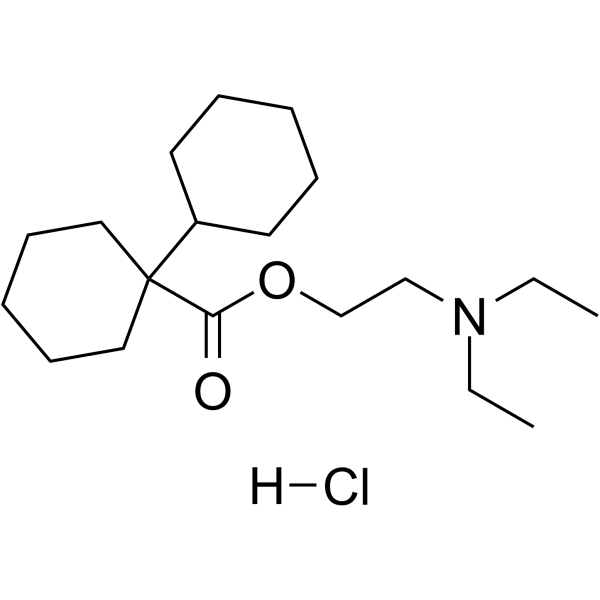
Dicyclomine hydrochloride

" in MedChemExpress (MCE) Product Catalog:
Products (8)

8 Results for "Dicyclomine hydrochloride" in MCE Product Catalog:

Cat. No.: HY-B1339
CAS No.: 67-92-5
Synonyms: Dicycloverine hydrochloride
Target:  

mAChR

Research Areas:  

Neurological Disease

Dicyclomine hydrochloride is a potent and orally active muscarinic cholinergic receptors antagonist. Dicyclomine hydrochloride shows high affinity for muscarinic M1 receptor subtype (Ki=5.1 nM) and M2 receptor subtype (Ki=54.6 nM) in brush-border membrane and basal plasma membranes, respectively . Dicyclomine is an antispasmodic agent and relieves smooth muscle spasm of the gastrointestinal tract in vivo .
loading...
    loading...
Cat. No.: HY-B1339A
CAS No.: 77-19-0
Synonyms: Dicycloverine
Target:  

mAChR

Research Areas:  

Neurological Disease

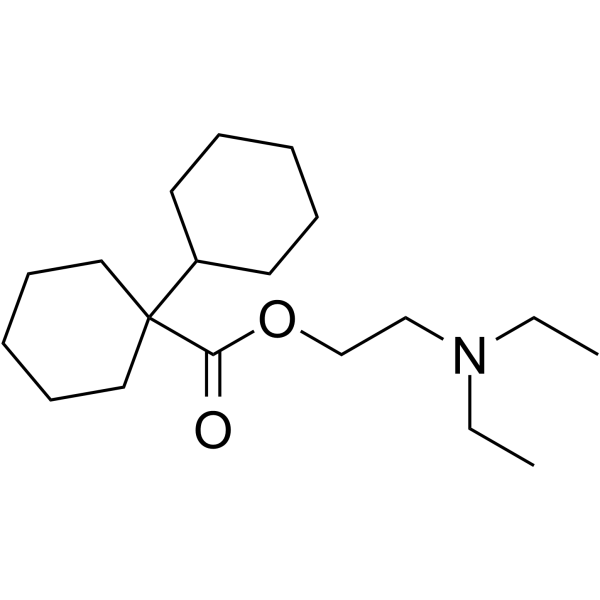
Dicyclomine (Dicycloverine) is a potent and orally active muscarinic cholinergic receptors antagonist. Dicyclomine (Dicycloverine) shows high affinity for muscarinic M1 receptor subtype (Ki=5.1 nM) and M2 receptor subtype (Ki=54.6 nM) in brush-border membrane and basal plasma membranes, respectively . Dicyclomine is an antispasmodic agent and relieves smooth muscle spasm of the gastrointestinal tract in vivo .
loading...
    loading...
Cat. No.: HY-B1339R
CAS No.: 67-92-5
Synonyms: Dicycloverine hydrochloride (Standard)
Research Areas:  

Neurological Disease

Dicyclomine (hydrochloride) (Standard) is the analytical standard of Dicyclomine (hydrochloride). This product is intended for research and analytical applications. Dicyclomine hydrochloride is a potent and orally active muscarinic cholinergic receptors antagonist. Dicyclomine hydrochloride shows high affinity for muscarinic M1 receptor subtype (Ki=5.1 nM) and M2 receptor subtype (Ki=54.6 nM) in brush-border membrane and basal plasma membranes, respectively . Dicyclomine is an antispasmodic agent and relieves smooth muscle spasm of the gastrointestinal tract in vivo .
loading...
    loading...
Cat. No.: HY-B1339S
Synonyms: Dicycloverine-d4 hydrochloride
Dicyclomine-d4 hydrochloride (Dicycloverine-d4 hydrochloride) is the deuterium labeled Dicyclomine hydrochloride (HY-B1339). Dicyclomine hydrochloride is a potent and orally active muscarinic cholinergic receptors antagonist. Dicyclomine hydrochloride shows high affinity for muscarinic M1 receptor subtype (Ki=5.1 nM) and M2 receptor subtype (Ki=54.6 nM) in brush-border membrane and basal plasma membranes, respectively . Dicyclomine is an antispasmodic agent and relieves smooth muscle spasm of the gastrointestinal tract in vivo .
loading...
    loading...
Cat. No.: HY-B1339AS
CAS No.: 2803506-01-4
Synonyms: Dicycloverine-d4
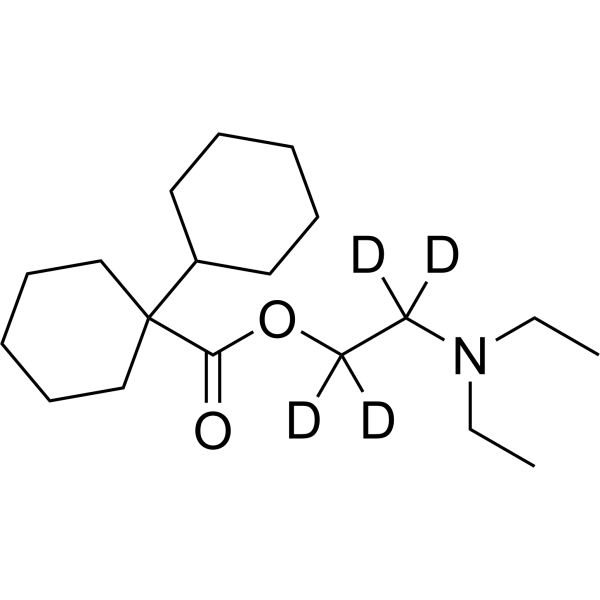
Dicyclomine-d4 is the deuterium labeled Dicyclomine . Dicyclomine (Dicycloverine) is a potent and orally active muscarinic cholinergic receptors antagonist. Dicyclomine (Dicycloverine) shows high affinity for muscarinic M1 receptor subtype (Ki=5.1 nM) and M2 receptor subtype (Ki=54.6 nM) in brush-border membrane and basal plasma membranes, respectively . Dicyclomine is an antispasmodic agent and relieves smooth muscle spasm of the gastrointestinal tract in vivo .
loading...
    loading...
Cat. No.: HY-W043718
CAS No.: 60263-54-9
Target:  

Drug Intermediate

Research Areas:  

Others

Dicyclomine impurity 1 is an impurity of Dicyclomine (HY-B1339A).
loading...
    loading...
Cat. No.: HY-W043718R
CAS No.: 60263-54-9
Target:  

Reference Standards

[1,1′-Bicyclohexyl]-1-carboxylic acid (Standard) is the analytical standard of [1,1′-Bicyclohexyl]-1-carboxylic acid. This product is intended for research and analytical applications.
loading...
    loading...
Cat. No.: HY-101196
CAS No.: 155649-00-6
Target:  

Endogenous Metabolite

Research Areas:  

Neurological Disease

PG 9 maleate is a compound with analgesic and anti-memory loss activity. PG 9 maleate exerts analgesic effects by enhancing central cholinergic transmission. PG 9 maleate protects against memory loss caused by scopolamine or dicyclomine within a specific dose range. The affinity profile of PG 9 maleate indicates significant selectivity among the M4/M1 receptor subtypes, which may be the mechanism for its analgesic and anti-memory loss effects. PG 9 maleate can increase the release of acetylcholine, thereby improving its biological activity .
loading...
    loading...

