415 Results for "

Dihydroxy benzaldehyde

" in MedChemExpress (MCE) Product Catalog:
Products (415)

415 Results for "Dihydroxy benzaldehyde" in MCE Product Catalog:

16
16 Publications Verification
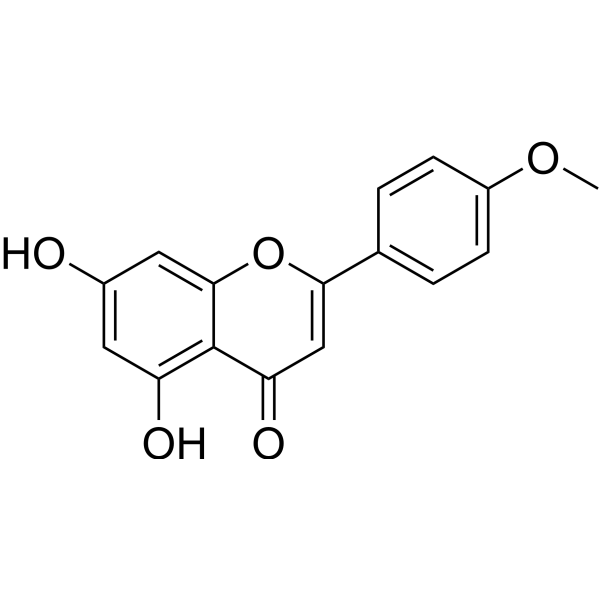
Cat. No.: HY-N0451
CAS No.: 480-44-4
Synonyms: 5,7-Dihydroxy-4'-methoxyflavone
Acacetin (5,7-Dihydroxy-4'-methoxyflavone) is an orally active flavonoid derived from Dendranthema morifolium. Acacetin docks in the ATP binding pocket of PI3Kγ. Acacetin causes cell cycle arrest and induces apoptosis and autophagy in cancer cells. Acacetin has potent anti-cancer and anti-inflammatory activity and has the potential for pain-related diseases research .
loading...
    loading...
16
16 Publications Verification
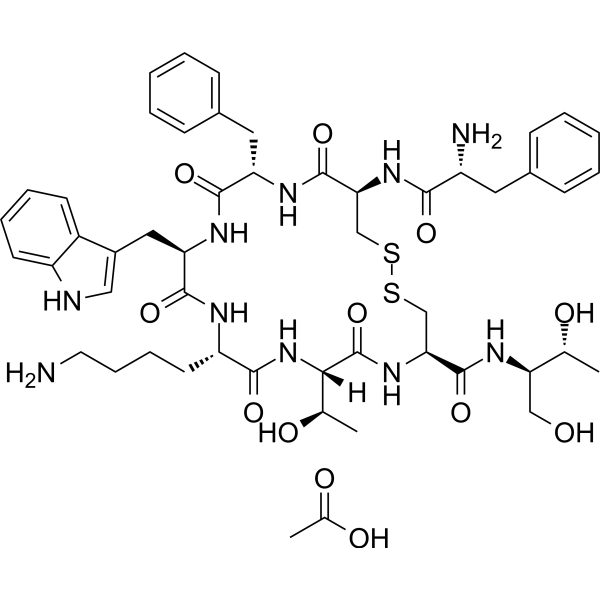
Cat. No.: HY-17365
CAS No.: 79517-01-4
Synonyms: SMS 201-995 acetate
Octreotide acetate, a long-acting synthetic analog of native somatostatin, inhibits growth hormone, glucagon, and insulin more potently.
loading...
    loading...
3
3 Cited Publications
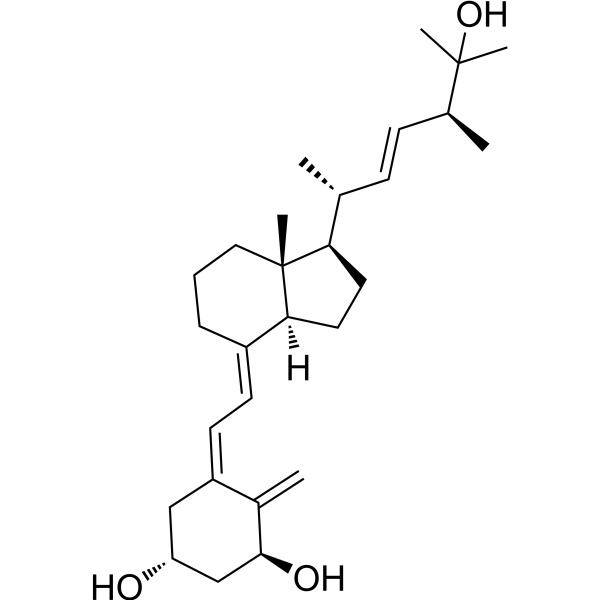
Cat. No.: HY-32350
CAS No.: 60133-18-8
Synonyms: 1α,25-Dihydroxy Vitamin D2
Ercalcitriol (1α,25-Dihydroxy Vitamin D2) is a vitamin D receptor (VDR) agonist with high binding affinity. After binding to VDR, Ercalcitriol forms a complex with retinoid X receptor (RXR) to regulate target gene transcription. For example, Ercalcitriol induces human gingival/oral epithelial cells to produce human cat antimicrobial peptide (hCAP-18/LL-37), which has antimicrobial activity against periodontal pathogens such as Porphyromonas gingivalis. Ercalcitriol enhances the innate immune defense of the oral mucosa by promoting the expression of antimicrobial peptides, and is mainly used in the study of periodontal diseases and immune-related oral diseases .
loading...
    loading...
2
2 Cited Publications
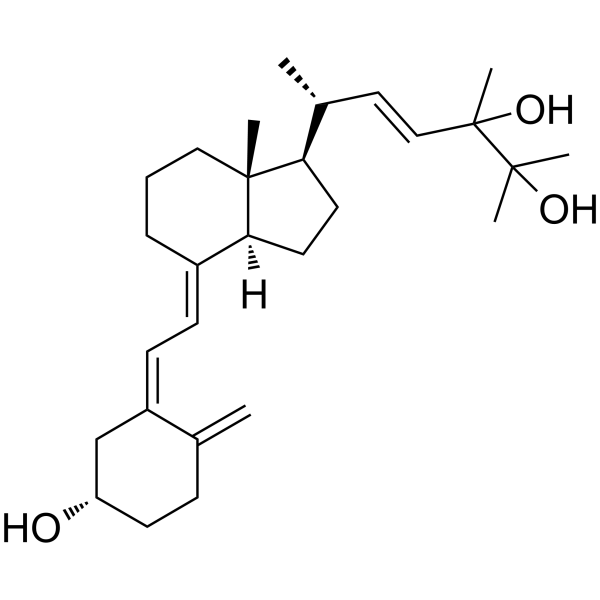
Cat. No.: HY-76801
CAS No.: 58050-55-8
Synonyms: 24,25-Dihydroxy vitamin D2
Research Areas:  

Metabolic Disease

24,25-Dihydroxy VD2 (24,25-Dihydroxy vitamin D2) is a hydroxylated metabolite and derivative of Vitamin D2 HY-76542 (HY-76542) .
loading...
    loading...
2
2 Cited Publications
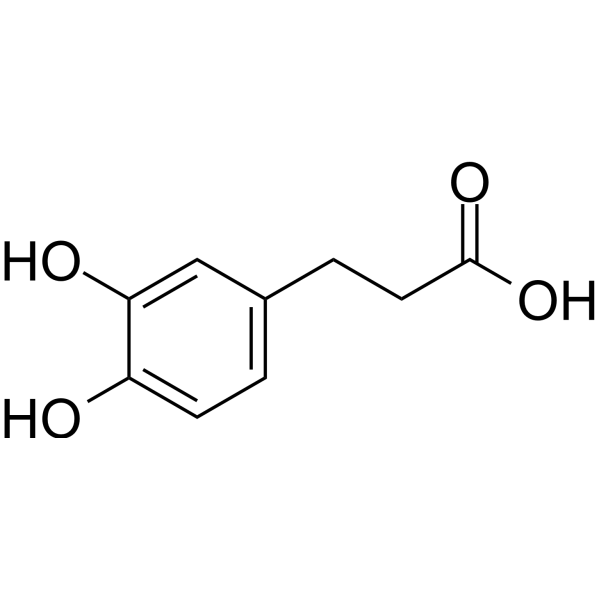
Cat. No.: HY-N2406
CAS No.: 1078-61-1
Synonyms: 3,4-Dihydroxy-benzenepropanoic acid
Dihydrocaffeic acid is a microbial metabolite of flavonoids. Dihydrocaffeic acid scavenges intracellular ROS and increases nitric oxide synthase activity. Dihydrocaffeic acid reduces phosphorylation of MAPK p38 and prevent UVB-induced skin damage. Dihydrocaffeic acid has antioxidant, anti-inflammatory and anti-cartilage degradation activities .
loading...
    loading...
1
1 Cited Publications
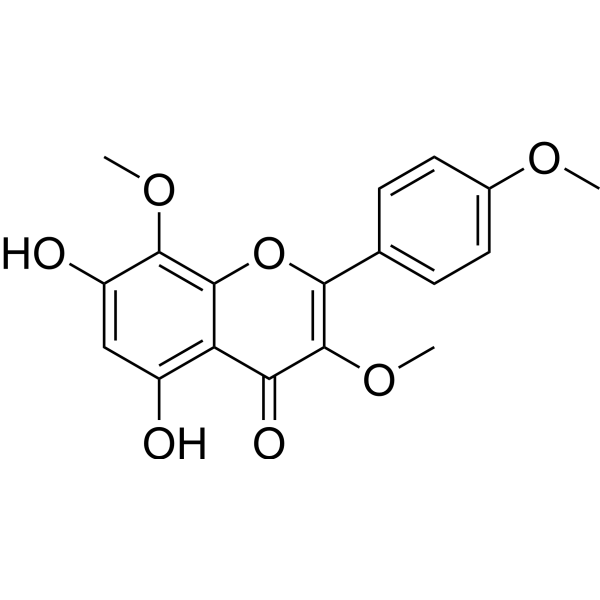
Cat. No.: HY-N2661
CAS No.: 1570-09-8
5,7-Dihydroxy-3,4',8-trimethoxyflavone (Substance E) can be isolated from Conyza stricta Willd .
loading...
    loading...
1
1 Cited Publications
Cat. No.: HY-129409
CAS No.: 75187-63-2
Purity:  99.49%
Synonyms: 7,8,4'-Trihydroxyisoflavone
7,8-Dihydroxy-3-(4-hydroxyphenyl)-4H-chromen-4-one (7,8,4'-Trihydroxyisoflavone) is a product that can be isolated from .
loading...
    loading...
1
1 Cited Publications
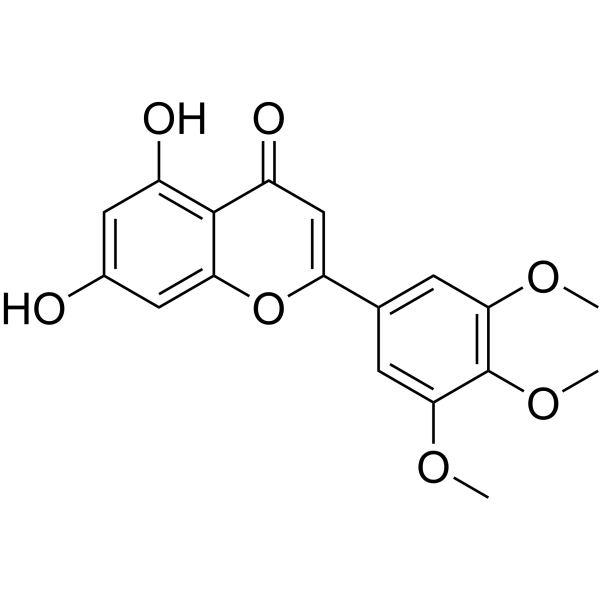
Cat. No.: HY-N7150
CAS No.: 18103-42-9
Synonyms: 5,7-Dihydroxy-3',4',5'-trimethoxyflavone
Tricetin 3',4',5'-trimethyl ether (5,7-Dihydroxy-3',4',5'-trimethoxyflavone) is a flavone glucoside, that can be isolated the flowers of Chrysanthemum sinensea. Tricetin 3',4',5'-trimethyl ether displays xanthine oxidase competitive-type inhibitory activity, with an IC50 of 0.51 μM and a Ki of 0.37 μM .
loading...
    loading...
1
1 Cited Publications
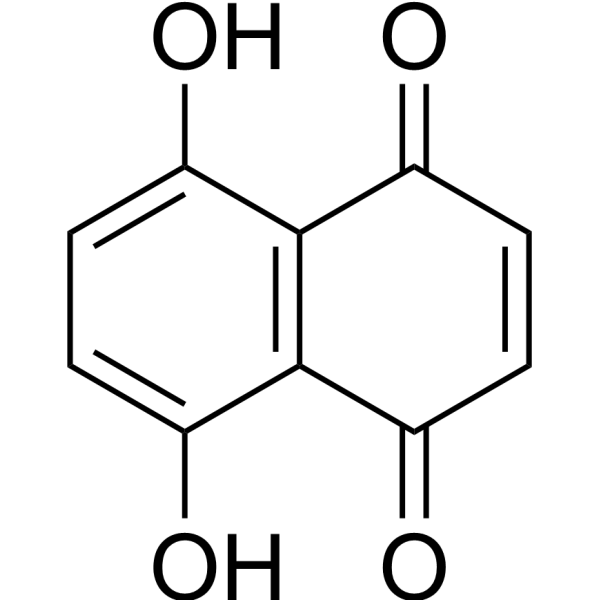
Cat. No.: HY-N7526
CAS No.: 475-38-7
Synonyms: DHNQ; 5,8-Dihydroxy-1,4-naphthoquinone
Naphthazarin (DHNQ) is a microtubule depolymerizing agent. Naphthazarin can improve motor function and reduce neuroinflammation in mouse models of Parkinson's disease. Naphthazarin can induce tumor cell apoptosis, autophagy, and cell cycle arrest. Naphthazarin can also induce erythrocyte apoptosis. Naphthazarin can be used in the research of tumors and neurodegenerative diseases .
loading...
    loading...
1
1 Cited Publications
Cat. No.: HY-105055
CAS No.: 77327-05-0
Purity:  99.95%
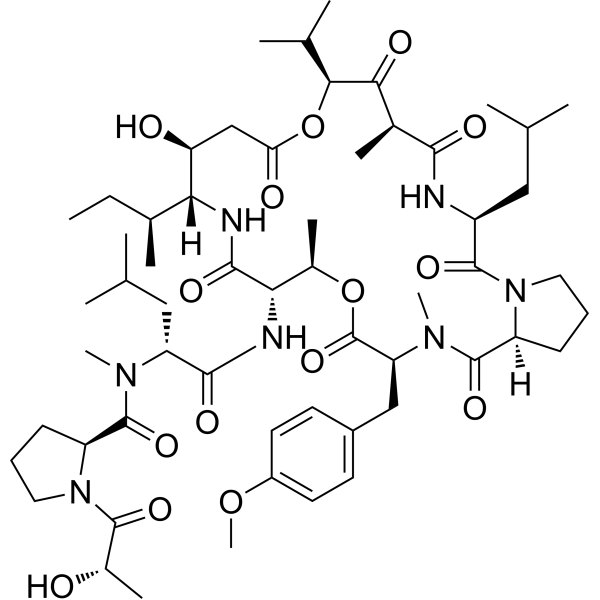
Didemnin B is a depsipeptide extracted from the marine tunicate Trididemnin cyanophorum. Didemnin B can be used for the research of cancer .
loading...
    loading...
Cat. No.: HY-N4102
CAS No.: 2107-76-8
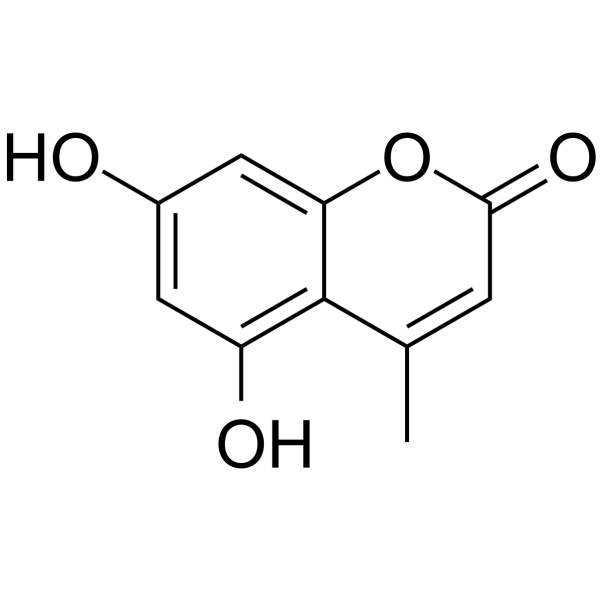
5,7-Dihydroxy-4-methylcoumarin is an antioxidant. 5,7-Dihydroxy-4-methylcoumarin protects mouse cochlear hair cells from Cisplatin-induced damage, enhances cell viability and inhibits apoptosis. 5,7-Dihydroxy-4-methylcoumarin downregulates phosphorylated JNK levels, increases the ratio of phosphorylated FoxO1 to total FoxO1, scavenges free radicals, reduces ROS accumulation, maintains mitochondrial membrane potential and alleviates mitochondrial dysfunction. 5,7-Dihydroxy-4-methylcoumarin downregulates the expression of caspase-3 and improves cell viability. 5,7-Dihydroxy-4-methylcoumarin can be used in studies related to ototoxicity .
loading...
    loading...
Cat. No.: HY-76574
CAS No.: 454-89-7
Target:  

Drug Intermediate

Research Areas:  

Cancer

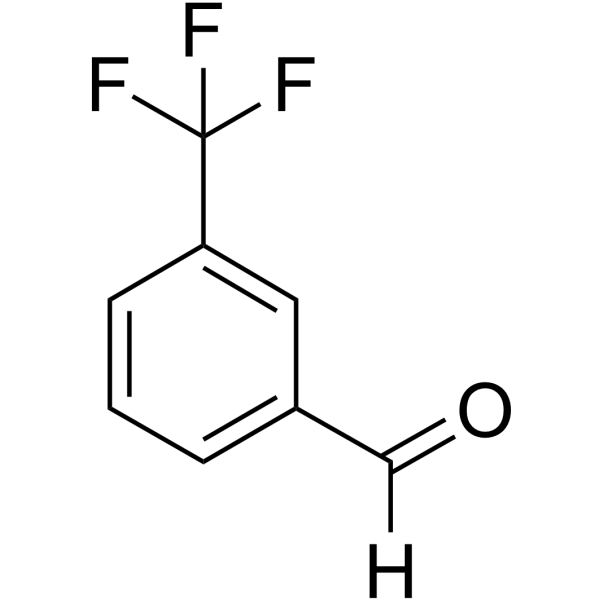
3-(Trifluoromethyl)benzaldehyde is a key intermediate in organic synthesis. 3-(Trifluoromethyl)benzaldehyde can be used to synthesize 2,3-di- and 2,2,3-trisubstituted-3-methoxycarbonyl-γ-butyrolactones .
loading...
    loading...
Cat. No.: HY-133455
CAS No.: 1151451-77-2
Purity:  ≥97.0%
Target:  

PROTAC Linkers

Research Areas:  

Cancer

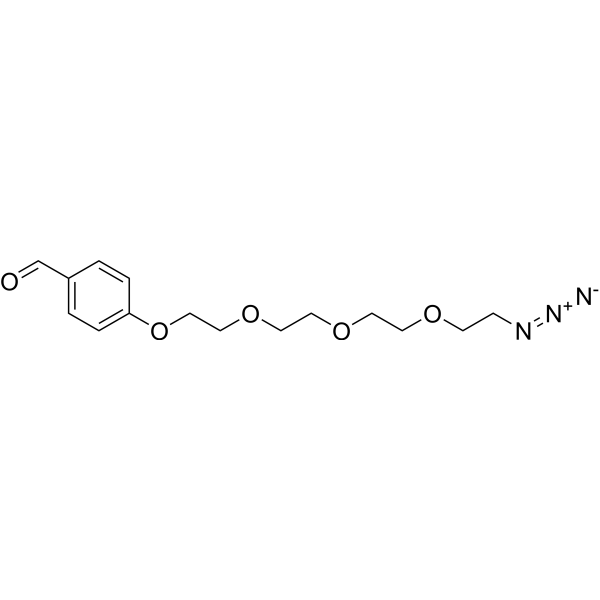
Benzaldehyde-PEG4-azide is a PEG-based PROTAC linker that can be used in the synthesis of PROTACs . Benzaldehyde-PEG4-azide is a click chemistry reagent, it contains an Azide group and can undergo copper-catalyzed azide-alkyne cycloaddition reaction (CuAAc) with molecules containing Alkyne groups. It can also undergo strain-promoted alkyne-azide cycloaddition (SPAAC) reactions with molecules containing DBCO or BCN groups.
loading...
    loading...
Cat. No.: HY-Y1766
CAS No.: 2103-57-3
Synonyms: 2,3,4-Trihydrooxy benzaldehyde
2,3,4-Trimethoxybenzaldehyde (2,3,4-Trihydrooxy Benzaldehyde) can be used to study the effects on tubulin-dependent GTP hydrolysis .
loading...
    loading...
Cat. No.: HY-W014701
CAS No.: 31519-22-9
1,4-Dihydroxy-2-naphthoic acid is an aryl hydrocarbon receptor (AhR) agonist. 1,4-Dihydroxy-2-naphthoic acid is also a bacterially derived metabolite and has anti-inflammatory activity .
loading...
    loading...
Cat. No.: HY-N8796
CAS No.: 75679-58-2
Target:  

Endogenous Metabolite

Research Areas:  

Cancer

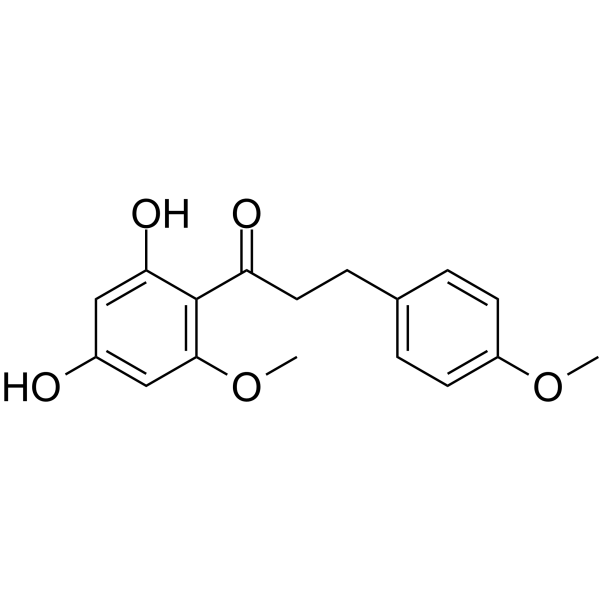
2',4'-Dihydroxy-4,6'-diMethoxydihydrochalcone is a dihydrochalcone compound isolated from Iryanthera juruensis Warb. 2',4'-Dihydroxy-4,6'-diMethoxydihydrochalcone is a major cytotoxic metabolite when tested against a panel of cancer cell lines .
loading...
    loading...
Cat. No.: HY-76181
CAS No.: 66742-57-2
Target:  

Drug Intermediate

Research Areas:  

Others

4-(3-Fluorobenzyloxy)benzaldehyde is a drug intermediate for synthesis of various active compounds.
loading...
    loading...
Cat. No.: HY-Z0041
CAS No.: 1125-88-8
Research Areas:  

Others

Benzaldehyde dimethyl acetal is an acetal and flavor compound with a sweet, woody aroma reminiscent of nuts and bitter almonds. Benzaldehyde dimethyl acetal is used in flavor formulations for imitating cherry, fruit, almond, nut and other flavors. Benzaldehyde dimethyl acetal can act as a hydrolyzable substrate to undergo acid-catalyzed hydrolysis .
loading...
    loading...
Cat. No.: HY-50715
CAS No.: 870837-18-6
Target:  

Drug Intermediate

Research Areas:  

Others

3-Methoxy-4-(4-methyl-1H-imidazol-1-yl)benzaldehyde is a drug intermediate for synthesis of various active compounds.
loading...
    loading...
Cat. No.: HY-Z0041R
CAS No.: 1125-88-8
Research Areas:  

Others

Benzaldehyde dimethyl acetal (Standard) is the analytical standard of Benzaldehyde dimethyl acetal (HY-Z0041). This product is intended for research and analytical applications. Benzaldehyde dimethyl acetal is an acetal and flavor compound with a sweet, woody aroma reminiscent of nuts and bitter almonds. Benzaldehyde dimethyl acetal is used in flavor formulations for imitating cherry, fruit, almond, nut and other flavors. Benzaldehyde dimethyl acetal can act as a hydrolyzable substrate to undergo acid-catalyzed hydrolysis .
loading...
    loading...

