



1,4-Dihydroxy-2-naphthoic acid

Based on 1 Customer Validation
1,4-Dihydroxy-2-naphthoic acid is an aryl hydrocarbon receptor (AhR) agonist. 1,4-Dihydroxy-2-naphthoic acid is also a bacterially derived metabolite and has anti-inflammatory activity.
For research use only. We do not sell to patients.
- Purity : 99.60%
- CAS No.: 31519-22-9
- Formula: C11H8O4
- Molecular Weight:204.18
-
Storage:
4°C, sealed storage, away from moisture
* In solvent : -80°C, 6 months; -20°C, 1 month (sealed storage, away from moisture)


To place orders, for customer services and technical support, please contact: MedChemExpress USA
Tel: 609-228-6898 E-mail: [email protected] [email protected]


-
 Biological Activity
-
Chemical Information
-
Solvent & Solubility
- Purity & Documentation
- References
-
 Help & FAQs



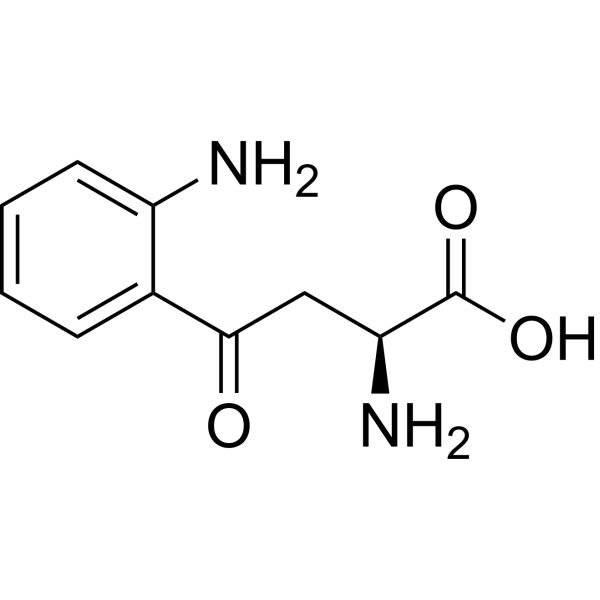
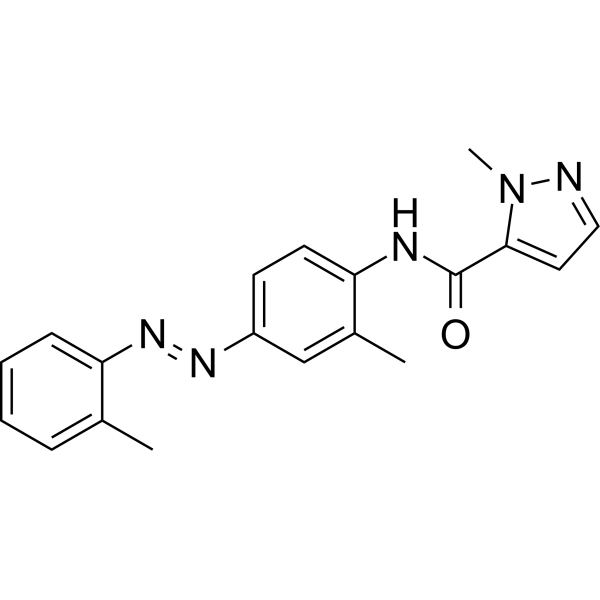
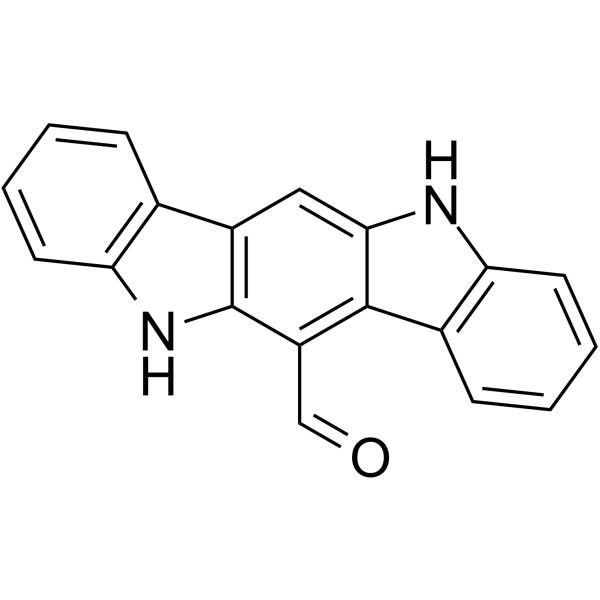
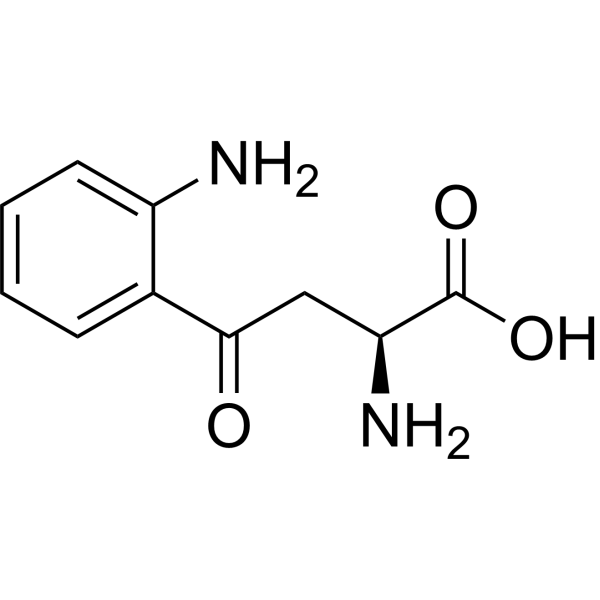
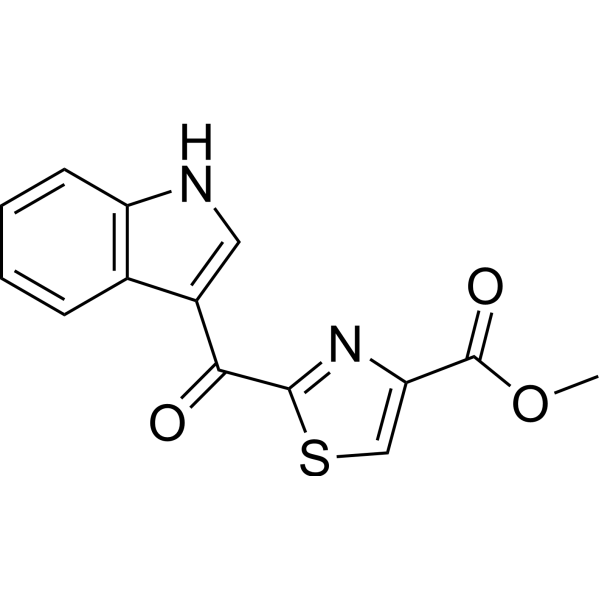
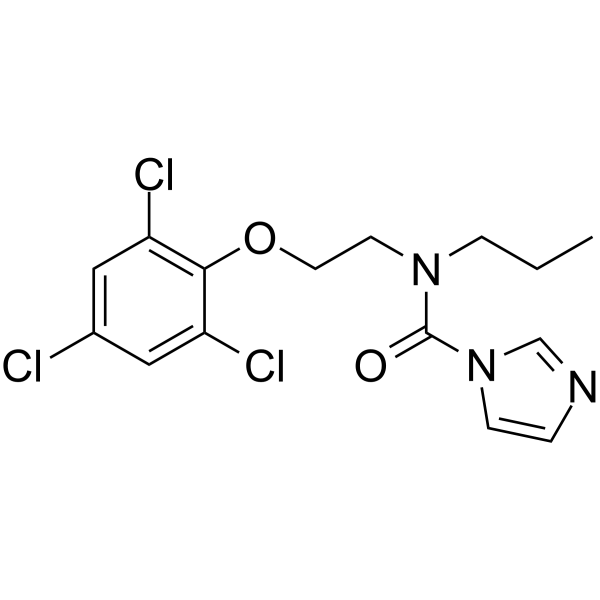
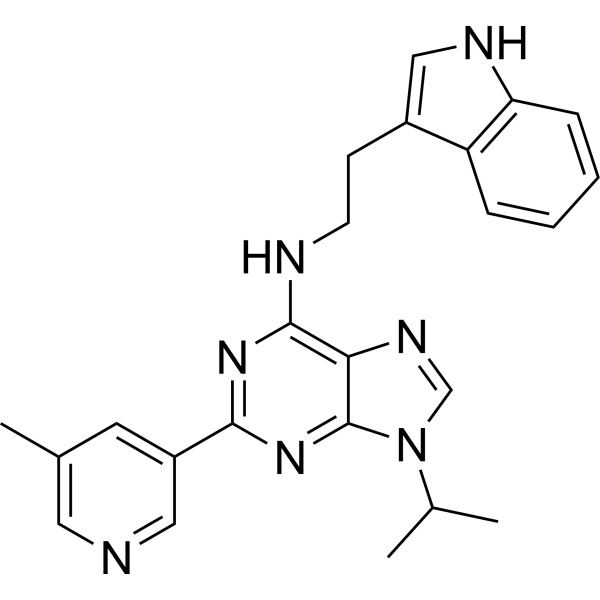


Biological Activity
Description
In Vitro
1,4-Dihydroxy-2-naphthoic acid (25-1000 μM, 18-24 h) induces > 70% of the response for CYP1A1 and CYP1B1 in both YAMC and Caco2 cells[2].
1,4-Dihydroxy-2-naphthoic acid (100 μM, 24 h) inhibits IL-1β, IL-6, IL-23, p19 and IL-17A mRNA levels in LPS (HY-D1056)-stimulated RAW264.7 cells[4].
1,4-Dihydroxy-2-naphthoic acid (48-72 h) inhibits proliferation against HaCaT, NCTC 2544, Hs-69 and PIG1 cells with IC50s of 38.94, 46,80, 226.3 and 23.98 μM at 72 h[5].
1,4-Dihydroxy-2-naphthoic acid (15-120 μM, 9-72 h) induces apoptosis and causes G0/G1 Cell cycle arrest in HaCaT cells in time and dose dependent manners[5].
1,4-Dihydroxy-2-naphthoic acid (30-240 μM, 24-48 h) decreases MMP, increases DNA fragmentation and causes nuclear translocation of AIF and endoG in HaCaT cells[5].
1,4-Dihydroxy-2-naphthoic acid (20-100 μM, 72 h) exhibits relatively low skin irritation, that significantly induces the release of IL-1α only at a concentration of 60 μM in NCTC2544cells[5].
MedChemExpress (MCE) has not independently confirmed the accuracy of these methods. They are for reference only.
-
Cell Line:YAMC and Caco2 cells
-
Concentration:25, 50, 100, 250, 500, 1000 μM
-
Incubation Time:18 h
-
Result:Induced Cyp1a1 and Cyp1b1 in both cells.
Completely eliminated the induction effects on Cyp1a1 and Cyp1b1 when the AhR was knocked out.
-
Cell Line:YAMC and Caco2 cells
-
Concentration:500 μM
-
Incubation Time:24 h
-
Result:Induced Cyp1a1 and Cyp1b1 expression in both cells.
-
Cell Line:LPS-stimulated RAW264.7 cells
-
Concentration:100 μM
-
Incubation Time:24 h
-
Result:Inhibited IL-1β, IL-6, IL-23p19 and IL-17A mRNA levels in RAW264.7 cells.
-
Cell Line:HaCaT cells
-
Concentration:30, 60 and 120 μM
-
Incubation Time:9, 24 and 72 h
-
Result:Increased in nuclear fluorescence from dark blue to light blue/white (chromatin condensation) at 30 and 60 μM.
Formed apoptotic bodies at 120 μM.
Increased apoptosis ratio time dependently.
Activated Caspase-8 and Caspase-9 and cleavage PARP and Bid.
-
Cell Line:HaCaT cells
-
Concentration:15, 30, 60 and 120 μM
-
Incubation Time:24 h
-
Result:Dose-dependently induced G0/G1 cell cycle arrest.
Upregulated p21, while downregulated Cyclin D1/D3 and Cdk4.
In Vivo
1,4-Dihydroxy-2-naphthoic acid (2 mg/kg, p.o., for 14 days) reduces inflammation in mice with colitis by suppressing macrophage-derived proinflammatory cytokines[4].
1,4-Dihydroxy-2-naphthoic acid (20 mg/kg, p.o., for 3 weeks) prevents mice motor dysfunction induced by MPTP (HY-W114750)[6].
MedChemExpress (MCE) has not independently confirmed the accuracy of these methods. They are for reference only.
-
Animal Model:UCMS model established in female C57BL/6 mice (6-7 weeks)[1]
-
Dosage:20 mg/kg
-
Administration:Oral administration (p.o.), once daily, 3 weeks prior to UCMS or 2 weeks after UCMS, for 5-10 weeks
-
Result:Did not exhibit a reduction in sucrose preference.
Restored the activity of Ca-ATPase and glycogen levels, and reduced phospholipase and lipid peroxides.
Did not significantly affect open field test (OFT), marble bury (MB) and novelty-induced hypophagia (NIH) behaviors.
Had no significant effect on the light/dark (L/D) test or on anxiety behaviors in the elevated plus maze (EPM).
Had a significant effect on spatial learning in unstressed animals.
-
Animal Model:Colitis model established in 8-week male interleukin-10-deficient mice[4]
-
Dosage:2 mg/kg
-
Administration:Oral administration (p.o.) with water freely available, for 14 days
-
Result:Significantly reduced the inflammation score.
Significantly reduced F4/80⁺ cells and VCAM-1 expression.
Significantly inhibited IL-1β, IL-6, TNF-α, IL-23p19 and IL-17A mRNA levels.
-
Animal Model:Parkinson's disease (PD) model established in male C57BL/6 mice[6]
-
Dosage:20 mg/kg
-
Administration:Oral administration (p.o.), for 3 weeks
-
Result:Prevented MPTP-induced deficits in the motor pole test and in the adhesive strip removal test.
Improved balance beam performance and completely prevented MPTP-induced reduction in stride length.


Chemical Information
-
CAS No. 31519-22-9
-
Appearance Solid
-
Molecular Weight 204.18
-
Formula C11H8O4
-
Color Gray to brown
-
SMILES
OC1=CC(C(O)=O)=C(O)C2=CC=CC=C21
-
Structure Classification
-
Initial Source
Propionibacterium freudenreichii
-
Shipping
Room temperature in continental US; may vary elsewhere.
-
Storage
4°C, sealed storage, away from moisture
* In solvent : -80°C, 6 months; -20°C, 1 month (sealed storage, away from moisture)


Solvent & Solubility
In Vitro:
DMSO : 175 mg/mL (857.09 mM; Need ultrasonic; Hygroscopic DMSO has a significant impact on the solubility of product, please use newly opened DMSO)
Please refer to the solubility information to select the appropriate solvent. Once prepared, please aliquot and store the solution to prevent product inactivation from repeated freeze-thaw cycles.
Storage method and period of stock solution: -80°C, 6 months; -20°C, 1 month (sealed storage, away from moisture). When stored at -80°C, please use it within 6 months. When stored at -20°C, please use it within 1 month.
Please refer to the solubility information to select the appropriate solvent. Once prepared, please aliquot and store the solution to prevent product inactivation from repeated freeze-thaw cycles.
Storage method and period of stock solution: -80°C, 6 months; -20°C, 1 month (sealed storage, away from moisture). When stored at -80°C, please use it within 6 months. When stored at -20°C, please use it within 1 month.
Concentration (start) × Volume (start) = Concentration (final) × Volume (final)


Purity & Documentation
-
Data Sheet (286 KB)
-
SDS (393 KB)
- English - EN (393 KB)
- Français - FR (393 KB)
- Deutsch - DE (393 KB)
- Norwegian - NO (393 KB)
- Español - ES (393 KB)
- Swedish - SV (393 KB)
- Italian - IT (393 KB)
- Korean - KR (393 KB)
- Portuguese - PT (393 KB)
-
Handling Instructions (2659 KB)
References
[1]. Madison CA, et al. 3,3'-Diindolylmethane and 1,4-dihydroxy-2-naphthoic acid prevent chronic mild stress induced depressive-like behaviors in female mice. J Affect Disord. 2022 Jul 15;309:201-210. [Content Brief]
[2]. Cheng Y, et al. Editor's Highlight: Microbial-Derived 1,4-Dihydroxy-2-naphthoic Acid and Related Compounds as Aryl Hydrocarbon Receptor Agonists/Antagonists: Structure-Activity Relationships and Receptor Modeling. Toxicol Sci. 2017 Feb;155(2):458-473. [Content Brief]
[3]. Kang JE, et al. A Novel Lactobacillus casei LP1 Producing 1,4-Dihydroxy-2-Naphthoic Acid, a Bifidogenic Growth Stimulator. Prev Nutr Food Sci. 2015 Mar;20(1):78-81. [Content Brief]
[4]. Okada Y, et al. 1,4-Dihydroxy-2-naphthoic acid from Propionibacterium freudenreichii reduces inflammation in interleukin-10-deficient mice with colitis by suppressing macrophage-derived proinflammatory cytokines. J Leukoc Biol. 2013 Sep;94(3):473-80. [Content Brief]
[5]. Mok CF, et al. 1,4-dihydroxy-2-naphthoic Acid Induces Apoptosis in Human Keratinocyte: Potential Application for Psoriasis Treatment. Evid Based Complement Alternat Med. 2013;2013:792840. [Content Brief]
[6]. Madison CA, et al. 1,4-dihydroxy-2-naphthoic acid prevents 1-methyl-4-phenyl-1,2,3,6-tetrahydropyridine-induced motor function deficits. Behav Pharmacol. 2025 Feb 1;36(1):40-46. [Content Brief]


Complete Stock Solution Preparation Table
Please refer to the solubility information to select the appropriate solvent. Once prepared, please aliquot and store the solution to prevent product inactivation from repeated freeze-thaw cycles.
Storage method and period of stock solution: -80°C, 6 months; -20°C, 1 month (sealed storage, away from moisture). When stored at -80°C, please use it within 6 months. When stored at -20°C, please use it within 1 month.
| Optional Solvent | Concentration Solvent Mass | 1 mg | 5 mg | 10 mg | 25 mg |
|---|---|---|---|---|---|
| DMSO | 1 mM | 4.8976 mL | 24.4882 mL | 48.9764 mL | 122.4410 mL |
| 5 mM | 0.9795 mL | 4.8976 mL | 9.7953 mL | 24.4882 mL | |
| 10 mM | 0.4898 mL | 2.4488 mL | 4.8976 mL | 12.2441 mL | |
| 15 mM | 0.3265 mL | 1.6325 mL | 3.2651 mL | 8.1627 mL | |
| 20 mM | 0.2449 mL | 1.2244 mL | 2.4488 mL | 6.1220 mL | |
| 25 mM | 0.1959 mL | 0.9795 mL | 1.9591 mL | 4.8976 mL | |
| 30 mM | 0.1633 mL | 0.8163 mL | 1.6325 mL | 4.0814 mL | |
| 40 mM | 0.1224 mL | 0.6122 mL | 1.2244 mL | 3.0610 mL | |
| 50 mM | 0.0980 mL | 0.4898 mL | 0.9795 mL | 2.4488 mL | |
| 60 mM | 0.0816 mL | 0.4081 mL | 0.8163 mL | 2.0407 mL | |
| 80 mM | 0.0612 mL | 0.3061 mL | 0.6122 mL | 1.5305 mL | |
| 100 mM | 0.0490 mL | 0.2449 mL | 0.4898 mL | 1.2244 mL |


1,4-Dihydroxy-2-naphthoic acid Related Classifications
HY-W014701 Related Classifications
 Powered by Bioz