Search Result
Results for "
EGFR L858R-T790M
" in MedChemExpress (MCE) Product Catalog:
3
Isotope-Labeled Compounds
| Cat. No. |
Product Name |
Target |
Research Areas |
Chemical Structure |
-
- HY-15772
-
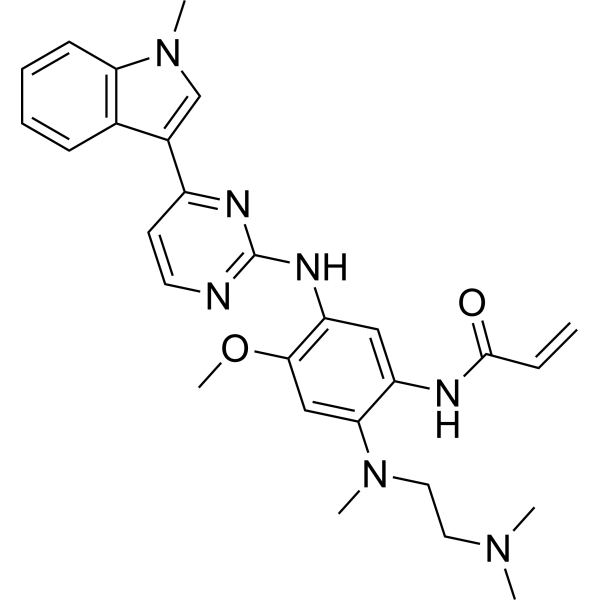
Osimertinib
Maximum Cited Publications
185 Publications Verification
AZD-9291; Mereletinib
|
EGFR
|
Cancer
|
|
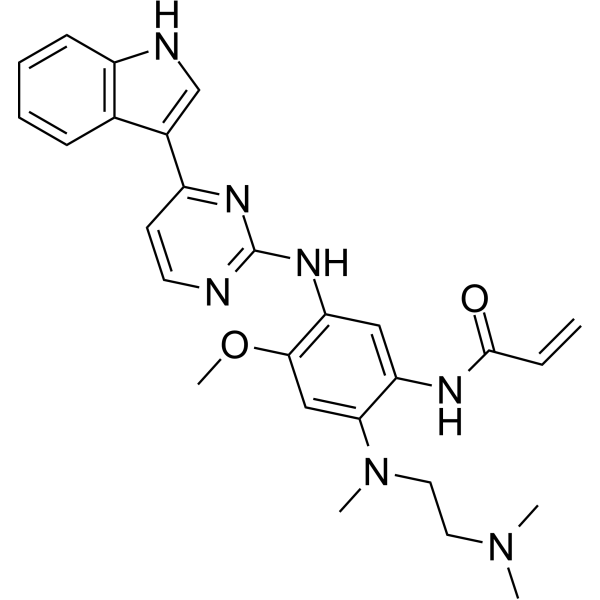
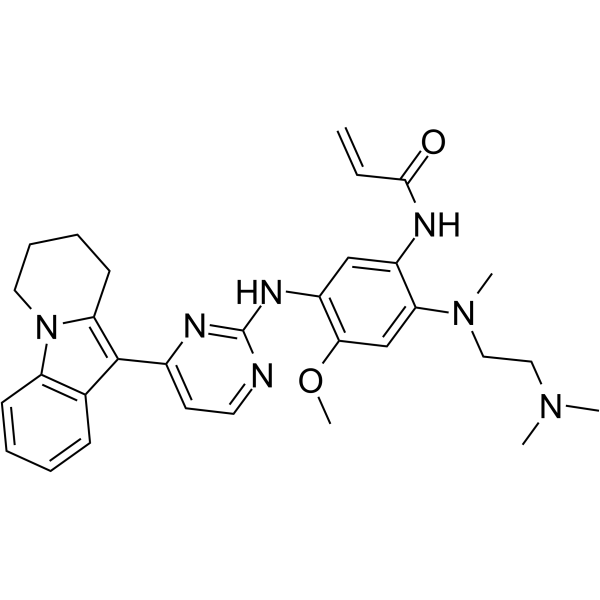
Osimertinib (AZD9291) is a covalent, orally active, irreversible, and mutant-selective EGFR inhibitor with an apparent IC50 of 12 nM against L858R and 1 nM against L858R/T790M, respectively. Osimertinib overcomes T790M-mediated resistance to EGFR inhibitors in lung cancer .
|
-
-
- HY-10261
-
|
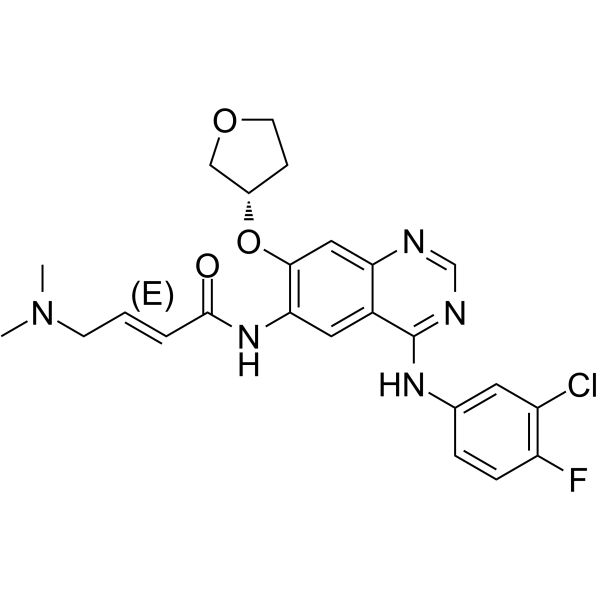
BIBW 2992
|
EGFR
Autophagy
Apoptosis
c-Met/HGFR
Akt
p38 MAPK
|
Cancer
|
|
Afatinib (BIBW 2992) is an orally active, potent and irreversible dual specificity inhibitor of ErbB family (EGFR and HER2), with IC50 values of 0.5 nM, 0.4 nM, 10 nM and 14 nM for EGFR wt, EGFR L858R, EGFR L858R/T790M and HER2, respectively. Afatinib can be used for the research of esophageal squamous cell carcinoma (ESCC), non-small cell lung cancer (NSCLC) and gastric cancer .
|
-
-
- HY-15772A
-
|
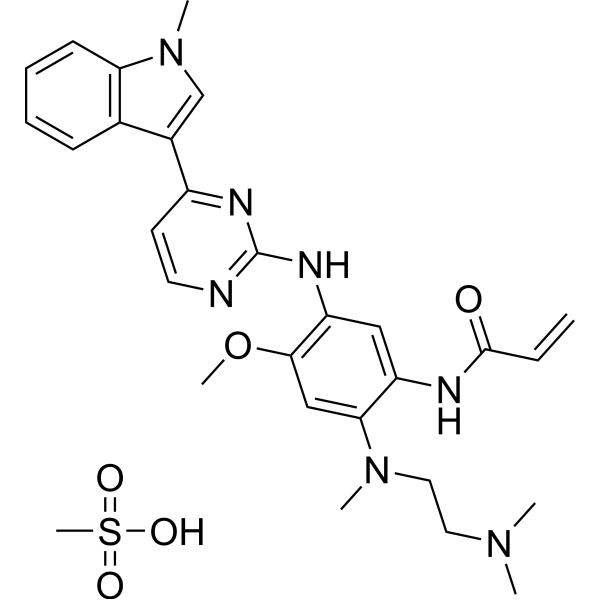
AZD-9291 mesylate; Mereletinib mesylate
|
EGFR
|
Cancer
|
|
Osimertinib mesylate (AZD9291 mesylate) is a covalent, orally active, irreversible, and mutant-selective EGFR inhibitor with an apparent IC50 of 12 nM against L858R and 1 nM against L858R/T790M. Osimertinib overcomes T790M-mediated resistance to EGFR inhibitors in lung cancer .
|
-
-
- HY-10261A
-
|
BIBW 2992MA2
|
EGFR
Autophagy
Apoptosis
c-Met/HGFR
Akt
p38 MAPK
|
Cancer
|
|
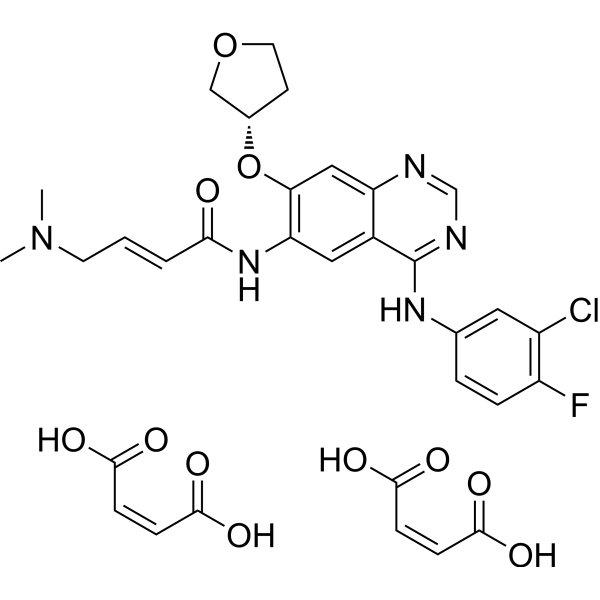
Afatinib (BIBW 2992) dimaleate is an orally active, potent and irreversible dual specificity inhibitor of ErbB family (EGFR and HER2), with IC50 values of 0.5 nM, 0.4 nM, 10 nM and 14 nM for EGFR wt, EGFR L858R, EGFR L858R/T790M and HER2, respectively. Afatinib dimaleate can be used for the research of esophageal squamous cell carcinoma (ESCC), non-small cell lung cancer (NSCLC) and gastric cancer .
|
-
-
- HY-B0793
-
|
|
EGFR
|
Cancer
|
|
AZ-5104 is an active, demethylated metabolite of AZD 9291. AZ-5104 is an EGFR inhibitor with IC50s of 1, 6, 1, 25 and 7 nM for EGFR L858R/T790M, EGFR L858R, EGFR L861Q, EGFR and ErbB4, respectively.
|
-
-
- HY-79077
-
|
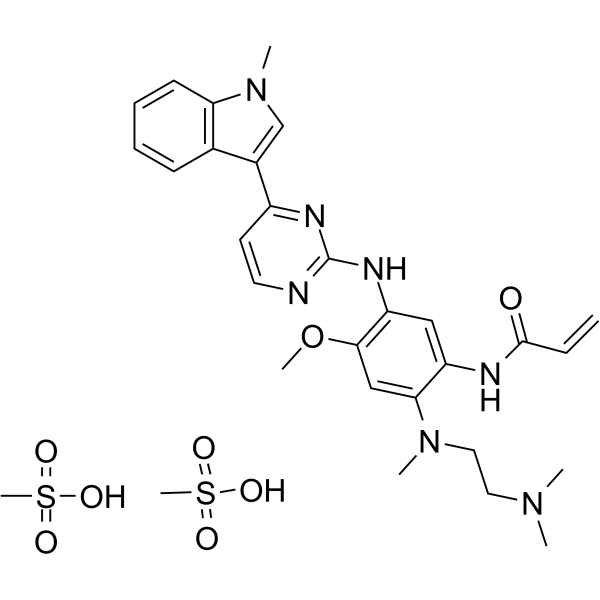
AZD-9291 dimesylate; Mereletinib dimesylate
|
EGFR
|
Cancer
|
|
Osimertinib dimesylate (AZD-9291 dimesylate) is an irreversible and mutant selective EGFR inhibitor with IC50s of 12 and 1 nM against EGFR L858R and EGFR L858R/T790M, respectively.
|
-
-
- HY-15772R
-
|
AZD-9291 (Standard); Mereletinib (Standard)
|
Reference Standards
EGFR
|
Cancer
|
|
Osimertinib (Standard) is the analytical standard of Osimertinib. This product is intended for research and analytical applications. Osimertinib (AZD9291) is a covalent, orally active, irreversible, and mutant-selective EGFR inhibitor with an apparent IC50 of 12 nM against L858R and 1 nM against L858R/T790M, respectively. Osimertinib overcomes T790M-mediated resistance to EGFR inhibitors in lung cancer .
|
-
-
- HY-15164A
-
|
BPI-2009
|
EGFR
|
Infection
Neurological Disease
Metabolic Disease
Cancer
|
|
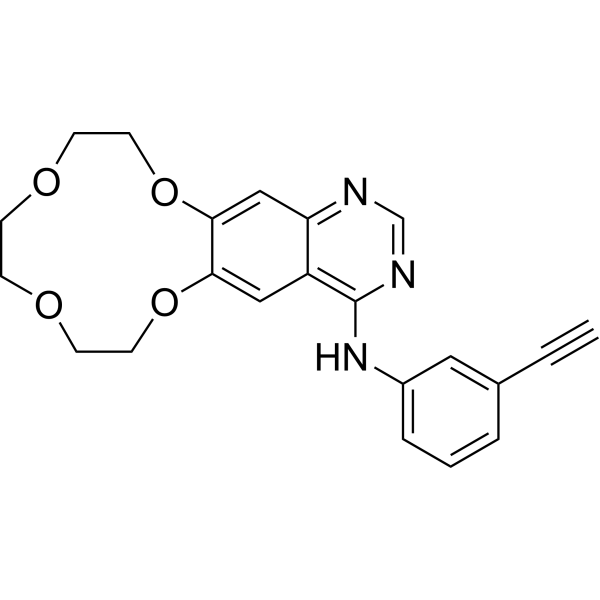
Icotinib (BPI-2009) is a potent, CNS-penetrant and specific EGFR inhibitor with an IC50 of 5 nM; also inhibits mutant EGFR L858R, EGFR L858R/T790M, EGFR T790M and EGFR L861Q. Icotinib is a click chemistry reagent, it contains an Alkyne group and can undergo copper-catalyzed azide-alkyne cycloaddition (CuAAc) with molecules containing Azide groups.
|
-
-
- HY-N1073
-
|
6-Isopentenylgenistein; Erythrinin B
|
Apoptosis
EGFR
HSP
ERK
Akt
|
Infection
Cancer
|
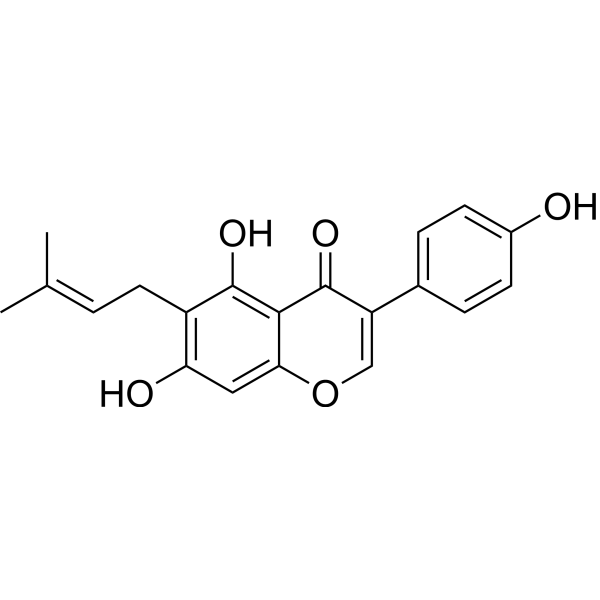
Wighteone (6-Isopentenylgenistein; Erythrinin B) is a prenylated isoflavone that acts as a HSP90/EGFR L858R/T790M inhibitor and antifungal agent. Wighteone reduces the expression level of HSP90, blocks EGF-induced phosphorylation of EGFR, and thereby inhibits the downstream ERK and AKT signaling pathways. Wighteone induces cell cycle redistribution, inhibits proliferation and triggers apoptosis in cancer cells. Wighteone can be isolated from Erythrina suberosa, and can also be induced to synthesize in Lotus japonicus under specific conditions. Wighteone can be used to study HER2-positive breast cancer, leukemia, non-small cell lung cancer with EGFR L858R/T790M mutation, and fungal infections .
|
-
-
- HY-15730
-
|
HM781-36B; NOV120101
|
EGFR
Apoptosis
|
Cancer
|
|
Poziotinib (HM781-36B) is an orally active, irreversible pan-HER inhibitor, which effectively inhibits EGFR wt, HER-2 and HER-4 with IC50s of 3.2, 5.3 and 23.5 nM, respectively. Poziotinib (HM781-36B) also shows excellent inhibitory activities against mutated EGFRs, including EGFR T790M and EGFR L858R/T790M, with IC50s of 4.2 and 2.2 nM, respectively. Excellent antitumor activity .
|
-
-
- HY-100213
-
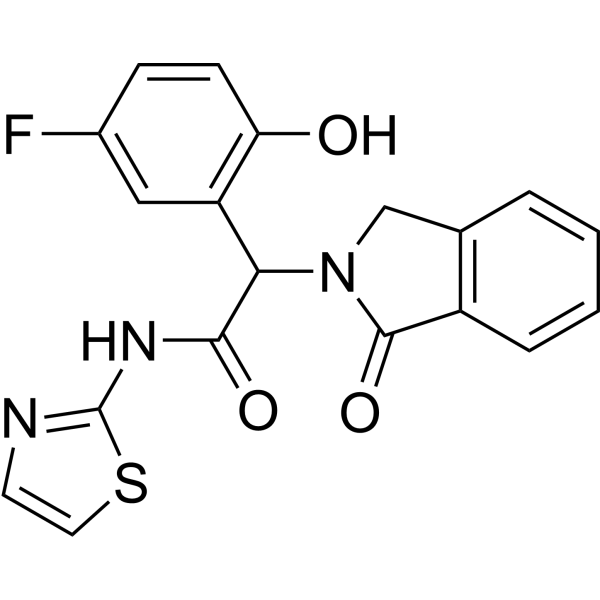
EAI045
3 Publications Verification
|
EGFR
|
Cancer
|
|
EAI045 is an allosteric and the fourth-generation inhibitor of mutant EGFR with IC50s of 1.9, 0.019, 0.19 and 0.002 μM for EGFR, EGFR L858R, EGFR T790M and EGFR L858R/T790M at 10 μM ATP, respectively.
|
-
-
- HY-147858
-
|
|
PROTACs
EGFR
Apoptosis
|
Cancer
|
|
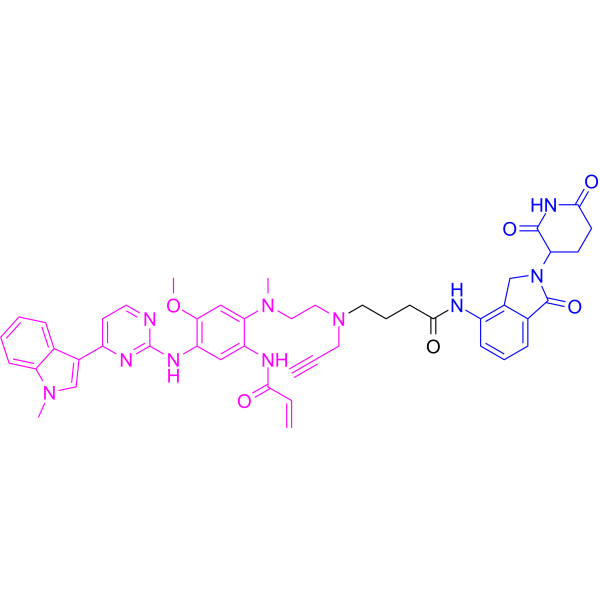
PROTAC EGFR degrader 7 (compound 13b) is a potent and selective CRBN-recruiting PROTAC EGFR L858R/T790M degrader, with a DC50 of 13.2 nM. PROTAC EGFR degrader 7 inhibits NCI–H1975 cells proliferation, with an IC50 of 46.82 nM. PROTAC EGFR degrader 7 significantly induces apoptosis and G2/M phase arrest in NCI–H1975 cell. PROTAC EGFR degrader 7 shows antitumor activity, and can be used for non-small cell lung cancer (NSCLC) research . PROTAC EGFR degrader 7 is a click chemistry reagent, it contains an Alkyne group and can undergo copper-catalyzed azide-alkyne cycloaddition (CuAAc) with molecules containing Azide groups.
|
-
-
- HY-15772S1
-
|
AZD-9291-13C,d3; Mereletinib-13C,d3
|
EGFR
|
Cancer
|
|
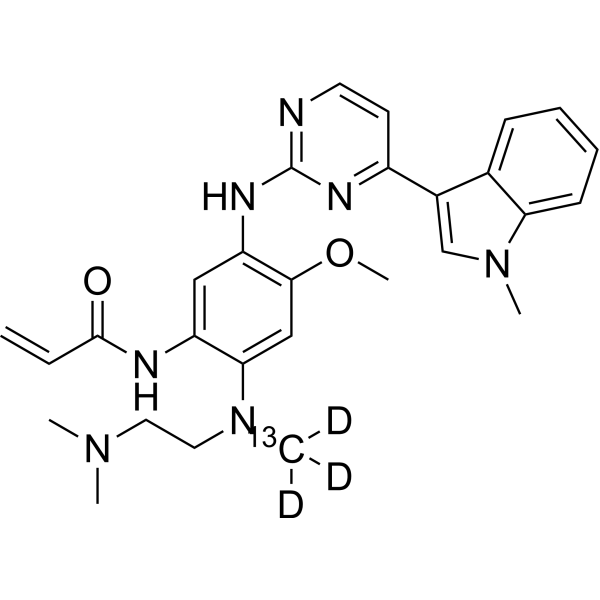
Osimertinib- 13C,d3 is the deuterium and 13C labeled Osimertinib. Osimertinib (AZD9291) is a covalent, orally active, irreversible, and mutant-selective EGFR inhibitor with an apparent IC50 of 12 nM against L858R and 1 nM against L858R/T790M, respectively.
|
-
-
- HY-10325
-
|
EKI-785; WAY-EKI 785
|
EGFR
Apoptosis
|
Endocrinology
Cancer
|
|
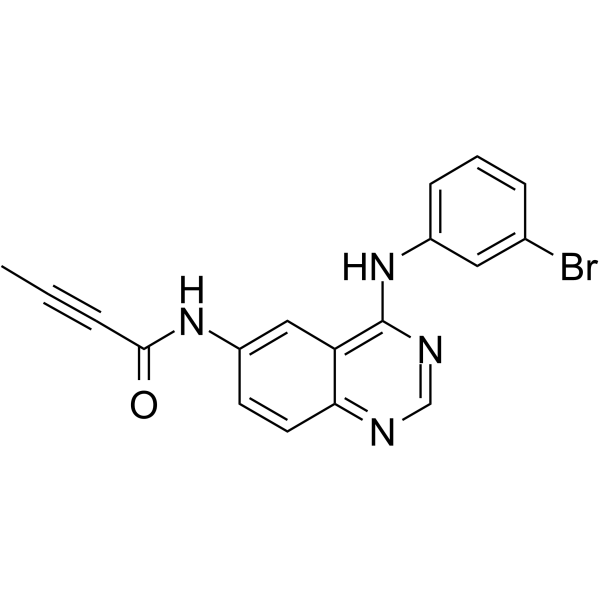
CL-387785 (EKI-785; WAY-EKI 785) is an orally active EGFR inhibitor with an IC50 of 370 pM. CL-387785 inhibits EGF-stimulated EGFR autophosphorylation with an IC50 of approximately 5 nM. CL-387,785 exerts selective inhibition on cell lines overexpressing EGFR or c-erbB-2, whereas it shows weak inhibitory effects on cell lines with low expression of these two receptors. CL-387785 effectively induces cell cycle arrest and apoptosis. CL-387785 can be used for the research of non-small cell lung cancer and autosomal recessive polycystic kidney disease .
|
-
-
- HY-12001
-
|
|
EGFR
|
Cancer
|
|
WZ3146 is a mutant selective EGFR inhibitor with IC50s of
2, 2, 5, 14 and 66 nM for EGFR L858R, EGFR L858R/T790M, EGFR E746_A750, EGFR E746_A750/T790M and EGFR, respectively.
|
-
-
- HY-12026
-
|
|
EGFR
|
Cancer
|
|
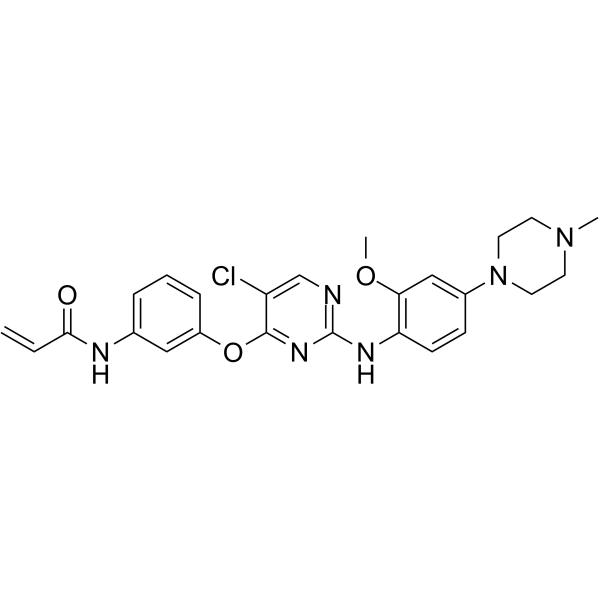
WZ4002 is a mutant selective EGFR inhibitor with IC50s of 2, 8, 3 and 2 nM for EGFR L858R, EGFR L858R/T790M, EGFR E746_A750 and EGFR E746_A750/T790M, respectively.
|
-
-
- HY-15164
-
|
BPI-2009H
|
EGFR
|
Infection
Neurological Disease
Metabolic Disease
Cancer
|
|
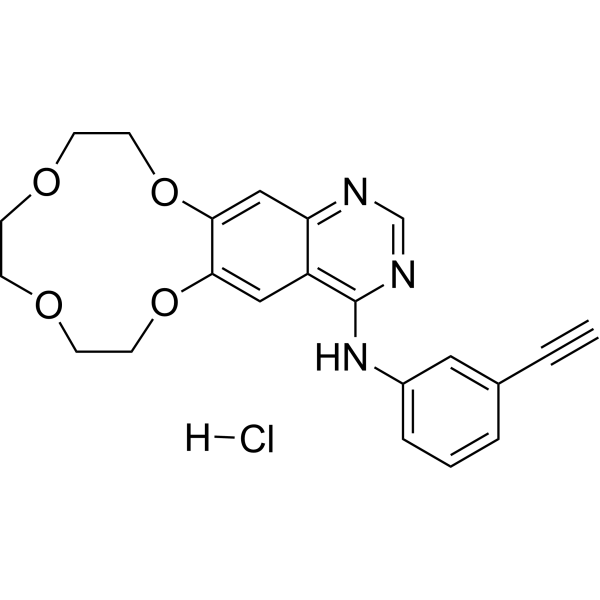
Icotinib Hydrochloride (BPI-2009) is a potent, CNS-penetrant and specific EGFR inhibitor with an IC50 of 5 nM; also inhibits mutant EGFR L858R, EGFR L858R/T790M, EGFR T790M and EGFR L861Q. Icotinib (Hydrochloride) is a click chemistry reagent, it contains an Alkyne group and can undergo copper-catalyzed azide-alkyne cycloaddition (CuAAc) with molecules containing Azide groups.
|
-
-
- HY-132842A
-
|
(S)-DZD9008
|
EGFR
Btk
|
Cancer
|
|
(S)-Sunvozertinib ((S)-DZD9008), the S-enantiomer of Sunvozertinib, shows inhibitory activity against EGFR exon 20 NPH and ASV insertions, EGFR L858R/T790M mutation and Her2 exon20 YVMA insertion (IC50=51.2 nM, 51.9 nM, 1 nM, and 21.2 nM, respectively). (S)-Sunvozertinib also inhibits BTK .
|
-
-
- HY-135805
-
|
|
EGFR
|
Cancer
|
|
JBJ-04-125-02 is a potent, mutant-selective, allosteric and orally active EGFR inhibitor with an IC50 of 0.26 nM for EGFR L858R/T790M. JBJ-04-125-02 can inhibit cancer cell proliferation and EGFR L858R/T790M/C797S signaling. JBJ-04-125-02 has anti-tumor activities .
|
-
-
- HY-10346
-
AV-412
5 Publications Verification
MP412
|
EGFR
|
Cancer
|
|
AV-412 (MP412) is an EGFR inhibitor with IC50s of 0.75, 0.5, 0.79, 2.3, 19 nM for EGFR, EGFR L858R, EGFR T790M, EGFR L858R/T790M and ErbB2, respectively.
|
-
-
- HY-111415
-
|
|
EGFR
|
Cancer
|
|
EGFR-IN-5 is a EGFR inhibitor with IC50s of 10.4, 1.1, 34, 7.2 nM for EGFR, EGFR L858R, EGFR L858R/T790M, and EGFR L858R/T790M/C797S, respectively.
|
-
-
- HY-146349
-
|
|
PROTACs
EGFR
Autophagy
|
Cancer
|
|
PROTAC EGFR degrader 4 is a potent PROTAC targeting mutant EGFR.PROTAC EGFR degrader 4 induces EGFR del19 and EGFR L858R/T790M degradation with DC50s of 0.51 and 126 nM, respectively. PROTAC EGFR degrader 4 significantly inhibits growth of HCC827 and H1975 cell lines with IC50s of 0.83 and 203.1 nM, respectively. Induced EGFR degradation is related to autophagy .
|
-
-
- HY-15772S
-
|
AZD-9291-d6; Mereletinib-d6
|
EGFR
|
Cancer
|
|
Osimertinib-d6 is a deuterium labeled osimertinib. Osimertinib is a covalent, orally active, irreversible, and mutant-selective EGFR inhibitor with an apparent IC50 of 12 nM against L858R and 1 nM against L858R/T790M. Osimertinib overcomes T790M-mediated resistance to EGFR inhibitors in lung cancer .
|
-
-
- HY-139920
-
|
SH-1028
|
EGFR
|
Cancer
|
|
Oritinib (SH-1028), an irreversible third-generation EGFR TKI, overcomes T790M-mediated resistance in non-small cell lung cancer. Oritinib (SH-1028), a mutant-selective inhibitor of EGFR kinase activity, inhibits EGFR WT, EGFR L858R, EGFR L861Q, EGFR L858R/T790M, EGFR d746-750 and EGFR d746-750/T790M kinases, with IC50s of 18, 0.7, 4, 0.1, 1.4 and 0.89 nM, respectively .
|
-
-
- HY-139997
-
|
|
PROTACs
EGFR
|
Cancer
|
|
DDC-01-163 is an allosteric PROTAC degrader targeting EGFR. DDC-01-163 is dependent on the ubiquitin–proteasome system. DDC-01-163 can selectively inhibit the proliferation of L858R/T790M (L/T) mutant Ba/F3 cells. DDC-01-163 is effective against Osimertinib (HY-15772)-resistant cells with L/T/C797S and L/T/L718Q EGFR mutations. DDC-01-163 exhibits enhanced anti-proliferative activity against L858R/T790M EGFR-Ba/F3 cells when combined with the ATP-site EGFR inhibitor Osimertinib. DDC-01-163 can be used for the study of non-small cell lung cancer .
|
-
-
- HY-119944
-
JND3229
1 Publications Verification
|
EGFR
|
Cancer
|
|
JND3229 is a reversible EGFR C797S inhibitor with IC50 values of 5.8, 6.8 and 30.5 nM for EGFR L858R/T790M/C797S, EGFR WT and EGFR L858R/T790M, respectively. JND3229 has good anti-proliferative activity and can effectively inhibit tumour growth in vivo. JND3229 can be used in cancer research, especially in non-small cell carcinoma .
|
-
-
- HY-100214
-
|
|
EGFR
|
Cancer
|
|
EAI001 is a potent, selective mutant epidermal growth factor receptor (EGFR) allosteric inhibitor with an IC50 value of 24 nM for EGFR L858R/T790M. EAI001 can be used for research of cancer .
|
-
-
- HY-147183A
-
|
|
EGFR
|
Cancer
|
|
JBJ-09-063 TFA is a mutant-selective allosteric EGFR inhibitor with IC50s of 0.147 nM, 0.063 nM, 0.083 nM and 0.396 nM for EGFR L858R, EGFR L858R/T790M, EGFR L858R/T790M/C797S and EGFRLT/L747S. JBJ-09-063 TFA effectively reduces EGFR, Akt and ERK1/2 phosphorylation. JBJ-09-063 TFA is effective across EGFR tyrosine kinase inhibitor (TKI)-sensitive and resistant models. JBJ-09-063 TFA can be used for researching EGFR-mutant lung cancer .
|
-
-
- HY-147183B
-
|
|
EGFR
|
Cancer
|
|
JBJ-09-063 hydrochloride is a mutant-selective allosteric EGFR inhibitor with IC50s of 0.147 nM, 0.063 nM, 0.083 nM and 0.396 nM for EGFR L858R, EGFR L858R/T790M, EGFR L858R/T790M/C797S and EGFRLT/L747S. JBJ-09-063 hydrochloride effectively reduces EGFR, Akt and ERK1/2 phosphorylation. JBJ-09-063 hydrochloride is effective across EGFR tyrosine kinase inhibitor (TKI)-sensitive and resistant models. JBJ-09-063 hydrochloride can be used for researching EGFR-mutant lung cancer .
|
-
-
- HY-15772AR
-
|
AZD-9291 mesylate (Standard); Mereletinib mesylate (Standard)
|
Reference Standards
EGFR
|
Cancer
|
|
Osimertinib (mesylate) (Standard) is the analytical standard of Osimertinib (mesylate). This product is intended for research and analytical applications. Osimertinib mesylate (AZD9291 mesylate) is a covalent, orally active, irreversible, and mutant-selective EGFR inhibitor with an apparent IC50 of 12 nM against L858R and 1 nM against L858R/T790M. Osimertinib overcomes T790M-mediated resistance to EGFR inhibitors in lung cancer .
|
-
-
- HY-147183
-
|
|
EGFR
|
Cancer
|
|
JBJ-09-063 is a mutant-selective allosteric EGFR inhibitor with IC50s of 0.147 nM, 0.063 nM, 0.083 nM and 0.396 nM for EGFR L858R, EGFR L858R/T790M, EGFR L858R/T790M/C797S and EGFRLT/L747S. JBJ-09-063 effectively reduces EGFR, Akt and ERK1/2 phosphorylation. JBJ-09-063 is effective across EGFR tyrosine kinase inhibitor (TKI)-sensitive and resistant models. JBJ-09-063 can be used for researching EGFR-mutant lung cancer .
|
-
-
- HY-135914
-
|
|
EGFR
|
Cancer
|
|
JBJ-02-112-05 is a potent, mutant-selective, allosteric and orally active EGFR inhibitor with an IC50 of 15 nM for EGFR L858R/T790M .
|
-
-
- HY-10346A
-
|
MP-412 free base
|
EGFR
|
Cancer
|
|
AV-412 free base (MP-412 free base) is an EGFR inhibitor with IC50s of 0.75, 0.5, 0.79, 2.3, 19 nM for EGFR, EGFR L858R, EGFR T790M, EGFR L858R/T790M and ErbB2, respectively.
|
-
-
- HY-128778
-
|
DBPR112
|
EGFR
|
Cancer
|
|
Gozanertinib is an orally active furanopyrimidine-based EGFR inhibitor with IC50s of 15 nM and 48 nM for EGFR WT and EGFR L858R/T790M, respectively. Gozanertinib can occupy the ATP-binding site. Gozanertinib has significant antitumor efficacy .
|
-
-
- HY-171958
-
|
|
PROTACs
EGFR
|
Cancer
|
|
PROTAC EGFR degrader 12 (example 1) is a PROTAC degrader targeting EGFR that can effectively degrade EGFR mutants, but has little effect on EGFR WT. PROTAC EGFR degrader 12 shows IC50s against EGFR L858R-T790M (NCI-H1975 cells), EGFR L858R (NCI-H3255 cells), and EGFR L858R-T790M-L797S (NCI-H1975+CS cells) of all <50 nM .
|
-
-
- HY-101522
-
|
|
EGFR
BMX Kinase
Btk
MEK
|
Cancer
|
|
CHMFL-EGFR-202 is a potent, irreversible inhibitor of epidermal growth factor receptor (EGFR) mutant kinase, with IC50s of 5.3 nM and 8.3 nM for drug-resistant mutant EGFR T790M and WT EGFR kinases, respectively. CHMFL-EGFR-202 exhibits ~10-fold selectivity for EGFR L858R/T790M against the EGFR wild-type in cells. CHMFL-EGFR-202 adopts a covalent “DFG-in-C-helix-out” inactive binding conformation with EGFR, with strong antiproliferative effects against EGFR mutant-driven nonsmall-cell lung cancer (NSCLC) cell lines .
|
-
-
- HY-150905
-
|
|
EGFR
|
Cancer
|
|
EGFR ligand-2 (compound C4), a covalent EGFR ligand, is a EGFR mutant inhibitor with IC50s of 21 nM and 48 nM for EGFR L858R and EGFR L858R/T790M, respectively. EGFR ligand-2 can be used to synthesize PROTAC .
|
-
-
- HY-133780
-
|
|
EGFR
Autophagy
|
Cancer
|
|
Afatinib impurity 11 is an impurity of Afatinib. Afatinib is an irreversible EGFR family inhibitor with IC50s of 0.5 nM, 0.4 nM, 10 nM and 14 nM for EGFR wt, EGFR L858R, EGFR L858R/T790M and HER2, respectively .
|
-
-
- HY-19617A
-
|
|
EGFR
|
Cancer
|
|
EGFR-IN-1 hydrochloride is an orally active and irreversible L858R/T790M mutant selective EGFR inhibitor. EGFR-IN-1 hydrochloride potently inhibits Gefitinib-resistant EGFR L858R, T790M with 100-fold selectivity over wild-type EGFR. EGFR-IN-1 hydrochloride displays strong antiproliferative activity against the H1975 cells and the first line mutant HCC827 cells. Antitumor activity .
|
-
-
- HY-150610
-
|
|
EGFR
|
Cancer
|
|
EGFR-IN-69 (compound 17g) is a potent EGFR inhibitor, with IC50 values of 4.3, 6.6 and 25.6 nM against EGFR L858R/T790M/C797S, EGFR L858R/T790M, and EGFR 19del/T790M/C797S, respectively. EGFR-IN-69 can be used for non-small-cell-lung-cancer (NSCLC) research .
|
-
-
- HY-10261D
-
|
BIBW 2992 oxalate
|
EGFR
Autophagy
Apoptosis
c-Met/HGFR
Akt
|
Cancer
|
|
Afatinib (BIBW 2992) oxalate is an orally active, potent and irreversible dual specificity inhibitor of ErbB family (EGFR and HER2), with IC50 values of 0.5 nM, 0.4 nM, 10 nM and 14 nM for EGFR wt, EGFR L858R, EGFR L858R/T790M and HER2, respectively. Afatinib oxalate can be used for the research of esophageal squamous cell carcinoma (ESCC), non-small cell lung cancer (NSCLC) and gastric cancer .
|
-
-
- HY-178283
-
|
|
EGFR
|
Cancer
|
|
EGFR-IN-177 is a potent EGFR inhibitor with IC50s of 0.32, 1.04, 0.65, 0.67, 0.48, 0.55 and 0.38 nM against EGFR L858R, EGFR L858R/T790M, EGFR L858R/T790M/C797S, EGFR D746-750, EGFR D746-750/C797S, EGFR D770_N77linsNPG, and EGFR WT. EGFR-IN-177 inhibits lung cancer proliferation and EGFR phosphorylation. EGFR-IN-177 can be used for the study of cancers such as non-small cell lung cancer .
|
-
-
- HY-164392
-
|
|
EGFR
Apoptosis
|
Cancer
|
|
TAS-121 is an orally active, selective, covalent, third-generation mutant EGFR-tyrosine kinase inhibitor (EGFR-TKI). TAS-121 inhibits the L858R mutation (IC50=1.7 nM), Ex19del mutation (IC50=2.7 nM), L858R/T790M mutation (IC50=0.56 nM) and Ex19del/T790M mutation (IC50=1.1 nM) and wild-type EGFR (IC50=8.2 nM). TAS-121 inhibits HER2 and HER4 with IC50s of 110 and 2.6 nM, respectively. TAS-121 inhibits phosphorylation of EGFR and its downstream signaling targets to block cell proliferation. TAS-121 induces apoptosis and displays antitumor activity in SW48 (EGFR G719S) and NCI-H1975 (EGFR L858R/T790M) xenograft models .
|
-
-
- HY-174293
-
|
|
Drug Derivative
|
Cancer
|
|
Osimertinib dimer is a dimer of Osimertinib (HY-15772). Osimertinib (AZD9291) is a covalent, orally active, irreversible, and mutant-selective EGFR inhibitor with an apparent IC50 of 12 nM against L858R and 1 nM against L858R/T790M, respectively. Osimertinib overcomes T790M-mediated resistance to EGFR inhibitors in lung cancer .
|
-
-
- HY-175864
-
|
|
EGFR
Apoptosis
p38 MAPK
ERK
Akt
STAT
|
Inflammation/Immunology
Cancer
|
|
EGFR-IN-173 is an orally active, pan-mutant EGFR tyrosine kinase inhibitor that targets EGFR 19del, L858R/T790M and C797S triple-mutations, potently inhibiting EGFR 19del/T790M/C797S with an IC50 of 1.19 nM while showing over 100-fold selectivity for mutant over wild-type EGFR (IC50 = 19.362 μM against WT). EGFR-IN-173 significantly inhibits cell migration, induces apoptosis in non-small cell lung cancer (NSCLC) cells. EGFR-IN-173 inhibits EGFR phosphorylation and suppresses the downstream pathways (MAPK/ERK, AKT, STAT3). EGFR-IN-173 exhibits antitumor efficacy in NSCLC and Ba/F3 xenograft models. EGFR-IN-173 can be used for NSCLC research .
|
-
-
- HY-151981
-
|
|
EGFR
|
Cancer
|
|
EGFR-IN-74 (Compound 21) is a potent EGFR inhibitor with an IC50 of 138 nM against EGFR L858R/T790M. EGFR-IN-74 induces cancer cell apoptosis .
|
-
-
- HY-18213
-
|
|
EGFR
|
Cancer
|
|
EGFR-IN-9 (Compound 8) is a potent EGFR kinase inhibitor with IC50s of 7 nM, 28 nM for the wild type EGFR kinase and double mutant EGFR kinase (L858R/T790M). EGFR-IN-9 has antitumor activity .
|
-
-
- HY-146132
-
|
|
EGFR
|
Cancer
|
|
EGFR-IN-55 (Compound 8a) is a potent EGFR inhibitor with IC50 values of 70 nM and 3.9 nM against EGFR WT and EGFR L858R/T790M, respectively. EGFR-IN-55 arrests NCI-H1975 cells in G0/G1 phase and shows anticancer activity .
|
-
-
- HY-163396
-
|
|
EGFR
Apoptosis
|
Cancer
|
|
EGFR-IN-107 (compound 3r) is an orally active EGFR inhibitor with IC50 values of 0.4333 μM for EGFR WT and 0.0438 μM for EGFR L858R/T790M. EGFR-IN-107 has anti-proliferative activity and can inhibit the proliferation of H1975 cells and induce their apoptosis. EGFR-IN-107 can be used in cancer research .
|
-
-
- HY-155118
-
|
|
EGFR
|
Cancer
|
|
EGFR-IN-81 (Compound 10i) is an EGFR inhibitor. EGFR-IN-81 inhibits EGFR WT and L858R/T790M with IC50s 4.38 nM and 5.69 nM. EGFR-IN-81 has cytotoxic activity against MCF-7 and HCT116 cells with of 2.07 μM and 6.72 μM respectively .
|
-
- HY-157526
-
|
|
EGFR
Apoptosis
|
Cancer
|
|
EGFR-TK-IN-1 (compound 7o) is a potent mutant EGFR inhibitor with IC50 of 8.5 nM an 9.3 nM against EGFR L858R/T790M and EGFR Del19.EGFR-TK-IN-1 showes strong antiproliferative effects against EGFR mutant-driven non-small cell lung cancer (NSCLC) cells and induces cell apoptosis .
|
-
- HY-161319
-
|
|
EGFR
|
Cancer
|
|
EGFR-IN-104 (Compound A23) is an effective inhibitor of EGFR, with IC50 values of 0.33 μM and 0.133 μM against EGFR L858R/T790M and EGFR Del19/T790M/C797S, respectively. EGFR-IN-104 exhibits anticancer activity both in vitro and in vivo .
|
-
- HY-19617B
-
|
|
EGFR
|
Cancer
|
|
EGFR-IN-1 TFA is an orally active and irreversible L858R/T790M mutant selective EGFR inhibitor. EGFR-IN-1 TFA potently inhibits Gefitinib-resistant EGFR L858R, T790M with 100-fold selectivity over wild-type EGFR. EGFR-IN-1 TFA displays strong antiproliferative activity against the H1975 cells and the first line mutant HCC827 cells. Antitumor activity .
|
-
- HY-19617
-
|
|
EGFR
|
Cancer
|
|
EGFR-IN-1 (compound 24) is an orally active and irreversible L858R/T790M mutant selective EGFR inhibitor. EGFR-IN-1 potently inhibits Gefitinib-resistant EGFR L858R, T790M with 100-fold selectivity over wild-type EGFR. EGFR-IN-1 displays strong antiproliferative activity against the H1975 cells and the first line mutant HCC827 cells. Antitumor activity .
|
-
- HY-162299
-
|
|
EGFR
|
Cancer
|
|
EGFR kinase inhibitor 3 (compound 2) is a bivalent ATP-allosteric EGFR kinase inhibitor with IC50s of <10 nM, 1.5 nM, 0.059 nM, 0.064 nM for WT EGFR, EGFR-activating mutations L858R, L858R/T790M and L858R/T790M/C797S, respectively. EGFR kinase inhibitor 3 is a C-linked inhibitor .
|
-
- HY-15164AR
-
|
BPI-2009 (Standard)
|
Reference Standards
EGFR
|
Cancer
|
|
Icotinib (Standard) is the analytical standard of Icotinib. This product is intended for research and analytical applications. Icotinib (BPI-2009) is a potent and specific EGFR inhibitor with an IC50 of 5 nM; also inhibits mutant EGFR L858R, EGFR L858R/T790M, EGFR T790M and EGFR L861Q. Icotinib is a click chemistry reagent, it contains an Alkyne group and can undergo copper-catalyzed azide-alkyne cycloaddition (CuAAc) with molecules containing Azide groups.
|
-
- HY-15164AS
-
|
BPI-2009-d4
|
Isotope-Labeled Compounds
|
Others
|
|
Icotinib-d4 is the deuterium-labeled Icotinib (HY-15164A). Icotinib-d4 (BPI-2009) is a potent and specific EGFR inhibitor with an IC50 of 5 nM; also inhibits mutant EGFR L858R, EGFR L858R/T790M, EGFR T790M and EGFR L861Q. Icotinib-d4 is a click chemistry reagent, itcontains an Alkyne group and can undergo copper-catalyzed azide-alkyne cycloaddition (CuAAc) with molecules containing Azide groups.
|
-
- HY-175011
-
|
|
EGFR
Apoptosis
|
Cancer
|
|
EGFR-IN-165 is a potent EGFR inhibitor. EGFR-IN-165 demonstrates superior potency with IC50s of 17.18 and 64.74 nM against EGFR L858R/T790M and EGFR WT; 2.17 and 6.2 μM against NCI-H1975 cells and A431 cells. EGFR-IN-165 significantly inhibits the migration and induces G1 phase cell cycle arrest and cell apoptosis. EGFR-IN-165 can be used for the study of cancers such as non-small cell lung cancer, colorectal cancer, and head and neck squamous cell carcinoma .
|
-
- HY-128860
-
|
|
EGFR
|
Cancer
|
|
Mutated EGFR-IN-2 (compound 91) is a mutant-selective EGFR inhibitor extracted from patent WO2017036263A1, which potently inhibits single-mutant EGFR (T790M) and double-mutant EGFR (including L858R/T790M (IC50=<1nM) and ex19del/T790M), and can suppress activity of single gain-of-function mutant EGFR (including L858R and ex19del) as well. Mutated EGFR-IN-2 shows anti-tumor antivity .
|
-
- HY-164503
-
|
NEP010
|
EGFR
|
Cancer
|
|
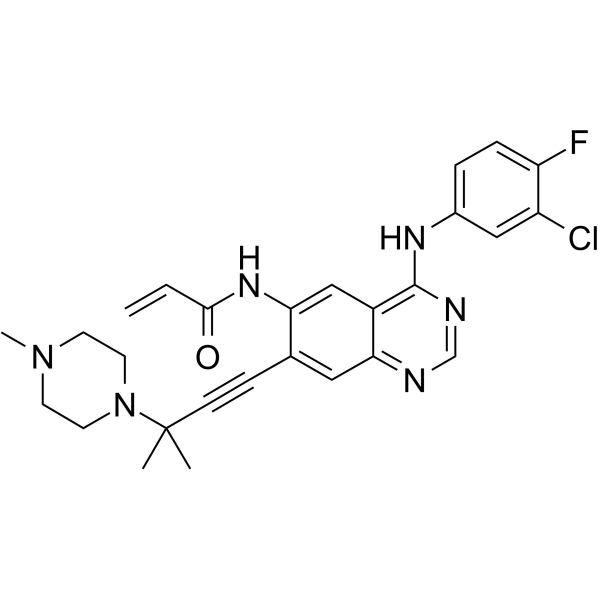
Neptinib (NEP010) is an orally active derivative of Afatinib (HY-10261) that has stronger antitumor activity than Afatinib (HY-10261) by improving pharmacokinetics. Neptinib has a significant inhibitory effect on tumor growth in mouse non-small cell lung cancer models with different EGFR mutations. Neptinib has a certain inhibitory effect on the EGFR kinase family, with IC50 values ??of 0.24 nM, 7.25 nM, 0.46 nM and 1.79 nM for EGFR wt, EGFR L858R/T790M, EGFR L858R and EGFR T790M, respectively .
|
-
- HY-142519
-
|
|
EGFR
|
Cancer
|
|
EGFR-IN-27 is a potent EGFR inhibitor with IC50s of <50 nM for EGFR Del, L858R, Del/T790M, L858R/T790M, Del/T790M/C797S, and L858R/T790M/C797S, respectively (WO2021249324A1, compound 511) .
|
-
- HY-170438
-
|
|
EGFR
|
Cancer
|
|
EGFR-IN-139 (compound PD 18) is an epidermal growth factor receptor (EGFR) inhibitor, with IC50s of 12.88 (wild type), 10.84 (L858R/T790M), 42.68 (L858R/T790M/C797S) nM, respectively. EGFR-IN-139 displays strong anticancer activity against A549 and H1975 cancer cell lines, which are highly expressed EGFR. EGFR-IN-139 has a strong selectivity to cancer cells. EGFR-IN-139 can be used for nonsmall cell lung cancer (NSCLC) research[1].
|
-
- HY-157398
-
|
|
EGFR
|
Cancer
|
|
EGFR T790M/L858R-IN-3 (compound B1) is a EGFR L858R/T790M inhibitor with IC50 value of 13?nM. EGFR T790M/L858R-IN-3 shows anti-tumour activity in H1975 cells with an IC50 value of 0.087 μΜ. EGFR T790M/L858R-IN-3 inhibits cell migration in A549 cells and induces apoptosis in H1975 cells .
|
-
- HY-169309
-
|
|
EGFR
|
Cancer
|
|
EGFR-IN-133 (Compound 24) is an inhibitor for EGFR, that inhibits the EGFR wildtype, L858R/T790M, d19/T790M, L858R/T790M/C797S, and d19/T790M/C797S mutans with IC50 of 0.1, 0.044, 0.036, 0.04, and 0.054 nM. EGFR-IN-133 exhibits good pharmacokinetics characteristics with high oral exposure .
|
-
- HY-169308
-
|
|
EGFR
|
Cancer
|
|
EGFR-IN-132 (Compound 23) is an inhibitor for EGFR, that inhibits the EGFR wildtype, L858R/T790M, d19/T790M, L858R/T790M/C797S, and d19/T790M/C797S mutans with IC50 of 1.6, 0.025, 0.019, 0.022, and 0.029 nM. EGFR-IN-132 exhibits good pharmacokinetics characteristics with high oral exposure .
|
-
- HY-155178
-
|
|
EGFR
|
Cancer
|
|
Antiproliferative agent-34 (Compound A14) is a multi-target kinase inhibitor, with an IC50 of 177 nM and 1567 nM for EGFR L858R/T790M and EGFR WT. Antiproliferative agent-34 also inhibits JAK2, ROS1, FLT3, FLT4, PDGFRα with IC50 of 30.93, 106.90, 108.00, 226.60, 42.53 nM. Antiproliferative agent-34 inhibits H1975 and HCC827 cells proliferation with IC50 values below 40 nM under normoxic condition, and the anti-proliferation potency achieves 4–6-fold improvement (IC50 values < 10 nM) under hypoxic condition .
|
-
- HY-180325
-
|
|
EGFR
|
Others
|
|
DDC4002 is a selective EGFR inhibitor. DDC4002 has inhibitory activity against the L858R/T790M mutant EGFR subtype (IC50 = 39 nM) .
|
-
- HY-116091
-
|
|
EGFR
Akt
ERK
|
Cancer
|
|
EGFR-IN-451 is an EGFR inhibitor with an IC50 value of 0.02 nM. EGFR-IN-451 also inhibits mutant EGFR L858R, EGFR T790M, and EGFR L858R/T790M with IC50 values of 0.26-34 nM. EGFR-IN-451 inhibits AKT and ERK activation and inhibits proliferation of EGFR-mutant cancer cells. EGFR-IN-451 can be used for the research of EGFR-driven cancer .
|
-
- HY-182742
-
|
|
EGFR
|
Cancer
|
|
EGFR-IN-208 is an allosteric mutant EGFR L858R/T790M and EGFR L858R/T790M/C797S inhibitor, with IC50 values of 3.06 μM and 1.08 μM, respectively. EGFR-IN-208 binds to the allosteric site of EGFR and inhibits EGFR phosphorylation. EGFR-IN-208 induces apoptosis and exhibits antiproliferative effects in cancer cells. EGFR-IN-208 can be used in research related to non-small cell lung cancer .
|
-
- HY-180922
-
|
|
EGFR
Akt
STAT
p38 MAPK
|
Cancer
|
|
EGFR kinase-IN-8 (Compound H8b) is an EGFR inhibitor. EGFR kinase-IN-8 potently inhibits both triple-mutated EGFR L858R/T790M/C797S (IC50 = 3.86 nM) and double-mutated EGFR L858R/T790M (IC50 = 1.23 nM). EGFR kinase-IN-8 suppresses EGFR phosphorylation and downstream AKT, STAT3, and MAPK signaling. EGFR kinase-IN-8 exhibits anticancer activity against non-small cell lung cancer .
|
-
- HY-153605
-
|
|
EGFR
|
Cancer
|
|
EGFR-IN-77 (Compound 4a) is a selective EGFR T790M/L858R inhibitor, with an IC50 of 0.101 μM against EGFR T790M/L858R, 0.477 μM against EGFR L858R, and 1.771 μM against wild-type EGFR. EGFR-IN-77 exerts selective antiproliferative effects on EGFR T790M/L858R non-small cell lung cancer. EGFR-IN-77 can be used for the research of EGFR L858R/T790M double-mutant non-small cell lung cancer .
|
-
- HY-181502
-
|
|
EGFR
ERK
PARP
Caspase
Bcl-2 Family
Apoptosis
|
Cancer
|
|
EGFR-IN-197 is an EGFR inhibitor with IC50 values of 19.5 nM and 12.0 nM against EGFR L858R/T790M and EGFR L858R/T790M/C797S, respectively. EGFR-IN-197 arrests the cell cycle of NCI-H1975 cells at the G2/M phase, while inhibiting their proliferation, colony formation and migration; it also inhibits mitochondrial translocation and upregulates mitochondrial H2S levels. EGFR-IN-197 disrupts anti-apoptotic signaling pathways by regulating apoptosis-related proteins; it induces DNA damage and activates pro-apoptotic pathways to trigger apoptosis. EGFR-IN-197 can be used in studies related to non-small cell lung cancer (NSCLC) .
|
-
- HY-182031
-
|
|
EGFR
Apoptosis
Bcl-2 Family
Survivin
|
Cancer
|
|
JS04 is a EGFR L858R/T790M kinase inhibitor. JS04 activates both endogenous and exogenous apoptosis (apoptosis) pathways and induces G2/M phase arrest of the cell cycle. JS04 is applicable to the research of drug-resistant non-small cell lung cancer .
|
-
- HY-180965
-
|
|
PROTACs
Anaplastic lymphoma kinase (ALK)
EGFR
Apoptosis
|
Cancer
|
|
Pro-PEG3-BA is an EML4-ALK/EGFR PROTAC degrader, degrading EML4 ALK and EGFR mutant (L858R/T790M) with DC 50 values of 0.42 and 13.50 μM, respectively. Pro-PEG3-BA hinders proliferation and induces cell cycle arrest and apoptosis of NSCLC cells in vitro. Pro-PEG3-BA shows safety profile and decreases EML4-ALK protein via rewiring the ubiquitin- proteasome system in vivo. Pro-PEG3-BA can be used for non-small cell lung cancer research .
|
-
- HY-180966
-
|
|
PROTACs
EGFR
|
Cancer
|
|
Gly-PEG3-BA is an EML4-ALK PROTAC degrader. Gly-PEG3-BA effectively reduces EML4-ALK with a DC50 value of 0.50 μM in H3122 (EML4-ALK) cells. Gly-PEG3-BA effectively reduces EGFR mutant (L858R/T790M) levels with a DC50 of 20.15 μM in H1975 (EGER-L858R/T790M) cells. Gly-PEG3-BA exerts potent antiproliferation activity in H3122 (EML4-ALK) and H1975 (EGER-L858R/T790M) cells with IC50s value of 0.84 and 20.74 μM. Gly-PEG3-BA can be used for non-small lung cancer research .
|
-
| Cat. No. |
Product Name |
Category |
Target |
Chemical Structure |
-
- HY-N1073
-
|
6-Isopentenylgenistein; Erythrinin B
|
Leguminosae
Genista ephedroides DC.
Plants
Isoflavones
Source Classification
|
Apoptosis
EGFR
HSP
ERK
Akt
|
Wighteone (6-Isopentenylgenistein; Erythrinin B) is a prenylated isoflavone that acts as a HSP90/EGFR L858R/T790M inhibitor and antifungal agent. Wighteone reduces the expression level of HSP90, blocks EGF-induced phosphorylation of EGFR, and thereby inhibits the downstream ERK and AKT signaling pathways. Wighteone induces cell cycle redistribution, inhibits proliferation and triggers apoptosis in cancer cells. Wighteone can be isolated from Erythrina suberosa, and can also be induced to synthesize in Lotus japonicus under specific conditions. Wighteone can be used to study HER2-positive breast cancer, leukemia, non-small cell lung cancer with EGFR L858R/T790M mutation, and fungal infections .
|
-
| Cat. No. |
Product Name |
Chemical Structure |
-
- HY-15772S1
-
|
|
|
Osimertinib- 13C,d3 is the deuterium and 13C labeled Osimertinib. Osimertinib (AZD9291) is a covalent, orally active, irreversible, and mutant-selective EGFR inhibitor with an apparent IC50 of 12 nM against L858R and 1 nM against L858R/T790M, respectively.
|
-
-
- HY-15772S
-
|
|
|
Osimertinib-d6 is a deuterium labeled osimertinib. Osimertinib is a covalent, orally active, irreversible, and mutant-selective EGFR inhibitor with an apparent IC50 of 12 nM against L858R and 1 nM against L858R/T790M. Osimertinib overcomes T790M-mediated resistance to EGFR inhibitors in lung cancer .
|
-
-
- HY-15164AS
-
|
|
|
Icotinib-d4 is the deuterium-labeled Icotinib (HY-15164A). Icotinib-d4 (BPI-2009) is a potent and specific EGFR inhibitor with an IC50 of 5 nM; also inhibits mutant EGFR L858R, EGFR L858R/T790M, EGFR T790M and EGFR L861Q. Icotinib-d4 is a click chemistry reagent, itcontains an Alkyne group and can undergo copper-catalyzed azide-alkyne cycloaddition (CuAAc) with molecules containing Azide groups.
|
-
| Cat. No. |
Product Name |
|
Classification |
-
- HY-15164A
-
|
BPI-2009
|
|
Alkynes
|
|
Icotinib (BPI-2009) is a potent, CNS-penetrant and specific EGFR inhibitor with an IC50 of 5 nM; also inhibits mutant EGFR L858R, EGFR L858R/T790M, EGFR T790M and EGFR L861Q. Icotinib is a click chemistry reagent, it contains an Alkyne group and can undergo copper-catalyzed azide-alkyne cycloaddition (CuAAc) with molecules containing Azide groups.
|
-
- HY-147858
-
|
|
|
Alkynes
PROTAC Synthesis
|
|
PROTAC EGFR degrader 7 (compound 13b) is a potent and selective CRBN-recruiting PROTAC EGFR L858R/T790M degrader, with a DC50 of 13.2 nM. PROTAC EGFR degrader 7 inhibits NCI–H1975 cells proliferation, with an IC50 of 46.82 nM. PROTAC EGFR degrader 7 significantly induces apoptosis and G2/M phase arrest in NCI–H1975 cell. PROTAC EGFR degrader 7 shows antitumor activity, and can be used for non-small cell lung cancer (NSCLC) research . PROTAC EGFR degrader 7 is a click chemistry reagent, it contains an Alkyne group and can undergo copper-catalyzed azide-alkyne cycloaddition (CuAAc) with molecules containing Azide groups.
|
-
- HY-15164
-
|
BPI-2009H
|
|
Alkynes
|
|
Icotinib Hydrochloride (BPI-2009) is a potent, CNS-penetrant and specific EGFR inhibitor with an IC50 of 5 nM; also inhibits mutant EGFR L858R, EGFR L858R/T790M, EGFR T790M and EGFR L861Q. Icotinib (Hydrochloride) is a click chemistry reagent, it contains an Alkyne group and can undergo copper-catalyzed azide-alkyne cycloaddition (CuAAc) with molecules containing Azide groups.
|
-
- HY-153605
-
|
|
|
PROTAC Synthesis
|
|
EGFR-IN-77 (Compound 4a) is a selective EGFR T790M/L858R inhibitor, with an IC50 of 0.101 μM against EGFR T790M/L858R, 0.477 μM against EGFR L858R, and 1.771 μM against wild-type EGFR. EGFR-IN-77 exerts selective antiproliferative effects on EGFR T790M/L858R non-small cell lung cancer. EGFR-IN-77 can be used for the research of EGFR L858R/T790M double-mutant non-small cell lung cancer .
|
Your information is safe with us. * Required Fields.
Inquiry Information
- Product Name:
- Cat. No.:
- Quantity:
- MCE Japan Authorized Agent:

