5 Results for "

EGFR-Akt signaling pathway

" in MedChemExpress (MCE) Product Catalog:
Products (5)

5 Results for "EGFR-Akt signaling pathway" in MCE Product Catalog:

1
1 Cited Publications
Cat. No.: HY-160187A
CAS No.: 3055022-23-3
Target:  

Cadherin MMP Akt FAK ERK NF-κB

Research Areas:  

Cancer

(Rac)-AAA is a regulator and inhibitor targeting GPR75. By blocking the 20-HETE-induced downregulation of GPR75 expression, (Rac)-AAA effectively inhibits the activation of key downstream signaling pathways including EGFR, AKT, NF-κB and FAK. (Rac)-AAA reverses 20-HETE-mediated epithelial-mesenchymal transition, which is specifically characterized by downregulating vimentin (vimentin), upregulating E-Cadherin, as well as reducing MMP-2 activity and cancer cell migration ability. (Rac)-AAA also abolishes the 20-HETE-induced upregulation of HIC-5 expression and anchorage-independent growth, and modulates the subcellular localization of PKC-α and phosphorylated AKT. (Rac)-AAA is investigated in androgen-independent prostate cancer (castration-resistant prostate cancer) .
loading...
    loading...
Cat. No.: HY-N4309
CAS No.: 6871-67-6
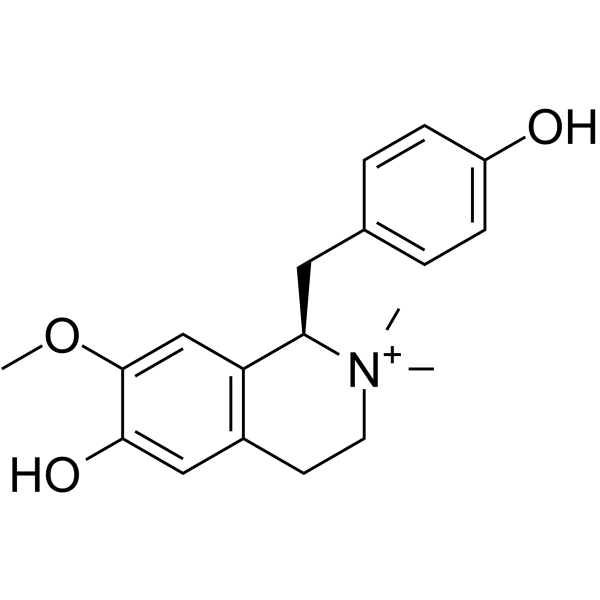
Lotusine is an orally active signaling pathway modulator and enzyme inhibitor, with an IC50 of 30.60 μg/mL against α-amylase and an IC50 of 36.15 μg/mL against α-glucosidase. Lotusine inhibits the EGFR-Akt-ERK signaling pathway by reducing the levels of phosphorylated EGFR, Akt and ERK. Lotusine induces apoptosis, triggers G0/G1 cell cycle arrest and inhibits cancer cell proliferation. Lotusine reduces lipid peroxidation and increases the activities of SOD, CAT and GPx. Lotusine is applicable to researches related to non-small cell lung cancer, type 2 diabetes and autism spectrum disorder .
loading...
    loading...
Cat. No.: HY-176279
Research Areas:  

Cancer

Hsp90-IN-42 is a heat shock protein 90 (Hsp90) inhibitor with an IC50 of 15.65 nM against human targets. Hsp90-IN-42 destabilizes EGFR and inhibits the activation of the EGFR-Akt signaling pathway. Hsp90-IN-42 suppresses the proliferation and migration of cancer cells, induces cell cycle arrest by downregulating CDK12 and CDK13, and triggers mild apoptosis via downregulating Bcl-2 and upregulating Bax. Hsp90-IN-42 inhibits tumor growth in xenograft mouse models. Hsp90-IN-42 can be used in research related to colorectal cancer .
loading...
    loading...
Cat. No.: HY-N4309A
CAS No.: 3721-76-4
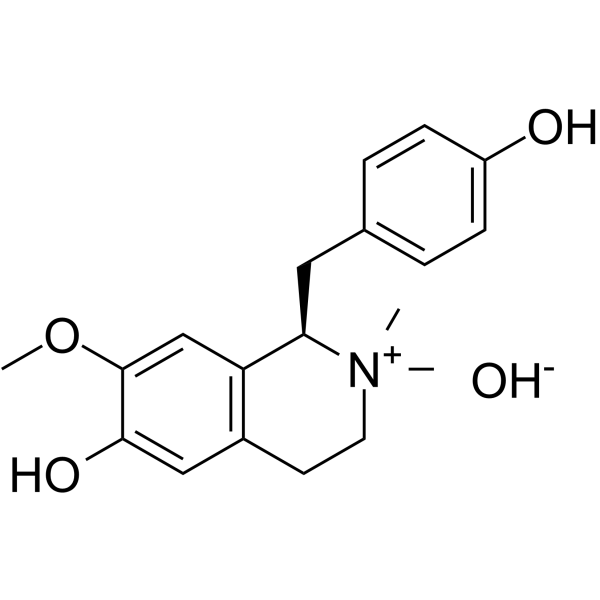
Lotusine hydroxide is an orally active signaling pathway modulator and enzyme inhibitor, with an IC50 of 30.60 μg/mL against α-amylase and an IC50 of 36.15 μg/mL against α-glucosidase. Lotusine hydroxide inhibits the EGFR-Akt-ERK signaling pathway by reducing the levels of phosphorylated EGFR, Akt and ERK. Lotusine hydroxide induces apoptosis, triggers G0/G1 cell cycle arrest and inhibits cancer cell proliferation. Lotusine hydroxide reduces lipid peroxidation and increases the activities of SOD, CAT and GPx. Lotusine hydroxide is applicable to researches related to non-small cell lung cancer, type 2 diabetes and autism spectrum disorder .
loading...
    loading...
Cat. No.: HY-181491
Research Areas:  

Cancer

Tubulin-IN-64 is a sulfonated styrylquinazoline derivative with high selectivity antitumor activity. Tubulin-IN-64 targets tubulin, inhibits the EGFR/Akt/mTOR and EGFR/Ras signaling pathways, induces cell cycle arrest, apoptosis and autophagy. Tubulin-IN-64 exhibits significant antitumor efficacy in the zebrafish GBM xenograft model. Tubulin-IN-64 can be used for the research on glioblastoma and leukemia .
loading...
    loading...

