6 Results for "

Fecal gut microbiota

" in MedChemExpress (MCE) Product Catalog:
Products (6)

6 Results for "Fecal gut microbiota" in MCE Product Catalog:

1
1 Cited Publications
Cat. No.: HY-N0468
CAS No.: 63279-13-0
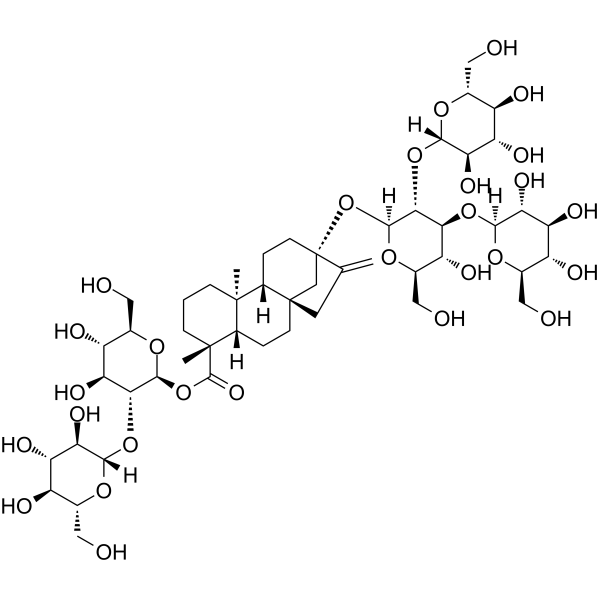
Rebaudioside D is an orally active sweetener that targets and activates FXR, modulates Acetyl-CoA Carboxylase, and inhibits 3-hydroxy-3-methylglutaryl-CoA reductase. Rebaudioside D regulates bile acid homeostasis and lipid metabolism, reduces the synthesis rates of fatty acids and cholesterol, and exerts multiple effects including anti-adipogenesis, hepatoprotection, anti-steatosis, gut microbiota modulation, enhancement of secondary bile acid metabolism, anti-endotoxin activity, regulation of bile acid transport, and inhibition of bile acid efflux. Rebaudioside D also reduces body weight gain, visceral fat accumulation, hepatic triglyceride and cholesterol accumulation, hepatic lipid peroxidation, and decreases the circulating level of lipopolysaccharide-binding protein. Rebaudioside D additionally enhances the secondary bile acid metabolic pathway of intestinal bacteria, upregulates the gene expression of ileal organic solute transporter α, and downregulates the gene expression of hepatic bile salt export pump. Rebaudioside D does not affect glucose homeostasis, alter total caloric intake or fecal energy excretion, induce weight gain, exacerbate obesity, promote hepatic steatosis, impair brown adipose tissue function, nor change skeletal muscle metabolism-related proteins. Rebaudioside D can be used in diet-induced obesity and obesity-related research .
loading...
    loading...
Cat. No.: HY-156261
CAS No.: 68990-09-0
Beef extract is a common ingredient in the preparation of biological culture media .
loading...
    loading...
Cat. No.: HY-148044
CAS No.: 372495-52-8
Purity:  99.33%
Research Areas:  

Infection

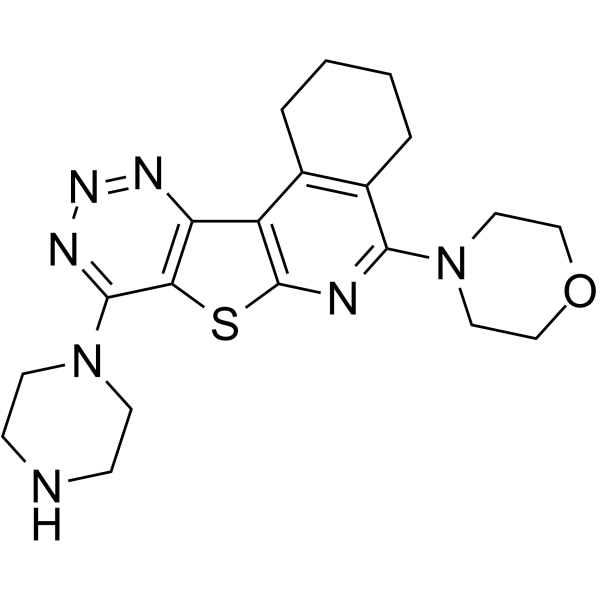
UNC10201652 is a potent Loop 1 (L1)-specific gut bacterial β-glucuronidase (GUSs) inhibitor with an IC50 value of 0.117 μM for E. coli GUS. UNC10201652 can block SN-38 glucuronide (HY-126373) processing only in individuals whose fecal gut microbiota is highly abundant in L1 GUS enzymes .
loading...
    loading...
Cat. No.: HY-W011730
CAS No.: 87178-63-0
Synonyms: Leu-Pro hydrochloride
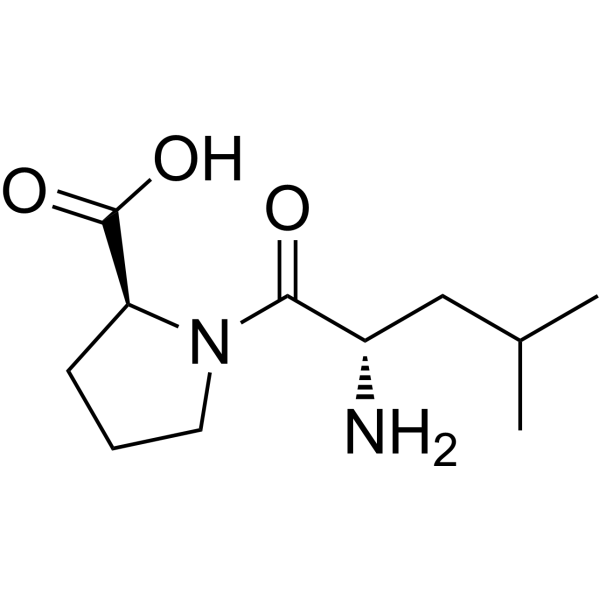
Leucylproline hydrochloride (Leu‑Pro hydrochloride) is a dipeptide composed of L‑leucine and L‑proline, and it is a fecal secondary metabolite associated with the gut microbiota. Leucylproline hydrochloride is taken up by Lactococcus lactis cells via the di‑tripeptide transport system, and mediates transcriptional repression of the prtP/prtM promoter after intracellular accumulation. The content of Leucylproline hydrochloride is significantly decreased in fecal samples related to hepatolenticular degeneration. Leucylproline hydrochloride can be used for the study of metabolism‑related diseases .
loading...
    loading...
Cat. No.: HY-114729
CAS No.: 6403-35-6
Synonyms: Leu-Pro
Leucylproline (Leu‑Pro) is a dipeptide composed of L‑leucine and L‑proline, and it is a fecal secondary metabolite associated with the gut microbiota. Leucylproline is taken up by Lactococcus lactis cells via the di‑tripeptide transport system, and mediates transcriptional repression of the prtP/prtM promoter after intracellular accumulation. The content of leucylproline is significantly decreased in fecal samples related to hepatolenticular degeneration. Leucylproline can be used for the study of metabolism‑related diseases .
loading...
    loading...
Cat. No.: HY-N0468R
CAS No.: 63279-13-0
Rebaudioside D (Standard) is the analytical standard of Rebaudioside D. This product is intended for research and analytical applications. Rebaudioside D is an orally active sweetener that targets and activates FXR, modulates Acetyl-CoA Carboxylase, and inhibits 3-hydroxy-3-methylglutaryl-CoA reductase. Rebaudioside D regulates bile acid homeostasis and lipid metabolism, reduces the synthesis rates of fatty acids and cholesterol, and exerts multiple effects including anti-adipogenesis, hepatoprotection, anti-steatosis, gut microbiota modulation, enhancement of secondary bile acid metabolism, anti-endotoxin activity, regulation of bile acid transport, and inhibition of bile acid efflux. Rebaudioside D also reduces body weight gain, visceral fat accumulation, hepatic triglyceride and cholesterol accumulation, hepatic lipid peroxidation, and decreases the circulating level of lipopolysaccharide-binding protein. Rebaudioside D additionally enhances the secondary bile acid metabolic pathway of intestinal bacteria, upregulates the gene expression of ileal organic solute transporter α, and downregulates the gene expression of hepatic bile salt export pump. Rebaudioside D does not affect glucose homeostasis, alter total caloric intake or fecal energy excretion, induce weight gain, exacerbate obesity, promote hepatic steatosis, impair brown adipose tissue function, nor change skeletal muscle metabolism-related proteins. Rebaudioside D can be used in diet-induced obesity and obesity-related research .
loading...
    loading...

