1. Search Result
Search Result
Results for "

Fluorescence properties

" in MedChemExpress (MCE) Product Catalog:

60

Inhibitors & Agonists

42

Fluorescent Dye

3

Biochemical Assay Reagents

1

Peptides

3

Natural
Products

2

Click Chemistry

Cat. No. Product Name Target Research Areas Chemical Structure
  • HY-D1301
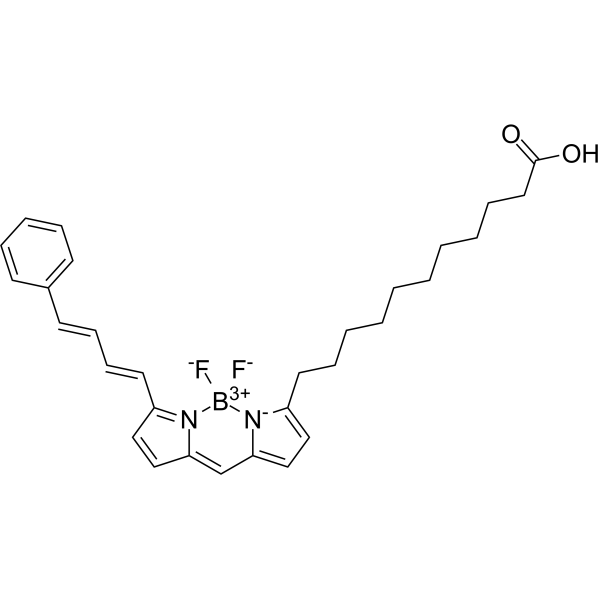
    BODIPY 581/591 C11
    Maximum Cited Publications
    135 Publications Verification

    Fluorescent Dye Ferroptosis Metabolic Disease Inflammation/Immunology Cancer
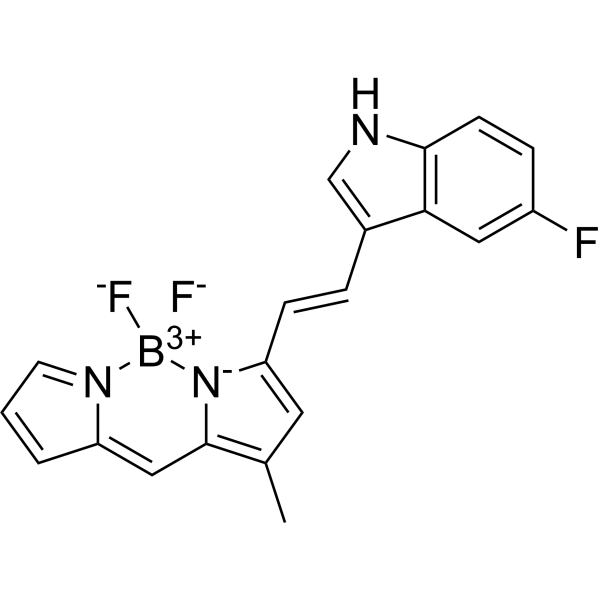
    BODIPY 581/591 C11 is a BODIPY borofluoroprene derivative with good light stability and low fluorescence artifacts. BODIPY 581/591 C11 can be used for study lipid peroxidation and antioxidant properties in living cells, or detect ferroptosis by reaction with hydroxyl radicals. BODIPY 581/591 C11 is emitted at 591 nm (reduced prototype), or redshifted to 510 nm (oxidized type). The excitation wavelengths were 581 nm (reduced prototype) and 500 nm (oxidized type) .
    BODIPY 581/591 C11
  • HY-D1730
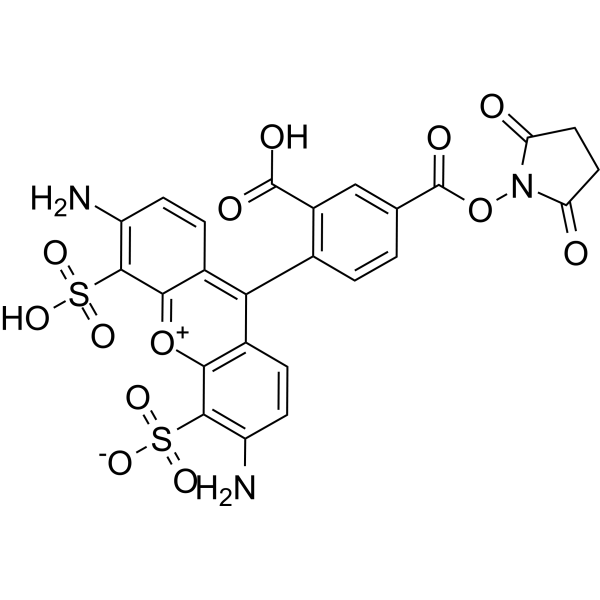
    AF488 NHS ester
    1 Publications Verification

    Fluorescent Dye Others
    AF488 NHS ester is an amine specific fluorescence probe (Em=525 nm). AF488 NHS ester reacts with sulfhydryl groups and amines in aqueous and biological samples then change their chemical structure and fluorescence properties after derivatization .
    AF488 NHS ester
  • HY-110210

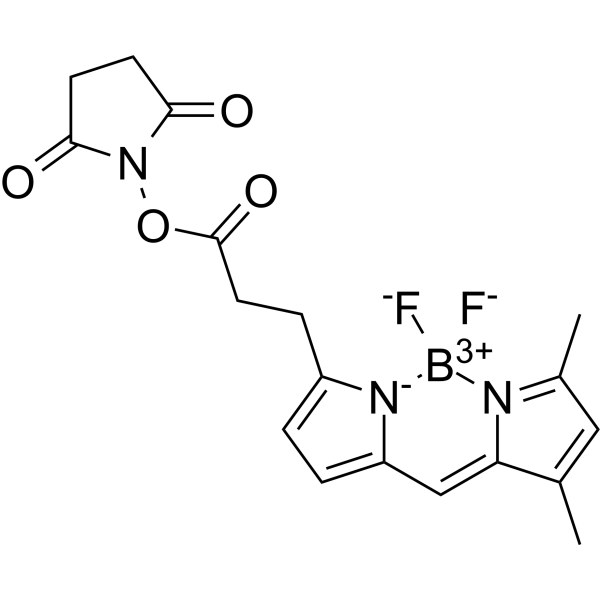
    BODIPY FL,SE

    Fluorescent Dye Others
    BODIPY FL NHS ester (BODIPY FL, SE) is a cell membranes-penatrable amine-reactive fluorescent probe. The maximum excitation/emission wavelength of the BODIPY-FL NHS ester are 502/511 nm, respectively. BODIPY-FL NHS ester has high stability and is insensitive to the polarity, pH and type of solvent, and can maintain stable fluorescence properties under different environmental conditions. BODIPY-FL NHS ester can be used for the synthesis of protease substrates, live cell imaging, protein labeling and immunoassay .
    BODIPY-FL NHS ester
  • HY-D0791
    TRITC
    1 Publications Verification

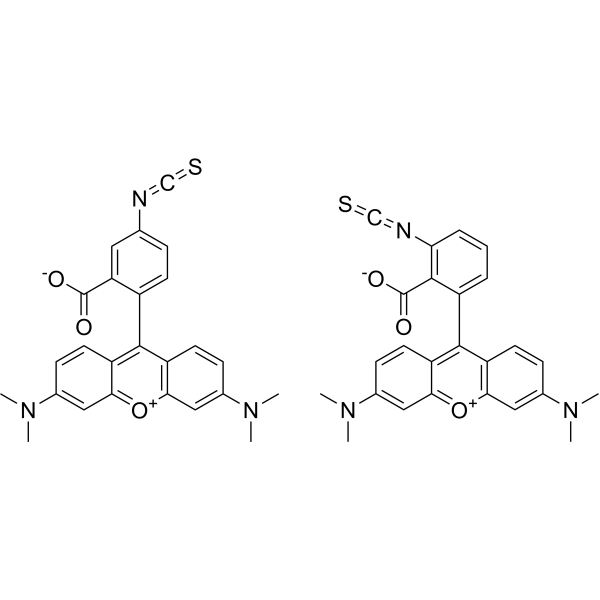
    5(6)-Tetramethylrhodamine isothiocyanate

    Fluorescent Dye Others
    TRITC (5(6)-Tetramethylrhodamine isothiocyanate) is a commonly used fluorescent dye, belonging to the Rhodamine derivative family. It exhibits red fluorescence properties (Ex/Em ≈ 550/580 nm). TRITC can be used for cell labeling and imaging .
    TRITC
  • HY-DY1022

    Ferroptosis Fluorescent Dye Metabolic Disease Inflammation/Immunology Cancer
    BODIPY 581/591 C11 (solution) is a BODIPY borofluoroprene derivative with good light stability and low fluorescence artifacts. BODIPY 581/591 C11 can be used for study lipid peroxidation and antioxidant properties in living cells, or detect ferroptosis by reaction with hydroxyl radicals. BODIPY 581/591 C11 is emitted at 591 nm (reduced prototype) , or redshifted to 510 nm (oxidized type). The excitation wavelengths were 581 nm (reduced prototype) and 500 nm (oxidized type) .
    Solvent and concentration: DMSO: 2 mM
    BODIPY 581/591 C11 (solution)
  • HY-D1730A
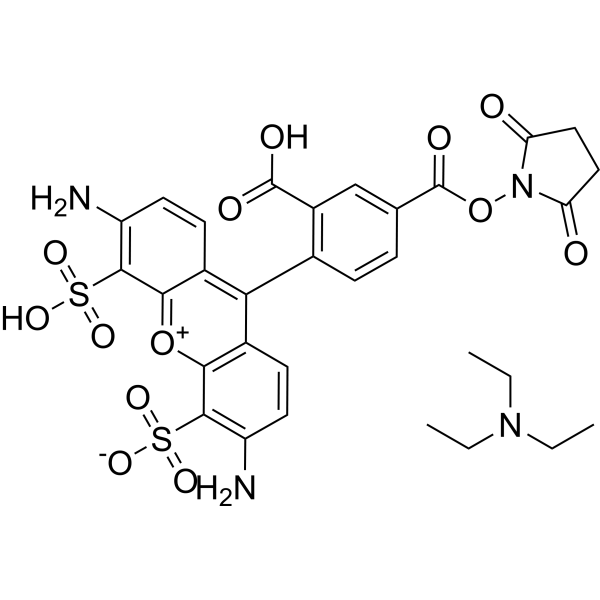
    AF488 NHS ester TEA
    1 Publications Verification

    Fluorescent Dye Others
    AF488 NHS ester TEA is an amine specific fluorescence probe (λem=525 nm=525 nm). AF488 NHS ester reacts with sulfhydryl groups and amines in aqueous and biological samples then change their chemical structure and fluorescence properties after derivatization. AF488 exhibits the λem and λex wavelength of 520 nm and 470 nm, respectively .
    AF488 NHS ester TEA
  • HY-N1347
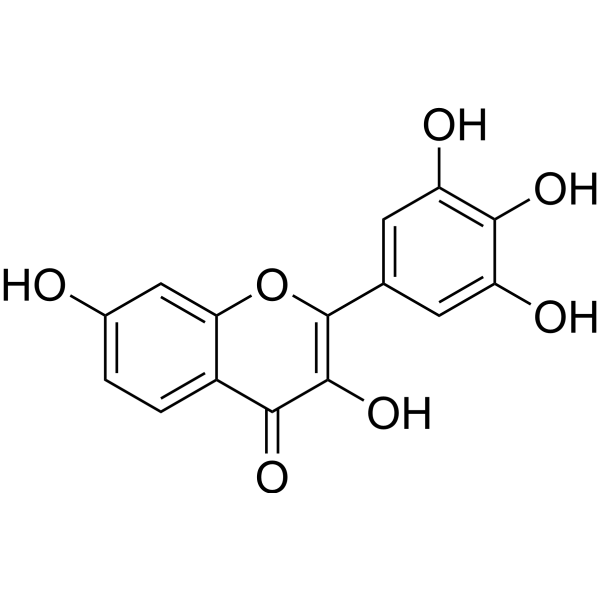
    Robinetin
    1 Publications Verification

    3,3',4',5',7-Pentahydroxyflavone

    Fungal HIV Integrase Bacterial Infection
    Robinetin (3,3',4',5',7-Pentahydroxyflavone), a naturally occurring flavonoid with remarkable ‘two color’ intrinsic fluorescence properties, has antifungal, antiviral, antibacterial, antimutagenesis, and antioxidant activity. Robinetin also can inhibit lipid peroxidation and protein glycosylation .
    Robinetin
  • HY-D0031

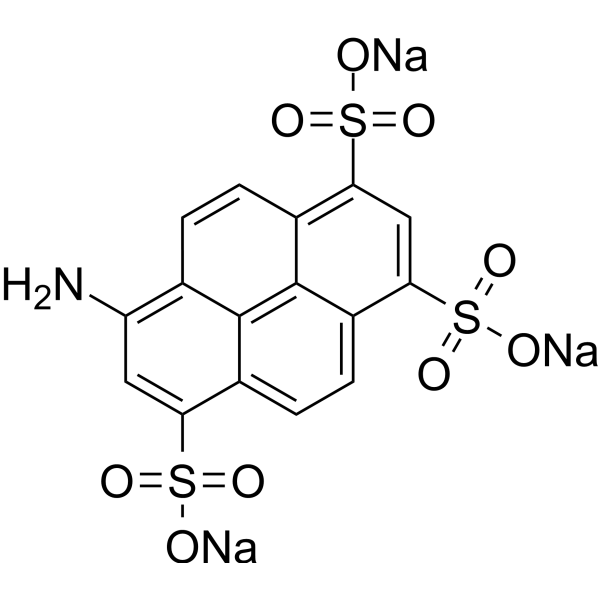
    APTS

    Fluorescent Dye Others
    8-Aminopyrene-1,3,6-trisulfonic acid trisodium (APTS) is an anionic fluorescent dye (excitation/emission: 425/503 nm in pH 7.4 PBS). The fluorescence intensity of 8-Aminopyrene-1,3,6-trisulfonic acid trisodium remains stable at pH 4-10. 8-Aminopyrene-1,3,6-trisulfonic acid trisodium retains its fluorescence properties when immobilized in a hydrogel by copolymerization. 8-Aminopyrene-1,3,6-trisulfonic acid trisodium can be used for glucose sensing .
    8-Aminopyrene-1,3,6-trisulfonic acid trisodium
  • HY-D1247

    Biochemical Assay Reagents Others
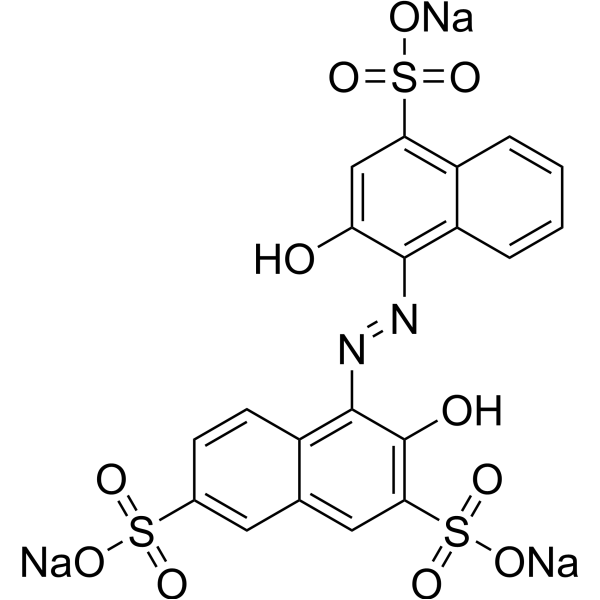
    Hydroxynaphthol Blue is an azo dye and serves as a metal indicator. Hydroxynaphthol Blue binds to specific metal ions to form stable complexes with distinct color and fluorescence properties. Hydroxynaphthol Blue is used for the visual monitoring of isothermal nucleic acid amplification results. A visible color difference appears between positive and negative nucleic acid amplification reactions, allowing result discrimination by the naked eye without opening the reaction tube .
    Hydroxynaphthol Blue
  • HY-D1872

    Fluorescent Dye Others
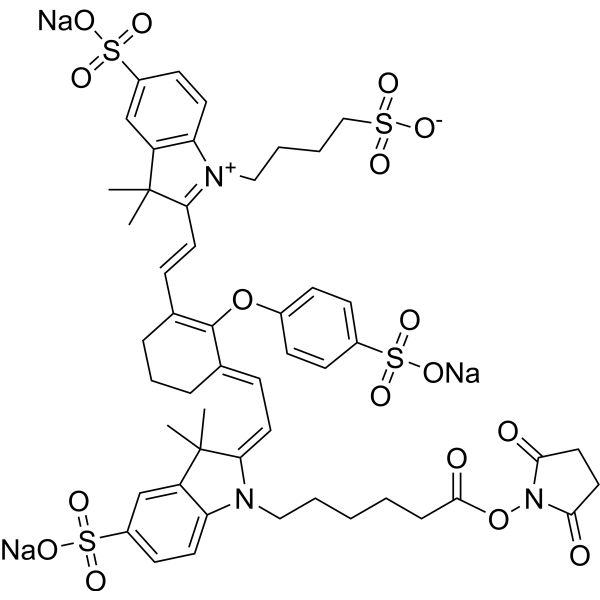
    800CW NHS ester is a near-infrared fluorescent dye active ester that can conjugate with amine-containing small molecules, antibodies, peptides, and other substances to form fluorescent conjugates. 800CW NHS ester exhibits high fluorescence quantum yield and low non-specific binding properties. 800CW NHS ester can be used in biomedical research such as microbial infection imaging, tumor imaging, and biochemical detection .
    800CW NHS ester
  • HY-W127703
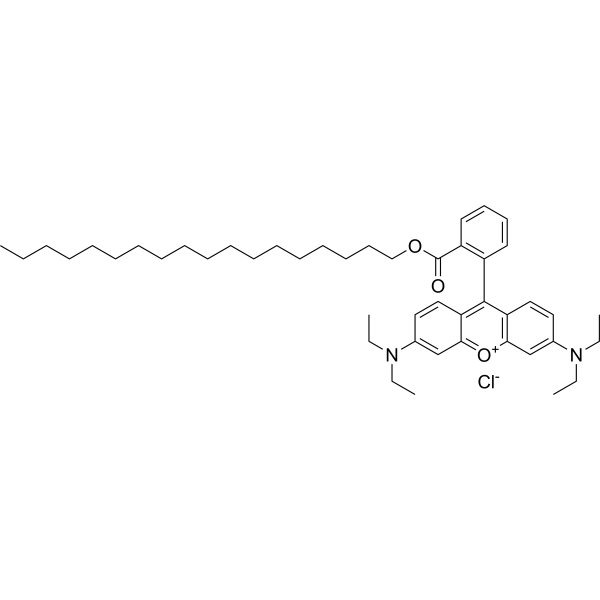
    Octadecyl Rhodamine B chloride
    1 Publications Verification

    Fluorescent Dye Biochemical Assay Reagents Others
    Octadecyl Rhodamine B chloride is an amphiphilic fluorescent probe with both membrane-binding ability and fluorescent properties, which easily forms aggregates in aqueous phase leading to self-quenching. Octadecyl Rhodamine B chloride can be used for cell membrane staining and further applied in membrane biology research. The maximum absorption/emission wavelengths of Octadecyl Rhodamine B chloride monomer in Triton X-100 are 565 nm/585 nm; the absorption peaks of aggregates in water are blue-shifted to 524 nm and 574 nm, with significantly quenched fluorescence .
    Octadecyl Rhodamine B chloride
  • HY-D1040

    Cyanine 5.5 carboxylic acid

    Fluorescent Dye Others
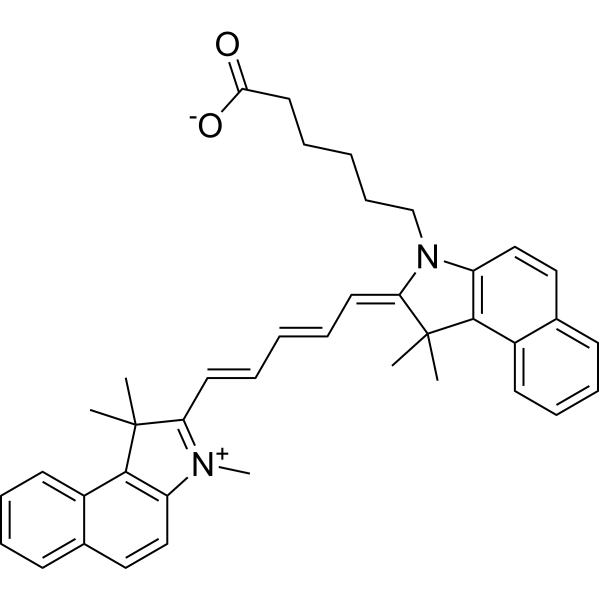
    Cy5.5-COOH (Cyanine 5.5 carboxylic acid) is a fluorescent dye that emits fluorescence at 710 nm upon excitation at 650 nm. Cy5.5-COOH possesses excellent spectral properties, including a narrow absorption spectrum, high sensitivity, and stability. Cy5.5-COOH can be used for bioimaging and disease diagnosis .
    Cy5.5-COOH
  • HY-W923198

    Methacryloyloxy fluorescein

    Fluorescent Dye Others
    Fluorescein O-methacrylate (Methacryloyloxy fluorescein) is a pH-responsive fluorescent monomeric dye. Fluorescein O-methacrylate exhibits pH-responsive fluorescence properties: its fluorescence is activated under alkaline conditions and quenched under neutral or acidic conditions; reversible switching of fluorescence is achievable by adjusting the pH of the solution. Fluorescein O-methacrylate can be used as a monomer for the synthesis of amphiphilic fluorescein polymers. These polymers can self-assemble into stable polymer nanoparticles with enhanced aqueous-phase fluorescence, and also enable the conjugation of nanoparticles with amine-containing biomolecules to support sensitive optical detection of biomarkers (Ex/Em = 490/520 nm) .
    Fluorescein O-methacrylate
  • HY-D0784
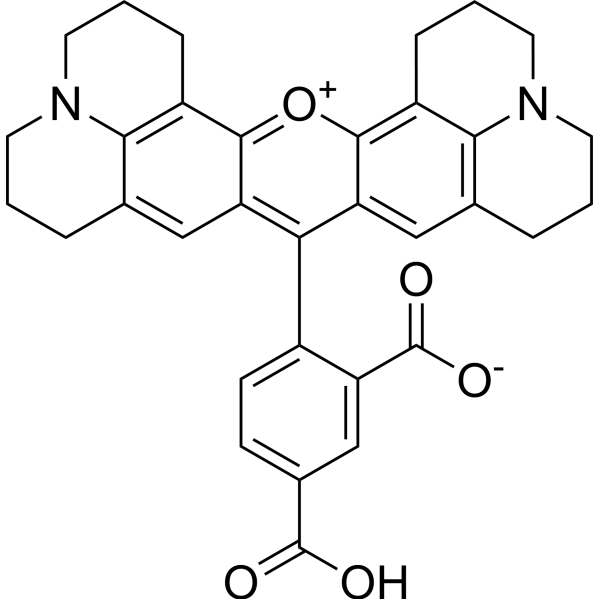
    5-ROX
    1 Publications Verification

    5-Carboxy-X-rhodamine

    Fluorescent Dye Others
    5-ROX (5-Carboxy-X-rhodamine), a rhodamine dye, exhibits strong fluorescence property in aqueous buffer with the λexit of 580 nm (ε=3.6×10 4 M -1 cm -1), and λemit of 604 nm (=0.94) .
    5-ROX
  • HY-D0077

    Oregon green 488

    Fluorescent Dye Others
    2',7'-Difluorofluorescein (Oregon green 488) is a fluorescein derivative and a pH-sensitive fluorescent probe (pKa ~4.7). Upon excitation at 488 nm, 2',7'-Difluorofluorescein exhibits pH-sensitive fluorescence intensity through the formation of dianions, while its pH sensitivity decreases under excitation at 450 nm, allowing its use in ratiometric pH analysis. 2',7'-Difluorofluorescein can be used for the quantitative analysis of pH values in the range of 2-7 in submicron aerosol particles. 2',7'-Difluorofluorescein undergoes buffer-mediated and buffer-free excited-state proton transfer between different protonated forms, and its cationic form undergoes rapid excited-state deprotonation. 2',7'-Difluorofluorescein is resistant to photodegradation, maintains stable absorption and fluorescence properties within the physiological pH range, and serves as a fluorescent protein label, a component of Ca 2+ indicators, a fluorescent imaging agent, and an anisotropy probe .
    2',7'-Difluorofluorescein
  • HY-D2264

    Fluorescent Dye Others
    Caffeine orange (Compound 1) is an aqueous-phase fluorescence turn-on sensor for caffeine that is highly selective to caffeine. Caffeine orange makes caffeinated coffee appear orange when exposed to 532 nM of green excitation light. Caffeine orange has excellent photophysical properties such as high extinction coefficient, high light stability and narrow emission bandwidth, which can be used in the research of caffeine detection devices .
    Caffeine orange
  • HY-129763

    Fluorescent Dye Cardiovascular Disease
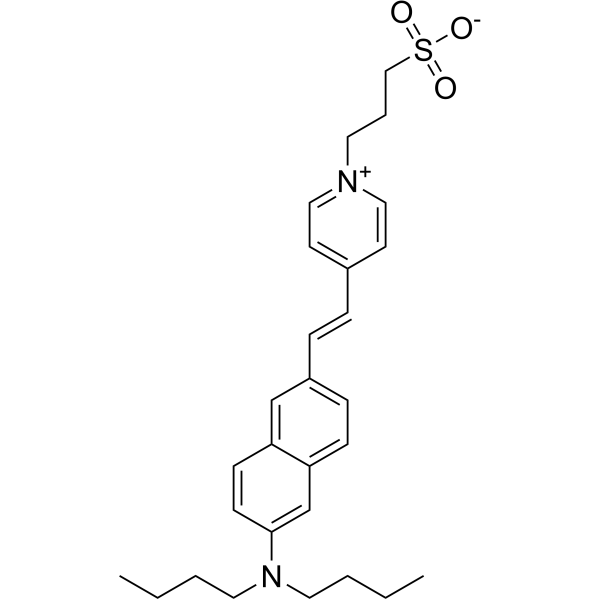
    Di-4-ANEPPS is a voltage-sensitive dye that acts on voltage-gated ion channels (such as sodium channels) and inhibits sodium current, significantly reducing sodium current density, although specific values like IC50 remain unclear. It mainly binds to the voltage-sensitive regions on the cell membrane, changing its fluorescence properties to reflect membrane potential changes and thus affecting the function of ion channels to exert its activity. This substance can be used in cardiovascular research, such as the electrophysiology of cardiomyocytes, myocardial ischemia, and the effects of drugs on cardiomyocytes. It is of great value in evaluating drug cardiotoxicity and exploring the mechanisms of arrhythmias .
    Di-4-ANEPPS
  • HY-W089353
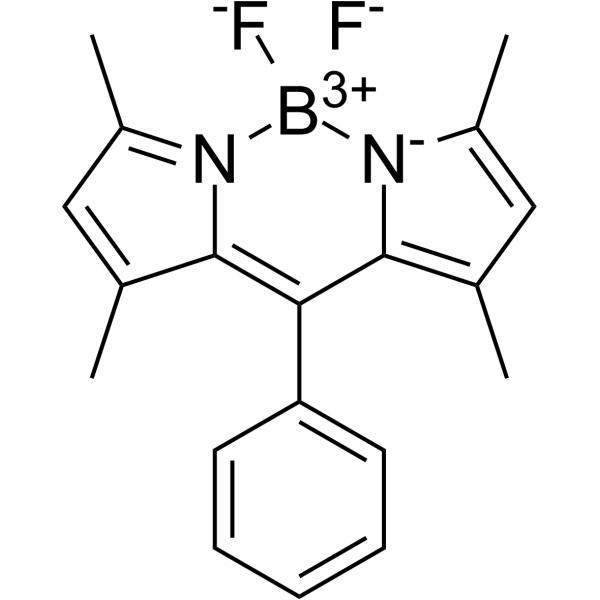
    8-Phenyl-BODIPY 505/515
    1 Publications Verification

    MOFs Fluorescent Dye Others
    8-Phenyl-BODIPY 505/515 is a molecular rotor based on the BODIPY scaffold, specifically used as a microviscosity probe. The working principle of 8-Phenyl-BODIPY 505/515 is based on the restriction of molecular motion by viscosity: in a high-viscosity environment, the rotational freedom of its chemical bonds is inhibited, which leads to a significant extension of fluorescence lifetime. This property makes 8-Phenyl-BODIPY 505/515 an effective tool for monitoring changes in the viscosity of intracellular microenvironments via fluorescence lifetime imaging (FLIM) technology .
    8-Phenyl-BODIPY 505/515
  • HY-D1991

    Fluorescent Dye Others
    ATTO 647 is a carborhodamine fluorophore and imaging tracer with photostable properties. ATTO 647 serves as a fluorescent probe to investigate cell membrane structure and diffusion characteristics. When conjugated with wheat germ agglutinin, ATTO 647 specifically binds to N-acetyl-β-D-glucosamine and sialic acid residues on membrane glycoproteins, enabling single-molecule tracing of glycoprotein diffusion. ATTO 647 exhibits highly stable fluorescence properties with significantly reduced blinking in mounting media such as ROXS (AA/MV) and ROXS (TX/TQ), whereas its brightness properties vary in Ibidi-MM and Vectashield. ATTO 647 can also be used to label histone H2B-GFP in fixed cells for confocal microscopy photobleaching experiments .
    ATTO 647
  • HY-D1190

    RAR/RXR Others
    DC271 is a RAR agonist and synthetic retinoid that binds to the retinoid-binding site of cellular retinoic acid-binding protein II (CRBP-II). DC271 exhibits solvatochromic fluorescence properties: it produces intense blue-shifted emission in nonpolar environments and weak red-shifted emission in polar environments, and its severe fluorescence quenching in aqueous solutions can be reversed by embedding in the hydrophobic retinoid-binding protein pocket. DC271 enables direct detection of the binding between unlabeled compounds and related retinoid-binding proteins via fluorescence competition assays (Ex/Em = 355 nm/460 nm) .
    DC271
  • HY-107864

    Tetraiodofluorescein

    Fluorescent Dye Infection
    Erythrosine B free acid is a visibly red dye with colorimetric and fluorescent properties that serves as an important dye for many Gram-positive and -negative bacteria. Erythrosine B free acid can be used for live/dead determination in both colorimetric and fluorescence-based assays for low, medium and high-throughput experimentation .
    Erythrosine B free acid
  • HY-D2062

    Fluorescent Dye Integrin Cancer
    ATTO 740 NHS ester is a near-infrared fluorescent dye and a multimodal fluorescence/photoacoustic contrast agent with excellent near-infrared emission properties and extremely high photostability. The photoacoustic signal of ATTO 740 NHS ester shows no significant decrease after continuous irradiation with a 750 nm laser for 30 min, making it suitable for in vivo fluorescence imaging and photoacoustic contrast imaging. When conjugated with the cystine knot peptide R01, ATTO 740 NHS ester enables precise detection of integrin αvβ6-positive cells and tumors in nude mouse xenograft models .
    ATTO 740 NHS ester
  • HY-D1482

    Fluorescent Dye Others
    Sulfo Cy5-tetrazine is a tetrazine-coupled Cy5 (HY-D0821) derivative dye with fluorescence properties similar to CY5 (Ex/Em=633/647 nm). Sulfo-Cy5-tetrazine is a click chemistry reagent, it contains a Tetrazine group that can undergo an inverse electron demand Diels-Alder reaction (iEDDA) with molecules containing TCO groups .
    Sulfo-Cy5-tetrazine
  • HY-W090065

    1-Pyrenemethylamine hydrochloride

    Biochemical Assay Reagents Others
    Pyren-1-ylmethanamine hydrochloride, Pyren-1-ylmethanamine hydrochloride is commonly used as a fluorescent probe in biochemistry and molecular biology to detect and study nucleic acids, proteins and other biomolecules, moreover, it has been used in analytical chemistry Among them, for the detection of heavy metals and other pollutants in environmental samples, the pyrene group in the molecule exhibits strong fluorescence properties, which makes it useful as a sensitive and selective detector in various applications.
    Pyren-1-ylmethanamine hydrochloride
  • HY-W127832
    Ru(dpp)3(PF6)2
    1 Publications Verification

    Fluorescent Dye Others
    Ru(dpp)3(PF6)2 is a complex containing metallic ruthenium (Ru) and is a chemiluminescent oxygen probe. [Ru(dpp)3] 2+ is a luminescent substance that can undergo metal-to-ligand charge transfer (MLCT), and fluorescence will appear during the transfer of Ru to the ligand. At the same time, the fluorescence of Ru(dpp)3(PF6)2 is effectively quenched by molecular oxygen, so it is widely used in biosensors, environmental monitoring, and materials science. The property of Ru(dpp)3(PF6)2, which oxidizes Ru 2+ to Ru 3+, has also been used to design and construct solid-state light-emitting electrochemical cells .
    Ru(dpp)3(PF6)2
  • HY-D2444

    Fluorescent Dye Cancer
    AF555 NHS is a red fluorescent dye with excellent fluorescence properties and light stability. The excitation wavelength is 556 nm and the emission wavelength is 571 nm, which can be used for protein labeling, antibody labeling, and cell imaging .
    AF555 NHS
  • HY-D2437

    Fluorescent Dye Antibiotic Cardiovascular Disease Cancer
    DOX-PEG-Cy3 (Doxorubicin-PEG-Cy3) is a Cy3 (HY-D0822) labeled DOX-PEG conjugate. The Cy3 fluorophore is commonly used in applications such as immunolabeling, nucleic acid labeling, fluorescence microscopy, and flow cytometry. Cy3 has an emission maximum around 562-570 nm. DOX is a broad-spectrum anthracycline antibiotic with cytotoxic properties .
    DOX-PEG-Cy3
  • HY-D2940

    SiR650-BG

    Fluorescent Dye Others
    SiR-SNAP (SiR650-BG) is a SiR-labeled SNAP tag near-infrared fluorescent probe (Ex/Em: 645 nm/661 nm). SiR-SNAP combines excellent optical properties, good cell membrane permeability, and environmentally sensitive fluorescence characteristics, providing a powerful tool for the dynamic study of proteins in living cells .
    SiR-SNAP
  • HY-P5520

    Bombesin Receptor Radionuclide-Drug Conjugates (RDCs) Cancer
    GB-6 is a short linear peptide that targets the gastrin releasing peptide receptor (GRPR). GRPR is overexpressed in pancreatic cancer. Based on the tumor selectivity and tumor-specific accumulation properties of GB-6, GB-6 labeled with near infrared (NIR) fluorescent dyes or radionuclide netium-99m (99mTc) can be used as a high-contrast imaging probe. GB-6 has excellent in vivo stability, with tumor to pancreatic and intestinal fluorescence signal ratios of 5.2 and 6.3, respectively, in SW199 0 subcutaneous xenograft models. GB-6 can rapidly target tumors and accurately delineate tumor boundaries, which has broad application prospects .
    GB-6
  • HY-D2204

    Phosphatase SHP1 Fluorescent Dye Cancer
    SHP1-IN-1 (compound 5p) is a fluorescent probe for the protein tyrosine phosphatase SHP1 containing the Src homology 2 domain. SHP1-IN-1 has SHP1 inhibitory activity, selectivity for Fe 3+ ions and good fluorescence properties. SHP1-IN-1 exhibits aggregation post-quenching (ACQ) effect, good interference immunity and low detection limit (5.55 μM) .
    SHP1-IN-1
  • HY-152102

    Fluorescent Dye Cancer
    BTCy is a near-infrared (NIR) fluorescence probe with polarity-responsive and cell plasma membrane-targeting properties. BTCy can be used for in vivo imaging of tumor tissue (λex = 561 nm, λem = 600-700 nm) .
    BTCy
  • HY-120948

    Fluorescent Dye Others
    RU 45196 is an 11 beta-substituted 19-norsteroid of the estra-4,9-diene series. RU 45196 displays fluorescence properties (excitation at 480 nm, emission at 525 nm) as well as high binding affinities for the glucocorticoid and progesterone receptors .
    RU 45196
  • HY-D2968

    Fluorescent Dye Neurological Disease
    DCM-ONOO is a near-infrared two-photon fluorescence probe specifically designed for real-time monitoring of the dynamic fluctuations of peroxynitrite (ONOO⁻) in epilepsy models. DCM-ONOO exhibits excellent optical properties, with a single photon excitation (Ex) of 520 nm; a single photon emission (Em) of 685 nm; a two-photon excitation of 820 nm; and a Stokes shift of 165 nm. When DCM-ONOO is combined with ONOO⁻, it shifts from 460 nm to 512 nm, and only generates a significant fluorescence response to ONOO⁻. DCM-ONOO has been successfully applied to rat epilepsy models .
    DCM–ONOO
  • HY-N1347R

    3,3',4',5',7-Pentahydroxyflavone (Standard)

    Reference Standards Fungal HIV Integrase Bacterial Infection
    Robinetin (Standard) is the analytical standard of Robinetin. This product is intended for research and analytical applications. Robinetin (3,3',4',5',7-Pentahydroxyflavone), a naturally occurring flavonoid with remarkable ‘two color’ intrinsic fluorescence properties, has antifungal, antiviral, antibacterial, antimutagenesis, and antioxidant activity. Robinetin also can inhibit lipid peroxidation and protein glycosylation .
    Robinetin (Standard)
  • HY-D1040A

    Cyanine 5.5 carboxylic acid chloride

    Fluorescent Dye Others
    Cy5.5-COOH (Cyanine 5.5 carboxylic acid) chloride is a fluorescent dye that emits fluorescence at 710 nm upon excitation at 650 nm. Cy5.5-COOH chloride possesses excellent spectral properties, including a narrow absorption spectrum, high sensitivity, and stability. Cy5.5-COOH chloride can be used for bioimaging and disease diagnosis .
    CY5.5-COOH chloride
  • HY-D1482A

    Fluorescent Dye Others
    Sulfo Cy5-tetrazine sodium is a tetrazine-coupled Cy5 (HY-D0821) derivative dye with fluorescence properties similar to CY5 (Ex/Em=633/647 nm). Sulfo-Cy5-tetrazine sodium is a click chemistry reagent, it contains a Tetrazine group that can undergo an inverse electron demand Diels-Alder reaction (iEDDA) with molecules containing TCO groups .
    Sulfo Cy5-tetrazine sodium
  • HY-180493

    Fluorescent Dye Others
    p-DNSB is a bridged compound. p-DNSB shows fluorescence properties (wavelengths in Diethylether: 416 nm (absorption); 574 nm (emission)) .
    p-DNSB
  • HY-N9935

    Drug Derivative Others
    Coumestrol dimethyl ether (compound 2) is a methylated derivative of the phytoestrogen Coumestrol (HY-N2335). Coumestrol dimethyl ether can be used as a model compound for studying the protonation and fluorescence properties of Coumestrol .
    Coumestrol dimethyl ether
  • HY-D3033

    Fluorescent Dye Others
    FITC-Alginate is a FITC (HY-66019)-labeled alginate. FITC-Alginate combines the polysaccharide properties of alginate with the fluorescence properties of FITC, playing an important role in fields such as fluorescent labeling, cell imaging, and drug delivery research (Ex/Em = 488/525 nm).
    FITC-Alginate
  • HY-D3035

    Fluorescent Dye Others
    Rhodamine-Alginate is a Rhodamine B (HY-Y0016)-labeled alginate. Rhodamine-Alginate combines the polysaccharide properties of alginate with the fluorescence properties of Rhodamine B, playing an important role in fields such as fluorescent labeling, cell imaging, and drug delivery research (Ex/Em = 546/610 nm) .
    Rhodamine-Alginate
  • HY-D3019

    Fluorescent Dye Others
    CY5-Alginate is a CY5 (HY-D0821)-labeled alginate.CY5-Alginate combines the polysaccharide properties of alginate with the fluorescence properties of CY5, playing an important role in fields such as fluorescent labeling, cell imaging, and drug delivery research (Ex/Em = 633/670 nm).
    CY5-Alginate
  • HY-D3018

    Fluorescent Dye Others
    CY3-Alginate is a CY3 (HY-D0822)-labeled alginate. CY3-Alginate combines the polysaccharide properties of alginate with the fluorescence properties of CY3, playing an important role in fields such as fluorescent labeling, cell imaging, and drug delivery research (Ex/Em = 550/570 nm).
    CY3-Alginate
  • HY-D3021

    Fluorescent Dye Others
    CY7-Alginate is a CY7 (HY-D0825)-labeled alginate. CY7-Alginate combines the polysaccharide properties of alginate with the fluorescence properties of CY7, playing an important role in fields such as fluorescent labeling, cell imaging, and drug delivery research (Ex/Em = 740/770 nm).
    CY7-Alginate
  • HY-D3048

    Fluorescent Dye Others
    Rhodamine B-Chitosan (MW 3000) is a Rhodamine B (HY-Y0016)-labeled chitosan with a molecular weight of 3000. Rhodamine B-Chitosan (MW 3000) combines the polysaccharide properties of chitosan with the fluorescence properties of Rhodamine B, playing an important role in fields such as fluorescent labeling, cell imaging, and drug delivery research (Ex/Em = 546/610 nm) .
    Rhodamine B-Chitosan (MW 3000)
  • HY-D3048D

    Fluorescent Dye Others
    Rhodamine B-Chitosan (MW 40000) is a Rhodamine B (HY-Y0016)-labeled chitosan with a molecular weight of 40,000. Rhodamine B-Chitosan (MW 40000) combines the polysaccharide properties of chitosan with the fluorescence properties of Rhodamine B, playing an important role in fields such as fluorescent labeling, cell imaging, and drug delivery research (Ex/Em = 546/610 nm) .
    Rhodamine B-Chitosan (MW 40000)
  • HY-D3048A

    Fluorescent Dye Others
    Rhodamine B-Chitosan (MW 5000) is a Rhodamine B (HY-Y0016)-labeled chitosan with a molecular weight of 5,000. Rhodamine B-Chitosan (MW 5000) combines the polysaccharide properties of chitosan with the fluorescence properties of Rhodamine B, playing an important role in fields such as fluorescent labeling, cell imaging, and drug delivery research (Ex/Em = 546/610 nm) .
    Rhodamine B-Chitosan (MW 5000)
  • HY-D3048E

    Fluorescent Dye Others
    Rhodamine B-Chitosan (MW 100000) is a Rhodamine B (HY-Y0016)-labeled chitosan with a molecular weight of 100,000. Rhodamine B-Chitosan (MW 100000) combines the polysaccharide properties of chitosan with the fluorescence properties of Rhodamine B, playing an important role in fields such as fluorescent labeling, cell imaging, and drug delivery research (Ex/Em = 546/610 nm) .
    Rhodamine B-Chitosan (MW 100000)
  • HY-D3048B

    Fluorescent Dye Others
    Rhodamine B-Chitosan (MW 10000) is a Rhodamine B (HY-Y0016)-labeled chitosan with a molecular weight of 10,000. Rhodamine B-Chitosan (MW 10000) combines the polysaccharide properties of chitosan with the fluorescence properties of Rhodamine B, playing an important role in fields such as fluorescent labeling, cell imaging, and drug delivery research (Ex/Em = 546/610 nm) .
    Rhodamine B-Chitosan (MW 10000)
  • HY-D3048I

    Fluorescent Dye Others
    Rhodamine B-Chitosan (MW 10000) is a Rhodamine B (HY-Y0016)-labeled chitosan with a molecular weight of 10,000. Rhodamine B-Chitosan (MW 10000) combines the polysaccharide properties of chitosan with the fluorescence properties of Rhodamine B, playing an important role in fields such as fluorescent labeling, cell imaging, and drug delivery research (Ex/Em = 546/610 nm) .
    Rhodamine B-Chitosan (MW 500000)
  • HY-D3048H

    Fluorescent Dye Others
    Rhodamine B-Chitosan (MW 200000) is a Rhodamine B (HY-Y0016)-labeled chitosan with a molecular weight of 200,000. Rhodamine B-Chitosan (MW 200000) combines the polysaccharide properties of chitosan with the fluorescence properties of Rhodamine B, playing an important role in fields such as fluorescent labeling, cell imaging, and drug delivery research (Ex/Em = 546/610 nm) .
    Rhodamine B-Chitosan (MW 200000)

Inquiry Online

Your information is safe with us. * Required Fields.

Salutation


Country or Region *

Applicant Name *


Organization Name *

Department *


Email Address *


Product Name *

Cat. No.


Requested quantity *

Phone Number *


Remarks

Inquiry Online

Inquiry Information

Product Name:
Cat. No.:
Quantity:
MCE Japan Authorized Agent:

