
Search Result
Results for "
GC/MWCNT electrodes
" in MedChemExpress (MCE) Product Catalog:
9
Biochemical Assay Reagents
2
Isotope-Labeled Compounds
| Cat. No. |
Product Name |
Target |
Research Areas |
Chemical Structure |
-
- HY-D0175
-
|
γ-Aminopropyltriethoxysilane; APTES
|
Biochemical Assay Reagents
|
Others
|
|
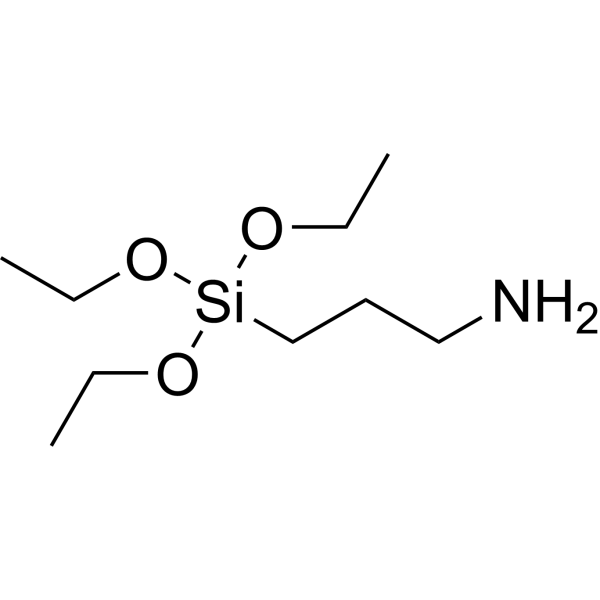
3-Aminopropyltriethoxysilane (APTES) acts as a strong glue to immobilize biomolecules such as antibodies and enzymes to silicon and silicon derivatives such as silicon nitride (Si3N4 )) on. 3-Aminopropyltriethoxysilane also acts as a spacer, providing biomolecules with more spatial freedom during immobilization for higher specific activity. 3-Aminopropyltriethoxysilane can form a more stable, sensitive, and highly biocompatible bioanalytical platform by immobilizing biomolecules onto some solid materials, electrode materials, nanomaterials, and nanocomposites .
|
-
-
- HY-E70005I
-
|
Type VI collagenase
|
MMP
|
Cancer
|
|
Collagenase, Type VI (EC 3.4.24.3) is a collagenase that can degrade type VI collagen. Type VI collagen is a component of cell membranes in various tissues (such as skin, heart, blood vessels, cartilage, and synovial fluid). Excessive collagenase can cause extracellular matrix lesions. Collagenase is also a biomarker for tumor invasion and metastasis. Collagenase, Type VI can specifically act on the peptide bond between proline and glycine. This feature can be used to quickly and sensitively detect its concentration level in experiments using corresponding modified electrodes .
|
-
-
- HY-W074143
-
|
|
Fluorescent Dye
|
Others
|
|
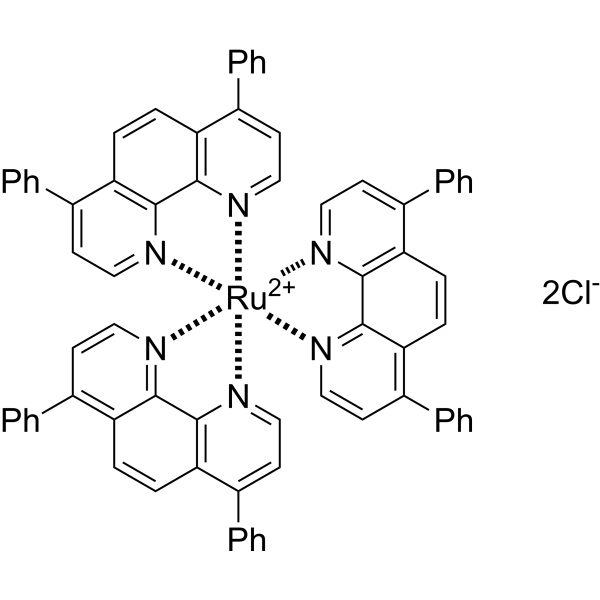
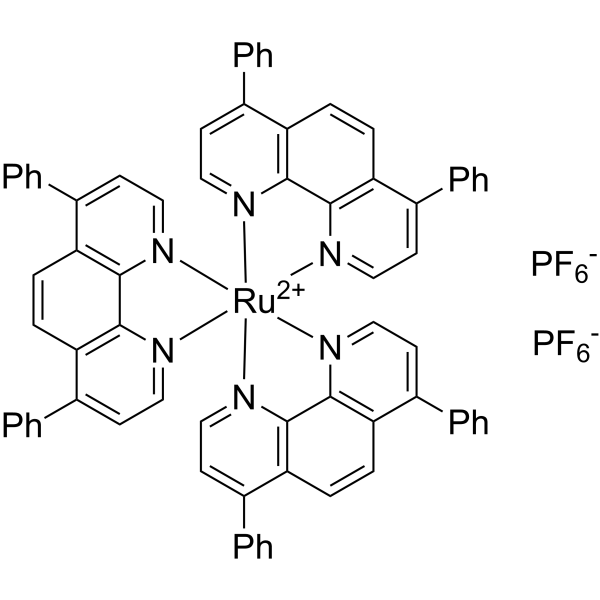
Tris(4,7-diphenyl-1,10-phenanthroline)ruthenium(II) dichloride ([Ru(dpp)3] 2+) is an electrochemiluminescent (ECL) probe and oxygen-sensitive sensor. Tris(4,7-diphenyl-1,10-phenanthroline)ruthenium(II) dichloride can be used to modify electrode surfaces for the detection of sulfates (S2O8 2-) and oxalates, based on electrochemical reactions that generate excited-state species, releasing photons through irreversible redox reactions. Tris(4,7-diphenyl-1,10-phenanthroline)ruthenium(II) dichloride utilizes the oxygen quenching of fluorescence mechanism, where fluorescence intensity reflects the metabolic rate of living microorganisms or oxygen levels within cells/tumors, allowing for real-time detection. Tris(4,7-diphenyl-1,10-phenanthroline)ruthenium(II) dichloride's main applications include microbial detection, antibacterial activity studies, and tumor microenvironment research .
|
-
-
- HY-W015816
-
|
2,6-DMBQ
|
Photosystem II
|
Others
|
|
2,6-Dimethylbenzoquinone (2,6-DMBQ) is a benzoquinone derivative. 2,6-Dimethylbenzoquinone promotes Photosystem II-mediated photoelectrochemical water oxidation via electron transfer between spinach chloroplast Photosystem II membranes and carbon paste electrodes, and accepts electrons from Photosystem II during oxygen evolution assays. 2,6-Dimethylbenzoquinone undergoes direct photolysis in aqueous solution under 365 nm conditions, producing 2,6-dimethylhydroquinone and 3-hydroxy-2,6-dimethylbenzoquinone .
|
-
-
- HY-126061
-
|
|
Biochemical Assay Reagents
Drug Metabolite
|
Others
|
|
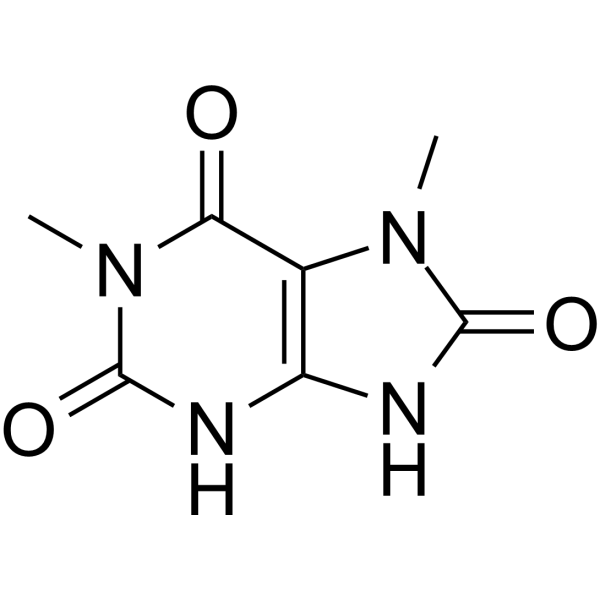
1,7-Dimethyluric acid is an N-methylated uric acid and purine derivative, as well as a caffeine metabolite. When 1,7-Dimethyluric acid is acted upon by peroxidase in the presence of H2O2, it follows the same oxidation pathway to generate a UV-absorbing intermediate, which decays via first-order kinetics. 1,7-Dimethyluric acid can adsorb onto pyrolytic graphite electrodes, but not onto glassy carbon electrodes or platinum electrodes. The N-methylation modification of its pyrimidine ring prevents ring contraction of the diol intermediate, and no NMR evidence of O-alkylation is observed during propylation under the test conditions .
|
-
-
- HY-P2888
-
|
BOD
|
Biochemical Assay Reagents
|
Metabolic Disease
|
|
Bilirubin oxidase (BOD) is an electrocatalyst with oxygen removal activity. Bilirubin oxidase can catalyze the oxidation of bilirubin to biliverdin. Bilirubin oxidase participates in the metabolism of porphyrins and chlorophyll, and acts as a catalyst for oxygen reduction. Bilirubin oxidase can serve as a component of a single-enzyme oxygen removal system for reductase-based voltammetric biosensors .
|
-
-
- HY-W077680
-
|
|
Biochemical Assay Reagents
|
Others
|
|
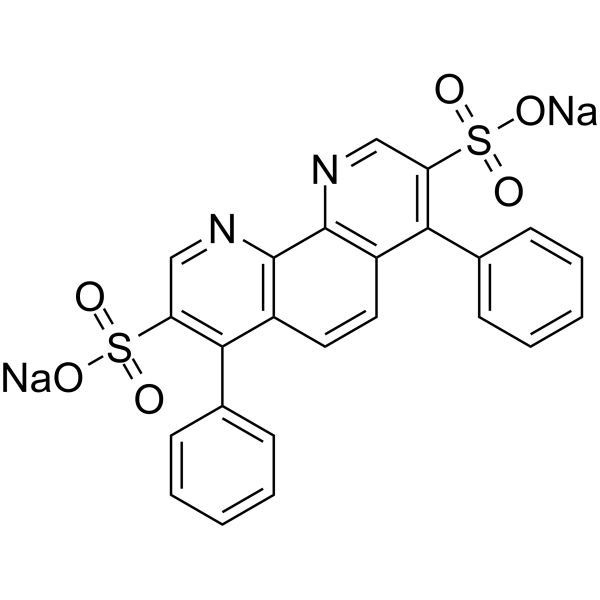
Girard's P reagent is a reagent used in organic chemistry. Girard's P reagent is used to react with vanillin to form a hydrazone derivative, which is then combined with an ion selective electrode (ISE) to develop a potentiometric method for the determination of vanillin. Girard's P reagent can be used in the development of ion selective electrodes and in the study of organic analysis .
|
-
-
- HY-D0808
-
|
|
Fluorescent Dye
|
|
|
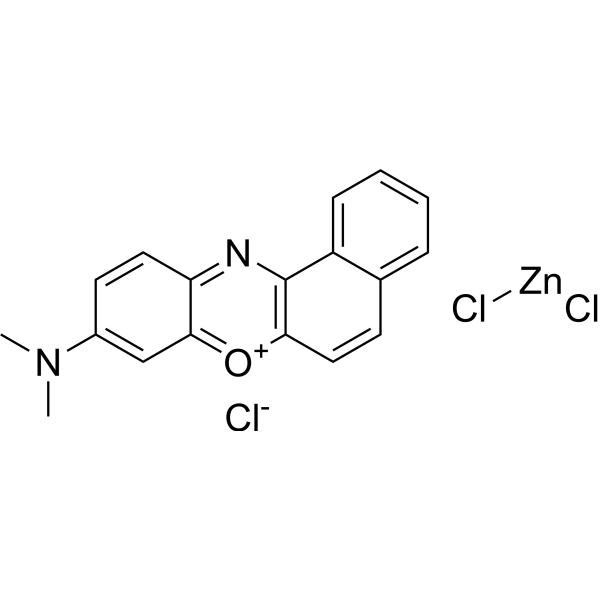
Meldola blue is a biosensor for measuring lactate in serum based on screen-printed carbon electrodes modified with Meldola's Blue-Reinecke salt (MBRS-SPCE) coated with lactate dehydrogenase NAD+-dependent enzyme (from pig heart) and NAD+.
|
-
-
- HY-W092533
-
|
|
Tryptophan Hydroxylase
|
Neurological Disease
|
|
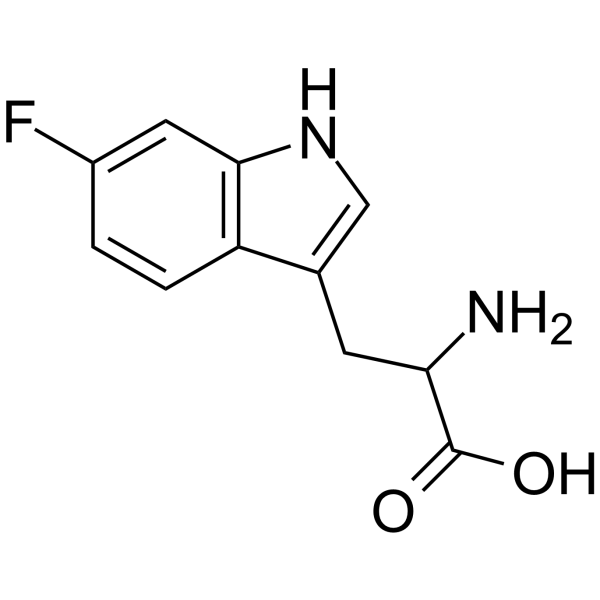
6-Fluorotryptophan, a competitive inhibitor of tryptophan hydroxylase, produced a transient disruption of sleep in rats chronically implanted with EEG recording electrodes .
|
-
-
- HY-139728
-
|
Calcium ionophore II
|
Biochemical Assay Reagents
|
Others
|
|
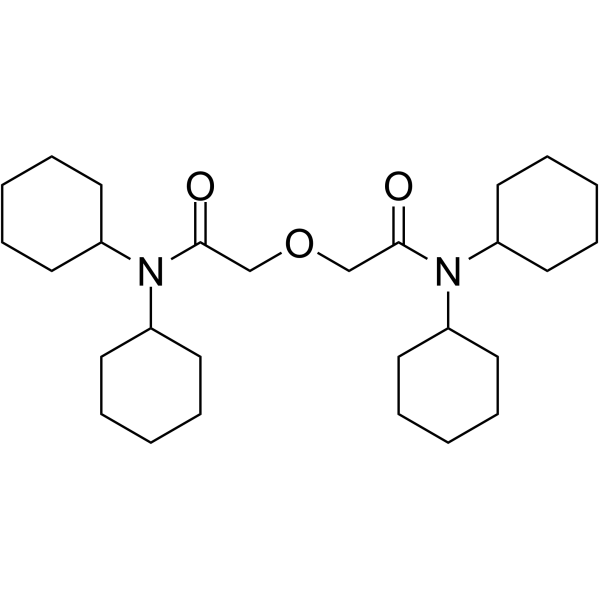
N,N,N′,N′-Tetracyclohexyl-3-oxapentanediamide (Calcium ionophore II) is a lipophilic ionophore that can be used in preparing calcium ion-selective electrode .
|
-
-
- HY-W010488
-
|
|
Biochemical Assay Reagents
|
Others
|
|
Dithiooxamide (Rubeanic Acid) is a selective chelating agent and sulfur-containing analog of Oxamide. Dithiooxamide forms stable chelates with various metal ions (such as lead, iron, cadmium, manganese, and aluminum), which can be separated, enriched, and detected by adsorption on solid adsorbents or electrode surfaces .
|
-
-
- HY-91018
-
|
N-[3-(Trimethoxysilyl)propyl]-N,N,N-trimethylammonium chloride, 50% in methanol
|
Biochemical Assay Reagents
|
Others
|
|
Trimethyl[3-(trimethoxysilyl)propyl]ammonium (N-[3-(Trimethoxysilyl)propyl]-N,N,N-trimethylammonium) chloride (50% in methanol) is a functional organic silane coupling agent and quaternary ammonium salt cationic functional monomer, which can be used for functionalizing mesoporous silica with electrochemical modified electrodes or surface chemical modification .
|
-
-
- HY-W008954
-
|
|
Environmental Pollutants
Biochemical Assay Reagents
|
Others
|
|
Tris(2-ethylhexyl) phosphate is an organophosphorus flame retardant analog with considerable ecological toxicity. Tris(2-ethylhexyl) phosphate can be used as neutral carriers to make organic ammonium ion-selective membrane electrodes. Tris(2-ethylhexyl) phosphate is widely applied in furniture, textiles, building materials, electronics, and other chemicals .
|
-
-
- HY-Y1890B
-
|
|
Biochemical Assay Reagents
|
Others
|
|
Cremophor EL-10 is a nonionic polyoxyethylene castor oil surfactant with multiple functions including organic solubilizer, mixed zinc anode corrosion inhibitor and dendrite growth inhibitor. By forming a physical barrier to block electrolyte contact and constructing oriented hydration channels to reduce the desolvation energy barrier of Zn 2+ , Cremophor EL-10 achieves a corrosion inhibition efficiency of over 99%. Cremophor EL-10 exerts no significant effects on the mitochondrial activity and cell viability of epithelial cells, making it suitable for in vitro drug delivery and biopharmaceutical research at concentrations ≤10% v/v. However, Cremophor EL-10 may induce sustained non-endothelium-dependent contraction in rat aortic rings and exert concentration-dependent inhibitory effects on acetylcholine-induced endothelium-dependent relaxation responses .
|
-
-
- HY-W033573
-
|
|
Biochemical Assay Reagents
|
Others
|
|
Hexaammineruthenium(II) chloride is a non-corrosive redox probe. Hexaammineruthenium(II) chloride avoids gold electrode corrosion and degradation to enable stable electrochemical impedance spectroscopy measurements. Hexaammineruthenium(II) chloride supports detection of human-IgG with a defined diagnostic concentration range .
|
-
-
- HY-W674112
-
|
ETH 1117
|
Endogenous Metabolite
|
Others
|
|
Magnesium ionophore I (ETH 1117) serves as the primary component for the development of calcium-magnesium selective electrodes.
|
-
-
- HY-157914
-
|
6,6-Dibenzyl-1,4,8,11-tetraoxacyclotetradecane
|
Biochemical Assay Reagents
|
Others
|
|
Dibenzyl-14-crown-4 (6,6-Dibenzyl-1,4,8,11-tetraoxacyclotetradecane) is a crown ether derivate, which serves as neutral carrier in PVC ion-selective electrode, improves the Li + selectivity against Na + and K + .
|
-
-
- HY-131142
-
|
|
Drug Derivative
|
Others
|
|
Monensin methyl ester, a neutral analog of Monensin (HY-N4302), is an ion active component for Na + selective disk electrodes .
|
-
-
- HY-Y1810
-
|
|
Environmental Pollutants
Biochemical Assay Reagents
|
Others
|
|
Diethylene glycol diethyl ether is an electrolyte solvent for a non-aqueous lithium-air cell. Diethylene glycol diethyl ether can facilitate the reversible reduction and oxidation processes at the porous carbon electrode without a catalyst .
|
-
-
- HY-131829
-
|
6-AE-NAD+
|
Biochemical Assay Reagents
|
Others
|
|
N6-(2-Aminoethyl)-NAD+ (6-AE-NAD+) is a NAD+ derivative commonly used in affinity chromatography. N6-(2-Aminoethyl)-NAD+ can be covalently linked to a PQQ (pyrroloquinoline quinone) (HY-100196) monolayer on an electrode surface for immobilizing NAD+-dependent enzymes such as lactate dehydrogenase (LDH) .
|
-
-
- HY-Y0607S1
-
|
|
Isotope-Labeled Compounds
Drug Intermediate
|
Others
|
|
4-Nitrobenzoic acid-d2 is the deuterium labeled 4-Nitrobenzoic acid (HY-Y0607). 4-Nitrobenzoic acid acts as a redox mediator and electron transfer promoter. 4-Nitrobenzoic acid accepts electrons from reduced glucose oxidase and transfers them to the electrode to facilitate the glucose oxidation reaction, while minimizing the formation of protonated amino groups .
|
-
-
- HY-D1144
-
|
|
Fluorescent Dye
|
|
|
Acid blue 260 is an azo dye whose staining effect is effectively removed by multi-walled carbon nanotubes (MWCNTs). At 298 K, the adsorption capacity of MWCNT is 233.34 mg/g; and increases with the increase of dye concentration and temperature.
|
-
-
- HY-157915
-
|
Tetrakis[3,5-bis(1,1,1,3,3,3-hexafluoro-2-methoxy-2-propyl)phenyl]borate, sodium salt, trihydrate
|
Biochemical Assay Reagents
|
Others
|
|
HFPB (Compound 2) is a type of cation exchanger with high lipophilicity and acid resistivity, which can be used in membrane electrode research .
|
-
-
- HY-W739372
-
|
|
Biochemical Assay Reagents
|
|
|
Poly (sodium 4-styrenesulfonate) is a cation exchange polyelectrolyte used to prepare highly mechanically stable and highly reproducible coatings. During the reduction of graphene oxide, Poly (sodium 4-styrenesulfonate) is used to synthesize polymer-coated graphite nanosheets. Furthermore, the interactions between Poly (sodium 4-styrenesulfonate) and metal ions have been studied, and it has been combined with Nafion for mixed coatings in bismuth film electrodes, showcasing its broad application potential in functional materials and electrochemical research .
|
-
-
- HY-107273
-
|
Sinpeinine A
|
Others
|
Inflammation/Immunology
|
|
Delavinone (Sinpeinine A) is an alkaloid . Delavinone is suitable for electrospray ionization (ESI) positive electrode detection .
|
-
-
- HY-W092533R
-
-
-
- HY-119516
-
|
|
Biochemical Assay Reagents
|
Others
|
|
Naftalofos is a phosphate compound that can be used to prepare glassy carbon electrodes modified with modified reduced graphene oxide/chitosan composites. Naftalofos sensors can be used in the detection of food and environmental samples .
|
-
-
- HY-W076042
-
|
Sodium tetrakis(4-fluorophenyl)borate dihydrate
|
Biochemical Assay Reagents
|
Others
|
|
Cesibor dihydrate is an additive salt used in ion-selective electrodes (ISEs) and micro ion-selective field effect transistors (μ-ISFETs) to enhance or modulate their selective responses to specific ions .
|
-
-
- HY-128413
-
|
|
Drug Derivative
|
Others
|
|
1-Iodoadamantane is a 1-substituted adamantane derivative. On a silver electrode in aprotic solvents, 1-Iodoadamantane can be reduced to form a mixture of adamantane and 1,1'-biadamantane without insonation, while only adamantane is formed under the action of 10 kHz insonation .
|
-
-
- HY-122792
-
|
|
Endogenous Metabolite
|
Cardiovascular Disease
|
|
Phenyramidol hydrochloride is an anticoagulant and analgesic with activity that increases detection sensitivity in biological samples. Phenyramidol hydrochloride can be oxidized in aqueous media by electrochemical methods to achieve its quantitative analysis. The detection of Phenyramidol hydrochloride using an amino-functionalized multi-walled carbon nanotube-modified glassy carbon electrode showed significant enhancement of the current peak .
|
-
-
- HY-Y0607S
-
|
|
Isotope-Labeled Compounds
Drug Intermediate
|
Others
|
|
4-Nitrobenzoic acid-d4 is the deuterium labeled 4-Nitrobenzoic acid (HY-Y0607). 4-Nitrobenzoic acid is an oxidoreduction mediator and an electron transfer promoter. 4-Nitrobenzoic acid accepts electrons from the reduced glucose oxidase and transfers them to the electrode to promote the glucose oxidation reaction, while minimizing the formation of protonated amine groups .
|
-
-
- HY-139728R
-
|
Calcium ionophore II (Standard)
|
Biochemical Assay Reagents
Reference Standards
|
Others
|
|
N,N,N′,N′-Tetracyclohexyl-3-oxapentanediamide (Standard) is the analytical standard of N,N,N′,N′-Tetracyclohexyl-3-oxapentanediamide. This product is intended for research and analytical applications. N,N,N′,N′-Tetracyclohexyl-3-oxapentanediamide (Calcium ionophore II) is a lipophilic ionophore that can be used in preparing calcium ion-selective electrode .
|
-
-
- HY-Y0607R
-
|
|
Reference Standards
Drug Intermediate
|
Others
|
|
4-Nitrobenzoic acid (Standard) is the analytical standard of 4-Nitrobenzoic acid (HY-Y0607). This product is intended for research and analytical applications. 4-Nitrobenzoic acid is an oxidoreduction mediator and an electron transfer promoter. 4-Nitrobenzoic acid accepts electrons from the reduced glucose oxidase and transfers them to the electrode to promote the glucose oxidation reaction, while minimizing the formation of protonated amine groups .
|
-
-
- HY-103382R
-
|
|
Reference Standards
Fungal
|
Infection
|
|
Phenyramidol (Hydrochloride) (Standard) is the analytical standard of Phenyramidol (Hydrochloride). This product is intended for research and analytical applications. Phenyramidol hydrochloride is an anticoagulant and analgesic with activity that increases detection sensitivity in biological samples. Phenyramidol hydrochloride can be oxidized in aqueous media by electrochemical methods to achieve its quantitative analysis. The detection of Phenyramidol hydrochloride using an amino-functionalized multi-walled carbon nanotube-modified glassy carbon electrode showed significant enhancement of the current peak .
|
-
-
- HY-137980
-
-
-
- HY-W094110A
-
|
|
Biochemical Assay Reagents
|
Others
|
|
Iron (III) sulfate solution acts as a sodium ion intercalator and sodium storage material. Iron (III) sulfate solution is applicable to research related to the development of sodium-ion battery electrodes .
|
-
-
- HY-119417A
-
|
|
Herbicide
|
Others
|
|
Chloramben sodium is a herbicide with anti-growth activity against plants. Chloramben sodium can be effectively removed by photo-Fenton reaction under natural pH conditions, showing good degradation performance. The removal rate of chloramben sodium is consistent with different electrodes, mainly due to the oxidation mediated by the hydroxyl ions formed in the Fenton reaction. Chloramben sodium is almost completely mineralized using IrO2-based electrodes at high current density, indicating that it can be effectively degraded under light. Chloramben sodium leads to the formation of persistent chlorine derivatives in chlorine-containing environments, so the removal rate and mineralization rate are slightly reduced. Chloramben sodium can form intermediates with a variety of aromatic compounds and organic acids, reflecting the complexity of its transformation in the environment .
|
-
-
- HY-131829A
-
|
6-AE-NAD+ sodium
|
Biochemical Assay Reagents
|
Others
|
|
N6-(2-Aminoethyl)-NAD+ (6-AE-NAD+) sodium is a NAD+ derivative commonly used in affinity chromatography. N6-(2-Aminoethyl)-NAD+ sodium can be covalently linked to a PQQ (pyrroloquinoline quinone) (HY-100196) monolayer on an electrode surface for immobilizing NAD+-dependent enzymes such as lactate dehydrogenase (LDH) .
|
-
-
- HY-122792R
-
|
|
Endogenous Metabolite
Reference Standards
|
Cardiovascular Disease
|
|
Phenyramidol (Hydrochloride) (Standard) is the analytical standard of Phenyramidol (Hydrochloride). This product is intended for research and analytical applications. Phenyramidol hydrochloride is an anticoagulant and analgesic with activity that increases detection sensitivity in biological samples. Phenyramidol hydrochloride can be oxidized in aqueous media by electrochemical methods to achieve its quantitative analysis. The detection of Phenyramidol hydrochloride using an amino-functionalized multi-walled carbon nanotube-modified glassy carbon electrode showed significant enhancement of the current peak .
|
-
-
- HY-W414395
-
-
-
- HY-W094110
-
|
|
Environmental Pollutants
Biochemical Assay Reagents
|
Others
|
|
Iron (III) sulfate is a stable rhombohedral NASICON compound. Iron (III) sulfate can serve as a sodium ion intercalation host, enabling sodium ion intercalation and deintercalation via a single-phase mechanism relying on the Fe 2+/Fe 3+ redox couple. Iron (III) sulfate exhibits reversible electrochemical behavior and moderate polarization in cyclic voltammetry tests, and its charge transfer resistance changes during charge-discharge cycles. Iron (III) sulfate possesses a high redox potential, excellent rate capability, and long-cycle stability .
|
-
| Cat. No. |
Product Name |
Type |
-
- HY-W074143
-
|
|
Fluorescent Dyes
|
|
Tris(4,7-diphenyl-1,10-phenanthroline)ruthenium(II) dichloride ([Ru(dpp)3] 2+) is an electrochemiluminescent (ECL) probe and oxygen-sensitive sensor. Tris(4,7-diphenyl-1,10-phenanthroline)ruthenium(II) dichloride can be used to modify electrode surfaces for the detection of sulfates (S2O8 2-) and oxalates, based on electrochemical reactions that generate excited-state species, releasing photons through irreversible redox reactions. Tris(4,7-diphenyl-1,10-phenanthroline)ruthenium(II) dichloride utilizes the oxygen quenching of fluorescence mechanism, where fluorescence intensity reflects the metabolic rate of living microorganisms or oxygen levels within cells/tumors, allowing for real-time detection. Tris(4,7-diphenyl-1,10-phenanthroline)ruthenium(II) dichloride's main applications include microbial detection, antibacterial activity studies, and tumor microenvironment research .
|
-
- HY-D0808
-
|
|
Fluorescent Dyes
|
|
Meldola blue is a biosensor for measuring lactate in serum based on screen-printed carbon electrodes modified with Meldola's Blue-Reinecke salt (MBRS-SPCE) coated with lactate dehydrogenase NAD+-dependent enzyme (from pig heart) and NAD+.
|
-
- HY-D1144
-
|
|
Fluorescent Dyes
|
|
Acid blue 260 is an azo dye whose staining effect is effectively removed by multi-walled carbon nanotubes (MWCNTs). At 298 K, the adsorption capacity of MWCNT is 233.34 mg/g; and increases with the increase of dye concentration and temperature.
|
| Cat. No. |
Product Name |
Type |
-
- HY-D0175
-
|
γ-Aminopropyltriethoxysilane; APTES
|
Biochemical Assay Reagents
|
|
3-Aminopropyltriethoxysilane (APTES) acts as a strong glue to immobilize biomolecules such as antibodies and enzymes to silicon and silicon derivatives such as silicon nitride (Si3N4 )) on. 3-Aminopropyltriethoxysilane also acts as a spacer, providing biomolecules with more spatial freedom during immobilization for higher specific activity. 3-Aminopropyltriethoxysilane can form a more stable, sensitive, and highly biocompatible bioanalytical platform by immobilizing biomolecules onto some solid materials, electrode materials, nanomaterials, and nanocomposites .
|
-
- HY-W010488
-
|
|
Biochemical Assay Reagents
|
|
Dithiooxamide (Rubeanic Acid) is a selective chelating agent and sulfur-containing analog of Oxamide. Dithiooxamide forms stable chelates with various metal ions (such as lead, iron, cadmium, manganese, and aluminum), which can be separated, enriched, and detected by adsorption on solid adsorbents or electrode surfaces .
|
-
- HY-91018
-
|
N-[3-(Trimethoxysilyl)propyl]-N,N,N-trimethylammonium chloride, 50% in methanol
|
Biochemical Assay Reagents
|
|
Trimethyl[3-(trimethoxysilyl)propyl]ammonium (N-[3-(Trimethoxysilyl)propyl]-N,N,N-trimethylammonium) chloride (50% in methanol) is a functional organic silane coupling agent and quaternary ammonium salt cationic functional monomer, which can be used for functionalizing mesoporous silica with electrochemical modified electrodes or surface chemical modification .
|
-
- HY-Y1890B
-
|
|
Biochemical Assay Reagents
|
|
Cremophor EL-10 is a nonionic polyoxyethylene castor oil surfactant with multiple functions including organic solubilizer, mixed zinc anode corrosion inhibitor and dendrite growth inhibitor. By forming a physical barrier to block electrolyte contact and constructing oriented hydration channels to reduce the desolvation energy barrier of Zn 2+ , Cremophor EL-10 achieves a corrosion inhibition efficiency of over 99%. Cremophor EL-10 exerts no significant effects on the mitochondrial activity and cell viability of epithelial cells, making it suitable for in vitro drug delivery and biopharmaceutical research at concentrations ≤10% v/v. However, Cremophor EL-10 may induce sustained non-endothelium-dependent contraction in rat aortic rings and exert concentration-dependent inhibitory effects on acetylcholine-induced endothelium-dependent relaxation responses .
|
-
- HY-157914
-
|
6,6-Dibenzyl-1,4,8,11-tetraoxacyclotetradecane
|
Biochemical Assay Reagents
|
|
Dibenzyl-14-crown-4 (6,6-Dibenzyl-1,4,8,11-tetraoxacyclotetradecane) is a crown ether derivate, which serves as neutral carrier in PVC ion-selective electrode, improves the Li + selectivity against Na + and K + .
|
-
- HY-Y1810
-
|
|
Biochemical Assay Reagents
|
|
Diethylene glycol diethyl ether is an electrolyte solvent for a non-aqueous lithium-air cell. Diethylene glycol diethyl ether can facilitate the reversible reduction and oxidation processes at the porous carbon electrode without a catalyst .
|
-
- HY-157915
-
|
Tetrakis[3,5-bis(1,1,1,3,3,3-hexafluoro-2-methoxy-2-propyl)phenyl]borate, sodium salt, trihydrate
|
Biochemical Assay Reagents
|
|
HFPB (Compound 2) is a type of cation exchanger with high lipophilicity and acid resistivity, which can be used in membrane electrode research .
|
-
- HY-W076042
-
|
Sodium tetrakis(4-fluorophenyl)borate dihydrate
|
Biochemical Assay Reagents
|
|
Cesibor dihydrate is an additive salt used in ion-selective electrodes (ISEs) and micro ion-selective field effect transistors (μ-ISFETs) to enhance or modulate their selective responses to specific ions .
|
-
- HY-Y0607R
-
|
|
Biochemical Assay Reagents
|
|
4-Nitrobenzoic acid (Standard) is the analytical standard of 4-Nitrobenzoic acid (HY-Y0607). This product is intended for research and analytical applications. 4-Nitrobenzoic acid is an oxidoreduction mediator and an electron transfer promoter. 4-Nitrobenzoic acid accepts electrons from the reduced glucose oxidase and transfers them to the electrode to promote the glucose oxidation reaction, while minimizing the formation of protonated amine groups .
|
| Cat. No. |
Product Name |
Category |
Target |
Chemical Structure |
-
- HY-126061
-
-
-
- HY-107273
-
-
-
- HY-103382R
-
|
|
Alkaloids
Microorganisms
Indole Alkaloids
Source Classification
|
Reference Standards
Fungal
|
|
Phenyramidol (Hydrochloride) (Standard) is the analytical standard of Phenyramidol (Hydrochloride). This product is intended for research and analytical applications. Phenyramidol hydrochloride is an anticoagulant and analgesic with activity that increases detection sensitivity in biological samples. Phenyramidol hydrochloride can be oxidized in aqueous media by electrochemical methods to achieve its quantitative analysis. The detection of Phenyramidol hydrochloride using an amino-functionalized multi-walled carbon nanotube-modified glassy carbon electrode showed significant enhancement of the current peak .
|
-
| Cat. No. |
Product Name |
Chemical Structure |
-
- HY-Y0607S1
-
|
|
|
4-Nitrobenzoic acid-d2 is the deuterium labeled 4-Nitrobenzoic acid (HY-Y0607). 4-Nitrobenzoic acid acts as a redox mediator and electron transfer promoter. 4-Nitrobenzoic acid accepts electrons from reduced glucose oxidase and transfers them to the electrode to facilitate the glucose oxidation reaction, while minimizing the formation of protonated amino groups .
|
-
-
- HY-Y0607S
-
|
|
|
4-Nitrobenzoic acid-d4 is the deuterium labeled 4-Nitrobenzoic acid (HY-Y0607). 4-Nitrobenzoic acid is an oxidoreduction mediator and an electron transfer promoter. 4-Nitrobenzoic acid accepts electrons from the reduced glucose oxidase and transfers them to the electrode to promote the glucose oxidation reaction, while minimizing the formation of protonated amine groups .
|
-
Your information is safe with us. * Required Fields.
Inquiry Information
- Product Name:
- Cat. No.:
- Quantity:
- MCE Japan Authorized Agent:

