10 Results for "

Glucokinase Inhibitor

" in MedChemExpress (MCE) Product Catalog:
Products (10)

10 Results for "Glucokinase Inhibitor" in MCE Product Catalog:

Cat. No.: HY-42680
CAS No.: 87-81-0
Synonyms: D-(-)-Tagatose
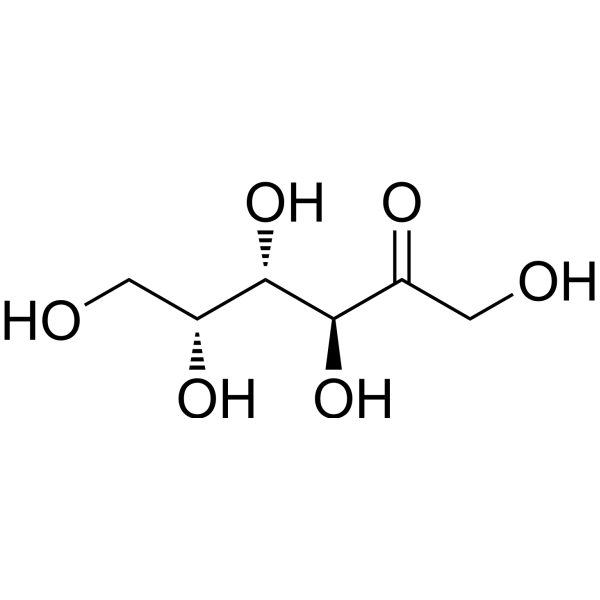
D-Tagatose (D-(-)-Tagatose) is a natural low-calorie rare sugar. D-Tagatose inhibits the activities of sucrase, maltase and intestinal disaccharidases, reduces the digestion of sucrose and starch, and blocks the absorption of sucrose, maltose and glucose. D-Tagatose promotes glucokinase activity and inhibits glycogen phosphorylase activity via tagatose-1-phosphate, regulates the synthesis and decomposition of hepatic glycogen, reduces postprandial and fasting blood glucose levels, and improves hyperinsulinemia. D-Tagatose regulates lipid profiles, stimulates GLP-1 secretion, and exhibits prebiotic effects. D-Tagatose is a bulking sweetener. D-Tagatose can be used in research related to diabetes, hyperlipidemia, dental caries, atherosclerosis and type 2 diabetes .
loading...
    loading...
Cat. No.: HY-131940
CAS No.: 94825-74-8
Purity:  ≥95.0%
Synonyms: 3-O-Methyl-GlcNAc
Target:  

Insecticide

Research Areas:  

Metabolic Disease

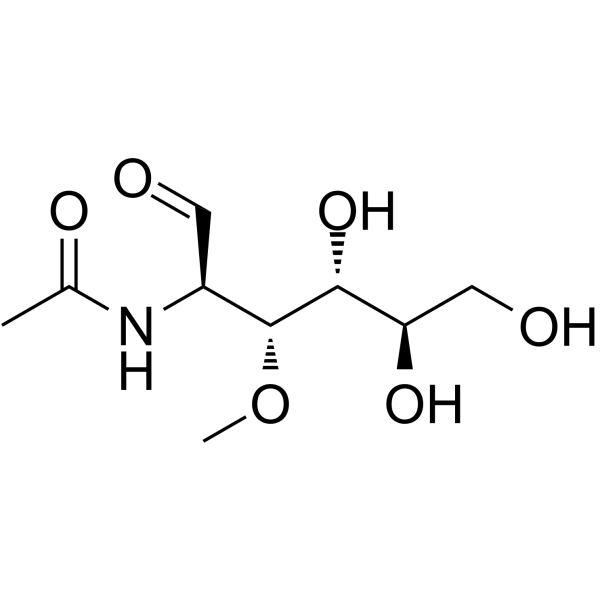
3-O-Methyl-N-acetyl-D-glucosamine is a potent inhibitor of N-acetylglucosamine kinase. 3-O-Methyl-N-acetyl-D-glucosamine potently inhibits glucose phosphorylation by N-acetylglucosamine kinase whereas glucokinase is not at all affected by this hexosamine .
loading...
    loading...
Cat. No.: HY-144287
CAS No.: 1001417-92-0
Purity:  98.36%
Research Areas:  

Metabolic Disease

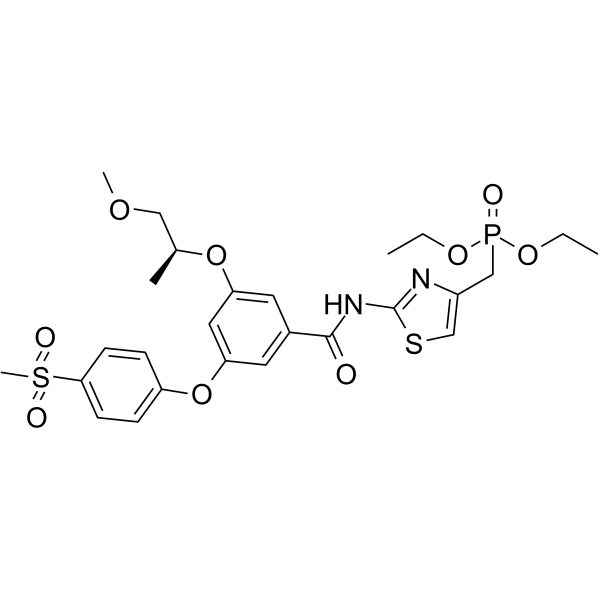
Glucokinase activator 3 is an orally active Glucokinase (GK) activator with an AC50 of 38 nM. Glucokinase activator 3 inhibits hERG channel and sodium channel in patch clamp assays. Glucokinase activator 3 exhibits high efficacy in reducing blood glucose in diet-induced obese (DIO) mice. Glucokinase activator 3 has the potential for the research of type 2 diabetes .
loading...
    loading...
Cat. No.: HY-19494
CAS No.: 710321-76-9
Target:  

Glucokinase

Research Areas:  

Metabolic Disease

RO-4597014 is a glucokinase inhibitor. RO-4597014 can be used in the study of diabetes .
loading...
    loading...
Cat. No.: HY-128663
CAS No.: 353484-37-4
Target:  

Parasite

Research Areas:  

Infection

GLK7-001 is a Trypanosoma cruzi glucokinase (TcGlcK) inhibitor. GLK7-001 has in vitro trypanocidal activity .
loading...
    loading...
Cat. No.: HY-156020
CAS No.: 851185-20-1
Target:  

Glycosidase

Research Areas:  

Metabolic Disease

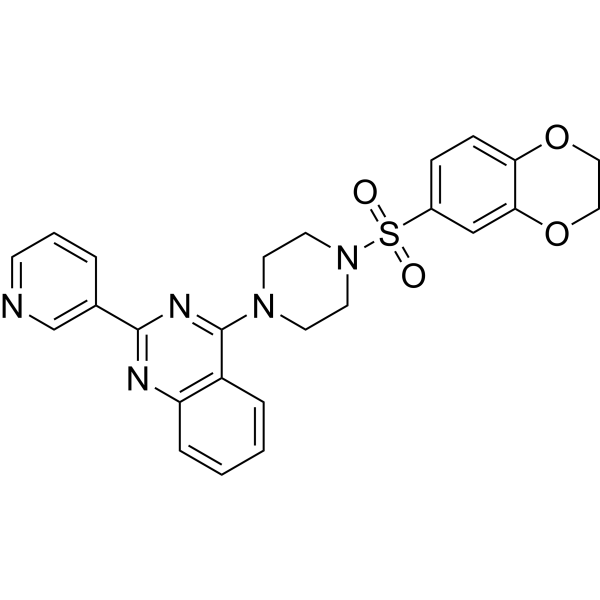
Glucocerebrosidase-IN-2 (compound 12) is a quinazoline analogue and an inhibitor of glucocerebrosidase (GC). Glucocerebrosidase-IN-2 has the potential to improve GC translocation to lysosomes in Gaucher disease patient-derived cells (mostly carrying the N370S mutation). Glucocerebrosidase-IN-2 inhibits the hydrolysis of 4-methylumbelliferone β-D-glucopyranoside (4MU) and fluorescent glycosylceramide (FlourGC) in N370S mutant tissues with an AC50 of 25.29 μM .
loading...
    loading...
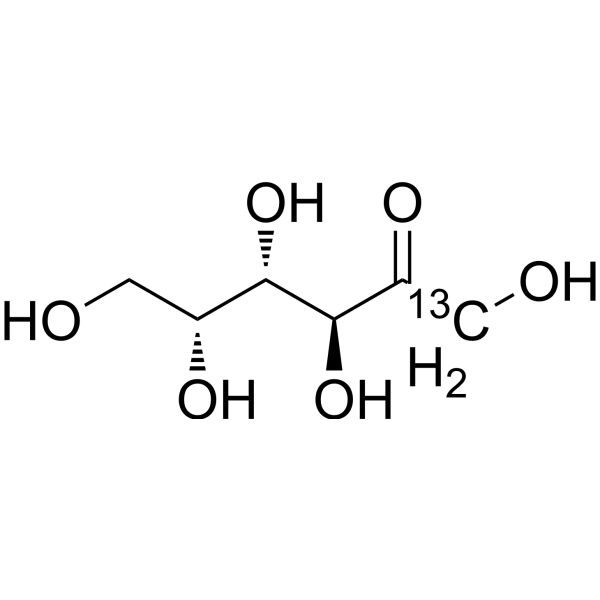
Cat. No.: HY-42680S
CAS No.: 478506-42-2
Synonyms: D-(-)-Tagatose-13C
D-Tagatose- 13C is the 13C labeled D-Tagatose (HY-42680). D-Tagatose (D-(-)-Tagatose) is a natural low-calorie rare sugar. D-Tagatose inhibits the activities of sucrase, maltase and intestinal disaccharidases, reduces the digestion of sucrose and starch, and blocks the absorption of sucrose, maltose and glucose. D-Tagatose promotes glucokinase activity and inhibits glycogen phosphorylase activity via tagatose-1-phosphate, regulates the synthesis and decomposition of hepatic glycogen, reduces postprandial and fasting blood glucose levels, and improves hyperinsulinemia. D-Tagatose regulates lipid profiles, stimulates GLP-1 secretion, and exhibits prebiotic effects. D-Tagatose is a bulking sweetener. D-Tagatose can be used in research related to diabetes, hyperlipidemia, dental caries, atherosclerosis and type 2 diabetes.
loading...
    loading...
Cat. No.: HY-42680R
CAS No.: 87-81-0
Synonyms: D-(-)-Tagatose (Standard)
D-Tagatose (Standard) is the analytical standard of D-Tagatose (HY-42680). This product is intended for research and analytical applications. D-Tagatose (D-(-)-Tagatose) is a natural low-calorie rare sugar. D-Tagatose inhibits the activities of sucrase, maltase and intestinal disaccharidases, reduces the digestion of sucrose and starch, and blocks the absorption of sucrose, maltose and glucose. D-Tagatose promotes glucokinase activity and inhibits glycogen phosphorylase activity via tagatose-1-phosphate, regulates the synthesis and decomposition of hepatic glycogen, reduces postprandial and fasting blood glucose levels, and improves hyperinsulinemia. D-Tagatose regulates lipid profiles, stimulates GLP-1 secretion, and exhibits prebiotic effects. D-Tagatose is a bulking sweetener. D-Tagatose can be used in research related to diabetes, hyperlipidemia, dental caries, atherosclerosis and type 2 diabetes.
loading...
    loading...
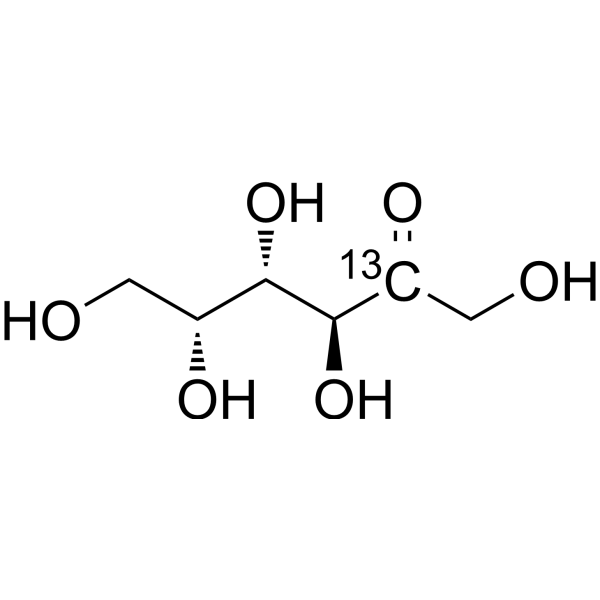
Cat. No.: HY-42680S1
CAS No.: 478506-44-4
Synonyms: D-(-)-Tagatose-13C-1
D-Tagatose- 13C-1 is the 13C labeled D-Tagatose (HY-42680). D-Tagatose (D-(-)-Tagatose) is a natural low-calorie rare sugar. D-Tagatose inhibits the activities of sucrase, maltase and intestinal disaccharidases, reduces the digestion of sucrose and starch, and blocks the absorption of sucrose, maltose and glucose. D-Tagatose promotes glucokinase activity and inhibits glycogen phosphorylase activity via tagatose-1-phosphate, regulates the synthesis and decomposition of hepatic glycogen, reduces postprandial and fasting blood glucose levels, and improves hyperinsulinemia. D-Tagatose regulates lipid profiles, stimulates GLP-1 secretion, and exhibits prebiotic effects. D-Tagatose is a bulking sweetener. D-Tagatose can be used in research related to diabetes, hyperlipidemia, dental caries, atherosclerosis and type 2 diabetes.
loading...
    loading...
Cat. No.: HY-L058
1,379 compounds

Glycolysis is a series of metabolic processes by which one molecule of glucose is catabolized to two molecules of pyruvate with a net gain of two ATP. Glycolysis takes place in 10 steps and catalyzed by a series of enzyme, such as hexokinase, Glucose-6-phosphate isomerase, Phosphofructokinase, etc. Glycolysis is used by all cells in the body for energy generation.

Most cancer cells exhibit increased glycolysis and use this metabolic pathway for generation of ATP as a main source of their energy supply. This phenomenon is known as the Warburg effect and is considered as one of the most fundamental metabolic alterations during malignant transformation. Because increased aerobic glycolysis is commonly seen in a wide spectrum of human cancers, development of novel glycolytic inhibitors as a new class of anticancer agents is likely to have broad therapeutic applications.

MCE provides a unique collection of 1,379 glycolysis compounds that mainly target hexokinase, glucokinase, enolase, pyruvate kinase, PDHK, etc. MCE Glycolysis Compound Library is a useful tool for glucose metabolism research and anti-cancer drug discovery.

