114 Results for "

H3 antagonist

" in MedChemExpress (MCE) Product Catalog:
Products (114)

114 Results for "H3 antagonist" in MCE Product Catalog:

3
3 Cited Publications
Cat. No.: HY-12206
CAS No.: 106243-16-7
Purity:  99.91%
Synonyms: MR-12842
Target:  

Histamine Receptor

Research Areas:  

Neurological Disease

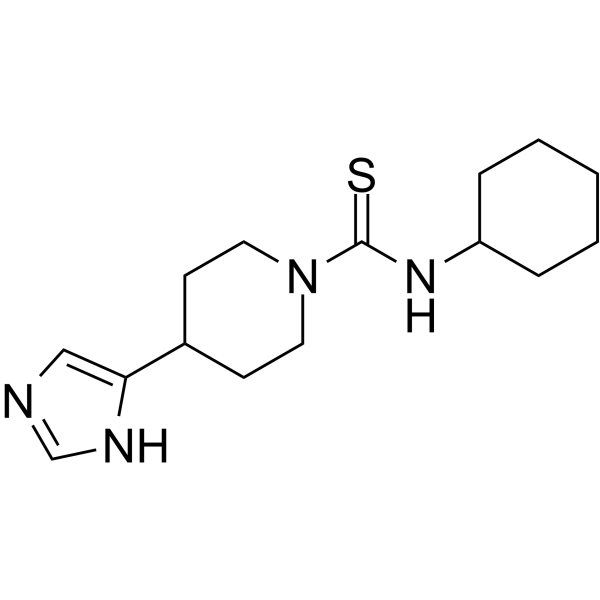
Thioperamide (MR-12842) is a potent, orally available, brain penetrant and selective H3 receptor antagonist with a Ki of 4.3 nM for inhibition of [ 3H]histamine release. Thioperamide inhibits [ 3H]histamine synthesis with a Ki of 31 nM .
loading...
    loading...
3
3 Cited Publications
Cat. No.: HY-100832
CAS No.: 1872382-47-2
Purity:  99.50%
Research Areas:  

Cancer

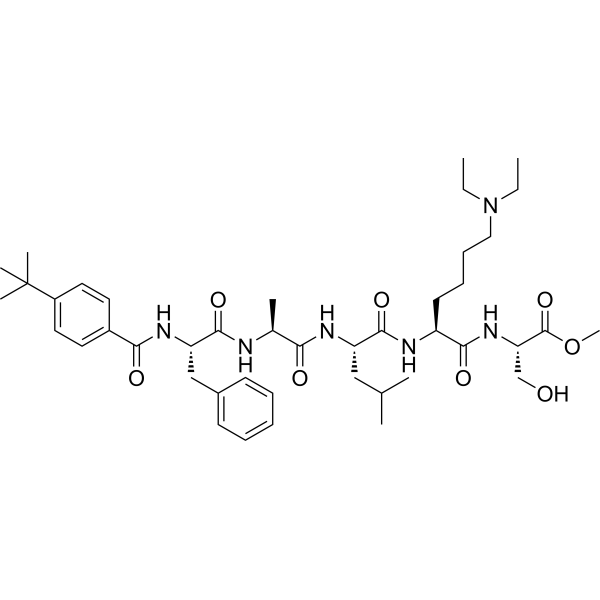
UNC3866 is a potent antagonist of the CBX7-H3 interaction as determined by AlphaScreen (IC50=66±1.2 nM) and is more than 100-fold selective for CBX7 over the other nine members of this methyl-lysine (Kme) reader panel.
loading...
    loading...
3
3 Cited Publications
Cat. No.: HY-12206A
CAS No.: 148440-81-7
Purity:  98.26%
Synonyms: MR-12842 maleate
Target:  

Histamine Receptor

Research Areas:  

Neurological Disease

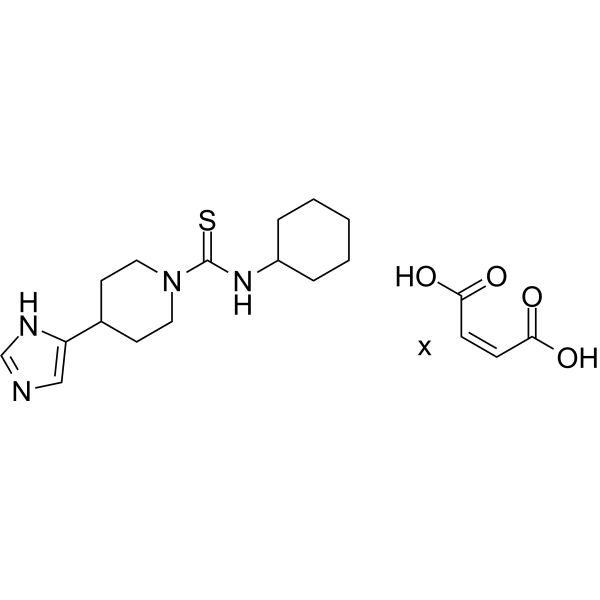
Thioperamide maleate (MR-12842 maleate) is a potent, orally available, brain penetrant and selective H3 receptor antagonist with a Ki of 4.3 nM for inhibition of [ 3H]histamine release. Thioperamide maleate inhibits [ 3H]histamine synthesis with a Ki of 31 nM .
loading...
    loading...
3
3 Cited Publications
Cat. No.: HY-112596
CAS No.: 2052130-80-8
Purity:  99.44%
Target:  

Estrogen Receptor/ERR

Research Areas:  

Cancer

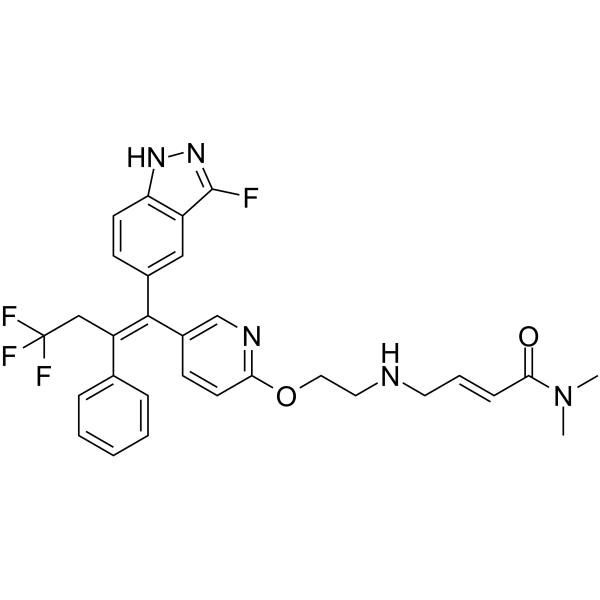
H3B-6545 is an oral, selective estrogen receptor covalent antagonist (SERCA) for the research of metastatic ER-positive, HER2-negative breast cancer .
loading...
    loading...
3
3 Cited Publications
Cat. No.: HY-112596A
CAS No.: 2052132-51-9
Purity:  99.16%
Target:  

Estrogen Receptor/ERR

Research Areas:  

Cancer

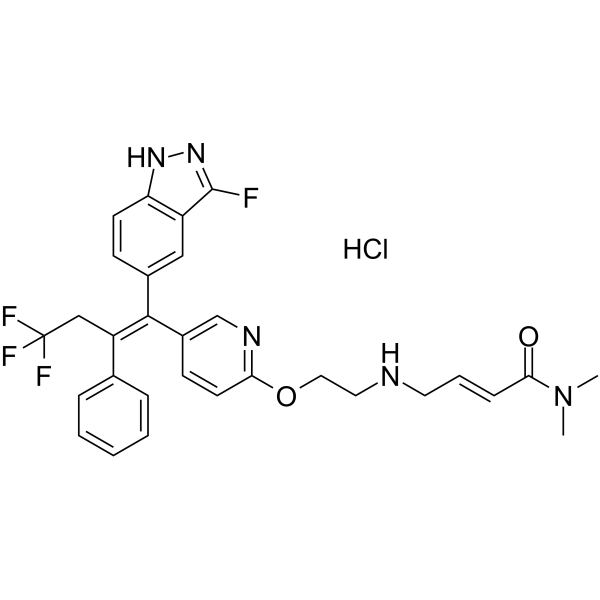
H3B-6545 hydrochloride is an oral, selective estrogen receptor covalent antagonist (SERCA) for the research of metastatic ER-positive, HER2-negative breast cancer .
loading...
    loading...
2
2 Cited Publications
Cat. No.: HY-B0524A
CAS No.: 5579-84-0
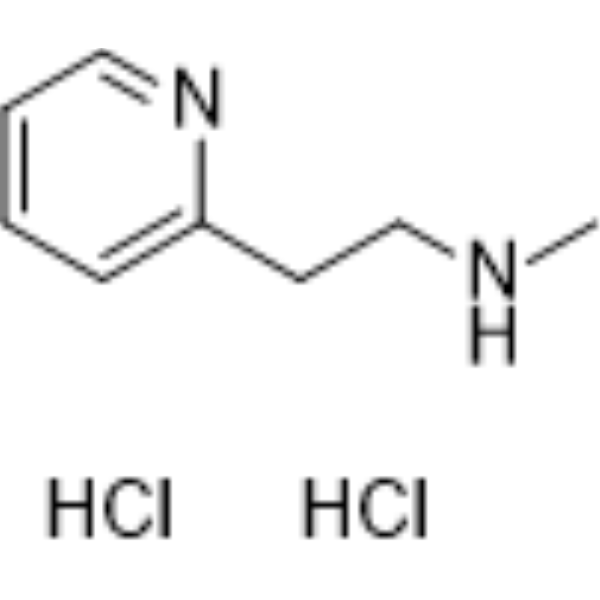
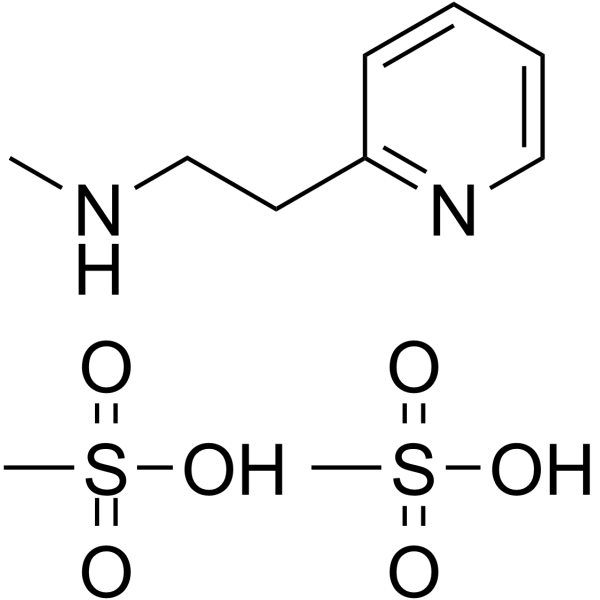
Betahistine dihydrochloride is an orally active histamine H1 receptor agonist and a H3 receptor antagonist . Betahistine dihydrochloride is used for the study of rheumatoid arthritis (RA) .
loading...
    loading...
2
2 Cited Publications
Cat. No.: HY-B0524
CAS No.: 5638-76-6
Target:  

Histamine Receptor

Research Areas:  

Inflammation/Immunology Cancer

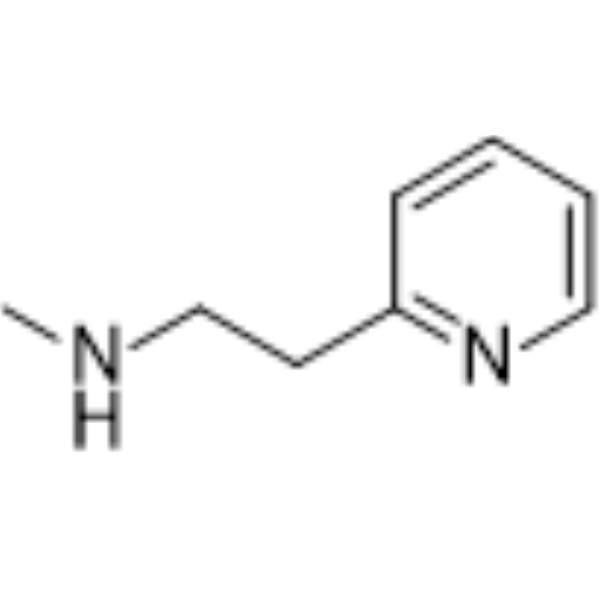
Betahistine is an orally active histamine H1 receptor agonist and a H3 receptor antagonist . Betahistine is used for the study of rheumatoid arthritis (RA) .
loading...
    loading...
2
2 Cited Publications
Cat. No.: HY-14111
CAS No.: 720690-73-3
Purity:  98.59%
Synonyms: GSK189254 free base
Target:  

Histamine Receptor

Research Areas:  

Neurological Disease Endocrinology

GSK189254A (GSK189254 free base) is a novel, potent and selective histamine H3 receptor antagonist with pKi values of 9.59-9.90 and 8.51-9.17 for human and rat H3, respectively.
loading...
    loading...
2
2 Cited Publications
Cat. No.: HY-101232
CAS No.: 69014-14-8
Purity:  98.53%
Synonyms: ICI 125211
Target:  

Histamine Receptor

Research Areas:  

Cardiovascular Disease

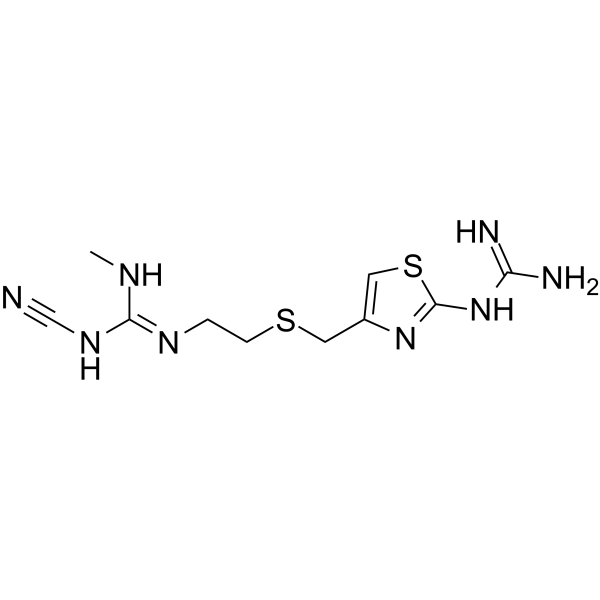
Tiotidine (ICI 125211) is a potent and selective antagonist of histamine H2-receptor (pA2=7.3-7.8 for guinea-pig right atrium). Tiotidine has low affinity for both the H1 and the H3 receptors .
loading...
    loading...
2
2 Cited Publications
Cat. No.: HY-D0237
CAS No.: 54856-23-4
Target:  

Histamine Receptor

Research Areas:  

Inflammation/Immunology

Betahistine mesylate is an orally active histamine H1 receptor agonist and a H3 receptor antagonist . Betahistine mesylate is used for the study of rheumatoid arthritis (RA) .
loading...
    loading...
2
2 Cited Publications
Cat. No.: HY-12195
CAS No.: 460746-46-7
Purity:  99.23%
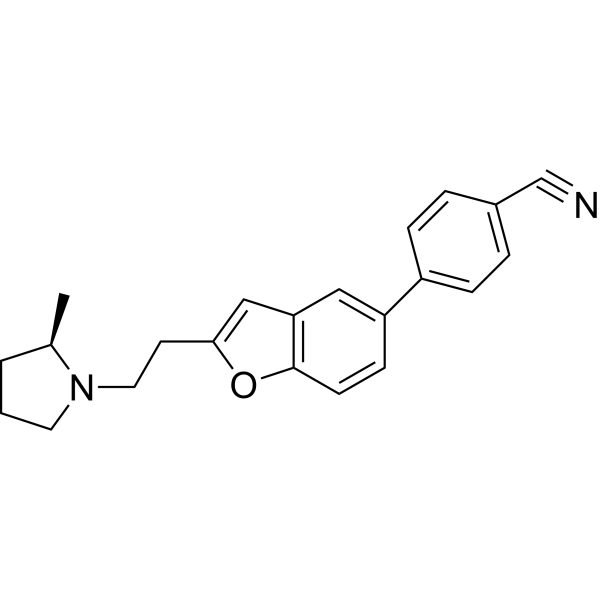
ABT-239 is a novel, highly efficacious, non-imidazole class of H3R antagonist and a transient receptor potential vanilloid type 1 (TRPV1) antagonist.
loading...
    loading...
1
1 Cited Publications
Cat. No.: HY-U00076
CAS No.: 862309-06-6
Target:  

Histamine Receptor

Research Areas:  

Neurological Disease Endocrinology

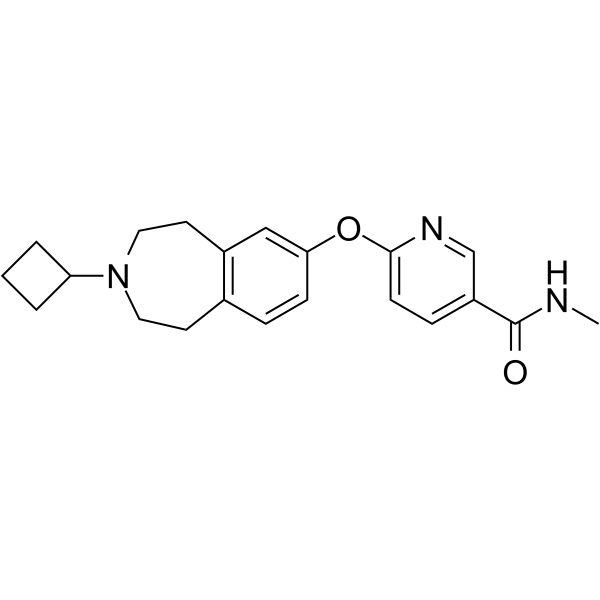
MK-0249 (Compound 1) is a potent, selective and orally active histamine H3 receptor antagonist, with an IC50 of 1.7 nM for human H3 .
loading...
    loading...
1
1 Cited Publications
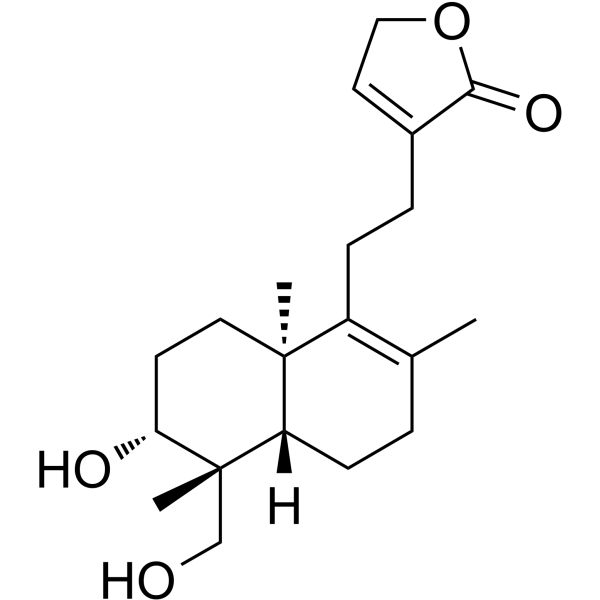
Cat. No.: HY-N0857
CAS No.: 79233-15-1
Deoxyandrographolide is an orally active lactone found in the Andrographis paniculata Nees. Deoxyandrographolide shows a KD of 38.4 μM of HDAC1. Deoxyandrographolide enhances GLUT4 plasma membrane translocation, activates PI3K and AMPK-dependent signaling pathways, suppresses fasting blood glucose, serum insulin, triglycerides, and LDL-cholesterol levels. Deoxyandrographolide enhances HDAC1 expression via inhibited ubiquitination degradation, represses H3K4me3, improves chromosome stability, and restrains aging biomarkers p16, p21, γH2A.X, p53 and ROS production. Deoxyandrographolide interacts with Foot-and-Mouth Disease Virus 3Cpro active site, inhibits protease and IFN-antagonist activity, derepresses ISG expression, and inhibits viral replication. Deoxyandrographolide can be used for the researches of type 2 diabetes mellitus, vascular senescence and virus infection .
loading...
    loading...
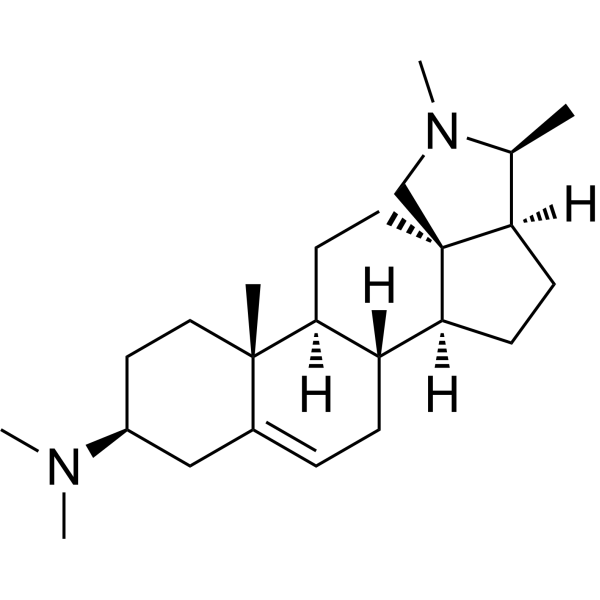
Cat. No.: HY-107566
CAS No.: 546-06-5
Purity:  99.87%
Conessine is an orally active and BBB-penetrable selective histamine H3 receptor antagonist. The pKi values of Conessine for rat and human H3 receptors are 7.61 and 8.27, respectively. Conessine is an inhibitor of the multidrug efflux pump system in Pseudomonas aeruginosa and can enhance the activity of antibiotics. Conessine has antimalarial activity. Conessine can also be used in the research of muscle atrophy .
loading...
    loading...
Cat. No.: HY-14880
CAS No.: 929622-08-2
Purity:  96.60%
Synonyms: JNJ-31001074
Bavisant (JNJ-31001074) is an orally active, potent, brain-penetrating and highly selective antagonist of the histamine H3 receptor. Bavisant can be used for attention-deficit hyperactivity disorder (ADHD) research .
loading...
    loading...
Cat. No.: HY-104003
CAS No.: 862896-30-8
Purity:  99.86%
Target:  

Histamine Receptor

Research Areas:  

Neurological Disease Endocrinology

S 38093 is a brain-penetrant, orally active antagonist of H3 receptor, with Kis of 8.8, 1.44 and 1.2 μM for rat, mouse and human H3 receptors, respectively.
loading...
    loading...
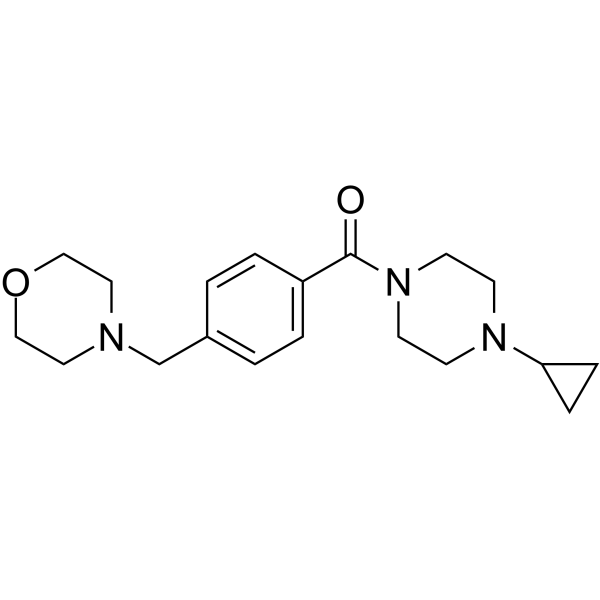
Cat. No.: HY-107568
CAS No.: 145196-87-8
Purity:  99.70%
Target:  

Histamine Receptor

Research Areas:  

Inflammation/Immunology

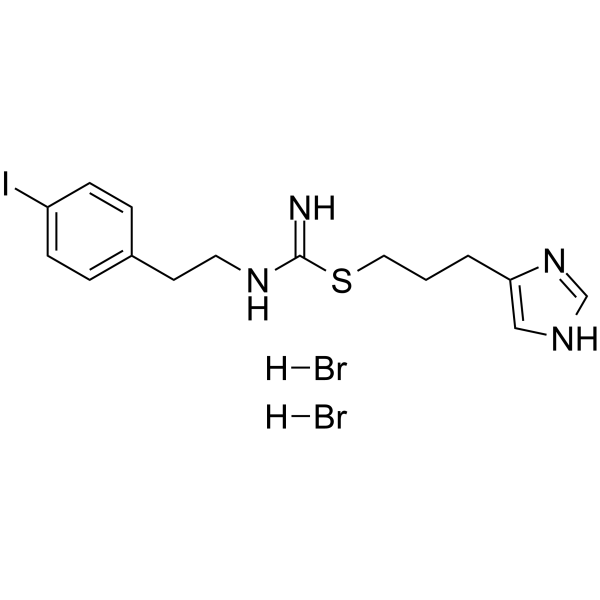
Iodophenpropit dihydrobromide is a potent and selective histamine H3 receptor antagonist. The binding of [ 125I]Iodophenpropit is selective, saturable, readily reversible, and of high affinity (KD 0.32 nM) .
loading...
    loading...
Cat. No.: HY-14567
CAS No.: 184025-18-1
Purity:  99.26%
Synonyms: FUB-359
Target:  

Histamine Receptor

Research Areas:  

Neurological Disease Endocrinology

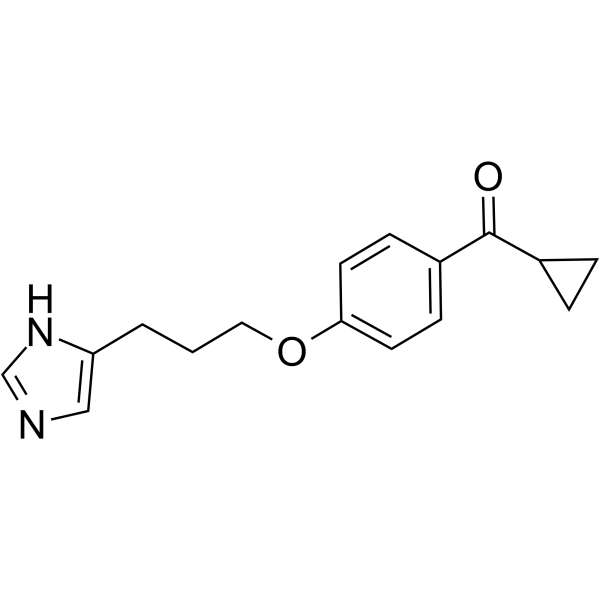
Ciproxifan (FUB 359) is a potent, selective, orally bioavailable and competitive antagonist of histamine H3-receptor, with an IC50 of 9.2 nM. Ciproxifan displays low apparent affinity at other receptor subtypes. Ciproxifan can be used for the research of aging disorders and Alzheimer's disease .
loading...
    loading...
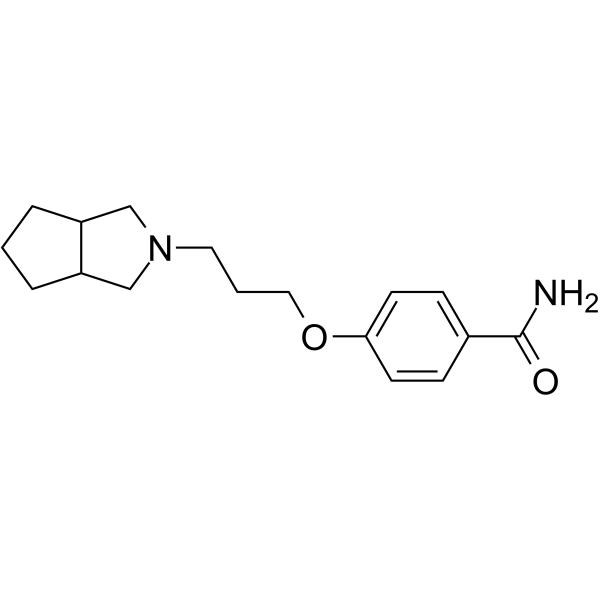
Cat. No.: HY-11044
CAS No.: 1039399-17-1
Purity:  99.1%
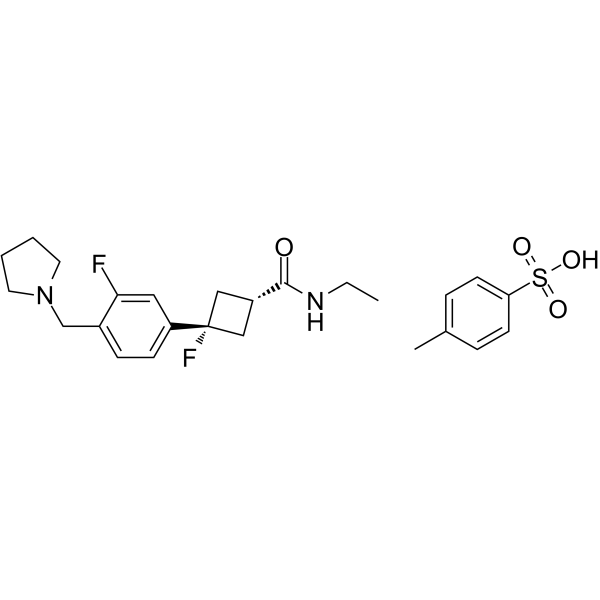
PF-03654746 Tosylate is a potent, selective and brain-penetrant histamine H3 receptor antagonist. PF-03654746 Tosylate reduces allergen-induced nasal symptoms . PF-03654746 Tosylate has potential for treatment of human cognitive disorders, improves cognitive efficacy and disease-modifying effects in Alzheimer's disease (AD) .
loading...
    loading...
Cat. No.: HY-106000
CAS No.: 720691-69-0
Purity:  99.09%
Target:  

Histamine Receptor

Research Areas:  

Neurological Disease

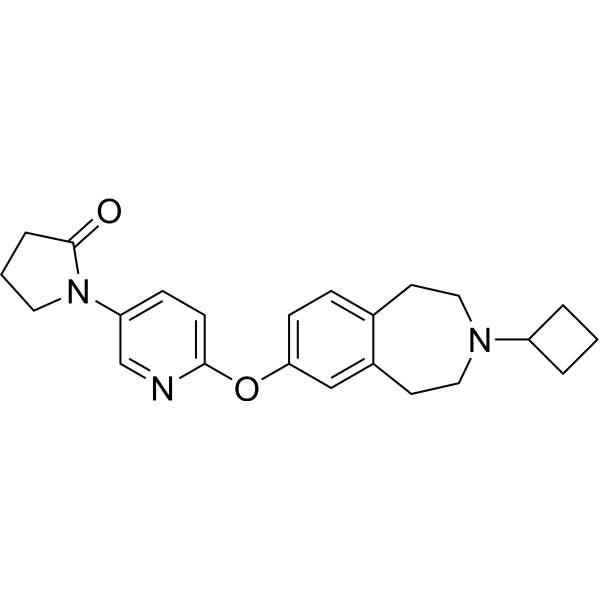
GSK239512 is a blood-brain barrier-permeable, orally active H3 receptor antagonist, with a human pKi ranging from <5.5 to 9.92 and a murine pKi ranging from 9.44 to 9.83. GSK239512 modulates cholinergic and monoaminergic neurotransmission, blocks the inhibitory feedback of H3 receptors, and increases the release of pro-cognitive neurotransmitters. GSK239512 induces oligodendrocyte precursor cell differentiation and restores myelin gene expression at the cellular level. GSK239512 reverses Scopolamine (HY-N0296)-induced memory deficits and improves recognition memory in animal models. GSK239512 can be used in research related to Alzheimer's disease, chronic traumatic encephalopathy, relapsing-remitting multiple sclerosis, and schizophrenia .
loading...
    loading...

