1. Search Result
Search Result
Results for "

HL-7702

" in MedChemExpress (MCE) Product Catalog:

20

Inhibitors & Agonists

1

Peptides

8

Natural
Products

Cat. No. Product Name Target Research Areas Chemical Structure
  • HY-N0288
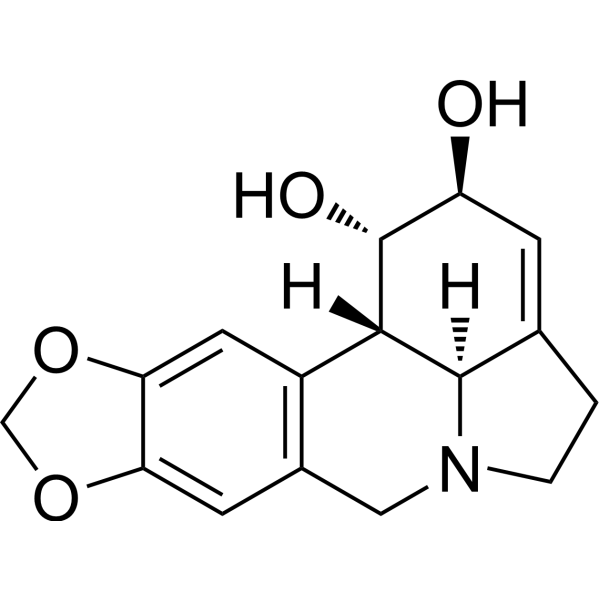
    Lycorine
    20+ Cited Publications

    Fatty Acid Synthase (FASN) Virus Protease Bacterial Apoptosis Inflammation/Immunology Cancer
    Lycorine is a natural alkaloid extracted from the Amaryllidaceae plant. Lycorine is a potent and orally active SCAP inhibitor with a Kd value 15.24 nM. Lycorine downregulates the SCAP protein level without changing its transcription . Lycorine is also a melanoma vasculogenic inhibitor . Lycorine can be used for the study of prostate cancer and metabolic diseases .
    Lycorine
  • HY-N0058
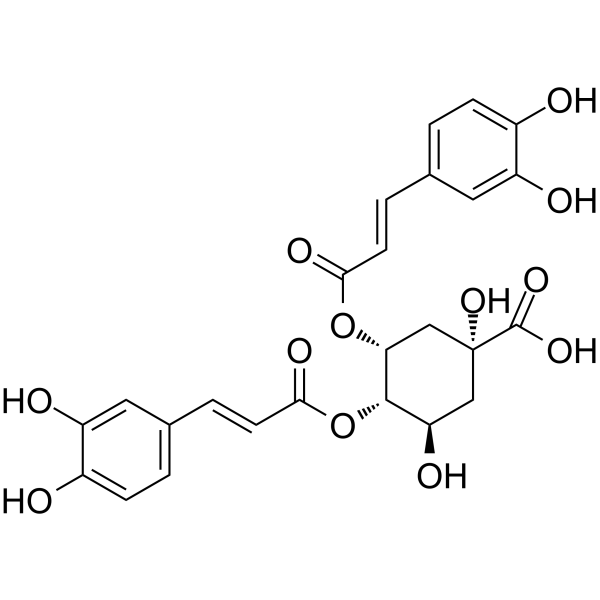
    4,5-Dicaffeoylquinic acid
    10+ Cited Publications

    IsocHLorogenic acid C

    HBV Endogenous Metabolite Apoptosis Glycosidase Infection
    4,5-Dicaffeoylquinic acid (Isochlorogenic acid C) is an antioxidant, can be isolated from Gynura divaricata and Laggera alata. 4,5-Dicaffeoylquinic acid reduces islet cell apoptosis and improves pancreatic function in type 2 diabetic mice, and has obvious inhibitory activities against yeast α-glucosidase. 4,5-Dicaffeoylquinic acid inhibits prostate cancer cells through cell cycle arrest. 4,5-Dicaffeoylquinic acid also has anti-apoptotic, anti-injury and anti-hepatitis B virus effects .
    4,5-Dicaffeoylquinic acid
  • HY-N7543

    HIV Endothelin Receptor Infection Metabolic Disease
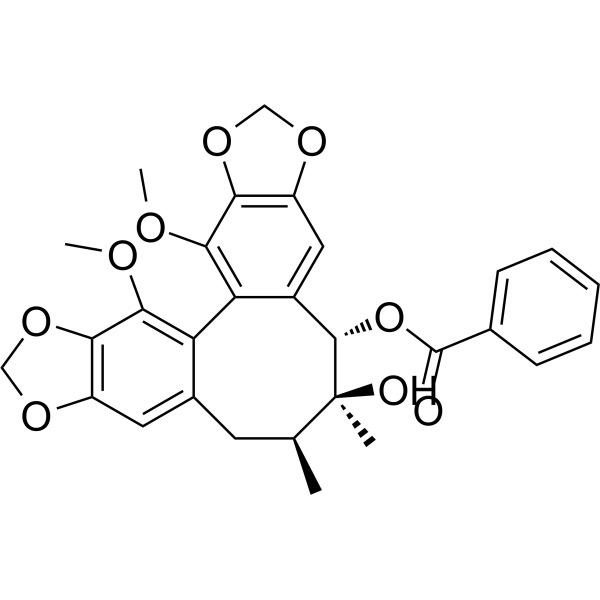
    Schisantherin D is a lignan. Schisantherin D can be isolated from Kadsura interior. Schisantherin D downregulates the expression of ETBR and inhibits the secretion of ECM and ET-1. Schisantherin D alleviates EtOH + ET-1-induced hepatocyte cytotoxicity. Schisantherin D potently inhibits HIV replication in cells .
    Schisantherin D
  • HY-N0288R

    Fatty Acid Synthase (FASN) Virus Protease Bacterial Apoptosis Reference Standards Inflammation/Immunology Cancer
    Lycorine (Standard) is the analytical standard of Lycorine. This product is intended for research and analytical applications. Lycorine is a natural alkaloid extracted from the Amaryllidaceae plant. Lycorine is a potent and orally active SCAP inhibitor with a Kd value 15.24 nM. Lycorine downregulates the SCAP protein level without changing its transcription . Lycorine is also a melanoma vasculogenic inhibitor . Lycorine can be used for the study of prostate cancer and metabolic diseases .
    Lycorine (Standard)
  • HY-144826

    GSK-3 Neurological Disease
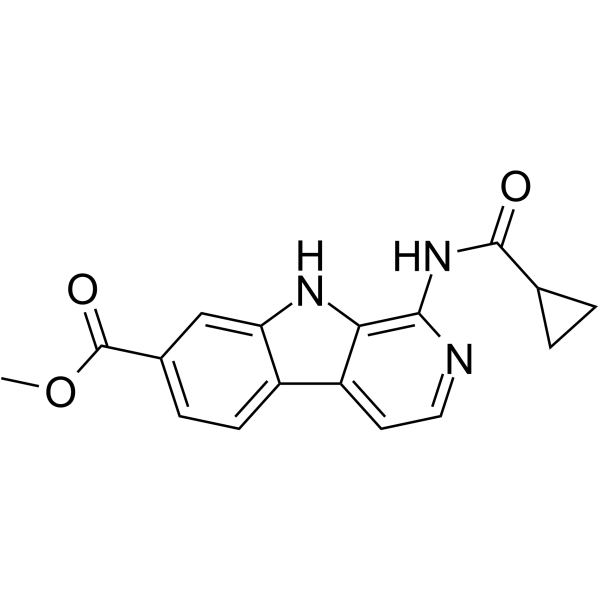
    ZDWX-25 is a highly potent GSK-3β and DYRK1A dual inhibitor with an IC50 value of 71 nM for GSK-3β. ZDWX-25 possesses significant cytotoxic activities against SH-SY5Y and HL-7702 cells. ZDWX-25 can be used for researching alzheimer's disease .
    ZDWX-25
  • HY-N0058R

    IsocHLorogenic acid C (Standard)

    Reference Standards HBV Endogenous Metabolite Apoptosis Glycosidase Infection
    4,5-Dicaffeoylquinic acid (Standard) is the analytical standard of 4,5-Dicaffeoylquinic acid. This product is intended for research and analytical applications. 4,5-Dicaffeoylquinic acid (Isochlorogenic acid C) is an antioxidant, can be isolated from Gynura divaricata and Laggera alata. 4,5-Dicaffeoylquinic acid reduces islet cell apoptosis and improves pancreatic function in type 2 diabetic mice, and has obvious inhibitory activities against yeast α-glucosidase. 4,5-Dicaffeoylquinic acid inhibits prostate cancer cells through cell cycle arrest. 4,5-Dicaffeoylquinic acid also has anti-apoptotic, anti-injury and anti-hepatitis B virus effects .
    4,5-Dicaffeoylquinic acid (Standard)
  • HY-172394

    HDAC ADAMTS Apoptosis Bcl-2 Family Cyclin G-associated Kinase (GAK) Cancer
    ZSNI-21 is a ADAM17/HDAC2 inhibitor with ADAM17 IC50 0.939 μM and HDAC2 IC50 0.844 μM. ZSNI-21 regulates the expression of apoptosis-related proteins (Bax, Bcl-2) and Cyclin D1, and induces apoptosis.. ZSNI-21 can be used for the research of hepatocellular carcinoma, breast cancer, and non-small cell lung cancer .
    ZSNI-21
  • HY-162269

    NAMPT Inflammation/Immunology
    Nampt activator-5 is a NAMPT activator with a KD value of 6.19 μM. Nampt activator-5 activates the rate-limiting enzyme in NAD + biosynthesis and promotes NAD + production. Nampt activator-5 delays the senescence process of senescent hepatocytes, extends the lifespan of *Caenorhabditis elegans*, and alleviates age-related dysfunction and abnormal biomarkers in naturally aged mice. Nampt activator-5 can be used in aging research .
    Nampt activator-5
  • HY-175560

    SOS1 PERK Cancer
    SOS1-IN-22 is a son of sevenless homolog 1 (SOS1) inhibitor. SOS1-IN-22 can inhibit KRAS-G12C/SOS1 complex formation with an IC50 value of 40.28 nM. SOS1-IN-22 can reduce phosphorylation ERK levels. SOS1-IN-22 can be used for the research of cancer, such as pancreatic carcinoma and appendiceal carcinoma .
    SOS1-IN-22
  • HY-139140

    Phosphorylase Metabolic Disease
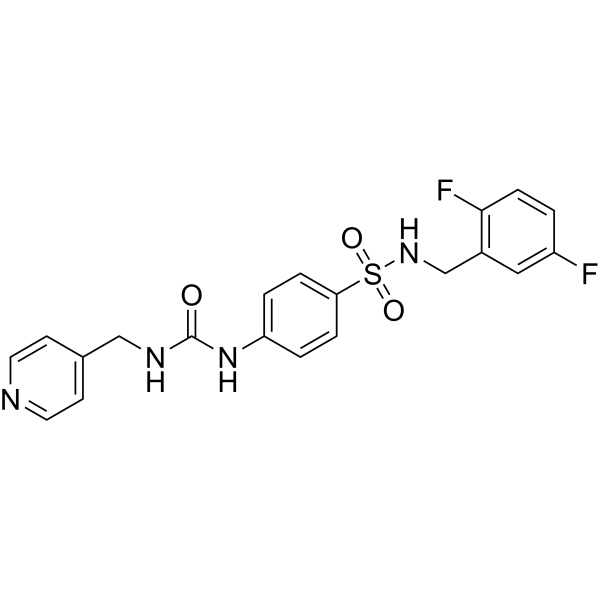
    BAY R3401 is an orally active glycogen phosphorylase inhibitor that can achieve irreversible and non-selective inhibition of hepatic glycogenolysis. BAY R3401 inhibits glycogenolysis in liver cells, with IC50 values of 27.06 and 52.83 μM in HL-7702 and HepG2 cells, respectively. BAY R3401 can be used for the research of type 2 diabetes .
    BAY R3401
  • HY-N12711

    Others Others
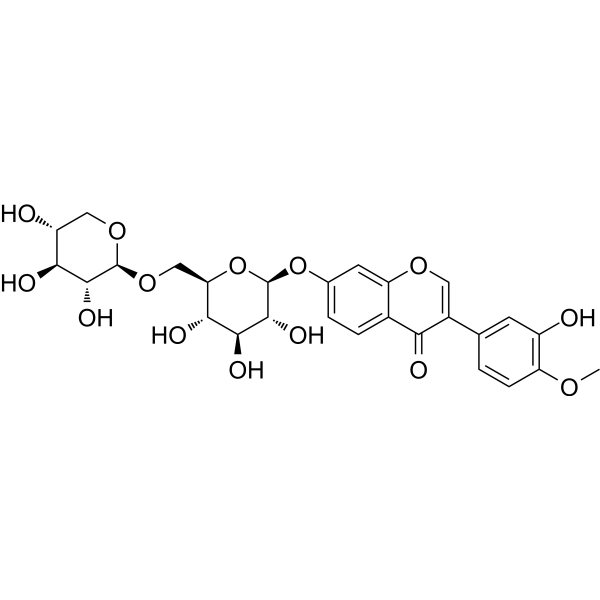
    Calycosin 7-O-xylosylglucoside exhibits hepatoprotective efficacy in human hepatic cell HL-7702 through scavenging oxidative damage and antioxidant properties .
    Calycosin 7-O-xylosylglucoside
  • HY-169688

    MDM-2/p53 Apoptosis Cancer
    NA-17 is a naphthalimide compound with anti-tumor activity and lower toxicity to normal cells like HL-7702 and WI-38. NA-17 exhibits a p53-dependent selective inhibition in various NSCLC cells, inducing the accumulation of active p53 in the mitochondria and nuclei of NSCLC cells. NA-17 can cause cell cycle arrest in the G1 phase, leading to apoptosis and cell death .
    NA-17
  • HY-124451

    Environmental Pollutants Apoptosis Autophagy Cancer
    2-Chloronaphthalene, serving as an intermediate in organic synthesis, is classified as a persistent organic pollutant. 2-Chloronaphthalene can induce apoptosis and autophagy, while inhibiting cell proliferation. 2-Chloronaphthalene leads to cell death through the interplay between autophagy and apoptosis .
    2-Chloronaphthalene
  • HY-N17767

    Others Inflammation/Immunology
    Leonoside F is a phenylethanoid glycoside compound isolated from the aerial parts of Leonurus japonicus Houtt., which protects liver cells from chemically induced damage. At a concentration of 1×10 -5 M, Leonoside F shows significant hepatoprotective activity against D-galactosamine-induced damage in HL-7702 liver cells, with an inhibition rate of 30.9% .
    Leonoside F
  • HY-162597

    DYRK Neurological Disease
    Dyrk1A-IN-9 (Compound L9) is a moderately active DYRK1A inhibitor (IC50: 1.67 μM). L9 shows neuroprotective activity by regulating the expression of Aβ and phosphorylation of Tau protein. Dyrk1A-IN-9 can be used for research of Alzheimer's disease .
    Dyrk1A-IN-9
  • HY-143302

    Apoptosis Cancer
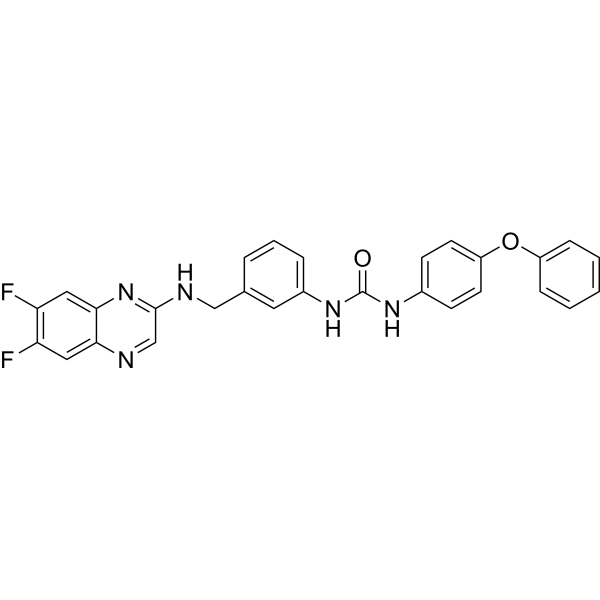
    Anticancer agent 31 is a 1,3-diphenylurea quinoxaline derivative, and a anticancer agent. Anticancer agent 31 exhibits antitumor acitvity by arresting cell cycle at S phase and inducing apoptosis .
    Anticancer agent 31
  • HY-P10832

    Apoptosis Ras Raf MEK ERK Caspase PARP Bcl-2 Family Cancer
    ATWLPPRAANLLMAAS is a chimeric peptide with anti-angiogenic and potent anti-tumor effects. ATWLPPRAANLLMAAS can inhibit the proliferation, viability, migration, and invasion of human hepatocellular carcinoma cells, and induce apoptosis. .
    ATWLPPRAANLLMAAS
  • HY-N17630

    Others Metabolic Disease
    Schekwangsienin is a triterpenoid compound isolated from the aerial parts of Schefflera kwangsiensis. Schekwangsienin exhibits hepatoprotective activity and can be used in studies on liver injury .
    Schekwangsienin
  • HY-179614

    PARP DNA/RNA Synthesis Apoptosis CDK Bcl-2 Family Cancer
    PARP1-IN-50 is a selective and orally active PARP-1 inhibitor with an IC50 of 64.98 nM. PARP1-IN-50 can inhibit PAR formation and induce DNA double strand breaks, thereby causing DNA damage. PARP1-IN-50 can induce G2/M phase arrest and cancer cells apoptosis. PARP1-IN-50 demonstrates significant antiproliferative activity against various cancer cells. PARP1-IN-50 can be used for the research of cancer, such as breast cancer .
    PARP1-IN-50
  • HY-181404

    Fungal P-glycoprotein Infection
    PA36-2 is an Mdr1 inhibitor and azole resistance reversal agent, with a IC50 of 1.0 μg/mL and a Kd of 4.209 μM against Candida albicans Mdr1. By effectively inhibiting the activity of the Mdr1 efflux pump, PA36-2 prevents the pumping of substrates out of cells, enhances the intracellular accumulation of azole antibiotics, and exerts a synergistic effect with antifungal agents such as Fluconazole (FLC) (HY-B0101). PA36-2 can be used in the research of azole-resistant candidiasis .
    PA36-2

Inquiry Online

Your information is safe with us. * Required Fields.

Salutation


Country or Region *

Applicant Name *


Organization Name *

Department *


Email Address *


Product Name *

Cat. No.


Requested quantity *

Phone Number *


Remarks

Inquiry Online

Inquiry Information

Product Name:
Cat. No.:
Quantity:
MCE Japan Authorized Agent:

