9 Results for "

Ischemic Myocardium

" in MedChemExpress (MCE) Product Catalog:
Products (9)

9 Results for "Ischemic Myocardium" in MCE Product Catalog:

1
1 Cited Publications
Cat. No.: HY-103346
CAS No.: 220509-74-0
Purity:  99.97%
Target:  

Caspase Apoptosis

Research Areas:  

Cardiovascular Disease

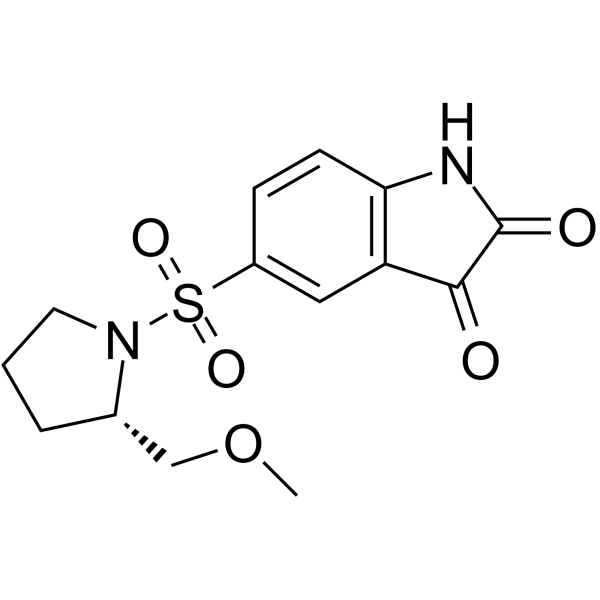
MMPSI is a potent and selective small molecule caspase 3 and caspase 7 inhibitor with an IC50 of 1.7 μM for human caspase-3. MMPSI can significantly reduce ischemia-reperfusion-induced infarct size in the isolated rabbit heart, and reduce apoptosis in both the ischemic myocardium and isolated cardiomyocytes. MMPSI can be used for researching cardioprotection .
loading...
    loading...
Cat. No.: HY-P5217
Target:  

Inhibitory Antibodies

Research Areas:  

Others

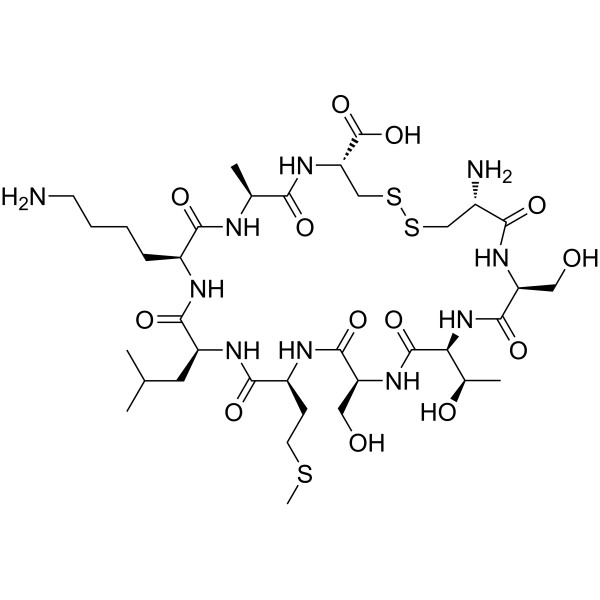
CSTSMLKAC (peptide 2) is a cyclic 9 amino acid sequence that mimics endogenous peptide sequences. CSTSMLKAC homes to cardiomyocytes in the ischemic myocardium .
loading...
    loading...
Cat. No.: HY-19463A
CAS No.: 470454-73-0
Target:  

Sodium Channel

Research Areas:  

Cardiovascular Disease

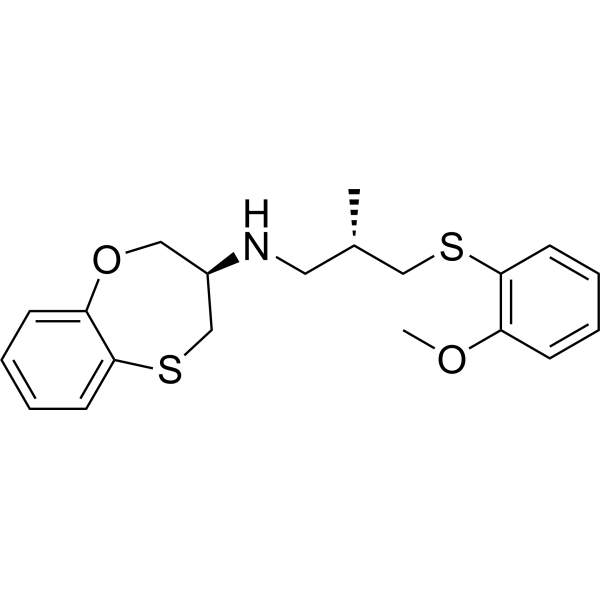
F 15845 is a highly effective persistent sodium current blocker. F 15845 also is a cardioprotective agent, has anti-ischemic activity and exerts short- and long-term cardioprotection after myocardial infarction. F 15845 can be used for the research of myocardium functional impairment .
loading...
    loading...
Cat. No.: HY-19463
CAS No.: 866760-23-8
Target:  

Sodium Channel

Research Areas:  

Cardiovascular Disease

F 15845 hydrobromide is a highly effective persistent sodium current blocker. F 15845 hydrobromide is also a cardioprotective agent, has anti-ischemic activity and exerts short- and long-term cardioprotection after myocardial infarction. F 15845 hydrobromide can be used for the research of myocardium functional impairment .
loading...
    loading...
Cat. No.: HY-123721
CAS No.: 78816-67-8
Synonyms: AWD-19-166; GS 015
Target:  

Endogenous Metabolite

Research Areas:  

Cardiovascular Disease

Tiracizine hydrochloride (AWD-19-166) is a Class I antiarrhythmic drug with activity that reduces myocardial contractile function. Tiracizine hydrochloride was studied in patients with ischemic heart disease, showing its effects on the myocardium. Tiracizine hydrochloride reduces myocardial contractility and may have potential use in the management of heart disease .
loading...
    loading...
Cat. No.: HY-125144
CAS No.: 265986-98-9
Research Areas:  

Cardiovascular Disease

BIIB 513 is an inhibitor of NHE 1 that protects against myocardial ischemia. BIIB 513 inhibits acid load recovery with an IC50 of 27 nmol/L in cells expressing wild-type NHE 1 under acute acid load .
loading...
    loading...
Cat. No.: HY-117135
CAS No.: 186086-10-2
Research Areas:  

Cardiovascular Disease

HNS-32 is a compound with antiarrhythmic and vasodilatory effects in canine hearts, showing superior protective effects against ischemic and reperfusion arrhythmias compared to an equivalent dose of Mexiletine hydrochloride (HY-A0093). Furthermore, HNS-32 exhibits significant negative chronotropic effects on mammalian ventricular myocardium, indicating its potential application value in the study of acute coronary syndrome .
loading...
    loading...
Cat. No.: HY-103346R
CAS No.: 220509-74-0
MMPSI (Standard) is the analytical standard of MMPSI (HY-103346). This product is intended for research and analytical applications. MMPSI is a potent and selective small molecule caspase 3 and caspase 7 inhibitor with an IC50 of 1.7 μM for human caspase-3. MMPSI can significantly reduce ischemia-reperfusion-induced infarct size in the isolated rabbit heart, and reduce apoptosis in both the ischemic myocardium and isolated cardiomyocytes. MMPSI can be used for researching cardioprotection .
loading...
    loading...
Cat. No.: HY-184103
CAS No.: 378230-75-2
Synonyms: Ethylenedicysteine deoxyglucose
ECDG is a small-molecule compound dependent on α-ketoglutarate/Fe 2+ that participates in the biosynthesis of echinocandins. ECDG is involved in the targeted transport of glucose, and can be used for PET imaging after labeling with radioactive atoms. ECDG increases blood glucose levels in rats, undergoes cellular uptake mediated by D-glucose, localizes in ischemic viable myocardial tissue, and accumulates in the synovial space of rheumatoid arthritis. ECDG can be used in research related to candidiasis, glucose metabolism disorders, fungal infections, myocardial ischemia and rheumatoid arthritis .
loading...
    loading...

