
129 Results for "

Klenow (exo-)

" in MedChemExpress (MCE) Product Catalog:
Products (129)

129 Results for "Klenow (exo-)" in MCE Product Catalog:

8
8 Publications Verification
Cat. No.: HY-112670
CAS No.: 75541-83-2
Purity:  99.77%
Target:  

Arf Family GTPase

Research Areas:  

Others

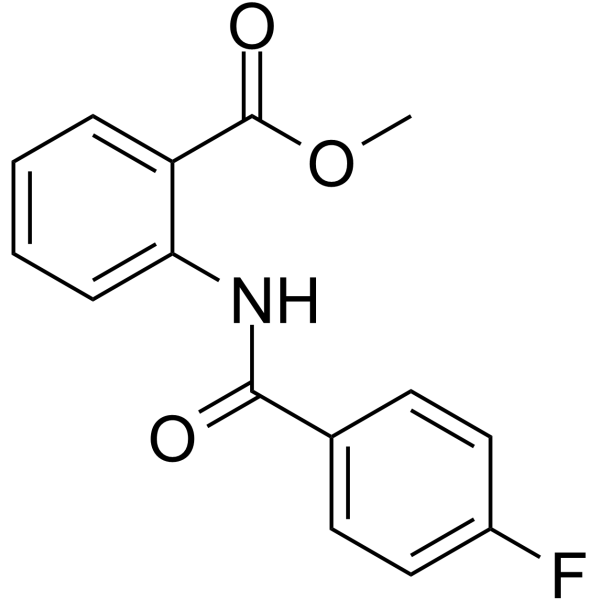
Exo1 is a chemical inhibitor of the exocytic pathway.
loading...
    loading...
4
4 Cited Publications
Cat. No.: HY-120821
CAS No.: 1839524-44-5
Purity:  99.17%
Synonyms: ES2
Target:  

Exosomes

Research Areas:  

Others

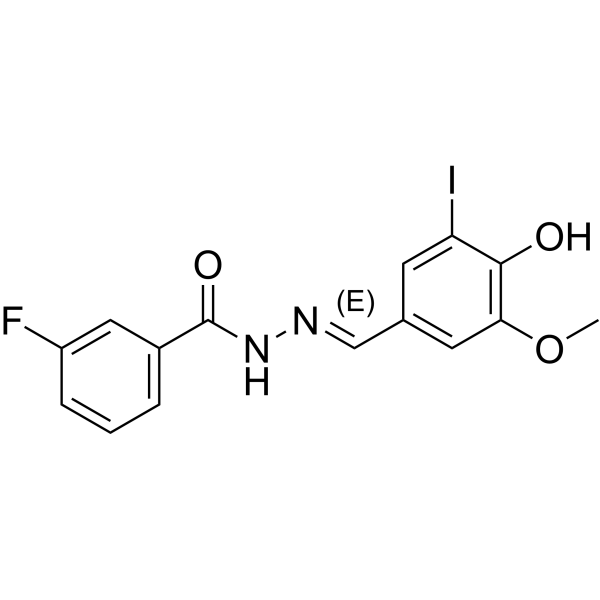
Endosidin-2 (ES2) is a selective inhibitor targeting the conserved exosome subunit EXO70. Endosidin-2 binds to the C-terminal domain of EXO70, inhibiting exocytosis and endosomal recycling, while promoting vacuolar trafficking in plant cells. Endosidin-2 interferes with the EXO70-mediated vesicle-to-plasma membrane anchoring process, leading to abnormal aggregation of auxin transporters (such as PIN2) in the cytoplasm and redirected to vacuolar degradation, while causing abnormal Golgi structure (such as cup-shaped or ring-shaped vesicles cisternae formation). Endosidin-2 can inhibit exocytosis in plant and mammalian cells and is mainly used to study the dynamic regulation of membrane trafficking (such as polar growth, vesicle sorting) .
loading...
    loading...
1
1 Cited Publications
Cat. No.: HY-P2988
CAS No.: 9001-67-6
Synonyms: Exo-α-sialidase
Target:  

Sialyltransferase

Research Areas:  

Infection

Neuraminidase, Microorganism (Exo-α-sialidase) is an exosialidase, is often used in biochemical studies. Neuraminidase cleaves α-ketosidic linkage between the sialic (N-acetylneuraminic) acid and an adjacent sugar residue. Neuraminidase, derived from mucosal pathogens, is a virulence factor that modifies the host's response to infection .
loading...
    loading...
Cat. No.: HY-174143
CAS No.: 1111188-09-0
Target:  

Apoptosis

Research Areas:  

Cancer

EXO1-IN-1 is a human exonuclease 1 (EXO1) inhibitor (IC50 = 15.7 μM). EXO1-IN-1 inhibits DNA end resection, promotes the accumulation of DNA double-strand breaks, and triggers S-phase polyamylation. EXO1-IN-1 induces apoptosis (Apoptosis) in BRCA1-deficient breast cancer cells. EXO1-IN-1 suppresses the growth of BRCA1-deficient breast cancer xenografts. EXO1-IN-1 can be used in research related to BRCA1-deficient breast cancer .
loading...
    loading...
Cat. No.: HY-W754588
CAS No.: 1384100-45-1
Target:  

PROTAC Linkers

Research Areas:  

Others

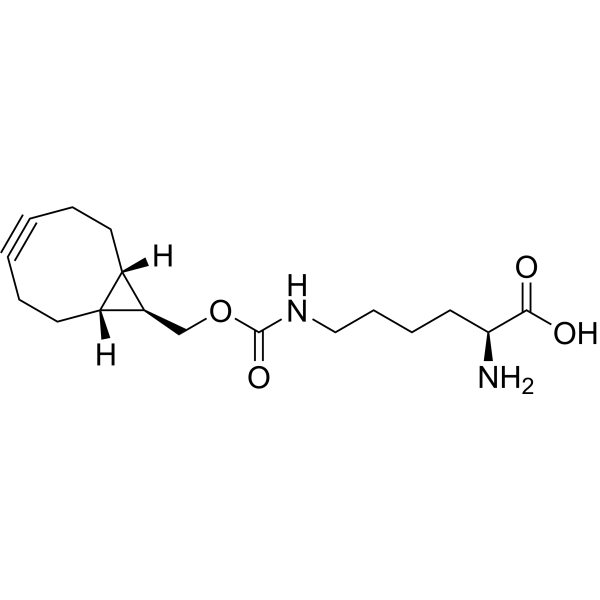
exo-BCN-L-Lysine is a Click Amino Acid that can be used as a linker in the synthesis of PROTAC molecules. exo-BCN-L-Lysine contains a BCN group that can undergo strain-promoted alkyne-azide cycloaddition (SPAAC) with molecules containing Azide groups.
loading...
    loading...
Cat. No.: HY-P3187
CAS No.: 9025-53-0
Target:  

DNA/RNA Synthesis

Research Areas:  

Others

Exo-1,4-β-xylosidase is an exonuclease that specifically acts on the β-1,4 glycosidic bonds at the non-reducing ends of xylan and xylooligosaccharides. Exo-1,4-β-xylosidase is Ca 2+-dependent and reversibly binds to metal ions to catalyze the hydrolysis of β-1,4 glycosidic bonds, thereby degrading xylan to produce xylose. Exo-1,4-β-xylosidase can be used in research fields such as lignocellulose bioconversion, bioethanol production, and optimization of xylan saccharification processes .
loading...
    loading...
Cat. No.: HY-133402
CAS No.: 1841134-72-2
Purity:  ≥95.0%
Target:  

PROTAC Linkers

Research Areas:  

Cancer

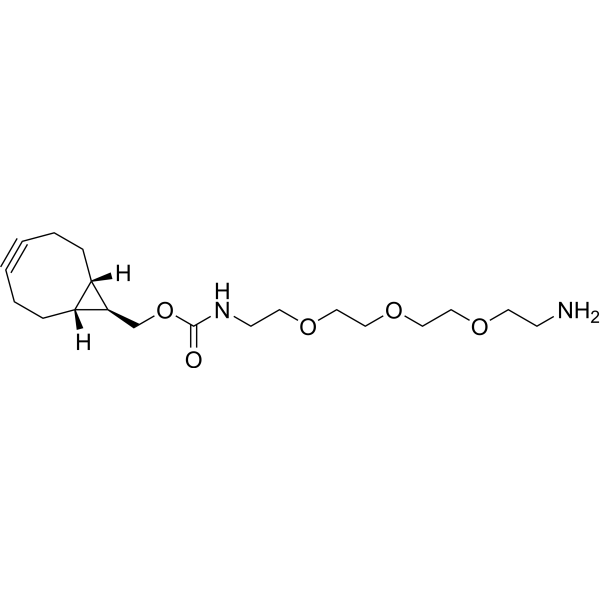
BCN- exo- PEG3- NH2 is a PEG-based PROTAC linker that can be used in the synthesis of PROTACs . BCN- exo- PEG3- NH2 is a click chemistry reagent, it contains a BCN group that can undergo strain-promoted alkyne-azide cycloaddition (SPAAC) with molecules containing Azide groups.
loading...
    loading...
Cat. No.: HY-W096149
CAS No.: 1493802-77-9
Research Areas:  

Others

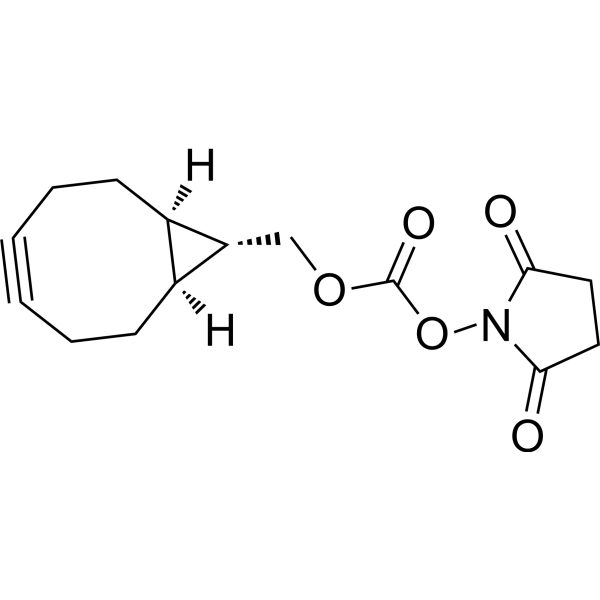
exo-BCN-NHS carbonate is a reagent used in copper-free click chemistry that introduces the bicyclo[6.1.0]non-4-yne (BCN) moiety, and plays a relevant role in the biosynthesis of peptides containing (exoBCN)-L-lysine to enable conjugation with tetrazine-modified molecules.
loading...
    loading...
Cat. No.: HY-137975
CAS No.: 304684-77-3
Purity:  99.96%
Target:  

Bacterial

Research Areas:  

Endocrinology

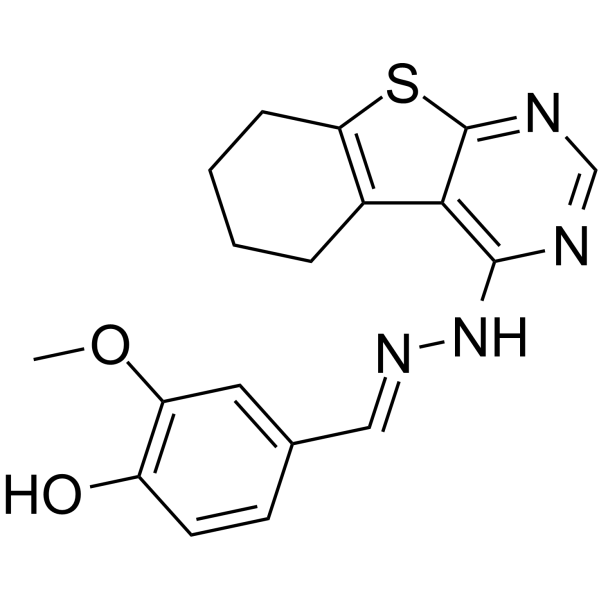
Exo2 is a secretion inhibitor. Exo2 perturbs trafficking of Shiga toxin between endosomes and the trans-Golgi network. Exo2 blocks secretory cargo exit from the ER (endoplasmic reticulum) and disrupts the Golgi apparatus, but does not affect the morphology of the TGN (trans-Golgi network) Exo2 can stimulate calcium-dependent exocytosis in permeabilized adrenal chromaff in cells .
loading...
    loading...
Cat. No.: HY-133406
CAS No.: 1380006-72-3
Purity:  ≥98.0%
Target:  

PROTAC Linkers

Research Areas:  

Cancer

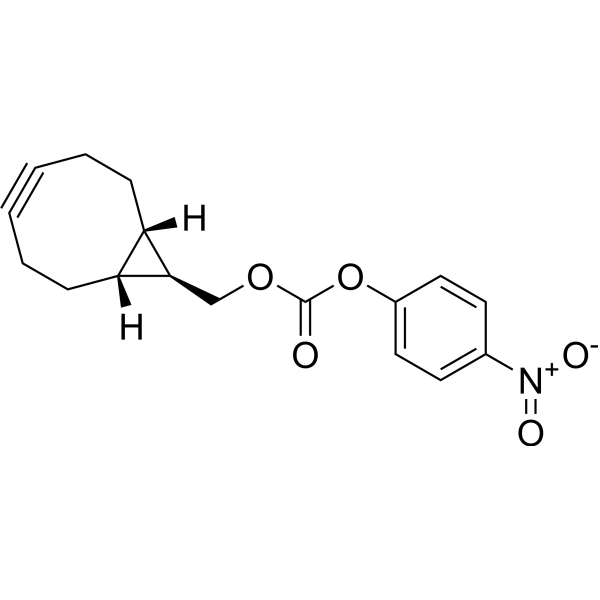
exo BCN-O-PNB is an alkyl/ether-based PROTAC linker that can be used in the synthesis of PROTACs . exo BCN-O-PNB is a click chemistry reagent, it contains a BCN group that can undergo strain-promoted alkyne-azide cycloaddition (SPAAC) with molecules containing Azide groups.
loading...
    loading...
Cat. No.: HY-169322
CAS No.: 2921735-80-8
Synonyms: Mal-Exo-EVC-MMAE
APL-1081 (Mal-Exo-EVC-MMAE) is part of an antibody-conjugated active molecule (ADC). APL-1081 is conjugated with an ADC linker (peptide Mal-Exo-EEVC) and a potent tubulin polymerization inhibitor, MMAE (HY-15162) .
loading...
    loading...
Cat. No.: HY-134734
CAS No.: 2143965-47-1
Purity:  95.13%
Target:  

ADC Linkers

Research Areas:  

Cancer

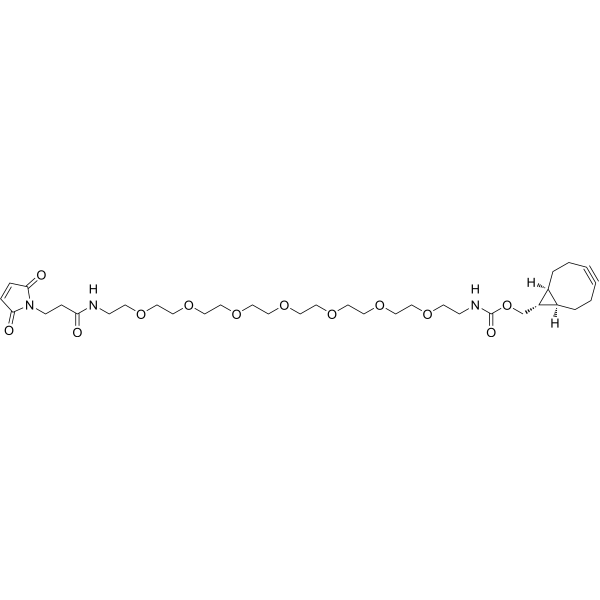
BCN-exo-PEG7-maleimide is an ADC Linker containing 7 PEG units. BCN-exo-PEG7-maleimide contains the lyophilic bidentate macrocyclic ligand BCN, which allows for further synthesis of macrocyclic complexes. In click chemistry, BCN reacts with molecules containing azide groups to form stable triazoles in the absence of catalysts. Its maleimide group (-Maleimide) degrades in aqueous media and has been used in drug delivery studies.
loading...
    loading...
Cat. No.: HY-156322
CAS No.: 2919127-00-5
Target:  

ADC Linkers

Research Areas:  

Cancer

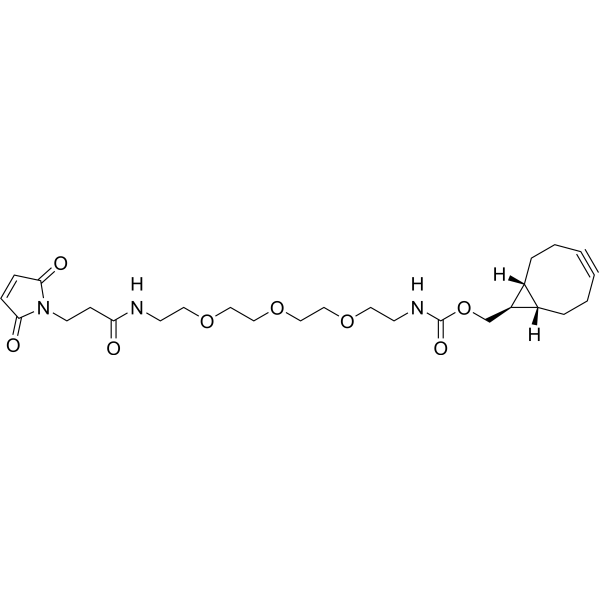
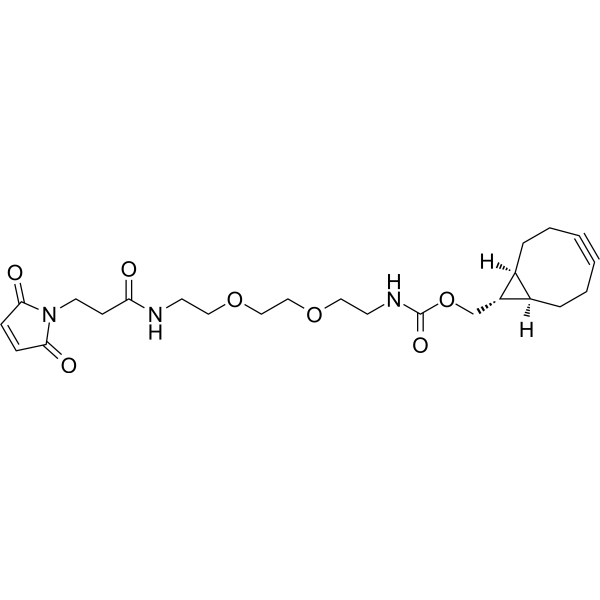
BCN-exo-PEG3-maleimide is an ADC Linker containing 3 PEG units. BCN-exo-PEG3-maleimide contains the lyophilic bidentate macrocyclic ligand BCN, which enables the further synthesis of macrocyclic complexes. In click chemistry, BCN reacts with molecules containing azide groups to form stable triazoles in the absence of catalysts. Its maleimide group (-Maleimide) degrades in aqueous media and has been used in drug delivery studies.
loading...
    loading...
Cat. No.: HY-108437
CAS No.: 1127442-87-8
Purity:  98.75%
Target:  

Wnt

Research Areas:  

Infection Cancer

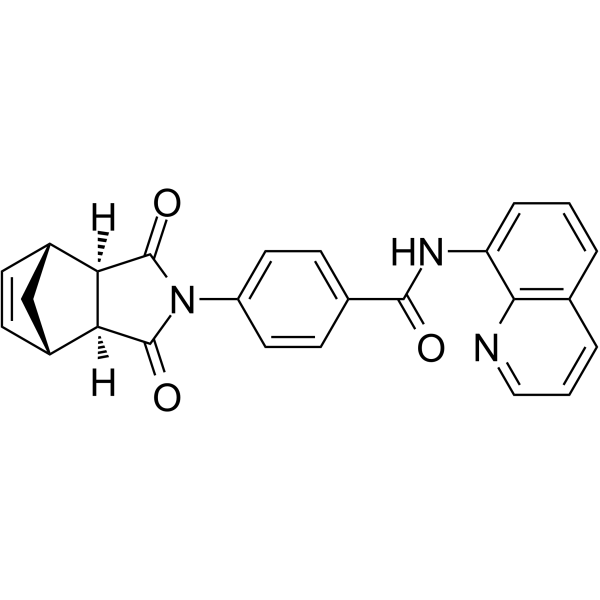
exo-IWR-1, an inactive stereoisomer of Endo-IWR-1, is a negative control of IWR-1 (HY-12238). IWR-1 is a tankyrase inhibitor which inhibits Wnt/β-catenin signaling pathway .
loading...
    loading...
Cat. No.: HY-156305
CAS No.: 2488174-17-8
Purity:  95.70%
Target:  

Fluorescent Dye

Research Areas:  

Others

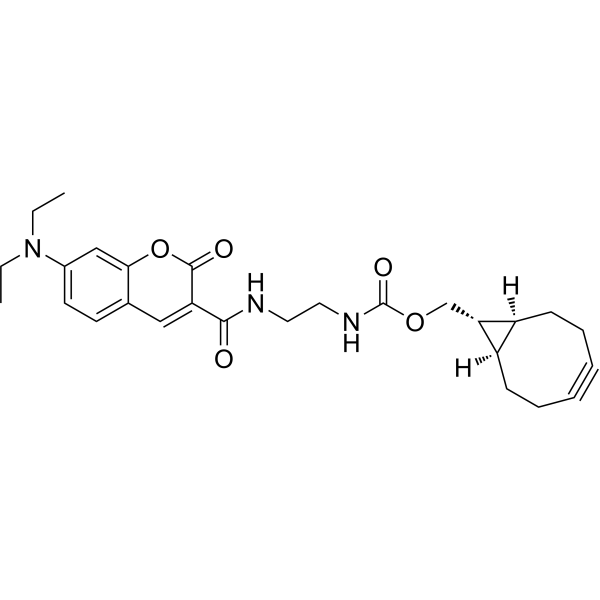
Coumarin-C2-exoBCN is a dye derivative of Coumarin (HY-N0709) and can be used for research related to fluorescent labeling and chemical reaction tracking.
loading...
    loading...
Cat. No.: HY-175888
CAS No.: 2921735-93-3
Synonyms: Mc-exo-EVC-Exatecan
Research Areas:  

Cancer

APL-1082 is a drug-Linker conjugate that can be used for ADC synthesis. APL-1082 contains Exatecan (HY-13631) and Linker (HY-175929). APL-1082 reduces aggregation and hydrophobicity in Trastuzumab (HY-P9907) ADCs, enables production of high-DAR (10) ADCs with homogeneity and defined physicochemical properties. APL-1082 forms a Trastuzumab ADC with enhanced stability, showing greater DAR retention over time. APL-1082 can be used for the research of gastric cancer .
loading...
    loading...
Cat. No.: HY-W048513
CAS No.: 60129-59-1
7-Deaza-2'-deoxyadenosine is an isosteric dATP analog of 2'-deoxyadenosine. 7-Deaza-2'-deoxyadenosine is recognized by various DNA polymerases and incorporated into DNA strands as a substrate. 7-Deaza-2'-deoxyadenosine undergoes a bioorthogonal inverse electron demand Diels-Alder reaction with tetrazine-modified molecules, enabling site-specific labeling of DNA, surface antibody immobilization and intracellular fluorescent labeling. 7-Deaza-2'-deoxyadenosine reduces the DNA curvature of d(A6)·d(T6) fragments and the stability of DNA/RNA double helices, and leads to decreased antisense activity against SV40 T Antigen. 7-Deaza-2'-deoxyadenosine finds application in the research field of SV40 T Antigen-related cancers .
loading...
    loading...
Cat. No.: HY-P10862A
Target:  

Exosomes Virus Protease

Research Areas:  

Infection Cancer

AH-D peptide TFA is an antiviral peptide that selectively disrupts membrane structures within the size range of exosomes, inducing T-EXO depletion and enhancing cancer immunotherapy .
loading...
    loading...
Cat. No.: HY-156320
CAS No.: 2141976-22-7
Target:  

ADC Linkers

Research Areas:  

Cancer

BCN-exo-PEG2-maleimide is an ADC Linker containing 2 PEG units. BCN-exo-PEG2-maleimide contains the lyophilic bidentate macrocyclic ligand BCN, which allows for further synthesis of macrocyclic complexes. In click chemistry, BCN reacts with molecules containing azide groups to form stable triazoles in the absence of catalysts. Its maleimide group (-Maleimide) degrades in aqueous media and has been used in drug delivery studies.
loading...
    loading...
Cat. No.: HY-169323
CAS No.: 2921735-87-5
Synonyms: Mal-Exo-EEVC-MMAE
Research Areas:  

Cancer

APL-1091 (Mal-Exo-EEVC-MMAE) is an ADC payload-linker conjugate (Drug-Linker Conjugates for ADC). APL-1091 is formed by the conjugation of the Mal-Exo-EEVC (HY-169353) linker and MMAE (HY-15162), a microtubule inhibitor. APL-1091 resists aggregation at high drug-to-antibody ratio (DAR), exhibits excellent plasma stability, and reduces premature payload release. When conjugated with Trastuzumab (HY-P9907), APL-1091 displays anti-tumor activity in gastric cancer xenograft models. APL-1091 can be used for ADC synthesis and gastric cancer-related research .
loading...
    loading...

