1. Search Result
Search Result
Results for "

LMP7 inhibitor

" in MedChemExpress (MCE) Product Catalog:

19

Inhibitors & Agonists

1

Peptides

1

Natural
Products

1

Click Chemistry

Cat. No. Product Name Target Research Areas Chemical Structure
  • HY-13821
    Epoxomicin
    20+ Cited Publications

    BU-4061T

    Proteasome Apoptosis Inflammation/Immunology Cancer
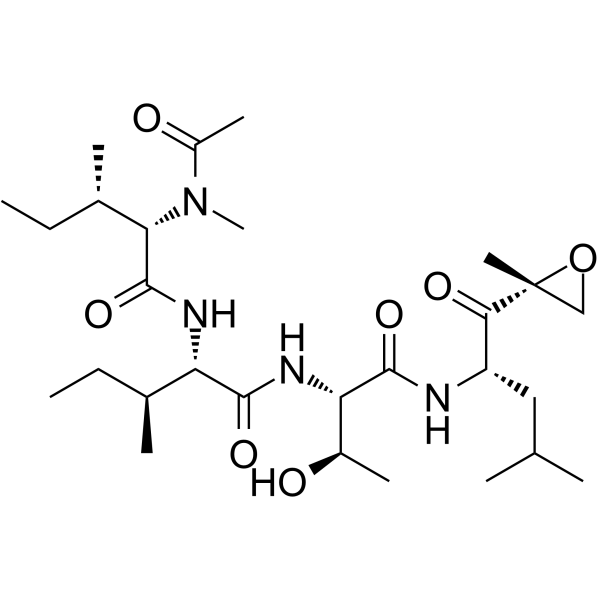
    Epoxomicin (BU-4061T) is an epoxyketone-containing natural product and a potent, selective and irreversible proteasome inhibitor. Epoxomicin covalently binds to the LMP7, X, MECL1, and Z catalytic subunits of the proteasome and potently inhibits primarily the chymotrypsin-like activity. Epoxomicin can cross the blood-brain barrier. Epoxomicin has strongly antitumor and anti-inflammatory activity .
    Epoxomicin
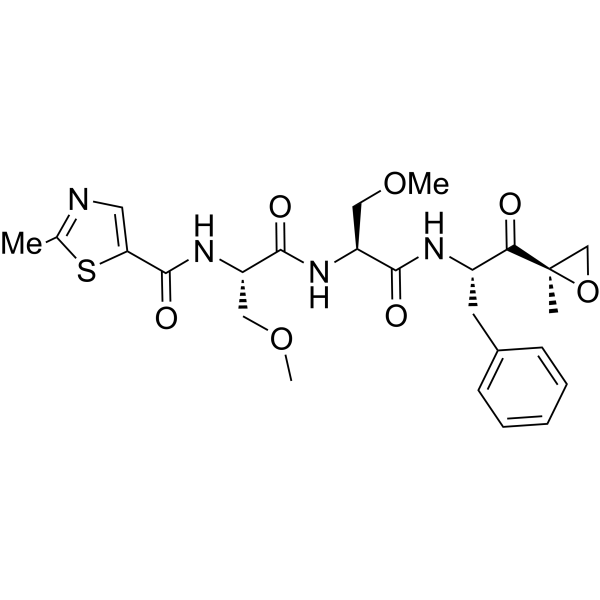
  • HY-13207
    ONX-0914
    Maximum Cited Publications
    24 Publications Verification

    PR-957

    Proteasome Bacterial HIV Infection Inflammation/Immunology
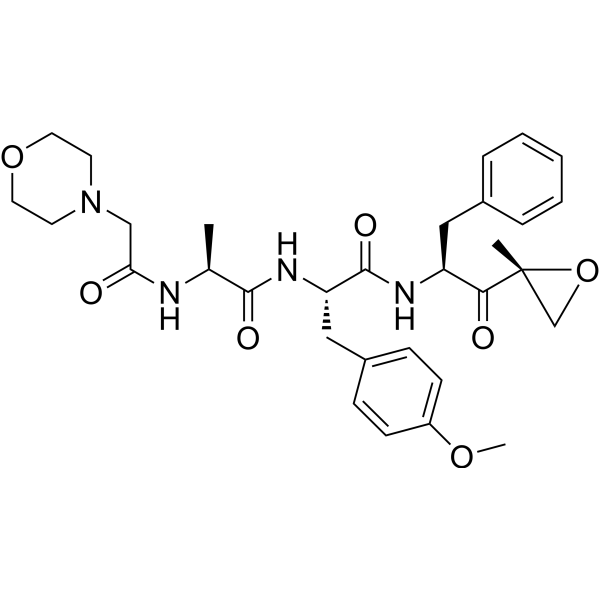
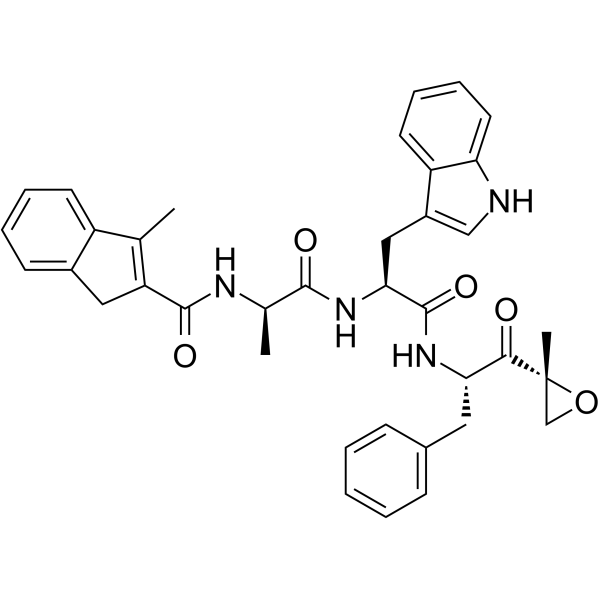
    ONX-0914 (PR-957) is a selective inhibitor of low-molecular mass polypeptide-7 (LMP7), the chymotrypsin-like subunit of the immunoproteasome. ONX-0914 blocks cytokine production and attenuates progression of experimental arthritis. ONX-0914 is a noncompetitive irreversible inhibitor of the mycobacterial proteasome (Ki=5.2 μM). ONX-0914 reactivates latent HIV-1 through p-TEFb activation mediated by HSF-1 .
    ONX-0914
  • HY-12113
    Oprozomib
    3 Publications Verification

    ONX 0912; PR-047

    Proteasome Autophagy Apoptosis Cancer
    Oprozomib (PR-047) is an orally bioavailable and selective peptide epoxyketone proteasome inhibitor with IC50s of 36 and 82 nM for proteasome (β5) and immunoproteasome (LMP7), respectively. Oprozomib (ONX 0912) induces apoptosis in MM cells .
    Oprozomib
  • HY-111790
    M3258
    5 Publications Verification

    Proteasome Apoptosis Cancer
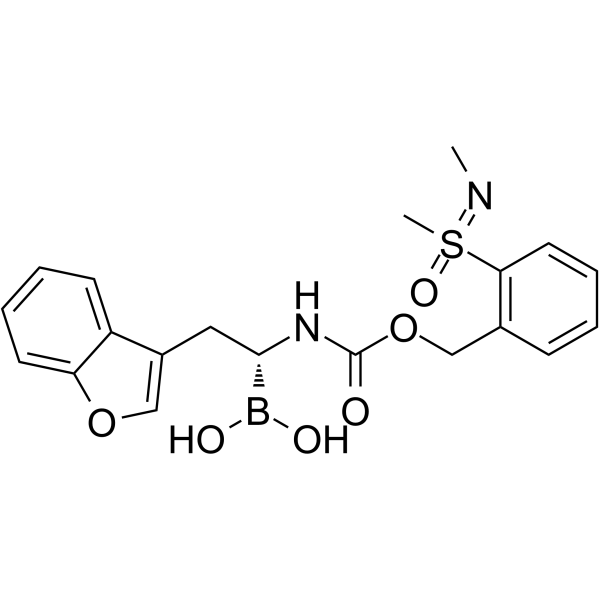
    M3258 is an orally bioavailable, potent, reversible and highly selective immunoproteasome subunit LMP7 (β5i) inhibitor. M3258 exerts high biochemical (IC50=3.6 nM) and cellular (IC50=3.4 nM) potency against the LMP7 subunit. M3258 shows strong antitumor efficacy in multiple myeloma xenograft models. M3258 leads to a significant and prolonged suppression of tumor LMP7 activity and ubiquitinated protein turnover and the induction of apoptosis in multiple myeloma cells .
    M3258
  • HY-P11306

    Proteasome NF-κB Inflammation/Immunology
    Biotin-(Oaa)3-epoxomicin is a biotin-labeled form of Epoxomicin (HY-13821), prepared by conjugating Epoxomicin with biotin via three hydrophilic oxaacetyl amino acid (Oaa) linkers. Biotin-(Oaa)3-epoxomicin is primarily used in proteomic studies for the capture, identification and target validation of proteasome complexes, to determine the intracellular targets of epoxomicin. Epoxomicin acts as a proteasome inhibitor and NF-κB inhibitor, which effectively blocks inflammatory responses in mouse ear edema assays. It inhibits proteasome activity via covalent binding to catalytic subunits including LMP7, X, MECL1 and Z, with the strongest inhibitory effect on chymotrypsin-like activity, and does not interfere with non-proteasomal proteases such as trypsin and papain .
    Biotin-(Oaa)3-epoxomicin
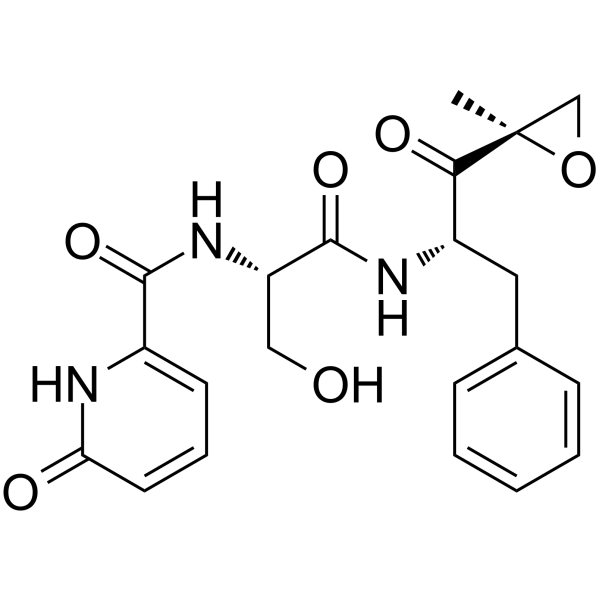
  • HY-123587

    Proteasome Apoptosis Cancer
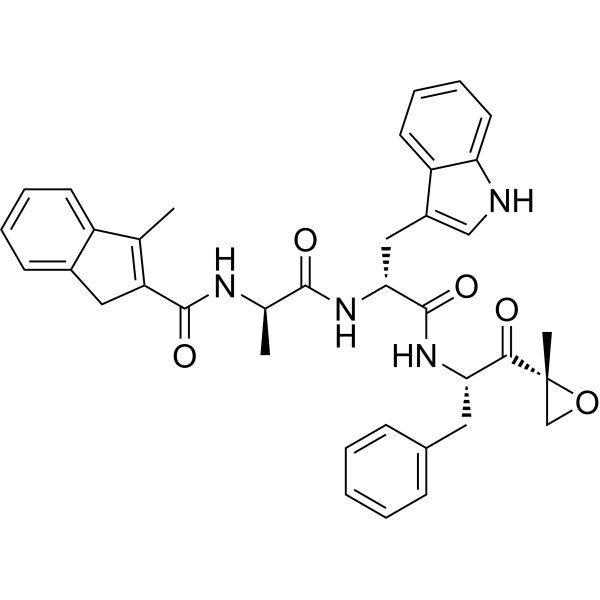
    PR-924 is a selective tripeptide epoxyketone immunoproteasome subunit LMP-7 inhibitor with an IC50 of 22 nM. PR-924 covalently modifies proteasomal N-terminal threonine active sites. PR-924 inhibits growth and triggers apoptosis in multiple myeloma (MM) cells. PR-924 has antitumor activities .
    PR-924
  • HY-101786
    KZR-504
    5 Publications Verification

    Proteasome Inflammation/Immunology
    KZR-504 is a highly selective inhibitor of immunoproteasome low molecular mass polypeptide 2 (LMP2), with IC50s of 51 nM, 4.274 μM for LMP2 and LMP7, respectively. KZR-504 is of interest for the treatment of autoimmune disease .
    KZR-504
  • HY-114419
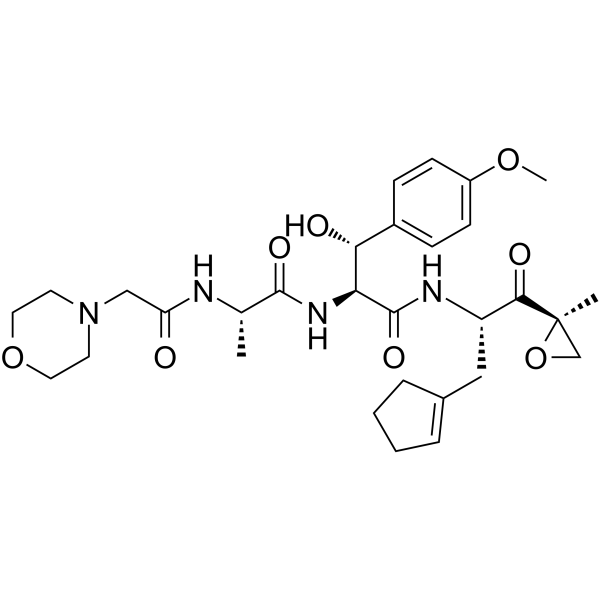
    Zetomipzomib
    4 Publications Verification

    KZR-616

    Proteasome Inflammation/Immunology
    Zetomipzomib (KZR-616), a first-in-class inhibitor of the immunoproteasome, selectively targets the LMP7 (IC50: 39/57 nM=hLMP7/mLMP7) and LMP2 (IC50: 131/179 nM=hLMP7/mLMP7) subunits of the immunoproteasome. Zetomipzomib has the potential for the research of multiple autoimmune diseases .
    Zetomipzomib
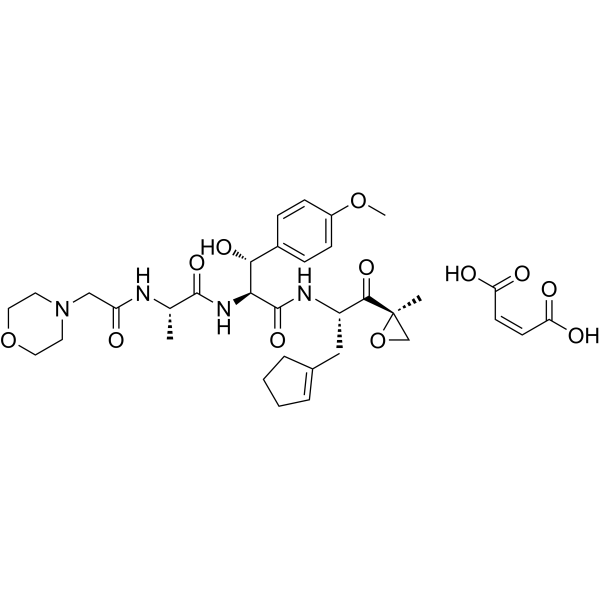
  • HY-114419A
    Zetomipzomib maleate
    4 Publications Verification

    KZR-616 maleate

    Proteasome Inflammation/Immunology
    Zetomipzomib (KZR-616) maleate, a first-in-class immunoproteasome inhibitor, selectively targets the LMP7 (IC50: 39/57 nM=hLMP7/mLMP7) and LMP2 (IC50: 131/179 nM=hLMP2/mLMP2) subunits of the immunoproteasome. Zetomipzomib maleate has the potential for the research of multiple autoimmune diseases .
    Zetomipzomib maleate
  • HY-114170
    ML604440
    3 Publications Verification

    Proteasome Inflammation/Immunology
    ML604440 is a specific and cell-permeable Proteasome β1i (LMP2) subunit inhibitor. ML604440 can be used in experimental colitis, EAE and autoimmune disease research. ML604440 shows synergistic effects and advantageous when combined with LMP7 inhibitor .
    ML604440
  • HY-13207A
    ONX-0914 TFA
    Maximum Cited Publications
    24 Publications Verification

    PR-957 TFA

    Proteasome Bacterial HIV Infection Inflammation/Immunology
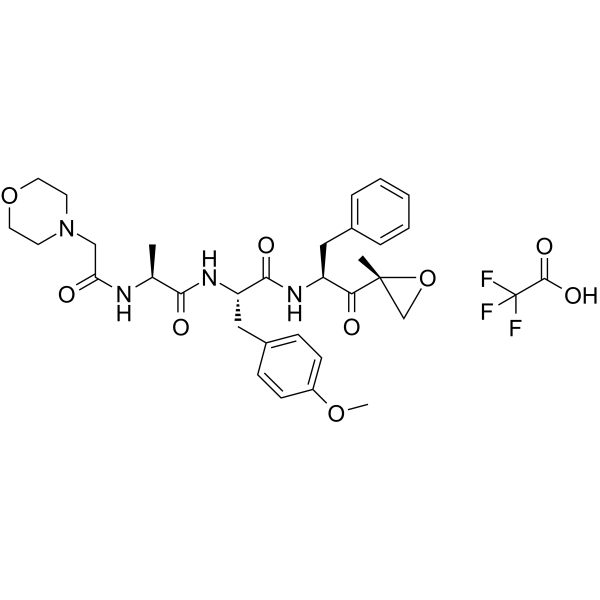
    ONX-0914 (PR-957) TFA is a selective inhibitor of low-molecular mass polypeptide-7 (LMP7), the chymotrypsin-like subunit of the immunoproteasome. ONX-0914 TFA blocks cytokine production and attenuates progression of experimental arthritis. ONX-0914 TFA is a noncompetitive irreversible inhibitor of the mycobacterial proteasome (Ki=5.2 μM). ONX-0914 TFA reactivates latent HIV-1 through p-TEFb activation mediated by HSF-1 .
    ONX-0914 TFA
  • HY-157033

    Proteasome Inflammation/Immunology
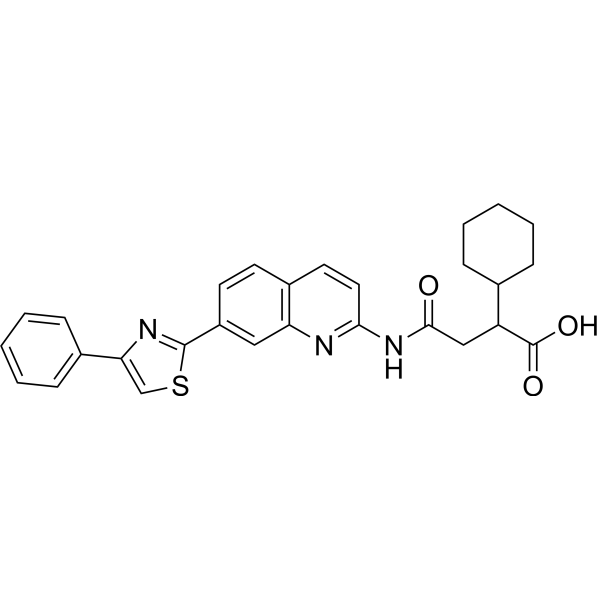
    LMP7-IN-2 is a LMP7 inhibitor. LMP7-IN-2 can be used for associated inflammatory diseases and disorders .
    LMP7-IN-2
  • HY-142920

    Proteasome Inflammation/Immunology
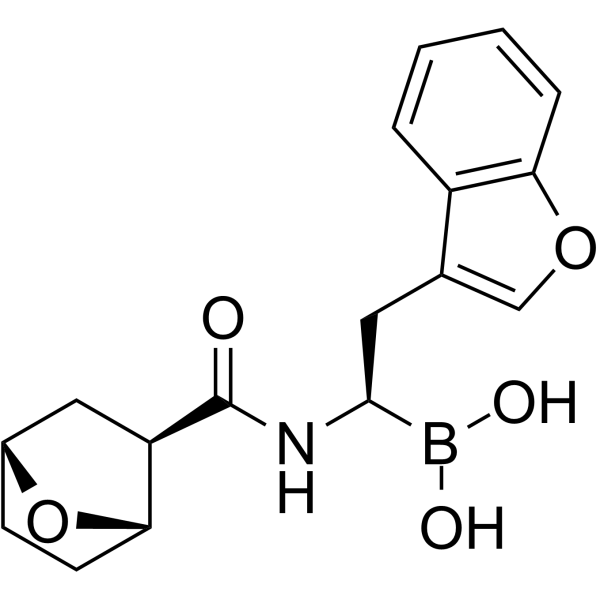
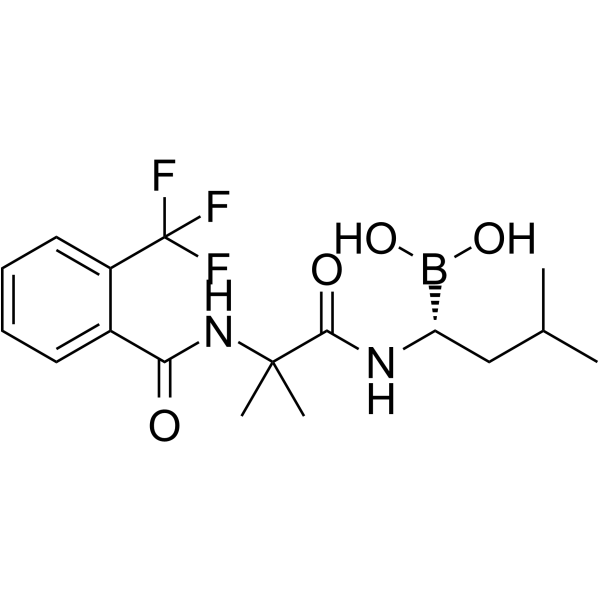
    LMP7-IN-1, a Boronic acid derivative, is a potent and selective immunoproteasome subunit LMP7 (β5i) inhibitor with an IC50 of 1.83 nM (WO2021143923A1; compound 20) .
    LMP7-IN-1
  • HY-162754

    Proteasome Inflammation/Immunology
    LMP7/LMP2-IN-1 (Compound 19) is the orally active inhibitor for immunoproteasome subunits LMP7 and LMP2 with IC50 of 257 and 10 nM. LMP7/LMP2-IN-1 reduces the generation of antibody, downregulates the cells in spleen germinal center B and in plasma in NP-OVA-immunized mice, and can be used in research about autoimmune diseases .
    LMP7/LMP2-IN-1
  • HY-123587A

    Apoptosis Cancer
    (R)-PR-924 is the isomer of PR-924 (HY-123587), and can be used as an experimental control. PR-924 is a selective tripeptide epoxyketone immunoproteasome subunit LMP-7 inhibitor with an IC50 of 22 nM. PR-924 covalently modifies proteasomal N-terminal threonine active sites. PR-924 inhibits growth and triggers apoptosis in multiple myeloma (MM) cells. PR-924 has antitumor activities .
    (R)-PR-924
  • HY-112946

    Proteasome Inflammation/Immunology
    LU-001i is a highly specific proteasome β1i (LMP2) inhibitor. LU-001i alone has no significant immunomodulatory effect, but when combined with the LMP7 inhibitor (PRN1126), it can exert anti-inflammatory and immunomodulatory effects. LU-001i can be used for the study of autoimmune diseases .
    LU-001i
  • HY-113526

    Drug Derivative Endogenous Metabolite Cardiovascular Disease
    AR-12463 is a derivative of Trapidil (HY-B1016). AR-12463 inhibits the conversion of [14C]acetate to cholesterol. AR-12463 significantly reduces the elevation of total cholesterol in rabbit serum and prevents cholesterol incorporation into tissues. AR-12463 can be used to study atherosclerosis.
    AR-12463
  • HY-179394

    Proteasome Inflammation/Immunology
    Immunoproteasome-IN-2 is selective immunoproteasome inhibitor with IC50 = 232.3 nM for LMP7, IC50 = 9384.9 nM for β5. Immunoproteasome-IN-2 exhibits ancillary inhibitory activity against LMP2 and MECL-1 subunits. Immunoproteasome-IN-2 demonstrates anti-inflammatory efficacy in a mouse model of arthritis and shows a favorable safety profile in toxicological studies with reduced hepatotoxicity and hematotoxicity. Immunoproteasome-IN-2 has LMP7/β5 selectivity directly correlated with lower systemic toxicity. Immunoproteasome-IN-2 can be employed for research in arthritis .
    Immunoproteasome-IN-2
  • HY-101786R

    Reference Standards Proteasome Inflammation/Immunology
    KZR-504 (Standard) is the analytical standard of KZR-504 (HY-101786). This product is intended for research and analytical applications. KZR-504 is a highly selective inhibitor of immunoproteasome low molecular mass polypeptide 2 (LMP2), with IC50s of 51 nM, 4.274 μM for LMP2 and LMP7, respectively. KZR-504 is of interest for the treatment of autoimmune disease .
    KZR-504 (Standard)

Inquiry Online

Your information is safe with us. * Required Fields.

Salutation


Country or Region *

Applicant Name *


Organization Name *

Department *


Email Address *


Product Name *

Cat. No.


Requested quantity *

Phone Number *


Remarks

Inquiry Online

Inquiry Information

Product Name:
Cat. No.:
Quantity:
MCE Japan Authorized Agent:

