1. Search Result
Search Result
Pathways Recommended: Stem Cell/Wnt Cell Cycle/DNA Damage
Results for "

Living cells

" in MedChemExpress (MCE) Product Catalog:

248

Inhibitors & Agonists

3

Screening Libraries

161

Fluorescent Dye

8

Biochemical Assay Reagents

9

Peptides

4

MCE Kits

5

Natural
Products

5

Isotope-Labeled Compounds

11

Click Chemistry

7

Oligonucleotides

Cat. No. Product Name Target Research Areas Chemical Structure
  • HY-111391
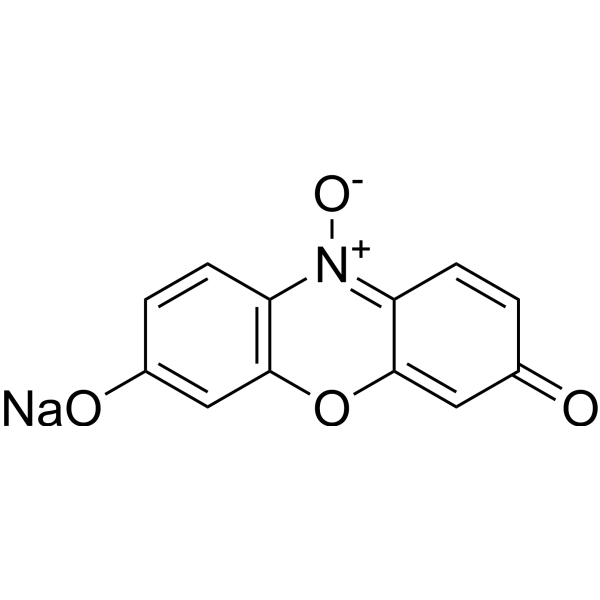
    Resazurin sodium
    5 Publications Verification

    Diazoresorcinol sodium

    Bacterial Fluorescent Dye Infection
    Resazurin sodium (Diazoresorcinol sodium) is a non-toxic, stable, membrane-permeable blue non-fluorescent dye (faintly fluorescent). Resazurin sodium is used as a redox indicator, can be reduced to pink, highly fluorescent Resorufin (Ex=530-560 nm, Em=590 nm) in living cells. Resazurin sodium can be used for the detection of cell viability, toxicity, proliferation, migration and invasion in cells (human, plant and animal, bacterial and fungal) .
    Resazurin sodium
  • HY-U00451
    ATP-Red 1
    5+ Cited Publications

    Fluorescent Dye Others
    ATP-Red 1 is a multisite-binding switchable fluorescent probe, and can selectively and rapidly responds to intracellular concentrations of ATP in living cells (Ex/Em = 510/590 nm).
    ATP-Red 1
  • HY-Y1089
    4-Dimethylaminopyridine
    1 Publications Verification

    Biochemical Assay Reagents Transmembrane Glycoprotein Others Neurological Disease
    4-Dimethylaminopyridine is an acyl transfer catalyst. 4-Dimethylaminopyridine is used for labeling and analysis of glycoproteins on the surface of living cells. 4-Dimethylaminopyridine reduces dyskinesia attacks .
    4-Dimethylaminopyridine
  • HY-126561
    Green CMFDA
    10+ Cited Publications

    CMFDA

    Fluorescent Dye Others
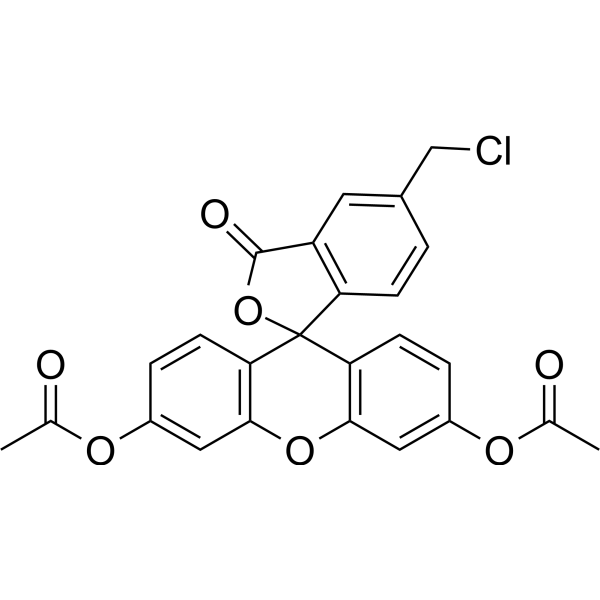
    Green CMFDA is a cell-permeable fluorescent probe with Em of 514 nm and Ex of 485 nm and can be used as a cell tracer. Green CMFDA can be cleaved by non-specific esterases common in living cells, producing a fluorescent compound, fluorescein, visible using a fluorescent microscope .
    Green CMFDA
  • HY-D0970
    Diphenyl Blue
    2 Publications Verification

    Direct Blue 14; Trypan Blue

    Fluorescent Dye Others
    Diphenyl Blue (Trypan Blue) is a cell active dye, the most commonly used dye for the identification of dead cells, of en used to test cell membrane integrity and cell viability. Diphenyl Blue staining is one of the methods for tissue and cell culture. When cells are deactivated or have incomplete cell membranes, Diphenyl Blue can stain them Blue. Normal living cells with intact cell membranes reject Diphenyl blue and do not stain them blue. However, macrophages are capable of phagocytosis of Diphenyl Blue, so it can be used as a living stain for macrophages .
    Diphenyl Blue
  • HY-D1428
    Di-4-ANEPPDHQ
    1 Publications Verification

    Fluorescent Dye Inflammation/Immunology
    Di-4-ANEPPDHQ is a polarity-sensitive membrane probe with a doubly positive charge that can be used to visualize membrane microdomains in living Arabidopsis cells. Di-4-ANEPPDHQ produces a fluorescence spectrum shift by changing the polarity of the lipid environment after embedding into the cell membrane, thereby quantifying the degree of lipid accumulation. The excitation wavelength of Di-4-ANEPPDHQ is 488 nm, and the emission wavelengths are 560 nm and 650 nm in the liquid ordered and disordered phases, respectively. Di-4-ANEPPDHQ is often used for fluorescence imaging studies of membrane microstructure, lipid order, and membrane tension response in living cells[1][2][3].
    Di-4-ANEPPDHQ
  • HY-D1775

    Fluorescent Dye Neurological Disease Cancer
    LysoTracker blue DND-22 is a blue fluorescent dye (Ex/Em: 373/422 nm). LysoTracker blue DND-22 stains acidic regions in living cells. LysoTracker blue DND-22 is used in the researches of neurodegenerative diseases and leukemia .
    LysoTracker Blue DND-22
  • HY-110250
    DFHBI
    5+ Cited Publications

    Fluorescent Dye Others
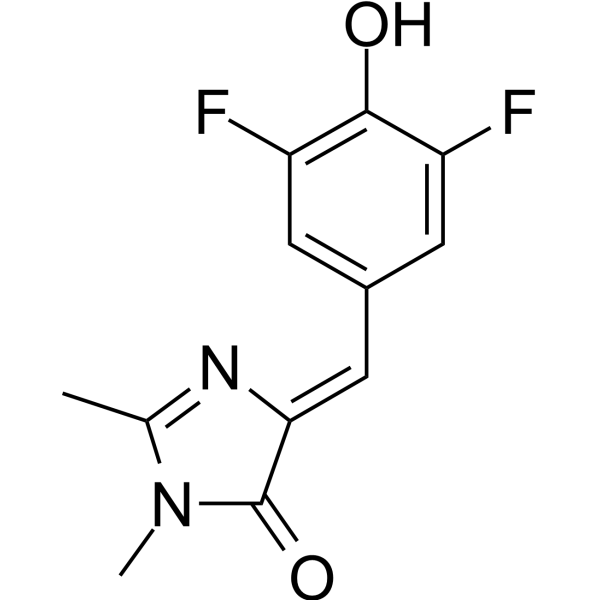
    DFHBI is a small molecule that resembles the chromophore of green fluorescent protein (GFP). DFHBI can be used for imaging RNA in living cells. . Spinach and DFHBI are essentially nonfluorescent when unbound, whereas the Spinach-DFHBI complex is brightly fluorescent both in vitro and in living cells (Ex/Em = 469/501 nm).
    DFHBI
  • HY-139452

    Glycosidase Others
    PFB-FDGlu is a selective lysosomal Glucocerebrosidase (GCase) substrate, which is metabolised by GCase to yield fluorescein. PFB-FDGlu is cell permeable and can be used with a flow cytometer to measure GCase activity in living cells on a single-cell basis .
    PFB-FDGlu
  • HY-W094758A

    Fluorescent Dye Cancer
    4-Di-1-ASP is a styryl dye used to stain glioma cells in living brain tissue for analysis of cell structure, viability, proliferation and endocytosis, cytokinesis and phagocytosis, as well as for observation of mitochondrial structures in living cells. 4-Di-1-ASP fluoresces green when imaged microscopically (λexem = 475/606 nm) .
    4-Di-1-ASP
  • HY-D0817

    Rhodamine 110 chloride; RH110

    Fluorescent Dye Others
    Rhodamine 110 is a sensitive and selective substrate for assaying proteinases in solution or inside living cells. The excitation wavelength is 498 nm and the emission wavelength is 521 nm .
    Rhodamine 110
  • HY-DY1046

    Fluorescent Dye Others
    Green CMFDA (solution) is a cell-permeable fluorescent probe with Em of 514 nm and Ex of 485 nm and can be used as a cell tracer. Green CMFDA can be cleaved by non-specific esterases common in living cells, producing a fluorescent compound, fluorescein, visible using a fluorescent microscope .
    Solvent and concentration: DMSO: 10 mM
    Green CMFDA (solution)
  • HY-D2348A

    Fluorescent Dye Infection
    ACE TFA is a low-background, photostable fluorophore with nanomolar binding affinity for the Okra RNA aptamer. ACE TFA enables clear visualization of mRNA in live bacteria and mammalian cells, including tracking the trafficking of mRNA to stress granules and dual-color super-resolution imaging of RNA in live cells. (Ex=488 nm, Em=555 nm) .
    ACE TFA
  • HY-103469
    Peroxy Orange 1
    3 Publications Verification

    PO1

    Fluorescent Dye Others
    Peroxy Orange 1 (PO1) is a new H2O2 specific probe that can bind to green fluorescent highly reactive oxygen species (hROS) probe APF. Peroxy Orange 1 is also a living cell dye .
    Peroxy Orange 1
  • HY-12801
    DiZPK
    3 Publications Verification

    Biochemical Assay Reagents Others
    DiZPK is a photocrosslinker for identifying direct protein-protein interactions in living prokaryotic and eukaryotic cells.
    DiZPK
  • HY-W356116

    Nbd-ceramide

    Fluorescent Dye Others
    C6 NBD Ceramide is a Golgi apparatus fluorescent probe with cell membrane permeability. C6 NBD Ceramide can be used for fast and convenient green fluorescent labeling of Golgi in living and fixed cells, and can be used to observe changes in Golgi morphology in living cells (Ex=466 nm, Em=536 nm). C6-NBD-ceramide is metabolized to fluorescent sphingomyelin and glucosylceramide, can be used for the study of sphingolipid transport and metabolic mechanism .
    C6 NBD Ceramide
  • HY-D0154

    Tetramethylrhodamine-6-isothiocyanate

    Fluorescent Dye Others
    6-TRITC (Tetramethylrhodamine-6-isothiocyanate) is a potent fluorescent tracer. 6-TRITC can be used as an probe for haptenated proteins/peptides for the research of contact allergy. 6-TRITC can be used as a tracer for the confocal imaging in living cells .
    6-TRITC
  • HY-108715A
    RT-AM
    5+ Cited Publications

    Fluorescent Dye Neurological Disease
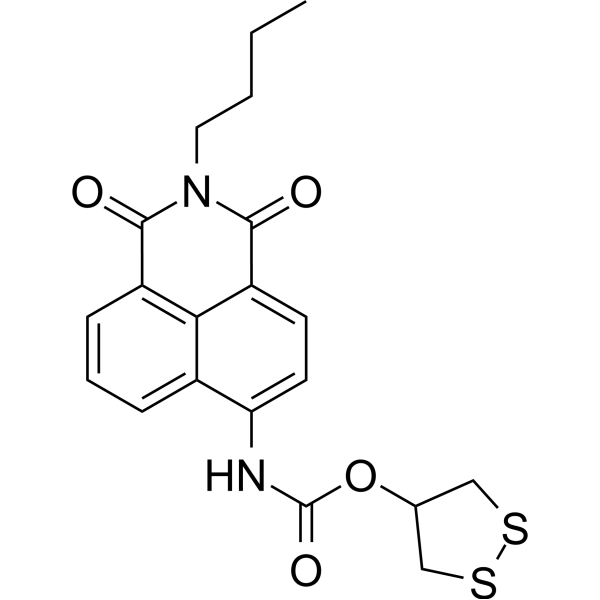
    RT-AM is a pro-agent real thiol. Real Thiol is a reversible reaction-based fluorescent probe which can quantitatively monitor the real-time glutathione dynamics in living cells.
    RT-AM
  • HY-D1157
    HKPerox-2
    5 Publications Verification

    Fluorescent Dye Reactive Oxygen Species (ROS) Others
    HKPerox-2 is a highly sensitive green fluorescent probe for the specific detection of H2O2 in living cells with a maximum excitation wavelength and emission wavelength of 520 nm and 543 nm, respectively .
    HKPerox-2
  • HY-115640
    TRFS-green
    10+ Cited Publications

    TrxR Others
    TRFS-green is a highly selective off−on fluorescent probe for imaging selenoprotein thioredoxin reductase (TrxR) in living cells. TRFS-green has the maximum absorbance at around 373 nm. After it is activated by TrxR, the maximum absorbance shifts to around 440 nm .
    TRFS-green
  • HY-118540

    Diazoresorcinol

    Fluorescent Dye Bacterial Infection
    Resazurin (Diazoresorcinol) is a water-soluble, non-toxic, stable, membrane-permeable blue non-fluorescent dye (faintly fluorescent). Resazurin is used as a redox indicator, can be reduced to pink, highly fluorescent Resorufin (Ex=530-560 nm, Em=590 nm) in living cells. Resazurin can be used for the detection of cell viability, toxicity, proliferation, migration and invasion in cells (human, plant and animal, bacterial and fungal) .
    Resazurin
  • HY-108715

    Fluorescent Dye Neurological Disease
    Real Thiol is a reversible reaction-based fluorescent probe which can quantitatively monitor the real-time glutathione dynamics in living cells.
    Real Thiol
  • HY-153783

    Fluorescent Dye Others Cancer
    OBI is a Red Broccoli probe with red fluorescence. OBI enables Red Broccoli to be easily detected in living mammalian cells. OBI can be used to monitor intracellular metabolites .
    OBI
  • HY-D1148
    HKGreen-4I
    1 Publications Verification

    Fluorescent Dye Others
    HKGreen-4I is a highly sensitive green fluorescent probe for the specific detection of ONOO - in living cells with a maximum excitation wavelength and emission wavelength of 520 nm and 543 nm, respectively .
    HKGreen-4I
  • HY-D2119
    CQ-Lyso
    2 Publications Verification

    Fluorescent Dye Cancer
    CQ-Lyso is a lysosome-targeting chromenoquinoline. CQ-Lyso is a fluorescent probe for measuring the pH of lysosomes in living cells using only single wavelength excitation. CQ-Lyso can visualize the dynamic pH changes in lysosomes .
    CQ-Lyso
  • HY-147652

    DNA Stain Others
    G-quadruplex DNA fluorescence probe 1 (Compound E1) is a selective G-quadruplex DNA targeting fluorescent probe. G-quadruplex DNA fluorescence probe 1 can pass through membrane and enter living cells with low cytotoxicity .
    G-quadruplex DNA fluorescence probe 1
  • HY-149931

    Fluorescent Dye Cancer
    BMV109 is a quenched probe that becomes fluorescent when cleaved and covalently bound by active cathepsin proteases. BMV109 can be exploited for tumor imaging .
    BMV109
  • HY-D0853
    DiAzKs
    1 Publications Verification

    H-L-Photo-lysine

    Fluorescent Dye Others
    DiAzKs (H-L-Photo-lysine) is a diazirine-containing lysine amino acid and is a photo-cross-linker. DiAzKs can site-selective incorporated into proteins and is used to crosslink protein-protein interactions in vitro and in living cells. DiAzKs acts as a UV light-activated photo-crosslinking probe .
    DiAzKs
  • HY-W753658

    Fluorescent Dye Others
    Coppersensor-3 (CS3) is a bright small-molecule fluorescent probe for selective Cu(I) detection. Coppersensor-3 is selective and sensitive enough to image labile copper pools in living cells at endogenous, basal levels. Coppersensor-3 can be used for the cell biology of copper research .
    Coppersensor-3
  • HY-DY1014

    Fluorescent Dye Others
    ATP-Red 1 (solution) is a multisite-binding switchable fluorescent probe, and can selectively and rapidly responds to intracellular concentrations of ATP in living cells (Ex/Em = 510/590 nm).
    Solvent and concentration: DMSO: 1 mM
    ATP-Red 1 (solution)
  • HY-D1261
    Naph-EA-mal
    1 Publications Verification

    Thiol-green 1

    Fluorescent Dye Others
    Naph-EA-mal (Thiol-green 1) is a rapid detect and ultrafast turn-on thiol fluorescence probe for protein labeling and bioimaging. Naph-EA-mal (Thiol-green 1) can be used to detect thiols in living cells, label the protein thiols, quantify the concentration of total thiols in cell lysate, and determine the reversible protein thiols oxidation in fixed cells . Ex: 488 nM; Em: 540 nM.
    Naph-EA-mal
  • HY-151776

    TZ-Cy3

    Fluorescent Dye Others
    Cy3 methyltetrazine (TZ-Cy3) is a click chemistry reagent with methyltetrazine building blocks that is highly reactive towards cyclooctene. Cy3 methyltetrazine is also a tetrazine-modified fluorescent probe that can be used to analyze protein phosphorylation in solution and living cells .
    Cy3 methyltetrazine
  • HY-D2346
    HBmito Crimson
    3 Publications Verification

    Fluorescent Dye Others
    HBmito Crimson is a deep red fluorescent probe (λex: 658 nm, λem: 678 nm) for the inner mitochondrial membrane. HBmito Crimson is a cell membrane-permeable probe with high selectivity for the mitochondrial inner membrane, suitable for specific fluorescence staining of the inner mitochondrial membrane in living cells. HBmito Crimson has high photostability and brightness, suitable for long-term dynamic fluorescence imaging.
    HBmito Crimson
  • HY-W674039

    Biochemical Assay Reagents Others
    6-Azido-6-deoxy-D-glucose, 95% is used for visualizing protein-specific glycosylation in living cells.
    6-Azido-6-deoxy-D-glucose, 95%
  • HY-D1151
    HKOH-1
    3 Publications Verification

    Reactive Oxygen Species (ROS) Fluorescent Dye Others
    HKOH-1 is a highly sensitive green fluorescent probe for the specific detection of ·OH in living cells with a maximum excitation wavelength and emission wavelength of 500 nm and 520 nm, respectively .
    HKOH-1
  • HY-163213
    Psoralen-triethylene glycol azide
    1 Publications Verification

    Biochemical Assay Reagents Others
    Psoralen-triepthylene glycol azide is a compound used to probe the structure and conformation of RNA in living cells, using matching RNA crosslinking and deep sequencing or comradery methods .
    Psoralen-triethylene glycol azide
  • HY-D1158

    Fluorescent Dye Inflammation/Immunology
    HKOCl-4m is a selective and mitochondria-targeting rhodol-based fluorescent probe for monitoring mitochondrial hypochlorous acid (HOCl) .
    HKOCl-4m
  • HY-D1159
    HKOH-1r
    5+ Cited Publications

    Reactive Oxygen Species (ROS) Fluorescent Dye Others
    HKOH-1r is a highly sensitive green fluorescent probe for the specific detection of ·OH in living cells with a maximum excitation wavelength and emission wavelength of 500 nm and 520 nm, respectively .
    HKOH-1r
  • HY-D2344

    3-Benzothiazole-daphnetin

    Fluorescent Dye Others
    3-BTD (3-Benzothiazole-daphnetin) is a Catechol-O-methyltransferase (COMT) two-photon fluorescence probe. 3-BTD can also be used for biological imaging of endogenous COMT in living cells and tissue sections .
    3-BTD
  • HY-D2208
    SYTM Green
    1 Publications Verification

    Fluorescent Dye Others
    SYTM Green is a cell impermeant DNA dye that fluoresces green by binding to dsDNA (Ex/Em=503/530 nm). SYTM Green can also be used to stain bacteria, including Gram-positive and Gram-negative bacteria. Note: SYTM Green cannot penetrate living cells, and this product is equivalent to (Ex/Em=488/530 nm) .
    SYTM Green
  • HY-D0853A
    DiAzKs hydrochloride
    1 Publications Verification

    H-L-Photo-lysine hydrochloride

    Fluorescent Dye Others
    DiAzKs (H-L-Photo-lysine) hydrochloride is a diazirine-containing lysine amino acid and is a photo-cross-linker. DiAzKs hydrochloride can site-selective incorporated into proteins and is used to crosslink protein-protein interactions in vitro and in living cells. DiAzKs hydrochloride acts as a UV light-activated photo-crosslinking probe .
    DiAzKs hydrochloride
  • HY-177764

    Amino Acid Derivatives Others
    Tet-v2.0-ethyl is a tetrazine non-canonical amino acid. Tet-v2.0-ethyl can stably exist within living cells without being degraded, enabling in situ labeling of intracellular biomolecules. Tet-v2.0-ethyl is mainly used as a bioorthogonal labeling tool compound .
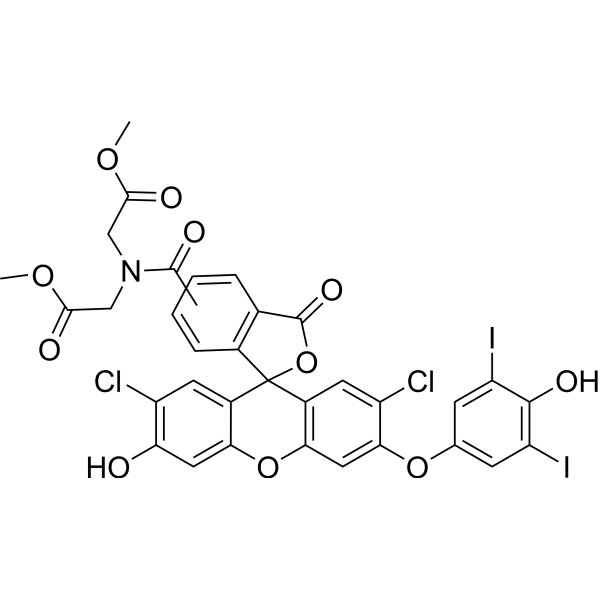
    Tet-v2.0-ethyl
  • HY-B0511S2

    Vitamin B7-d2; Vitamin H-d2; D-Biotin-d2

    Endogenous Metabolite Metabolic Disease
    Biotin-d2 is the deuterium labeled Biotin. Biotin is an enzyme co-factor present in minute amounts in every living cell.
    Biotin-d2
  • HY-B0511S

    Vitamin B7 d2-1; Vitamin H d2-1; D-Biotin d2-1

    Isotope-Labeled Compounds Endogenous Metabolite Metabolic Disease
    Biotin-d2-1 is the deuterium labeled Biotin. Biotin is an enzyme co-factor present in minute amounts in every living cell.
    Biotin-d2-1
  • HY-D2479

    Fluorescent Dye Metabolic Disease
    DMANI is an intramolecular charge transfer (ICT)-based mitochondria-targeted ratiometric fluorescent probe. DMANI can monitor mitochondrial peroxynitrite (ONOO ) in living cells .
    DMANI
  • HY-130013

    Fluorescent Dye Others
    HKYellow-AM (6/12-mixture) is a yellow fluorescent probe that can detect ONOO- in living cells and tissues with high selectivity and sensitivity without cytotoxicity .
    HKYellow-AM (6/12-mixture)
  • HY-157504

    Nucleoside Antimetabolite/Analog Others
    2’-O-Methyl-5’-O-phosphonoadenylyl-(3’→5’)-guanosine (TEA) is a trinucleotide cap analogue that regulates protein expression in living cells .
    2′-O-Methyl-5′-O-phosphonoadenylyl-(3′→5′)-guanosine TEA
  • HY-130022
    HKPerox-1
    2 Publications Verification

    Fluorescent Dye Others
    HKPerox-1 is a highly sensitive green fluorescent probe for the specific detection of H2O2 in living cells with a maximum excitation wavelength and emission wavelength of 520 nm and 543 nm, respectively .
    HKPerox-1
  • HY-153890

    Biochemical Assay Reagents Others
    NVOC cage-TMP-Halo is a cell-permeable and photoactivatable protein dimerization inducer. NVOC cage-TMP-Halo can rapidly and reversibly control protein localization in living cells. NVOC cage-TMP-Halo can be used for dynamic cellular processes research .
    NVOC cage-TMP-Halo
  • HY-169838

    Biochemical Assay Reagents Others
    WYneC can specifically bind to sulfinylated proteins in living cells and then react with fluorescent probes containing azide groups for detection. In the field of redox biology, WYneC can also be used to determine the occupancy of S-sulfinylation sites or as a carrier to deliver substances to mitochondria .
    WYneC

Inquiry Online

Your information is safe with us. * Required Fields.

Salutation


Country or Region *

Applicant Name *


Organization Name *

Department *


Email Address *


Product Name *

Cat. No.


Requested quantity *

Phone Number *


Remarks

Inquiry Online

Inquiry Information

Product Name:
Cat. No.:
Quantity:
MCE Japan Authorized Agent:

