

280 Results for "

Neuroprotection

" in MedChemExpress (MCE) Product Catalog:
Products (280)

280 Results for "Neuroprotection" in MCE Product Catalog:

189
189 Publications Verification
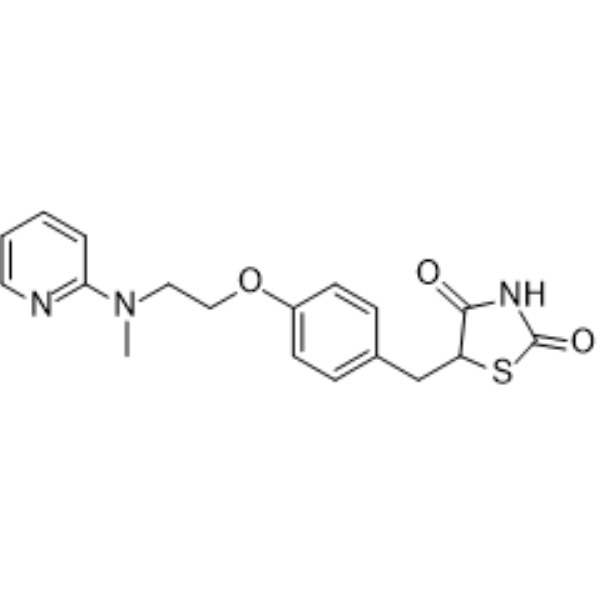
Cat. No.: HY-17386
CAS No.: 122320-73-4
Synonyms: BRL 49653
Rosiglitazone (BRL 49653) is an orally active selective PPARγ agonist (EC50: 60 nM, Kd: 40 nM), with blood-brain barrier permeability. Rosiglitazone is an TRPC5 activator (EC50: 30 μM) and TRPM3 inhibitor. Rosiglitazone can be used in the research of obesity and diabetes, senescence, ovarian cancer .
loading...
    loading...
189
189 Publications Verification
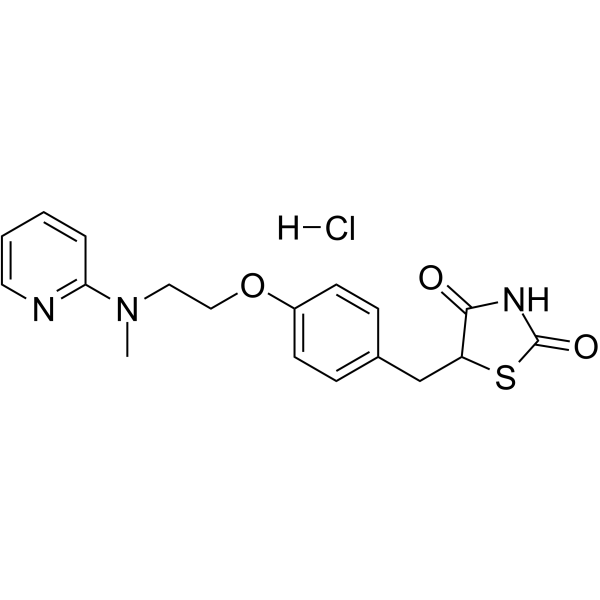
Cat. No.: HY-17386A
CAS No.: 302543-62-0
Synonyms: BRL 49653 hydrochloride
Rosiglitazone (BRL 49653) hydrochloride is an orally active selective PPARγ agonist (EC50: 60 nM, Kd: 40 nM). Rosiglitazone hydrochloride is a TRPC5 activator (EC50: 30 μM) and TRPM3 inhibitor. Rosiglitazone hydrochloride can be used in the research of obesity and diabetes, senescence, ovarian cancer .
loading...
    loading...
186
186 Cited Publications
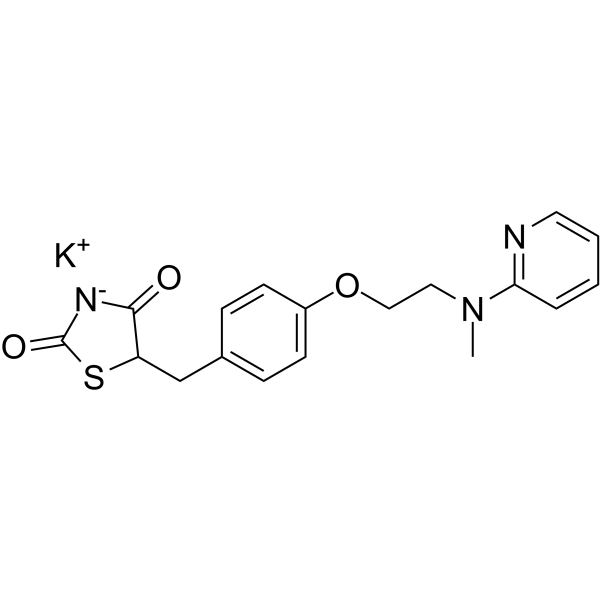
Cat. No.: HY-17386B
CAS No.: 316371-84-3
Synonyms: BRL 49653 potassium
Rosiglitazone (BRL 49653) potassium is an orally active selective PPARγ agonist (EC50: 60 nM, Kd: 40 nM). Rosiglitazone potassium is a TRPC5 activator (EC50: 30 μM) and TRPM3 inhibitor. Rosiglitazone potassium can be used in the research of obesity and diabetes, senescence, ovarian cancer .
loading...
    loading...
169
169 Cited Publications
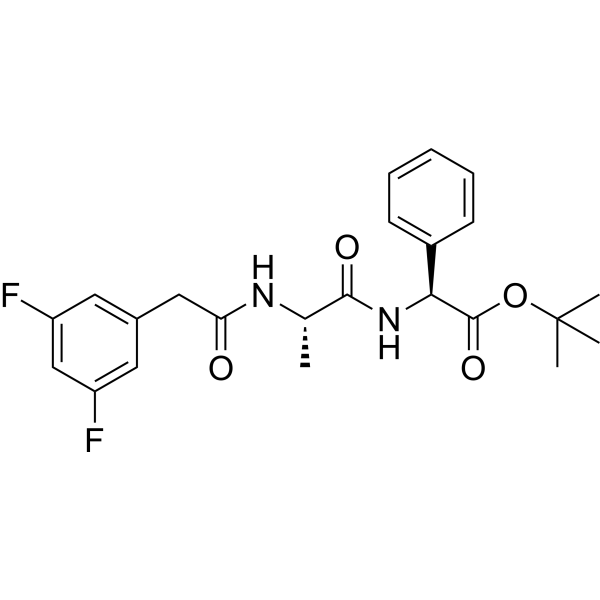
Cat. No.: HY-13027
CAS No.: 208255-80-5
Purity:  99.97%
Synonyms: GSI-IX
DAPT (GSI-IX) is a potent and orally active γ-secretase inhibitor with IC50s of 115 nM and 200 nM for total amyloid-β (Aβ) and 42, respectively. DAPT inhibits the activation of Notch 1 signaling and induces cell differentiation. DAPT also induces autophagy and apoptosis. DAPT has neuroprotection activity and has the potential for autoimmune and lymphoproliferative diseases, degenerative disease and cancers treatment .
loading...
    loading...
86
86 Cited Publications
Cat. No.: HY-10448
CAS No.: 404-86-4
Purity:  99.79%
Synonyms: (E)-Capsaicin
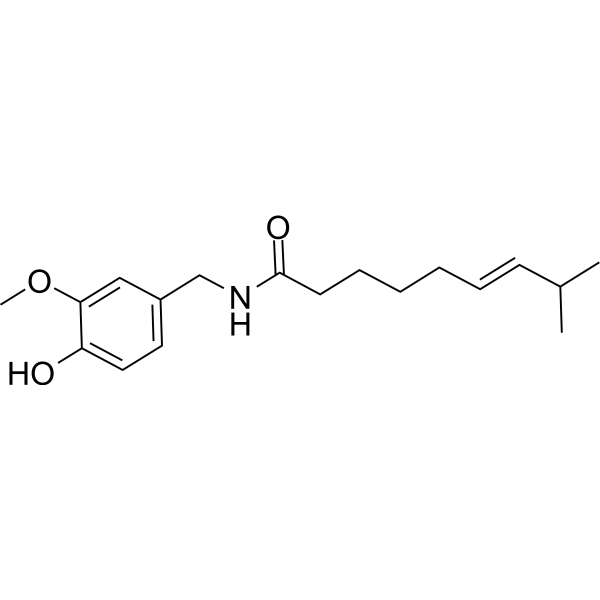
Capsaicin ((E)-Capsaicin), an active component of chili peppers, is a TRPV1 agonist. Capsaicin induces a nociceptive response by binding to its receptors. Capsaicin has analgesic effects on neurological disorders. Capsaicin has antioxidant, anti-inflammatory, anti-cancer effects .
loading...
    loading...
45
45 Cited Publications
Cat. No.: HY-114118
CAS No.: 910463-68-2
Purity:  99.84%
Semaglutide is a long-acting, selective, competitive GLP-1R agonist that can penetrate the blood-brain barrier. After activating GLP-1R, Semaglutide promotes insulin secretion, inhibits gastric emptying and appetite, and at the same time enhances autophagy, inhibits oxidative stress and apoptosis. Semaglutide also regulates mitochondrial function and lipid metabolism (such as reducing de novo lipogenesis in the liver). Semaglutide has activities such as lowering blood sugar, reducing weight, neuroprotection (such as improving motor function in Parkinson's disease models, reducing α-synuclein aggregation) and improving hepatic steatosis. Semaglutide can be used for the study of neurodegenerative diseases and liver diseases such as type 2 diabetes, obesity, Parkinson's disease, metabolic associated fatty liver disease (MASLD), and cancer .
loading...
    loading...
45
45 Cited Publications
Cat. No.: HY-114118B
CAS No.: 1997361-85-9
Purity:  99.92%
Semaglutide acetate is a long-acting, selective, competitive GLP-1R agonist that can penetrate the blood-brain barrier. After activating GLP-1R, Semaglutide acetate promotes insulin secretion, inhibits gastric emptying and appetite, and at the same time enhances autophagy, inhibits oxidative stress and apoptosis. Semaglutide acetate also regulates mitochondrial function and lipid metabolism (such as reducing de novo lipogenesis in the liver). Semaglutide acetate has activities such as lowering blood sugar, reducing weight, neuroprotection (such as improving motor function in Parkinson's disease models, reducing α-synuclein aggregation) and improving hepatic steatosis. Semaglutide acetate can be used for the study of neurodegenerative diseases and liver diseases such as type 2 diabetes, obesity, Parkinson's disease, metabolic associated fatty liver disease (MASLD), and cancer .
loading...
    loading...
45
45 Cited Publications
Cat. No.: HY-114118A
Purity:  99.92%
Semaglutide TFA is a long-acting, selective, competitive GLP-1R agonist that can penetrate the blood-brain barrier. After activating GLP-1R, Semaglutide TFA promotes insulin secretion, inhibits gastric emptying and appetite, and at the same time enhances autophagy, inhibits oxidative stress and apoptosis. Semaglutide TFA also regulates mitochondrial function and lipid metabolism (such as reducing de novo lipogenesis in the liver). Semaglutide TFA has activities such as lowering blood sugar, reducing weight, neuroprotection (such as improving motor function in Parkinson's disease models, reducing α-synuclein aggregation) and improving hepatic steatosis. Semaglutide TFA can be used for the study of neurodegenerative diseases and liver diseases such as type 2 diabetes, obesity, Parkinson's disease, metabolic associated fatty liver disease (MASLD), and cancer .
loading...
    loading...
34
34 Cited Publications
Cat. No.: HY-N0182
CAS No.: 528-48-3
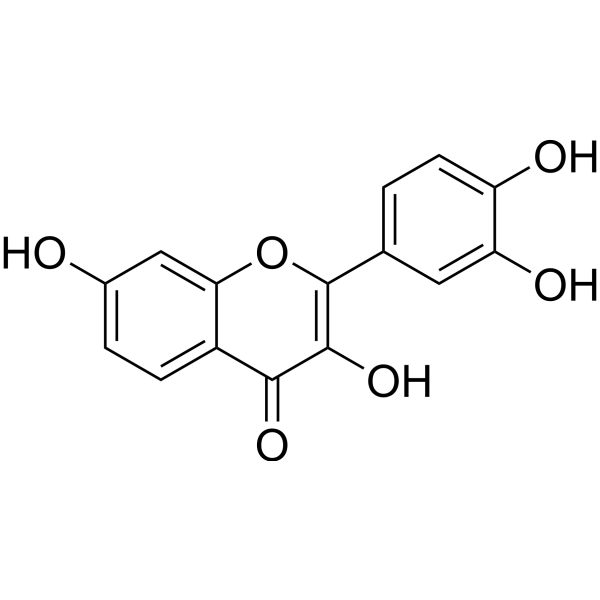
Fisetin is a natural flavonol found in many fruits and vegetables with various benefits, such as antioxidant, anticancer, neuroprotection effects.
loading...
    loading...
34
34 Cited Publications
Cat. No.: HY-N0182A
Category:  

Plants

Target:  

Sirtuin PPAR TNF Receptor

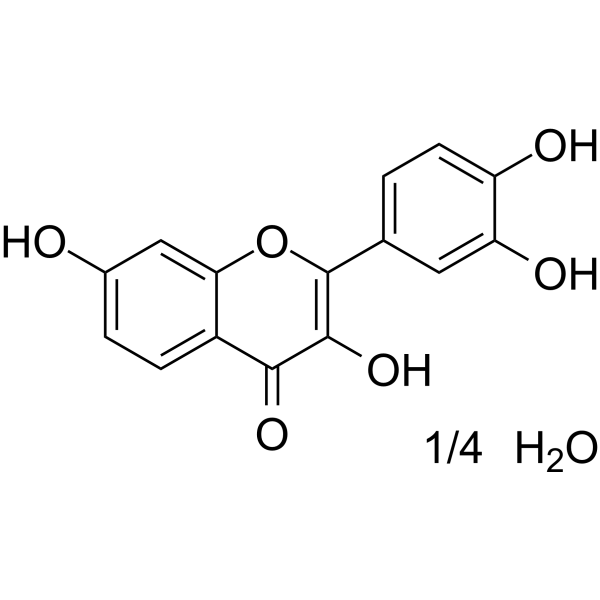
Fisetin quarterhydrate is a natural flavonol found in many fruits and vegetables with various benefits, such as antioxidant, anticancer, neuroprotection effects.
loading...
    loading...
29
29 Cited Publications
Cat. No.: HY-B0350A
CAS No.: 156-54-7
Synonyms: Butanoic acid sodium; Butyric acid sodium
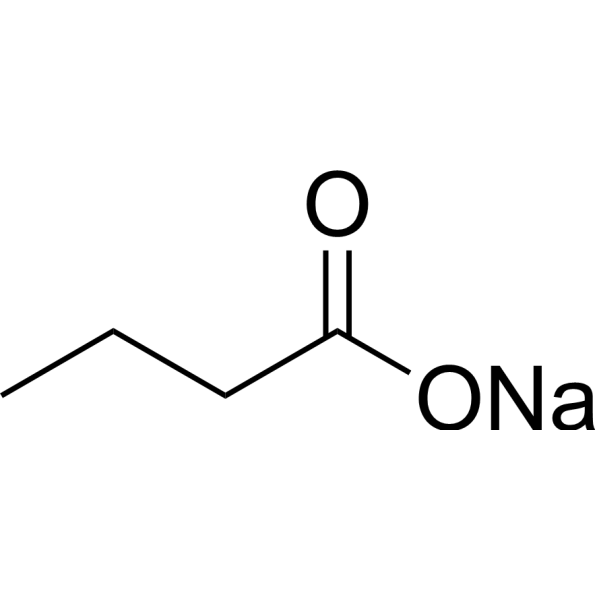
Sodium Butyrate (sodium butanoate) is an inhibitor of HDAC, possessing anti-tumor activity .
loading...
    loading...
23
23 Cited Publications
Cat. No.: HY-100586
CAS No.: 57469-77-9
Purity:  99.91%
Synonyms: (±)-Ibuprofen L-lysine
Target:  

COX Apoptosis Parasite

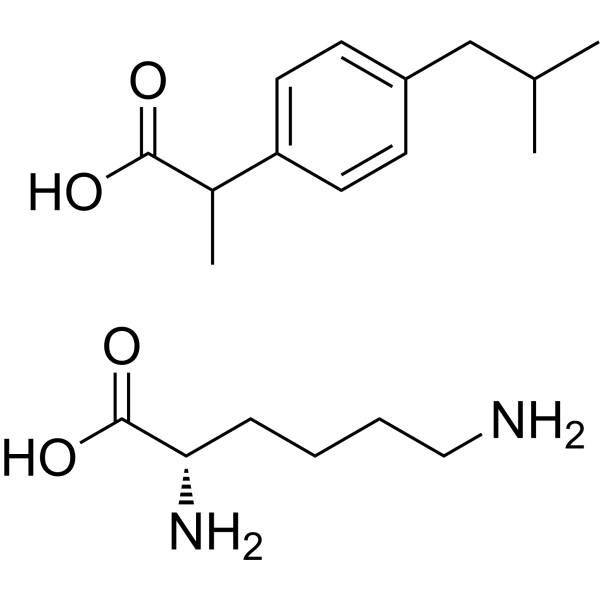
Ibuprofen ((±)-Ibuprofen) L-lysine is a potent orally active, selective COX-1 inhibitor with an IC50 value of 13 μM. Ibuprofen L-lysine inhibits cell proliferation, angiogenesis, and induces cell apoptosis. Ibuprofen L-lysine is a nonsteroidal anti-inflammatory agent and a nitric oxide (NO) donor. Ibuprofen L-lysine can be used in the research of pain, swelling, inflammation, infection, immunology, cancers .
loading...
    loading...
23
23 Cited Publications
Cat. No.: HY-78131
CAS No.: 15687-27-1
Synonyms: (±)-Ibuprofen
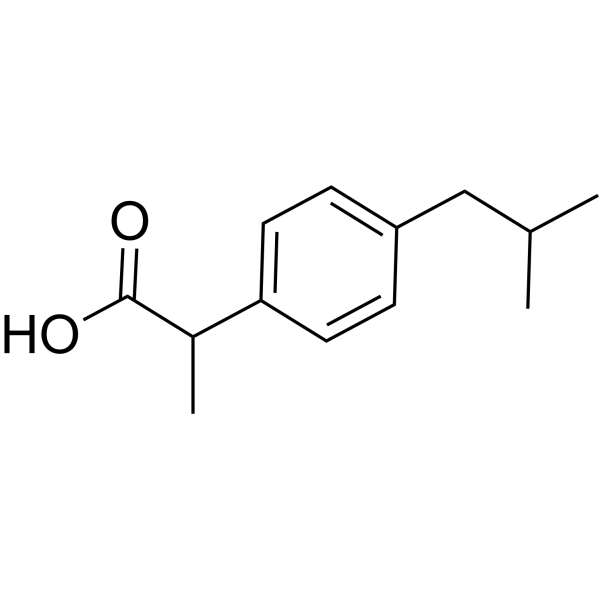
Ibuprofen ((±)-Ibuprofen) is a potent, orally active, selective COX-1 inhibitor with an IC50 value of 13 μM. Ibuprofen inhibits cell proliferation, angiogenesis, and induces cell apoptosis. Ibuprofen is a nonsteroidal anti-inflammatory agent and a nitric oxide (NO) donor. Ibuprofen ((±)-Ibuprofen) can be used in the research of pain, swelling, inflammation, infection, immunology, cancers .
loading...
    loading...
23
23 Cited Publications
Cat. No.: HY-78131C
CAS No.: 31121-93-4
Synonyms: (±)-Ibuprofen sodium
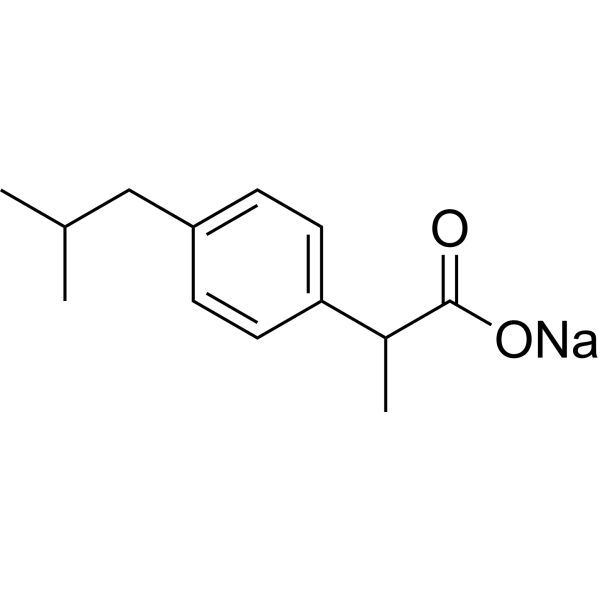
Ibuprofen ((±)-Ibuprofen) sodium is an orally active, selective COX-1 inhibitor with an IC50 value of 13 μM. Ibuprofen sodium inhibits cell proliferation, angiogenesis, and induces cell apoptosis. Ibuprofen sodium is a nonsteroidal anti-inflammatory agent and a nitric oxide (NO) donor. Ibuprofen sodium can be used in the research of pain, swelling, inflammation, infection, immunology, cancers .
loading...
    loading...
21
21 Cited Publications
Cat. No.: HY-N0020
CAS No.: 82854-37-3
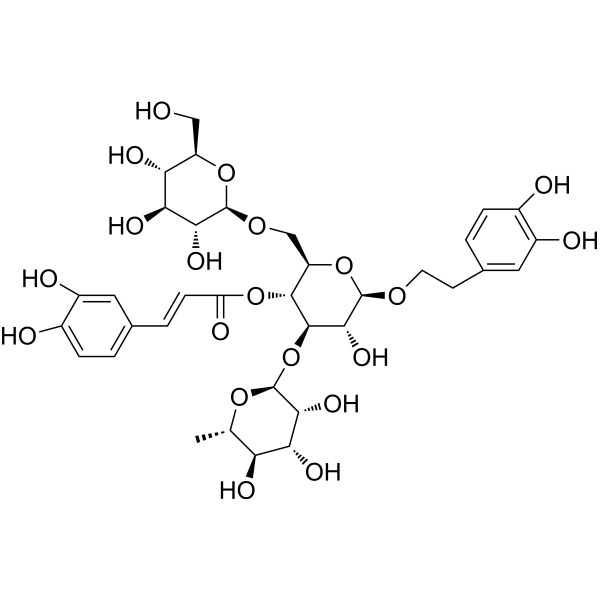
Echinacoside, one of the phenylethanoids isolated from the stems of Cistanche deserticola, effectively inhibits Wnt/β-catenin signaling. Echinacoside elicits neuroprotection by activating Trk receptors and their downstream signal pathways. Antiosteoporotic activity .
loading...
    loading...
17
17 Cited Publications
Cat. No.: HY-12452
CAS No.: 1428-67-7
Purity:  99.66%
Synonyms: Diarylpropionitrile
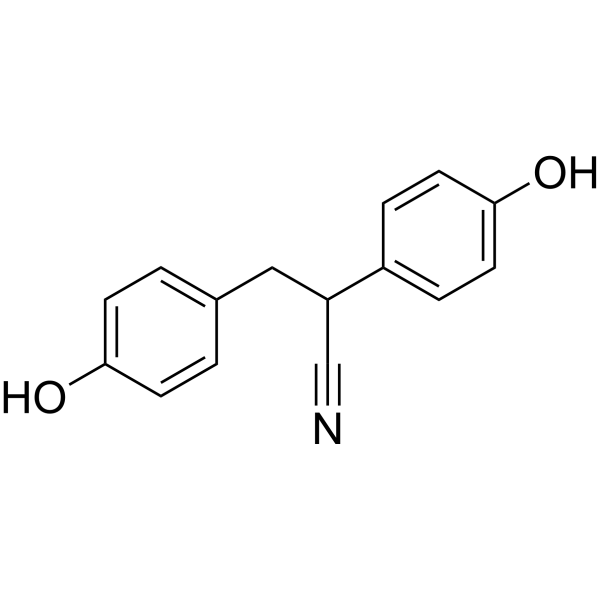
DPN (Diarylpropionitrile) is a non-steroidal estrogen receptor β (ERβ) selective ligand, with an EC50 of 0.85 nM. DPN has neuroprotective effects in a number of neurological diseases .
loading...
    loading...
14
14 Cited Publications
Cat. No.: HY-B0410
CAS No.: 104632-26-0
Target:  

Dopamine Receptor

Research Areas:  

Neurological Disease

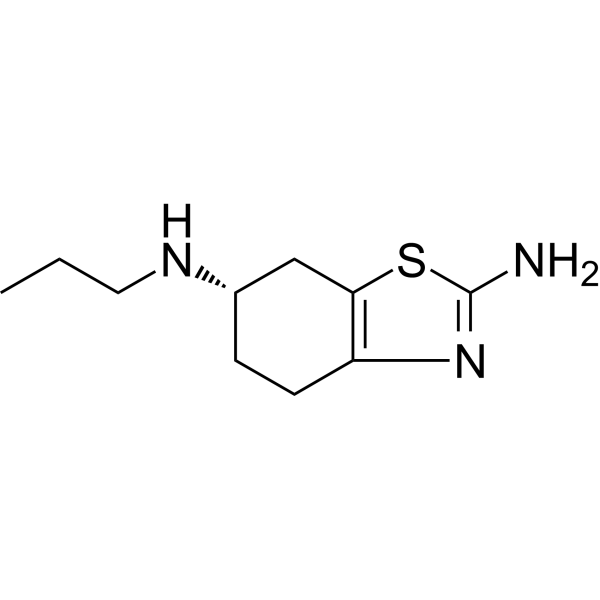
Pramipexole is a selective and blood-brain barrier (BBB) penetrant dopamine D2-type receptor agonist, with Kis of 2.2 nM, 3.9 nM, 0.5 nM and 1.3 nM for D2-type receptor, D2, D3 and D4 receptors, respectively. Pramipexole can be used for the research of Parkinson's disease (PD) and restless legs syndrome (RLS) .
loading...
    loading...
14
14 Cited Publications
Cat. No.: HY-B0410A
CAS No.: 191217-81-9
Target:  

Dopamine Receptor

Research Areas:  

Neurological Disease

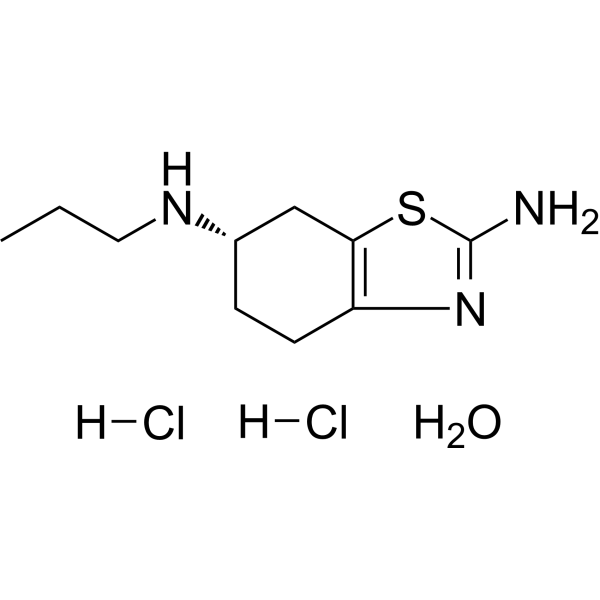
Pramipexole dihydrochloride hydrate is a selective and blood-brain barrier (BBB) penetrant dopamine D2-type receptor agonist, with Kis of 2.2 nM, 3.9 nM, 0.5 nM and 1.3 nM for D2-type receptor, D2, D3 and D4 receptors, respectively. Pramipexole dihydrochloride hydrate can be used for the research of Parkinson's disease (PD) and restless legs syndrome (RLS) .
loading...
    loading...
14
14 Cited Publications
Cat. No.: HY-17355
CAS No.: 104632-25-9
Target:  

Dopamine Receptor

Research Areas:  

Neurological Disease

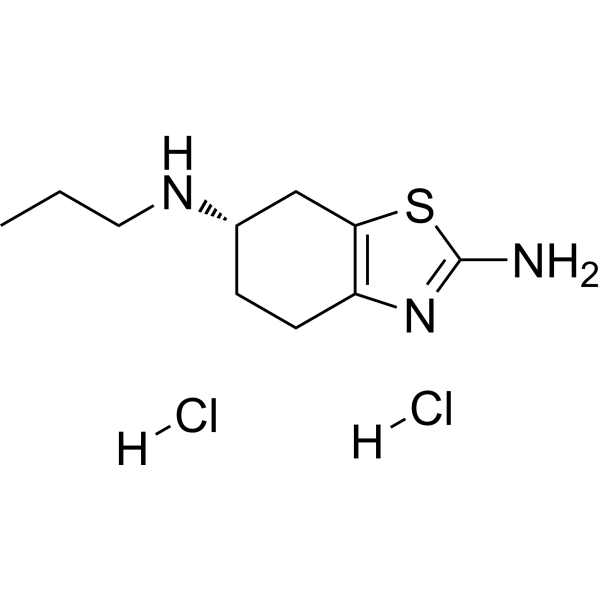
Pramipexole dihydrochloride is a selective and blood-brain barrier (BBB) penetrant dopamine D2-type receptor agonist, with Kis of 2.2 nM, 3.9 nM, 0.5 nM and 1.3 nM for D2-type receptor, D2, D3 and D4 receptors, respectively. Pramipexole dihydrochloride can be used for the research of Parkinson's disease (PD) and restless legs syndrome (RLS) .
loading...
    loading...
13
13 Cited Publications
Cat. No.: HY-18100A
CAS No.: 75136-54-8
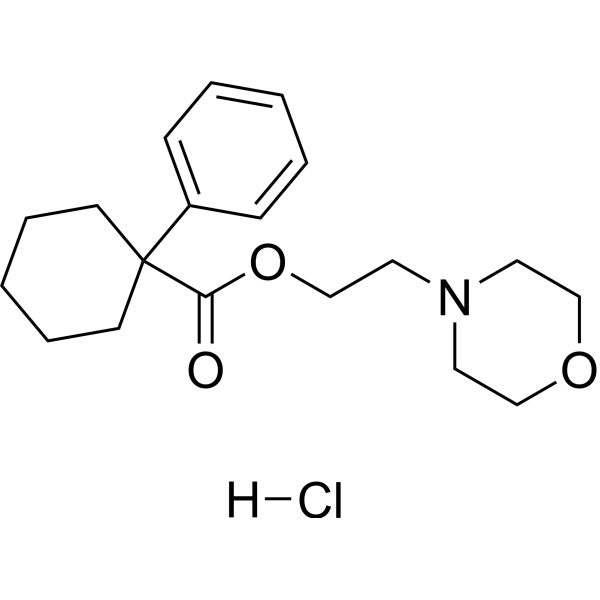
PRE-084 hydrochloride is a highly selective σ1 receptor (S1R) agonist, with an IC50 of 44 nM. PRE-084 hydrochloride exhibits good neuroprotective effects, can improve motor function and motor neuron survival in mice. PRE-084 hydrochloride also can ameliorate myocardial ischemia-reperfusion injury in rats by activating the Akt-eNOS pathway .
loading...
    loading...

