
1. Search Result
Search Result
Results for "

PET

" in MedChemExpress (MCE) Product Catalog:

290

Inhibitors & Agonists

8

Fluorescent Dye

9

Biochemical Assay Reagents

51

Peptides

5

Inhibitory Antibodies

4

Natural
Products

6

Recombinant Proteins

5

Isotope-Labeled Compounds

5

Antibodies

3

Click Chemistry

4

Oligonucleotides

1

GMP Molecules

Cat. No. Product Name Target Research Areas Chemical Structure
  • HY-128890
    DOTA-​NHS-ester
    1 Publications Verification

    ADC Linker Cancer
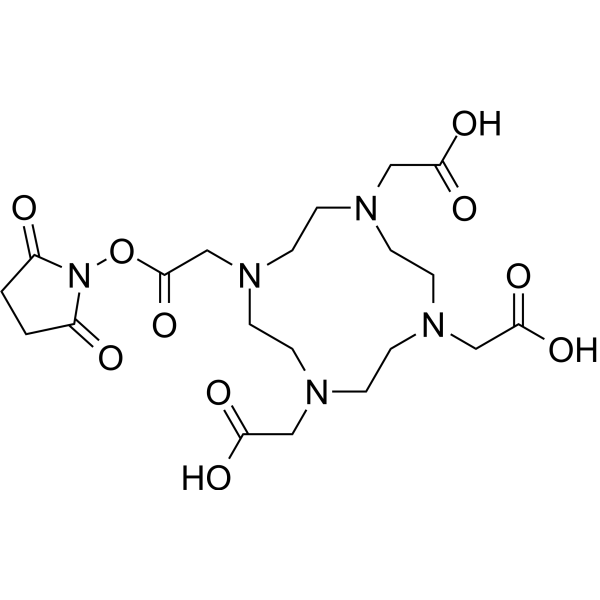
    DOTA-NHS-ester is a linker for affibody molecules and is applied in small animals PET, SPECT, and CT. DOTA-NHS-ester can be used to label radiotherapeutic agents or imaging probes for the detection of tumors .
    DOTA-​NHS-ester
  • HY-106244
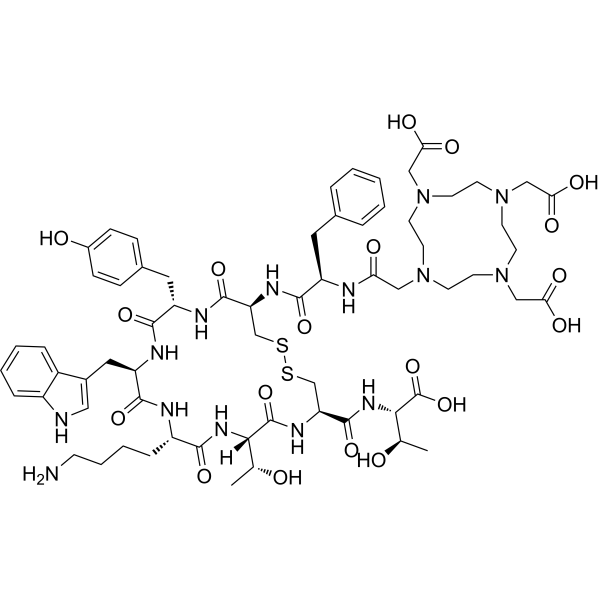
    DOTATATE
    3 Publications Verification

    Oxodotreotide

    Radionuclide-Drug Conjugates (RDCs) Cancer
    DOTATATE is a DOTA-conjugated peptide. DOTATATE can be labelled with radionuclides for positron emission tomography (PET) imaging and peptide receptor radionuclide research (PRRT) . DOTATATE can be used for the synthesis/research of Radionuclide-Drug Conjugates (RDCs).
    DOTATATE
  • HY-106244A
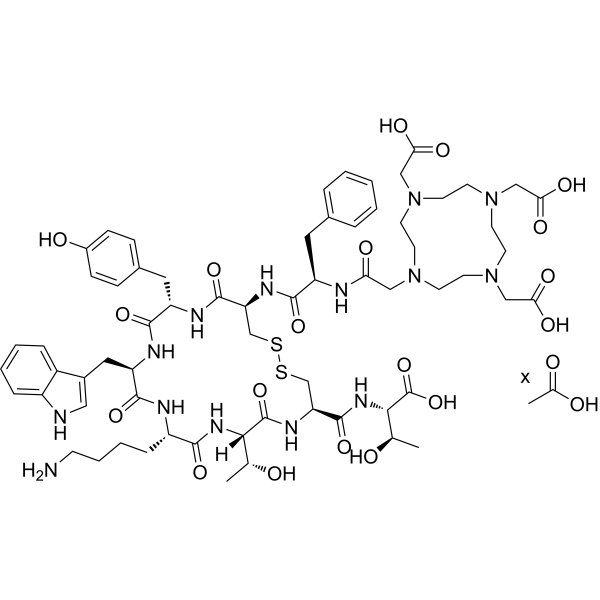
    DOTATATE acetate
    3 Publications Verification

    Oxodotreotide acetate

    Radionuclide-Drug Conjugates (RDCs) Cancer
    DOTATATE acetate is a DOTA-conjugated peptide. DOTATATE acetate can be labelled with radionuclides for positron emission tomography (PET) imaging and peptide receptor radionuclide research (PRRT) . DOTATATE (acetate) can be used for the synthesis/research of Radionuclide-Drug Conjugates (RDCs).
    DOTATATE acetate
  • HY-134418

    Radionuclide-Drug Conjugates (RDCs) Cardiovascular Disease Cancer
    NOTA is a bifunctional chelate which acts as the framework to construct PET imaging tools. NOTA also can be used for probe design and signal amplification via the multivalent effect. NOTA can be used in multiple myeloma, breast cancer, lymphoma and myocardial infarction research .
    NOTA
  • HY-107531

    GSK-3 Neurological Disease Cancer
    A 1070722 is a potent and selective glycogen synthase kinase 3 (GSK-3) inhibitor, with a Ki of 0.6 nM for both GSK-3α and GSK-3β. A 1070722 can penetrate the blood-brain barrier (BBB) and accumulates in brain regions, thus potential for PET radiotracer for the quantification of GSK-3 in brain. A 1070722 decreases spontaneous locomotion .
    A 1070722
  • HY-W250574

    NOTA-bis(t-Butyl ester)

    Biochemical Assay Reagents Radionuclide-Drug Conjugates (RDCs) Drug Derivative Cancer
    NOTA-bis (tBu) ester is a derivative of NOTA (HY-134418). NOTA-bis (tBu) ester is radiolabeled with 68Ga to form ZD2-( 68Ga-NOTA) after conjugation with ZD2. ZD2-( 68Ga-NOTA) can be used for PET imaging studies of pancreatic cancer .
    NOTA-bis(tBu)ester
  • HY-153549
    Pentixafor
    2 Publications Verification

    Radionuclide-Drug Conjugates (RDCs) CXCR Others
    Pentixafor is a peptide that targets CXCR4. Pentixafor is capable of being labelled with 68Gallium ( 68Ga) for positron emission tomography (PET) imaging . Pentixafor can be used for the synthesis/research of Radionuclide-Drug Conjugates (RDCs).
    Pentixafor
  • HY-75706

    PARP Ligands for Target Protein for PROTAC Cancer
    N-Descyclopropanecarbaldehyde Olaparib is an analogue of Olaparib (HY-10162) containing DOTA moiety. N-Descyclopropanecarbaldehyde Olaparib is a PARP inhibitor used for synthesizing novel dual EGFR and PARP PROTAC, DP-C-4 (HY-141481) . N-Descyclopropanecarbaldehyde Olaparib can be radiolabeled with F-18 or fluorophore for positron emission tomography (PET) or optical imaging in several types of tumor .
    N-Descyclopropanecarbaldehyde Olaparib
  • HY-153248

    Biochemical Assay Reagents Neurological Disease Inflammation/Immunology
    PBR28 is a translocator protein (TSPO) binding positron emission tomography (PET) radiotracer with blood-brain barrier permeability . PBR28 binds to TSPO, a marker of microglial activation and neuroinflammation, and is used for neuroinflammation imaging in brain diseases and HIV-infected individuals .
    PBR28
  • HY-D2363

    Radionuclide-Drug Conjugates (RDCs) FAP Prolyl Endopeptidase (PREP) Cancer
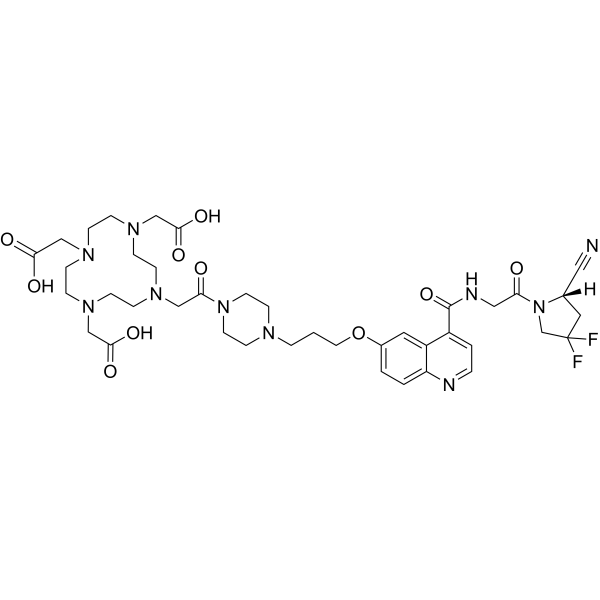
    DOTA.SA.FAPi TFA is a selective FAP inhibitor with an IC50 value of 0.9 nM against FAP. DOTA.SA.FAPi TFA forms stable complexes with 68Ga and serves as a PET radiotracer for preclinical imaging of FAP-expressing tumors. DOTA.SA.FAPi TFA can be used in the research of colorectal adenocarcinoma and various other cancers .
    DOTA.SA.FAPi TFA
  • HY-149766

    HDAC Neurological Disease
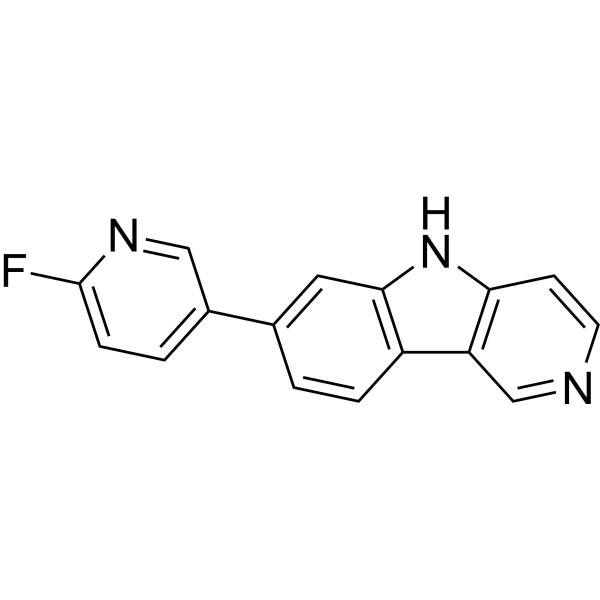
    PB94 is a selective HDAC11 inhibitor (IC50=108 nM). PB94 can be radiolabeled as [11C]-PB94 for use in positron emission tomography (PET), as well as brain uptake and metabolic properties in administered live animals. PB94 improves neuropathic pain in mice and could be used to study neurological indications .
    PB94
  • HY-119190

    Phosphodiesterase (PDE) Neurological Disease
    PF-06445974, a promising positron emission tomography (PET) lead, has exquisite potency at PDE4B with an IC50 <1 nM. The IC50 values are 36, 4.7 and 17 nM for PDE4D, PDE4A and PDE4C, respectively. PF-06445974 has good selectivity over PDE4D, excellent brain permeability, and a high level of specific binding in the "cold tracer" study .
    PF-06445974
  • HY-153550

    Radionuclide-Drug Conjugates (RDCs) PSMA Cancer
    PSMA-1007 is a prostate-specific membrane antigen (PSMA) ligand. 18F-labeled PSMA-1007 can be used as a PET tracer for prostate cancer imaging. PSMA-1007 can be used for the synthesis/research of Radionuclide-Drug Conjugates (RDCs) .
    PSMA-1007
  • HY-P2336A
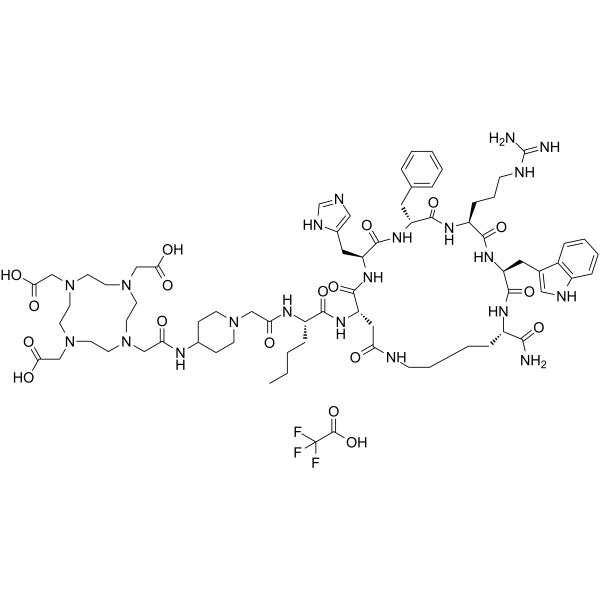
    CCZ01048 TFA
    3 Publications Verification

    Melanocortin Receptor Cancer
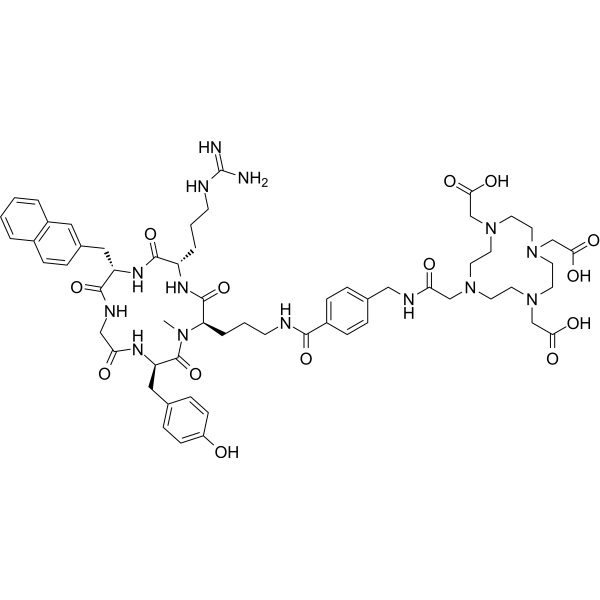
    CCZ01048 TFA, a α-MSH analogue, exhibits high binding affinity to melanocortin 1 receptor (MC1R) with a Ki of 0.31 nM. CCZ01048 TFA shows rapid internalization into B16F10 melanoma cells and high in vivo stability. CCZ01048 TFA is a promising candidate for PET imaging of malignant melanoma .
    CCZ01048 TFA
  • HY-100275

    Amyloid-β Neurological Disease
    MK-3328 is a β-Amyloid ligand, which exhibits high binding potency with an IC50 of 10.5 nM. MK-3328 is capable of being labelled with 18F for positron emission tomography (PET) imaging .
    MK-3328
  • HY-155483

    NOTA-PSMA

    Radionuclide-Drug Conjugates (RDCs) Cancer
    PSMA-BCH (NOTA-PSMA) is a NOTA-conjugated precursor. NOTA is a bifunctional chelate which acts as the framework to construct PET imaging tools .
    PSMA-BCH
  • HY-W539893

    NODAG

    Biochemical Assay Reagents Cancer
    NODAGA-tris(t-Bu ester) (NODAG) is a NODAGA derivative. NODAGA-tris(t-Bu ester) can be used to label peptides, antibodies, etc., and subsequently radiolabeled for PET imaging .
    NODAGA-tris(t-Bu ester)
  • HY-139048

    iGluR Neurological Disease
    Fluoroethylnormemantine, a derivative of Memantine, is an antagonist of the N-methyl-D-aspartate (NMDA) receptor. [ 18F]-Fluoroethylnormemantine can be used as a positron emission tomography (PET) tracer. Fluoroethylnormemantine exhibits anti-amnesic, neuroprotective, antidepressant-like and fear-attenuating effects .
    Fluoroethylnormemantine
  • HY-179492

    hnRNP Neurological Disease
    ACI-19278 is a TDP-43 PET tracer with an average Kd of 25 nM. ACI-19278 only binds to pathological TDP-43 aggregates and does not cross-react with Aβ, Tau, etc. [ 18F]ACI-19278 successfully visualized the TDP-43 pathology in the human brain through positron emission computed tomography. ACI-19278 can be used for in vivo diagnosis of TDP-43 protein lesions .
    ACI-19278
  • HY-122184

    HSP Apoptosis Cancer
    PET-16 is a selective HSP70 inhibitor that binds to an allosteric pocket of the substrate-binding domain. PET-16 inhibits the ability of HSP70 to cycle between ATP-bound and ADP-bound states. PET-16 induces apoptosis in multiple myeloma .
    PET-16
  • HY-108548

    Rp-8-Bromo-PET-cGMPS

    PKG Inflammation/Immunology
    Rp-8-Br-PET-cGMPS sodium (Rp-8-Bromo-PET-cGMPS) is an analog of cyclic GMP (cGMP). It is a cell permeable, competitive, and reversible inhibitor of cGMP-dependent protein kinases (cGKs) that blocks activation of cGKI and cGKII by cGMP (Kis=35 and 30 nM). It less potently inhibits protein kinase A (Ki=11 μM) and cGMP-induced activation of cyclic nucleotide-gated channels (IC50=25 μM). In the absence of cGMP stimulation, Rp-8-bromo-PET-cGMPS can act as a partial agonist of cGKI (Ki=1 μM). Rp-8-bromo-PET-cGMPS is resistant to hydrolysis by phosphodiesterase 11.
    Rp-8-Br-PET-cGMPS sodium
  • HY-135497

    Dopamine Receptor Neurological Disease
    Fallypride is a potent antagonist of dopamine D2/D3 receptor. Fallypride, in the form of fallypride ( 18F), can be used as a positron emission tomography (PET) radiotracer .
    Fallypride
  • HY-177459

    FAP Cancer
    DOTA-2P(FAPI)2 is a dimeric FAP (fibroblast activation protein) that can be used as a PET imaging agent and a tracer for tumor therapy .
    DOTA-2P(FAPI)2
  • HY-161246

    5-HT Receptor Neurological Disease
    uPSEM792 is a pharmacologically selective effector molecules (PSEM) agonist for PSAM 4-GlyR, with an affinity of Ki of 0.7 nM. uPSEM792 is a substrate for efflux transporters in brains of wild type and dual P-gp and BCRP knockout mice. uPSEM7952 is a possible lead for developing the PET radioligand for PSAM 4-GlyR .
    uPSEM792
  • HY-P11287

    Interleukin Related Radionuclide-Drug Conjugates (RDCs) Cancer
    DOTA-Pep-1L is a polypeptide formed by the conjugation of DOTA and Pep-1L. DOTA-Pep-1L specifically binds to IL13RA2 and can be used for the synthesis of targeted polypeptides. DOTA-Pep-1L yields the isotopically labeled product [ 225Ac]DOTA-Pep-1L, which exerts α-radiation killing effects on orthotopic glioma cells and extends the median survival time of mice bearing orthotopic glioma models after stereotactic injection. DOTA-Pep-1L can be used for PET imaging, tumor targeting and glioma research .
    DOTA-Pep-1L
  • HY-137665

    PKG Cardiovascular Disease
    PET-cGMP is a cyclic guanosine monophosphate analog and an effective selective agonist of PKG I, the EC50 of PET-cGMP for PKG Iβ is 3.8 nM, while for PKG II, it's 193 nM .
    PET-cGMP
  • HY-175229

    PSMA Cancer
    PSMA ligand 1 (Compound 1c) is a PSMA ligand with an IC50 of 26.74 nM. The [ 18F]-labeled PSMA ligand 1 can serve as a PSMA PET tracer and is used in research on the diagnosis of prostate cancer .
    PSMA ligand 1
  • HY-178871

    Orexin Receptor (OX Receptor) Neurological Disease
    OX2-2303 is a potent, selective orexin-2 receptor (OX2R) antagonist. OX2-2303 exhibits excellent binding affinity towards OX2R (Ki = 0.1 nM), and shows >890-fold selectivity over OX1R. OX2-2303 can be used as a positron emission tomography (PET) radioligand for central nervous system (CNS) research .
    OX2-2303
  • HY-175685

    FAP Cancer
    FAP-IN-7 (Compound 5b) is a FAPPET imaging and radionuclide therapy of cancers research .
    FAP-IN-7
  • HY-141464

    Fmoc-Asn(Ac3AcNH-beta-Glc)-OH

    Amino Acid Derivatives Cancer
    Fmoc-L-Asn(beta-D-GlcNAc(Ac)3)-OH (Fmoc-Asn(Ac3AcNH-beta-Glc)-OH) can be used in the synthesis of silicon-fluoride acceptor (SiFA) derivatized octreotate derivatives. SiFA-octreotate analogues, as tumor imaging agents, are useful tool for the research of positron emission tomography (PET) .
    Fmoc-L-Asn(beta-D-GlcNAc(Ac)3)-OH
  • HY-P2336

    Melanocortin Receptor Cancer
    CCZ01048, a α-melanocyte-stimulating hormone (α-MSH) analogue, exhibits high binding affinity to melanocortin 1 receptor (MC1R) with a Ki of 0.31 nM. CCZ01048 shows rapid internalization into B16F10 melanoma cells and high in vivo stability. CCZ01048 is a promising candidate for PET imaging of malignant melanoma .
    CCZ01048
  • HY-134418R

    Radionuclide-Drug Conjugates (RDCs) Reference Standards Cardiovascular Disease Cancer
    NOTA (Standard) is the analytical standard of NOTA. This product is intended for research and analytical applications. NOTA is a bifunctional chelate which acts as the framework to construct PET imaging tools. NOTA also can be used for probe design and signal amplification via the multivalent effect. NOTA can be used in multiple myeloma, breast cancer, lymphoma and myocardial infarction research .
    NOTA (Standard)
  • HY-175730

    Cannabinoid Receptor Neurological Disease Inflammation/Immunology Cancer
    CB2R ligand-1 (Compound L14) is a selective Cannabinoid type 2 receptor (CB2R) ligand with a with Ki of 0.16  nM for CB2R over CB1R. CB2R ligand-1 as be used as a tracer for positron emission tomography (PET) imaging of neurodegenerative diseases, inflammation and cancer .
    CB2R ligand-1
  • HY-W587729

    Drug Intermediate Others
    Ethylene terephthalate cyclic dimer is a intermediate of polyethylene terephthalate (PET). PET is a common plastic used in fibers and packaging materials.
    Ethylene terephthalate cyclic dimer
  • HY-W111830

    Terephthalic acid, diethyl ester

    Endogenous Metabolite Others
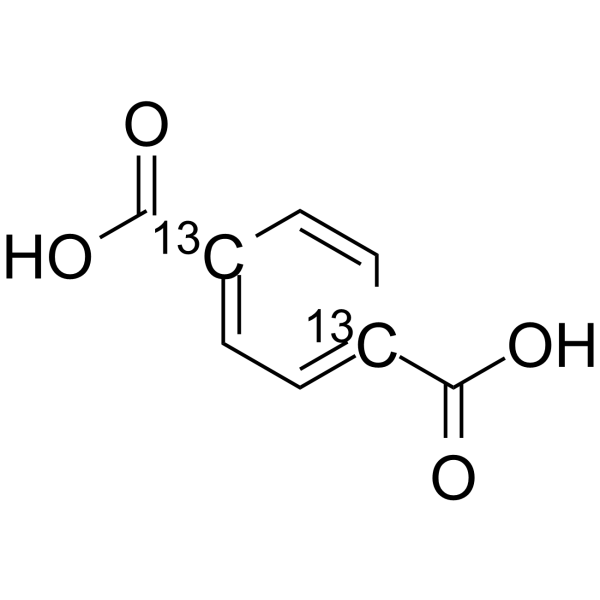
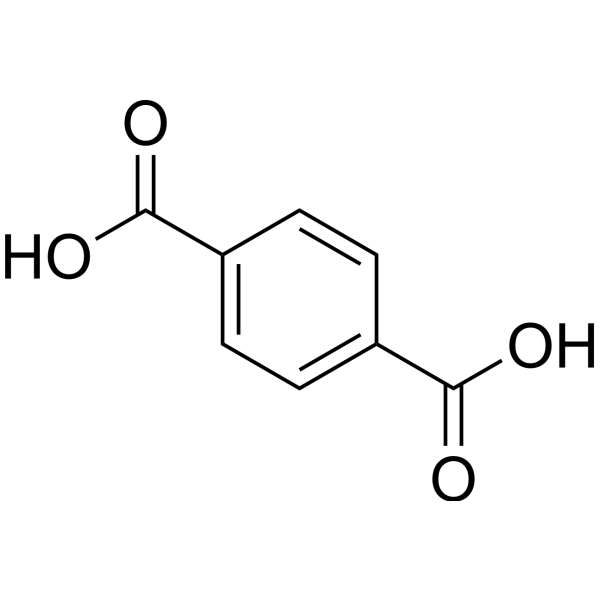
    Diethyl terephthalate (Terephthalic acid) is a monomer in the synthesis of polyethylene terephthalate (PET) material. Diethyl terephthalate is usually used as a substrate for isolating PET-degrading strains .
    Diethyl terephthalate
  • HY-158326

    FAP Cancer
    FAP-IN-4 (Comp 10) is a fibroblast activation protein (FAP) inhibitor and a 18F-labeled PET tracer targeting FAP. FAP-IN-4 can be used for cancer research .
    FAP-IN-4
  • HY-P10307

    Radionuclide-Drug Conjugates (RDCs) Bacterial Infection
    DOTA-ubiquicidin (29-41), an antimicrobial peptide fragment derivative, can be used for synthesis of [ 68Ga]Ga-DOTA-Ubiquicidin29-41 and then used for imaging of infectious processes using PET/CT . DOTA-ubiquicidin (29–41) can be used for the synthesis/research of Radionuclide-Drug Conjugates (RDCs).
    DOTA-ubiquicidin (29–41)
  • HY-180447

    Radionuclide-Drug Conjugates (RDCs) Cancer
    Tz-Ph-PEG4-NH-DOTA (Compound 10) is a 1,2,4,5-tetrazine (Tz) derivative. Tz-Ph-PEG4-NH-DOTA can be used in PET imaging and tumor research .
    Tz-Ph-PEG4-NH-DOTA
  • HY-149869

    PSMA Cancer
    PSMA-IN-3 (compound 17) is a novel high-affinity PSMA inhibitor with an IC50 value of 13 nM. PSMA-IN-3 is suitable for developing an 18F-labeled radioligand for PET imaging of PSMA in prostate cancer .
    PSMA-IN-3
  • HY-174977

    P2Y Receptor Neurological Disease
    P2Y12R ligand-1 (Compound 41) is a high-affinity P2Y12R ligand with a Ki value of 17.1 nM. P2Y12R ligand-1 labeled with [ 18F] can be used in studies of brain PET imaging .
    P2Y12R ligand-1
  • HY-P11257

    Radionuclide-Drug Conjugates (RDCs) Cancer
    DOTA-BP1 is a DOTA-modified BP1 (BCMA-targeting peptide). DOTA-BP1 can be radiolabeled with [ 68Ga]Ga to produce a BCMA-targeting PET tracer. DOTA-BP1 can be used in the research of detecting BCMA in multiple myeloma .
    DOTA-BP1
  • HY-P10220

    Radionuclide-Drug Conjugates (RDCs) TREM receptor Cancer
    NOTA-COG1410 forms triggering receptor expressed on myeloid cells 2 (TREM2) targeting ligand. NOTA-COG1410 is capable of being labelled with 68Gallium ( 68Ga) for discovery and diagnosis of digestive system tumors through positron emission tomography/computed tomography (PET/CT). NOTA-COG1410 can be used for the synthesis/research of Radionuclide-Drug Conjugates (RDCs) .
    NOTA-COG1410
  • HY-174923

    Biochemical Assay Reagents GSK-3 Neurological Disease
    AZ12943203 (Compound 13e) is a GSK-3 PET radioligand with a Kd of 2.94  nM. AZ12943203 has a significant inhibitory potency toward GSK-3β (IC50 : 4.44 nM), and can specifically bind to GSK-3-rich regions of the rodent brain. AZ12943203 can be used for neurodegenerative diseases imaging, particularly Alzheimer’s disease .
    AZ12943203
  • HY-175330

    FAP Cancer
    FAP-IN-6 (Compound 21) is a selectivity FAP inhibitor with an IC50 of 13 pM. FAP-IN-6 has a high metabolic stability. FAP-IN-6 labeled with 18F can be used as a positron emission tomography (PET) tracer. FAP-IN-6 can be used for microenvironment of cancers research .
    FAP-IN-6
  • HY-P5362A

    Radionuclide-Drug Conjugates (RDCs) Somatostatin Receptor Cancer
    NODAGA-LM3 TFA is a ligand that can cross the blood-brain barrier and targets somatostatin receptor SSTR2 with high affinity (IC50 = 1.3 nM). NODAGA-LM3 TFA does not trigger the internalization of SSTR2 and can inhibit agonist-induced internalization processes. NODAGA-LM3 TFA shows low uptake in normal tissues such as the liver and spleen, but high uptake in the lungs and blood pool. 68Ga-labeled NODAGA-LM3 TFA can serve as a PET imaging agent for well-differentiated neuroendocrine tumors, and is applied in studies related to small cell lung cancer and well-differentiated neuroendocrine tumors .
    NODAGA-LM3 TFA
  • HY-206852

    Drug Intermediate Phosphodiesterase (PDE) Neurological Disease
    PF-06445974 precursor (Compound 28) is a nitro precursor and synthetic intermediate. PF-06445974 precursor can be used for the synthesis of PF-06445974 (HY-119190). PF-06445974 is a positron emission tomography (PET) compound that acts potently on PDE4B .
    PF-06445974 precursor
  • HY-101182

    Microtubule/Tubulin Neurological Disease
    THK-5117, an arylquinoline derivative, displays high binding affinity to tau fibrils with a Ki of 10.5 nM. THK-5117 has high binding affinity to tau protein aggregates and tau-rich Alzheimer disease (AD)  brain homogenates. 18F-THK-5117 has the potential to act as a tau imaging PET probe .
    THK-5117
  • HY-179227

    HDAC Neurological Disease
    HDAC6 ligand-7 (Compound 16a) is a positron emission tomography (PET) tracer for the deacetylase 6 (HDAC6) enzyme with a Kd value of 1.66 nM. HDAC6 ligand-7 exhibits excellent HDAC6 inhibitory activity, with IC50 values of 2.7 and 3.7 nM for hHDAC6 and mHDAC6, respectively, and has high selectivity for HDAC1/4/7/8. HDAC6 ligand-7 after being radioactively labeled with fluorine-18, [¹⁸F]HDAC6 ligand-7 shows varying degrees of radioactive uptake in PET, which can reflect the specific binding to HDAC6. HDAC6 ligand-7 can be used for the study of HDAC6 imaging .
    HDAC6 ligand-7
  • HY-175014

    PD-1/PD-L1 Biochemical Assay Reagents Cancer
    LGT-1 is a PD-L1 ligand. LGT-1 labeled with 18F has an excellent specific uptake in B16-F10 tumor cells, and shows a high tumor uptake but a low liver uptake with good stability in B16-F10 tumor-bearing mice model. LGT-1 can be used as a radiotracer for PET imaging of PD-L1 expression in tumors .
    LGT-1
  • HY-P11088

    Transmembrane Glycoprotein Radionuclide-Drug Conjugates (RDCs) Inflammation/Immunology
    VCAM1 binding peptide is a VCAM1 binder with internalization activity. VCAM1 binding peptide can be labeled with 5-FAM. VCAM1 binding peptide serves as a component of biosensing systems for visualizing in vitro VCAM1 endocytic pathways. VCAM1 binding peptide forms the research and development basis for MacroP and NAMP, PET radiotracers targeting VCAM1. VCAM1 binding peptide is applicable to studies related to atherosclerosis .
    VCAM1 binding peptide

Inquiry Online

Your information is safe with us. * Required Fields.

Salutation


Country or Region *

Applicant Name *


Organization Name *

Department *


Email Address *


Product Name *

Cat. No.


Requested quantity *

Phone Number *


Remarks

Inquiry Online

Inquiry Information

Product Name:
Cat. No.:
Quantity:
MCE Japan Authorized Agent:

