20 Results for "

Phenolic Hydroxyl Groups

" in MedChemExpress (MCE) Product Catalog:
Products (20)

20 Results for "Phenolic Hydroxyl Groups" in MCE Product Catalog:

1
1 Cited Publications
Cat. No.: HY-W007671
CAS No.: 1080-06-4
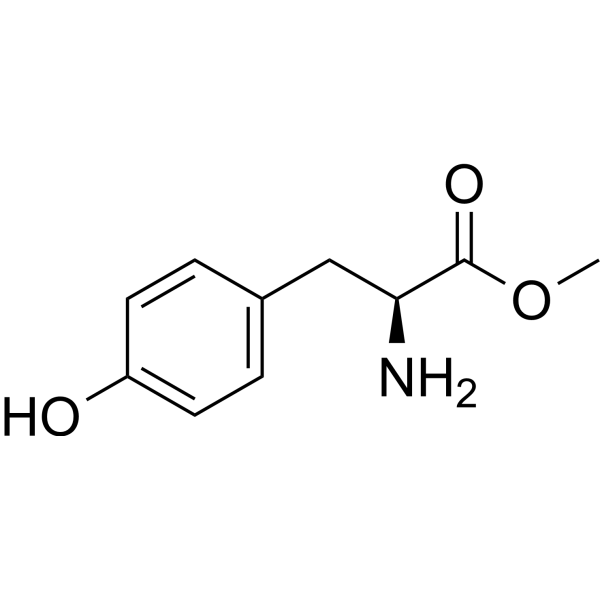
H-Tyr-OMe is an amino acid derivative and also a coordinating ligand for Cu II ions. H-Tyr-OMe can serve as a surface functionalization reagent for carbon dots, and is used to prepare fluorescent probes for biothiol sensing. H-Tyr-OMe is oxidized to quinone under the catalysis of Tyrosinase via its phenolic hydroxyl group, which quenches the fluorescence of carbon dots. H-Tyr-OMe contains potential coordination sites, including carboxyl, amino and phenolic hydroxyl groups .
loading...
    loading...
1
1 Cited Publications
Cat. No.: HY-W012228
CAS No.: 3417-91-2
Research Areas:  

Others

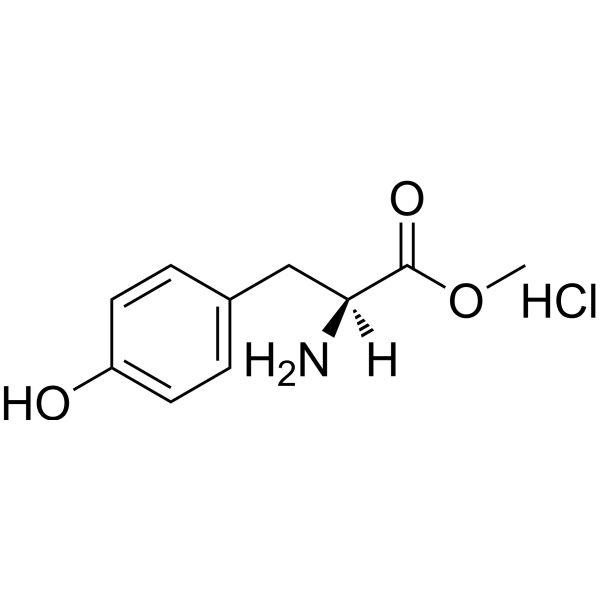
H-Tyr-OMe.HCl is an amino acid derivative and also a coordinating ligand for Cu II ions. H-Tyr-OMe.HCl can serve as a surface functionalization reagent for carbon dots, and is used to prepare fluorescent probes for biothiol sensing. H-Tyr-OMe.HCl is oxidized to quinone under the catalysis of Tyrosinase via its phenolic hydroxyl group, which quenches the fluorescence of carbon dots. H-Tyr-OMe.HCl contains potential coordination sites, including carboxyl, amino and phenolic hydroxyl groups .
loading...
    loading...
Cat. No.: HY-W127711
CAS No.: 14263-94-6
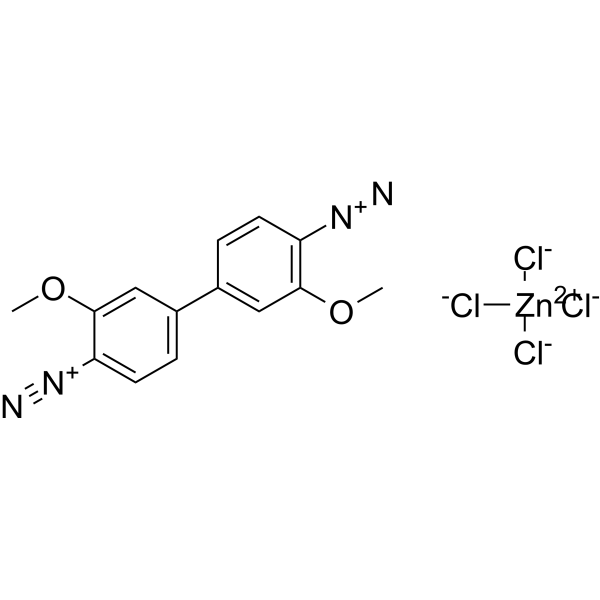
Fast Blue B Salt, Dye content ~95% is a diazo dye, primarily used as a chromogenic substrate in biochemical analysis. Fast Blue B Salt, Dye content ~95% is the coupling agent for the histochemical demonstration of proteases. Fast Blue B Salt, Dye content ~95% can be used for the detection of acid phosphatase in Clostridium perfringens, and also for the determination of lipase activity. Fast Blue B Salt, Dye content ~95% reacts directly with the active hydroxyl groups in phenolic compounds to determine the content of phenolic substances .
loading...
    loading...
Cat. No.: HY-Y0801
CAS No.: 303-07-1
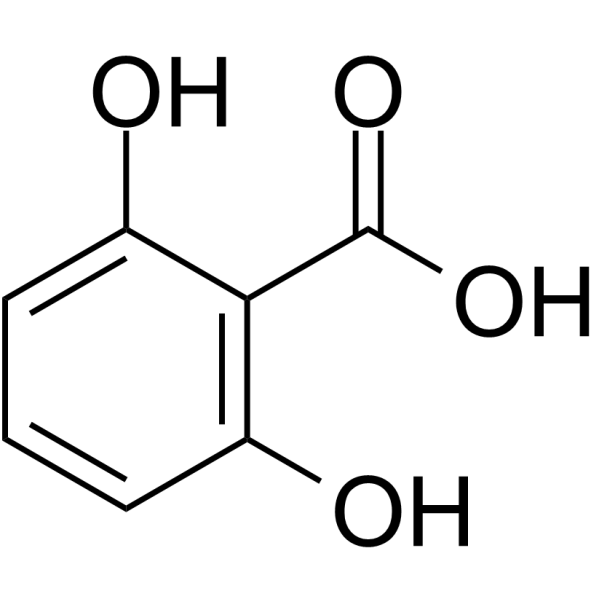
2,6-Dihydroxybenzoic acid is an aromatic compound containing phenolic hydroxyl groups and carboxyl groups, and it is a secondary metabolite of Salicylic acid (HY-B0167). 2,6-Dihydroxybenzoic acid is also present in olive oil wastewater .
loading...
    loading...
Cat. No.: HY-G0004
CAS No.: 37519-14-5
Synonyms: 3-Hydroxyacetaminophen
Target:  

Drug Metabolite

Research Areas:  

Inflammation/Immunology

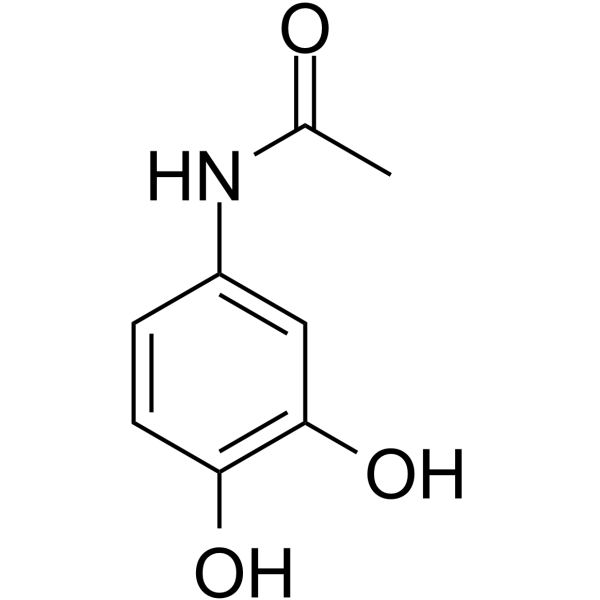
Acetaminophen metabolite 3-hydroxy-acetaminophen (3-Hydroxyacetaminophen) is a non-toxic metabolite and antioxidant of acetaminophen (HY-66005) with free radical scavenging activity. Acetaminophen metabolite 3-hydroxy-acetaminophen can reduce oxidative damage by exerting electron donation ability and antioxidant activity through phenolic hydroxyl groups. 3-hydroxy-acetaminophen can be used to study the toxicity mechanism and drug metabolism of acetaminophen .
loading...
    loading...
Cat. No.: HY-Y1374
CAS No.: 93-97-0
Research Areas:  

Others

Benzoic anhydride is a catalyst that can be used for organic synthesis reactions. Benzoic anhydride is used as a chemical titration reagent for selective quantification and deactivation of phenolic hydroxyl groups on the surface of carbon nanotubes .
loading...
    loading...
Cat. No.: HY-W017092
CAS No.: 634-36-6
Target:  

Drug Intermediate

Research Areas:  

Others

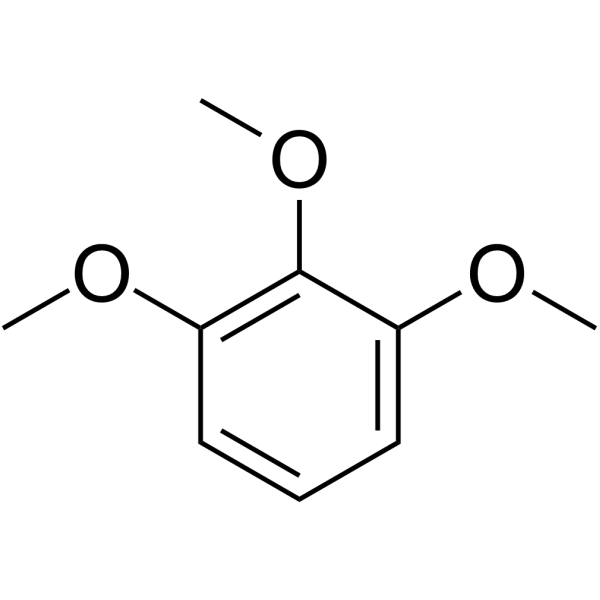
1,2,3-Trimethoxybenzene is a model compound of lignin. 1,2,3-Trimethoxybenzene can potentially serve as a biomarker for certain foods due to its presence in tea. 1,2,3-Trimethoxybenzene can be used as a drug intermediate for synthesizing 2,6-dimethoxy-1,4-benzoquinone (HY-N1677) .
loading...
    loading...
Cat. No.: HY-W007671R
CAS No.: 1080-06-4
H-Tyr-OMe (Standard) is the analytical standard of H-Tyr-OMe (HY-W007671). This product is intended for research and analytical applications. H-Tyr-OMe is an amino acid derivative and also a coordinating ligand for Cu II ions. H-Tyr-OMe can serve as a surface functionalization reagent for carbon dots, and is used to prepare fluorescent probes for biothiol sensing. H-Tyr-OMe is oxidized to quinone under the catalysis of Tyrosinase via its phenolic hydroxyl group, which quenches the fluorescence of carbon dots. H-Tyr-OMe contains potential coordination sites, including carboxyl, amino and phenolic hydroxyl groups .
loading...
    loading...
Cat. No.: HY-Y1374R
CAS No.: 93-97-0
Research Areas:  

Others

Benzoic anhydride (Standard) is the analytical standard of Benzoic anhydride. This product is intended for research and analytical applications. Benzoic anhydride is a catalyst that can be used for organic synthesis reactions. Benzoic anhydride is used as a chemical titration reagent for selective quantification and deactivation of phenolic hydroxyl groups on the surface of carbon nanotubes .
loading...
    loading...
Cat. No.: HY-Y0801R
CAS No.: 303-07-1
2,6-Dihydroxybenzoic acid (Standard) is the analytical standard of 2,6-Dihydroxybenzoic acid (HY-Y0801). This product is used for research and analytical applications. 2,6-Dihydroxybenzoic acid is an aromatic compound containing phenolic hydroxyl groups and carboxyl groups, and it is a secondary metabolite of Salicylic acid (HY-B0167). 2,6-Dihydroxybenzoic acid is also present in olive oil wastewater .
loading...
    loading...
Cat. No.: HY-G0004R
CAS No.: 37519-14-5
Synonyms: 3-Hydroxyacetaminophen (Standard)
Acetaminophen metabolite 3-hydroxy-acetaminophen (3-Hydroxyacetaminophen) (Standard) is the analytical standard of Acetaminophen metabolite 3-hydroxy-acetaminophen (HY-G0004). This product is intended for research and analytical applications. Acetaminophen metabolite 3-hydroxy-acetaminophen is a non-toxic metabolite and antioxidant of acetaminophen (HY-66005) with free radical scavenging activity. Acetaminophen metabolite 3-hydroxy-acetaminophen can reduce oxidative damage by exerting electron donation ability and antioxidant activity through phenolic hydroxyl groups. 3-hydroxy-acetaminophen can be used to study the toxicity mechanism and drug metabolism of acetaminophen .
loading...
    loading...
Cat. No.: HY-N15727
CAS No.: 1251459-63-8
2,5-Dimethylchromone-7-O-β-D-glucopyranoside is an orally active chromone glycoside found in the underground parts of Rheum australe. 2,5-Dimethylchromone-7-O-β-D-glucopyranoside shows a DPPH radical scavenging activity with an IC50 value of 66.9 μM. 2,5-Dimethylchromone-7-O-β-D-glucopyranoside scavenges free radicals by providing hydrogen atoms through phenolic hydroxyl groups, inhibiting lipid peroxidation. 2,5-Dimethylchromone-7-O-β-D-glucopyranoside is promising for research of oxidative stress-related diseases such as inflammation and skin diseases .
loading...
    loading...
Cat. No.: HY-W413662
CAS No.: 119649-45-5
Research Areas:  

Others

4-[(4-Methoxyphenyl)methoxy]butan-1-ol is a compound with a methyl phenol group and a butanol tail. The hydroxyl group enables further derivatization or replacement with other reactive functional groups.
loading...
    loading...
Cat. No.: HY-184613
Polydopamine nanoparticles (PDA NPs) are nanoscale materials formed by the self-polymerization of dopamine monomers under specific conditions. Their structural characteristics include a polyphenolic structure and a surface rich in functional groups such as amino and phenolic hydroxyl groups, which provide abundant chemical modification sites.
loading...
    loading...
Cat. No.: HY-W015811
CAS No.: 621-27-2
Target:  

PDI

3-N-Propylphenol is a small phenolic derivative containing a hydroxyl aryl group that competitively inhibits the binding of the peptide to pancreatic-specific protein disulfide isomerase (PDIp). 3-Propylphenol can be used for research on pancreatic-related diseases .
loading...
    loading...
Cat. No.: HY-W006081
CAS No.: 4920-77-8
Target:  

UGT

Research Areas:  

Others

3-Methyl-2-nitrophenol is a UDP-glucuronyltransferase (EC 2.4.1.17) acceptor substrate that can be confirmed to undergo glucuronidation catalyzed by the enzyme to form a glucuronide conjugate. 3-Methyl-2-nitrophenol functions as a substrate for conjugation, with glucuronidation forming a glucuronide conjugate that eliminates the parent compound’s characteristic yellow color. 3-Methyl-2-nitrophenol has higher lipid solubility that contributes to high glucuronidation conversion rate, and exhibits lower absorbance at 340 nm to act as a less interfering substrate for the NADH-NAD +-linked UDP-glucuronyltransferase assay .
loading...
    loading...
Cat. No.: HY-E71131
Research Areas:  

Others

(S)-Stylopine synthase (EC 1.14.21.1) catalyzes an oxidation reaction that does not introduce oxygen into the product. (S)-Stylopine synthase (EC 1.14.21.1) forms a second methylenedioxy bridge in the protoberberine alkaloid stylopine by oxidatively cyclizing cheilanthifoline with adjacent phenolic hydroxyl and methoxy groups.
loading...
    loading...
Cat. No.: HY-Y0801S
CAS No.: 1195947-64-8
2,6-Dihydroxybenzoic acid-d3 is the deuterated-labeled 2,6-Dihydroxybenzoic acid (HY-Y0801). 2,6-Dihydroxybenzoic acid is an aromatic compound containing phenolic hydroxyl groups and carboxyl groups, and it is a secondary metabolite of Salicylic acid (HY-B0167). 2,6-Dihydroxybenzoic acid is also present in olive oil wastewater .
loading...
    loading...
Cat. No.: HY-116235
CAS No.: 140-95-4
Synonyms: Dimethylolurea
Research Areas:  

Others

Oxymethurea (Dimethylolurea) is a formaldehyde-releasing protein modification reagent. Under acidic conditions, Oxymethurea promotes nucleophilic substitution of tyrosine via protonation of its hydroxymethyl group, while under alkaline conditions, it promotes protein crosslinking by converting the phenolic hydroxyl group of tyrosine into a more nucleophilic phenoxide ion. Oxymethurea can be used in studies related to protein chemical modification, protein crosslinking, protein protection and genotoxicity .
loading...
    loading...
Cat. No.: HY-N17138
CAS No.: 1621347-17-8
threo-1-(4-Hydroxyphenyl)-1-methoxy-2,3-propanediol is an aromatic propanediol phenolic derivative containing methoxy and hydroxyl groups. It can be naturally extracted from the dried aerial parts of Abies delavayi Franch. var. delavayi (Cangshan fir) from Dali, Yunnan, China. This source plant produces anti-inflammatory and anti-tumor active components .
loading...
    loading...
  • 1

