1. Search Result
Search Result
Results for "

Porphyromonas gingivalis

" in MedChemExpress (MCE) Product Catalog:

14

Inhibitors & Agonists

1

Fluorescent Dyes

3

Biochemical Assay Reagents

3

Peptides

4

Natural
Products

1

Isotope-Labeled Compounds

Cat. No. Product Name Target Research Areas Chemical Structure
  • HY-W110551

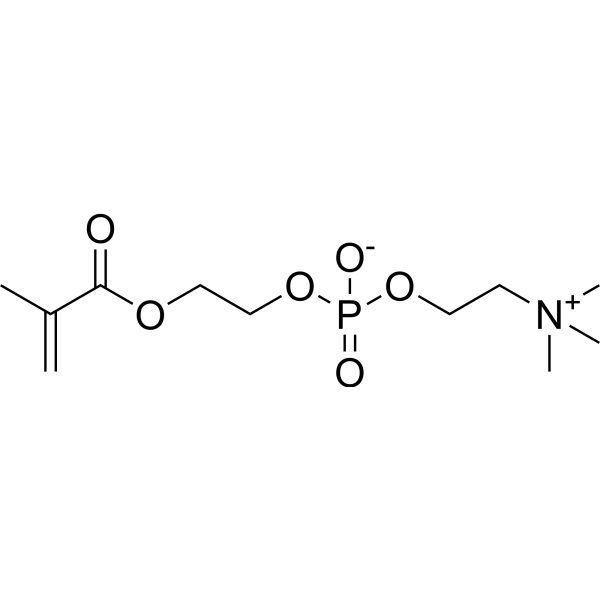
    Biochemical Assay Reagents Interleukin Related Infection Inflammation/Immunology
    2-Methacryloyloxyethyl phosphorylcholine is a polymer monomer containing a phospholipid polar group. 2-Methacryloyloxyethyl phosphorylcholine polymers modify the surface properties of materials and reduce protein-surface interactions, reduce IL-8 production, inhibit cell, Staphylococcus aureus, and Porphyromonas gingivalis adhesion. 2-Methacryloyloxyethyl phosphorylcholine is used in the study of medical device-associated infections, periodontitis, and dental caries .
    2-Methacryloyloxyethyl phosphorylcholine
  • HY-D1056D
    Lipopolysaccharides, from P. gingivalis
    3 Publications Verification

    LPS, from Porphyromonas gingivalis

    Toll-like Receptor (TLR) Inflammation/Immunology
    Lipopolysaccharides, from P. gingivalis (LPS, from Porphyromonas gingivalis) are endotoxins and TLR4 activators extracted from Porphyromonas gingivalis (P. gingivalis) and are classified as S (smooth) type LPS. Lipopolysaccharides, from P. gingivalis possess the typical three-part structure: O-antigen, core oligosaccharide, and lipid A. Lipopolysaccharides, from P. gingivalis activate TLR-4 in immune cells and are important virulence factors in the mechanism of periodontal disease. Lipopolysaccharides, from P. gingivalis can be used in research related to periodontitis .
    It is recommended to prepare a solution with concentration ≥2 mg/mL. Vortex thoroughly for more than 10 minutes. Due to the adsorption characteristics of LPS, silanized container or low adsorption centrifuge tubes should be used for aliquoting and storage, and mix thoroughly before use.
    Lipopolysaccharides, from P. gingivalis
  • HY-32350
    Ercalcitriol
    3 Publications Verification

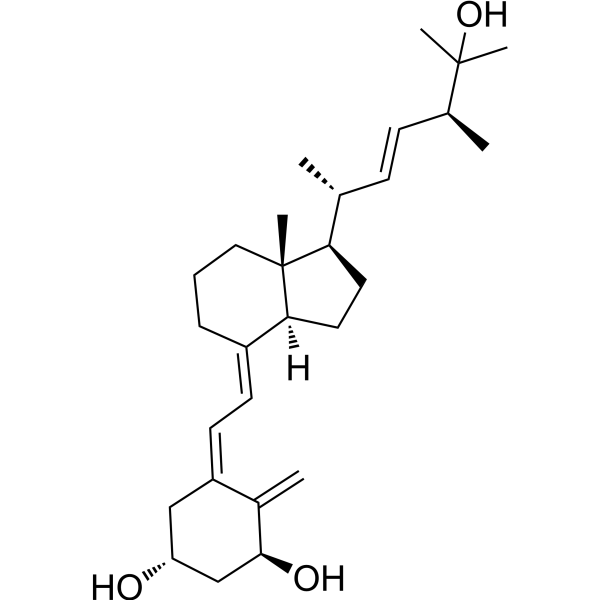
    1α,25-Dihydroxy Vitamin D2

    VD/VDR Drug Metabolite Endogenous Metabolite Metabolic Disease
    Ercalcitriol (1α,25-Dihydroxy Vitamin D2) is a vitamin D receptor (VDR) agonist with high binding affinity. After binding to VDR, Ercalcitriol forms a complex with retinoid X receptor (RXR) to regulate target gene transcription. For example, Ercalcitriol induces human gingival/oral epithelial cells to produce human cat antimicrobial peptide (hCAP-18/LL-37), which has antimicrobial activity against periodontal pathogens such as Porphyromonas gingivalis. Ercalcitriol enhances the innate immune defense of the oral mucosa by promoting the expression of antimicrobial peptides, and is mainly used in the study of periodontal diseases and immune-related oral diseases .
    Ercalcitriol
  • HY-131409

    D-Val-Leu-Lys-p-itoailide dihydrochloride; D-VLK-pNA dihydrochloride; S 2251 dihydrochloride

    Fluorescent Dye Others
    D-Val-Leu-Lys-pNA (D-Val-Leu-Lys-p-nitroanilide) dihydrochloride is a chromogenic peptide substrate that serves as a characteristic substrate for plasmin and plasminogen. D-Val-Leu-Lys-pNA dihydrochloride acts as a sensitive substrate for the DFE27 serine protease derived from Bacillus subtilis DC27. Catalyzed by plasmin, D-Val-Leu-Lys-pNA dihydrochloride binds and hydrolyzes to release p-nitroaniline (pNA), which can be detected colorimetrically at 405 nm as a measure of fibrinolytic activity .
    D-Val-Leu-Lys-pNA dihydrochloride
  • HY-N3558

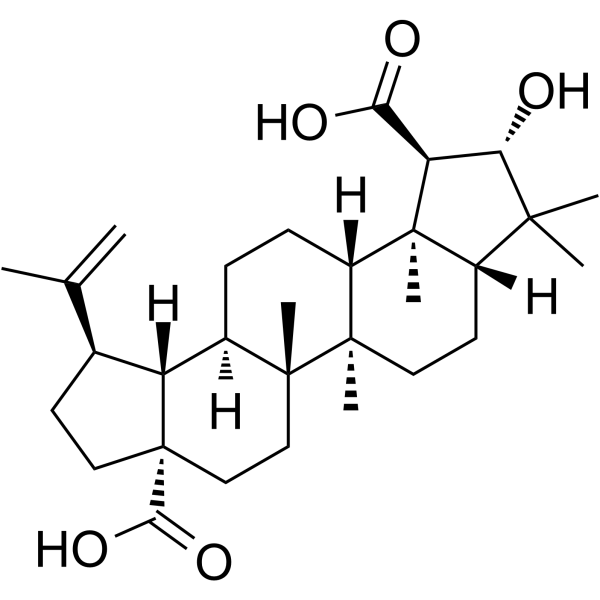
    Emmolic acid

    Bacterial Infection Cancer
    Ceanothic acid (Emmolic acid) is an orally active pentacyclic triterpenoid. Ceanothic acid inhibits the growth of various oral bacteria, including Streptococcus mutans, Actinomyces viscosus, Porphyromonas gingivalis, and Prevotella intermedia. Ceanothic acid scavenges DPPH and H2O2 free radicals. Ceanothic acid inhibits acetic acid (HY-Y0319)-induced writhing response, xylene-induced ear swelling, and carrageenan-induced paw swelling in mice. Ceanothic acid can be used in research related to oral bacterial infections, ovarian cancer, liver cancer, and liver injury .
    Ceanothic acid
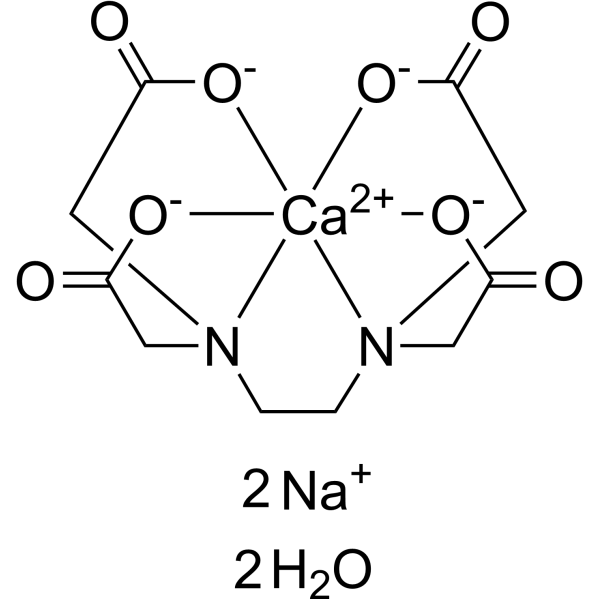
  • HY-W749867

    Calcium disodium EDTA dihydrate

    Bacterial Infection Others
    CaⅡ-EDTA disodium dihydrate (Calcium disodium EDTA dihydrate) is an orally active metal chelating reagent, exhibits bactericidal activities against periodontal pathogens Aggregatibacter actinomycetemcomitans, Prevotella intermedia and Porphyromonas gingivalis . CaⅡ-EDTA disodium dihydrate is effective chelating antidotes for lead- and cadmium poisoning .
    Ca(II)-EDTA disodium dihydrate
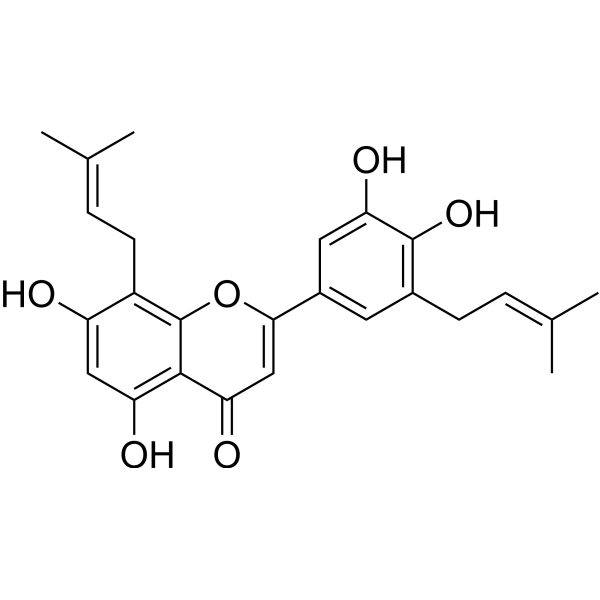
  • HY-N3831

    Bacterial Apoptosis Infection Inflammation/Immunology Cancer
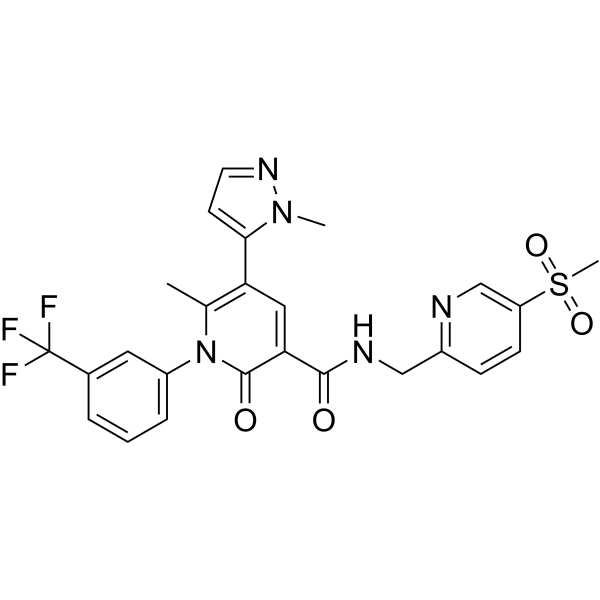
    Epimedokoreanin B is a natural flavonoid with anticancer, anti-inflammatory and antibacterial effects. Epimedokoreanin B inhibits the growth of lung cancer cells through endoplasmic reticulum stress-mediated apoptosis accompanied by autophagosome accumulation. Epimedokoreanin B is an anti-periodontitis agent that inhibits gingipains and Porphyromonas gingivalis growth and biofilm formation .
    Epimedokoreanin B
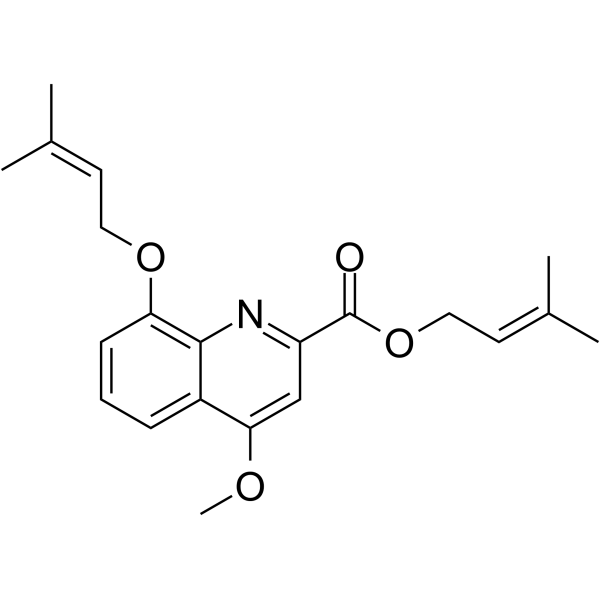
  • HY-117843

    Mitochondrial Metabolism Interleukin Related Bacterial Infection Metabolic Disease Inflammation/Immunology
    Ppc-1 is a mitochondrial uncoupler. Ppc-1 enhances mitochondrial oxygen consumption without adverse effects on ATP production. Ppc-1 is a cell-permeate interleukin-2 (IL-2) inhibitor. Ppc-1 inhibits the Gram-negative periodontopathogen Porphyromonas gingivalis. Ppc-1 has anti-obesity, antibacterial and anti-inflammatory activities .
    Ppc-1
  • HY-N12240

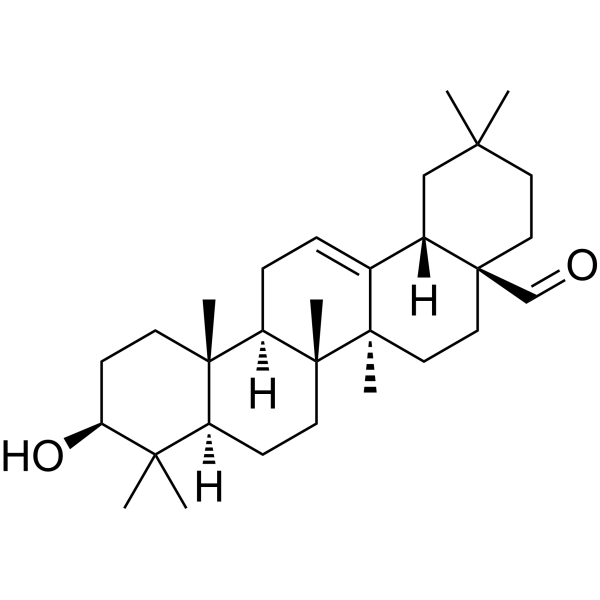
    Bacterial Infection
    Oleanolic aldehyde is an antimicrobial compound used to inhibit oral bacteria. Oleanolic aldehyde inhibits Streptococcus mutans and Porphyromonas gingivalis, which are associated with dental caries and periodontal disease, with minimum inhibitory concentrations (MICs) of 488 μg/mL and 250 μg/mL, respectively .
    Oleanolic aldehyde
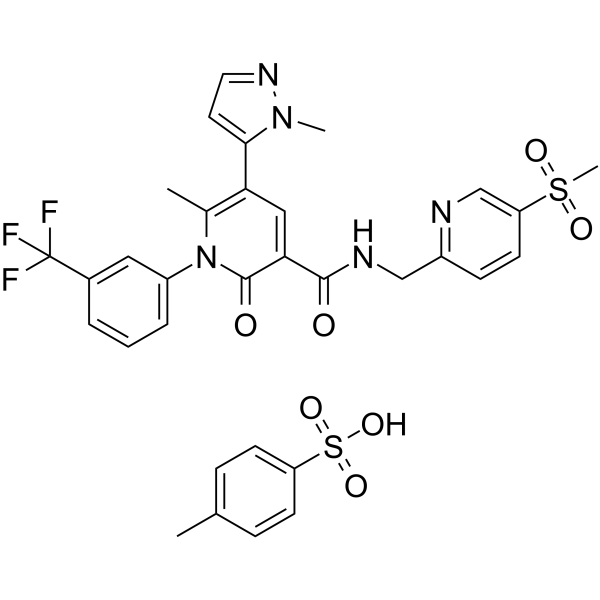
  • HY-129991

    CCR Inflammation/Immunology
    JNJ-17166864 is a highly selective CCR2 antagonist. JNJ-17166864 has low oral bioavailability. JNJ-17166864 can significantly reduce the area of alveolar bone loss in a mouse model of periodontitis induced by Porphyromonas gingivalis infection. JNJ-17166864 can be used in the research of inflammatory diseases such as allergic rhinitis and periodontitis .
    JNJ-17166864
  • HY-P4528

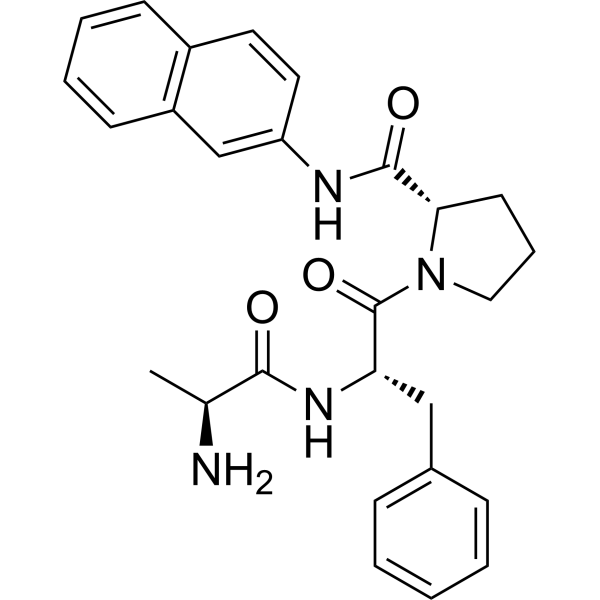
    Ser/Thr Protease Others
    Ala-Phe-Pro-βNA is the subsrate of prolyl tripeptidyl aminopeptidase, which is from Porphyromonas gingivalis. Ala-Phe-Pro-βNA binds to H-Ala-Ile-pyrrolidin-2-yl boronic acid for PTP39 and the E636A mutant with Ki values of 88.1 nM and 48.8 nM, respectivley .
    Ala-Phe-Pro-βNA
  • HY-168378

    S-2251

    Fluorescent Dye Others
    D-Val-Leu-Lys-pNA (S-2251) is a chromogenic peptide substrate that serves as a characteristic substrate for plasmin and plasminogen. D-Val-Leu-Lys-pNA acts as a sensitive substrate for the DFE27 serine protease derived from Bacillus subtilis DC27. Catalyzed by plasmin, D-Val-Leu-Lys-pNA binds and hydrolyzes to release p-nitroaniline (pNA), which can be detected colorimetrically at 405 nm as a measure of fibrinolytic activity .
    D-Val-Leu-Lys-pNA
  • HY-32350S1

    1α,25-Dihydroxy Vitamin D2-d3

    Isotope-Labeled Compounds Endogenous Metabolite VD/VDR Metabolic Disease
    Ercalcitriol-d3 (1α,25-Dihydroxy Vitamin D2-d3) is the deuterium labeled Ercalcitriol (HY-32350). Ercalcitriol (1α,25-Dihydroxy Vitamin D2) is a vitamin D receptor (VDR) agonist with high binding affinity. After binding to VDR, Ercalcitriol forms a complex with retinoid X receptor (RXR) to regulate target gene transcription. For example, Ercalcitriol induces human gingival/oral epithelial cells to produce human cat antimicrobial peptide (hCAP-18/LL-37), which has antimicrobial activity against periodontal pathogens such as Porphyromonas gingivalis. Ercalcitriol enhances the innate immune defense of the oral mucosa by promoting the expression of antimicrobial peptides, and is mainly used in the study of periodontal diseases and immune-related oral diseases .
    Ercalcitriol-d3
  • HY-168378A

    S-2251 acetate

    Fluorescent Dye Others
    D-Val-Leu-Lys-pNA acetate (S-2251 acetate) is a chromogenic peptide substrate that serves as a characteristic substrate for plasmin and plasminogen. D-Val-Leu-Lys-pNA acetate acts as a sensitive substrate for the DFE27 serine protease derived from Bacillus subtilis DC27. Catalyzed by plasmin, D-Val-Leu-Lys-pNA acetate binds and hydrolyzes to release p-nitroaniline (pNA), which can be detected colorimetrically at 405 nm as a measure of fibrinolytic activity .
    D-Val-Leu-Lys-pNA acetate

Inquiry Online

Your information is safe with us. * Required Fields.

Salutation


Country or Region *

Applicant Name *


Organization Name *

Department *


Email Address *


Product Name *

Cat. No.


Requested quantity *

Phone Number *


Remarks

Inquiry Online

Inquiry Information

Product Name:
Cat. No.:
Quantity:
MCE Japan Authorized Agent:

