



Alvelestat hydrochloride
Based on 12 publication(s) in Google Scholar
Alvelestat hydrochloride (AZD9668 hydrochloride) is an orally active, selective inhibitor of neutrophil elastase. Alvelestat hydrochloride reduces elastase activity, myeloperoxidase release, neutrophil recruitment and activation, and calcium phosphate precipitation; promotes smooth muscle cell colonization and collagen deposition; and inhibits the formation of neutrophil extracellular traps (NETs) as well as NET-derived neutrophil elastase activity. Alvelestat hydrochloride restores endothelial dysfunction, regulates antioxidant factors, improves the expression of endothelial tight junctions, reduces vascular leakage, and accelerates wound healing. Alvelestat hydrochloride prevents pulmonary hemorrhage, matrix protein degradation, airspace enlargement, and small airway wall remodeling; and alleviates cigarette-induced inflammatory responses. Alvelestat hydrochloride inhibits the growth of abdominal aortic aneurysms exacerbated by Porphyromonas gingivalis. Alvelestat hydrochloride can be used in research related to chronic obstructive pulmonary disease, abdominal aortic aneurysm, radiation-induced skin injury, and bronchiectasis.
For research use only. We do not sell to patients.
- CAS No.: 1240425-11-9
- Formula: C25H23ClF3N5O4S
- Molecular Weight:581.99
-
Storage:
Please store the product under the recommended conditions in the Certificate of Analysis.


To place orders, for customer services and technical support, please contact: MedChemExpress USA
Tel: 609-228-6898 E-mail: [email protected] [email protected]


-
 Biological Activity
-
Chemical Information
- Purity & Documentation
- References
-
 Help & FAQs


Publications Citing Use of MedChemExpress (MCE) Alvelestat hydrochloride
More- Cancer Cell. 2021 Mar 8;39(3):423-437.e7. [Abstract]
- Cell Death Dis. 2025 Apr 8;16(1):264. [Abstract]
- J Immunother Cancer. 2025 Feb 26;13(2):e010813. [Abstract]
- J Neuroinflammation. 2026 Jul 9.
- Neural Regen Res. 2023 Oct;18(10):2252-2259. [Abstract]
- NPJ Regen Med. 2020 Oct 30;5(1):19. [Abstract]
- Int J Mol Sci. 2024 Dec 27;26(1):143. [Abstract]
- Int Immunopharmacol. 2024 Nov 5;143(Pt 3):113534. [Abstract]
- FEBS Open Bio. 2018 Mar 25;8(5):751-763. [Abstract]
- bioRxiv. 2025 February 28.
- bioRxiv. 2023 Nov 13.
- Biomed Pharmacother. 2021 Feb:134:111152. [Abstract]
 Customer Validation & Images

-
WB

-
Histological Imaging/Staining
-
RT-PCR

-
Cell Migration/Invasion Assay
-
WB


Biological Activity
Description
|
MMP-9 |
IL-6 |
Claudin-5 |
IL-1β |
In Vitro
Alvelestat hydrochloride potently, fully reversibly and selectively inhibits human neutrophil elastase, with at least 100-fold selectivity over other serine proteases, enzymes, receptors and ion channels[1].
Alvelestat (AZD9668) hydrochloride potently inhibits purified rat neutrophil elastase with an IC50 of approximately 7 nM; it also potently inhibits purified human neutrophil elastase with an IC50 of approximately 8 nM[2].
Alvelestat (AZD9668) (20 μg/mL; 3 h) hydrochloride potently inhibits NE activity and NET formation in human polymorphonuclear neutrophils (PMNs) stimulated by IR + PMA; it also potently inhibits neutrophil elastase (NE) activity in isolated human neutrophil extracellular traps (NETs)[3].
Alvelestat hydrochloride binds to purified human neutrophil elastase with high affinity in a rapid and reversible manner (KD = 9.5 nM), potently inhibits purified human neutrophil elastase (pIC50 = 7.9, IC50 = 12 nM), shows high selectivity over other serine proteases, and exhibits favorable cross-species activity against neutrophil elastase derived from mice, rats, guinea pigs, and dogs[4].
Alvelestat hydrochloride potently inhibits neutrophil elastase activity in zymosan-stimulated human whole blood (pIC50 = 7.36, IC50 = 44 nM); it also potently inhibits cell-associated neutrophil elastase activity in human polymorphonuclear cells stimulated by LPS and fMLP (pIC50 = 7.31, IC50 = 48 nM)[4].
Alvelestat hydrochloride potently inhibits the activity of neutrophil elastase released in a burst from Cytochalasin B (HY-16928)-pretreated, fMLP-stimulated human polymorphonuclear cells (pIC50 = 7.30, IC50 = 50 nM)[4].
Alvelestat (20 μg/mL; 24 h) hydrochloride improves the angiogenic functions (branch point formation and tube length) of HUVECs treated with IR + NET; it restores the endothelial barrier function of IR + NET-treated HUVECs and the expression of tight junction proteins claudin-5 and occludin in HUVECs, and upregulates the expression of antioxidant factors NRF2 and HO-1[3].
MedChemExpress (MCE) has not independently confirmed the accuracy of these methods. They are for reference only.
-
Cell Line:irradiated HUVECs treated with NETs
-
Concentration:20 μg/mL
-
Incubation Time:24 h
-
Result:Significantly increased the relative band intensities of tight junction proteins claudin-5 and occludin in IR + NET-treated HUVECs compared to untreated IR + NET controls.
-
Cell Line:irradiated HUVECs treated with NETs
-
Concentration:20 μg/mL
-
Incubation Time:24 h
-
Result:Significantly increased the relative mRNA levels of antioxidative factors NRF2 and HO-1 in IR + NET-treated HUVECs compared to untreated IR + NET controls.
In Vivo
Alvelestat (0.1-5 mg/kg; p.o.) hydrochloride significantly attenuates pulmonary hemorrhage induced by human neutrophil elastase (NE) in female C57BL/6JBomTac mice[4].
Alvelestat (2.5-20 mg/kg; p.o.) hydrochloride significantly reduces collagen degradation induced by human neutrophil elastase (NE) in female HanTac: WH rats; at doses of 10 mg/kg and above, it reduces elastin degradation[4].
Alvelestat (1-10 mg/kg; p.o.; twice daily for 4 consecutive days) hydrochloride reduces smoke-induced BAL neutrophil counts in female BALB/cJBomTac mice, and decreases IL-1β levels in BAL at doses ≥1 mg/kg[4].
Alvelestat (100 mg/kg; p.o.; once daily) hydrochloride completely inhibits smoke-induced pulmonary inflammation, emphysema and small airway remodeling in female Hartley guinea pigs[4].
MedChemExpress (MCE) has not independently confirmed the accuracy of these methods. They are for reference only.
-
Animal Model:SKH-1 (male, 6-8 weeks old, radiation-induced skin injury model)[3]
-
Dosage:10 mg/kg
-
Administration:p.o.; daily; from day of irradiation until euthanasia
-
Result:Lowered Evans blue leakage fold change from 1.57 to 1.30 versus non-irradiated groups.
Restored colocalization of tight junction proteins claudin-5 and occludin on CD31+ vasculature.
Dampened NET deposition marked by CitH3 immunostaining signals.
Shrank wound area evidently at 2, 3 and 4 weeks post radiation.
Mitigated TEWL and improved skin hydration across 2-4 weeks post exposure.
Cut skin injury histological scores from 8.8 down to 6.6.
Suppressed type I collagen mRNA abundance markedly.
Lessened Ly6G+ and MPO+ neutrophil infiltration proportions.
Dropped IL-6 and Mmp-9 transcript levels relative to irradiated counterparts.
-
Animal Model:C57BL/6JBomTac (female, 18-20 g, intratracheal administration of human NE)[4]
-
Dosage:0.1 mg/kg; 0.5 mg/kg; 1 mg/kg; 1.5 mg/kg; 2 mg/kg; 2.5 mg/kg; 3.5 mg/kg; 5 mg/kg
-
Administration:p.o.
-
Result:Suppressed BAL hemoglobin elevation triggered by human NE at dosages above 1.5 mg/kg.
Achieved robust suppression at 1.5, 2, 2.5, 3.5 and 5 mg/kg versus NE-only cohorts.
-
Animal Model:HanTac: WH (female, 180-220 g, intratracheal administration of human NE)[4]
-
Dosage:2.5 mg/kg; 5 mg/kg; 10 mg/kg; 20 mg/kg
-
Administration:p.o.
-
Result:Significantly inhibited NE-induced increases in BAL hydroxyproline in a dose-dependent manner at doses ≥2.5 mg/kg.
Significantly inhibited NE-induced increases in BAL desmosine at doses of 10 mg/kg and 20 mg/kg.
-
Animal Model:BALB/cJBomTac (female, 18-20 g, whole-body exposure to cigarette smoke)[4]
-
Dosage:1 mg/kg; 3 mg/kg; 6 mg/kg; 10 mg/kg
-
Administration:p.o.; twice daily; 4 days
-
Result:Significantly reduced BAL neutrophil counts at doses ≥6 mg/kg.
Significantly reduced BAL IL-1β levels relative to smoke-exposed controls at doses ≥1 mg/kg.
-
Animal Model:Hartley (female, initial weight ~350 g, nose-only exposure to tobacco smoke for 24 weeks)[4]
-
Dosage:100 mg/kg (prophylactic); 100 mg/kg (therapeutic)
-
Administration:p.o.; once daily; 24 weeks (prophylactic); once daily; 12 weeks (therapeutic)
-
Result:Blocked smoke-triggered BAL neutrophil and macrophage elevation under prophylactic and therapeutic regimens.
Eliminated smoke-mediated pulmonary emphysema in two administration modes.
Abolished smoke-caused small airway remodeling via preventive and therapeutic dosing.


Chemical Information
-
CAS No. 1240425-11-9
-
Molecular Weight 581.99
-
Formula C25H23ClF3N5O4S
-
SMILES
O=C(C1=CC(C2=CC=NN2C)=C(C)N(C3=CC=CC(C(F)(F)F)=C3)C1=O)NCC4=NC=C(S(=O)(C)=O)C=C4.Cl
-
Synonyms
AZD9668 hydrochloride
-
Shipping
Room temperature in continental US; may vary elsewhere.
-
Storage
Please store the product under the recommended conditions in the Certificate of Analysis.


Publications (12)
-
Journal Impact Factor
-
Most Recent
-
Cancer Cell
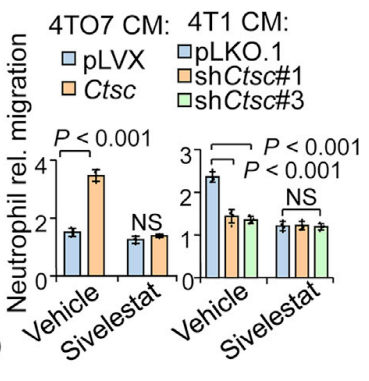
Cathepsin C promotes breast cancer lung metastasis by modulating neutrophil infiltration and neutrophil extracellular trap formation. [Abstract]2021 Mar 8;39(3):423-437.e7. PMID: 33450198
Alvelestat hydrochloride purchased from MedChemExpress. Usage Cited in: Cancer Cell. 2021 Mar 8;39(3):423-437.e7. [Abstract]
Alvelestat (10 μM). Migration of murine neutrophils recruited by media of neutrophils pre-treated with cancer cell CM and the PR3 inhibitor Sivelestat.
-
Cell Death Dis
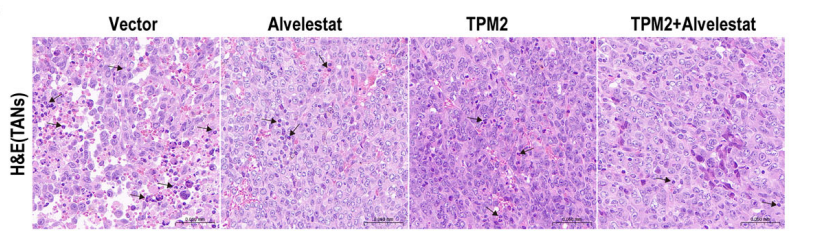
Downregulation of tropomyosin 2 promotes the progression of lung adenocarcinoma by regulating neutrophil infiltration through neutrophil elastase. [Abstract]2025 Apr 8;16(1):264. PMID: 40199876
Alvelestat hydrochloride purchased from MedChemExpress. Usage Cited in: Cell Death Dis. 2025 Apr 8;16(1):264. [Abstract]
After pretreatment of neutrophils with TPM2-overexpressed A549 cells and/or 20 μmol/l ELANE inhibitor (Alvelestat) to detect p-ERK1/2 and ERK1/2 expression.
Alvelestat hydrochloride purchased from MedChemExpress. Usage Cited in: Cell Death Dis. 2025 Apr 8;16(1):264. [Abstract]
Further analysis showed that the Alvelestat (6 mg/kg) group reduced neutrophil infiltration in tumors and increased tumor cell apoptosis.
-
J Immunother Cancer
Neutrophil extracellular traps impede cancer metastatic seeding via protease-activated receptor 2-mediated downregulation of phagocytic checkpoint CD24. [Abstract]2025 Feb 26;13(2):e010813. PMID: 40010762 -
-
Neural Regen Res
2023 Oct;18(10):2252-2259. PMID: 37056145
Alvelestat hydrochloride purchased from MedChemExpress. Usage Cited in: Neural Regen Res. 2023 Oct;18(10):2252-2259. [Abstract]
CD24 mRNA levels in cells treated with NETs and neutrophil elastase (NE) inhibitors (Alvelestat/Sivelestat 10 μM) (RT-qPCR).
-
NPJ Regen Med
2020 Oct 30;5(1):19. PMID: 33298919
Alvelestat hydrochloride purchased from MedChemExpress. Usage Cited in: NPJ Regen Med. 2020 Oct 30;5(1):19. [Abstract]
Alvelestat (elastase inhibitor: 20 μg/mL) decreased the expression of elastase in the NETs-treated macrophages.
-
Int J Mol Sci
Neutrophil Extracellular Trap Formation Model Induced by Monosodium Urate and Phorbol Myristate Acetate: Involvement in MAPK Signaling Pathways. [Abstract]2024 Dec 27;26(1):143. PMID: 39796001 -
Int Immunopharmacol
HSYA ameliorates venous thromboembolism by depleting the formation of TLR4/NF-κB pathway-dependent neutrophil extracellular traps. [Abstract]2024 Nov 5;143(Pt 3):113534. PMID: 39504860 -
FEBS Open Bio
Identification of small-molecule elastase inhibitors as antagonists of IL-36 cytokine activation. [Abstract]2018 Mar 25;8(5):751-763. PMID: 29744290 -
-
-
Biomed Pharmacother
Neutrophil elastase inhibitor (MPH-966) improves intestinal mucosal damage and gut microbiota in a mouse model of 5-fluorouracil-induced intestinal mucositis. [Abstract]2021 Feb:134:111152. PMID: 33373916


Purity & Documentation
References
[1]. Vogelmeier C, et al. A randomised, placebo-controlled, dose-finding study of AZD9668, an oral inhibitor of neutrophil elastase, in patients with chronic obstructive pulmonary disease treated with tiotropium. COPD. 2012 Apr;9(2):111-20. [Content Brief]
[2]. Delbosc S, et al. Elastase inhibitor AZD9668 treatment prevented progression of experimental abdominal aortic aneurysms. Journal of vascular surgery. 2016 Feb;63(2):486-92.e1. [Content Brief]
[3]. Park JH, et al. AZD 9668, a neutrophil elastase inhibitor, promotes wound healing in the irradiated skin by inhibiting NET-derived vascular dysfunction. International immunopharmacology. 2025 Jun 26;159:114860. [Content Brief]
[4]. Stevens T, et al. AZD9668: pharmacological characterization of a novel oral inhibitor of neutrophil elastase. The Journal of pharmacology and experimental therapeutics. 2011 Oct;339(1):313-20. [Content Brief]

Calculators
Concentration (start) × Volume (start) = Concentration (final) × Volume (final)


Alvelestat hydrochloride Related Classifications
HY-15651B Related Classifications
 Powered by Bioz
Keywords
- Alvelestat
- 1240425-11-9
- AZD9668
- AZD 9668
- AZD-9668
- Elastase
- Claudin
- Interleukin Related
- MMP
- abdominal aortic aneurysm
- human polymorphonuclear cells
- chronic obstructive pulmonary disease
- HUVECs
- radiation-induced skin injury
- NET formation
- neutrophil elastase
- Porphyromonas gingivalis
- bronchiectasis
- myeloperoxidase
- Inhibitor
- inhibitor
- inhibit