



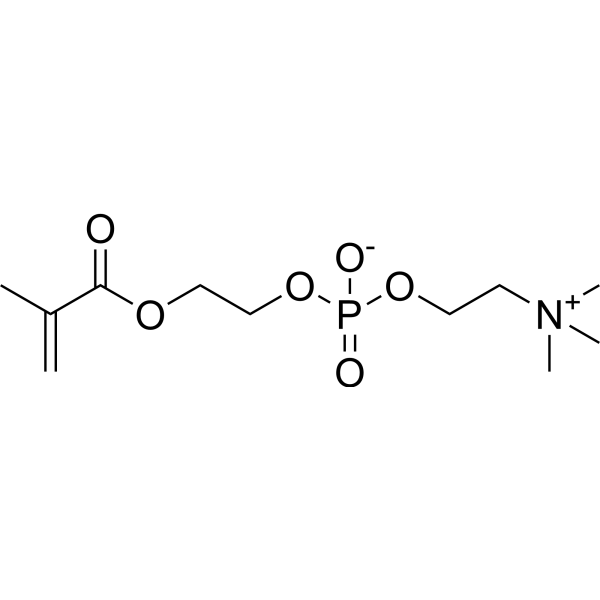
2-Methacryloyloxyethyl phosphorylcholine

Based on 1 Customer Validation
2-Methacryloyloxyethyl phosphorylcholine is a polymer monomer containing a phospholipid polar group. 2-Methacryloyloxyethyl phosphorylcholine polymers modify the surface properties of materials and reduce protein-surface interactions, reduce IL-8 production, inhibit cell, Staphylococcus aureus, and Porphyromonas gingivalis adhesion. 2-Methacryloyloxyethyl phosphorylcholine is used in the study of medical device-associated infections, periodontitis, and dental caries.
Nos produits utilisent uniquement pour la recherche. Nous ne vendons pas aux patients.
- Pureté : 99.68%
- CAS No.: 67881-98-5
- Formule: C11H22NO6P
- Masse moléculaire:295.27
-
Stockage:Powder -20°C, 3 years ; In solvent -80°C, 6 months , -20°C, 1 month

To place orders, for customer services and technical support, please contact: MedChemExpress USA
Tel: 609-228-6898 E-mail: [email protected] [email protected]


-
 Activité biologique
-
Chemical Information
-
Solvant et solubilité
- Pureté et documentation
- Références
-
 Help & FAQs


-
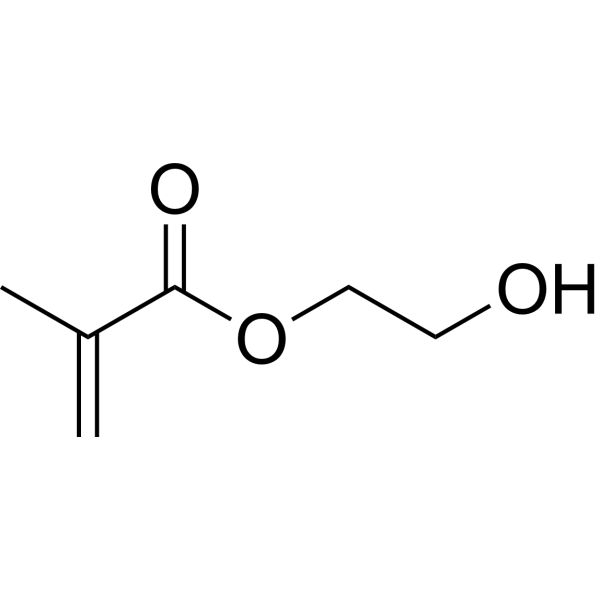
HY-W012723
2-Hydroxyethyl methacrylateHydroxyester Compound -
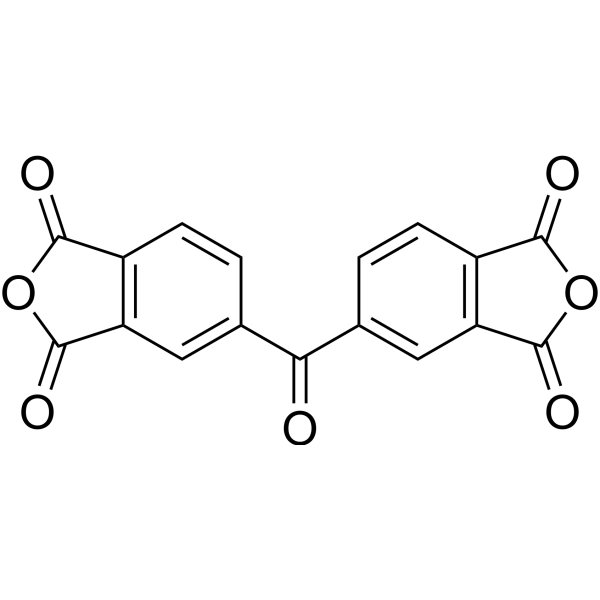
HY-W009169
Benzophenonetetracarboxylic dianhydridePrecursor -
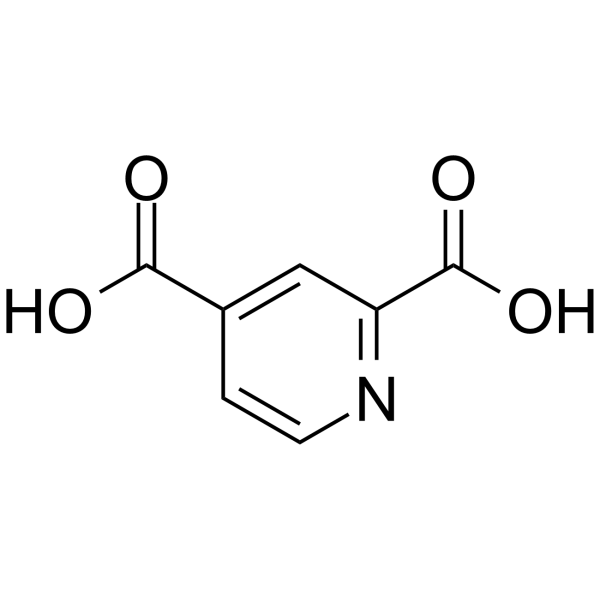
HY-W017132
2,4-PDCA2OG Oxygenase Inhibitor -
HY-W110584
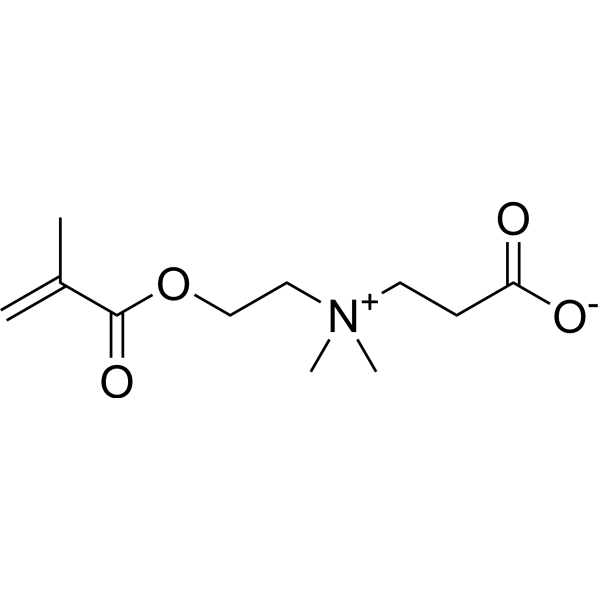
Carboxybetaine methacrylateAmphoteric Ionic Compound -
![[2-(Methacryloyloxy)ethyl]trimethylammonium chloride](https://file.medchemexpress.com/product_pic/hy-w014539.gif)
HY-W014539
[2-(Methacryloyloxy)ethyl]trimethylammonium chlorideBiochemical Assay Reagent -

HY-W105423
Methacrylic acid N-hydroxysuccinimide esterPolymer -
HY-D1005
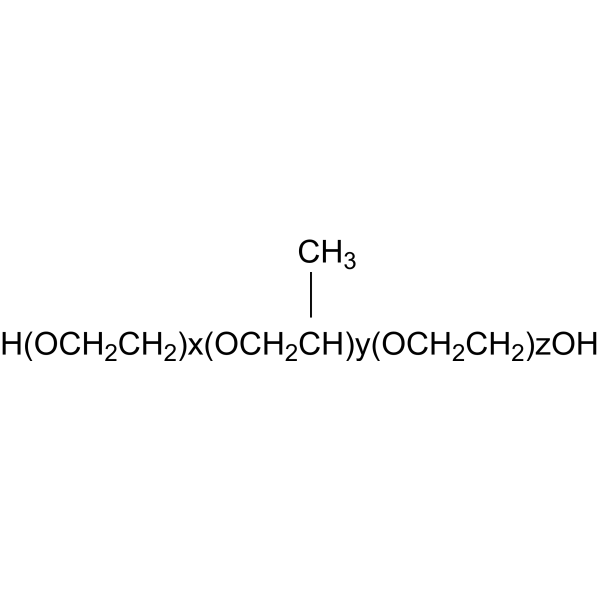
Poloxamer 407 (F127)LPL Receptor Inhibitor -
HY-D1005A
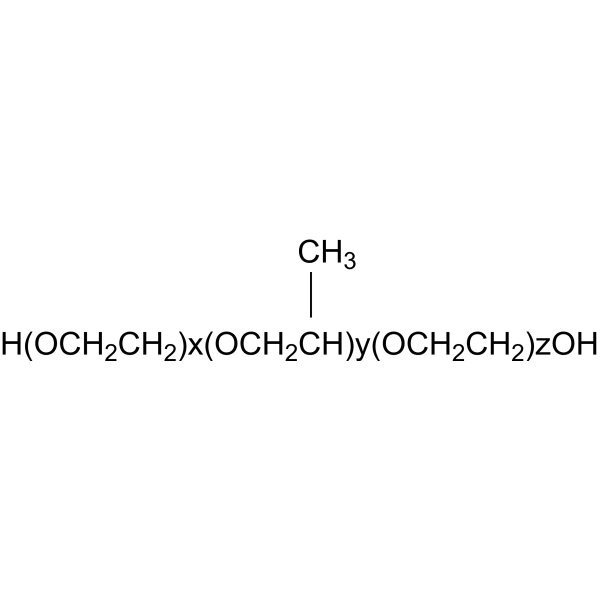
Poloxamer 188Linear Copolymer -
HY-W020027
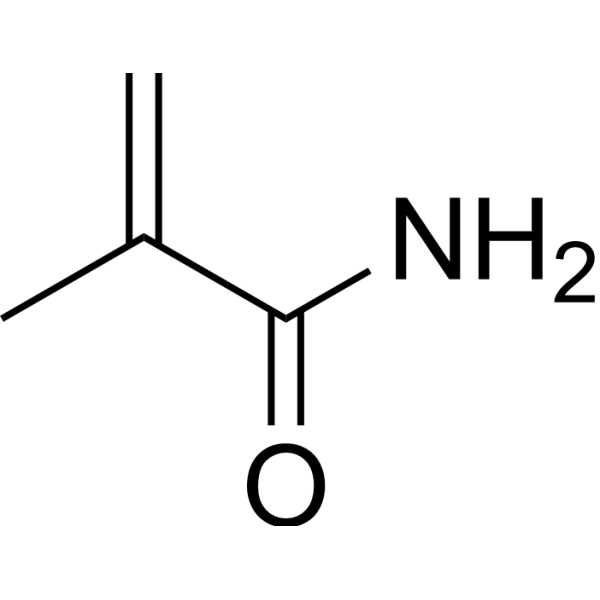
MethacrylamideGelatin Derivatization Reagent -

HY-W095198
N-(2-Hydroxyethyl)acrylamideAmphiphilic Polymer -
HY-D1005H
Poloxamer 188 (F68)Nonionic Linear Copolymer


Activité biologique
Description
In Vitro
2-Methacryloyloxyethyl phosphorylcholine polymers (coated on PET substrate) suppress fibroblast L-929 cell adhesion[1].
2-Methacryloyloxyethyl phosphorylcholine polymer (5 wt %; 30 s) significantly reduces the adherence of Porphyromonas gingivalis to RT-7 oral epithelial cells and inhibits TLR2-mediated IL-8 production[2].
2-Methacryloyloxyethyl phosphorylcholine polymer (PMB; coated on suture surface) significantly reduces the initial bacterial adhesion of methicillin-resistant Staphylococcus aureus and methicillin-susceptible Staphylococcus aureus on suture surfaces and inhibits biofilm formation[4].
MedChemExpress (MCE) has not independently confirmed the accuracy of these methods. They are for reference only. .
In Vivo


Chemical Information
-
CAS No. 67881-98-5
-
Appearance Solid
-
Masse moléculaire 295.27
-
Formule C11H22NO6P
-
Color White to light yellow
-
SMILES
C=C(C)C(OCCOP(OCC[N+](C)(C)C)([O-])=O)=O
-
Livraison
Room temperature in continental US; may vary elsewhere.
-
Stockage
Powder -20°C 3 years In solvent -80°C 6 months -20°C 1 month


Solvant et solubilité
In Vitro:
DMSO : 100 mg/mL (338.67 mM; Need ultrasonic; Hygroscopic DMSO has a significant impact on the solubility of product, please use newly opened DMSO)
H2O : ≥ 100 mg/mL (338.67 mM)
* "≥" means soluble, but saturation unknown.
Please refer to the solubility information to select the appropriate solvent. Once prepared, please aliquot and store the solution to prevent product inactivation from repeated freeze-thaw cycles.
Storage method and period of stock solution: -80°C, 6 months; -20°C, 1 month. When stored at -80°C, please use it within 6 months. When stored at -20°C, please use it within 1 month.
* Note: If you choose water as the stock solution, please dilute it to the working solution, then filter and sterilize it with a 0.22 μm filter before use.
Please refer to the solubility information to select the appropriate solvent. Once prepared, please aliquot and store the solution to prevent product inactivation from repeated freeze-thaw cycles.
Storage method and period of stock solution: -80°C, 6 months; -20°C, 1 month. When stored at -80°C, please use it within 6 months. When stored at -20°C, please use it within 1 month.
* Note: If you choose water as the stock solution, please dilute it to the working solution, then filter and sterilize it with a 0.22 μm filter before use.
Concentration (start) × Volume (start) = Concentration (final) × Volume (final)
In Vivo:
Select the appropriate dissolution method based on your experimental animal and administration route.
- For the following dissolution methods, please ensure to first prepare a clear stock solution using an In Vitro approach and then sequentially add co-solvents:
- To ensure reliable experimental results, the clarified stock solution can be appropriately stored based on storage conditions. As for the working solution for In Vivo experiments, it is recommended to prepare freshly and use it on the same day.
- The percentages shown for the solvents indicate their volumetric ratio in the final prepared solution. If precipitation or phase separation occurs during preparation, heat and/or sonication can be used to aid dissolution.
Add each solvent one by one: 10% DMSO 40% PEG300 5% Tween-80 45% Saline
Solubility: ≥ 2.5 mg/mL (8.47 mM); Clear solution
This protocol yields a clear solution of ≥ 2.5 mg/mL (saturation unknown).
Taking 1 mL working solution as an example, add 100 μL DMSO stock solution (25.0 mg/mL) to 400 μL PEG300, and mix evenly; then add 50 μL Tween-80 and mix evenly; then add 450 μL Saline to adjust the volume to 1 mL.
Preparation of Saline: Dissolve 0.9 g sodium chloride in ddH₂O and dilute to 100 mL to obtain a clear Saline solution.
Add each solvent one by one: 10% DMSO 90% (20% SBE-β-CD in Saline)
Solubility: ≥ 2.5 mg/mL (8.47 mM); Clear solution
This protocol yields a clear solution of ≥ 2.5 mg/mL (saturation unknown).
Taking 1 mL working solution as an example, add 100 μL DMSO stock solution (25.0 mg/mL) to 900 μL 20% SBE-β-CD in Saline, and mix evenly.
Preparation of 20% SBE-β-CD in Saline (4°C, storage for one week): 2 g SBE-β-CD powder is dissolved in 10 mL Saline, completely dissolve until clear.
In Vivo Dissolution Calculator
Please enter the basic information of animal experiments:
-
-
-
-
Recommended: Prepare an additional quantity of animals to account for potential losses during experiments.
Working solution concentration: 0.22 mg/mL
This product has good water solubility, please refer to the measured solubility data in water/PBS/Saline for details.


Pureté et documentation
-
Fiche technique (271 KB)
-
SDS (393 KB)
- English - EN (393 KB)
- Français - FR (393 KB)
- Deutsch - DE (393 KB)
- Norwegian - NO (393 KB)
- Español - ES (393 KB)
- Swedish - SV (393 KB)
- Italian - IT (393 KB)
- Korean - KR (393 KB)
- Portuguese - PT (393 KB)
-
Instruction de manipulation (2659 KB)
Références
[1]. Ishihara K, et al. Inhibition of fibroblast cell adhesion on substrate by coating with 2-methacryloyloxyethyl phosphorylcholine polymers. J Biomater Sci Polym Ed. 1999;10(10):1047-61. [Content Brief]
[2]. Yumoto H, et al. Anti-inflammatory and protective effects of 2-methacryloyloxyethyl phosphorylcholine polymer on oral epithelial cells. J Biomed Mater Res A. 2015 Feb;103(2):555-63. [Content Brief]
[3]. Jang K, et al. An efficient surface modification using 2-methacryloyloxyethyl phosphorylcholine to control cell attachment via photochemical reaction in a microchannel. Lab Chip. 2010 Aug 7;10(15):1937-45. [Content Brief]
[4]. Kaneko T, et al. 2-Methacryloyloxyethyl Phosphorylcholine Polymer Coating Inhibits Bacterial Adhesion and Biofilm Formation on a Suture: An In Vitro and In Vivo Study. Biomed Res Int. 2020 Oct 1;2020:5639651. [Content Brief]


Complete Stock Solution Preparation Table
Please refer to the solubility information to select the appropriate solvent. Once prepared, please aliquot and store the solution to prevent product inactivation from repeated freeze-thaw cycles.
Storage method and period of stock solution: -80°C, 6 months; -20°C, 1 month. When stored at -80°C, please use it within 6 months. When stored at -20°C, please use it within 1 month.
| Optional Solvent | Concentration Solvent Mass | 1 mg | 5 mg | 10 mg | 25 mg |
|---|---|---|---|---|---|
| DMSO / H2O | 1 mM | 3.3867 mL | 16.9337 mL | 33.8673 mL | 84.6683 mL |
| 5 mM | 0.6773 mL | 3.3867 mL | 6.7735 mL | 16.9337 mL | |
| 10 mM | 0.3387 mL | 1.6934 mL | 3.3867 mL | 8.4668 mL | |
| 15 mM | 0.2258 mL | 1.1289 mL | 2.2578 mL | 5.6446 mL | |
| 20 mM | 0.1693 mL | 0.8467 mL | 1.6934 mL | 4.2334 mL | |
| 25 mM | 0.1355 mL | 0.6773 mL | 1.3547 mL | 3.3867 mL | |
| 30 mM | 0.1129 mL | 0.5645 mL | 1.1289 mL | 2.8223 mL | |
| 40 mM | 0.0847 mL | 0.4233 mL | 0.8467 mL | 2.1167 mL | |
| 50 mM | 0.0677 mL | 0.3387 mL | 0.6773 mL | 1.6934 mL | |
| 60 mM | 0.0564 mL | 0.2822 mL | 0.5645 mL | 1.4111 mL | |
| 80 mM | 0.0423 mL | 0.2117 mL | 0.4233 mL | 1.0584 mL | |
| 100 mM | 0.0339 mL | 0.1693 mL | 0.3387 mL | 0.8467 mL |
* Note: If you choose water as the stock solution, please dilute it to the working solution, then filter and sterilize it with a 0.22 μm filter before use.


2-Methacryloyloxyethyl phosphorylcholine Related Classifications
HY-W110551 Related Classifications
 Powered by Bioz