4 Results for "

Pseudomonas syringae pv. tabaci

" in MedChemExpress (MCE) Product Catalog:
Products (4)

4 Results for "Pseudomonas syringae pv. tabaci" in MCE Product Catalog:

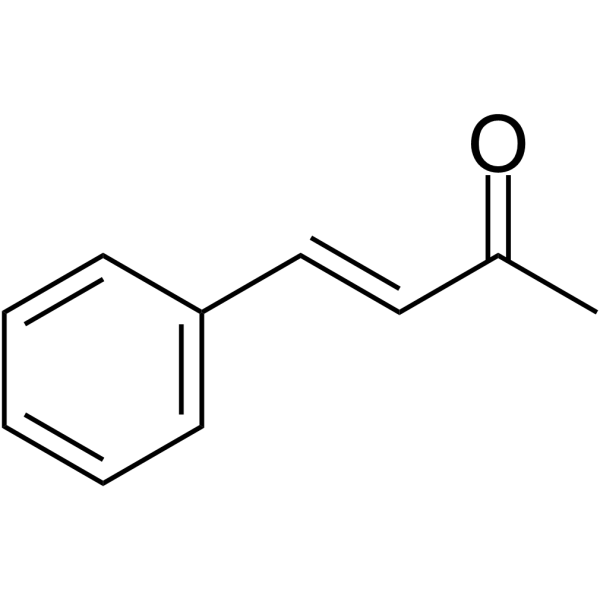
Cat. No.: HY-W012595
CAS No.: 122-57-6
Synonyms: Benzalacetone
Benzylideneacetone (Benzalacetone) is an orally active antibiotic, tyrosinase inhibitor, phospholipase A2 inhibitor, and immunosuppressant. Benzylideneacetone has antibacterial activity against some gram-negative plant-pathogenic bacteria. Benzylideneacetone can also be used in the synthesis of chemicals and drugs, and as a flavoring additive for some foods .
loading...
    loading...
Cat. No.: HY-P10779
CAS No.: 2268675-54-1
Target:  

Bacterial

Research Areas:  

Inflammation/Immunology

flg22Pst is a peptide that can be derived Pseudomonas syringae pv. tabaci and serves as an effective elicitor for the plant immune system. flg22Pst can induce callose deposition in plants, trigger plant immune responses, and thereby assist plants in defending against pathogen invasion .
loading...
    loading...
Cat. No.: HY-125048
CAS No.: 3776-37-2
Synonyms: 229-B; Streptothricin D
Target:  

Bacterial

Racemomycin B (229-B; Streptothricin D), the main component from Streptomyces lavendulae OP-2, is a streptothricin antibiotic containing three β-lysine groups. RM-B exhibits antimicrobial activity against plant pathogenic microorganisms and effectively inhibits the growth of Brassica rapa L. roots at 50 ppm. RM-B showed a minimum inhibitory concentration (MIC) of 0.4 μg/ml against Pseudomonas syringae pv. tabaci IFO-3508 and a MIC range of 0.1-2.0 μg/ml against six strains of Fusarium oxysporum, showing stronger antimicrobial activity than RM-A and RM-C. The biological activity of racemomycin compounds increases with the increase in the number of β-lysine groups.
loading...
    loading...
Cat. No.: HY-183541
CAS No.: 56857-64-8
Target:  

Bacterial

Research Areas:  

Infection

Phytuberol is an antibacterial agent and unsaturated sesquiterpene alcohol. As a phytoalexin, phytuberol participates in plant defense responses by inhibiting the growth of pathogenic fungi (e.g., Phytophthora infestans, Helminthosporium spp.). Its accumulation increases significantly in potato tuber slices treated with Ethephon (HY-W131845) and fungal elicitors, and correlates with tissue browning and disease resistance responses. Hytuberol can be used in studies related to bacterial wilt, tobacco wildfire disease, potato late blight, and potato-fungus interactions .
loading...
    loading...

