13 Results for "

Sedoheptulose

" in MedChemExpress (MCE) Product Catalog:
Products (13)

13 Results for "Sedoheptulose" in MCE Product Catalog:

Cat. No.: HY-W726070
CAS No.: 3019-74-7
Sedoheptulose is a heptulose. Sedoheptulose, in the form of phosphate esters, functions as a metabolic intermediate in the pentose phosphate pathway. Sedoheptulose serves as a starting material for the chemical synthesis of pseudoaminosugars and chiral substituted furans .
loading...
    loading...
1
1 Cited Publications
Cat. No.: HY-113206A
CAS No.: 17187-72-3
Target:  

Endogenous Metabolite

Research Areas:  

Metabolic Disease

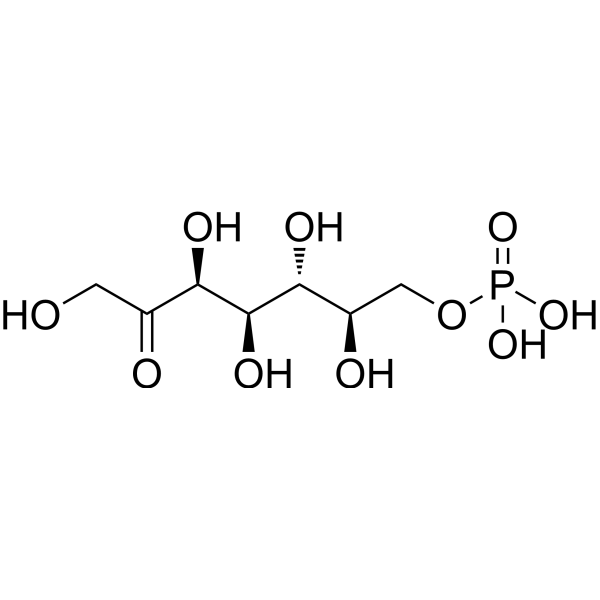
D-Sedoheptulose-7-phosphate barium is a common precursor for the heptoses of septacidin (group III) and hygromycin B (group IV). D-Sedoheptulose-7-phosphate barium can be converted to NDP-heptoses through similar biosynthetic pathways in those compounds .
loading...
    loading...
Cat. No.: HY-113206
CAS No.: 2646-35-7
D-Sedoheptulose 7-phosphate is a common precursor for the heptoses of septacidin (group III) and hygromycin B (group IV). D-Sedoheptulose 7-phosphate can be converted to NDP-heptoses through similar biosynthetic pathways in those compounds .
loading...
    loading...
Cat. No.: HY-W010256
CAS No.: 551-84-8
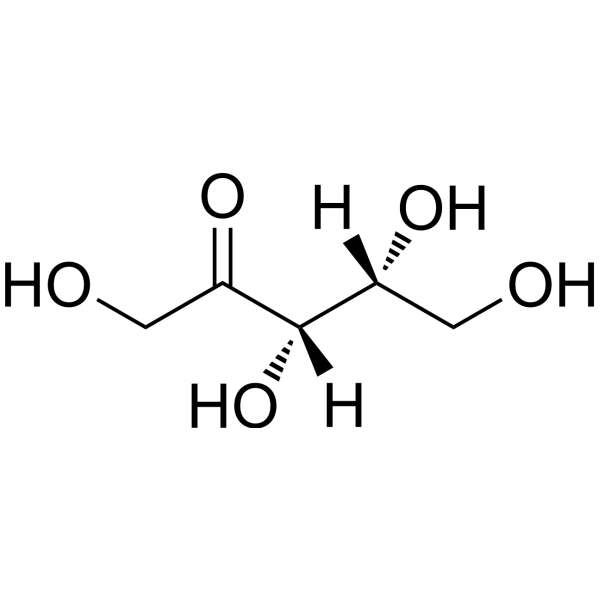
D-Xylulose is a toxic pentose. D-Xylulose does not induce pentitol production in cells. D-Xylulose can induce ATP and intracellular Pi depletion through the accumulation of Sedoheptulose 7-P .
loading...
    loading...
Cat. No.: HY-W145500
CAS No.: 469-90-9
Synonyms: Sedoheptulosan
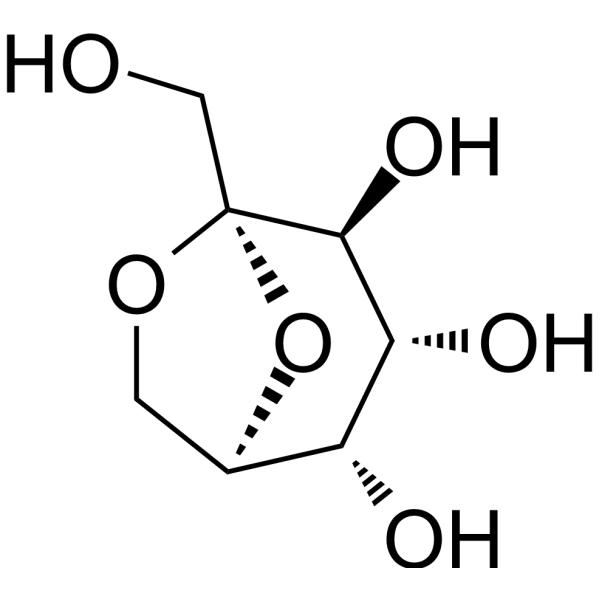
Sedoheptulose anhydride is a compound belonging to the class of carbohydrates. It is a derivative of sedoheptulose, a seven-carbon sugar. Sedoheptulose anhydride is commonly used in biochemistry as a precursor for various metabolic pathways. It can be converted into Sedoheptulose 1,7-bisphosphate, which is an important molecule for photosynthesis and carbon fixation. In addition to its use in biochemistry, Sedoheptulose anhydride has applications in cancer research.
loading...
    loading...
Cat. No.: HY-W010256S1
CAS No.: 131771-47-6
D-Xylulose-2- 13C is the 13C-labeled D-Xylulose (HY-W010256). D-Xylulose is a toxic pentose. D-Xylulose does not induce pentitol production in cells. D-Xylulose can induce ATP and intracellular Pi depletion through the accumulation of Sedoheptulose 7-P .
loading...
    loading...
Cat. No.: HY-W010256S
CAS No.: 131771-46-5
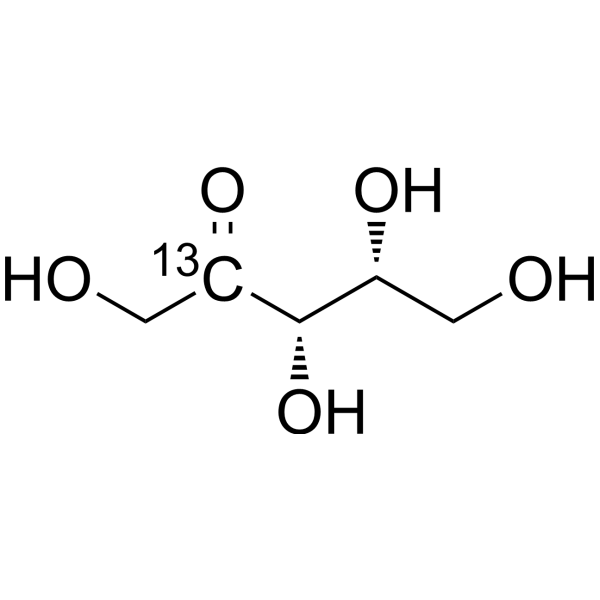
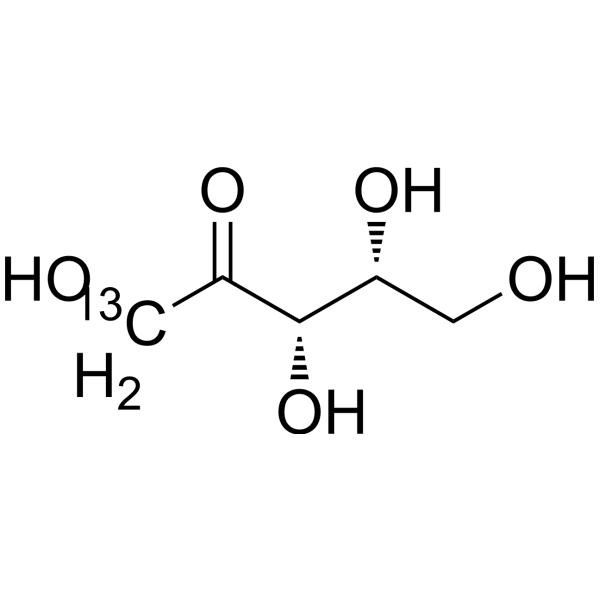
D-Xylulose-1- 13C is the 13C-labeled D-Xylulose (HY-W010256). D-Xylulose is a toxic pentose. D-Xylulose does not induce pentitol production in cells. D-Xylulose can induce ATP and intracellular Pi depletion through the accumulation of Sedoheptulose 7-P .
loading...
    loading...
Cat. No.: HY-N16527
CAS No.: 233690-85-2
7-O-Galloyl-D-sedoheptulose is an orally effective polyphenolic compound. 7-O-Galloyl-D-sedoheptulose lowers the serum levels of glucose, leptin, insulin, C-peptide, resistin, TNF-α, IL-6, and increases the serum level of adiponectin. 7-O-Galloyl-D-sedoheptulose significantly reduces the levels of ROS and lipid peroxidation products (TBARS) by down-regulating the protein expression of NADPH oxidase subunit Nox-4 and p22phox. 7-O-Galloyl-D-sedoheptulose down-regulates NF-κB and related pro-inflammatory factors (COX-2, iNOS), inhibits the phosphorylation of JNK and the activity of its downstream AP-1. 7-O-Galloyl-D-sedoheptulose reduces the expression of TGF-β1 and fibronectin, indicating its potential in anti-tissue fibrosis. 7-O-Galloyl-D-sedoheptulose can be used for the study of type 2 diabetes and its hepatic and pancreatic complications .
loading...
    loading...
Cat. No.: HY-W010256S3
D-Xylulose- 13C5 is the 13C-labeled D-Xylulose (HY-W010256). D-Xylulose is a toxic pentose. D-Xylulose does not induce pentitol production in cells. D-Xylulose can induce ATP and intracellular Pi depletion through the accumulation of Sedoheptulose 7-P .
loading...
    loading...
Cat. No.: HY-N17111
CAS No.: 126622-78-4
1,7-Di-O-Galloyl-D-sedoheptulose is a phenolic acid that can be found in pomegranate arils .
loading...
    loading...
Cat. No.: HY-E71021
Target:  

Endogenous Metabolite

Research Areas:  

Metabolic Disease

Transaldolase, Baker's yeast (S. cerevisiae) (EC 2.2.1.2) is an enzyme of the non-oxidative phase of the pentose phosphate pathway. The following chemical reaction is catalyzed by transaldolase:sedoheptulose 7-phosphate + glyceraldehyde 3-phosphate? erythrose 4-phosphate + fructose 6-phosphate.
loading...
    loading...
Cat. No.: HY-N11733
CAS No.: 62475-58-5
D-Glucoheptose is a heptose monosaccharide that serves as a starting material for sedoheptulose. D-Glucoheptose has a strong association with the genus Symbiobacterium. The content of D-Glucoheptose in urine of the control group without liver injury is higher than that in the anti-tuberculosis drug-induced liver injury group. D-Glucoheptose can be used in studies related to anti-tuberculosis drug-induced liver injury .
loading...
    loading...
Cat. No.: HY-P2726A
Aldolase, Spinach (EC 4.1.2.13) is an enzyme catalyzing a reversible reaction that splits the aldol, fructose 1,6-bisphosphate, into the triose phosphates dihydroxyacetone phosphate (DHAP) and glyceraldehyde 3-phosphate (G3P). Aldolase, Spinach (EC 4.1.2.13) can also produce DHAP from other (3S,4R)-ketose 1-phosphates such as fructose 1-phosphate and sedoheptulose 1,7-bisphosphate.
loading...
    loading...
  • 1

