1. Search Result
Search Result
Results for "

Smooth muscle

" in MedChemExpress (MCE) Product Catalog:

696

Inhibitors & Agonists

1

Screening Libraries

1

Fluorescent Dyes

15

Biochemical Assay Reagents

68

Peptides

2

MCE Kits

3

Inhibitory Antibodies

108

Natural
Products

4

Recombinant Proteins

44

Isotope-Labeled Compounds

29

Antibodies

9

Click Chemistry

108

Oligonucleotides

Cat. No. Product Name Target Research Areas Chemical Structure
  • HY-N0455
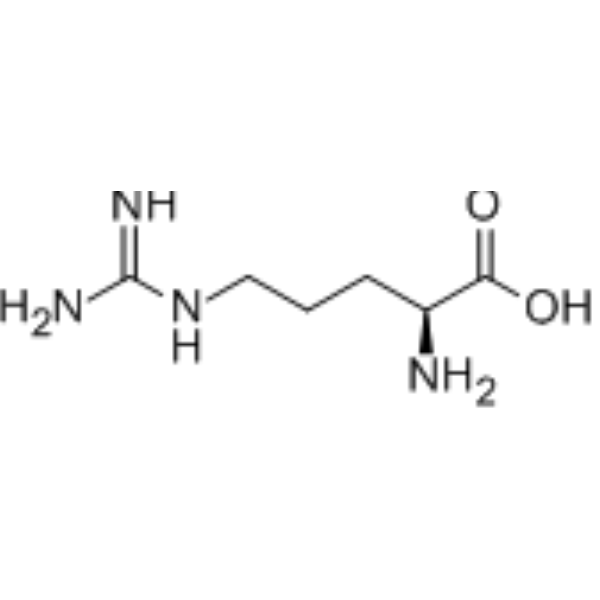
    L-Arginine
    20+ Cited Publications

    Environmental Pollutants Endogenous Metabolite NO Synthase Cardiovascular Disease Inflammation/Immunology
    L-Arginine ((S)-(+)-Arginine) is the substrate for the endothelial nitric oxide synthase (eNOS) to generate NO. L-Arginine is transported into vascular smooth muscle cells by the cationic amino acid transporter family of proteins where it is metabolized to nitric oxide (NO), polyamines, or L-proline. L-Arginine is a potent vasodilator, and can be used to induce experimental acute pancreatitis .
    L-Arginine
  • HY-14664A
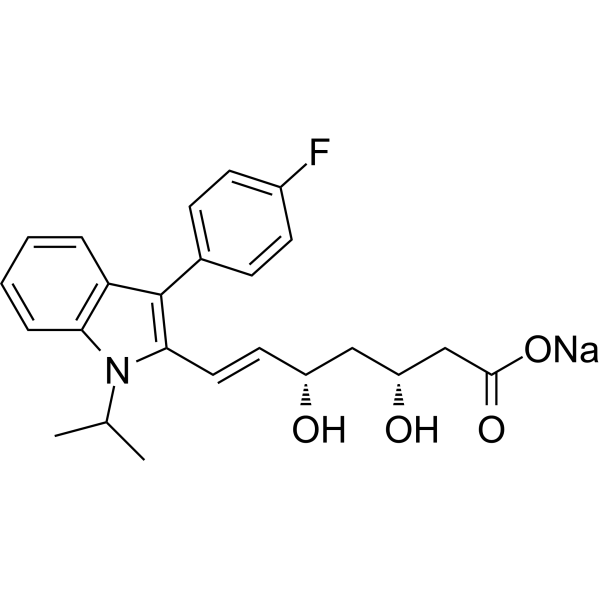
    Fluvastatin sodium
    15+ Cited Publications

    XU 62-320

    HMG-CoA Reductase (HMGCR) Autophagy Ferroptosis Cardiovascular Disease Cancer
    Fluvastatin sodium (XU 62320) is a first fully synthetic, competitive HMG-CoA reductase inhibitor with an IC50 of 8 nM. Fluvastatin sodium protects vascular smooth muscle cells against oxidative stress through the Nrf2-dependent antioxidant pathway .
    Fluvastatin sodium
  • HY-14664
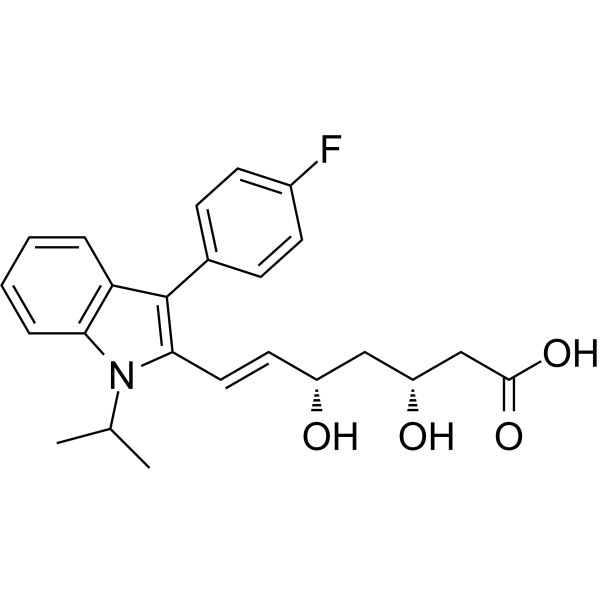
    Fluvastatin
    15+ Cited Publications

    XU 62-320 free acid

    HMG-CoA Reductase (HMGCR) Autophagy Cardiovascular Disease Cancer
    Fluvastatin (XU 62-320 free acid) is a first fully synthetic, competitive HMG-CoA reductase inhibitor with an IC50 of 8 nM. Fluvastatin protects vascular smooth muscle cells against oxidative stress through the Nrf2-dependent antioxidant pathway .
    Fluvastatin
  • HY-N0455A
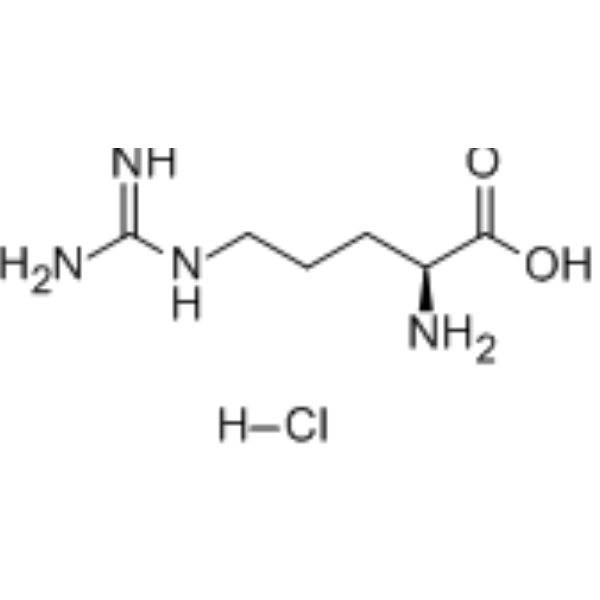
    L-Arginine hydrochloride
    20+ Cited Publications

    (S)-(+)-Arginine hydrochloride

    NO Synthase Endogenous Metabolite Cardiovascular Disease Inflammation/Immunology
    L-Arginine ((S)-(+)-Arginine) is the substrate for the endothelial nitric oxide synthase (eNOS) to generate NO. L-Arginine is transported into vascular smooth muscle cells by the cationic amino acid transporter family of proteins where it is metabolized to nitric oxide (NO), polyamines, or L-proline. L-Arginine is a potent vasodilator, and can be used to induce experimental acute pancreatitis .
    L-Arginine hydrochloride
  • HY-B0309
    Felodipine
    3 Publications Verification

    Calcium Channel Autophagy Cardiovascular Disease
    Felodipine, a dihydropyridine, is a potent, vasoselective calcium channel antagonist. Felodipine lowers blood pressure (BP) by selective action on vascular smooth muscle, especially in the resistance vessels. Felodipine, an anti-hypertensive agent, induces autophagy. Felodipine can cross the blood-brain barrier .
    Felodipine
  • HY-12378
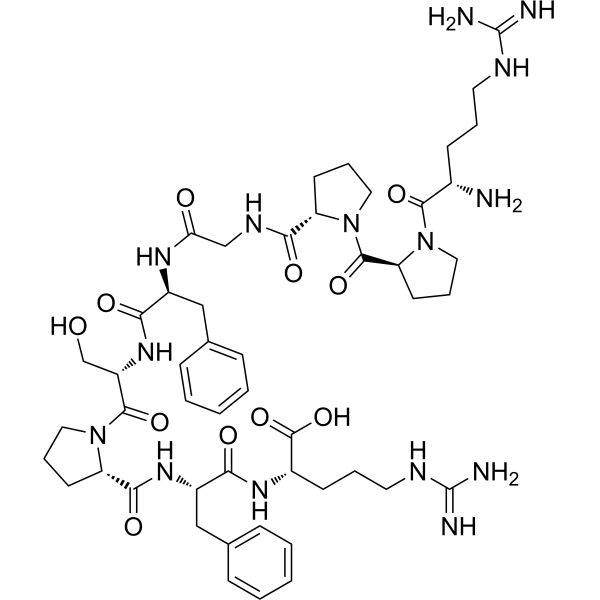
    BQ-123
    3 Publications Verification

    Endothelin Receptor Cardiovascular Disease
    BQ-123 is a potent and selective endothelin A (ETA) receptor antagonist with an IC50 of 7.3 nM and a Ki of 25 nM. BQ-123 inhibits endothelin-1-mediated proliferation of human pulmonary artery smooth muscle cells and lowers blood pressure in different rat models of hypertension .
    BQ-123
  • HY-N1082

    Others Cardiovascular Disease Neurological Disease Inflammation/Immunology
    Visnagin, an antioxidant furanocoumarin derivative, possess anti-inflammatory and analgesic properties. Visnagin has substantial potential to prevent Cerulein induced acute pancreatitis (AP). Visnagin possess promising vasodilator effects in vascular smooth muscles .
    Visnagin
  • HY-N0455R

    Reference Standards NO Synthase Endogenous Metabolite Cardiovascular Disease Cancer
    L-Arginine (Standard) is the analytical standard of L-Arginine. This product is intended for research and analytical applications. L-Arginine ((S)-(+)-Arginine) is the substrate for the endothelial nitric oxide synthase (eNOS) to generate NO. L-Arginine is transported into vascular smooth muscle cells by the cationic amino acid transporter family of proteins where it is metabolized to nitric oxide (NO), polyamines, or L-proline. L-Arginine is a potent vasodilator, and can be used to induce experimental acute pancreatitis .
    L-Arginine (Standard)
  • HY-B1815

    Xanthinol Niacinate

    PDGFR Cardiovascular Disease
    Xanthinol Nicotinate (Xanthinol Niacinate), a vasodilator, can act directly on the smooth muscle of small arteries and capillaries. Xanthinol Nicotinate expands blood vessels, improves blood rheology and reduces peripheral vascular resistance .
    Xanthinol Nicotinate
  • HY-14290A
    Pinacidil monohydrate
    4 Publications Verification

    P-1134 monohydrate

    Potassium Channel Cardiovascular Disease
    Pinacidil (P-1134) monohydrate is a potent activator of ATP-sensitive potassium channel. Pinacidil monohydrate is an antihypertensive agent hyperpolarizes vascular smooth muscle by opening K + channels. Pinacidil monohydrate enhances K +-efflux in smooth muscle. Pinacidil monohydrate has vasorelaxant properties. Pinacidil monohydrate is able to inhibit spontaneous tone and of reducing agonist induced contractions. Pinacidil monohydrate can be studied in research area such as cardiovascular diseases .
    Pinacidil monohydrate
  • HY-101329

    9-Anthracenecarboxylic acid

    MOFs Chloride Channel Others
    Anthracene-9-carboxylic acid (9-Anthracenecarboxylic acid) is an anthracene derivative traditionally used to block and identify Ca 2+-activated Cl - currents (CaCCs) in various cell types, like diverse smooth muscle cells, epithelial cells and salivary gland cells .
    Anthracene-9-carboxylic acid
  • HY-15847
    HS38
    3 Publications Verification

    DAPK Cardiovascular Disease
    HS38 is a potent, selective, and ATP-competitive inhibitor of death-associated protein kinase 1 (DAPK1) and zipper-interacting protein kinase (ZIPK, also called DAPK3), with Kds of 300 nM and 280 nM, respectively. HS38 is also a PIM3 inhibitor with an IC50 of 200 nM. HS38 can be used for the research of smooth muscle related disorders .
    HS38
  • HY-W506116

    Ostruthine

    Bacterial DNA/RNA Synthesis Cardiovascular Disease Infection
    Ostruthin is a natural coumarin compound with bacterial and antimycobacterial activities . Ostruthin inhibits the growth of mycobacteria and Staphylococcus aureus. Ostruthin suppresses vascular smooth muscle cell proliferation as well as de novo cellular DNA synthesis. Ostruthin is applicable to research related to mycobacterial infections and cardiovascular and cerebrovascular diseases .
    Ostruthin
  • HY-119926

    Hydroxylupanine

    Integrin Cardiovascular Disease Neurological Disease
    13-Hydroxylupanine (Hydroxylupanine) is the typical alkaloid profile of sweet lupins.13-Hydroxylupanine blocks ganglionic transmission, decreases cardiac contractility and contracts uterine smooth muscle .
    13-Hydroxylupanine
  • HY-N4323
    14-Deoxyandrographolide
    1 Publications Verification

    Calcium Channel Apoptosis Caspase Neurological Disease Metabolic Disease
    14-Deoxyandrographolide is a diterpene with calcium channel blocking activity and acts as a uterine smooth muscle relaxant. 14-Deoxyandrographolide stimulates the release of nitric oxide (NO) in endothelial cells. 14-Deoxyandrographolide gradually desensitizes liver cells to TNF-α mediated apoptosis by inducing the release of TNFRSF1A .
    14-Deoxyandrographolide
  • HY-W013195

    Nucleoside Antimetabolite/Analog Cancer
    8-Bromoadenosine is an adenosine analog. Adenosine analogs mostly act as smooth muscle vasodilators and have also been shown to inhibit cancer progression. 8-Bromoadenosine can quench the intrinsic fluorescence of human serum albumin (HSA) through static quenching procedure. 8-Bromoadenosine can be used to synthesize adenosine phosphate, such as Acadesine (HY-13417), Clofarabine (HY-A0005), Fludarabine phosphate (HY-B0028) and Vidarabine (HY-B0277) .
    8-Bromoadenosine
  • HY-P3849

    LMN-NKA

    Neurokinin Receptor Neurological Disease
    [Lys5,MeLeu9,Nle10]Neurokinin A(4-10) (LMN-NKA), an analogue of Neurokinin A, is a selective and potent NK2R agonist. [Lys5,MeLeu9,Nle10]Neurokinin A(4-10) has prokinetic activity. [Lys5,MeLeu9,Nle10]Neurokinin A(4-10) can be used to study the roles of the NK-2 receptor in smooth muscle contraction in numerous tissues .
    [Lys5,MeLeu9,Nle10]Neurokinin A(4-10)
  • HY-108589

    PNU 37883A

    Potassium Channel Neurological Disease
    PNU 37883 hydrochloride (PNU 37883A) is a selective vascular ATP-sensitive potassium (Kir6, KATP) channels blocker. PNU 37883 hydrochloride has diuretic effects with specific binding in kidney and vascular smooth muscle rather than in brain or pancreatic beta cells .
    PNU 37883 hydrochloride
  • HY-121018

    BM-13505; SKF 96148

    Prostaglandin Receptor Cardiovascular Disease
    Daltroban (BM-13505) is a selective and specific thromboxane A2 (TXA2) receptor antagonist. Daltroban increase intracellular calcium in vascular smooth muscle cells. Daltroban shows protective effect in reperfusion injury .
    Daltroban
  • HY-15404

    Lu-135252

    Endothelin Receptor Cardiovascular Disease Endocrinology
    Darusentan (Lu-135252) is a selective endothelin receptor A (ET-A) receptor antagonist, which binds with a Ki of 1.4 nM to the ET-A receptor and a Ki of 184 nM to ET-B receptor, respectively with a 100-fold selectivity for ETA rather than ETB receptors . Darusentan competes for radiolabeled endothelin binding in rat aortic vascular smooth muscle cells (RAVSMs) membranes with single-site kinetics, exhibiting a Ki of 13 nM .
    Darusentan
  • HY-138822

    2,3-DPG pentasodium salt

    Endogenous Metabolite Cardiovascular Disease
    2,3-Diphospho-D-glyceric acid (2,3-DPG) pentasodium salt is a hemoglobin binder and vascular calcification inhibitor that reduces the oxygen affinity of hemoglobin. 2,3-Diphospho-D-glyceric acid pentasodium salt also specifically delays the transformation of colloidal calciprotein particles into crystalline forms, thereby effectively inhibiting vascular smooth muscle cell calcification without affecting the normal formation of osteoid nodules in osteoblast-like cells. 2,3-Diphospho-D-glyceric acid pentasodium salt shows no cytotoxicity to tested cell lines and only weakly interferes with β-hematin formation mediated by glyceryl monopalmitate. 2,3-Diphospho-D-glyceric acid pentasodium salt can be used to study the pathological mechanisms of vascular calcification and malaria-related conditions .
    2,3-Diphospho-D-glyceric acid pentasodium salt
  • HY-108283

    AA 149; Supacal

    Calcium Channel Inflammation/Immunology
    Trepibutone (AA 149) increases secretion of bile and pancreatic juice, and accelerates flaccidity of the smooth muscle in the gastrointestinal tract. Trepibutone can be used for the research of cholecystitis and functional gastrointestinal disorders .
    Trepibutone
  • HY-P3726

    Integrin Inflammation/Immunology Cancer
    Lys-Gln-Ala-Gly-Asp-Val (KQAGDV) is the six most carboxyl-terminal amino acids in the fibrinogen γ-chain sequence. Lys-Gln-Ala-Gly-Asp-Val is a cell adhesion peptide which is mediated through the α2bβ3 integrin. Lys-Gln-Ala-Gly-Asp-Val is a potent adhesion ligand for smooth muscle cells (SMCs) .
    Lys-Gln-Ala-Gly-Asp-Val
  • HY-123983

    Pim DAPK Cardiovascular Disease
    HS56 is an ATP-competitive dual Pim/DAPK3 inhibitor with Ki values of 0.26, 0.208, 2.94, and >100 μM for DAPK3, Pim-3, Pim-1, and Pim-2, respectively. HS56 inhibits LC20 phosphorylation and smooth muscle contraction. HS56 decreases blood pressure in spontaneously hypertensive mice. HS56 can be used in research of hypertension .
    HS56
  • HY-103281

    Bombesin Receptor Metabolic Disease
    Litorin, an amphibian bombesin peptide derivative, is an bombesin receptor agonist. Litorin stimulates the contraction of smooth muscle, stimulates gastrin, gastric acid, and pancreatic secretion, and suppresses the nutriment in vivo .
    Litorin
  • HY-P3525A

    Integrin Others
    G-Pen-GRGDSPCA TFA is an αvβ3-inhibiting RGD peptide. G-Pen-GRGDSPCA can limit neointimal hyperplasia and lumen stenosis after vascular injury, as well as regulate the migration and proliferation of smooth muscle cells. G-Pen-GRGDSPCA TFA can be used in the study of the mechanism of vascular injury repair .
    G-Pen-GRGDSPCA TFA
  • HY-137311

    Calcium Channel Phospholipase mAChR Neurological Disease
    (S)-Albuterol hydrochloride is a muscarinic receptor and phospholipase C activator. (S)-Albuterol hydrochloride increases intracellular free calcium in airway smooth muscle .
    (S)-Albuterol hydrochloride
  • HY-134368

    Calcium Channel Cardiovascular Disease
    Ap3A is a vasoactive molecule that regulates intracellular Ca 2+ levels. Ap3A can promote the growth of vascular smooth muscle cells .
    Ap3A
  • HY-P3525

    Integrin Others
    G-Pen-GRGDSPCA is an αvβ3-inhibiting RGD peptide. G-Pen-GRGDSPCA can limit neointimal hyperplasia and lumen stenosis after vascular injury, as well as regulate the migration and proliferation of smooth muscle cells. G-Pen-GRGDSPCA can be used in the study of the mechanism of vascular injury repair .
    G-Pen-GRGDSPCA
  • HY-P5769

    Endothelin Receptor Cardiovascular Disease
    Endothelin (16-21) is a selective ETB receptor agonist (EC50=228 nM in guinea-pig bronchus). Endothelin (16-21) can induce smooth muscle contraction. Endothelin (16-21) is promising for research of respiratory (e.g., asthma) and cardiovascular (e.g., hypertension) diseases .
    Endothelin (16-21)
  • HY-150270

    Prostaglandin Receptor P2X Receptor NOD-like Receptor (NLR) Caspase Interleukin Related Neurological Disease Inflammation/Immunology
    NP-1815-PX is an orally active dual inhibitor of P2X4 and prostaglandin TP receptors, with an IC50 of 0.26 μM against human P2X4 receptors. NP-1815-PX specifically inhibits ATP-mediated prostaglandin production, TP receptor-induced calcium elevation, and the canonical/non-canonical NLRP3 inflammasome signaling pathway. NP-1815-PX selectively blocks smooth muscle contractions induced by ATP, U46619 (HY-108566) and prostaglandin F2α. NP-1815-PX not only produces anti-allodynic effects in vivo, but also significantly alleviates symptoms of DNBS (HY-W324435)-induced colitis (such as weight loss and tissue damage). NP-1815-PX exerts anti-inflammatory effects by downregulating IL-1β levels and Caspase-1 activity. NP-1815-PX is used in studies related to asthma and inflammatory bowel disease (colitis) .
    NP-1815-PX
  • HY-135447

    Prostaglandin Receptor Others
    BM-531 is a dual-acting agent for thromboxane receptor (TXA2) antagonism and thromboxane synthase inhibition. BM-531 exerts anti-aggregatory effects on human citrated platelet-rich plasma (PRP), inhibiting Arachidonic acid (HY-109590A)-induced aggregation with an ED100 of 0.125 μM and U-46619 (HY-108566)-induced aggregation with an ED50 of 0.482 μM. BM-531 inhibits high-K +-induced contraction of porcine uterine smooth muscle .
    BM-531
  • HY-134367

    Adenosine Receptor PKA Apoptosis Cardiovascular Disease
    Ap2A (disodium) is a symmetrical dinucleoside polyphosphate. Ap2A (disodium) can promote the growth of vascular smooth muscle cells .
    Ap2A disodium
  • HY-N8628

    3,4,5-TIBA

    Phytohormone Others
    3,4,5-Triiodobenzoic acid is an auxin transport inhibitor. 3,4,5-Triiodobenzoic acid stimulates specific [ 3H]verapamil binding to zucchini microsomes. 3,4,5-Triiodobenzoic acid also increases specific [ 3H]verapamil binding to rabbit skeletal muscle membranes. 3,4,5-Triiodobenzoic acid can be used in the research of smooth muscle contraction .
    3,4,5-Triiodobenzoic acid
  • HY-103209

    Adrenergic Receptor Cardiovascular Disease Endocrinology
    Rec 15/2615 hydrochloride is a potent and selective α-1B adrenoceptor antagonist with Ki values of 1.9 nM, 0.3 nM, 2.6 nM for α1A, α1B, α1D, respectively. Rec 15/2615 hydrochloride modulates vaginal smooth muscle contractility and genital engorgement .
    Rec 15/2615 hydrochloride
  • HY-121020

    SARS-CoV Infection Others Inflammation/Immunology
    Arcapillin is a flavonoid that can be isolated from Artemisia capillaris Thunb. Arcapillin induces dose-dependent relaxation of ileum and pulmonary artery smooth muscle, causes slight urinary bladder smooth muscle contraction at highest tested concentrations. Arcapillin binds to the active site of SARS-CoV-2 Mpro via interactions with Gln139, His163, and His164, exhibits antiviral activity against SARS-CoV-2 and MERS-CoV. Arcapillin can be used for the research of gastrointestinal disorders, COVID-19, and Middle East respiratory syndrome (MERS) .
    Arcapillin
  • HY-19548

    Arginase Endocrinology
    BEC, an arginine analogue, is a slow-binding competitive inhibitor of the binuclear manganese metalloenzyme arginase. BEC enhances substrate flux to NO synthase, thereby enhancing NO-dependent smooth muscle relaxation in the corpus cavernosum, and enhances penile erection .
    BEC
  • HY-117390

    Phosphodiesterase (PDE) Cardiovascular Disease Metabolic Disease
    FR-181074 is a selective and orally active PDE V inhibitor. FR-181074 can specifically block PDE V to inhibit the degradation of cyclic guanosine monophosphate (cGMP) in order to relax smooth muscle. FR-181074 can be used for the researches of cardiovascular disease and endocrinology, such as hypertension and erectile dysfunction .
    FR-181074
  • HY-W153897

    Adrenergic Receptor Metabolic Disease
    N-Methyltyramine is a protoalkaloid that can be isolated from various plant species. N-Methyltyramine is an α2-adrenoreceptor antagonist. N-Methyltyramine enhances appetite and digestion of foods by stimulating gastrin and pancreatic secretions. N-Methyltyramine can relax mouse small intestinal smooth muscle and inhibits small intestinal propulsion .
    N-Methyltyramine
  • HY-14664AR

    XU 62-320 (Standard)

    Reference Standards HMG-CoA Reductase (HMGCR) Autophagy Ferroptosis Cardiovascular Disease Cancer
    Fluvastatin (sodium) (Standard) is the analytical standard of Fluvastatin (sodium). This product is intended for research and analytical applications. Fluvastatin sodium (XU 62320) is a first fully synthetic, competitive HMG-CoA reductase inhibitor with an IC50 of 8 nM. Fluvastatin sodium protects vascular smooth muscle cells against oxidative stress through the Nrf2-dependent antioxidant pathway .
    Fluvastatin sodium (Standard)
  • HY-N4323R

    Reference Standards Calcium Channel Apoptosis Caspase Neurological Disease Metabolic Disease
    14-Deoxyandrographolide (Standard) is the analytical standard of 14-Deoxyandrographolide. 14-Deoxyandrographolide is a diterpene with calcium channel blocking activity and acts as a uterine smooth muscle relaxant. 14-Deoxyandrographolide stimulates the release of nitric oxide (NO) in endothelial cells. 14-Deoxyandrographolide gradually desensitizes liver cells to TNF-α mediated apoptosis by inducing the release of TNFRSF1A .
    14-Deoxyandrographolide (Standard)
  • HY-14664R

    XU 62-320 free acid (Standard)

    HMG-CoA Reductase (HMGCR) Autophagy Reference Standards Cardiovascular Disease Cancer
    Fluvastatin (Standard) is the analytical standard of Fluvastatin. This product is intended for research and analytical applications. Fluvastatin (XU 62-320 free acid) is a first fully synthetic, competitive HMG-CoA reductase inhibitor with an IC50 of 8 nM. Fluvastatin protects vascular smooth muscle cells against oxidative stress through the Nrf2-dependent antioxidant pathway .
    Fluvastatin (Standard)
  • HY-B1815R

    Xanthinol Niacinate (Standard)

    PDGFR Reference Standards Cardiovascular Disease
    Xanthinol Nicotinate (Standard) is the analytical standard of Xanthinol Nicotinate. This product is intended for research and analytical applications. Xanthinol Nicotinate (Xanthinol Niacinate), a vasodilator, can act directly on the smooth muscle of small arteries and capillaries. Xanthinol Nicotinate expands blood vessels, improves blood rheology and reduces peripheral vascular resistance .
    Xanthinol Nicotinate (Standard)
  • HY-114218

    Phosphodiesterase (PDE) Cardiovascular Disease Inflammation/Immunology
    BL-122 is a selective phosphodiesterase-5 (PDE-5) inhibitor. BL-122 can increase the level of cGMP in the tissue, promote the expression of nitric oxide (NO), and mediate the relaxation of smooth muscle. BL-122 can be used for the researches of inflammation, immunology and cardiovascular disease, such as asthma and hypertension .
    BL-122
  • HY-14664B

    (3R,5S)-XU 62-320 free acid

    HMG-CoA Reductase (HMGCR) Autophagy Cardiovascular Disease Cancer
    (3R,5S)-Fluvastatin is the 3R,5S-isomer Fluvastatin. Fluvastatin (XU 62-320 free acid) is a first fully synthetic, competitive HMG-CoA reductase inhibitor with an IC50 of 8 nM. Fluvastatin protects vascular smooth muscle cells against oxidative stress through the Nrf2-dependent antioxidant pathway .
    (3R,5S)-Fluvastatin
  • HY-P10346

    Smooth-muscle Myosin Light-Chain Kinase (796-815)

    Myosin Cardiovascular Disease Inflammation/Immunology
    smMLCK peptide is a specific inhibitor of smooth muscle myosin light chain kinase (smMLCK). The smMLCK peptide mimics the substrate and competitively inhibits the binding of the actual substrate to the enzyme, thereby inhibiting the kinase activity. This inhibition prevents the phosphorylation of the myosin light chain, thus inhibiting muscle contraction .
    smMLCK peptide
  • HY-P10768

    PACAP Receptor Inflammation/Immunology
    Ro 25-1553 is a selective VIP2 receptor (VPAC2 receptor) agonist. Ro 25-1553 exhibits bronchodilatory effects on tracheal smooth muscle contractions induced by nerve stimulation or Carbachol (HY-B1208). Ro 25-1553 produces a superimposed effect when combined with Formoterol and Salmeterol (HY-14302). Ro 25-1553 can be used for the study of bronchoconstriction .
    Ro 25-1553
  • HY-P5155

    Potassium Channel Neurological Disease
    Stromatoxin 1 is an inhibitor of Potassium Channel, a peptide which can be isolated from tarantulas. Stromatoxin 1 selectively inhibits K(V)2.1, K(V)2.2, K(V)4.2, and K(V)2.1/9.3 channels. K(V)2.1 and K(V)2.2, but not K(V)4.2, channel subunits play a key role in opposing both myogenic and neurogenic urinary bladder smooth muscle (UBSM) contractions in rats .
    Stromatoxin 1
  • HY-P5998

    Myosin Cancer
    Myosin Light Chain Kinase Substrate (smooth muscle) is a smooth muscle myosin light chain kinase (MLCK) synthetic peptide substrate .
    Myosin Light Chain Kinase Substrate (smooth muscle)
  • HY-121966

    Riparin III

    Calcium Channel Neurological Disease
    Riparin is a nonspecific smooth muscle relaxant. Riparin exerts spasmolytic effect by inhibiting Ca 2+ influx and inhibiting the release of intracellular calcium ion stores .
    Riparin

Inquiry Online

Your information is safe with us. * Required Fields.

Salutation


Country or Region *

Applicant Name *


Organization Name *

Department *


Email Address *


Product Name *

Cat. No.


Requested quantity *

Phone Number *


Remarks

Inquiry Online

Inquiry Information

Product Name:
Cat. No.:
Quantity:
MCE Japan Authorized Agent:

