18 Results for "

Sulfoximine

" in MedChemExpress (MCE) Product Catalog:
Products (18)

18 Results for "Sulfoximine" in MCE Product Catalog:

37
37 Publications Verification
Cat. No.: HY-106376
CAS No.: 5072-26-4
Purity:  99.67%
Synonyms: Buthionine Sulfoximine; BSO
Target:  

Ferroptosis

Research Areas:  

Cancer

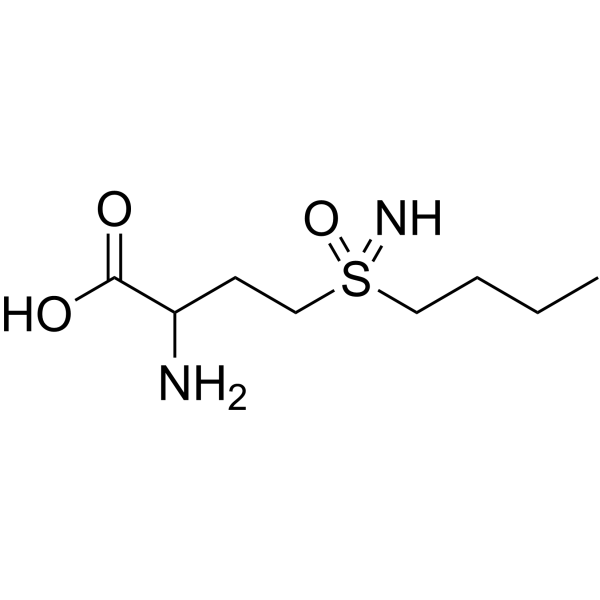
DL-Buthionine-(S,R)-sulfoximine is a potent inhibitor of glutamylcysteine synthetase biosynthesis.
loading...
    loading...
37
37 Publications Verification
Cat. No.: HY-106376B
Purity:  99.09%
Synonyms: Buthionine Sulfoximine hydrochloride; BSO hydrochloride
Target:  

Ferroptosis

Research Areas:  

Cancer

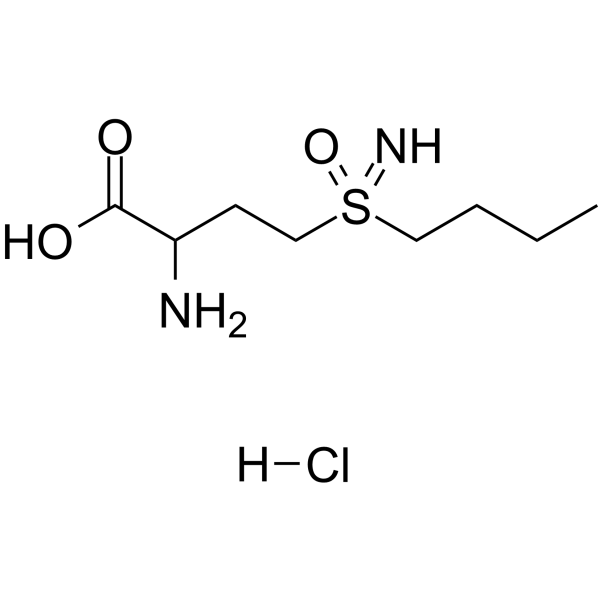
DL-Buthionine-(S,R)-sulfoximine hydrochloride (Buthionine sulfoximine hydrochloride) is a potent inhibitor of glutamylcysteine synthetase biosynthesis.
loading...
    loading...
20
20 Cited Publications
Cat. No.: HY-106376A
CAS No.: 83730-53-4
Purity:  99.35%
Synonyms: L-Buthionine Sulfoximine; L-BSO
Target:  

Ferroptosis

Research Areas:  

Cancer

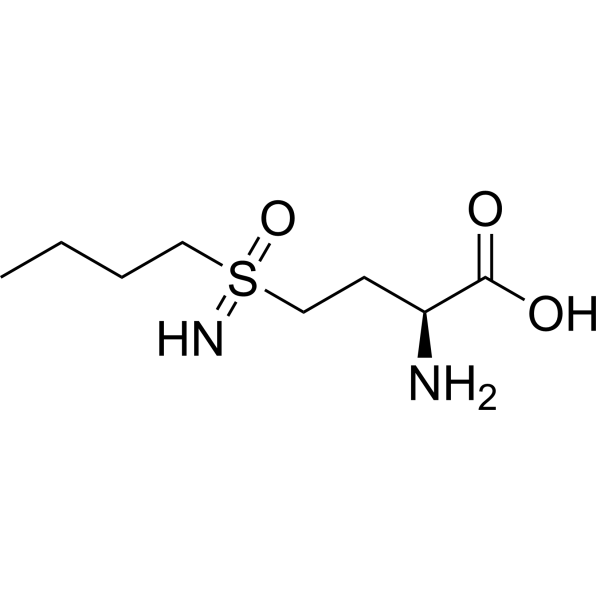
L-Buthionine-(S,R)-sulfoximine is a cell-permeable, potent, fast acting and irreversible inhibitor of g-glutamylcysteine synthetase and depletes cellular glutathione levels. The IC50 value of L-Buthionine-(S,R)-sulfoximine on melanoma, breast and ovarian tumor specimens are 1.9 μM, 8.6 μM, and 29 μM, respectively.
loading...
    loading...
20
20 Cited Publications
Cat. No.: HY-106376C
Purity:  ≥98.0%
Synonyms: L-Buthionine Sulfoximine hydrochloride; L-BSO hydrochloride
Target:  

Ferroptosis

Research Areas:  

Metabolic Disease Cancer

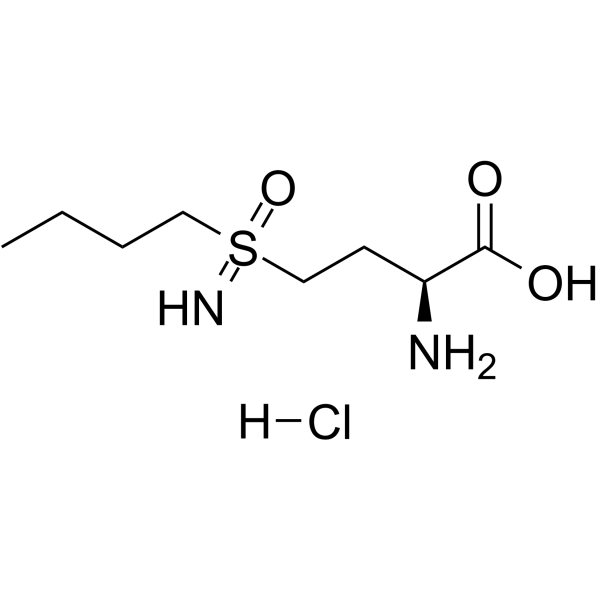
L-Buthionine-(S,R)-sulfoximine hydrochloride is a cell-permeable, potent, fast acting, orally active and irreversible inhibitor of g-glutamylcysteine synthetase and depletes cellular glutathione levels. The IC50 value of L-Buthionine-(S,R)-sulfoximine on melanoma, breast and ovarian tumor specimens are 1.9 μM, 8.6 μM, and 29 μM, respectively .
loading...
    loading...
6
6 Cited Publications
Cat. No.: HY-B1692
CAS No.: 15985-39-4
Synonyms: MSX; MSO
Target:  

Glutaminase

Research Areas:  

Neurological Disease

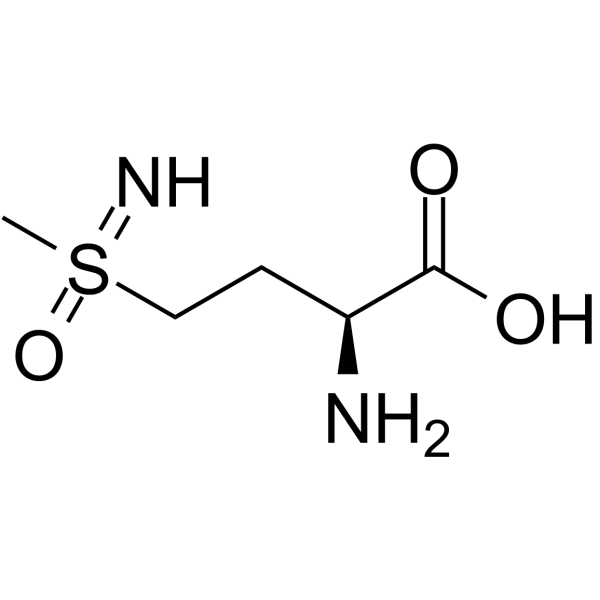
L-Methionine-DL-sulfoximine (MSX; MSO), a highly specific and irreversible inhibitor of Glutamine synthetase (GS), is also a potent convulsant which metabolically and morphologically primarily affects astroglia. L-Methionine-DL-sulfoximine has been employed to inhibit the Gln-dependent ammonia-stimulated neuronal toxicity in vitro, potentiating Gln deficit-dependent depression. L-Methionine-DL-sulfoximine tremendously increases the rate of release of fixed nitrogen in cyanobacteria. L-Methionine-DL-sulfoximine is a promising candidate for research in biofertilizers and convulsive seizures (CS) .
loading...
    loading...
2
2 Cited Publications
Cat. No.: HY-W338140
CAS No.: 1982-67-8
Synonyms: 2-Amino-4-(S-methylsulfonimidoyl)butanoic acid
Target:  

Endogenous Metabolite

Research Areas:  

Neurological Disease

Methionine sulfoximine (2-Amino-4-(S-methylsulfonimidoyl)butanoic acid) is an irreversible inhibitor of glutamine synthetase with convulsive effects. Methionine sulfoximine is able to affect the metabolism of glutamate and glutamine, which may provide important insights in neurobiological research. Methionine sulfoximine has also been used to study mechanisms related to epilepsy and its inhibitory potential .
loading...
    loading...
1
1 Cited Publications
Cat. No.: HY-118504
CAS No.: 946578-00-3
Purity:  99.92%
Research Areas:  

Neurological Disease

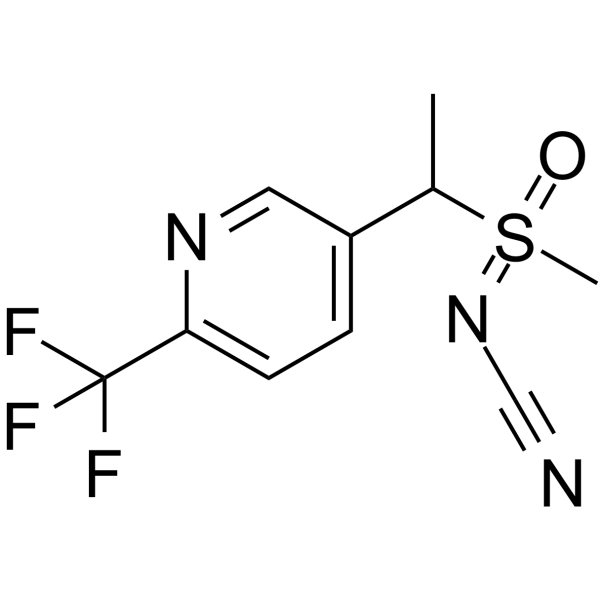
Sulfoxaflor is an orally active full agonist of insect nicotinic acetylcholine receptors (nAChRs), targeting the α-bungarotoxin-insensitive nAChR1 and nAChR2 subtypes. Sulfoxaflor binding to nACh is not inhibited by d-Tubocurarine (HY-125901), but is partially inhibited by Mecamylamine (HY-B1395A). Sulfoxaflor induces inward currents by activating nAChRs, leading to insect neurotoxicity. Sulfoxaflor can be used in the research of agricultural pest control, pesticide toxicology, insect neural receptor pharmacology, etc .
loading...
    loading...
Cat. No.: HY-132978
CAS No.: 2143892-50-4
Purity:  99.53%
Research Areas:  

Others

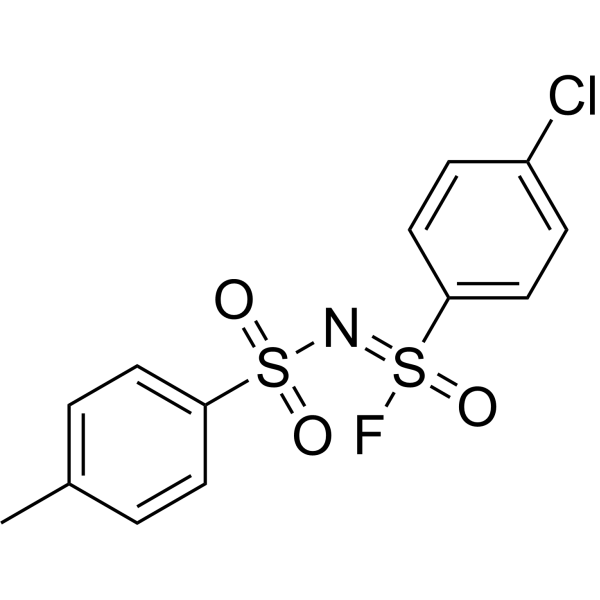
SulfoxFluor is a fluorinated sulfoximine compound that can be used in the rapid deoxyfluorination and selective deoxyazidation reactions of various alcohols. SulfoxFluor is characterized by high reactivity, rapid reaction, simple operation, easy scale-up, and high selectivity .
loading...
    loading...
Cat. No.: HY-W101673
CAS No.: 2416-95-7
Dipropofol is a dimeric derivative of Propofol (HY-B0649) with antioxidant and antibacterial activities. Dipropofol terminates free radical chain reactions, scavenges DPPH free radicals and inhibits lipid peroxidation. Dipropofol protects cells from death induced by glutamate, Aβ(25-35) and buthionine sulfoximine, and increases the survival rate of mice exposed to oxygen. Dipropofol selectively activates tonic GABAA currents, hyperpolarizes resting membrane potential, reduces action potential firing, and alleviates the severity of seizures induced by Kainic acid. Dipropofol can be used in the research of Gram-positive bacterial infections, Alzheimer's disease, cerebral ischemia-related neuronal injury, oxygen toxicity and temporal lobe epilepsy .
loading...
    loading...
Cat. No.: HY-179561
CAS No.: 894430-68-3
Target:  

Drug Derivative

Research Areas:  

Cardiovascular Disease

ACS14 is a derivative of Aspirin (HY-14654). ACS14 reduces Buthionine Sulfoximine (BSO) (HY-106376)-induced hypertension, plasma levels of thromboxane B2, 8-isoprostane, and insulin in rats, while GSH remained in the control range. ACS14 can be used for hypertension research .
loading...
    loading...
Cat. No.: HY-118504R
CAS No.: 946578-00-3
Research Areas:  

Neurological Disease

Sulfoxaflor (Standard) is the analytical standard of Sulfoxaflor. This product is intended for research and analytical applications. Sulfoxaflor is a sulfoximine insecticide and is an agonist of nAChR1 and nAChR2 subtypes. Sulfoxaflor is used for the control of sap-feeding insects such as Myzus persicae, Aphis gossypii, Bemissia tabaci and Nilaparvata lugens .
loading...
    loading...
Cat. No.: HY-106376BR
Synonyms: Buthionine Sulfoximine hydrochloride (Standard); BSO hydrochloride (Standard)
Research Areas:  

Cancer

DL-Buthionine-(S,R)-sulfoximine (hydrochloride) (Standard) is the analytical standard of DL-Buthionine-(S,R)-sulfoximine (hydrochloride). This product is intended for research and analytical applications. DL-Buthionine-(S,R)-sulfoximine hydrochloride (Buthionine sulfoximine hydrochloride) is a potent inhibitor of glutamylcysteine synthetase biosynthesis.
loading...
    loading...
Cat. No.: HY-106376R
CAS No.: 5072-26-4
Synonyms: Buthionine Sulfoximine (Standard); BSO (Standard)
Research Areas:  

Cancer

DL-Buthionine-(S,R)-sulfoximine (Standard) is the analytical standard of DL-Buthionine-(S,R)-sulfoximine. This product is intended for research and analytical applications. DL-Buthionine-(S,R)-sulfoximine is a potent inhibitor of glutamylcysteine synthetase biosynthesis.
loading...
    loading...
Cat. No.: HY-123815
CAS No.: 612037-58-8
Target:  

ROS Kinase

Research Areas:  

Cancer

BRD5459 is a ROS chemical probe. BRD5459 can increase ROS, a marker of oxidative stress in cells, without causing cell death .
loading...
    loading...
Cat. No.: HY-106376AR
CAS No.: 83730-53-4
Synonyms: L-Buthionine Sulfoximine (Standard); L-BSO (Standard)
Research Areas:  

Cancer

L-Buthionine-(S,R)-sulfoximine (Standard) is the analytical standard of L-Buthionine-(S,R)-sulfoximine (HY-106376A). This product is intended for research and analytical applications. L-Buthionine-(S,R)-sulfoximine is a cell-permeable, potent, fast acting and irreversible inhibitor of g-glutamylcysteine synthetase and depletes cellular glutathione levels. The IC50 value of L-Buthionine-(S,R)-sulfoximine on melanoma, breast and ovarian tumor specimens are 1.9 μM, 8.6 μM, and 29 μM, respectively.
loading...
    loading...
Cat. No.: HY-W101673R
CAS No.: 2416-95-7
Research Areas:  

Others

Dipropofol (Standard) is the analytical standard of Dipropofol. This product is intended for research and analytical applications. Dipropofol is a dimeric derivative of Propofol (HY-B0649) with antioxidant and antibacterial activities. Dipropofol terminates free radical chain reactions, scavenges DPPH free radicals and inhibits lipid peroxidation. Dipropofol protects cells from death induced by glutamate, Aβ(25-35) and buthionine sulfoximine, and increases the survival rate of mice exposed to oxygen. Dipropofol selectively activates tonic GABAA currents, hyperpolarizes resting membrane potential, reduces action potential firing, and alleviates the severity of seizures induced by Kainic acid. Dipropofol can be used in the research of Gram-positive bacterial infections, Alzheimer's disease, cerebral ischemia-related neuronal injury, oxygen toxicity and temporal lobe epilepsy .
loading...
    loading...
Cat. No.: HY-183406
CAS No.: 102616-62-6
Research Areas:  

Neurological Disease Cancer

AS15 is a PDIA1 inhibitor with an IC50 value of 300 nM. AS15 interacts with the active-site cysteine of PDIA1, and this process is independent of the substrate-binding domain of PDIA1. AS15 acts as a synergistic cell growth inhibitor with buthionine sulfoximine (BSO) (HY-106376), a glutathione synthesis inhibitor. AS15 can be used in the research of glioblastoma .
loading...
    loading...
Cat. No.: HY-183944
CAS No.: 214348-10-4
BN80933 is a selective neuronal nitric oxide synthase (nNOS) inhibitor with a rat Ki of 0.92 μM. BN80933 inhibits lipid peroxidation, and blocks hypoxia-induced lactate dehydrogenase elevation and delayed 8-epiprostaglandin F2α elevation. BN80933 can be used for the research of stroke, and traumatic brain injury .
loading...
    loading...
  • 1

