1. Search Result
Search Result
Results for "

TGR5 Receptor Agonist

" in MedChemExpress (MCE) Product Catalog:

13

Inhibitors & Agonists

1

Natural
Products

Cat. No. Product Name Target Research Areas Chemical Structure
  • HY-14229
    TGR5 Receptor Agonist
    3 Publications Verification

    CCDC

    G protein-coupled Bile Acid Receptor 1 Calcium Channel Metabolic Disease
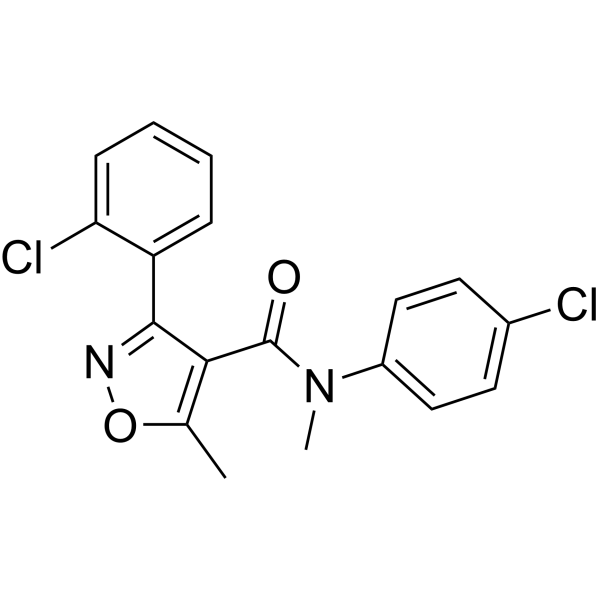
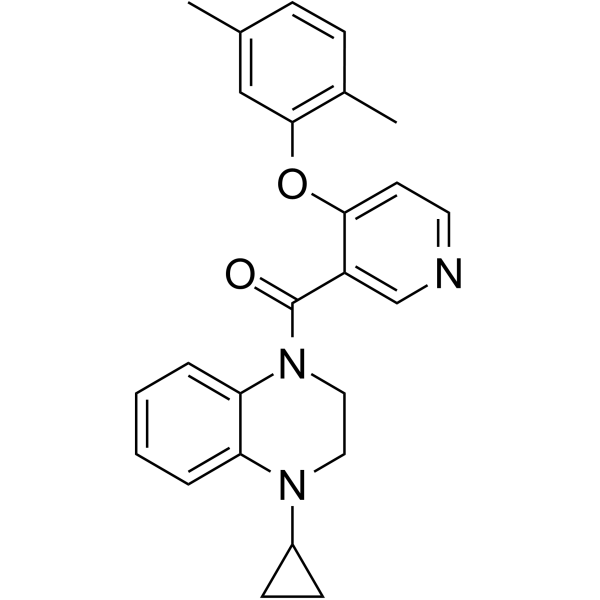
    TGR5 Receptor Agonist (CCDC), a potent Takeda G protein-coupled receptor 5 (TGR5; GPCR19) agonist, shows improved potency in the U2-OS cells and melanophore cells with pEC50s of 6.8 and 7.5, respectively. TGR5 Receptor Agonist can induce peripheral and central hypersensitivity to bladder distension in mice, and increase intracellular Ca 2+ concentration. TGR5 Receptor Agonist can also reduces food intake and improves insulin responsiveness, in diet-induced obese mice. TGR5 Receptor Agonist can be used to research diabetes, bladder hypersensitivity and anti-obesity .
    TGR5 Receptor Agonist
  • HY-156830

    G protein-coupled Bile Acid Receptor 1 Metabolic Disease
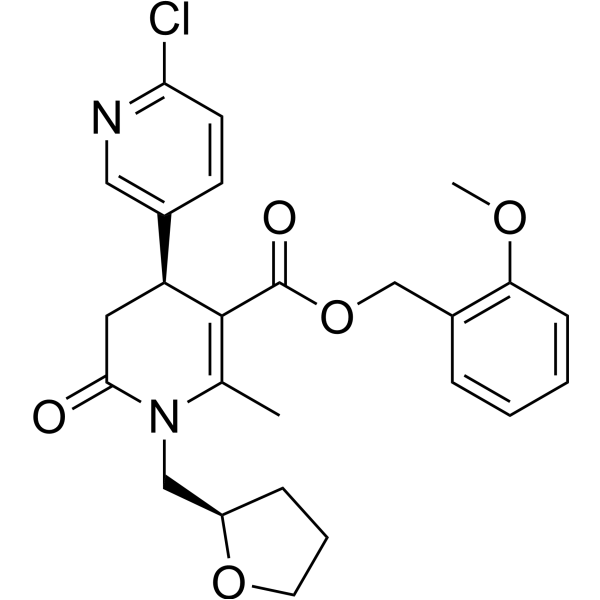
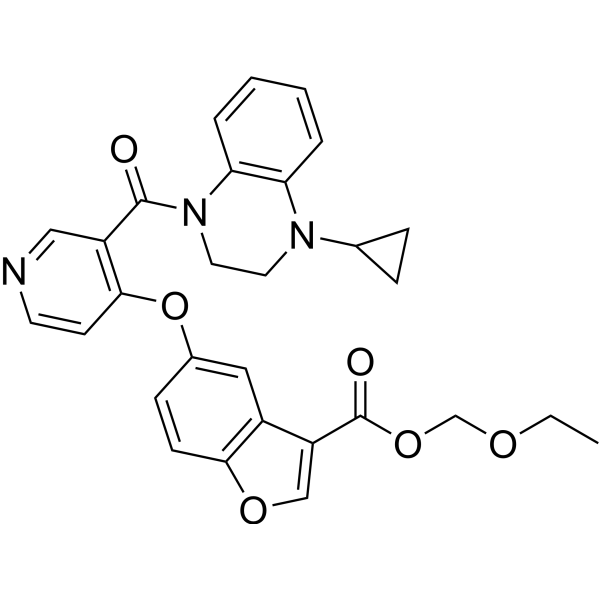
    TGR5 Receptor Agonist 4 is an agonist of Bile Acid Receptor (TGR5), with EC50 for hTGR5 and mTGR5 of 2 nM and 3 nM, respectively. TGR5 Receptor Agonist 4 plays important roles in hypoglycemic and weight loss .
    TGR5 Receptor Agonist 4
  • HY-12434
    INT-767
    Maximum Cited Publications
    6 Publications Verification

    FXR G protein-coupled Bile Acid Receptor 1 Autophagy Cancer
    INT-767 is a dual farnesoid X receptor (FXR)/TGR5 agonist with mean EC50s of 30 and 630 nM, respectively .
    INT-767
  • HY-146453

    G protein-coupled Bile Acid Receptor 1 Metabolic Disease
    TGR5 Receptor Agonist 3 (Compound 19) is a soft-agent G-protein-coupled bile acid receptor 1 (GPBAR1, TGR5) agonist with reduced gallbladder-filling effects (favorable gallbladder safety), with EC50s of 16.4 and 209 nM for hTGR5 and mTGR5, respectively.
    TGR5 Receptor Agonist 3
  • HY-110173

    G protein-coupled Bile Acid Receptor 1 Metabolic Disease
    TC-G 1005 is a potent, selective and orally active agonist of the BA receptor Takeda G protein-coupled receptor 5 (TGR5), with EC50s of 0.72 and 6.2 nM for hTGR5 and mTGR5, respectively. TC-G 1005 can reduce glucose levels in vivo .
    TC-G 1005
  • HY-N0910
    Notoginsenoside Ft1
    1 Publications Verification

    PI3K mTOR Akt Apoptosis p38 MAPK ERK Transmembrane Glycoprotein Glutathione Reductase (GR) Estrogen Receptor/ERR Calcium Channel Ferroptosis G protein-coupled Bile Acid Receptor 1 FXR Cardiovascular Disease Neurological Disease Metabolic Disease Inflammation/Immunology Cancer
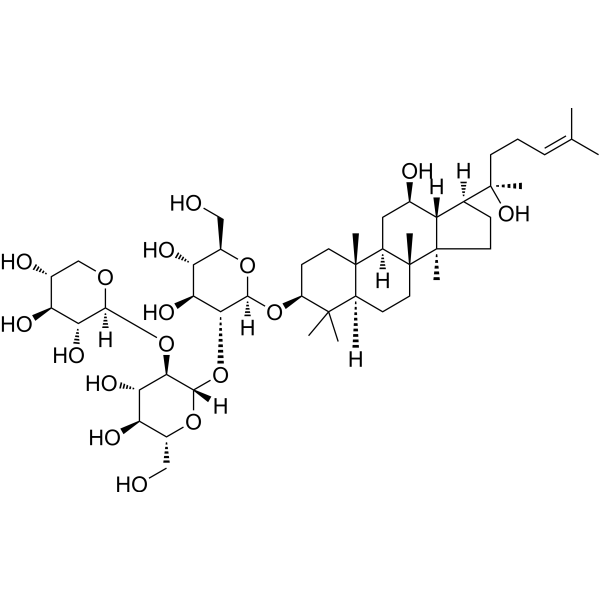
    Notoginsenoside Ft1 is an orally active bioactive saponin. Notoginsenoside Ft1 inhibits the PI3K/AKT/mTOR signaling pathway, activates the p38 MAPK and ERK1/2 signaling pathways, and increases the proportion of CD8 + T cells, thereby inducing apoptosis and lysosomal cell death in various cancer cells, and promoting angiogenesis. Notoginsenoside Ft1 causes vasodilation by activating glucocorticoid receptors (GR) and estrogen receptor beta (ERβ) in endothelial cells. Notoginsenoside Ft1 increases intracellular Ca 2+ accumulation, reduces cAMP levels by activating a signaling network mediated through P2Y12 receptors, and promotes platelet aggregation, thereby exerting a procoagulant effect. Notoginsenoside Ft1 inhibits ferroptosis (ferroptosis) in renal tubular epithelial cells by activating the TGR5 receptor, thereby demonstrating a renal protective effect. Notoginsenoside Ft1 acts as a TGR5 agonist and an FXR antagonist to combat obesity and insulin resistance .
    Notoginsenoside Ft1
  • HY-14229R

    CCDC (Standard)

    G protein-coupled Bile Acid Receptor 1 Calcium Channel Reference Standards Metabolic Disease
    TGR5 Receptor Agonist (Standard) is the analytical standard of TGR5 Receptor Agonist. This product is intended for research and analytical applications. TGR5 Receptor Agonist (CCDC), a potent Takeda G protein-coupled receptor 5 (TGR5; GPCR19) agonist, shows improved potency in the U2-OS cells and melanophore cells with pEC50s of 6.8 and 7.5, respectively. TGR5 Receptor Agonist can induce peripheral and central hypersensitivity to bladder distension in mice, and increase intracellular Ca2+ concentration. TGR5 Receptor Agonist can also reduces food intake and improves insulin responsiveness, in diet-induced obese mice. TGR5 Receptor Agonist can be used to research diabetes, bladder hypersensitivity and anti-obesity .
    TGR5 Receptor Agonist (Standard)
  • HY-156830A

    G protein-coupled Bile Acid Receptor 1 Metabolic Disease
    (4′R)-TGR5 Receptor Agonist 4 is the R enantiomer of TGR5 Receptor Agonist 4 (HY-156830). TGR5 Receptor Agonist 4 is an agonist of Bile Acid Receptor (TGR5), with EC50 for hTGR5 and mTGR5 of 2 nM and 3 nM, respectively. TGR5 Receptor Agonist 4 plays important roles in hypoglycemic and weight loss .
    (4′R)-TGR5 Receptor Agonist 4
  • HY-169792

    FXR Aminotransferases (Transaminases) Metabolic Disease Inflammation/Immunology
    HPG1860 is an orally active, highly selective and potent FXR agonist, with an EC50 of 18 nM (FXR-luciferase reporter assay). HPG1860 has EC50 values >30.0 μM for TGR5 and 13 other related nuclear receptors (cAMP biological assay). HPG1860 can be used for the research of non-alcoholic steatohepatitis (NASH) .
    HPG1860
  • HY-168329

    G protein-coupled Bile Acid Receptor 1 Metabolic Disease
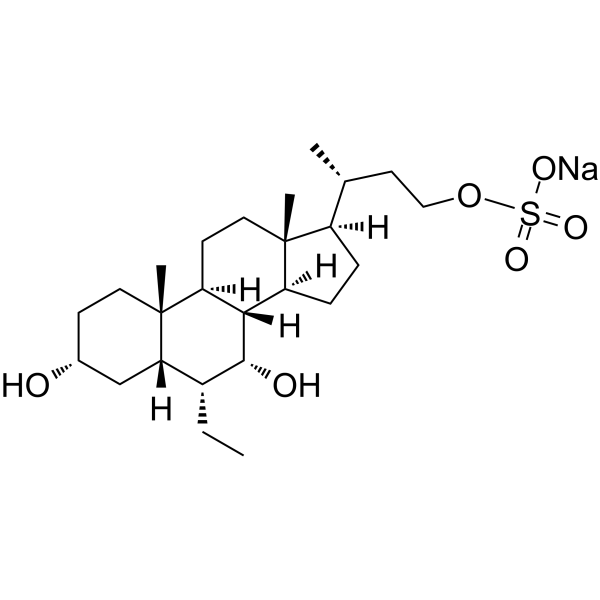
    TGR5 agonist 7 (Compound 22-Na) is a gut-restricted, orally active agonist for G protein-coupled bile acid receptor TGR5 (GPBAR1 or GPR131) with an EC50 < 1 μM. TGR5 agonist 7 exhibits blood glucose lowering effect in mouse model, and can be used in diabete research .
    TGR5 agonist 7
  • HY-178959

    FXR Metabolic Disease Inflammation/Immunology
    FXR agonist 13 is a selective, orally active, potent FXR agonist (EC50 = 0.097 μM) and has favorable hepatic microsomal metabolic stability. FXR agonist 13 exhibits moderate affinity for FXR-LBD upon direct binding (KD = 14.74 μM). FXR agonist 13 displays good selectivity against related nuclear receptors, including LXRα/β, PPARα/γ/δ, PXR, and TGR5. FXR agonist 13 can be used for the study of metabolic-associated steatohepatitis (MASH) .
    FXR agonist 13
  • HY-181102

    G protein-coupled Bile Acid Receptor 1 Metabolic Disease Inflammation/Immunology
    TGR5 agonist 10 is a selective, allosteric and orally active Takeda G protein coupled receptor 5 (TGR5) agonist with EC50s of 0.8 μM and 0.6 μM for human TGR5 and mouse TGR5, respectively. TGR5 agonist 10 demonstrates selectivity for TGR5 over FXR. TGR5 agonist 10 activates hTGR5 and mTGR5 to induce cAMP accumulation, and positively modulates lithocholic acid functional activity and potency at hTGR5, with higher selectivity for cAMP formation over β-arrestin2 recruitment. TGR5 agonist 10 exerts glucose-lowering effects in Mus musculus oral glucose tolerance tests. TGR5 agonist 10 can be used for the research of diabetes .
    TGR5 agonist 10
  • HY-182582

    G protein-coupled Bile Acid Receptor 1 Cytochrome P450 Metabolic Disease
    ZY12201 is a selective and orally active TGR5 agonist and pan-CYP inhibitor. ZY12201 lowers glucose levels. ZY12201 induces enzymes regulated through Aryl Hydrocarbon Receptor, Constitutive Androstane Receptor, and Pregnane X Receptor. ZY12201 can be used for the research of type 2 diabetes .
    ZY12201

Inquiry Online

Your information is safe with us. * Required Fields.

Salutation


Country or Region *

Applicant Name *


Organization Name *

Department *


Email Address *


Product Name *

Cat. No.


Requested quantity *

Phone Number *


Remarks

Inquiry Online

Inquiry Information

Product Name:
Cat. No.:
Quantity:
MCE Japan Authorized Agent:

