1. Search Result
Search Result
Results for "

Tonic pain

" in MedChemExpress (MCE) Product Catalog:

16

Inhibitors & Agonists

1

Natural
Products

2

Isotope-Labeled Compounds

Cat. No. Product Name Target Research Areas Chemical Structure
  • HY-100714
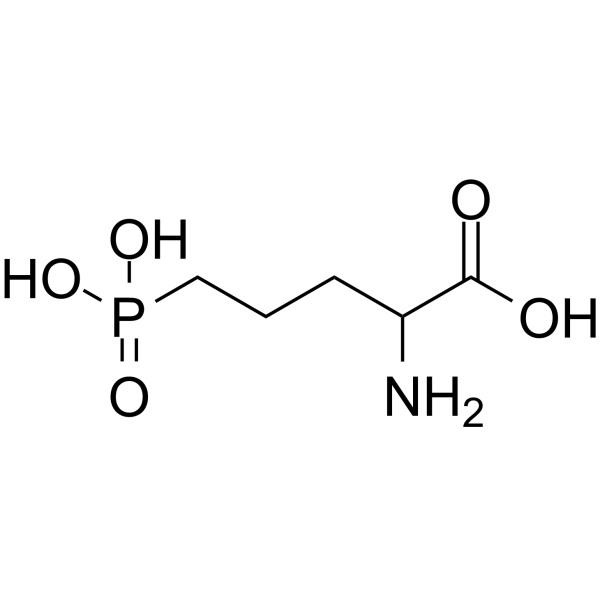
    DL-AP5
    3 Publications Verification

    2-APV; DL-2-Amino-5-phosphonovaleric acid

    iGluR Neurological Disease Inflammation/Immunology
    DL-AP5 (2-APV) is a competitive NMDA (N-methyl-D-aspartate) receptor antagonist. DL-AP5 shows significantly antinociceptive activity. DL-AP5 specifically blocks on channels in the rabbit retina .
    DL-AP5
  • HY-A0093
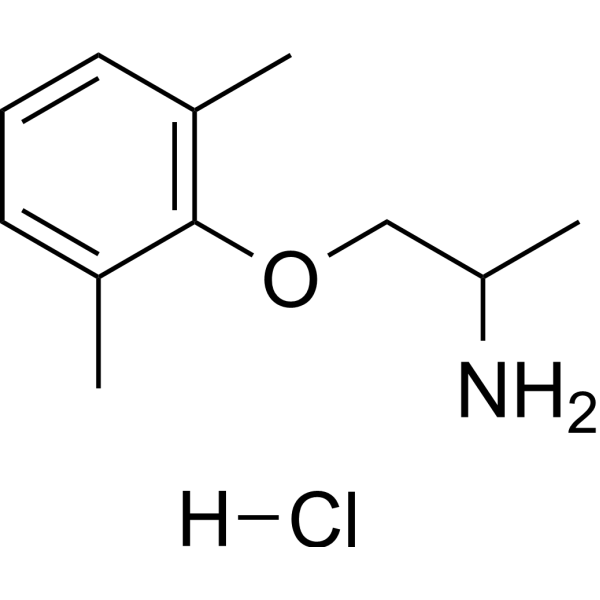
    Mexiletine hydrochloride
    2 Publications Verification

    KOE-1173 hydrochloride

    Sodium Channel Cardiovascular Disease Neurological Disease
    Mexiletine is an orally effective antiarrhythmic agent which has also been found to be effective for myotonia and neuropathic pain. Mexiletine exerts its efficacy through blocking sodium channels (IC50 : 75±8 μM for tonic block, 23.6±2.8 μM for use-dependent block), therefore can be used for cardiovascular and neurological research .
    Mexiletine hydrochloride
  • HY-119521
    Mexiletine
    2 Publications Verification

    KOE-1173

    Sodium Channel Cardiovascular Disease Neurological Disease
    Mexiletine is an orally effective antiarrhythmic agent which has also been found to be effective for myotonia and neuropathic pain. Mexiletine exerts its efficacy through blocking sodium channels (IC50 : 75±8 μM for tonic block, 23.6±2.8 μM for use-dependent block), therefore can be used for cardiovascular and neurological research .
    Mexiletine
  • HY-14604
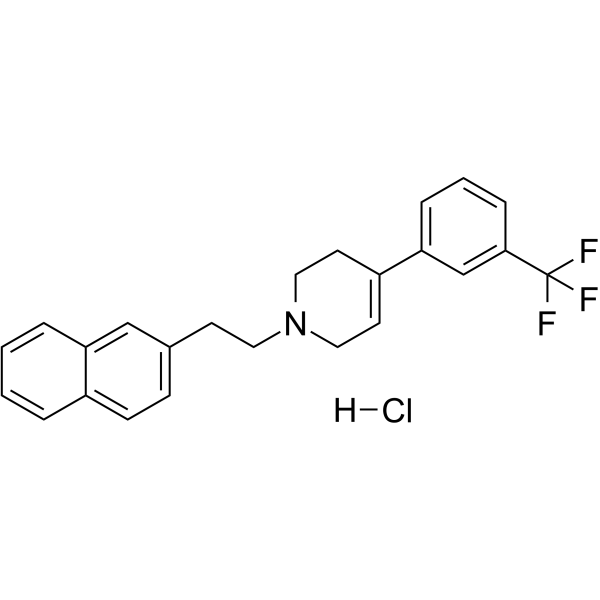
    Xaliproden hydrochloride
    1 Publications Verification

    SR57746A; SR57746 hydrochloride

    5-HT Receptor Dopamine Receptor Trk Receptor PKC ERK Akt JNK Neurological Disease Metabolic Disease
    Xaliproden (SR57746) hydrochloride (SR57746A) is an orally active, highly selective 5-HT1A receptor agonist. Xaliproden hydrochloride activates pertussis toxin-sensitive G protein-coupled signaling cascades, as well as the PKC, ERK1/ERK2, Akt and p21 Ras/MEK-1 pathways. Xaliproden hydrochloride also downregulates the JNK/p66/c-Jun signaling pathway, induces phosphorylation of the shc adaptor protein, regulates extracellular dopamine and 5-HT levels, and induces [ 35S]GTPγS labeling in rat brain structures rich in 5-HT1A receptors. Xaliproden hydrochloride exerts neurotrophic, neuroprotective, renoprotective, anti-inflammatory, anti-apoptotic, anti-fibrotic and analgesic effects. Xaliproden hydrochloride also enhances NGF-induced neurite outgrowth, promotes motor neuron survival, attenuates renal tubular injury and inhibits chemotherapy-induced mechanical allodynia, without activating or altering NGF-induced TrkA receptor activation. Xaliproden hydrochloride can be used in the research of motor neuron disease, diabetic nephropathy, chemotherapy-induced peripheral neuropathy, amyotrophic lateral sclerosis, Alzheimer's disease, acute tonic nociceptive pain, inflammatory pain, depression and anxiety .
    Xaliproden hydrochloride
  • HY-100714C
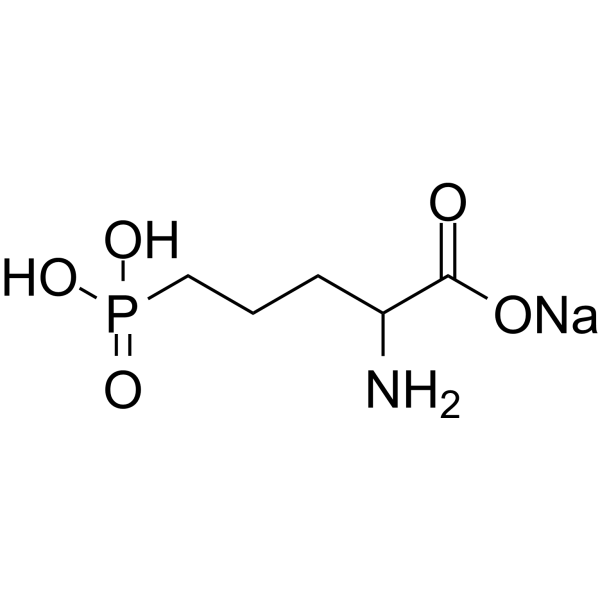
    DL-AP5 sodium
    3 Publications Verification

    2-APV sodium; DL-2-Amino-5-phosphonovaleric acid sodium

    iGluR Neurological Disease Inflammation/Immunology
    DL-AP5 (2-APV) sodium is a competitive NMDA (N-methyl-D-aspartate) receptor antagonist. DL-AP5 sodium shows significantly antinociceptive activity. DL-AP5 sodium specifically blocks on channels in the rabbit retina .
    DL-AP5 sodium
  • HY-16928R

    Phomin (Standard)

    Reference Standards Arp2/3 Complex Cancer
    (R)-Duloxetine (Standard) is the analytical standard of (R)-Duloxetine. This product is intended for research and analytical applications. (R)-Duloxetine is a form of Duloxetine (HY-B0161) that causes tonic and usage-dependent impairment of neuronal Na+ channels. (R)-Duloxetine can be used in pain research .
    Cytochalasin B (Standard)
  • HY-119820

    SR57746A free base

    Akt Dopamine Receptor Trk Receptor 5-HT Receptor PKC JNK ERK Neurological Disease
    Xaliproden (SR57746) free base is an orally active, highly selective 5-HT1A receptor agonist. Xaliproden free base activates pertussis toxin-sensitive G protein-coupled signaling cascades, as well as the PKC, ERK1/ERK2, Akt and p21 Ras/MEK-1 pathways. Xaliproden free base also downregulates the JNK/p66/c-Jun signaling pathway, induces phosphorylation of the shc adaptor protein, regulates extracellular dopamine and 5-HT levels, and induces [ 35S]GTPγS labeling in rat brain structures rich in 5-HT1A receptors. Xaliproden free base exerts neurotrophic, neuroprotective, renoprotective, anti-inflammatory, anti-apoptotic, anti-fibrotic and analgesic effects. Xaliproden free base also enhances NGF-induced neurite outgrowth, promotes motor neuron survival, attenuates renal tubular injury and inhibits chemotherapy-induced mechanical allodynia, without activating or altering NGF-induced TrkA receptor activation. Xaliproden free base can be used in the research of motor neuron disease, diabetic nephropathy, chemotherapy-induced peripheral neuropathy, amyotrophic lateral sclerosis, Alzheimer's disease, acute tonic nociceptive pain, inflammatory pain, depression and anxiety .
    Xaliproden free base
  • HY-B0161C

    (R)-LY248686

    Sodium Channel Neurological Disease
    (R)-Duloxetine is a isomer of Duloxetine (HY-B0161) that causes tonic and usage-dependent impairment of neuronal Na + channels. (R)-Duloxetine can be used in pain research .
    (R)-Duloxetine
  • HY-B0161CR

    (R)-LY248686 (Standard)

    Reference Standards Sodium Channel Neurological Disease
    (R)-Duloxetine (Standard) is the analytical standard of (R)-Duloxetine. This product is intended for research and analytical applications. (R)-Duloxetine is a form of Duloxetine (HY-B0161) that causes tonic and usage-dependent impairment of neuronal Na+ channels. (R)-Duloxetine can be used in pain research .
    (R)-Duloxetine (Standard)
  • HY-A0093R

    KOE-1173 hydrochloride (Standard)

    Sodium Channel Reference Standards Cardiovascular Disease Neurological Disease
    Mexiletine (hydrochloride) (Standard) is the analytical standard of Mexiletine (hydrochloride). This product is intended for research and analytical applications. Mexiletine is an orally effective antiarrhythmic agent which has also been found to be effective for myotonia and neuropathic pain. Mexiletine exerts its efficacy through blocking sodium channels (IC50 : 75±8 μM for tonic block, 23.6±2.8 μM for use-dependent block), therefore can be used for cardiovascular and neurological research .
    Mexiletine hydrochloride (Standard)
  • HY-100714D

    2-APV lithium; DL-2-Amino-5-phosphonovaleric acid lithium

    iGluR Neurological Disease Inflammation/Immunology
    DL-AP5 (2-APV) lithium is a competitive NMDA (N-methyl-D-aspartate) receptor antagonist. DL-AP5 lithium shows significantly antinociceptive activity. DL-AP5 lithium specifically blocks on channels in the rabbit retina .
    DL-AP5 lithium
  • HY-100714R

    2-APV (Standard); DL-2-Amino-5-phosphonovaleric acid (Standard)

    Reference Standards iGluR Neurological Disease Inflammation/Immunology
    DL-AP5 (Standard) is the analytical standard of DL-AP5. This product is intended for research and analytical applications. DL-AP5 (2-APV) is a competitive NMDA (N-methyl-D-aspartate) receptor antagonist. DL-AP5 shows significantly antinociceptive activity. DL-AP5 specifically blocks on channels in the rabbit retina .
    DL-AP5 (Standard)
  • HY-100714CR

    2-APV sodium (Standard); DL-2-Amino-5-phosphonovaleric acid sodium (Standard)

    Reference Standards iGluR Neurological Disease Inflammation/Immunology
    DL-AP5 (sodium) (Standard) is the analytical standard of DL-AP5 (sodium). This product is intended for research and analytical applications. DL-AP5 (2-APV) sodium is a competitive NMDA (N-methyl-D-aspartate) receptor antagonist. DL-AP5 sodium shows significantly antinociceptive activity. DL-AP5 sodium specifically blocks on channels in the rabbit retina .
    DL-AP5 sodium (Standard)
  • HY-119521S

    KOE-1173-d3

    Isotope-Labeled Compounds Cardiovascular Disease Neurological Disease
    Mexiletine-d3 (KOE-1173-d3) is deuterium labeled Mexiletine. Mexiletine is an orally effective antiarrhythmic agent which has also been found to be effective for myotonia and neuropathic pain. Mexiletine exerts its efficacy through blocking sodium channels (IC50 : 75±8 μM for tonic block, 23.6±2.8 μM for use-dependent block), therefore can be used for cardiovascular and neurological research .
    Mexiletine-d3
  • HY-119521S1

    KOE-1173-d6

    Isotope-Labeled Compounds Sodium Channel Cardiovascular Disease Neurological Disease
    Mexiletine-d6 (KOE-1173-d6) is deuterium labeled Mexiletine. Mexiletine is an orally effective antiarrhythmic agent which has also been found to be effective for myotonia and neuropathic pain. Mexiletine exerts its efficacy through blocking sodium channels (IC50 : 75±8 μM for tonic block, 23.6±2.8 μM for use-dependent block), therefore can be used for cardiovascular and neurological research .
    Mexiletine-d6
  • HY-14604R

    SR57746A (Standard); SR57746 hydrochloride (Standard)

    Reference Standards Akt Dopamine Receptor Trk Receptor 5-HT Receptor PKC JNK ERK Neurological Disease Cancer
    Xaliproden (hydrochloride) (Standard) is the analytical standard of Xaliproden (hydrochloride). This product is intended for research and analytical applications. Xaliproden (SR57746) hydrochloride (SR57746A) is an orally active, highly selective 5-HT1A receptor agonist. Xaliproden hydrochloride activates pertussis toxin-sensitive G protein-coupled signaling cascades, as well as the PKC, ERK1/ERK2, Akt and p21 Ras/MEK-1 pathways. Xaliproden hydrochloride also downregulates the JNK/p66/c-Jun signaling pathway, induces phosphorylation of the shc adaptor protein, regulates extracellular dopamine and 5-HT levels, and induces [ 35S]GTPγS labeling in rat brain structures rich in 5-HT1A receptors. Xaliproden hydrochloride exerts neurotrophic, neuroprotective, renoprotective, anti-inflammatory, anti-apoptotic, anti-fibrotic and analgesic effects. Xaliproden hydrochloride also enhances NGF-induced neurite outgrowth, promotes motor neuron survival, attenuates renal tubular injury and inhibits chemotherapy-induced mechanical allodynia, without activating or altering NGF-induced TrkA receptor activation. Xaliproden hydrochloride can be used in the research of motor neuron disease, diabetic nephropathy, chemotherapy-induced peripheral neuropathy, amyotrophic lateral sclerosis, Alzheimer's disease, acute tonic nociceptive pain, inflammatory pain, depression and anxiety .
    Xaliproden hydrochloride (Standard)

Inquiry Online

Your information is safe with us. * Required Fields.

Salutation


Country or Region *

Applicant Name *


Organization Name *

Department *


Email Address *


Product Name *

Cat. No.


Requested quantity *

Phone Number *


Remarks

Inquiry Online

Inquiry Information

Product Name:
Cat. No.:
Quantity:
MCE Japan Authorized Agent:

