1. Search Result
Search Result
Results for "

UVB irradiation.

" in MedChemExpress (MCE) Product Catalog:

17

Inhibitors & Agonists

2

Biochemical Assay Reagents

3

Natural
Products

3

Isotope-Labeled Compounds

1

Oligonucleotides

Cat. No. Product Name Target Research Areas Chemical Structure
  • HY-B1008
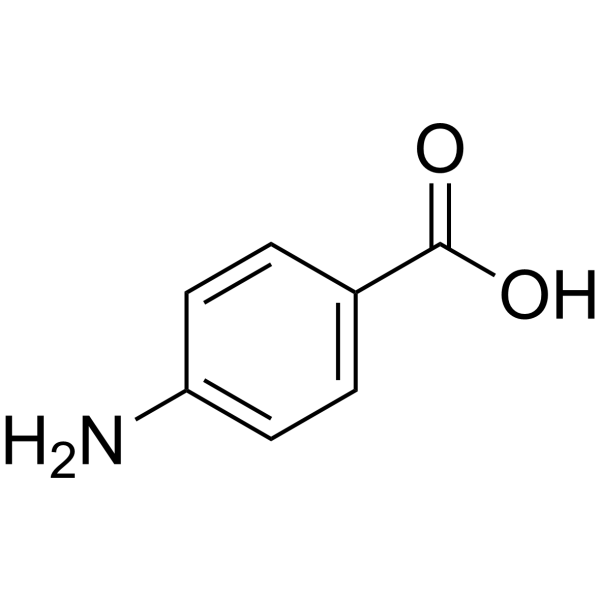
    4-Aminobenzoic acid
    1 Publications Verification

    PABA; p-Aminobenzoic acid

    Environmental Pollutants Endogenous Metabolite Bacterial Infection
    4-Aminobenzoic acid is an intermediate in the synthesis of folic acid by bacteria, plants and fungi. 4-Aminobenzoic acid has antibacterial and plant growth regulating properties .
    4-Aminobenzoic acid
  • HY-W251181

    Tyrosinase Metabolic Disease
    Isobutylamido thiazolyl resorcinol is a selective hTyr inhibitor with an IC50 of 1.1  μM. Isobutylamido thiazolyl resorcinol shows an IC50 of 108  μM against mushroom Tyrosinase. Isobutylamido thiazolyl resorcinol effectively prevents pigmentation caused by UVB irradiation. Isobutylamido thiazolyl resorcinol significantly improves the visibility of acne-induced hyperpigmentation .
    Isobutylamido thiazolyl resorcinol
  • HY-N2007

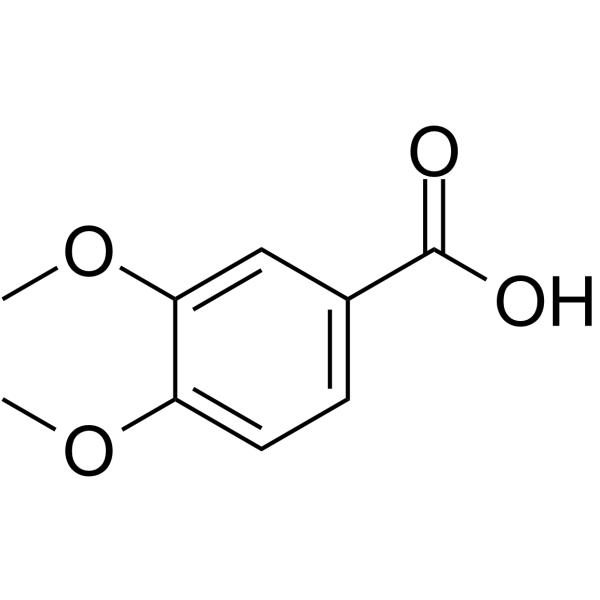
    3,4-Dimethoxybenzoic acid

    COX Reactive Oxygen Species (ROS) Cardiovascular Disease Inflammation/Immunology
    Veratric acid (3,4-Dimethoxybenzoic acid) is an orally active phenolic compound derived from vegetables and fruits, has antioxidant and anti-inflammatory activities . Veratric acid also acts as a protective agent against hypertension-associated cardiovascular remodelling . Veratric acid reduces upregulated COX-2 expression, and levels of PGE2, IL-6 after UVB irradiation .
    Veratric acid
  • HY-109654

    Reactive Oxygen Species (ROS) Metabolic Disease
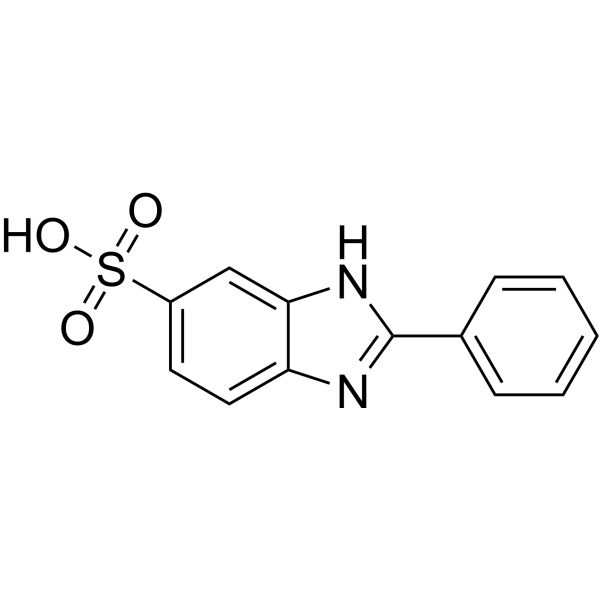
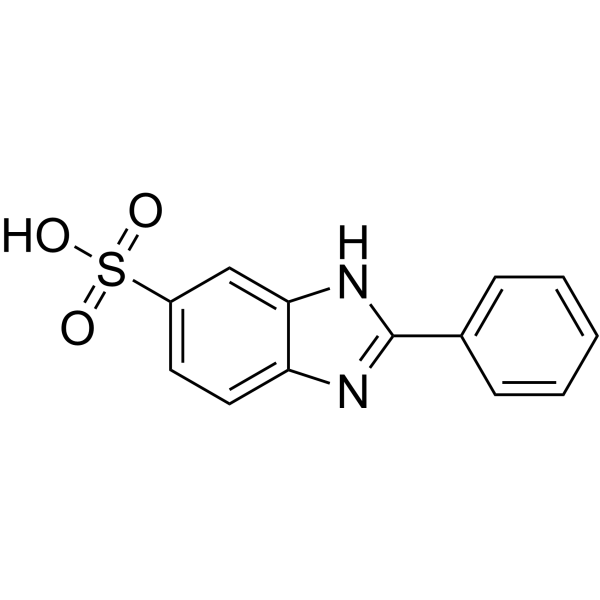
    Ensulizole is a sulfonated UV absorber and can intense UVB and partial UVA absorption. Ensulizole can damage the DNA through the generation of reactive oxygen species (ROS) upon UV or sunlight irradiation .
    Ensulizole
  • HY-W011168

    Nucleoside Antimetabolite/Analog DNA/RNA Synthesis Inflammation/Immunology Cancer
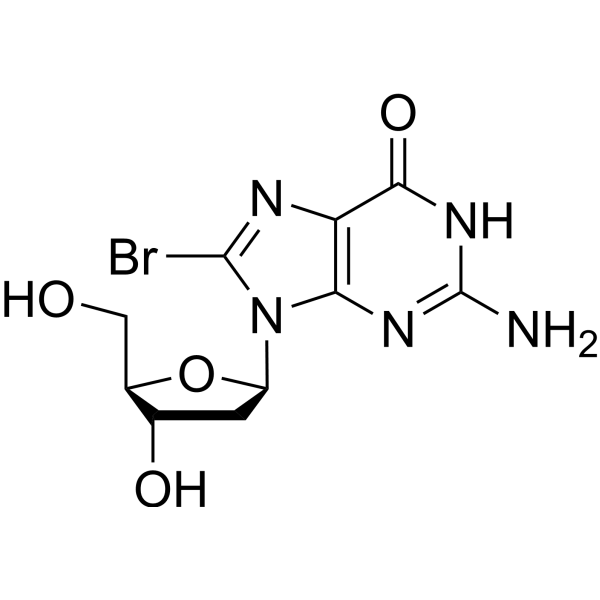
    8-Bromo-2'-deoxyguanosine is an inflammation-related DNA halogenated adduct and an early biomarker of inflammation-induced oxidative tissue damage. The formation of 8-Bromo-2'-deoxyguanosine precedes that of oxidative and nitrative products, and it can be generated via the MPO-H2O2-Cl --Br - system. 8-Bromo-2'-deoxyguanosine serves as the immunogen for preparing the monoclonal antibody mAb8B3, which can be used to detect early DNA modifications in preclinical models; its urinary level also increases significantly in inflammatory disease models. 8-Bromo-2'-deoxyguanosine can also be produced in the dermis of UV-B irradiated mice, and the extract of Coprinus comatus significantly reduces its level. 8-Bromo-2'-deoxyguanosine finds applications in studies related to inflammatory diseases, diabetes, hepatocellular carcinoma, and UV-B induced skin inflammation .
    8-Bromo-2'-deoxyguanosine
  • HY-W583212

    ZnMP

    Biochemical Assay Reagents Heme Oxygenase (HO) Inflammation/Immunology
    Zn (II) Mesoporphyrin IX (ZnMP) is a heme oxygenase inhibitor with photochemical substrate activity. Zn (II) Mesoporphyrin IX specifically inhibits the activity of bone marrow heme oxygenase. In vitro, Zn (II) Mesoporphyrin IX inhibits the growth of erythroid and myeloid progenitor cells in rabbit bone marrow, and blocks the rhG-CSF-induced mobilization of these progenitor cells into the peripheral blood, exhibiting toxicity to hematopoietic growth and progenitor cell production in rabbits. Zn (II) Mesoporphyrin IX undergoes irreversible photochemical decomposition conforming to first-order kinetic characteristics when irradiated with UV-B in 95% ethanol solution. Zn (II) Mesoporphyrin IX can be used in hematopoietic regulation research, but its photolability and toxic effects on the hematopoietic system require attention .
    Zn(II) Mesoporphyrin IX
  • HY-W010169
    Sodium 4-aminobenzoate
    1 Publications Verification

    Endogenous Metabolite Bacterial Infection
    Sodium 4-aminobenzoate is an intermediate in the synthesis of folic acid by bacteria, plants and fungi. Sodium 4-aminobenzoate has antibacterial and plant growth regulating properties .
    Sodium 4-aminobenzoate
  • HY-U00265

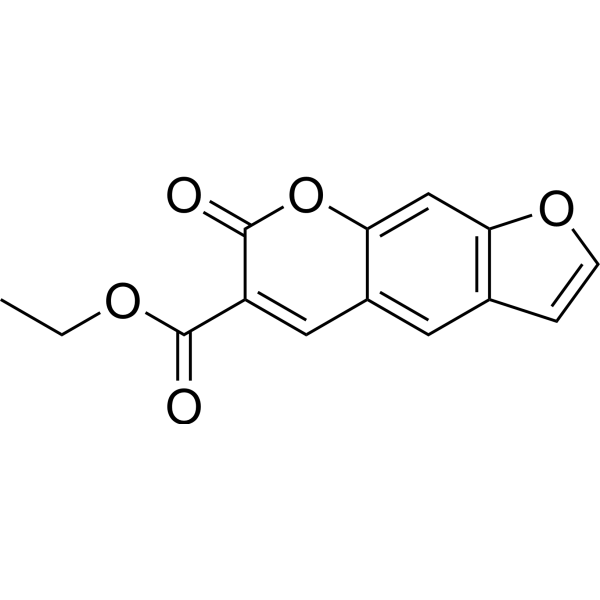
    3-Carbethoxypsoralen; 3-Ethoxycarbonylpsoralen

    Bacterial Infection
    3-CPs is a monofunctional furanocoumarin and a photoprotective agent targeting Staphylococcus aureus DNA, possessesing anti-UVB lethal activity. 3-CPs competitively intercalates into DNA, forming exclusively 4',5'-furan-side mono-adducts upon UVB irradiation, and irreversibly inhibits the formation of cyclobutane pyrimidine dimers. 3-CPs prevents UVB-induced DNA damage by preferentially binding to strong (AT)n sites within the DNA, without inducing lethal interstrand DNA cross-links; the limited number of mono-adducts it induces can be efficiently repaired by bacteria. 3-CPs holds potential for use in the development of photoprotective formulations for skin diseases, as well as in studies investigating bacterial DNA photodamage repair mechanisms and the optimization of photochemotherapy safety .
    3-CPs
  • HY-N2007S

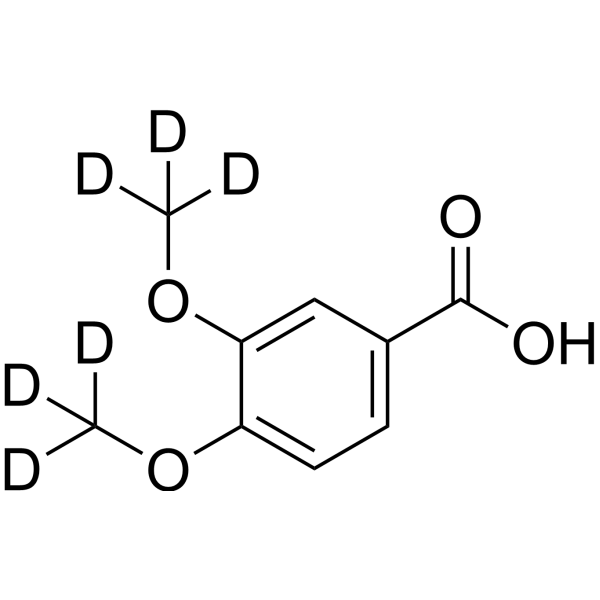
    3,4-Dimethoxybenzoic acid-d6

    Isotope-Labeled Compounds COX Reactive Oxygen Species (ROS) Cardiovascular Disease Inflammation/Immunology
    Veratric acid-d6 is deuterium labeled Veratric acid. Veratric acid (3,4-Dimethoxybenzoic acid) is an orally active phenolic compound derived from vegetables and fruits, has antioxidant and anti-inflammatory activities . Veratric acid also acts as a protective agent against hypertension-associated cardiovascular remodelling . Veratric acid reduces upregulated COX-2 expression, and levels of PGE2, IL-6 after UVB irradiation .
    Veratric acid-d6
  • HY-116145

    Tyrosinase NF-κB Inflammation/Immunology
    MHY884 is a tyrosinase inhibitor that suppresses UVB-induced activation of NF-κB signaling pathway through the downregulation of oxidative stress. MHY884 suppresses oxidative stress in the melanoma cells and attenuates UVB-induced oxidative stress, resulting in reduced NF-κB activity in irradiated mice. MHY884 is promising for research of UVB-induced skin damage .
    MHY884
  • HY-109654R

    Reference Standards Reactive Oxygen Species (ROS) Metabolic Disease
    Ensulizole (Standard) is the analytical standard of Ensulizole. This product is intended for research and analytical applications. Ensulizole is a sulfonated UV absorber and can intense UVB and partial UVA absorption. Ensulizole can damage the DNA through the generation of reactive oxygen species (ROS) upon UV or sunlight irradiation .
    Ensulizole (Standard)
  • HY-N2007R

    3,4-Dimethoxybenzoic acid (Standard)

    Reference Standards COX Reactive Oxygen Species (ROS) Cardiovascular Disease Inflammation/Immunology
    Veratric acid (Standard) is the analytical standard of Veratric acid. This product is intended for research and analytical applications. Veratric acid (3,4-Dimethoxybenzoic acid) is an orally active phenolic compound derived from vegetables and fruits, has antioxidant and anti-inflammatory activities . Veratric acid also acts as a protective agent against hypertension-associated cardiovascular remodelling . Veratric acid reduces upregulated COX-2 expression, and levels of PGE2, IL-6 after UVB irradiation .
    Veratric acid (Standard)
  • HY-124425R

    Reference Standards Antibiotic Cancer
    Veratric acid (Standard) is the analytical standard of Veratric acid. This product is intended for research and analytical applications. Veratric acid (3,4-Dimethoxybenzoic acid) is an orally active phenolic compound derived from vegetables and fruits, has antioxidant and anti-inflammatory activities . Veratric acid also acts as a protective agent against hypertension-associated cardiovascular remodelling . Veratric acid reduces upregulated COX-2 expression, and levels of PGE2, IL-6 after UVB irradiation .
    5′-Deoxythymidine (Standard)
  • HY-170579

    Reactive Oxygen Species (ROS) Apoptosis NF-κB Keap1-Nrf2 Inflammation/Immunology
    Antioxidant agent-20 (Compound 3d) has potent anti-inflammatory and antioxidant activity. Antioxidant agent-20 reduces reactive oxygen species (ROS) and apoptosis in a dose-dependent manner. Antioxidant agent-20 exhibits photoprotective effect against UVB-irradiated human skin keratinocytes (HaCaT) (IC50=5.13 µM) via activation of Nrf2/HO-1 signaling and inhibition of NF-κB pathway .
    Antioxidant agent-20
  • HY-W738273

    3,4-Dimethoxybenzoic acid-13C

    Reactive Oxygen Species (ROS) Inflammation/Immunology
    Veratric acid- 13C (3,4-Dimethoxybenzoic acid- 13C) is the 13C-labeled Veratric acid (HY-N2007). Veratric acid (3,4-Dimethoxybenzoic acid) is an orally active phenolic compound derived from vegetables and fruits, has antioxidant and anti-inflammatory activities . Veratric acid also acts as a protective agent against hypertension-associated cardiovascular remodelling . Veratric acid reduces upregulated COX-2 expression, and levels of PGE2, IL-6 after UVB irradiation .
    Veratric acid-13C
  • HY-W767399

    Isotope-Labeled Compounds DNA/RNA Synthesis Nucleoside Antimetabolite/Analog Cancer
    8-Bromo-2'-deoxyguanosine- 13C, 15N2 is the 13C- and 15N-labeled 8-Bromo-2'-deoxyguanosine (HY-W011168). 8-Bromo-2'-deoxyguanosine is an inflammation-related DNA halogenated adduct and an early biomarker of inflammation-induced oxidative tissue damage. The formation of 8-Bromo-2'-deoxyguanosine precedes that of oxidative and nitrative products, and it can be generated via the MPO-H2O2-Cl --Br - system. 8-Bromo-2'-deoxyguanosine serves as the immunogen for preparing the monoclonal antibody mAb8B3, which can be used to detect early DNA modifications in preclinical models; its urinary level also increases significantly in inflammatory disease models. 8-Bromo-2'-deoxyguanosine can also be produced in the dermis of UV-B irradiated mice, and the extract of Coprinus comatus significantly reduces its level. 8-Bromo-2'-deoxyguanosine finds applications in studies related to inflammatory diseases, diabetes, hepatocellular carcinoma, and UV-B induced skin inflammation .
    8-Bromo-2'-deoxyguanosine-13C,15N2
  • HY-182824

    Autophagy Others
    Sucrose dilaurate acts as an emulsifier, dispersant and stabilizer. Sucrose dilaurate reduces the release of HMGB1 from UVB-irradiated keratinocytes. Sucrose dilaurate inhibits melanogenesis and decreases bilirubin levels. Sucrose dilaurate induces autophagy in human epidermal keratinocytes, thereby reducing carboxymethyl lysine (CML) levels. Sucrose dilaurate reduces the secretion of insulin-like growth factor-binding protein 3 (IGFBP3) and nerve growth factor (NGF) by senescent keratinocytes. Sucrose dilaurate is investigated as an emulsifier, dispersant or stabilizer in the cosmetics, food and pharmaceutical industries .
    Sucrose dilaurate

Inquiry Online

Your information is safe with us. * Required Fields.

Salutation


Country or Region *

Applicant Name *


Organization Name *

Department *


Email Address *


Product Name *

Cat. No.


Requested quantity *

Phone Number *


Remarks

Inquiry Online

Inquiry Information

Product Name:
Cat. No.:
Quantity:
MCE Japan Authorized Agent:

