1. Search Result
Search Result
Results for "

Xenopus

" in MedChemExpress (MCE) Product Catalog:

102

Inhibitors & Agonists

1

Biochemical Assay Reagents

26

Peptides

13

Natural
Products

11

Recombinant Proteins

2

Isotope-Labeled Compounds

1

Oligonucleotides

Cat. No. Product Name Target Research Areas Chemical Structure
  • HY-B0942
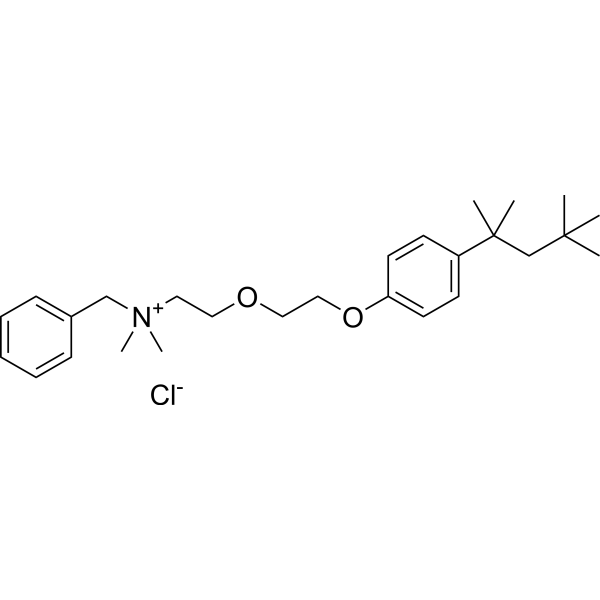
    Benzethonium chloride
    1 Publications Verification

    Environmental Pollutants nAChR Bacterial Apoptosis Caspase Infection Neurological Disease Cancer
    Benzethonium chloride inhibits nicotinic acetylcholine receptors in human recombinant α7 and α4β2 neurons in Xenopus laevis oocytes, which has antibacterial, anticancer, antisepsis and disinfection activity. Benzethonium chloride induced Apoptosis and activated caspases in cancer cell lines. Benzethonium chloride ablates the tumor-forming ability of FaDu cells, delays the growth of xenograft tumors in vivo .
    Benzethonium chloride
  • HY-107500
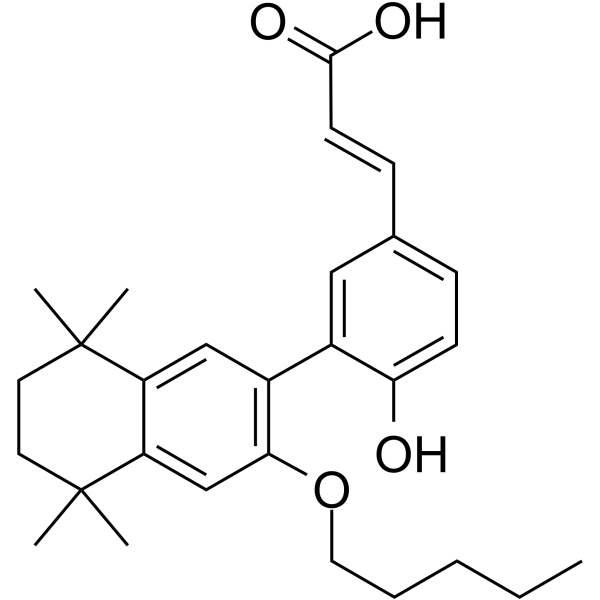
    UVI 3003
    5+ Cited Publications

    RAR/RXR Autophagy Others
    UVI 3003 is a highly selective antagonist of retinoid X receptor (RXR), and inhibits xenopus and human RXRα in Cos7 cells, with IC50s of 0.22 and 0.24 μM, respectively.
    UVI 3003
  • HY-W017113
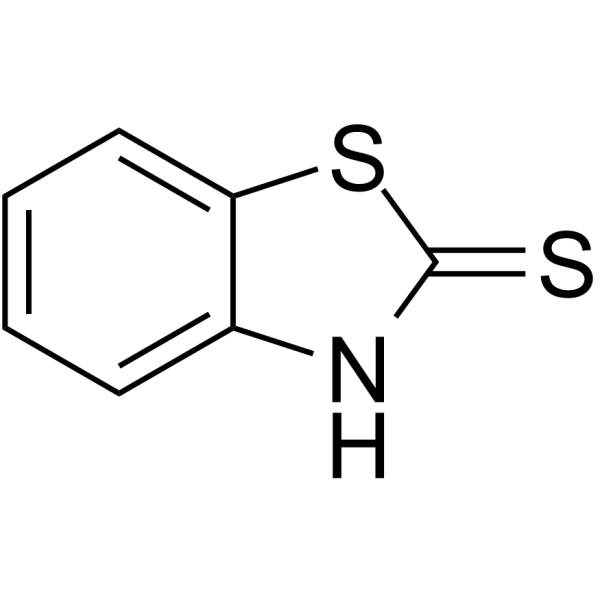
    2-Mercaptobenzothiazole
    1 Publications Verification

    Environmental Pollutants Endogenous Metabolite Metabolic Disease
    2-Mercaptobenzothiazole is an activator of the aryl hydrocarbon receptor (AhR) , inhibiting thyroid hormone synthesis and dopamine beta-hydroxylase activity . 2-Mercaptobenzothiazole promotes bladder cancer cell invasion by altering the conformation of the AhR ligand binding domain (LBD), activating AhR transcription, and upregulating the mRNA and protein expression of target genes CYP1A1 and CYP1B1 . 2-Mercaptobenzothiazole inhibits thyroid peroxidase (TPO) with an IC50 value of 11.5 μM, induces histological changes such as follicular cell hypertrophy in Xenopus laevis tadpoles, delaying metamorphosis . 2-Mercaptobenzothiazole increases chromosomal aberrations and sister chromatid exchanges (SCEs) in Chinese hamster ovary (CHO) cells, and enhances carcinogenicity in F344/N rats . 2-Mercaptobenzothiazole inhibits norepinephrine synthesis in mice and completely blocks the conversion of exogenous dopamine to norepinephrine in rat cardiomyocytes .
    2-Mercaptobenzothiazole
  • HY-B1167

    Cardiorythmine; (+)-Ajmaline

    Sodium Channel Cardiovascular Disease
    Ajmaline (Cardiorythmine) is a sodium channel blocking, class 1A anti-arrhythmic agent. Ajmaline blocks HERG currents with an IC50 of 1 μM in HEK cells and 42.3 μM in Xenopus oocytes. Ajmaline can be used for the research of the ventricular tachyarrhythmia .
    Ajmaline
  • HY-112624I

    Dextran 3; Dextran D3; Dextran T3(MW 2400-3600)

    Bacterial Others
    Dextran T3 (Dextran 3; Dextran T3(MW 2400-3600)) is a neural tracer and intestinal permeability probe that can move anterogradely and retrogradely in neuronal axons by passive diffusion. Dextran T3 (MW 3,000) is able to permeate across the intestinal epithelial cell membrane in the presence of cholera toxin-induced cytoskeletal disturbance. Dextran T3 (MW 3,000) is used as a fluorescent marker to rapidly label developing neurons (such as Xenopus retinal ganglion cells) and to assess intestinal barrier function. It can be used to study axonal transport in neuroanatomy and permeability changes in intestinal pathophysiology. The Dextran series of compounds are also natural polysaccharide drug carriers that can be connected to drugs through covalent bonding methods such as ester bonds, amide bonds or click chemistry, or self-assembled to form carriers such as nanoparticles and hydrogels. Dextran is biodegradable and biocompatible, and can achieve targeted delivery and controlled release of drugs. Dextran derivatives can prolong the half-life of drugs, increase local concentrations, and reduce the activity of immune clearance .
    Dextran T3 (MW 3,000)
  • HY-100834
    5,7-Dichlorokynurenic acid
    1 Publications Verification

    5,7-DCKA

    iGluR Neurological Disease
    5,7-Dichlorokynurenic acid (5,7-DCKA) is a selective and competitive antagonist of the glycine site on NMDA receptor with a KB of 65 nM. 5,7-Dichlorokynurenic acid reduces NMDA-induced neuron injury. 5,7-Dichlorokynurenic acid increases social interaction time, increases open arm exploration time, disinhibits suppressed conflict responding in rodent models. 5,7-Dichlorokynurenic acid exhibits anxiolytic-like activity in rodent models and supports exploration of glycine’s role in NMDA receptor-mediated synaptic transmission .
    5,7-Dichlorokynurenic acid
  • HY-P0270

    Magainin II

    Bacterial Antibiotic Fungal Infection
    Magainin 2 (Magainin II) is an antimicrobial peptide (AMP) isolated from the skin of the African clawed frog Xenopus laevis. Magainin 2 displays antibiotic activity against numerous gram-negative and gram-positive bacteria. Magainin 2 also is active against protozoa . Magainin 2 exerts its cytotoxicity effects by preferential interactions with anionic phospholipids abundant in bacterial membranes .
    Magainin 2
  • HY-14608R

    Reference Standards Endogenous Metabolite iGluR Ferroptosis Apoptosis Neurological Disease
    L-Glutamic acid (Standard) is the analytical standard of L-Glutamic acid. This product is intended for research and analytical applications. L-Glutamic acid is an excitatory amino acid neurotransmitter that acts as an agonist for all subtypes of glutamate receptors (metabolic rhodophylline, NMDA, and AMPA). L-Glutamic acid has an agonist effect on the release of DA from dopaminergic nerve endings. L-Glutamic acid can be used in the study of neurological diseases . IC50 & Target:DA . In Vitro: L-Glutamic acid (120, 500, 750, 1000 mg/dL) can reduce the harmful effect of lithium on the embryonic development of Xenopus Xenopus .
    L-Glutamic acid (2, 5, 10, 20 mM, 24-48 h) can induce neuroexcitotoxicity in neuroblastoma .
    In Vivo: L-Glutamic acid (3 g/kg, subcutaneous injection) can promote excitotoxic degeneration of retinal ganglion cells in mice .
    L-Glutamic acid (750 mg/kg, intraperitoneal injection) can reduce and inhibit oxidative stress induced by chlorpyrifos (CPF) in rats .
    L-Glutamic acid (Standard)
  • HY-174166

    Aquaporin Metabolic Disease
    AqF026 is an aquaporin 1 (AQP1) agonist. AqF026 enhances the channel activity of human AQP1 in the Xenopus laevis oocyte system. AqF026 enhances the osmotic transport of water across the peritoneum in a mouse model of peritoneal dialysis. AqF026 can be used in studies related to ultrafiltration failure in peritoneal dialysis .
    AqF026
  • HY-N6786

    Endogenous Metabolite Metabolic Disease
    Ochratoxin B is an orally active secondary metabolite of Aspergillus ochraceus and non-chlorinated analog of the mycotoxin Ochratoxin A. Ochratoxin B reduces the toxic effects of Ochratoxin A (HY-N6788). Ochratoxin B inhibits cell division. Ochratoxin B causes craniofacial malformations in Xenopus laevis embryos .
    Ochratoxin B
  • HY-13710A

    Histamine Receptor Endogenous Metabolite Inflammation/Immunology
    Dimethindene maleate is a selective histamine H1 antagonist with antihistamine effects. Dimethindene maleate can be used for the research of hypersensitivity reactions .
    Dimethindene maleate
  • HY-101310

    iGluR EAAT Bcl-2 Family Caspase Cardiovascular Disease Neurological Disease Inflammation/Immunology
    SYM 2081 is a kainate receptor agonist. SYM 2081 is a substrate of EAAT1 (Km of 54 μM). SYM 2081 inhibits EAAT2-mediated glutamate transport (Kb is 3.4 μM in Xenopus oocytes), modulates Apoptotic signaling pathways (increases Bcl-2 and decreases Bax/caspase-3 expression). SYM 2081 exhibits neuroprotective activity. SYM 2081 can be used in the study of hypoxic-ischemic brain damage and inflammatory or neuropathic pain .
    SYM 2081
  • HY-D0976
    NF279
    1 Publications Verification

    P2X Receptor HIV NTPDase CXCR Infection
    NF279 is a selective P2X1 receptor antagonist and NTPDase inhibitor, with a P2X1 IC50 value of 19 nM. NF279 suppresses GABA-evoked currents, reduces ATP-excited respiratory activity, alters hypoglossal nerve burst parameters, and blocks CXCR4, CCR5, CXCR3, and CXCR7-mediated calcium responses. NF279 arrests HIV-1 fusion downstream of CD4 binding, inhibits R5- and X4-tropic HIV-1 strains. NF279 can be used for the research of HIV-1 infection .
    NF279
  • HY-W011428
    Olomoucine
    1 Publications Verification

    CDK Others Cancer
    Olomoucine is an ATP competitive inhibitor of CDKs. Olomoucine is a purine (HY-34431) derivative and inhibits CDC2/cyclin B, Cdk2/cyclin A, Cdk2/cyclin E (both IC50=7 μM), CDK/p35 kinase (IC50=3 μM) and ERK1/p44 MAP kinase (IC50=25 μM) . Olomoucine regulates cell cycle and shows anti-melanin tumor activity .
    Olomoucine
  • HY-P4376A

    CaSR Neurological Disease
    Gamma-Glu-Abu TFA is the TFA salt form of Gamma-Glu-Abu (HY-P4376). Gamma-Glu-Abu TFA is an agonist for calcium sensing receptor (CaSR), that activates the CaSR with an EC50 of 0.21 μM in HEK-293 cell .
    Gamma-Glu-Abu TFA
  • HY-P0269

    Magainin I

    Bacterial Fungal Antibiotic Infection
    Magainin 1 (Magainin I) is an antimicrobial and amphipathic peptide isolated from the skin of Xenopus laevis. Magainin 1 exhibits antibiotic activity against numerous Gram-negative and Gram-positive bacteria .
    Magainin 1
  • HY-P0253

    Neurotensin Receptor Metabolic Disease
    Xenopsin, a neurotensin-like octapeptide from Xenopus laevis skin . Xenopsin is an inhibitor of Tetragastrin stimulated gastric acid secretion .
    Xenopsin
  • HY-101043

    Sigma Receptor iGluR Neurological Disease
    4-PPBP maleate is a potent σ 1 receptor ligand and agonist. 4-PPBP maleate is a non-competitive, selective NR1a/2B NMDA receptors (expressed in Xenopus oocytes) antagonist. 4-PPBP maleate provides neuroprotection .
    4-PPBP maleate
  • HY-B1404

    Buphenine hydrochloride

    iGluR Influenza Virus Infection Cardiovascular Disease Inflammation/Immunology
    Nylidrin hydrochloride (Buphenine hydrochloride) is an orally active β-adrenergic agonist. Nylidrin hydrochloride antagonizes NR1A/2B NMDA receptors (IC50 = 0.18 μM in Xenopus oocytes). Nylidrin hydrochloride reduces the levels of NP, HA, and M1. Nylidrin hydrochloride has antiviral activity against multiple H1N1 subtype influenza A viruses. Nylidrin hydrochloride improves hemorrhagic shock and anti-allergic effects .
    Nylidrin hydrochloride
  • HY-114269

    nAChR Neurological Disease Inflammation/Immunology
    (-)-(S)-B-973B is an allosteric activator of α7 nicotinic acetylcholine receptor (α7 nAChR). (-)-(S)-B-973B alleviates pain behaviors. (-)-(S)-B-973B can be used for the research of inflammatory pain .
    (-)-(S)-B-973B
  • HY-W073501

    trans-2-Pentenedioic acid

    Drug Isomer Endogenous Metabolite Cardiovascular Disease Metabolic Disease
    trans-Glutaconic acid (trans-2-Pentenedioic acid) is the trans isomer of Glutaconic acid (HY-W073501A). trans-Glutaconic acid is a neurotoxic metabolite. trans-Glutaconic acid induces weak neurotoxicity in cultured cerebral neocortical neurons. trans-Glutaconic acid elicits significant electrophysiological responses in rat neocortical wedge preparations at high concentrations. trans-Glutaconic acid can be used in studies related to glutaric acidemia type 1 .
    trans-Glutaconic acid
  • HY-W015050

    1-Aminoanthracene

    GABA Receptor Chloride Channel Fluorescent Dye Neurological Disease
    1-Anthramine (1-aminoanthracene) is a fluorescent general anesthetic. potentiates GABAergic transmission with Kd = 0.1 mM, for binding to the general anesthetic site in horse spleen apoferritin (HSAF). 1-Anthramine fluorescence is enhanced when bound to HSAF. 1-Anthramine potentiates chloride currents elicited by GABA. 1-Anthramine can reversibly inhibit the movement of Xenopus laevis, with an EC50 value of 16 μM .
    1-Anthramine
  • HY-137016A
    8-Pcpt-cGMP sodium
    1 Publications Verification

    HCN Channel Neurological Disease
    8-Pcpt-cGMP sodium is the sodium salt form of 8-Pcpt-cGMP (HY-137016). 8-Pcpt-cGMP sodium is an agonist for cyclic nucleotide-gated (CNG) channel with an EC50 of 0.5 μM. 8-Pcpt-cGMP sodium exhibits good membrane permeability. 8-Pcpt-cGMP sodium can be used in studies about the function of CNG channels in visual signal transduction and olfactory transduction .
    8-Pcpt-cGMP sodium
  • HY-B0942R

    Reference Standards nAChR Bacterial Neurological Disease
    Benzethonium (chloride) (Standard) is the analytical standard of Benzethonium (chloride). This product is intended for research and analytical applications. Benzethonium chloride inhibits nicotinic acetylcholine receptors in human recombinant α7 and α4β2 neurons in Xenopus laevis oocytes.
    Benzethonium chloride (Standard)
  • HY-108235A
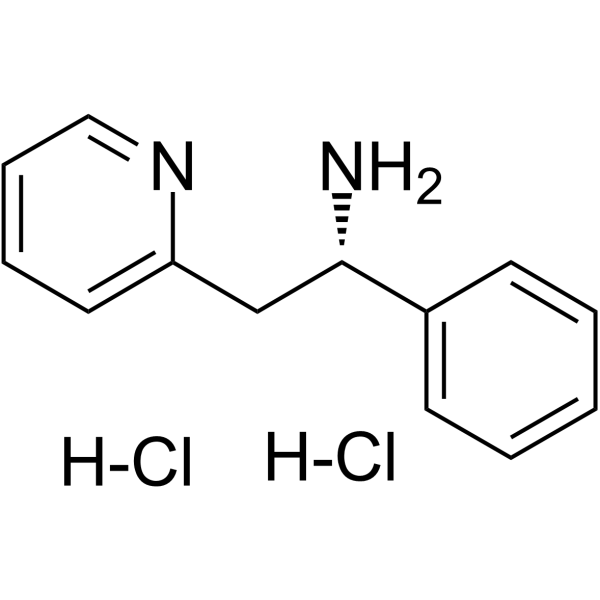
    Lanicemine dihydrochloride
    1 Publications Verification

    AZD6765 dihydrochloride; ARL 15896AR

    iGluR Neurological Disease
    Lanicemine (AZD6765) dihydrochloride is a low-trapping NMDA channel blocker (Ki of 0.56-2.1 μM for NMDA receptor; IC50s of 4-7 μM and 6.4 μM in CHO and Xenopus oocyte cells, respectively). Antidepressant effects .
    Lanicemine dihydrochloride
  • HY-148939

    iGluR Neurological Disease
    MPX-004 is a potent GluN2A antagonist. MPX-004 inhibits GluN2A-containing NMDA receptors expressed in HEK cells with an IC50 of 79 nM. MPX-004 has no inhibitory effect on GluN2B or GluN2D receptor-mediated responses. MPX-004 has the potential for neuropsychiatric and developmental disorders research .
    MPX-004
  • HY-19411

    nAChR Neurological Disease
    SSR180711 hydrochloride is an orally active, selective and reversible α7 acetylcholine nicotinic receptor (n-AChRs) partial agonist. SSR180711 hydrochloride can act on rat α7 n-AChR (Ki=22 nM; IC50=30 nM) and human α7 n-AChR (Ki=14 nM; IC50=18 nM). SSR180711 hydrochloride increases glutamatergic neurotransmission, ACh release and long-term potentiation (LTP) in the hippocampus .
    SSR180711 hydrochloride
  • HY-108960

    P2X Receptor Interleukin Related Neurological Disease
    PPADS is a P2X receptor (P2X Receptor) antagonist and a reversible competitive antagonist of NAADP receptors, with IC50 values of 68 nM (P2X1) and 214 nM (P2X3), respectively. PPADS alleviates pain-related behaviors in the central and peripheral nervous systems of mice after peripheral neuropathy, inhibits the overproduction of IL-1β, IL-6, iNOS and nNOS, and suppresses the hydrolytic activity of extracellular ATPase. PPADS blocks ATP-mediated inward currents on recombinant rat P2X1 and P2X3 receptors, and inhibits purinergic nerve stimulation-induced contraction of rabbit bladder detrusor muscle. PPADS is applicable to research related to neuropathic pain .
    PPADS
  • HY-P1073

    Calcium Channel Potassium Channel Sodium Channel TRP Channel Neurological Disease Cancer
    ProTx-I is a toxin derived from Thrixopelma pruriens and a peptide inhibitor targeting TTX-resistant sodium channels. ProTx-I interacts with voltage sensors of multiple domains such as NaV1.7, reduces neuronal excitability through allosteric modulation of channel gating and alteration of voltage dependence. The IC50 values of ProTx-I against human NaV1.7, NaV1.2, NaV1.6, and NaV1.5 are 95 nM, 104 nM, 21 nM, and 358 nM, respectively; ProTx-I also potently inhibits Ba 2+ currents of hCav3.1, while its inhibitory potency against hCav3.2 is approximately 160-fold lower. ProTx-I is applicable to the research of chronic pain .
    ProTx-I
  • HY-107628

    Melatonin Receptor Neurological Disease
    N-Pentanoyl 2-benzyltryptamine is a potent and selective antagonist of MT2 melatonin receptor, with a pKi of 8.03 for human MT2. N-Pentanoyl 2-benzyltryptamine shows 89- and 229-fold selectivity for human MT2 over human mt1 and Xenopus mel1c receptor subtypes. N-Pentanoyl 2-benzyltryptamine can inhibit melatonin-induced enhancement of electrically-evoked responses .
    N-Pentanoyl 2-benzyltryptamine
  • HY-P5785A

    Potassium Channel Neurological Disease
    Heteropodatoxin-2 (TFA), a peptides of 30-amino acid, is a heteropodatoxin. Heteropodatoxin-2 blocks Kv4.2 current expressed in Xenopus laevis oocytes in a voltage-dependent manner, with less block at more positive potentials .
    Heteropodatoxin-2 TFA
  • HY-P5455

    LIM Kinase (LIMK) Others
    S3 Fragment is a biological active peptide. (This peptide contains the unique amino-terminal phosphorylation site of Xenopus ADF/cofilin, the LIM kinase (LIMK) phosphorylation site. LIMK1 is a key regulator of the actin cytoskeleton through its phosphorylation of ADF/cofilin at serine-3 for inactivation. This peptide is a fragment of the S3 peptide containing the serine-3 sequence of ADF/cofilin that has been widely used as an effective competitive inhibitor of LIMK1.)
    S3 Fragment
  • HY-13710

    Histamine Receptor Potassium Channel Endogenous Metabolite Neurological Disease
    Dimethindene is a potent, selective histamine H1 antagonist. Dimethindene impairs cutaneous wound healing (WH). Dimethindene can block K + currents .
    Dimethindene
  • HY-W001692

    DOV 273547

    GABA Receptor Neurological Disease
    Ocinaplon (DOV 273547) is an orally active positive allosteric modulator of GABAA receptor, with an EC50 ranging from 3.07 μM (α1β2γ2 subtype) to 10.03 μM (α1β2γ3 subtype). Ocinaplon enhances GABA-stimulated chloride currents across multiple GABAA receptor subtypes, with varying potency between different subtypes. Ocinaplon exerts anxiolytic and anticonvulsant effects, and causes motor impairment at high doses. Ocinaplon can be used for research on generalized anxiety disorder .
    Ocinaplon
  • HY-P5823

    nAChR Neurological Disease
    Azemiopsin is a potent nicotinic acetylcholine receptor (nAChR) inhibitor with IC50s of 0.18 μM and 22 μM against T. californica nAChR and human α7 nAChR, respectively. Azemiopsin blocks acetylcholine-induced currents in Xenopus oocytes heterologously expressing human muscle-type nAChR .
    Azemiopsin
  • HY-108235

    AZD6765

    iGluR Neurological Disease
    Lanicemine (AZD6765) is a low-trapping NMDA channel blocker (Ki of 0.56-2.1 μM for NMDA receptor; IC50s of 4-7 μM and 6.4 μM in CHO and Xenopus oocyte cells, respectively). Antidepressant effects .
    Lanicemine
  • HY-P5809

    μ-TrTx-Pe1b

    Sodium Channel Neurological Disease
    Pe1b (μ-TrTx-Pe1b) is a selective Nav1.7 inhibitor with an IC50 of 167 nM .
    Pe1b
  • HY-106316

    GABA Receptor Neurological Disease
    CGS 20625 is a potent, selective and orally active partial agonist for the central benzodiazepine receptor. CGS 20625 inhibits [3H]-flunitrazepam binding to central benzodiazepine receptors with an IC50 of 1.3 nM. CGS 20625 enhances GABA in Xenopus laevis oocytes . CGS 20625 can be used for the research of pentylenetetrazol-induced seizures and anxiety .
    CGS 20625
  • HY-W040176

    N-Palmitoyl-tyrosine phosphoric acid ammonium

    LPL Receptor Cardiovascular Disease Neurological Disease Inflammation/Immunology
    N-PTyrosine PA (N-Palmitoyl-tyrosine phosphoric acid) ammonium is a lysophosphatidic acid (LPA) receptor modulator, which exhibits weak inhibitory activity against LPA1 and partial agonist properties towards LPA5. N-PTyrosine PA ammonium inhibits the activation of LPA receptors and downstream responses by competing with agonists for binding sites. N-PTyrosine PA ammonium can induce morphological changes and aggregation, and also inhibit LPA-induced morphological changes through receptor desensitization caused by pre-incubation. N-PTyrosine PA ammonium can be used in the research of related diseases such as atherosclerosis and acute ischemic syndromes (e.g., unstable angina, myocardial infarction, stroke) .
    N-PTyrosine PA ammonium
  • HY-B2021

    Insecticide Neurological Disease
    τ-Fluvalinate is an insecticide and in-hive miticide, with its mechanism involving interfering with nervous systems. τ-Fluvalinate binds to the open state of Varroa destructor (VdNaV1) and Apis mellifera (AmNaV1) voltage-dependent sodium channels, with EC50 values of 160 nM and 60 nM respectively. τ-Fluvalinate has higher affinity for AmNaV1, which causes sublethal toxicity to honeybees. τ-Fluvalinate can be applied for research on Varroa destructor infestation in honeybee colonies .
    τ-Fluvalinate
  • HY-129517

    iGluR Neurological Disease
    UBP714 exhibts agonistic activity for recombinant GluN1/GluN2 receptor by binding to the positive allosteric site (PAM) of NMDARs. UBP714 enhances NMDAR-mediated field excitatory postsynaptic potentials (f-EPSPs) in Xenopus oocytes .
    UBP714
  • HY-117611

    nAChR Neurological Disease
    GAT107 (compound 1b) is a potent α7 nAChR ago-PAMs (positive allosteric modulators) .
    GAT107
  • HY-108475

    DYRK Cancer
    ProINDY, a prodrug of INDY (HY-108476), is a DYRK1A and DYRK1B inhibitor. ProINDY effectively recovers Xenopus embryos from head malformation induced by Dyrk1A overexpression .
    ProINDY
  • HY-137016

    HCN Channel Neurological Disease
    8-Pcpt-cGMP is an agonist for cyclic nucleotide-gated (CNG) channel with an EC50 of 0.5 μM. 8-Pcpt-cGMP exhibits good membrane permeability. 8-Pcpt-cGMP can be used in studies about the function of CNG channels in visual signal transduction and olfactory transduction .
    8-Pcpt-cGMP
  • HY-122504

    Potassium Channel Neurological Disease
    Linoleoyl glycine is a modified polyunsaturated fatty acid. Linoleoyl glycine has activating effects on human KCNQ1/KCNE1 (hKCNQ1/hKCNE1) channels expressed in Xenopus oocytes .
    Linoleoyl glycine
  • HY-103522

    GABA Receptor Neurological Disease
    AA29504 is a ethyl carbamate with γ-aminobutyric acid (GABAA(HY-L120) receptor activity. AA29504 inhibits the delivery of the neurotransmitter gamma-aminobutyric acid in the central nervous system. AA29504 can be used to research anxiety, insomnia and other neuropsychiatric diseases .
    AA29504
  • HY-P10079

    Orexin Receptor (OX Receptor) Neurological Disease
    Xenopus orexin A is a neuropeptides that identified as an endogenous ligands for an orphan G-protein-coupled receptor. Xenopus orexin A is a potent agonist of OX1R .
    Xenopus orexin A
  • HY-P10080

    Orexin Receptor (OX Receptor) Neurological Disease
    Xenopus orexin B is a neuropeptides that identified as an endogenous ligands for an orphan G-protein-coupled receptor. Xenopus orexin B is a potent agonist of OX2R .
    Xenopus orexin B
  • HY-W011428R

    Reference Standards CDK Others Cancer
    Olomoucine is an ATP competitive inhibitor of CDKs. Olomoucine is a purine (HY-34431) derivative and inhibits CDC2/cyclin B, Cdk2/cyclin A, Cdk2/cyclin E (both IC50=7 μM), CDK/p35 kinase (IC50=3 μM) and ERK1/p44 MAP kinase (IC50=25 μM) . Olomoucine regulates cell cycle and shows anti-melanin tumor activity .
    Olomoucine (Standard)
  • HY-120367

    Carbonic Anhydrase Cancer
    DTP348 is an inhibitor for carbonic anhydrase IX with a Ki of 8.3 nM in vitro and an IC50 of 19.26 μM in Xenopus oocytes. DTP348 exhibits slight toxicity in zebrafish embryos with LD50 of 3.5 mM. DTP348 can be used in the anti-cancer research .
    DTP348

Inquiry Online

Your information is safe with us. * Required Fields.

Salutation


Country or Region *

Applicant Name *


Organization Name *

Department *


Email Address *


Product Name *

Cat. No.


Requested quantity *

Phone Number *


Remarks

Inquiry Online

Inquiry Information

Product Name:
Cat. No.:
Quantity:
MCE Japan Authorized Agent:

