Search Result
Results for "
active isomer
" in MedChemExpress (MCE) Product Catalog:
2
Biochemical Assay Reagents
16
Isotope-Labeled Compounds
| Cat. No. |
Product Name |
Target |
Research Areas |
Chemical Structure |
-
- HY-N0326
-
-
-
- HY-W018772
-
|
|
Endogenous Metabolite
|
Inflammation/Immunology
Cancer
|
|
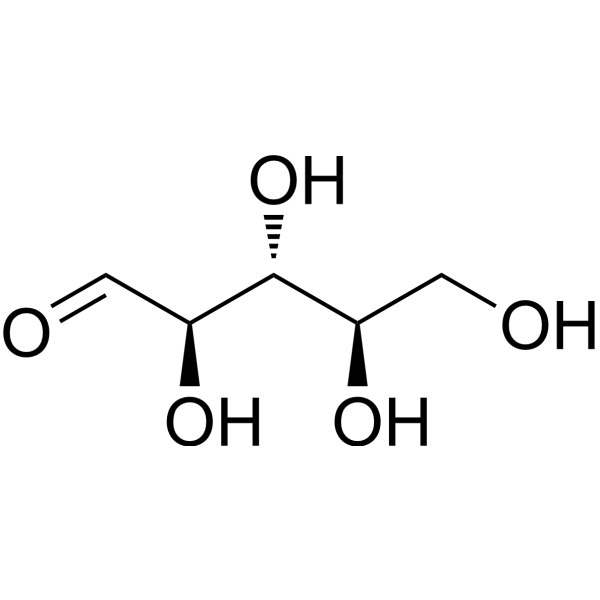
D-Ribose(mixture of isomers) is an energy enhancer, and acts as a sugar moiety of ATP, and widely used as a metabolic therapy supplement for chronic fatigue syndrome or cardiac energy metabolism. D-Ribose(mixture of isomers) is active in protein glycation, induces NF-κB inflammation in a RAGE-dependent manner .
|
-
-
- HY-76082
-
|
|
Environmental Pollutants
Endogenous Metabolite
|
Inflammation/Immunology
|
|
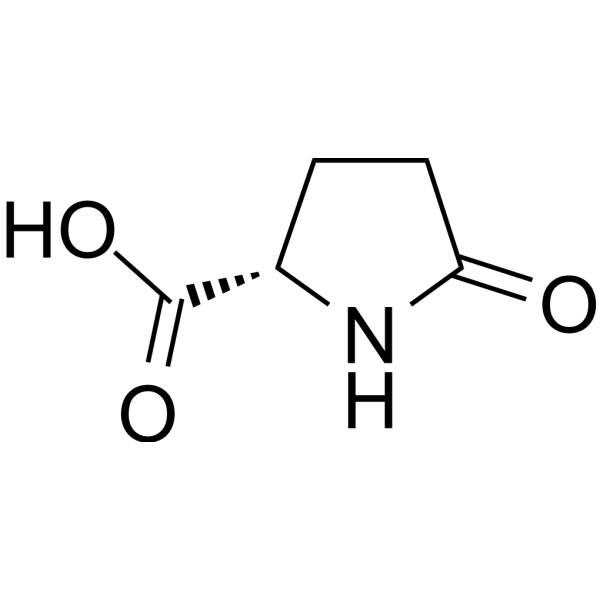
L-Pyroglutamic acid is the levo-isomer of Pyroglutamic acid. L-Pyroglutamic acid is the biologically active enantiomer in humans. Pyroglutamic acid is an intermediate in glutathione metabolism. L-Pyroglutamic acid can be used as a biomarker for systemic lupus erythematosus (SLE) .
|
-
-
- HY-18719
-
|
|
Estrogen Receptor/ERR
Drug Metabolite
PKC
Akt
Apoptosis
|
Neurological Disease
Cancer
|
|
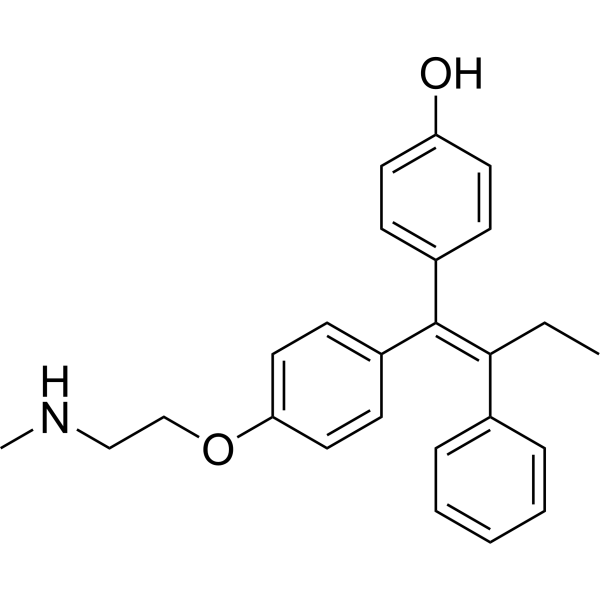
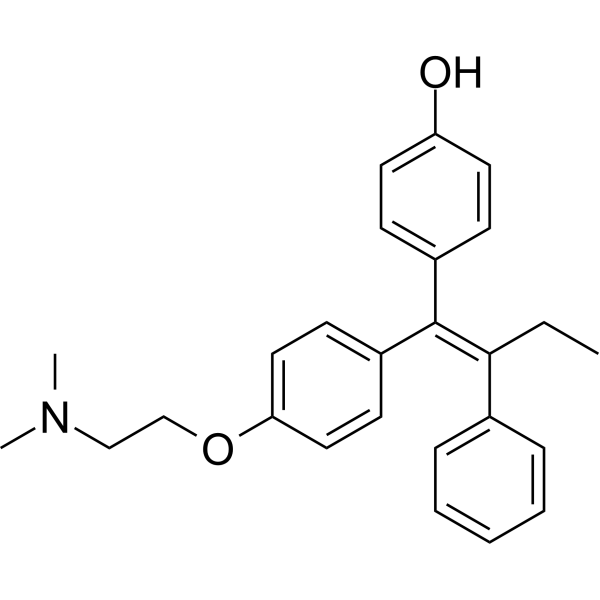
Endoxifen Z-isomer hydrochloride, an orally active Tamoxifen (HY-13757A) metabolite, is a selective estrogen receptor modulator with 100-fold more potency than its parent agent, Tamoxifen. Endoxifen Z-isomer inhibits PKCβ1 kinase activity. Endoxifen Z-isomer attenuates PKCβ1-activated AKT Ser473 phosphorylation, diminishes AKT substrate phosphorylation, and induces Apoptosis. Endoxifen Z-isomer exhibits anticancer activity against hormone-resistant metastatic breast cancer .
|
-
-
- HY-111095B
-
|
(R)-2-Hydroxypropionic acid sodium
|
Endogenous Metabolite
Drug Isomer
|
Neurological Disease
Metabolic Disease
|
|
D-(-)-Lactic acid ((R)-2-Hydroxypropionic acid) sodium is an orally active, toxic optical isomer of Lactic acid (HY-B2227), mainly derived from overproduction by intestinal bacteria or exogenous intake. D-(-)-Lactic acid sodium can induce intoxication, characterized by severe metabolic acidosis accompanied by neurological symptoms .
|
-
-
- HY-W018555
-
|
|
Endogenous Metabolite
Bacterial
|
Infection
Neurological Disease
|
|
D-Cysteine, the D-isomer of cysteine, is an orally active antibacterial agent and a regulator of neural progenitor cell proliferation. D-Cysteine can inhibit Escherichia coli, Streptococcus mutans, and Streptococcus sanguinis. The no-observed-adverse-effect level of D-Cysteine in rats should be less than 500 mg/kg/day .
|
-
-
- HY-N2543
-
-
-
- HY-B1583
-
|
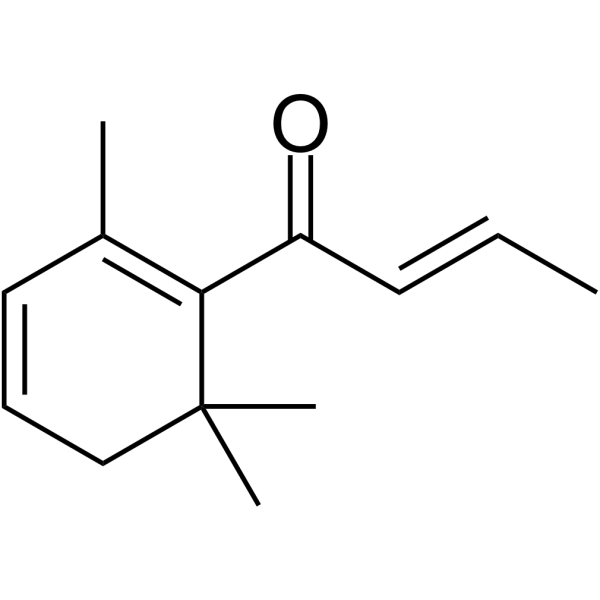
Zucapsaicin; Civamide; cis-Capsaicin
|
TRP Channel
HSV
|
Neurological Disease
|
|
(Z)-Capsaicin is the cis isomer of capsaicin, acts as an orally active TRPV1 agonist, and is used in the research of neuropathic pain.
|
-
-
- HY-113362
-
|
|
Antibiotic
Bacterial
Fungal
|
Infection
|
|
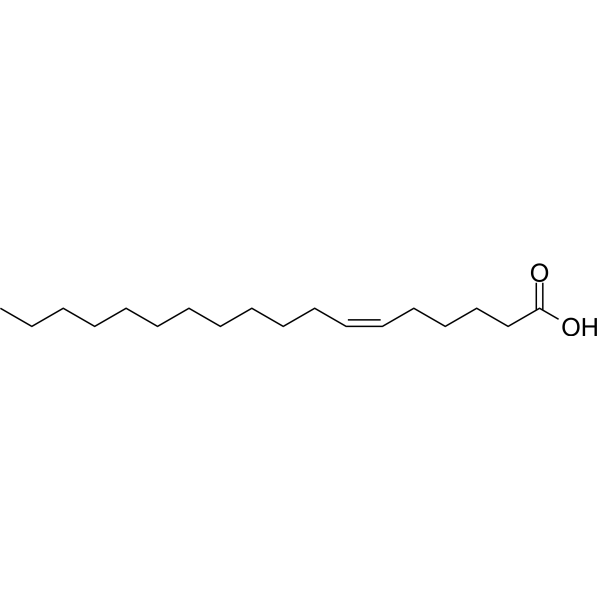
Petroselinic acid, a positional isomer of oleic acid, is isolated from the vegetable oil of Coriandrum sativum fruits. Petroselinic acid is used as substrate for sophorolipid fermentation. Petroselinic acid inhibits the biofilm formation in microorganisms, exhibits antibacterial and antifungal activities. Petroselinic acid is orally active [4.
|
-
-
- HY-18719A
-
|
|
Estrogen Receptor/ERR
Drug Metabolite
PKC
Akt
Apoptosis
|
Neurological Disease
Cancer
|
|
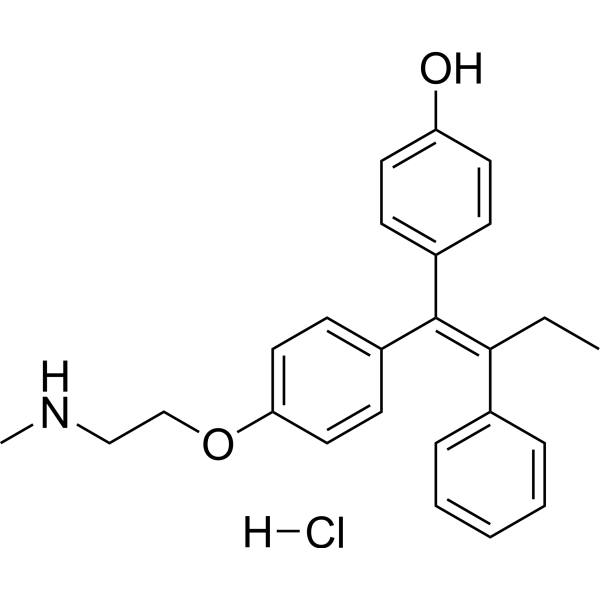
Endoxifen Z-isomer hydrochloride, an orally active Tamoxifen (HY-13757A) metabolite, is a selective estrogen receptor modulator with 100-fold more potency than its parent agent, Tamoxifen. Endoxifen Z-isomer hydrochloride inhibits PKCβ1 kinase activity. Endoxifen Z-isomer hydrochloride attenuates PKCβ1-activated AKT Ser473 phosphorylation, diminishes AKT substrate phosphorylation, and induces Apoptosis. Endoxifen Z-isomer hydrochloride exhibits anticancer activity against hormone-resistant metastatic breast cancer .
|
-
-
- HY-W015302
-
|
Orthanilic acid; 2-Aminobenzenesulphonic acid
|
Drug Intermediate
|
Others
|
|
2-Aminobenzenesulfonic acid is an anilinesulfonic acid and also the ortho-isomer of aminobenzenesulfonic acid. 2-Aminobenzenesulfonic acid can be used in the synthesis of other active compounds. 2-Aminobenzenesulfonic acid can coordinate via its -NH2 and -SO3 groups to form polymeric copper (II) complexes .
|
-
-
- HY-100423A
-
|
KPT-8602 (Z-isomer)
|
CRM1
|
Cancer
|
|
Eltanexor Z-isomer (KPT-8602 Z-isomer) is the less active isomer of KPT-8602.
|
-
-
- HY-101140A
-
-
-
- HY-16950B
-
|
(E)-Afimoxifene
|
Estrogen Receptor/ERR
|
Cancer
|
|
(E)-4-Hydroxytamoxifen ((E)-Afimoxifene), the less active isomer of (Z)-4-hydroxytamoxifen, is an estrogen receptor modulator.
|
-
-
- HY-100406
-
|
(+)-MCPG
|
mGluR
|
Neurological Disease
|
|
(S)-MCPG ((+)-MCPG) is a potent group I/II metabotropic glutamate receptor (mGluRs) antagonist and the active isomer of (RS)-MCPG (HY-100371) . (S)-MCPG can be used for the study of the function of mGluRs in spatial learning .
|
-
-
- HY-B1617A
-
|
|
Estrogen Receptor/ERR
|
Metabolic Disease
Endocrinology
|
|
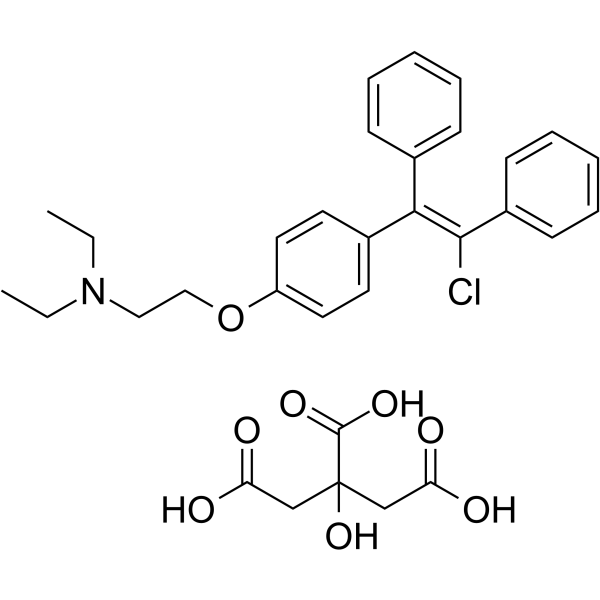
Zuclomiphene citrate is a cis isomer of Clomiphene citrate (HY-B0463). Zuclomiphene citrate is orally active and has an antiestrogenic effect. Zuclomiphene can reduce cholesterol levels. Zuclomiphene citrate can be for the researches of endocrinology and metabolic disease .
|
-
-
- HY-75095
-
|
S-(-)-α-Phenylethylamine; L-(-)-α-Methylbenzylamine
|
Drug Intermediate
Biochemical Assay Reagents
|
Neurological Disease
|
|
(S)-(-)-1-Phenylethanamine (S-(-)-α-Phenylethylamine; L-(-)-α-Methylbenzylamine) is a S-isomer of 1-Phenylethanamine (HY-W012848). (S)-(-)-1-Phenylethanamine can be used as a pharmaceutical intermediate for the synthesis of various active compounds .
|
-
-
- HY-N1867
-
|
|
PPAR
|
Metabolic Disease
|
|
trans-Cinnamyl alcohol is a trans-isomer of Cinnamyl alcohol. Cinnamyl Alcohol is an active component from chestnut flower, inhibits increased PPARγ expression, with anti-obesity activity. trans-Cinnamyl alcohol, belongs to the class of organic compounds known as cinnamyl alcohols, is a primary metabolite .
|
-
-
- HY-114271A
-
-
-
- HY-14855A
-
|
(S)-TR 700; (S)-DA 7157
|
Bacterial
Antibiotic
|
Infection
|
|
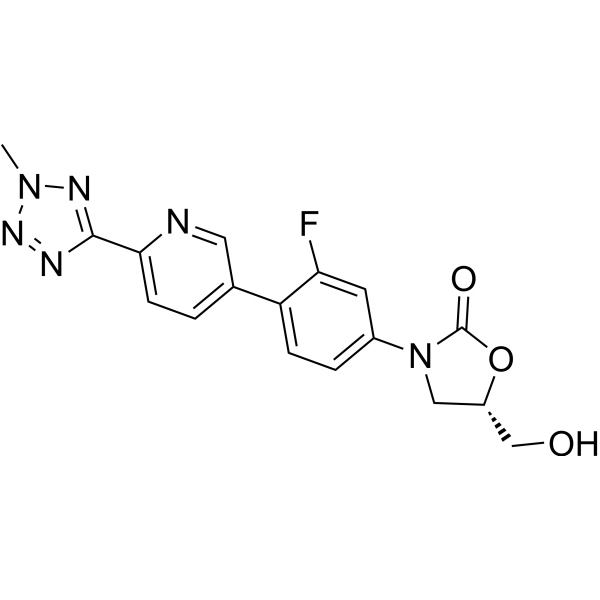
(S)-Tedizolid is the S-enantiomer of Tedizolid. Tedizolid is a novel oxazolidinone with activity against Gram-positive pathogens. (S)-Tedizolid is the less active isomer.
|
-
-
- HY-10502A
-
|
IND-58359 S enantiomer; (S)-(-)-R-115777
|
Farnesyl Transferase
|
Cancer
|
|
Tipifarnib S enantiomer is the S-enantiomer of Tipifarnib. Tipifarnib is a potent and specific farnesyltransferase (FTase) inhibitor with IC50 of 0.6 nM. Tipifarnib S enantiomer is the less active isomer.
|
-
-
- HY-151232
-
|
(E/Z)-PRN1008
|
Btk
|
Inflammation/Immunology
|
|
(E/Z)-Rilzabrutinib ((E/Z)-PRN1008) is a cis-trans isomer of Rilzabrutinib (HY-112166). Rilzabrutinib is a BTK inhibitor .
|
-
-
- HY-76082S
-
|
|
Isotope-Labeled Compounds
Endogenous Metabolite
|
Inflammation/Immunology
|
|
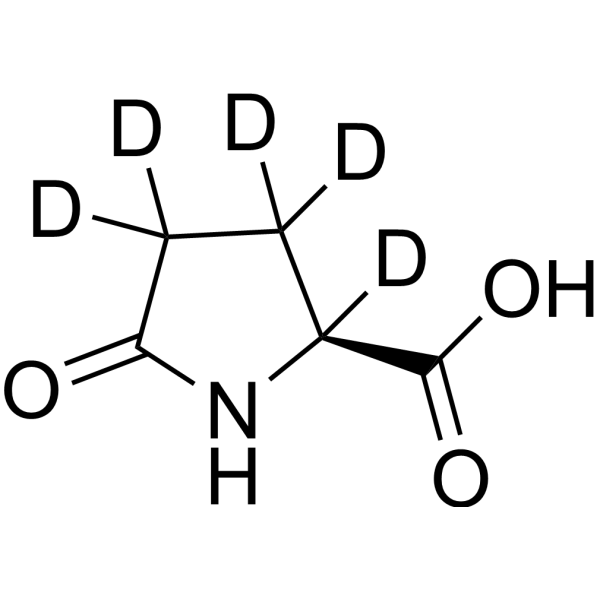
L-Pyroglutamic acid-d5 is the deuterium labeled L-Pyroglutamic acid (HY-76082). L-Pyroglutamic acid is the levo-isomer of Pyroglutamic acid. L-Pyroglutamic acid is the biologically active enantiomer in humans. Pyroglutamic acid is an intermediate in glutathione metabolism.
|
-
-
- HY-139612A
-
|
(S)-JDQ-443; (S)-NVP-JDQ443
|
Drug Isomer
Ras
PERK
|
Inflammation/Immunology
Cancer
|
|
(S)-Opnurasib ((S)-JDQ-443; (S)-NVP-JDQ443) is an isomer of Opnurasib (HY-139612). Opnurasib is an orally active, potent, selective, and covalent KRAS G12C inhibitor (extracted from patent WO2021120890A1). Opnurasib shows antitumor activity .
|
-
-
- HY-123669A
-
|
|
P2Y Receptor
|
Cardiovascular Disease
|
|
Trans-R-138727 is the trans isomer of R-138727 (HY-123669). R-138727 is the active metabolite of the antiplatelet agent Prasugrel (HY-15284). R-138727 is an irreversible inhibitor for the platelet receptor P2Y12, and inhibits ADP-induced platelet activation and aggregation .
|
-
-
- HY-114277B
-
|
AMG-510 isomer
|
Ras
|
Others
|
|
Sotorasib (AMG-510) isomer is the less active isomer of Sotorasib (AMG-510). AMG-510 is a potent KRAS G12C covalent inhibitor.
|
-
-
- HY-W018772S15
-
|
|
Endogenous Metabolite
|
Inflammation/Immunology
|
|
D-Ribose(mixture of isomers)- 13C5 isomers)- 13C5 is the 13C labeled D-Ribose(mixture of isomers) . D-Ribose(mixture of isomers) is an energy enhancer, and acts as a sugar moiety of ATP, and widely used as a metabolic therapy supplement for chronic fatigue syndrome or cardiac energy metabolism. D-Ribose(mixture of isomers) is active in protein glycation, induces NF-κB inflammation in a RAGE-dependent manner .
|
-
-
- HY-N0557
-
|
|
Others
|
Cancer
|
|
Isoescin IB is an isomer of Escin IB. Isoescin IB and Escin IB are the chief active ingredients in escin .
|
-
-
- HY-126028A
-
|
(S)-Sotalol
|
Adrenergic Receptor
|
Cardiovascular Disease
Neurological Disease
|
|
(+)-Sotalol ((S)-Sotalol) is the S-isomer of Sotalol (HY-103196). Sotalol is an orally active, non-selective β-adrenergic receptor blocker. (+)-Sotalol is an antiarrhythmic agent. (+)-Sotalol can prolong action potential duration in isolated cardiac muscle .
|
-
-
- HY-N1778A
-
|
(E)-O-Methylferulic acid
|
Reactive Oxygen Species (ROS)
Virus Protease
|
Infection
Cancer
|
|
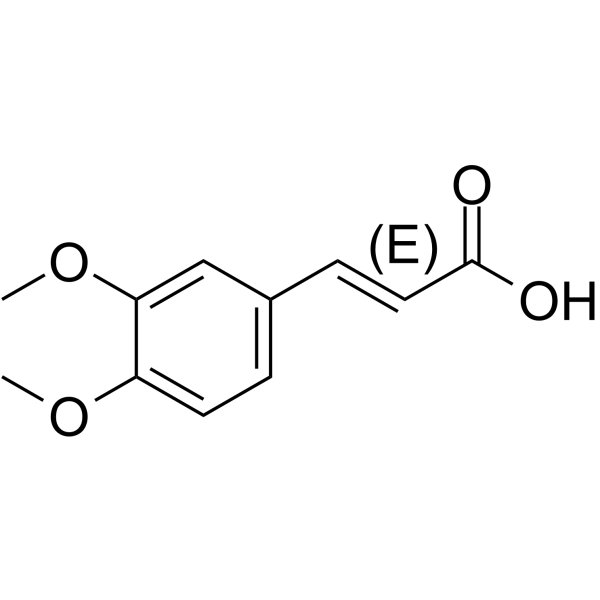
(E)-3,4-Dimethoxycinnamic acid is the less active isomer of 3,4-Dimethoxycinnamic acid. 3,4-Dimethoxycinnamic acid exerts anti-apoptotic effects on L-02 cells via the ROS-mediated signaling pathway . Anti-apoptotic effects .
|
-
-
- HY-110155A
-
|
|
Drug Isomer
|
Neurological Disease
|
|
(Rac)-LM11A-31 dihydrochloride is an isomer of LM11A-31 dihydrochloride. LM11A-31 dihydrochloride, a non-peptide p75 NTR (neurotrophin receptor p75) modulator, is an orally active and potent proNGF (nerve growth factor) antagonist .
|
-
-
- HY-106359A
-
|
RDP-58 acetate
|
TNF Receptor
IFNAR
Reactive Oxygen Species (ROS)
|
Cancer
|
|
Delmitide (RDP58) acetate is an orally active d-isomer decapeptide with potent anti-inflammatory activity. Delmitide acetate inhibits production of TNF-α, IFN-γ, and interleukin (IL)-12, and up-regulates heme oxygenase 1 activity. Delmitide acetate can be used for the research of ulcerative colitis .
|
-
-
- HY-W129233
-
|
Dihydroartemisinin (α,β mixture)
|
Parasite
Autophagy
Apoptosis
|
Infection
Cancer
|
|
Dihydroartemisinin (mixture of α and β isomers) is an anti-malaria and anticancer agent, as well as an active metabolite of artemisinin and its derivatives. Dihydroartemisinin exerts anticancer effects through various molecular mechanisms, such as inhibiting proliferation, inducing apoptosis, inhibiting tumor metastasis and angiogenesis, promoting immune function, inducing autophagy and endoplasmic reticulum stress .
|
-
-
- HY-76082R
-
|
|
Reference Standards
Endogenous Metabolite
|
Inflammation/Immunology
|
|
L-Pyroglutamic acid (Standard) is the analytical standard of L-Pyroglutamic acid (HY-76082). This product is intended for research and analytical applications. L-Pyroglutamic acid is the levo-isomer of Pyroglutamic acid. L-Pyroglutamic acid is the biologically active enantiomer in humans. Pyroglutamic acid is an intermediate in glutathione metabolism. L-Pyroglutamic acid standard can be used as a biomarker for systemic lupus erythematosus (SLE) .
|
-
-
- HY-18719S
-
-
-
- HY-W018772R
-
|
|
Reference Standards
Endogenous Metabolite
|
Inflammation/Immunology
Cancer
|
|
D-Ribose(mixture of isomers) (Standard) is the analytical standard of D-Ribose(mixture of isomers). This product is intended for research and analytical applications. D-Ribose(mixture of isomers) is an energy enhancer, and acts as a sugar moiety of ATP, and widely used as a metabolic therapy supplement for chronic fatigue syndrome or cardiac energy metabolism. D-Ribose(mixture of isomers) is active in protein glycation, induces NF-κB inflammation in a RAGE-dependent manner .
|
-
-
- HY-W110319
-
|
3,7-Diamino-2,8-dimethyldibenzothiophene sulfone(contains 2,6-Dimethyl isomer)
|
Drug Intermediate
|
Others
|
|
o-Tolidine Sulfone(contains 2,6-Dimethyl isomer) (3,7-Diamino-2,8-dimethyldibenzothiophene sulfone(contains 2,6-Dimethyl isomer)) is a drug intermediate for synthesis of various active compounds.
|
-
-
- HY-133016A
-
|
|
MetAP
|
Others
|
|
(R)-M8891 (compound R-9) is a less active isomer of M8891. M8891 is an orally active, reversible and brain penetrant Methionine Aminopeptidase-2 (MetAP-2) inhibitor .
|
-
-
- HY-19414A
-
-
-
- HY-B0267C
-
|
Aroxybutynin
|
mAChR
|
Neurological Disease
|
|
(R)-Oxybutynin (Aroxybutynin) is the racemic isomer of Oxybutynin and an orally active muscarinic receptor antagonist. (R)-Oxybutynin has antispasmodic, antimuscarinic, and anticholinergic activities and competitively antagonizes carbachol-induced contractions. (R)-Oxybutynin can be used to study urinary incontinence caused by neurogenic bladder dysfunction .
|
-
-
- HY-106359
-
-
-
- HY-16950BS
-
|
(E)-Afimoxifene-d5
|
Isotope-Labeled Compounds
Estrogen Receptor/ERR
|
Cancer
|
|
(E)-4-Hydroxytamoxifen-d5 ((E)-Afimoxifene-d5) is the deuterium labeled (E)-4-Hydroxytamoxifen. (E)-4-Hydroxytamoxifen ((E)-Afimoxifene), the less active isomer of (Z)-4-hydroxytamoxifen, is an estrogen receptor modulator.
|
-
-
- HY-125784A
-
|
|
5-HT Receptor
|
Neurological Disease
|
|
(R)-Viloxazine hydrochloride is a less active R-isomer of Viloxazine hydrochloride. Viloxazine hydrochloride is an effective antidepressant agent .
|
-
-
- HY-W067479
-
|
|
Insecticide
|
Others
|
|
(E)-Cinnamamide, the less active isomer of Cinnamamide. Cinnamamide, a derivative of the plant secondary compound Cinnamic acid. Cinnamamide is effective as a non-lethal chemical repellent suitable for reducing avian pest damage .
|
-
-
- HY-B1342A
-
-
-
- HY-139573A
-
|
(Rac)-FT-4202
|
Pyruvate Kinase
|
Cardiovascular Disease
|
|
(Rac)-Etavopivat ((Rac)-FT-4202) is an isomer of Etavopivat (HY-139573). Etavopivat is an orally active erythrocyte pyruvate kinase-R (PKR) activator that can be used in studies of sickle cell disease and other haemoglobinopathies .
|
-
-
- HY-173637A
-
|
|
Ras
|
Cancer
|
|
(S)-AZD0022 is an isomer of AZD0022, AZD0022 is a selective and orally active KRAS G12D inhibitor. AZD0022 inhibits KRAS pathway suppression in the GP2D xenograft model .
|
-
-
- HY-15005A
-
|
|
HCV
|
Infection
|
|
PSI-7976 is the isomer of PSI-7977. PSI-7977 is an active inhibitor of HCV RNA replication in the HCV replicon assay, demonstrates potent anti-hepatitis C virus (HCV) activity.
|
-
-
- HY-148516A
-
|
|
Myosin
|
Neurological Disease
|
|
(R)-MPH-220 is the R isomer of MPH-220 (HY-148516). MPH-220 is a selective and orally active inhibitor of skeletal muscle myosin-2. MPH-220 enables muscle relaxation. MPH-220 is anti-spastic agent that can be used in the research of spasticity and muscle stiffness .
|
-
-
- HY-10261E
-
|
(R)-BIBW 2992
|
EGFR
c-Met/HGFR
p38 MAPK
|
Cancer
|
|
(R)-Afatinib ((R)-BIBW 2992) is the Afatinib isomer. Afatinib (HY-10261) is an orally active, potent and irreversible dual specificity inhibitor of?ErbB?family (EGFR?and?HER2), with?IC50?values of 0.5 nM, 0.4 nM, 10 nM and 14 nM for?EGFR wt, EGFR L858R,?EGFR L858R/T790M?and HER2, respectively. Afatinib can be used for the research of esophageal squamous cell carcinoma (ESCC), non-small cell lung?cancer?(NSCLC) and gastric?cancer .
|
-
- HY-124909
-
-
- HY-19487A
-
|
Ribocil S enantiomer; ent-Ribocil A
|
Bacterial
|
Infection
|
|
Ribocil-B is the active S-isomer of ribocil which can inhibit flavin mononucleotide (FMN) with a KD of 6.6 nM.
|
-
- HY-14735
-
|
XP 19986
|
GABA Receptor
|
Neurological Disease
|
|
Arbaclofen placarbil is a novel transported proagent of the active R-isomer of baclofen. Baclofen is a racemic GABAB receptor agonist
|
-
- HY-N2543R
-
|
(E/Z)-Damascenone (Standard)
|
Reference Standards
NF-κB
Endogenous Metabolite
|
Inflammation/Immunology
|
|
Damascenone (Standard) is the analytical standard of Damascenone. This product is intended for research and analytical applications. Damascenone ((E/Z)-Damascenone) is an active compound of Epipremnum pinnatum with anti-inflammatory activity . Damascenone is a mixture complex of E-isomer-Damascenone and Z-isomer Damascenone.
|
-
- HY-17536A
-
|
(E)-KPT-330
|
CRM1
|
Cancer
|
|
(E)-Selinexor ((E)-KPT-330) is the E-isomer of Selinexor (HY-17536). Selinexor is the selective, orally active CRM1 inhibitor .
|
-
- HY-76082S1
-
|
|
Isotope-Labeled Compounds
Endogenous Metabolite
|
Inflammation/Immunology
|
|
L-Pyroglutamic acid- 13C5 is the 13C labeled L-Pyroglutamic acid (HY-76082) . L-Pyroglutamic acid is the levo-isomer of Pyroglutamic acid. L-Pyroglutamic acid is the levo-isomer of Pyroglutamic acid. L-Pyroglutamic acid is the biologically active enantiomer in humans. Pyroglutamic acid is an intermediate in glutathione metabolism. L-Pyroglutamic acid can be used as a biomarker for systemic lupus erythematosus (SLE) .
|
-
- HY-76082A
-
|
|
Endogenous Metabolite
|
Inflammation/Immunology
|
|
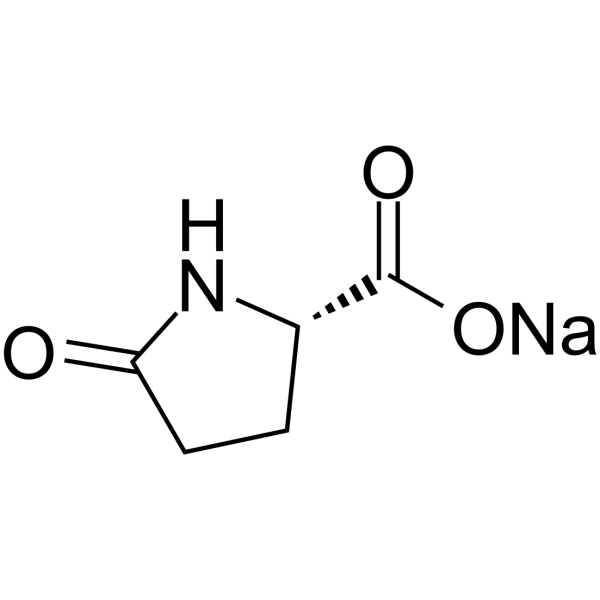
L-Pyroglutamic acid sodium is the levo-isomer of Pyroglutamic acid. L-Pyroglutamic acid sodium is the biologically active enantiomer in humans. Pyroglutamic acid is an intermediate in glutathione metabolism. L-Pyroglutamic acid sodium can be used as a biomarker for systemic lupus erythematosus (SLE) .
|
-
- HY-N4147
-
|
|
Others
|
Metabolic Disease
Inflammation/Immunology
|
|
Eleutheroside D is an active lignan isolated from the root of Eleutherococcus senticosus, has anti-inflammatory and hypoglycemic activities . Eleutheroside D is an optical isomer of Eleutheroside E (HY-N0272) .
|
-
- HY-Z8643
-
|
|
TGF-β Receptor
Drug Intermediate
|
Others
|
|
HCTZ-CH2-HCTZ is an isomer of HCTZ (HY-B0252). Hydrochlorothiazide (HCTZ), an orally active diuretic agent of the thiazide class, inhibits transforming TGF-β/Smad signaling pathway .
|
-
- HY-N8356A
-
|
9-cis-Retinyl palmitate
|
Endogenous Metabolite
|
Others
|
|
9-cis-Vitamin A palmitate (9-cis-Retinyl palmitate) is a 9-cis isomer formed by vitamin A palmitate in corn flakes. 9-cis-Vitamin A palmitate has a biological activity of 26% of all-trans-vitamin A palmitate, the most biologically ac-tive form of vitamin A .
|
-
- HY-139553A
-
|
(R)-ATI-450; (R)-CDD-450
|
Drug Isomer
|
Inflammation/Immunology
|
|
(R)-Zunsemetinib is the isomer of Zunsemetinib (HY-139553), and can be used as an experimental control. Zunsemetinib (CDD-450) is an orally active and selective p38α mitogen-activated protein kinase-activated protein kinase 2 (MK2) pathway inhibitor. Zunsemetinib can be used for the research of immuno-inflammatory diseases .
|
-
- HY-B1032A
-
|
(R)-Dropropizine
|
Histamine Receptor
|
Neurological Disease
|
|
(+)-Dropropizine ((R)-Dropropizine), an isomer of Dropropizine (HY-B1032), is an orally active histamine receptor inhibitor with anti-allergic effects. (+)-Dropropizine reduces a cough by modulation of neuropeptides involved in the cough reflex and by interfering with stimulus activation of peripheral endings of sensory nerves. (+)-Dropropizine is promising for research of dry cough caused by respiratory diseases .
|
-
- HY-115584B
-
|
|
Parasite
|
Infection
|
|
Lufenuron, (-)- is an active isomer form of Lufenuron. Lufenuron is a lipophilic benzoyl urea insecticide and chitin synthesis inhibitor that can be used for flea and fish lice control. Lufenuron inhibits the molting of arthropods .
|
-
- HY-114272A
-
-
- HY-112895A
-
|
|
Androgen Receptor
|
Cancer
|
|
(R)-UT-155 (compound 11) is a selective androgen receptor degrader (SARD) ligand. Less active than the S-isomer .
|
-
- HY-139149A
-
|
|
Histone Acetyltransferase
|
Cancer
|
|
(E/Z)-NiCur is the active isomer of NiCur (HY-139149). (E/Z)-NiCur is a potent CBP histone acetyltransferase (HAT) inhibitor .
|
-
- HY-W018772S16
-
|
|
Isotope-Labeled Compounds
|
Inflammation/Immunology
|
|
D-Ribose-1,2- 13C2 is the 13C labled D-Ribose(mixture of isomers) (HY-W018772) . D-Ribose(mixture of isomers) is an energy enhancer,and acts as a sugar moiety of ATP,and widely used as a metabolic therapy supplement for chronic fatigue syndrome or cardiac energy metabolism. D-Ribose(mixture of isomers) is active in protein glycation,induces NF-κB inflammation in a RAGE-dependent manner .
|
-
- HY-17626C
-
|
(R)-WCK-2349
|
Antibiotic
|
Others
|
|
(R)-Alalevonadifloxacin mesylate is an isomer of Alalevonadifloxacin mesylate (HY-17626B). Alalevonadifloxacin mesylate is a oraly active anti-methicillin-resistant Staphylococcus aureus (MRSA) antibiotic .
|
-
- HY-I0603
-
|
(R)-TAK-375
|
Melatonin Receptor
Drug Isomer
|
Others
|
|
(R)-Ramelteon ((R)-TAK-375) is an orally active inactive isomer of the melatonin receptor 1 and 2. (R)-Ramelteon is promising for research of regulating sleep .
|
-
- HY-116152A
-
|
(S)-Ciprofol; (S)-HSK3486
|
GABA Receptor
|
Neurological Disease
|
|
(S)-Cipepofol is the isomer of Cipepofol (HY-116152).Cipepofol (HSK3486) is a sleep-promoting active molecule and a gamma-aminobutyric acid (GABA) receptor enhancer .
|
-
- HY-145806
-
|
13-cis-Retinol acetate; 13-cis-Vitamin A acetate
|
Endogenous Metabolite
|
Endocrinology
|
|
13-cis-Retinyl acetate (13-cis-Retinol acetate; 13-cis-Vitamin A acetate) is a 13-cis isomer formed by Retinyl acetate. 13-cis-Retinyl acetate is an active metabolite of vitamin A .
|
-
- HY-10017A
-
|
|
CXCR
|
Inflammation/Immunology
Endocrinology
|
|
(R)-SCH 546738 is the R-isomer of SCH 546738 (HY-10017). SCH 546738 is an orally active and non-competitive antagonist for CXCR3 with Ki of 0.4 nM for human CXCR3 receptor .
|
-
- HY-N0557R
-
|
|
Reference Standards
Others
|
Cancer
|
|
Isoescin IB (Standard) is the analytical standard of Isoescin IB. This product is intended for research and analytical applications. Isoescin IB is an isomer of Escin IB. Isoescin IB and Escin IB are the chief active ingredients in escin .
|
-
- HY-152106A
-
-
- HY-163529A
-
|
|
HSV
|
Infection
|
|
(S)-HN0037 is the (S)-isomer of HN0037 (HY-163529), a selective and orally active helicase-primase inhibitor that inhibits HSV replication by targeting the viral helicase-primase enzyme complex .
|
-
- HY-B1583R
-
|
Zucapsaicin (Standard); Civamide (Standard); cis-Capsaicin (Standard)
|
Reference Standards
TRP Channel
HSV
|
Neurological Disease
|
|
(Z)-Capsaicin (Standard) is the analytical standard of (Z)-Capsaicin. This product is intended for research and analytical applications. (Z)-Capsaicin is the cis isomer of capsaicin, acts as an orally active TRPV1 agonist, and is used in the research of neuropathic pain.
|
-
- HY-B1617
-
|
|
Estrogen Receptor/ERR
|
Metabolic Disease
Endocrinology
|
|
Zuclomiphene is a cis isomer of Clomiphene citrate (HY-B0463). Zuclomiphene is orally active and has an antiestrogenic effect. Zuclomiphene can reduce cholesterol levels. Zuclomiphene can be for the researches of endocrinology and metabolic disease .
|
-
- HY-W008914
-
|
|
EGFR
|
Cancer
|
|
(E/Z)-CP-724714 is a racemic compound of (E)-CP-724714 and (Z)-CP-724714 isomers. CP-724714 is a potent and selective orally active ErbB2 (HER2) inhibitor .
|
-
- HY-14855AR
-
|
(S)-TR 700 (Standard); (S)-DA 7157 (Standard)
|
Reference Standards
Bacterial
Antibiotic
|
Infection
|
|
(S)-Tedizolid (Standard) is the analytical standard of (S)-Tedizolid. This product is intended for research and analytical applications. (S)-Tedizolid is the S-enantiomer of Tedizolid. Tedizolid is a novel oxazolidinone with activity against Gram-positive pathogens. (S)-Tedizolid is the less active isomer.
|
-
- HY-139124
-
|
15(R)-Carboprost; 15(R)-15-methyl PGF2α
|
Prostaglandin Receptor
|
Metabolic Disease
|
|
15(R)-15-Methyl Prostaglandin F2α (15(R)-Carboprost; 15(R)-15-methyl PGF2α) is a metabolically stable analog of PGF2α. 15(R)-15-Methyl Prostaglandin F2α is an inactive, prodrug PGF agonist designed for activation by gastric acid after oral administration. Acid-catalyzed epimerization of 15(R)-15-Methyl Prostaglandin F2α converts it into the active 15(S)-isomer. The 15(S)-isomer induces luteolysis when injected in rhesus monkeys at a dose of about 12 mg/animal, while the 15(R)-isomer does not.
|
-
- HY-N1867R
-
|
|
Reference Standards
PPAR
|
Metabolic Disease
|
|
trans-Cinnamyl alcohol is a trans-isomer of Cinnamyl alcohol. Cinnamyl Alcohol is an active component from chestnut flower, inhibits increased PPARγ expression, with anti-obesity activity. trans-Cinnamyl alcohol, belongs to the class of organic compounds known as cinnamyl alcohols, is a primary metabolite .
|
-
- HY-N1778AR
-
-
- HY-136350B
-
|
|
Phosphodiesterase (PDE)
|
Cancer
|
|
(S)-BRD9500 is the isomer of BRD9500 (HY-136350), and can be used as an experimental control. BRD9500 is an orally active phosphodiesterases 3 (PDE3) inhibitor with IC50s of 10 and 27 nM for PDE3A and PDE3B, respectively. Antitumor activity .
|
-
- HY-19394A
-
|
|
PPAR
|
Metabolic Disease
|
|
(E)-CLX-0921 is the E-isomer of CLX-0921 (HY-19394). CLX-0921 is an orally active PPARγ agonist with an IC50 of 1.54 μM. CLX-0921 has a potent antihyperglycemic activity, and can be used for the study of type 2 diabetes .
|
-
- HY-B0632B
-
|
|
Calcium Channel
|
Cardiovascular Disease
|
|
(2R,3R)-Diltiazem hydrochloride is an isomer of Diltiazem (HY-B0632) hydrochloride. Diltiazem is an orally active L-type Ca 2+ channel blocker. Diltiazem shows antihypertensive and antiarrhythmic effects. Diltiazem can be used for the research of cardiac arrhythmia, hypertension, and angina pectoris .
|
-
- HY-111271B
-
|
|
Prostaglandin Receptor
Drug Isomer
|
Inflammation/Immunology
Endocrinology
|
|
(R)-L 888607 is the isomer of L 888607 (HY-111271), and can be used as an experimental control. L 888607 is a potent, selective, stable and orally active CRTH2 agonist. L 888607 has high affinity for the human CRTH2 receptor with a Ki value of 4 nM. L 888607 can be used for the research of several physiological events and metabolite .
|
-
- HY-N8356
-
|
13-cis-Retinyl palmitate
|
Endogenous Metabolite
|
Others
|
|
13-cis-Vitamin A palmitate (13-cis-Retinyl palmitate) is a 13-cis isomer formed by vitamin A palmitate in corn flakes. 13-cis-Vitamin A palmitate has a biological activity of 75% of all-trans-vitamin A palmitate, the most biologically ac-tive form of vitamin A .
|
-
- HY-10002B
-
|
(1R,5Z)-1,25-Dihydroxyvitamin D3
|
VD/VDR
|
Cancer
|
|
(1R,5Z)-Calcitriol ((1R,5Z)-1,25-Dihydroxyvitamin D3) is a Calcitriol (HY-10002) isomer. Calcitriol is the most active metabolite of vitamin D and also a vitamin D receptor (VDR) agonist .
|
-
- HY-163452
-
|
|
Farnesyl Transferase
|
Metabolic Disease
|
|
Squalene synthase-IN-2 (comppund isomer A-(1S, 3R)-14i) is an orally active squalene synthase inhibitor with IC50 values of 3.4, 99 nM for squalene synthase and cholesterol synthesis, respectively. Squalene synthase-IN-2 reduces plasma cholesterol and triglyceride .
|
-
- HY-113362R
-
|
|
Reference Standards
Antibiotic
Bacterial
Fungal
|
Infection
|
|
Petroselinic acid (Standard) is the analytical standard of Petroselinic acid. This product is intended for research and analytical applications. Petroselinic acid, a positional isomer of oleic acid, is isolated from the vegetable oil of Coriandrum sativum fruits. Petroselinic acid is used as substrate for sophorolipid fermentation. Petroselinic acid inhibits the biofilm formation in microorganisms, exhibits antibacterial and antifungal activities. Petroselinic acid is orally active [4.
|
-
- HY-B1617AS2
-
|
|
Isotope-Labeled Compounds
Estrogen Receptor/ERR
|
Metabolic Disease
Endocrinology
|
|
Zuclomiphene d10 Citrate salt is deuterium labeled Zuclomiphene citrate (HY-B1617A). Zuclomiphene citrate is a cis isomer of Clomiphene citrate (HY-B0463). Zuclomiphene citrate is orally active and has an antiestrogenic effect. Zuclomiphene can reduce cholesterol levels. Zuclomiphene citrate can be for the researches of endocrinology and metabolic disease .
|
-
- HY-101140AR
-
|
|
Keap1-Nrf2
Reference Standards
|
Metabolic Disease
Inflammation/Immunology
|
|
KI696 isomer (Standard) is the analytical standard of KI696 isomer (HY-101140A). This product is intended for research and analytical applications. KI696 isomer is the less active isomer of KI696 (HY-101140). KI696 is a high affinity probe that disrupts the Keap1/NRF2 interaction .
|
-
- HY-113724
-
|
|
Endogenous Metabolite
|
Cardiovascular Disease
Metabolic Disease
|
|
S-8666 is an orally active uricosuric antihypertensive diuretic. The S-8666 has both S-(-)- and R-(+)-isomers. The diuretic and sodium-excretion activities of it are entirely dominated by the S-(-)-isomer, while the R-(+)-isomer shows no significant activity. S-8666 relies on the organic acid transport system to be secreted through the proximal tubule. S-8666 exhibits a clear uric acid excretion-promoting activity and diuretic effect in various species (such as rats and chimpanzees) .
|
-
- HY-16511A
-
|
(E)-WX-671
|
Ser/Thr Protease
|
Cancer
|
|
(E)-Upamostat ((E)-WX-671) is an E-isomer of Upamostat (HY-16511). Upamostat (WX-671), a prodrug of WX-UK1, is an orally active serine protease inhibitor .
|
-
- HY-13467A
-
-
- HY-156438A
-
|
(S)-NT-0796
|
Drug Isomer
|
Neurological Disease
|
|
(S)-Ruvonoflast ((S)-NT-0796) is the S-isomer of Ruvonoflast (HY-156438). Ruvonoflast (NT-0796) is an orally active, selective, centrally nervous system-transporting NLRP3 inflammasome inhibitor .
|
-
- HY-118572
-
|
|
Drug Isomer
|
Others
|
|
(S)-Allantoin is the S-isomer of Allantoin (HY-N0543). (S)-Allantoin binds selectively in the active site of urate oxidase. (S)-Allantoin can be converted to Allantoate by the action of allantoicase. (S)-Allantoin serves as a source of nitrogen in Arabidopsis thaliana .
|
-
- HY-15150C
-
|
(R)-R428; (R)-BGB324
|
Drug Isomer
|
Cancer
|
|
(R)-Bemcentinib ((R)-R428) is the R-isomer of Bemcentinib (HY-15150). Bemcentinib (R428) is a selective, orally active Axl inhibitor with an IC50 of 14 nM. Bemcentinib blocks tumor metastasis and prolongs survival in metastatic breast cancer models .
|
-
- HY-W067479R
-
|
|
Insecticide
Reference Standards
|
Others
|
|
(E)-Cinnamamide (Standard) is the analytical standard of (E)-Cinnamamide (HY-W067479). This product is intended for research and analytical applications. (E)-Cinnamamide, the less active isomer of Cinnamamide. Cinnamamide, a derivative of the plant secondary compound Cinnamic acid. Cinnamamide is effective as a non-lethal chemical repellent suitable for reducing avian pest damage .
|
-
- HY-176792A
-
|
|
PROTACs
Ras
Drug Isomer
|
Cancer
|
|
(R)-ACBI-4 is an isomer of ACBI-4 (HY-176792). ACBI-4 is a selective GTP-loaded active state of KRAS (KRAS(on)) PROTAC degrader. ACBI-4 has significant anti-proliferative effect and potently degrades multiple KRAS mutants in cancer cells, such as KRASG12R .
|
-
- HY-137440B
-
|
(2R,3R)-TAK-994 free base
|
Orexin Receptor (OX Receptor)
|
Neurological Disease
|
|
(2R,3R)-Firazorexton ((2R,3R)-TAK-994 free base) is an isomer of Firazorexton (HY-137440). Firazorexton is an orally active, brain-penetrating orexin type 2 receptor (OX2R) agonist that may improve narcolepsy-like symptoms ..
|
-
- HY-100406R
-
|
(+)-MCPG (Standard)
|
mGluR
Reference Standards
|
Neurological Disease
|
|
(S)-MCPG (Standard) is the analytical standard of (S)-MCPG (HY-100406). This product is intended for research and analytical applications. (S)-MCPG ((+)-MCPG) is a potent group I/II metabotropic glutamate receptor (mGluRs) antagonist and the active isomer of (RS)-MCPG (HY-100371) . (S)-MCPG can be used for the study of the function of mGluRs in spatial learning .
|
-
- HY-B1617AS1
-
|
|
Isotope-Labeled Compounds
Estrogen Receptor/ERR
|
Metabolic Disease
Endocrinology
|
|
Zuclomiphene-d5 citrate is the deuterium labeled Zuclomiphene citrate (HY-B1617A). Zuclomiphene citrate is a cis isomer of Clomiphene citrate (HY-B0463). Zuclomiphene citrate is orally active and has an antiestrogenic effect. Zuclomiphene can reduce cholesterol levels. Zuclomiphene citrate can be for the researches of endocrinology and metabolic disease .
|
-
- HY-B1617AS
-
|
|
Isotope-Labeled Compounds
Estrogen Receptor/ERR
|
Metabolic Disease
Endocrinology
|
|
Zuclomiphene-d4 citrate is a deuterium labeled Zuclomiphene citrate (HY-B1617A). Zuclomiphene citrate is a cis isomer of Clomiphene citrate (HY-B0463). Zuclomiphene citrate is orally active and has an antiestrogenic effect. Zuclomiphene can reduce cholesterol levels. Zuclomiphene citrate can be for the researches of endocrinology and metabolic disease .
|
-
- HY-135023
-
|
5-trans Prostaglandin E2
|
Cytochrome P450
Prostaglandin Receptor
|
Cancer
|
|
5-trans-PGE2 (5-trans Prostaglandin E2) is the active isomer of PGE2 and a potent activator of aromatase. Supplements the process of paracrine signaling between epithelial cells (expressing high levels of PGE2) and surrounding stromal cells (expressing high levels of aromatase). This process is involved in the growth and development of breast cancer .
|
-
- HY-113739A
-
|
(S)-DCIT
|
Cytochrome P450
|
Neurological Disease
|
|
(S)-Desmethylcitalopram is the isomer of Desmethylcitalopram hydrochloride (HY-113739). Desmethylcitalopram (DCIT) hydrochloride is the active metabolite of Citalopram (HY-121203). Desmethylcitalopram has antidepressant effects. Desmethylcitalopram also inhibits cytochrome P450-2D6,-2C19 with IC50s of 39.5 and 53.5 μM .
|
-
- HY-132451S
-
|
|
Isotope-Labeled Compounds
|
Cancer
|
|
(R,S)-4-Hydroxy Cyclophosphamide-d4 Preparation Kit is the deuterium labeled (R,S)-4-Hydroxy Cyclophosphamide Preparation Kit. (R,S)-4-Hydroxy Cyclophosphamide is an isomer of 4-Hydroxycyclophosphamide, the active metabolite of the cytotoxic alkylating agent Cyclophosphamide (HY-17420) .
|
-
- HY-30216
-
|
D-α-Hydroxyisocaproic acid
|
Amino Acid Derivatives
Endogenous Metabolite
|
Metabolic Disease
|
|
(R)-Leucic acid (D-α-Hydroxyisocaproic acid) is an orally active D-isomer of the α-hydroxy analogue of Leucine (HY-N0486). (R)-Leucic acid is a metabolite of Lactobacillus and can promote intestinal fatty acid absorption by upregulating CD36 expression. (R)-Leucic acid can be used to study microbe-host interactions and the regulation of lipid metabolism by probiotics .
|
-
- HY-111226A
-
-
- HY-10396A
-
|
(2R,3S)-PF 03491390; (2R,3S)-IDN-6556
|
Caspase
Flavivirus
|
Infection
Neurological Disease
Cancer
|
|
(2R,3S)-Emricasan ((2R,3S)-PF 03491390) is an isomer of Emricasan (HY-10396). Emricasan is an orally active and irreversible pan-caspase inhibitor. Emricasan inhibits Zika virus (ZIKV)-induced increases in caspase-3 activity and protected human cortical neural progenitors .
|
-
- HY-N0326R
-
|
|
Reference Standards
Endogenous Metabolite
Keap1-Nrf2
Apoptosis
|
Inflammation/Immunology
Cancer
|
|
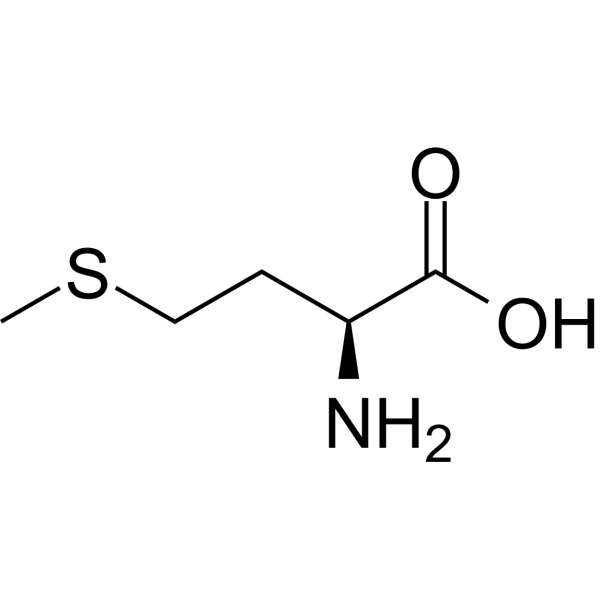
L-Methionine (Standard) is the analytical standard of L-Methionine. This product is intended for research and analytical applications. L-Methionine is an L-isomer of orally active Methionine, an essential amino acid. Methionine is a strong liver antidote that acts as a liver protector. L-Methionine can inhibit cell proliferation and induce cell apoptosis. L-Methionine has antitumor and antioxidant activity .
|
-
- HY-125021
-
2BAct
3 Publications Verification
|
Eukaryotic Initiation Factor (eIF)
|
Neurological Disease
|
|
2BAct is a highly selective, orally active, and CNS-penetrant eIF2B (eukaryotic initiation factor 2B) activator with an EC50 of 33 nM. 2BAct prevents neurological defects caused by a chronic integrated stress response. 2BAct displays improved solubility and pharmacokinetics relative to eIF2B activator ISRIB trans-isomer (HY-12495) .
|
-
- HY-N0326S13
-
-
- HY-116494A
-
|
|
BCRP
|
Cancer
|
|
(6R)-ML753286 is an isomer of ML753286 (HY-116494). ML753286 is an orally active and selective BCRP (Breast cancer resistance protein) inhibitor with an IC50 of 0.6 μM. ML753286 has high permeability and low to medium clearance in rodent and human liver S9 fractions, and is stable in plasma cross species .
|
-
- HY-120982
-
|
|
Prostaglandin Receptor
|
Endocrinology
|
|
Cloprostenol is a synthetic prostaglandin F2α (PGF2α) analog and a potent FP receptor agonist. (+)-15-epi Cloprostenol is the 15(S), or 15β-hydroxy enantiomer of (+)-cloprostenol. This epimer is less active by several orders of magnitude as an FP receptor ligand when compared to 15(R)-cloprostenol. However, the specific activity of this isomer has not been well studied.
|
-
- HY-133807B
-
|
|
TNF Receptor
|
Inflammation/Immunology
|
|
(R)-Benpyrine is the isomer of Benpyrine (HY-133807), and can be used as an experimental control. Benpyrine is a highly specific and orally active TNF-α inhibitor with a KD value of 82.1 μM. Benpyrine tightly binds to TNF-α and blocks its interaction with TNFR1, with an IC50 value of 0.109 μM. Benpyrine has the potential for TNF-α mediated inflammatory and autoimmune disease research .
|
-
- HY-A0015A
-
|
|
Histamine Receptor
|
Inflammation/Immunology
Endocrinology
|
|
(Rac)-Bepotastine (besilate) is the isomer of Bepotastine (besilate) (HY-A0015), and can be used as an experimental control. Bepotastine besilate is a selective and orally active second-generation histamine H1 receptor antagonist, can suppress the expression of nerve growth factor (NGF). Bepotastine besilate has the potential for allergic rhinitis, allergic conjunctivitis and urticaria/pruritus research .
|
-
- HY-136285A
-
|
|
Histone Acetyltransferase
|
Cancer
|
|
(R,R)-CPI-1612 is the isomer of CPI-1612 (HY-136285), and can be used as an experimental control. CPI-1612 is a highly potent, orally active EP300/CBP histone acetyltransferase (HAT) inhibitor with an IC50 of 8.1 nM for EP300 HAT. CPI-1612 has an anticancer activity .
|
-
- HY-145386
-
|
|
Histone Acetyltransferase
|
Cancer
|
|
(S,S)-CPI-1612 is the isomer of CPI-1612 (HY-136285), and can be used as an experimental control. CPI-1612 is a highly potent, orally active EP300/CBP histone acetyltransferase (HAT) inhibitor with an IC50 of 8.1 nM for EP300 HAT. CPI-1612 has an anticancer activity .
|
-
- HY-113380
-
-
- HY-153390A
-
|
|
Histone Methyltransferase
|
Cancer
|
|
(R)-AMG-193 is an isomer of AMG 193 (HY-153390). AMG 193 is an orally active MTA-cooperative PRMT5 inhibitor with antitumor activity. AMG 193, when complexed with MTA, preferentially inhibits the growth of MTAP-deficient tumor cells by inhibiting PRMT5 (IC50=0.107 μM), thereby protecting normal cells with wild-type MTAP .
|
-
- HY-13289B
-
|
(R)-SYN117 hydrochloride; (R)-RS-25560-197 hydrochloride; RS-25560-198 hydrochloride
|
Dopamine β-hydroxylase
|
Cardiovascular Disease
|
|
(R)-Nepicastat hydrochloride is the isomer of Nepicastat (HY-13289). Nepicastat (SYN117) is a selective,potent,and orally active inhibitor of dopamine-beta-hydroxylase. Nepicastat (SYN117) produces concentration-dependent inhibition of bovine (IC50=8.5 nM) and human (IC50=9 nM) dopamine-beta-hydroxylase. Nepicastat (SYN117) can cross the blood-brain barrier (BBB) .
|
-
- HY-120039A
-
|
|
Elastase
|
Inflammation/Immunology
|
|
(S)-MDL-101146 is the S-isomer of MDL-101146. MDL-101146 is an orally active, competitive and reversible inhibitor against human neutrophil elastase (HNE) with a Ki value of 25 nM. MDL-101146 inhibits HNE-induced hemorrhage in hamsters. MDL-101146 is promising for research of emphysema, rheumatoid arthritis, chronic bronchitis, cystic fibrosis, adult respiratory distress syndrome and glomerulonephritis .
|
-
- HY-B0267CS
-
|
Aroxybutynin-d10
|
Isotope-Labeled Compounds
mAChR
|
Neurological Disease
|
|
(R)-Oxybutynin-d10 (Aroxybutynin-d10) is deuterium labeled (R)-Oxybutynin. (R)-Oxybutynin (Aroxybutynin) is the racemic isomer of Oxybutynin and an orally active muscarinic receptor antagonist. (R)-Oxybutynin has antispasmodic, antimuscarinic, and anticholinergic activities and competitively antagonizes carbachol-induced contractions. (R)-Oxybutynin can be used to study urinary incontinence caused by neurogenic bladder dysfunction .
|
-
- HY-120039
-
|
|
Elastase
|
Inflammation/Immunology
|
|
(R)-MDL-101146 is the R-isomer of MDL-101146. MDL-101146 is an orally active, competitive and reversible inhibitor against human neutrophil elastase (HNE) with a Ki value of 25 nM. MDL-101146 inhibits HNE-induced hemorrhage in hamsters. MDL-101146 is promising for research of emphysema, rheumatoid arthritis, chronic bronchitis, cystic fibrosis, adult respiratory distress syndrome and glomerulonephritis .
|
-
- HY-B0006C
-
|
(R)-BM 14190
|
Adrenergic Receptor
Calcium Channel
|
Cardiovascular Disease
Cancer
|
|
(R)-Carvedilol ((R)-BM 14190) is the orally active R-isomer of Carvedilol (HY-B0006). (R)-Carvedilol has α-receptor blocking activity but no β-receptor blocking activity. (R)-Carvedilol inhibits spontaneous Ca 2+ waves. (R)-Carvedilol inhibits stress-induced ventricular tachycardia and delays the development of UV-induced skin tumors and reduces their malignancy .
|
-
- HY-B0098B
-
|
(R)-UK 33274
|
Adrenergic Receptor
|
Metabolic Disease
|
|
(R)-Doxazosin ((R)-UK 33274) is an isomer of Doxazosin, a selective and orally active a1-adrenoceptor agonist. Doxazosin can be used for systemic antihypertensive and ocular hypotensive. Doxazosin exerts its antihypertensive effect by reducing total peripheral resistance by selective postsynaptic a1-blockade, without reducing cardiac output. Doxazosin can significantly lower both standing and supine blood pressure .
|
-
- HY-111095BR
-
|
(R)-2-Hydroxypropionic acid sodium (Standard)
|
Reference Standards
Endogenous Metabolite
Drug Isomer
|
Neurological Disease
Metabolic Disease
|
|
D-(-)-Lactic acid ((R)-2-Hydroxypropionic acid) sodium (Standard) is the analytical standard of Malvidin-3-glucoside sodium. This product is intended for research and analytical applications. D-(-)-Lactic acid sodium is an orally active, toxic optical isomer of Lactic acid (HY-B2227), mainly derived from overproduction by intestinal bacteria or exogenous intake. D-(-)-Lactic acid sodium can induce intoxication, characterized by severe metabolic acidosis accompanied by neurological symptoms .
|
-
- HY-Z7721
-
|
(Rac)-TRK-100; (Rac)-ML 1129 sodium
|
Prostaglandin Receptor
|
Cardiovascular Disease
|
|
(Rac)-Beraprost ((Rac)-ML 1129) sodium is a racemic isomer of Beraprost sodium (HY-13569A). Beraprost sodium is an orally active prostacyclin analog that inhibits the release of Ca 2+ from intracellular storage sites by binding to prostacyclin membrane receptors (Prostaglandin Receptor), leading to relaxation of smooth muscle cells and vasodilation. Beraprost sodium has vasodilatory, antiplatelet, and cytoprotective effects, making it promising for research in the field of cardiovascular diseases, such as thromboangiitis obliterans and atherosclerosis .
|
-
- HY-123382
-
|
|
Drug Isomer
|
Neurological Disease
Inflammation/Immunology
|
|
GSK-1482160 isomer is the isomer of GSK-1482160 (HY-19888). GSK-1482160 is an orally active and blood-brain barrier penetrant P2X7 receptor (P2X7R) negative allosteric modulator with pIC50s of 8.5 (human) and 6.5 (rat). GSK-1482160 reduces the efficacy of ATP at the P2X7 receptor without affecting its affinity, thereby inhibiting the release of IL-1β. GSK-1482160 is an effective radioligand and can be labeled with radioactive isotopes like 11C or 18F to image P2X7R. GSK-1482160 can be used for the studies of chronic joint pain and chronic constriction injury (CCI).
|
-
- HY-137453B
-
|
(1R)-HS-10234
|
HBV
HIV
|
Infection
|
|
(1R)-Tenofovir amibufenamide ((1R)-HS-10234) is the isomer of Tenofovir amibufenamide, is an orally active antiviral agent. (1R)-Tenofovir amibufenamide ((1R)-HS-10234) is a HIV infection inhibitor and HBV infection inhibitor. (1R)-Tenofovir amibufenamide ((1R)-HS-10234) can be used for HIV infections, hepatitis B research .
|
-
- HY-W018555R
-
|
|
Reference Standards
Endogenous Metabolite
Bacterial
|
Infection
Neurological Disease
|
|
D-Cysteine (Standard) is the analytical standard of D-Cysteine. This product is intended for research and analytical applications. D-Cysteine, the D-isomer of cysteine, is an orally active antibacterial agent and a regulator of neural progenitor cell proliferation. D-Cysteine can inhibit Escherichia coli, Streptococcus mutans, and Streptococcus sanguinis. The no-observed-adverse-effect level of D-Cysteine in rats should be less than 500 mg/kg/day[1][2][3][4].
|
-
- HY-B0267B
-
|
Aroxybutynin hydrochloride
|
mAChR
|
Neurological Disease
|
|
(R)-Oxybutynin hydrochloride, a (R)-isomer of Oxybutynin hydrochloride, is an orally active muscarinic receptor antagonist. (R)-Oxybutynin hydrochloride has antimuscarinic, antispasmodic and anticholinergic activity, competitively antagonizes Carbachol-induced contractions. (R)-Oxybutynin hydrochloride can be used for researching incontinence due to neurogenic bladder dysfunction . (R)-Oxybutynin (hydrochloride) is a click chemistry reagent, it contains an Alkyne group and can undergo copper-catalyzed azide-alkyne cycloaddition (CuAAc) with molecules containing Azide groups.
|
-
- HY-123587A
-
|
|
Apoptosis
|
Cancer
|
|
(R)-PR-924 is the isomer of PR-924 (HY-123587), and can be used as an experimental control. PR-924 is a selective tripeptide epoxyketone immunoproteasome subunit LMP-7 inhibitor with an IC50 of 22 nM. PR-924 covalently modifies proteasomal N-terminal threonine active sites. PR-924 inhibits growth and triggers apoptosis in multiple myeloma (MM) cells. PR-924 has antitumor activities .
|
-
- HY-115733
-
|
(Rac)-Z-Phe-Phe-FMK
|
Cathepsin
|
Cancer
|
|
Cathepsin L-IN-2 ((Rac)-Z-Phe-Phe-FMK) is an isomer of the Cathepsin L inhibitor Z-Phe-Phe-FMK (HY-141867), with an IC50 of 15 μM for cathepsin L. Z-Phe-Phe-FMK irreversibly blocks the proteolytic function of cathepsins by covalently binding to the cysteine residues in the active center of the enzyme. Cathepsin L-IN-2 and Z-Phe-Phe-FMK can be used to study neurodegenerative diseases (such as GRN-related frontotemporal dementia) and cancer invasion and metastasis.
|
-
- HY-106961A
-
|
(Z)-ONO-AP 500-02
|
Prostaglandin Receptor
|
Cardiovascular Disease
|
|
(Z)-ONO 1301 is the isomer of ONO 1301 (HY-106961), and can be used as an experimental control. ONO 1301 (ONO-AP 500-02), a prostaglandin (PG) I2 mimetic, is an orally active, long-acting prostacyclin agonist with thromboxane-synthase inhibitory activity. ONO 1301 promotes production of hepatocyte growth factor (HGF) from various cell types and ameliorates ischemia-induced left ventricle dysfunction in the mouse, rat and pig .
|
-
- HY-138642A
-
|
(Rac)-ARV-471
|
Estrogen Receptor/ERR
PROTACs
|
Cancer
|
|
(Rac)-Vepdegestrant is the isomer of Vepdegestrant (HY-138642). Vepdegestrant ((R)-Lavandulol) is an orally active PROTAC estrogen receptor degrader against breast cancer. Vepdegestrant is a hetero-bifunctional molecule that facilitates the interactions between estrogen receptor alpha and an intracellular E3 ligase complex. Vepdegestrant leads to the ubiquitylation and subsequent degradation of estrogen receptors via the proteasome. Vepdegestrant robustly degrades ER in ER-positive breast cancer cell lines with a half-maximal degradation concentration (DC50) of about 2 nM .
|
-
- HY-106720C
-
|
(+)-YM 09538
|
Adrenergic Receptor
|
Others
|
|
(+)-Amosulalol ((+)-YM 09538) is an isomer of Amosulalol (HY-106720), an orally active dual inhibitor of α1/β1-adrenergic receptors. Amosulalol exhibits antihypertensive activity by inhibiting α1-adrenergic receptors. Amosulalol reduces the reflex increase in heart rate and plasma renin activity (PRA) in spontaneously hypertensive rats (SHR) by inhibiting β1-adrenergic receptors.
|
-
- HY-169780
-
|
|
TRP Channel
|
Neurological Disease
Inflammation/Immunology
|
|
(S)-AMG-628 (Compound 16q) is the S-isomer of AMG-628 (HY-123374). (S)-AMG-628 is the orally active antagonist for TRPV1, that inhibits the Capsaicin (HY-10448)- and acid-induced Ca 2+-influx with IC50 of 7 nM and 5 nM in CHO cell. (S)-AMG-628 ameliorates Capsaicin-induced rats flinching, and reverses the thermal hypersensitivity in CFA-(HY-153808) induced inflammatory pain models .
|
-
- HY-106720B
-
|
(-)-YM 09538
|
Adrenergic Receptor
|
Others
|
|
(-)-Amosulalol ((-)-YM 09538) is an isomer of Amosulalol (HY-106720), an orally active dual inhibitor of α1/β1-adrenergic receptors. Amosulalol exhibits antihypertensive activity by inhibiting α1-adrenergic receptors. Amosulalol reduces the reflex increase in heart rate and plasma renin activity (PRA) in spontaneously hypertensive rats (SHR) by inhibiting β1-adrenergic receptors.
|
-
- HY-10252A
-
|
cis-ADW742; cis-GSK 552602A; cis-ADW
|
IGF-1R
Insulin Receptor
Apoptosis
|
Inflammation/Immunology
|
|
cis-NVP-ADW742 (cis-ADW742) is a cis isomer of NVP-ADW742 (HY-10252). NVP-ADW742 is an orally active, selective IGF-1R tyrosine kinase inhibitor with an IC50 of 0.17 μM. NVP-ADW742 inhibits insulin receptor (InsR) with an IC50 of 2.8 μM. NVP-ADW742 induces pleiotropic antiproliferative/proapoptotic biologic sequelae in tumor cells .
|
-
- HY-14342A
-
|
|
Bombesin Receptor
|
Metabolic Disease
|
|
(R)-MK-5046 is the isomer of MK-5046 (HY-14342), and can be used as an experimental control. MK-5046 is a potent, selective and orally active Bombesin receptor subtype-3 (BRS-3) allosteric agonist with an IC50 and an EC50 value of 27 and 25 nM for hBRS-3, respectively. MK-5046 inhibits food intake and reduces body weight of diet-induced obese (DIO) mouse models. MK-5046 can be used for the research of obesity .
|
-
- HY-A0132
-
|
N-Acetyl-2-amino-2-deoxy-D-glucose
|
Endogenous Metabolite
Drug Derivative
Drug Isomer
Interleukin Related
|
Metabolic Disease
Inflammation/Immunology
Cancer
|
|
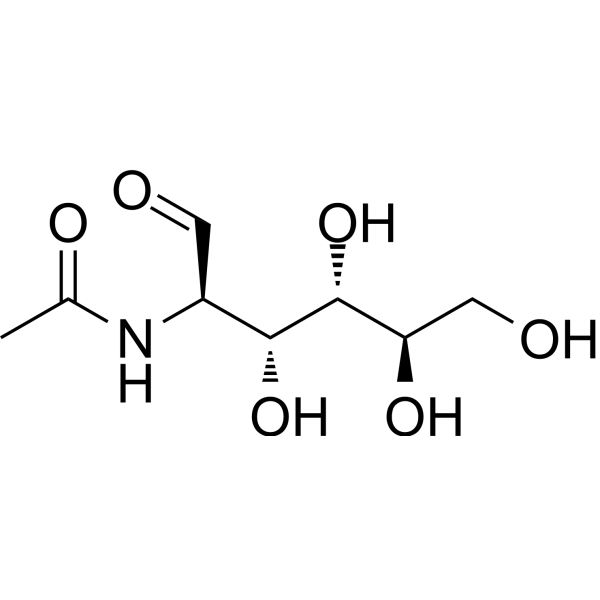
N-Acetyl-D-Glucosamine (N-Acetyl-2-amino-2-deoxy-D-glucose), the D isomer of N-acetylglucosamine, is an orally active monosaccharide derivative of glucose with anti-tumor and anti-inflammation properties. N-Acetyl-D-Glucosamine is also a bacterial metabolite, which is found in Escherichia coli. N-Acetyl-D-Glucosamine can induce yeast-mycelial conversion in Candida albicans. N-Acetyl-D-Glucosamine also enhances healing of cartilaginous injuries in rabbits .
|
-
- HY-111540B
-
|
(S)-IDO1-IN-5
|
Indoleamine 2,3-Dioxygenase (IDO)
|
Cancer
|
|
(S)-LY-3381916 ((S)-IDO1-IN-5; Example 1B) is an active S-isomer of LY-3381916. (S)-LY-3381916 binds to IDOL with an IC50 value less than 1.5 µΜ . LY-3381916 is a potent, selective and brain penetrated inhibitor of Indoleamine 2,3-Dioxygenase 1 (IDO1) activity, binds to apo-IDO1 lacking heme rather than mature heme-bound IDO1 .
|
-
- HY-W777084
-
|
(E)-O-Methylferulic acid-13C3
|
Reactive Oxygen Species (ROS)
|
Cancer
|
|
(E)-3,4-Dimethoxycinnamic acid- 13C3 ((E)-O-Methylferulic acid- 13C3) is the 13C-labeled (E)-3,4-Dimethoxycinnamic acid (HY-N1778A). (E)-3,4-Dimethoxycinnamic acid is the less active isomer of 3,4-Dimethoxycinnamic acid. 3,4-Dimethoxycinnamic acid exerts anti-apoptotic effects on L-02 cells via the ROS-mediated signaling pathway . Anti-apoptotic effects .
|
-
- HY-131527
-
|
N-Desmethyl Venlafaxine hydrochloride; Wy 45494
|
Serotonin Transporter
|
Metabolic Disease
|
|
Wy-45494 hydrochloride (N-Desmethyl Venlafaxine hydrochloride; Wy 45494) is a minor active metabolite of the selective norepinephrine and serotonin reuptake inhibitor (SNRI) venlafaxine. It is formed from venlafaxine via the cytochrome P450 (CYP) isomer CYP3A4.2. Wy-45494 hydrochloride inhibits norepinephrine and serotonin reuptake in rat synaptosomal preparations (IC50s of 4.7 and 1.6 μM, respectively). In vivo, Wy-45494 hydrochloride reversed reserpine-induced hypothermia in mice at a minimum effective dose (MED) of 10 mg/kg.
|
-
- HY-17603A
-
|
(E)-TSR-011
|
Anaplastic lymphoma kinase (ALK)
|
Cancer
|
|
(E)-Belizatinib ((E)-TSR-011)) (compound 36), the (E)-isomer of Belizatinib (HY-17603), is a potent, selective and orally active anaplastic lymphoma kinase (ALK) Inhibitor with an enzymatic IC50 of 0.005 μM and a cellular IC50 of 0.048 μM. (E)-Belizatinib shows >61-fold selectivity over JAK2, SRC, and IGF1R. (E)-Belizatinib shows favorable potency and PK characteristics in rats and dogs. (E)-Belizatinib can be used for ALK-driven cancer research .
|
-
- HY-147255A
-
|
(S)-ZM-H1505R
|
HBV
|
Infection
|
(S)-Canocapavir is the isomer of Canocapavir (HY-147255A). Canocapavir (ZM-H1505R) is an orally active HBV core protein-targeting antiviral agent. Canocapavir binds to the hydrophobic pocket at the dimer-dimer interface of HBV core protein (HBc), stimulating intracellular accumulation of nonfunctional HBV capsids, disrupting viral replication. Canocapavir interferes with the interaction between HBc and HBV large surface protein, resulting in diminished production of empty virionsis. Canocapavir can be used for the research of hepatitis B virus (HBV) infection .
|
-
- HY-139121
-
|
15-epi Bimatoprost free acid; 15(R)-Bimatoprost free acid; 15(R)-17-phenyl trinor PGF2α
|
Prostaglandin Receptor
|
Endocrinology
|
|
15(R)-17-Phenyl trinor Prostaglandin F2α (15-epi Bimatoprost free acid) is a prostaglandin F (FP) analog that acts as an ocular hypotensive agent. The free acid 17-Phenyl trinor Prostaglandin F2α is a potent FP receptor agonist. 15(R)-17-Phenyl trinor Prostaglandin F2α is the 15-epi or "unnatural" isomer of this active free acid metabolite and has reduced FP receptor agonist activity.
|
-
- HY-135023R
-
|
5-trans Prostaglandin E2 (Standard)
|
Cytochrome P450
Prostaglandin Receptor
Reference Standards
|
Cancer
|
|
5-trans-PGE2 (Standard) is the analytical standard of 5-trans-PGE2. This product is intended for research and analytical applications. 5-trans-PGE2 (5-trans Prostaglandin E2) is the active isomer of PGE2 and a potent activator of aromatase. Supplements the process of paracrine signaling between epithelial cells (expressing high levels of PGE2) and surrounding stromal cells (expressing high levels of aromatase). This process is involved in the growth and development of breast cancer .
|
-
- HY-P5327
-
|
|
Bcl-2 Family
|
Others
|
|
r8 Bid BH3 is a biological active peptide. (The Bid BH3 is a pro-apoptotic member of the 'BH3-only' subset of BCL-2 family proteins that constitute a critical control point in apoptosis. r8BIDBH3 is lethal to human leukemia cell lines that expresse Bcl-2. The Bcl-2 antagonists may have the potential to be efficacious in cancer therapy. Poly-D-arginine (d-isomer as denoted by rrrrrrrr) is fused to the Bid BH3 peptide to facilitate cellular uptake of the peptide.)
|
-
- HY-W741136
-
|
|
Drug Isomer
Microtubule/Tubulin
NOD-like Receptor (NLR)
Autophagy
Apoptosis
|
Inflammation/Immunology
|
|
(R)-Colchicine is the R-isomer of Colchicine (HY-16569). Colchicine, an orally active alkaloid, is a potent tubulin inhibitor and a microtubule disrupting agent. Colchicine inhibits microtubule polymerization with an IC50 of 3 nM. Colchicine is also a competitive antagonist of the α3 glycine receptors (GlyRs). Colchicine prevents non-steroidal anti-inflammatory drug (NSAID)-induced small intestinal injury by inhibiting activation of the NLRP3 inflammasome. Colchicine has extensive anti-inflammatory, immunosuppressive and strong anti-fibrosis effects and has the potential for gouty arthritis research .
|
-
- HY-B0267BS
-
|
|
mAChR
Isotope-Labeled Compounds
|
Neurological Disease
|
|
Oxybutynin-d5 hydrochloride is deuterated labeled (R)-Oxybutynin hydrochloride (HY-B0267B). (R)-Oxybutynin hydrochloride, a (R)-isomer of Oxybutynin hydrochloride, is an orally active muscarinic receptor antagonist. (R)-Oxybutynin hydrochloride has antimuscarinic, antispasmodic and anticholinergic activity, competitively antagonizes Carbachol-induced contractions. (R)-Oxybutynin hydrochloride can be used for researching incontinence due to neurogenic bladder dysfunction . (R)-Oxybutynin hydrochloride is a click chemistry reagent, it contains an Alkyne group and can undergo copper-catalyzed azide-alkyne cycloaddition (CuAAc) with molecules containing Azide groups.
|
-
- HY-B0006CS
-
|
(R)-BM 14190-d4
|
Isotope-Labeled Compounds
Adrenergic Receptor
Calcium Channel
|
Cardiovascular Disease
Cancer
|
|
(R)-Carvedilol-d4 is deuterium labeled (R)-Carvedilol (HY-B0006C). (R)-Carvedilol ((R)-BM 14190) is the orally active R-isomer of Carvedilol (HY-B0006). (R)-Carvedilol has α-receptor blocking activity but no β-receptor blocking activity. (R)-Carvedilol inhibits spontaneous Ca 2+ waves. (R)-Carvedilol inhibits stress-induced ventricular tachycardia and delays the development of UV-induced skin tumors and reduces their malignancy .
|
-
- HY-182317
-
|
|
Drug Isomer
Dengue Virus
|
Infection
|
|
(+)-Mosnodenvir is an isomer of Mosnodenvir (HY-153810). Mosnodenvir (JNJ-1802) is an orally active pan serotype dengue virus (DENV) inhibitor, with EC50 values ranging from 0.057 to 11 nM for four dengue virus (DENV) serotypes. Mosnodenvir blocks viral replication by inhibiting the formation of complexes between two viral proteins, nonstructural protein 3 (NS3) and NS4B, thereby preventing the formation of new viral RNA. Mosnodenvir exhibits picomolar to nanomolar antiviral activity in vitro and has antiviral efficacy in mice and non-human primates .
|
-
- HY-117593
-
|
|
P-glycoprotein
Cytochrome P450
Drug Isomer
|
Cancer
|
|
NSC 23925B is a P-glycoprotein (P-gp) inhibitor, as well as the most biologically active isomer of NSC23925 (HY-19626), which reverses and prevents P-glycoprotein-mediated multidrug resistance in cancer cells. NSC 23925B shows weak inhibition against most CYP450 enzymes (IC50 > 10 μM), and exhibits moderate inhibitory activity against CYP2B6 and CYP2D6 with IC50 values of 8.589 μM and 1.407 μM, respectively. NSC 23925B can be used for the research of multidrug-resistant cancers .
|
-
- HY-16950A
-
|
Afimoxifene; 4-OHT
|
Estrogen Receptor/ERR
Adhesion G Protein-coupled Receptors (AGPCRs)
Drug Metabolite
|
Metabolic Disease
Cancer
|
|
(E/Z)-4-Hydroxytamoxifen (Afimoxifene) is a racemic compound of (Z)-4-Hydroxytamoxifen and (E)-4-Hydroxytamoxifen isomers. (E/Z)-4-Hydroxytamoxifen is a selective estrogen receptor modulator with mixed estrogenic and antiestrogenic activity, which is also an active metabolite of Tamoxifen (HY-13757A). (E/Z)-4-Hydroxytamoxifen is an agonist of the G protein-coupled estrogen receptor (GPER) with relatively low affinity (100-1000 nM). (E/Z)-4-Hydroxytamoxifen is promising for research of cyclical mastalgia, such as breast pain, tenderness, and nodularity .
|
-
- HY-126066
-
-
- HY-100603B
-
|
|
Drug Isomer
PI4K
PI3K
|
Infection
|
|
(R)-GSK-F1 is the R-type isomer of GSK-F1 (HY-100603). GSK-F1 (Compound F1) is an orally active PI4KA inhibitor with pIC50 values of 8.0, 5.9, 5.8, 5.9, 5.9 and 6.4 against PI4KA, PI4KB, PI3KA, PI3KB, PI3KG and PI3KD, respectively. GSK-F1 can be used for HCV infection research .
|
-
- HY-131527R
-
|
N-Desmethyl Venlafaxine hydrochloride (Standard); Wy 45494 (Standard)
|
Serotonin Transporter
Reference Standards
|
Metabolic Disease
|
|
Wy-45494 (hydrochloride) (Standard) is the analytical standard of Wy-45494 (hydrochloride). This product is intended for research and analytical applications. Wy-45494 hydrochloride (N-Desmethyl Venlafaxine hydrochloride; Wy 45494) is a minor active metabolite of the selective norepinephrine and serotonin reuptake inhibitor (SNRI) venlafaxine. It is formed from venlafaxine via the cytochrome P450 (CYP) isomer CYP3A4.2. Wy-45494 hydrochloride inhibits norepinephrine and serotonin reuptake in rat synaptosomal preparations (IC50s of 4.7 and 1.6 μM, respectively). In vivo, Wy-45494 hydrochloride reversed reserpine-induced hypothermia in mice at a minimum effective dose (MED) of 10 mg/kg.
|
-
- HY-126247B
-
|
|
Drug Derivative
Ras
|
Cancer
|
|
(R)-BI-2852 is the isomer of BI-2852 (HY-126247), and can be used as an experimental control. BI-2852 is a KRAS inhibitor for the switch I/II pocket (SI/II-pocket) by structure-based agent design with nanomolar affinity. BI-2852 is mechanistically distinct from covalent KRASG12C inhibitor (binds to switch II pocket) and binds ten-fold more strongly to active KRASG12D versus KRASwt (740 nM vs 7.5 μM). BI-2852 blocks GEF, GAP, and effector interactions with KRAS, leading to inhibition of downstream signaling and an antiproliferative effect in KRAS mutant cells.
|
-
- HY-N0913R
-
|
|
Reference Standards
Antifolate
Thymidylate Synthase
|
Others
|
|
Wy-45494 (hydrochloride) (Standard) is the analytical standard of Wy-45494 (hydrochloride). This product is intended for research and analytical applications. Wy-45494 hydrochloride (N-Desmethyl Venlafaxine hydrochloride; Wy 45494) is a minor active metabolite of the selective norepinephrine and serotonin reuptake inhibitor (SNRI) venlafaxine. It is formed from venlafaxine via the cytochrome P450 (CYP) isomer CYP3A4.2. Wy-45494 hydrochloride inhibits norepinephrine and serotonin reuptake in rat synaptosomal preparations (IC50s of 4.7 and 1.6 μM, respectively). In vivo, Wy-45494 hydrochloride reversed reserpine-induced hypothermia in mice at a minimum effective dose (MED) of 10 mg/kg.
|
-
- HY-12093A
-
|
|
Drug Isomer
MMP
Cadherin
|
Inflammation/Immunology
|
|
(R)-MMP408 is an isomer of MMP408 (HY-12093). MMP408 is an orally active MMP-12 inhibitor (IC50=2.0 nM for hMMP-12) that effectively interferes with the epithelial-mesenchymal transition (EMT) process. MMP408 significantly upregulates the expression of E-cadherin in nasal epithelial cells, while inhibiting mesenchymal markers such as vimentin, α-smooth muscle actin and fibronectin, thereby reversing the EMT phenotype. MMP408 is used in studies of airway remodeling-related diseases, including chronic rhinosinusitis with nasal polyps, chronic obstructive pulmonary disease (COPD) and asthma .
|
-
- HY-162495A
-
|
|
Drug Isomer
CCR
Calcium Channel
Arrestin
P-glycoprotein
|
Inflammation/Immunology
|
|
(S)-IDOR-1117-2520 is the S-isomer of IDOR-1117-2520 (HY-162495). IDOR-1117-2520 is an orally active, potent, selective and reversible CCR6 antagonist. IDOR-1117-2520 antagonizes the CCL20-mediated calcium flow (IC50 = 63 nM) and inhibits β-arrestin recruitment to human CCR6 (IC50 = 30 nM) in cells expressing recombinant human CCR6. IDOR-1117-2520 is found to be a substrate of P-gp/MDR1. IDOR-1117-2520 can be used in the research of autoimmune diseases and skin inflammation .
|
-
- HY-105628
-
|
CI-427
|
Others
|
Neurological Disease
Inflammation/Immunology
|
|
Prodilidine (CI-427) is an orally active, pyrrolidine-derived non-narcotic pain inhibitor. Prodilidine exerts analgesic activity against various nociceptive stimuli, and shows no antipyretic, anti-inflammatory or respiratory depressive effects. Prodilidine fails to inhibit withdrawal symptoms of addictive agents in monkeys, but exhibits excitatory effects and enhances the crossed extensor reflex at toxic doses. Prodilidine is well absorbed from the gastrointestinal tract and metabolized via hepatic microsomal N-demethylation, displaying isomer-specific activity, toxicity and metabolic characteristics. Prodilidine can be used in research related to chronic pain (e.g., cancer-, musculoskeletal/arthritis-derived), traumatic pain and arthritic pain .
|
-
- HY-180985
-
|
|
PROTACs
Bcr-Abl
|
Cancer
|
|
Azo-PROTAC-4C-cis is a BCR-ABL PROTAC degrader, and its degradation efficiency of BCR-ABL is much lower than that of its trans isomer Azo-PROTAC-4C-trans (HY-180983). Azo-PROTAC-4C-cis is the product of the conformational transformation of Azo-PROTAC-4C-trans under ultraviolet (UV) light irradiation. Azo-PROTAC-4C-cis can be converted into highly active Azo-PROTAC-4C-trans under visible light, thereby initiating protein degradation. Azo-PROTAC-4C-cis can be used for the study of myeloid leukemia .
|
-
- HY-A0132S14
-
|
N-Acetyl-2-amino-2-deoxy-D-glucose-d3
|
Isotope-Labeled Compounds
Endogenous Metabolite
Drug Derivative
Interleukin Related
Drug Isomer
|
Metabolic Disease
Inflammation/Immunology
Cancer
|
|
N-Acetyl-D-glucosamine-d3 (N-Acetyl-2-amino-2-deoxy-D-glucose-d3) is deuterium labeled N-Acetyl-D-glucosamine. N-Acetyl-D-Glucosamine (N-Acetyl-2-amino-2-deoxy-D-glucose), the D isomer of N-acetylglucosamine, is an orally active monosaccharide derivative of glucose with anti-tumor and anti-inflammation properties. N-Acetyl-D-Glucosamine is also a bacterial metabolite, which is found in Escherichia coli. N-Acetyl-D-Glucosamine can induce yeast-mycelial conversion in Candida albicans. N-Acetyl-D-Glucosamine also enhances healing of cartilaginous injuries in rabbits .
|
-
- HY-172883A
-
|
|
FABP
PPAR
|
Metabolic Disease
Inflammation/Immunology
|
|
(E/Z)-ABP/PPAR modulator 1 is a mixture of the E and Z isomers of ABP/PPAR modulator 1 (HY-172883). ABP/PPAR modulator 1 is an orally active FABP and PPAR multiple modulator (IC50s of 0.65 μM and 1.08 μM for FABP1 and FABP4, EC50 s of 9.19 μM, 2.20 μM and 1.58 μM for PPARα, PPARγ and PPARδ). ABP/PPAR modulator 1 has potent anti-metabolic dysfunction-associated steatohepatitis (MASH) activity. ABP/PPAR modulator 1 dose-dependently ameliorates multiple pathological characteristics of fatty liver in WD + Carbon tetrachloride-induced MASH mice model .
|
-
- HY-123115
-
|
5-O-α-D-Glucopyranosyl-D-fructose
|
JAK
STAT
TNF Receptor
Interleukin Related
|
Metabolic Disease
Inflammation/Immunology
|
|
Leucrose (5-O-α-D-Glucopyranosyl-D-fructose) is an orally active Sucrose (HY-B1779) isomer naturally found in pollen and honey. Leucrose promotes phosphorylation of JAK1 and STAT6, reduces pro-inflammatory mediators and cytokinesas (TNFα, and IL-1β), increases M2 macrophage polarization and suppresses DSS (HY-116282C)-induced colitis. Leucrose suppresses hepatic triglyceride accumulation, improves fasting blood glucose levels, and regulates hepatic lipogenesis and fatty acid β-oxidation in high-fat diet-induced obese mice. Leucrose is slowly hydrolyzed into glucose and fructose by α-glucosidase and acts as as a sugar substitute in diet .
|
-
- HY-146223A
-
|
|
Ras
PI3K
p38 MAPK
Apoptosis
|
Cancer
|
|
(3R,10R,14aS)-AZD4625 is the isomer of AZD4625 (HY-146223), and can be used as an experimental control. AZD4625 is an orally active, selective irreversible, covalent allosteric GTPase KRASG12C inhibitor with an IC50 of 3 nM. AZD4625 can inhibit the MAPK pathway (with decreased pCRAF, pMEK, and pERK) and the PI3K pathway (with decreased pAKT and pS6), and induce cell apoptosis. AZD4625 has no binding and inhibition of wild-type RAS or isoforms carrying non-KRASG12C mutations. AZD4625 can be used for the study of KRASG12C mutant non-small cell lung cancer .
|
-
- HY-113298
-
|
Methylmaleic acid
|
NOD-like Receptor (NLR)
Keap1-Nrf2
Reactive Oxygen Species (ROS)
|
Cardiovascular Disease
Inflammation/Immunology
|
|
Citraconic acid (Methylmaleic acid) is an orally active inhibitor targeting the NLRP3 inflammasome and Keap1-Nrf2 pathway. Citraconic acid reduces reactive oxygen species (ROS) generation by inhibiting succinate dehydrogenase (SDH) activity. Citraconic acid also modifies the conformation of Keap1 protein, relieves its inhibition of Nrf2, promotes antioxidant gene expression, and inhibits NLRP3 activation and the release of pro-inflammatory factors such as IL-1β and IL-18. Citraconic acid has anti-inflammatory and antioxidant activities, can reduce oxidative stress and cell pyroptosis, improve tissue damage, and can be used for the research of inflammation-related diseases such as acute renal ischemia-reperfusion injury. Citraconic acid is an isomer of Itaconic acid (HY-Y052) .
|
-
- HY-16950AR
-
|
Afimoxifene (Standard); 4-OHT (Standard)
|
Reference Standards
Estrogen Receptor/ERR
Endogenous Metabolite
|
Cancer
|
|
(E/Z)-4-Hydroxytamoxifen (Standard) is the analytical standard of (E/Z)-4-Hydroxytamoxifen. This product is intended for research and analytical applications. (E/Z)-4-Hydroxytamoxifen (Afimoxifene) is a racemic compound of (Z)-4-Hydroxytamoxifen and (E)-4-Hydroxytamoxifen isomers. (E/Z)-4-Hydroxytamoxifen is a selective estrogen receptor modulator with mixed estrogenic and antiestrogenic activity, which is also an active metabolite of Tamoxifen (HY-13757A). (E/Z)-4-Hydroxytamoxifen is an agonist of the G protein-coupled estrogen receptor (GPER) with relatively low affinity (100-1000 nM). (E/Z)-4-Hydroxytamoxifen is promising for research of cyclical mastalgia, such as breast pain, tenderness, and nodularity .
|
-
- HY-113298R
-
|
Methylmaleic acid (Standard)
|
Reference Standards
NOD-like Receptor (NLR)
Keap1-Nrf2
Reactive Oxygen Species (ROS)
|
Cardiovascular Disease
Inflammation/Immunology
|
|
Citraconic acid (Methylmaleic acid) (Standard) is the analytical standard of Citraconic acid (HY-113298). This product is intended for research and analytical applications. Citraconic acid is an orally active inhibitor targeting the NLRP3 inflammasome and Keap1-Nrf2 pathway. Citraconic acid reduces reactive oxygen species (ROS) generation by inhibiting succinate dehydrogenase (SDH) activity. Citraconic acid also modifies the conformation of Keap1 protein, relieves its inhibition of Nrf2, promotes antioxidant gene expression, and inhibits NLRP3 activation and the release of pro-inflammatory factors such as IL-1β and IL-18. Citraconic acid has anti-inflammatory and antioxidant activities, can reduce oxidative stress and cell pyroptosis, improve tissue damage, and can be used for the research of inflammation-related diseases such as acute renal ischemia-reperfusion injury. Citraconic acid is an isomer of Itaconic acid (HY-Y052) .
|
-
| Cat. No. |
Product Name |
Type |
-
- HY-123115
-
|
5-O-α-D-Glucopyranosyl-D-fructose
|
Biochemical Assay Reagents
|
|
Leucrose (5-O-α-D-Glucopyranosyl-D-fructose) is an orally active Sucrose (HY-B1779) isomer naturally found in pollen and honey. Leucrose promotes phosphorylation of JAK1 and STAT6, reduces pro-inflammatory mediators and cytokinesas (TNFα, and IL-1β), increases M2 macrophage polarization and suppresses DSS (HY-116282C)-induced colitis. Leucrose suppresses hepatic triglyceride accumulation, improves fasting blood glucose levels, and regulates hepatic lipogenesis and fatty acid β-oxidation in high-fat diet-induced obese mice. Leucrose is slowly hydrolyzed into glucose and fructose by α-glucosidase and acts as as a sugar substitute in diet .
|
-
- HY-76082A
-
|
|
Biochemical Assay Reagents
|
|
L-Pyroglutamic acid sodium is the levo-isomer of Pyroglutamic acid. L-Pyroglutamic acid sodium is the biologically active enantiomer in humans. Pyroglutamic acid is an intermediate in glutathione metabolism. L-Pyroglutamic acid sodium can be used as a biomarker for systemic lupus erythematosus (SLE) .
|
| Cat. No. |
Product Name |
Target |
Research Area |
-
- HY-106359A
-
|
RDP-58 acetate
|
TNF Receptor
IFNAR
Reactive Oxygen Species (ROS)
|
Cancer
|
|
Delmitide (RDP58) acetate is an orally active d-isomer decapeptide with potent anti-inflammatory activity. Delmitide acetate inhibits production of TNF-α, IFN-γ, and interleukin (IL)-12, and up-regulates heme oxygenase 1 activity. Delmitide acetate can be used for the research of ulcerative colitis .
|
-
- HY-106359
-
-
- HY-P5327
-
|
|
Bcl-2 Family
|
Others
|
|
r8 Bid BH3 is a biological active peptide. (The Bid BH3 is a pro-apoptotic member of the 'BH3-only' subset of BCL-2 family proteins that constitute a critical control point in apoptosis. r8BIDBH3 is lethal to human leukemia cell lines that expresse Bcl-2. The Bcl-2 antagonists may have the potential to be efficacious in cancer therapy. Poly-D-arginine (d-isomer as denoted by rrrrrrrr) is fused to the Bid BH3 peptide to facilitate cellular uptake of the peptide.)
|
| Cat. No. |
Product Name |
Category |
Target |
Chemical Structure |
-
- HY-N0326
-
-
-
- HY-16950A
-
-
-
- HY-A0132
-
-
-
- HY-W018772
-
-
-
- HY-76082
-
-
-
- HY-113298
-
-
-
- HY-111095B
-
-
-
- HY-113380
-
-
-
- HY-W018555
-
-
-
- HY-N2543
-
-
-
- HY-113362
-
-
-
- HY-W015302
-
-
-
- HY-30216
-
-
-
- HY-N1867
-
|
|
Natural Products
Rosaceae
Plants
Source Classification
|
PPAR
|
|
trans-Cinnamyl alcohol is a trans-isomer of Cinnamyl alcohol. Cinnamyl Alcohol is an active component from chestnut flower, inhibits increased PPARγ expression, with anti-obesity activity. trans-Cinnamyl alcohol, belongs to the class of organic compounds known as cinnamyl alcohols, is a primary metabolite .
|
-
-
- HY-126066
-
-
-
- HY-N0326R
-
-
-
- HY-N0557
-
-
-
- HY-N1778A
-
-
-
- HY-76082R
-
-
-
- HY-W018772R
-
-
-
- HY-W067479
-
-
-
- HY-B1342A
-
-
-
- HY-N2543R
-
-
-
- HY-76082A
-
-
-
- HY-N4147
-
-
-
- HY-N8356A
-
-
-
- HY-16950AR
-
|
Afimoxifene (Standard); 4-OHT (Standard)
|
Structural Classification
Alkaloids
Monophenols
Other Alkaloids
Phenols
Endogenous metabolite
Source Classification
|
Reference Standards
Estrogen Receptor/ERR
Endogenous Metabolite
|
|
(E/Z)-4-Hydroxytamoxifen (Standard) is the analytical standard of (E/Z)-4-Hydroxytamoxifen. This product is intended for research and analytical applications. (E/Z)-4-Hydroxytamoxifen (Afimoxifene) is a racemic compound of (Z)-4-Hydroxytamoxifen and (E)-4-Hydroxytamoxifen isomers. (E/Z)-4-Hydroxytamoxifen is a selective estrogen receptor modulator with mixed estrogenic and antiestrogenic activity, which is also an active metabolite of Tamoxifen (HY-13757A). (E/Z)-4-Hydroxytamoxifen is an agonist of the G protein-coupled estrogen receptor (GPER) with relatively low affinity (100-1000 nM). (E/Z)-4-Hydroxytamoxifen is promising for research of cyclical mastalgia, such as breast pain, tenderness, and nodularity .
|
-
-
- HY-145806
-
-
-
- HY-N0557R
-
-
-
- HY-N1867R
-
-
-
- HY-N1778AR
-
-
-
- HY-N8356
-
-
-
- HY-113362R
-
-
-
- HY-111095BR
-
-
-
- HY-W018555R
-
-
-
- HY-N0913R
-
|
|
Structural Classification
Polysaccharides
Microorganisms
other families
Plants
Saccharides
Source Classification
|
Reference Standards
Antifolate
Thymidylate Synthase
|
|
Wy-45494 (hydrochloride) (Standard) is the analytical standard of Wy-45494 (hydrochloride). This product is intended for research and analytical applications. Wy-45494 hydrochloride (N-Desmethyl Venlafaxine hydrochloride; Wy 45494) is a minor active metabolite of the selective norepinephrine and serotonin reuptake inhibitor (SNRI) venlafaxine. It is formed from venlafaxine via the cytochrome P450 (CYP) isomer CYP3A4.2. Wy-45494 hydrochloride inhibits norepinephrine and serotonin reuptake in rat synaptosomal preparations (IC50s of 4.7 and 1.6 μM, respectively). In vivo, Wy-45494 hydrochloride reversed reserpine-induced hypothermia in mice at a minimum effective dose (MED) of 10 mg/kg.
|
-
-
- HY-113298R
-
|
Methylmaleic acid (Standard)
|
Structural Classification
Microorganisms
Ketones, Aldehydes, Acids
Endogenous metabolite
Source Classification
|
Reference Standards
NOD-like Receptor (NLR)
Keap1-Nrf2
Reactive Oxygen Species (ROS)
|
|
Citraconic acid (Methylmaleic acid) (Standard) is the analytical standard of Citraconic acid (HY-113298). This product is intended for research and analytical applications. Citraconic acid is an orally active inhibitor targeting the NLRP3 inflammasome and Keap1-Nrf2 pathway. Citraconic acid reduces reactive oxygen species (ROS) generation by inhibiting succinate dehydrogenase (SDH) activity. Citraconic acid also modifies the conformation of Keap1 protein, relieves its inhibition of Nrf2, promotes antioxidant gene expression, and inhibits NLRP3 activation and the release of pro-inflammatory factors such as IL-1β and IL-18. Citraconic acid has anti-inflammatory and antioxidant activities, can reduce oxidative stress and cell pyroptosis, improve tissue damage, and can be used for the research of inflammation-related diseases such as acute renal ischemia-reperfusion injury. Citraconic acid is an isomer of Itaconic acid (HY-Y052) .
|
-
-
- HY-118572
-
-
-
- HY-W067479R
-
-
| Cat. No. |
Product Name |
Chemical Structure |
-
- HY-76082S
-
1 Publications Verification
|
|
L-Pyroglutamic acid-d5 is the deuterium labeled L-Pyroglutamic acid (HY-76082). L-Pyroglutamic acid is the levo-isomer of Pyroglutamic acid. L-Pyroglutamic acid is the biologically active enantiomer in humans. Pyroglutamic acid is an intermediate in glutathione metabolism.
|
-
-
- HY-W018772S15
-
|
|
|
D-Ribose(mixture of isomers)- 13C5 isomers)- 13C5 is the 13C labeled D-Ribose(mixture of isomers) . D-Ribose(mixture of isomers) is an energy enhancer, and acts as a sugar moiety of ATP, and widely used as a metabolic therapy supplement for chronic fatigue syndrome or cardiac energy metabolism. D-Ribose(mixture of isomers) is active in protein glycation, induces NF-κB inflammation in a RAGE-dependent manner .
|
-
-
- HY-18719S
-
|
|
|
Endoxifen-d5 (Z-isomer) is the deuterium labeled Endoxifen (Z-isomer) (HY-18719). Endoxifen (Z-isomer) is an oral active Tamoxifen (HY-13757A) metabolite, inducing an anti-estrogenic effect in breast cancer cells expressing ERα. Endoxifen (Z-isomer) inhibits hERG. This effect is concentration-dependent, with an IC50 value of 1.6 μM .
|
-
-
- HY-16950BS
-
|
|
|
(E)-4-Hydroxytamoxifen-d5 ((E)-Afimoxifene-d5) is the deuterium labeled (E)-4-Hydroxytamoxifen. (E)-4-Hydroxytamoxifen ((E)-Afimoxifene), the less active isomer of (Z)-4-hydroxytamoxifen, is an estrogen receptor modulator.
|
-
-
- HY-76082S1
-
|
|
|
L-Pyroglutamic acid- 13C5 is the 13C labeled L-Pyroglutamic acid (HY-76082) . L-Pyroglutamic acid is the levo-isomer of Pyroglutamic acid. L-Pyroglutamic acid is the levo-isomer of Pyroglutamic acid. L-Pyroglutamic acid is the biologically active enantiomer in humans. Pyroglutamic acid is an intermediate in glutathione metabolism. L-Pyroglutamic acid can be used as a biomarker for systemic lupus erythematosus (SLE) .
|
-
-
- HY-W777084
-
|
|
|
(E)-3,4-Dimethoxycinnamic acid- 13C3 ((E)-O-Methylferulic acid- 13C3) is the 13C-labeled (E)-3,4-Dimethoxycinnamic acid (HY-N1778A). (E)-3,4-Dimethoxycinnamic acid is the less active isomer of 3,4-Dimethoxycinnamic acid. 3,4-Dimethoxycinnamic acid exerts anti-apoptotic effects on L-02 cells via the ROS-mediated signaling pathway . Anti-apoptotic effects .
|
-
-
- HY-W018772S16
-
|
|
|
D-Ribose-1,2- 13C2 is the 13C labled D-Ribose(mixture of isomers) (HY-W018772) . D-Ribose(mixture of isomers) is an energy enhancer,and acts as a sugar moiety of ATP,and widely used as a metabolic therapy supplement for chronic fatigue syndrome or cardiac energy metabolism. D-Ribose(mixture of isomers) is active in protein glycation,induces NF-κB inflammation in a RAGE-dependent manner .
|
-
-
- HY-B1617AS2
-
|
|
|
Zuclomiphene d10 Citrate salt is deuterium labeled Zuclomiphene citrate (HY-B1617A). Zuclomiphene citrate is a cis isomer of Clomiphene citrate (HY-B0463). Zuclomiphene citrate is orally active and has an antiestrogenic effect. Zuclomiphene can reduce cholesterol levels. Zuclomiphene citrate can be for the researches of endocrinology and metabolic disease .
|
-
-
- HY-B1617AS
-
|
|
|
Zuclomiphene-d4 citrate is a deuterium labeled Zuclomiphene citrate (HY-B1617A). Zuclomiphene citrate is a cis isomer of Clomiphene citrate (HY-B0463). Zuclomiphene citrate is orally active and has an antiestrogenic effect. Zuclomiphene can reduce cholesterol levels. Zuclomiphene citrate can be for the researches of endocrinology and metabolic disease .
|
-
-
- HY-132451S
-
|
|
|
(R,S)-4-Hydroxy Cyclophosphamide-d4 Preparation Kit is the deuterium labeled (R,S)-4-Hydroxy Cyclophosphamide Preparation Kit. (R,S)-4-Hydroxy Cyclophosphamide is an isomer of 4-Hydroxycyclophosphamide, the active metabolite of the cytotoxic alkylating agent Cyclophosphamide (HY-17420) .
|
-
-
- HY-B1617AS1
-
|
|
|
Zuclomiphene-d5 citrate is the deuterium labeled Zuclomiphene citrate (HY-B1617A). Zuclomiphene citrate is a cis isomer of Clomiphene citrate (HY-B0463). Zuclomiphene citrate is orally active and has an antiestrogenic effect. Zuclomiphene can reduce cholesterol levels. Zuclomiphene citrate can be for the researches of endocrinology and metabolic disease .
|
-
-
- HY-B0267CS
-
|
|
|
(R)-Oxybutynin-d10 (Aroxybutynin-d10) is deuterium labeled (R)-Oxybutynin. (R)-Oxybutynin (Aroxybutynin) is the racemic isomer of Oxybutynin and an orally active muscarinic receptor antagonist. (R)-Oxybutynin has antispasmodic, antimuscarinic, and anticholinergic activities and competitively antagonizes carbachol-induced contractions. (R)-Oxybutynin can be used to study urinary incontinence caused by neurogenic bladder dysfunction .
|
-
-
- HY-B0267BS
-
|
|
|
Oxybutynin-d5 hydrochloride is deuterated labeled (R)-Oxybutynin hydrochloride (HY-B0267B). (R)-Oxybutynin hydrochloride, a (R)-isomer of Oxybutynin hydrochloride, is an orally active muscarinic receptor antagonist. (R)-Oxybutynin hydrochloride has antimuscarinic, antispasmodic and anticholinergic activity, competitively antagonizes Carbachol-induced contractions. (R)-Oxybutynin hydrochloride can be used for researching incontinence due to neurogenic bladder dysfunction . (R)-Oxybutynin hydrochloride is a click chemistry reagent, it contains an Alkyne group and can undergo copper-catalyzed azide-alkyne cycloaddition (CuAAc) with molecules containing Azide groups.
|
-
-
- HY-B0006CS
-
|
|
|
(R)-Carvedilol-d4 is deuterium labeled (R)-Carvedilol (HY-B0006C). (R)-Carvedilol ((R)-BM 14190) is the orally active R-isomer of Carvedilol (HY-B0006). (R)-Carvedilol has α-receptor blocking activity but no β-receptor blocking activity. (R)-Carvedilol inhibits spontaneous Ca 2+ waves. (R)-Carvedilol inhibits stress-induced ventricular tachycardia and delays the development of UV-induced skin tumors and reduces their malignancy .
|
-
-
- HY-A0132S14
-
|
|
|
N-Acetyl-D-glucosamine-d3 (N-Acetyl-2-amino-2-deoxy-D-glucose-d3) is deuterium labeled N-Acetyl-D-glucosamine. N-Acetyl-D-Glucosamine (N-Acetyl-2-amino-2-deoxy-D-glucose), the D isomer of N-acetylglucosamine, is an orally active monosaccharide derivative of glucose with anti-tumor and anti-inflammation properties. N-Acetyl-D-Glucosamine is also a bacterial metabolite, which is found in Escherichia coli. N-Acetyl-D-Glucosamine can induce yeast-mycelial conversion in Candida albicans. N-Acetyl-D-Glucosamine also enhances healing of cartilaginous injuries in rabbits .
|
-
-
- HY-N0326S13
-
|
|
|
L-Methionine-d1 is the deuterium labeled L-Methionine (HY-N0326). L-Methionine is an L-isomer of orally active Methionine, an essential amino acid. Methionine is a strong liver antidote that acts as a liver protector. L-Methionine can inhibit cell proliferation and induce cell apoptosis. L-Methionine has antitumor and antioxidant activity .
|
-
Your information is safe with us. * Required Fields.
Inquiry Information
- Product Name:
- Cat. No.:
- Quantity:
- MCE Japan Authorized Agent:

