21 Results for "

amphiphilic molecules

" in MedChemExpress (MCE) Product Catalog:
Products (21)

21 Results for "amphiphilic molecules" in MCE Product Catalog:

4
4 Cited Publications
Cat. No.: HY-B1899A
CAS No.: 110026-03-4
Synonyms: Taurodeoxycholate sodium hydrate
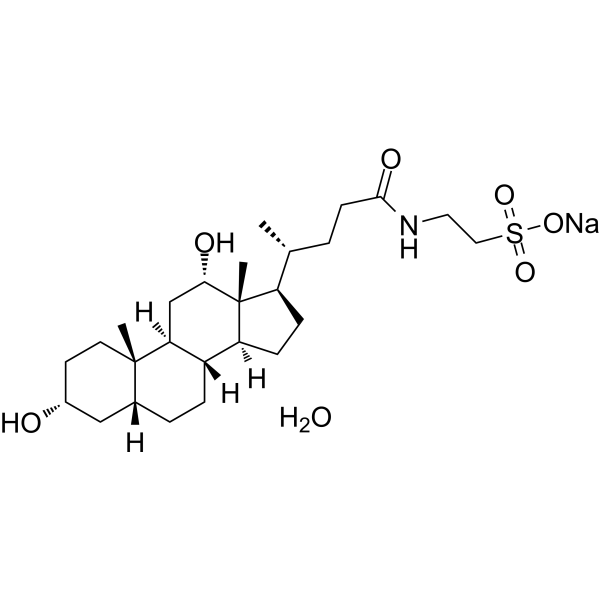
Taurodeoxycholic acid sodium hydrate (Sodium taurodeoxycholate monohydrate), a bile acid, is an amphiphilic surfactant molecule synthesized from cholesterol in the liver. Taurodeoxycholic acid sodium hydrate activates the S1PR2 pathway in addition to the TGR5 pathway .
loading...
    loading...
1
1 Cited Publications
Cat. No.: HY-142978
CAS No.: 156543-00-9
Synonyms: DSPE-mPEG2000
Target:  

Liposome

Research Areas:  

Others

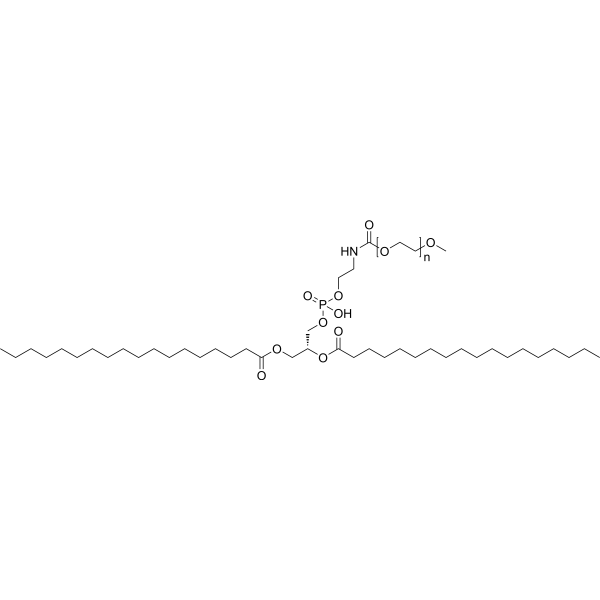
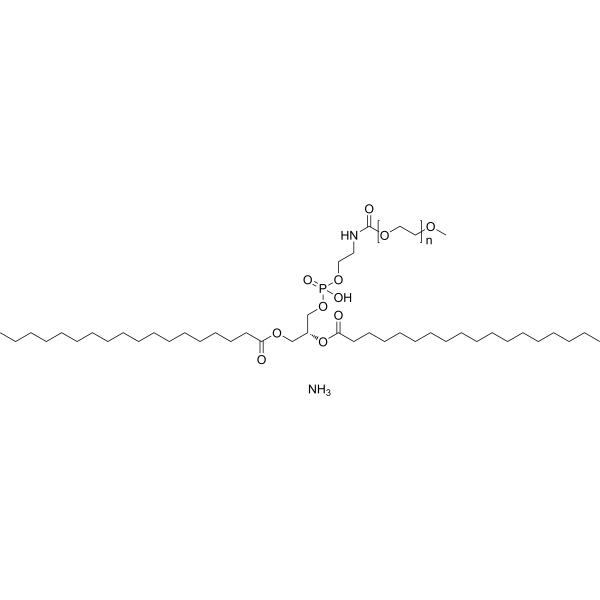
18:0 mPEG2000 PE (DSPE-mPEG2000) ammonium is a kind of amphiphilic polymer material. 18:0 mPEG2000 PE ammonium combines hydrophobic lipids (18:0 stearic acid chain) with hydrophilic polyethylene glycol (2 kDa) chains to form amphiphilic molecules, which are used to construct stable liposomes/nanoparticles, thereby enhancing drug delivery, prolonging circulation time, and achieving targeted effects through its functional terminal groups (usually biotin or carboxyl groups). 18:0 mPEG2000 PE ammonium can be used for the research of nanoprobes and drug delivery .
loading...
    loading...
Cat. No.: HY-W440896
Target:  

Liposome

Research Areas:  

Others

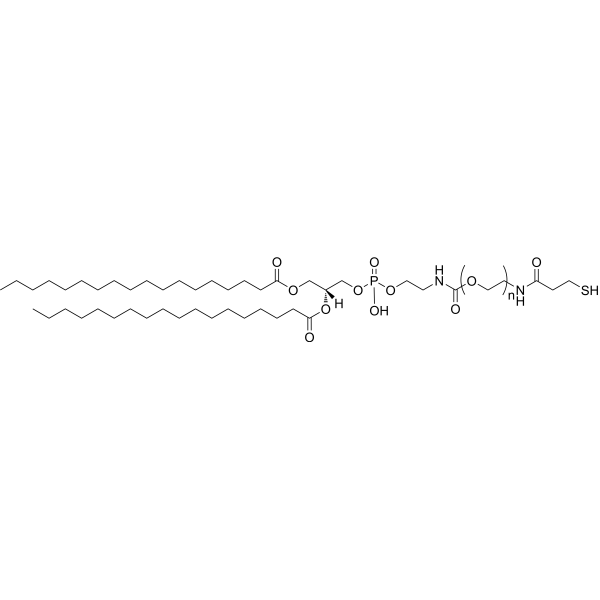
DSPE-PEG2000-SH is an amphiphilic thiol-functionalized DSPE-PEG molecule. DSPE-PEG2000-SH inserts into extracellular vesicle (EV) bilayer membranes via hydrophobic interactions, displaying surface thiol groups to form EV-SH crosslinkers.DSPE-PEG2000-SH enables crosslinking of EV-SH with 8-arm PEG-norbornene via thiol-ene photochemistry to construct hydrogels, with hydrogel mechanical properties tunable via PEG segment molecular weight variation.DSPE-PEG2000-SH can be used to encapsulate agents for drug delivery system, such as mRNA vaccine .
loading...
    loading...
Cat. No.: HY-144013H
CAS No.: 474922-77-5
Purity:  99%
Synonyms: DSPE-mPEG5000 ammonium; 1,2-Distearoyl-sn-glycero-3-phosphoethanolamine-N-[methoxy(polyethylene glycol)-5000] ammonium
Target:  

Liposome

Research Areas:  

Cancer

18:0 mPEG5000 PE (DSPE-mPEG5000) ammonium is a kind of amphiphilic polymer material. 18:0 mPEG5000 PE ammonium combines hydrophobic lipids (18:0 stearic acid chain) with hydrophilic polyethylene glycol (5 kDa) chains to form amphiphilic molecules, which are used to construct stable liposomes/nanoparticles, thereby enhancing drug delivery, prolonging circulation time, and achieving targeted effects through its functional terminal groups (usually biotin or carboxyl groups). 18:0 mPEG5000 PE ammonium can be used for the research of nanoprobes and drug delivery .
loading...
    loading...
Cat. No.: HY-167545
CAS No.: 10015-88-0
Synonyms: POPE
1-Palmitoyl-2-oleoylphosphatidylethanolamine (POPE) is a PE-based synthetic phospholipid that can intercalate with other amphiphilic molecules to form stable bilayers at physiological pH. 1-Palmitoyl-2-oleoylphosphatidylethanolamine can be used in drug delivery research .
loading...
    loading...
Cat. No.: HY-W440833
Target:  

Liposome

Research Areas:  

Others

DSPE-PEG3400-azide is a polydisperse PEG covalently attached to a phospholipid. The polymer is an amphiphilic molecule with hydrophobic fatty acid chains and hydrophilic PEG head which enables lipid bilayer or micelles formation in water. The phospholipid PEG can be used to prepare liposome or nanoparticles for targeted drug delivery and is reactive with alkyne to form triazole bond.
loading...
    loading...
Cat. No.: HY-172741
Target:  

Drug Derivative

Research Areas:  

Metabolic Disease

Dioctanoyl PI(3,5)P2 sodium is a synthetic analog of PI(3,5)P2 (a natural phosphatidylinositol). Phosphatidylinositol phosphates (PIPs) are intracellular amphiphilic molecules implicated in numerous cellular responses including growth, division, movement, differentiation, neuro-exocytosis, and survival .
loading...
    loading...
Cat. No.: HY-W440895
Research Areas:  

Others

DSPE-PEG1000-SH is an amphiphilic poly-PEG that can form lipid bilayers in water. This amphiphilic polymer can form lipid bilayers in aqueous solution and can be used to embed active molecules for drug delivery systems such as mRNA vaccines.
loading...
    loading...
Cat. No.: HY-P10514
CAS No.: 678980-64-8
Research Areas:  

Others

Transportan 10 is a derivative of Transportan (HY-P1732) and is an amphiphilic cell penetrating peptide (CPP). Transportan 10 helps molecules penetrate cell membrane barriers by directly interacting with the lipid bilayer. Transportan 10 can be used in gene therapy or siRNA delivery vector research .
loading...
    loading...
Cat. No.: HY-148776
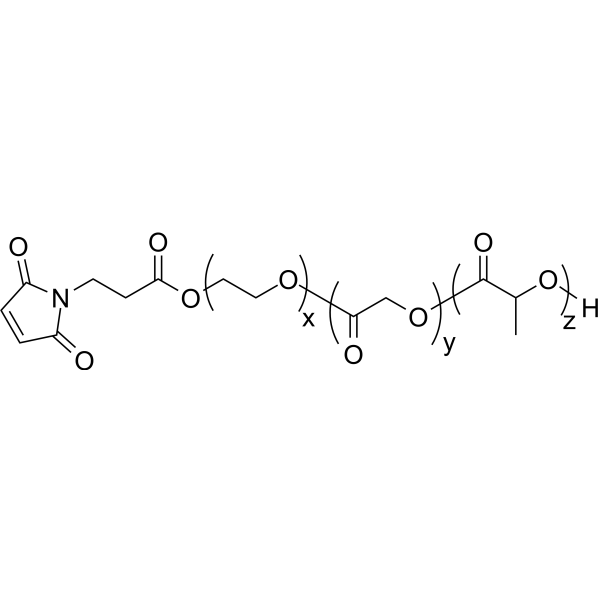
PLGA-PEG-MAL (20kDA-5.0kDA, LA:GA ratio 50:50) is a degradable amphiphilic polymer nanocarrier of poly (lactic acid-co-glycolic acid)-block-poly (ethylene glycol) (PLGA-PEG-Mal) that allows covalent modification of functional molecules. PLGA-PEG-MAL (20kDA-5.0kDA, LA:GA ratio 50:50) serves as a core polymer for nanoparticle synthesis, and also acts as a nanoparticle component for site-specific antibody conjugation to construct artificial antigen-presenting cells. PLGA-PEG-MAL (20kDA-5.0kDA, LA:GA ratio 50:50) is applicable for drug delivery-related research .
loading...
    loading...
Cat. No.: HY-W016979
CAS No.: 705-86-2
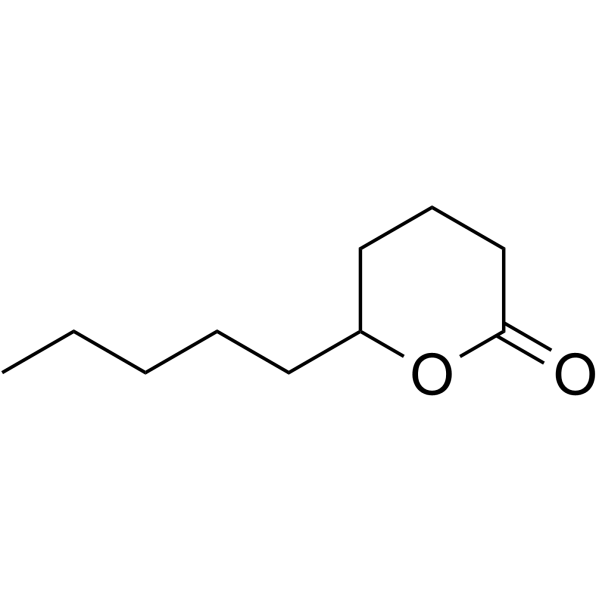
δ-Decalactone is a hydrophobic natural cyclic lactone aroma compound with a creamy-coconut-peach aroma. It serves as a flavoring agent and a renewable monomer for ring-opening polymerization to prepare homopolymers and amphiphilic block copolymers, and it can self-assemble into degradable micelles for the encapsulation of hydrophobic molecules. δ-Decalactone is used in food flavoring and polymer materials research .
loading...
    loading...
Cat. No.: HY-W016979R
CAS No.: 705-86-2
δ-Decalactone (Standard) is the analytical standard of δ-Decalactone (HY-W016979 ). This product is intended for research and analytical applications. δ-Decalactone is a hydrophobic natural cyclic lactone aroma compound with a creamy-coconut-peach aroma. It serves as a flavoring agent and a renewable monomer for ring-opening polymerization to prepare homopolymers and amphiphilic block copolymers, and it can self-assemble into degradable micelles for the encapsulation of hydrophobic molecules. δ-Decalactone is used in food flavoring and polymer materials research .
loading...
    loading...
Cat. No.: HY-168374A
CAS No.: 1829524-73-3
Research Areas:  

Others

DSPE-PEG1000-mannose is an amphiphilic molecule that can be used to synthesize lipid nanoparticles .
loading...
    loading...
Cat. No.: HY-W888515
Research Areas:  

Neurological Disease

mPEG-PCL is an amphiphilic biodegradable block copolymer composed of hydrophilic methoxy poly (ethylene glycol) (mPEG) and hydrophobic poly (ε-caprolactone) (PCL). mPEG-PCL possesses excellent biocompatibility and can form delivery carriers such as micelles and nanoparticles. Through its amphiphilic block structure, mPEG-PCL forms nanocarriers and encapsulates hydrophobic molecules, thereby enhancing the loading capacity of hydrophobic molecules, reducing burst release, and achieving sustained release. mPEG-PCL can be used in research on nanodelivery, tissue engineering, and ocular delivery systems related to age-related macular degeneration (AMD) .
loading...
    loading...
Cat. No.: HY-W089835R
CAS No.: 207737-97-1
Sodium taurodeoxycholate hydrate (Standard) is the analytical standard of Sodium taurodeoxycholate hydrate. This product is intended for research and analytical applications. Sodium taurodeoxycholate hydrate, a bile acid, is an amphiphilic surfactant molecule synthesized from cholesterol in the liver. Sodium taurodeoxycholate hydrate activates the S1PR2 pathway in addition to the TGR5 pathway .
loading...
    loading...
Cat. No.: HY-W440901
Target:  

Liposome

Research Areas:  

Others

DSPE-PEG5000-SPDP is an amphiphilic polyPEG which forms lipid bilayer in water. It can be used to encapsualte therapeutic agents. The core can encapsulate hydrophilic nutrients, such as protein/peptide and mRNA/DNA/siRNA etc. while the lipid bilayer can solubilize hydrophobic drugs, such as doxorubicin, curcumin etc. The SPDP moiety can react with thiol molecule to form a disulfide bond.
loading...
    loading...
Cat. No.: HY-115399A
CAS No.: 925448-37-9
Purity:  ≥97.0%
Synonyms: 3-Oxo-C16-AHL
Target:  

Bacterial

Research Areas:  

Infection

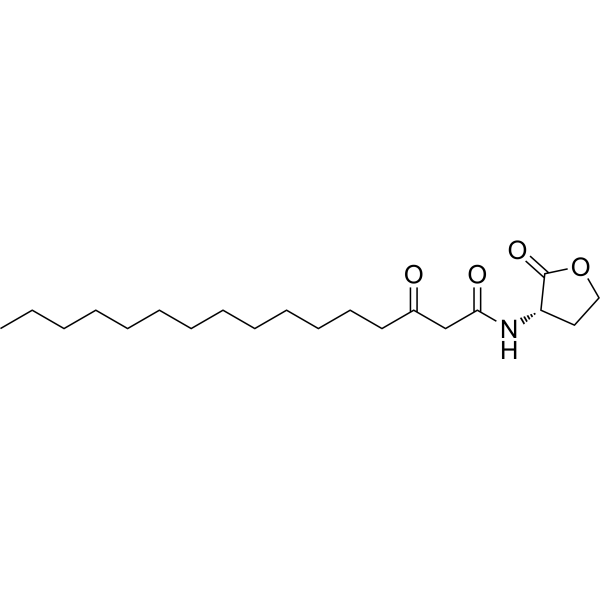
N-3-Oxo-hexadecanoyl-L-Homoserine lactone (3-Oxo-C16-AHL) is a signaling molecule to coordinate group behaviors at high densities in many bacteria. N-3-Oxo-hexadecanoyl-L-Homoserine lactone adsorbs to and promotes the remodeling of lipid membranes in ways that could underpin cell-cell or host-cell interactions .
loading...
    loading...
Cat. No.: HY-125687
CAS No.: 143673-93-2
Research Areas:  

Others

N,N'-suberoyldiglycylglycine is a model bolaamphiphile (bola-shaped amphiphilic molecule) made up of two glycylglycine units linked by a suberic acid connecting group .
loading...
    loading...
Cat. No.: HY-P11218
Target:  

Inhibitory Antibodies

Research Areas:  

Cancer

Lipo-PtIV-R8K is a nuclear targeting peptide containing R8K. Lipo-PtIV-R8K is a lipid PtIV prodrug amphiphilic molecule that can self assemble to form nanoparticles. Lipo-PtIV-R8K can be used in the research of cancer such as breast cancer .
loading...
    loading...
Cat. No.: HY-184601
Glycyrrhizic acid (GA) is a saponin derived from the root of the traditional Chinese medicine licorice. It possesses various pharmacological effects, such as anti-inflammatory, antioxidant, immunomodulatory, and antiviral activity. In addition to its own pharmacological activity, GA can form complexes with many drugs and other natural products. Structurally, glycyrrhizic acid is an amphiphilic molecule; its hydrophilic portion consists of glucuronic acid residues, while its hydrophobic portion is composed of glycyrrhizic acid residues. It can aggregate in water to form self-assembled micelles. Glycyrrhizic acid encapsulates hydrophobic drugs through self-assembly into host-guest complexes, thereby increasing drug solubility and inhibiting precipitation. These complexes can also achieve sustained and controlled release of encapsulated drugs. Therefore, glycyrrhizic acid micelles can serve as drug carriers to improve the absorption of hydrophobic drugs.
loading...
    loading...

