
1. Search Result
Search Result
Results for "

biological excipients

" in MedChemExpress (MCE) Product Catalog:

7

Inhibitors & Agonists

1

Fluorescent Dyes

7

Biochemical Assay Reagents

4

Oligonucleotides

1

GMP Molecules

Cat. No. Product Name Target Research Areas Chemical Structure
  • HY-Y0850E

    PVA (Mw 30000-70000, 87-90% hydrolyzed); Poly(Ethenol) (Mw 30000-70000, 87-90% hydrolyzed)

    Environmental Pollutants Biochemical Assay Reagents Cardiovascular Disease Cancer
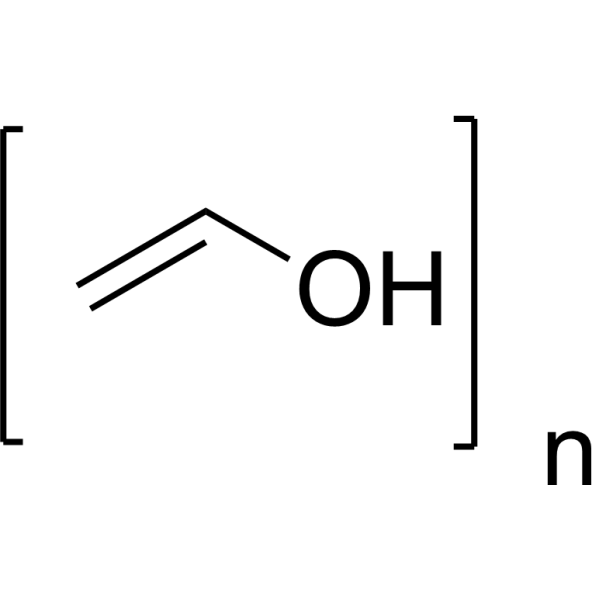
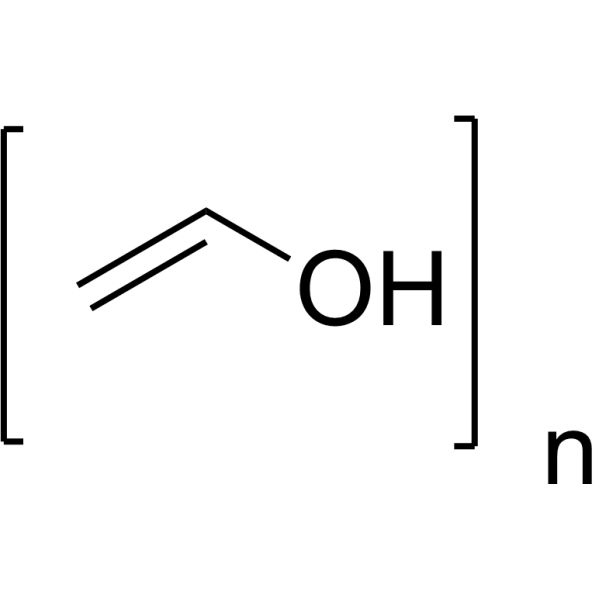
    Polyvinyl alcohol (Mw 30000-70000, 87-90% hydrolyzed) is a polyvinyl alcohol with a molecular weight of 30000-70000 and hydrolytic properties. The degree of hydrolysis refers to the degree to which the acetate groups in the original polyvinyl acetate are converted into hydroxyl groups during the hydrolysis process. Polyvinyl alcohol (Mw 30000-70000, 87-90% hydrolyzed) is the hydrolysis and removal of acetate groups after the polymerization of ethylene acetate. And polyvinyl alcohol is obtained. A degree of hydrolysis of 87-90% indicates that a large part of the acetate groups have been removed, resulting in a large number of hydroxyl groups in the PVA structure. Polyvinyl alcohol with different degrees of hydrolysis can be used to self-crosslink to form cryogel, which can be used as biological excipients .
    Polyvinyl alcohol (Mw 30000-70000, 87-90% hydrolyzed)
  • HY-Y0850J

    PVA (Mw 13000-23000, 87-89% hydrolyzed); Poly(Ethenol) (Mw 13000-23000, 87-89% hydrolyzed)

    Environmental Pollutants Biochemical Assay Reagents Cancer
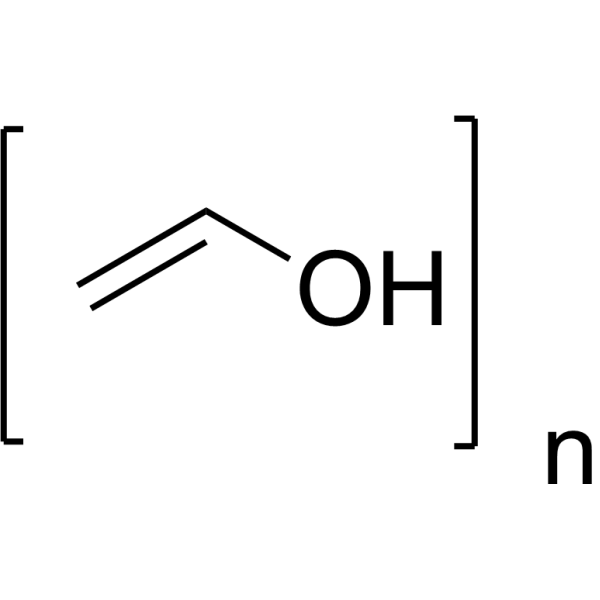
    Polyvinyl alcohol (Mw 13000-23000, 87-89% hydrolyzed) is a polyvinyl alcohol with a molecular weight of 130000-23000 and hydrolytic properties. Polyvinyl alcohol (Mw 13000-23000, 87-89% hydrolyzed) is the hydrolysis and removal of acetate groups after the polymerization of ethylene acetate and polyvinyl alcohol is obtained. A degree of hydrolysis of 87-89% indicates that a large part of the acetate groups have been removed, resulting in a large number of hydroxyl groups in the PVA structure. Polyvinyl alcohol with different degrees of hydrolysis can be used to self-crosslink to form cryogel, which can be used as biological excipient. Polyvinyl alcohol can be used in tissue engineering by electrospinning. Polyvinyl alcohol can achieve high cellular density, infiltration, and uniform distribution, facilitating functional connections between cells. Polyvinyl alcohol can improve cell vitality through in vitro cultivation. Polyvinyl alcohol demonstrates promising inhibition of ostersarcoma cancer cells with Doxorubicin (HY-15142A) .
    Polyvinyl alcohol (Mw 13000-23000, 87-89% hydrolyzed)
  • HY-Y0850L

    PVA (Mw 85000-124000, 99+% hydrolyzed); Poly(Ethenol) (Mw 85000-124000, 99+% hydrolyzed)

    Environmental Pollutants Biochemical Assay Reagents Cancer
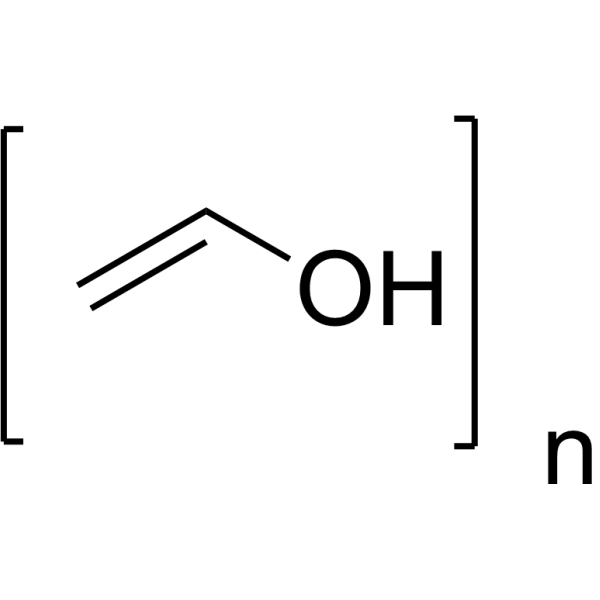
    Polyvinyl alcohol (Mw 85000-124000, 99+% hydrolyzed) is a polyvinyl alcohol with a molecular weight of 85000-124000 and hydrolytic properties. Polyvinyl alcohol (Mw 85000-124000, 99+% hydrolyzed) forms hydrogels that can be used to simulate digestive organs and lesion models for the training of endoscopic ultrasound (EUS) and endoscopic ultrasound elastography (EUS-E). Polyvinyl alcohol with different degrees of hydrolysis can be used to self-crosslink to form cryogel, which can be used as biological excipients .
    Polyvinyl alcohol (Mw 85000-124000, 99+% hydrolyzed)
  • HY-Y0850P

    PVA (Mw 146000-186000, 87-89% hydrolyzed); Poly(Ethenol) (Mw 146000-186000, 87-89% hydrolyzed)

    Environmental Pollutants Biochemical Assay Reagents Cancer
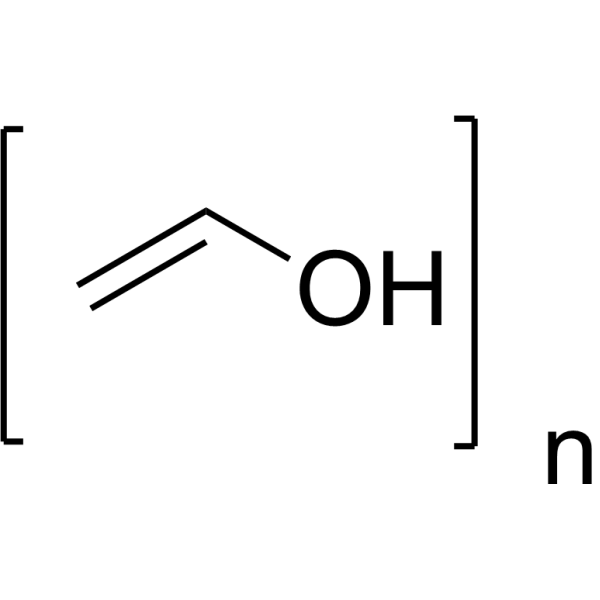
    Polyvinyl alcohol (Mw 146000-186000, 87-89% hydrolyzed) is a polyvinyl alcohol with a molecular weight of 146000-186000 and hydrolytic properties. Polyvinyl alcohol (Mw 146000-186000, 87-89% hydrolyzed) is the hydrolysis and removal of acetate groups after the polymerization of ethylene acetate. And polyvinyl alcohol is obtained. Polyvinyl alcohol with different degrees of hydrolysis can be used to self-crosslink to form cryogel, which can be used as biological excipient. Polyvinyl alcohol can be used in tissue engineering by electrospinning. Polyvinyl alcohol can achieve high cellular density, infiltration, and uniform distribution, facilitating functional connections between cells. Polyvinyl alcohol can improve cell vitality through in vitro cultivation. Polyvinyl alcohol demonstrates promising inhibition of ostersarcoma cancer cells with Doxorubicin (HY-15142A) .
    Polyvinyl alcohol (Mw 146000-186000, 87-89% hydrolyzed)
  • HY-Y0850M

    PVA (Mw 85000-124000, 87-89% hydrolyzed); Poly(Ethenol) (Mw 85000-124000, 87-89% hydrolyzed)

    Environmental Pollutants Biochemical Assay Reagents Others
    Polyvinyl alcohol (Mw 85000-124000, 87-89% hydrolyzed) is a polyvinyl alcohol with a molecular weight of 85000-124000 and hydrolytic properties. The degree of hydrolysis refers to the degree to which the acetate groups in the original polyvinyl acetate are converted into hydroxyl groups during the hydrolysis process. Polyvinyl alcohol (Mw 85000-124000, 87-89% hydrolyzed) is the hydrolysis and removal of acetate groups after the polymerization of ethylene acetate. And polyvinyl alcohol is obtained. A degree of hydrolysis of 87-89% indicates that a large part of the acetate groups have been removed, resulting in a large number of hydroxyl groups in the PVA structure. Polyvinyl alcohol with different degrees of hydrolysis can be used to self-crosslink to form cryogel, which can be used as biological excipient .
    Polyvinyl alcohol (Mw 85000-124000, 87-89% hydrolyzed)
  • HY-Y0850U8

    Polyvinyl alcohol (Mw 47000, 98-99% hydrolyzed, ~1000 polymerization); Poly(Ethenol) (Mw 47000, 98-99% hydrolyzed, ~1000 polymerization)

    Biochemical Assay Reagents Others
    PVA (Mw 47000, 98-99% hydrolyzed, ~1000 polymerization) is a polyvinyl alcohol with molecular weight of 47000 with hydrolysis properties. Hydrolysis degree refers to the conversion rate of acetic acid group hydrolysis to hydroxyl group in the original polyvinyl acetate, PVA (Mw 47000, 98-99% hydrolyzed, ~1000 polymerization). In addition, polyvinyl alcohol is obtained from polymerization of vinyl acetate to remove acetic acid group by hydrolysis. Polyvinyl alcohol with different degrees of hydrolysis can be self-crosslinked to form frozen gels and used as biological excipients .
    PVA (Mw 47000, 98-99% hydrolyzed, ~1000 polymerization)
  • HY-B2242GL

    Secondary calcium (GMP Like)

    Biochemical Assay Reagents Others
    Calcium phosphate (GMP Like) (Secondary calcium (GMP Like)) is the GMP Like class Calcium phosphate (HY-B2242) that can be used as pharmaceutical excipients. Calcium phosphate is a biochemical reagent that can be used as a biological material or organic compound for life science related research.
    Calcium phosphate (GMP Like)

Inquiry Online

Your information is safe with us. * Required Fields.

Salutation


Country or Region *

Applicant Name *


Organization Name *

Department *


Email Address *


Product Name *

Cat. No.


Requested quantity *

Phone Number *


Remarks

Inquiry Online

Inquiry Information

Product Name:
Cat. No.:
Quantity:
MCE Japan Authorized Agent:

