
391 Results for "

bladder

" in MedChemExpress (MCE) Product Catalog:
Products (391)

391 Results for "bladder" in MCE Product Catalog:

610
610 Publications Verification
Cat. No.: HY-12041
CAS No.: 129-56-6
Purity:  99.73%
Research Areas:  

Cancer

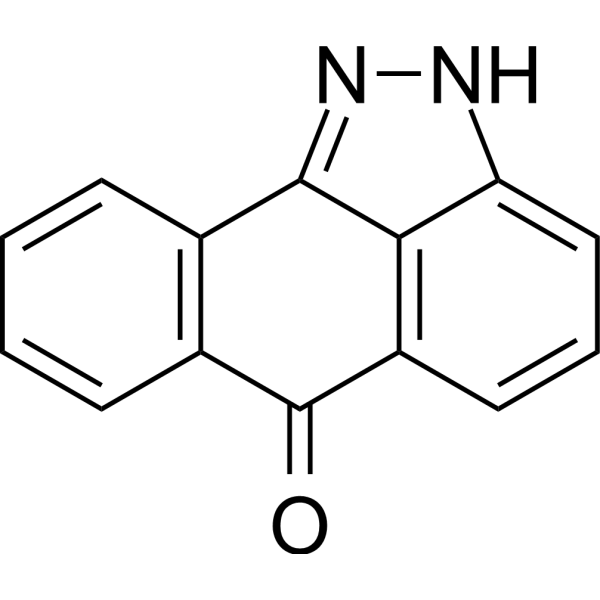
SP600125 is an orally active, reversible, and ATP-competitive JNK inhibitor with IC50s of 40, 40 and 90 nM for JNK1, JNK2 and JNK3, respectively. SP600125 is a potent ferroptosis inhibitor. SP600125 induces the transformation of bladder cancer cells from autophagy to apoptosis .
loading...
    loading...
188
188 Cited Publications
Cat. No.: HY-W008923
CAS No.: 17086-28-1
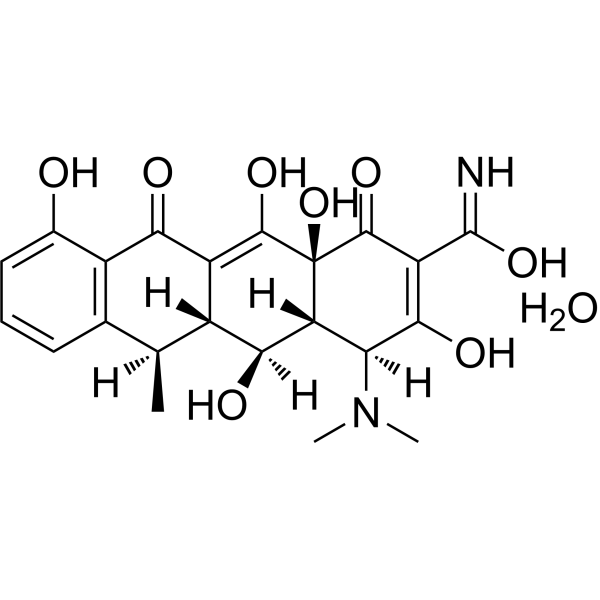
Doxycycline monohydrate is an orally active highly lipophilic, tissue-permeable MMP inhibitor with broad-spectrum antibacterial activity. Doxycycline monohydrate is also a semi-synthetic antibiotic with chelating properties, which blocks bacterial protein synthesis and inhibits extracellular matrix degradation through interactions with zinc and calcium atoms. Doxycycline monohydrate also inhibits mitochondrial biogenesis, translation, and the expression of respiratory chain proteins. Doxycycline monohydrate induces apoptosis, inhibits autophagy and EMT, downregulates stem cell markers, and activates the PI3K-AKT pathway, thereby effectively inhibiting the viability and proliferation of cancer cells such as breast cancer cells. Doxycycline monohydrate also promotes the survival and self-renewal of embryonic stem cells and neural stem cells, and reduces the frequency of medium changes in culture. Doxycycline monohydrate has been applied in studies related to breast cancer, prostate cancer, bladder cancer, and other cancers .
loading...
    loading...
185
185 Cited Publications
Cat. No.: HY-17386
CAS No.: 122320-73-4
Synonyms: BRL 49653
Rosiglitazone (BRL 49653) is an orally active selective PPARγ agonist (EC50: 60 nM, Kd: 40 nM), with blood-brain barrier permeability. Rosiglitazone is an TRPC5 activator (EC50: 30 μM) and TRPM3 inhibitor. Rosiglitazone can be used in the research of obesity and diabetes, senescence, ovarian cancer .
loading...
    loading...
185
185 Cited Publications
Cat. No.: HY-17386A
CAS No.: 302543-62-0
Synonyms: BRL 49653 hydrochloride
Rosiglitazone (BRL 49653) hydrochloride is an orally active selective PPARγ agonist (EC50: 60 nM, Kd: 40 nM). Rosiglitazone hydrochloride is a TRPC5 activator (EC50: 30 μM) and TRPM3 inhibitor. Rosiglitazone hydrochloride can be used in the research of obesity and diabetes, senescence, ovarian cancer .
loading...
    loading...
182
182 Cited Publications
Cat. No.: HY-17386B
CAS No.: 316371-84-3
Synonyms: BRL 49653 potassium
Rosiglitazone (BRL 49653) potassium is an orally active selective PPARγ agonist (EC50: 60 nM, Kd: 40 nM). Rosiglitazone potassium is a TRPC5 activator (EC50: 30 μM) and TRPM3 inhibitor. Rosiglitazone potassium can be used in the research of obesity and diabetes, senescence, ovarian cancer .
loading...
    loading...
22
22 Cited Publications
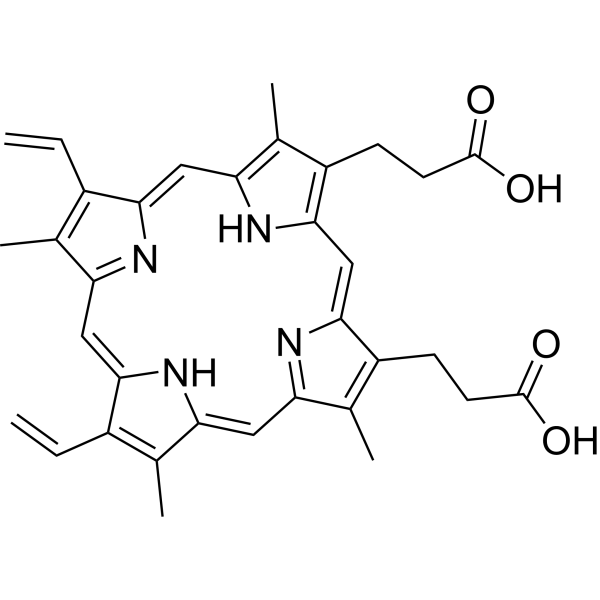
Cat. No.: HY-B1247
CAS No.: 553-12-8
Synonyms: PPIX
Protoporphyrin IX is a final intermediate in the heme biosynthetic pathway, which acts as a radiation sensitizer enhancing ROS generation even in a hypoxic state and inducing DNA damage. Protoporphyrin IX also acts as a photo sensitizer undergoing photobleaching that occurs through direct degradation by light irradiation. Protoporphyrin IX is formed and accumulated following 5-aminolevulinic acid (5-ALA) (HY-W000450) administration in the tumor cells of rats. Protoporphyrin IX causes selective improvement of basal cell carcinoma when activated red fluorescence of a peak wavelength at 405 nm. Protoporphyrin IX is promising for research of sonodynamic and photodynamic agents for a wide range of cancers, such as bladder cancer and nodular basal cell carcinoma .
loading...
    loading...
22
22 Cited Publications
Cat. No.: HY-B1247A
CAS No.: 50865-01-5
Synonyms: PPIX disodium
Target:  

Endogenous Metabolite

Research Areas:  

Cancer

Protoporphyrin IX disodium is a final intermediate in the heme biosynthetic pathway, which acts as a radiation sensitizer enhancing ROS generation even in a hypoxic state and inducing DNA damage. Protoporphyrin IX disodium also acts as a photo sensitizer undergoing photobleaching that occurs through direct degradation by light irradiation. Protoporphyrin IX disodium is formed and accumulated following 5-aminolevulinic acid (5-ALA) (HY-W000450) administration in the tumor cells of rats. Protoporphyrin IX disodium causes selective improvement of basal cell carcinoma when activated red fluorescence of a peak wavelength at 405 nm. Protoporphyrin IX disodium is promising for research of sonodynamic and photodynamic agents for a wide range of cancers, such as bladder cancer and nodular basal cell carcinoma .
loading...
    loading...
20
20 Cited Publications
Cat. No.: HY-W854659
CAS No.: 72984-36-2
Synonyms: Ce6 trisodium
Chlorin e6 Ce6 (trisodium) is a water-soluble derivative of chlorophyll, belonging to the chlorin class of photosensitizers with an absorption wavelength range of 600-670 nm. Chlorin e6 trisodium emits characteristic red fluorescence upon light excitation, enabling real-time identification of tumor boundaries and progression. Chlorin e6 trisodium can be used for the study of photodynamic therapy (PDT) of cancers (bladder cancer) and fluorescence diagnosis of neoplastic lesions .
loading...
    loading...
15
15 Cited Publications
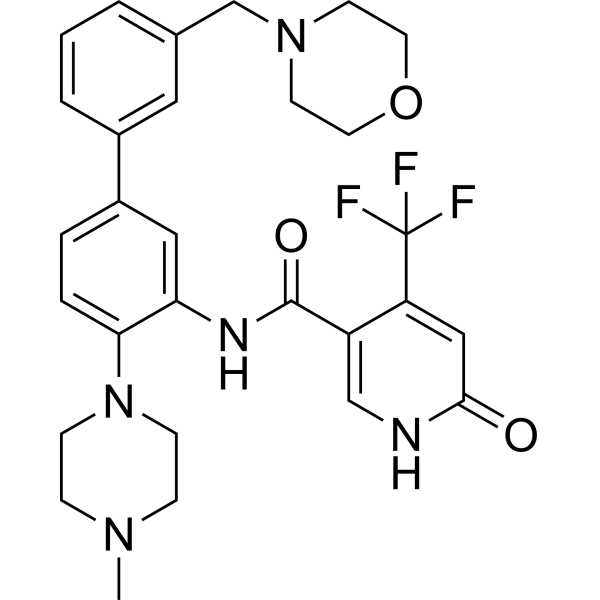
Cat. No.: HY-16993
CAS No.: 1801787-56-3
Target:  

Apoptosis WDR5

Research Areas:  

Cancer

OICR-9429, a chemical probe, is high affinity WD repeat domain 5 (WDR5) inhibitor, competitively blocks WDR5 interaction with MLL protein via binding the central peptide-binding pocket of WDR5. OICR-9429 can suppress histone H3K4 trimethylation and can be used for the research of various cancers including non-MLL-rearranged leukaemia, colon, pancreatic, prostate cancer and bladder cancer (BCa) .
loading...
    loading...
13
13 Cited Publications
Cat. No.: HY-110353
CAS No.: 1821387-73-8
Purity:  99.96%
Research Areas:  

Inflammation/Immunology Cancer

CU-T12-9 is a specific TLR1/2 agonist with EC50 of 52.9 nM in HEK-Blue hTLR2 SEAP assay. CU-T12-9 activates both the innate and the adaptive immune systems. CU-T12-9 selectively activates the TLR1/2 heterodimer, not TLR2/6. CU-T12-9 signals through NF-κB and invokes an elevation of the downstream effectors TNF-α, IL-10, and iNOS .
loading...
    loading...
11
11 Cited Publications
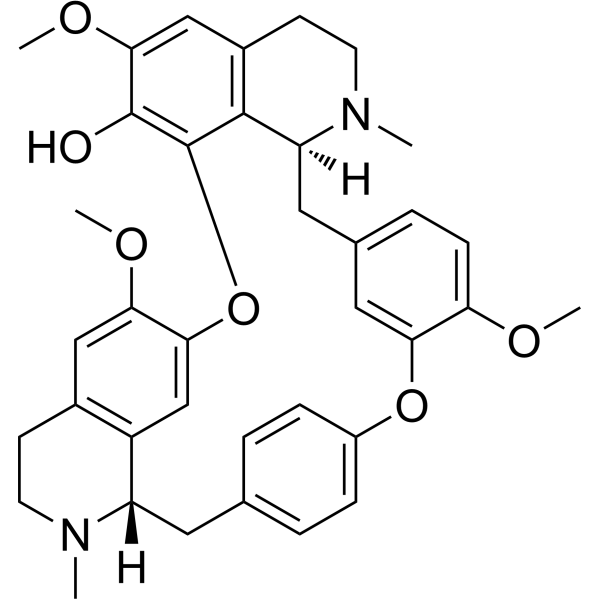
Cat. No.: HY-N1372A
CAS No.: 436-77-1
Fangchinoline is isolated from Stephania tetrandra with extensive biological activities, such as enhancing immunity, anti-inflammatory sterilization and anti-atherosclerosis. Fangchinoline, a novel HIV-1 inhibitor, inhibits HIV-1 replication by impairing gp160 proteolytic processing . Fangchinoline targets Focal adhesion kinase (FAK) and suppresses FAK-mediated signaling pathway in tumor cells which highly expressed FAK . Fangchinoline induces apoptosis and adaptive autophagy in bladder cancer .
loading...
    loading...
8
8 Cited Publications
Cat. No.: HY-B0371F
CAS No.: 63074-08-8
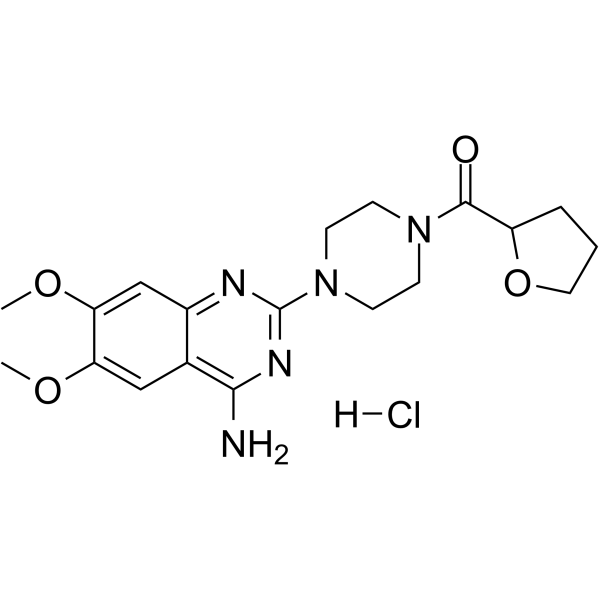
Terazosin hydrochloride is a quinazoline derivative and a competitive and orally active α1-adrenoceptor antagonist. Terazosin hydrochloride works by relaxing blood vessels and the opening of the bladder. Terazosin hydrochloride has the potential for benign prostatic hyperplasia (BPH) and high blood pressure treatment .
loading...
    loading...
8
8 Cited Publications
Cat. No.: HY-B0371
CAS No.: 63590-64-7
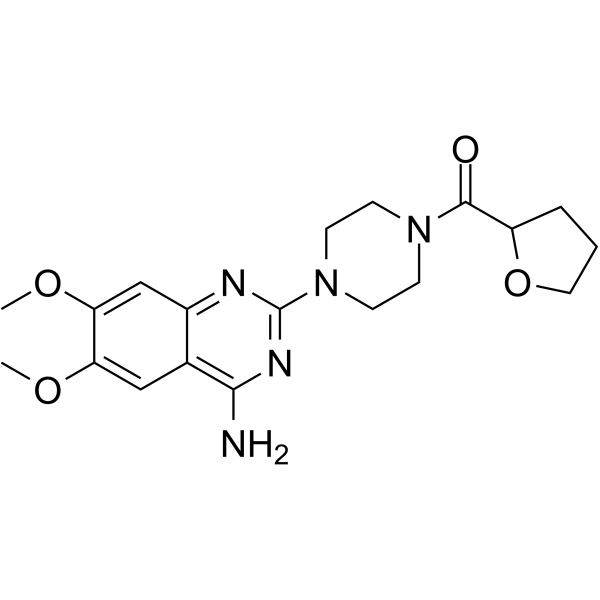
Terazosin is a quinazoline derivative and a competitive and orally active α1-adrenoceptor antagonist. Terazosin works by relaxing blood vessels and the opening of the bladder. Terazosin has the potential for benign prostatic hyperplasia (BPH) and high blood pressure treatment .
loading...
    loading...
8
8 Cited Publications
Cat. No.: HY-B0371A
CAS No.: 70024-40-7
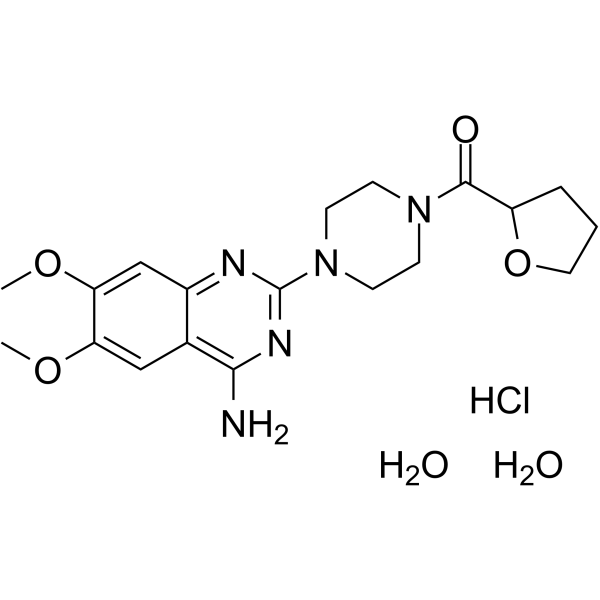
Terazosin hydrochloride dihydrate is a quinazoline derivative and a competitive and orally active α1-adrenoceptor antagonist. Terazosin hydrochloride dihydrate works by relaxing blood vessels and the opening of the bladder. Terazosin hydrochloride dihydrate has the potential for benign prostatic hyperplasia (BPH) and high blood pressure treatment .
loading...
    loading...
8
8 Cited Publications
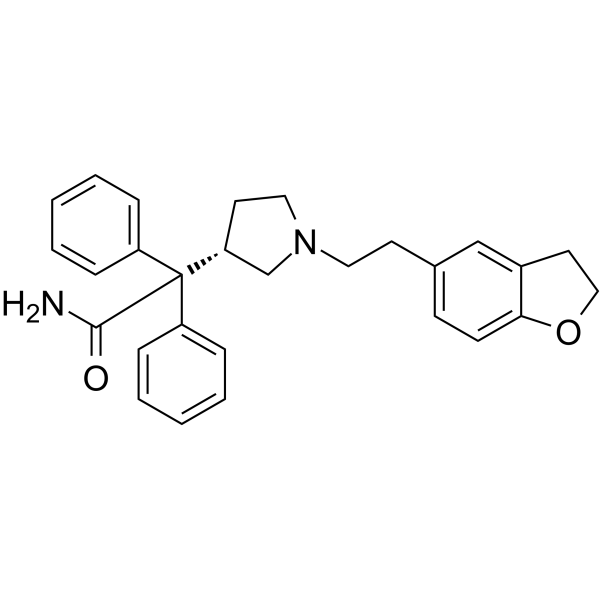
Cat. No.: HY-A0033
CAS No.: 133099-04-4
Synonyms: UK-88525
Darifenacin (UK-88525) is a selective and orally active M3 muscarinic receptor (M3R) antagonist with a pKi of 8.9. Darifenacin binds >20-fold more specifically to M3R than to other muscarinic receptors. Darifenacin can be used in the study of urinary incontinence and other symptoms of overactive bladder. Darifenacin inhibits tumor growth in colorectal cancer cells and has anti-tumor effects .
loading...
    loading...
8
8 Cited Publications
Cat. No.: HY-A0012
CAS No.: 133099-07-7
Synonyms: UK-88525 hydrobromide
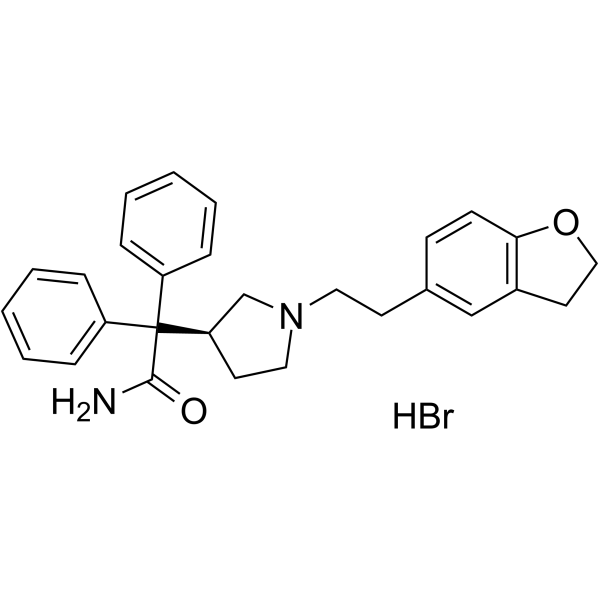
Darifenacin (UK-88525) hydrobromide is a selective and orally active M3 muscarinic receptor (M3R) antagonist with a pKi of 8.9. Darifenacin hydrobromide binds >20-fold more specifically to M3R than to other muscarinic receptors. Darifenacin hydrobromide can be used in the study of urinary incontinence and other symptoms of overactive bladder. Darifenacin hydrobromide inhibits tumor growth in colorectal cancer cells and has anti-tumor effects .
loading...
    loading...
5
5 Cited Publications
Cat. No.: HY-129046
CAS No.: 9001-99-4
Synonyms: Ribonuclease A; EC 4.6.1.18; RNase A
Research Areas:  

Others

RNase A (Bovine pancreatic RNase) is a widely used Endonuclease in DNA purification by specifically hydrolyzing cytosine or uracil residues of RNA. RNase A degrades the RNA in the RNA/DNA duplex. RNase A catalyses the breakdown of 3',5'-phosphodiester linkages of single stranded RNA. RNase A family members in organisms are tightly involved in various physiological and pathological processes including cell growth and development, proliferation, differentiation and migration. Dysregulation of RNase A activity or expression level is closely related to pancreatic, ovarian, bladder and thyroid cancer. RNase A has tumor cell-killing ability .
loading...
    loading...
4
4 Cited Publications
Cat. No.: HY-115718
CAS No.: 2471970-56-4
Purity:  98.00%
Target:  

PROTACs Bcl-2 Family

Research Areas:  

Cancer

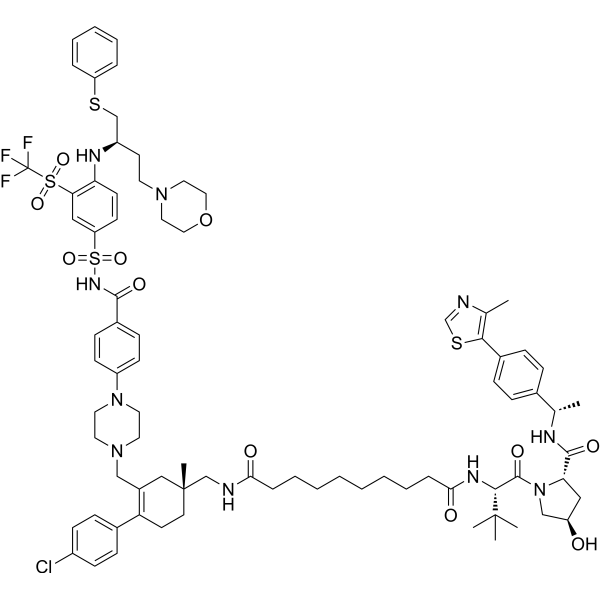
PZ703b is a Bcl-xl PROTAC degrader that induces apoptosis and inhibits cancer cell proliferation. PZ703b can be used for the research of bladder cancer research .
loading...
    loading...
4
4 Cited Publications
Cat. No.: HY-115718A
Purity:  98.62%
Target:  

PROTACs Bcl-2 Family

Research Areas:  

Cancer

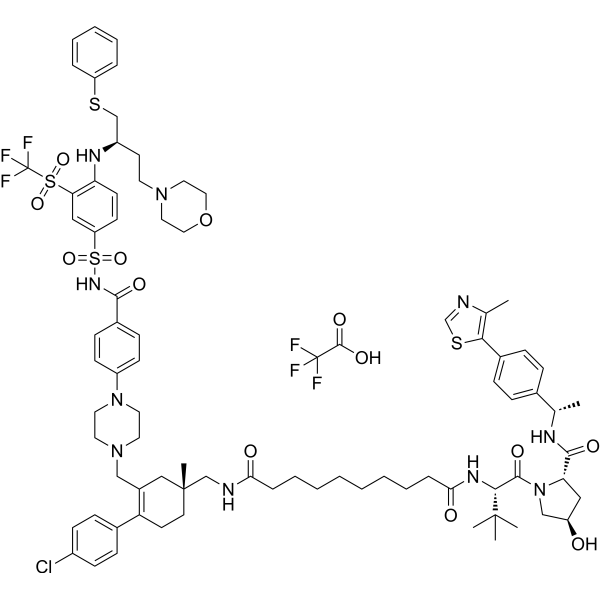
PZ703b TFA is a Bcl-xl PROTAC degradation agent that induces apoptosis and inhibits cancer cell proliferation for bladder cancer research .
loading...
    loading...
4
4 Cited Publications
Cat. No.: HY-115718B
Purity:  99.18%
Research Areas:  

Cancer

PZ703b hydrochloride is a Bcl-xl PROTAC degrader that induces apoptosis and inhibits cancer cell proliferation. PZ703b hydrochloride can be used for the research of bladder cancer research .
loading...
    loading...

