21 Results for "

carbocyanine

" in MedChemExpress (MCE) Product Catalog:
Products (21)

21 Results for "carbocyanine" in MCE Product Catalog:

126
126 Publications Verification
Cat. No.: HY-D1048
CAS No.: 100068-60-8
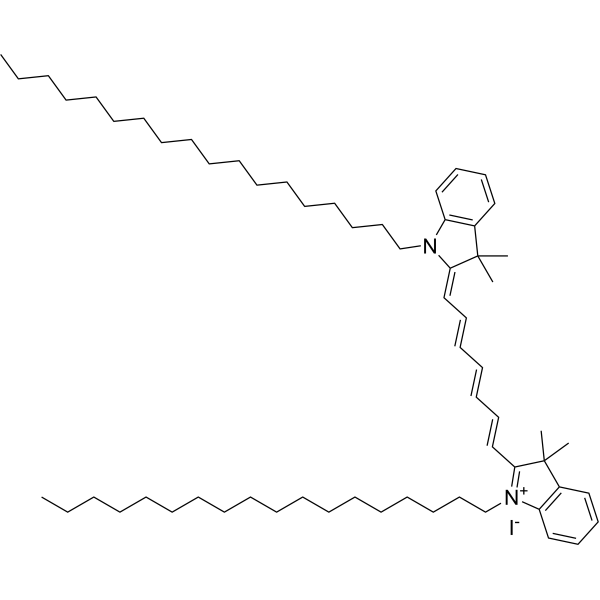
Synonyms: Cy7 DiC18
DiR is a long-chain carbocyanine dye. Carbocyanine dyes are widely used as Di to label cells, organelles, liposomes, viruses and lipoproteins .
loading...
    loading...
66
66 Cited Publications
Cat. No.: HY-D0083
CAS No.: 41085-99-8
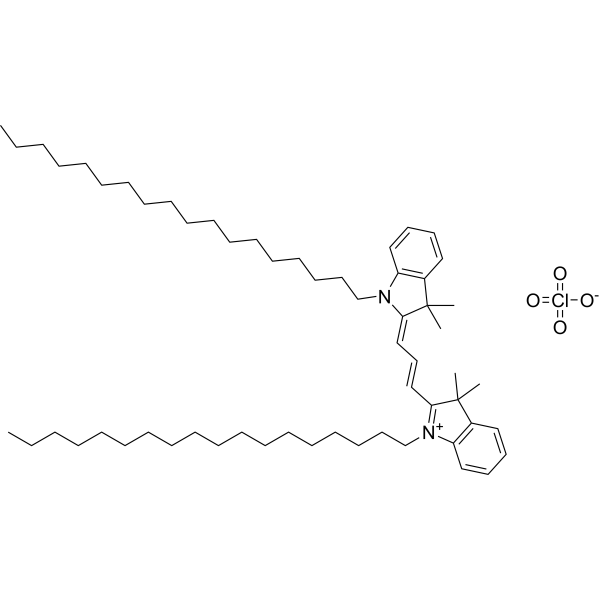
Synonyms: DiIC18(3)
DiI is a long-chain carbocyanine dye. Carbocyanine dyes are widely used as Di to label cells, organelles, liposomes, viruses and lipoproteins .
loading...
    loading...
46
46 Cited Publications
Cat. No.: HY-D1028
CAS No.: 127274-91-3
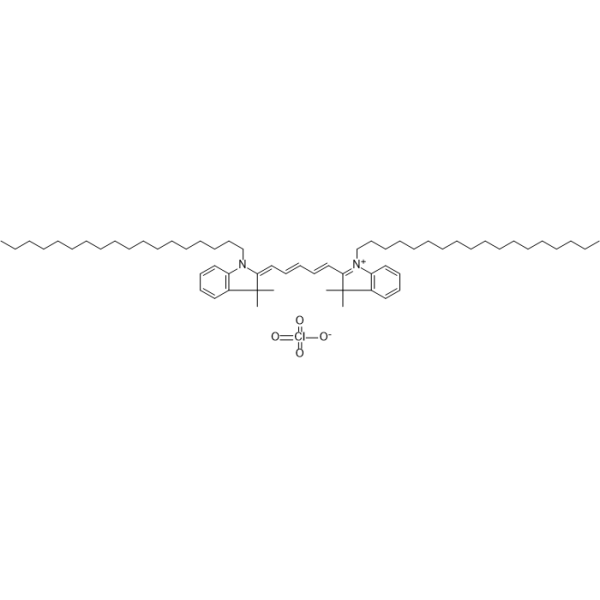
DiD is a long-chain carbocyanine dye. Carbocyanine dyes are widely used as Di to label cells, organelles, liposomes, viruses and lipoproteins (Ex/Em = 633/665 nm) .
loading...
    loading...
31
31 Cited Publications
Cat. No.: HY-D0969
CAS No.: 34215-57-1
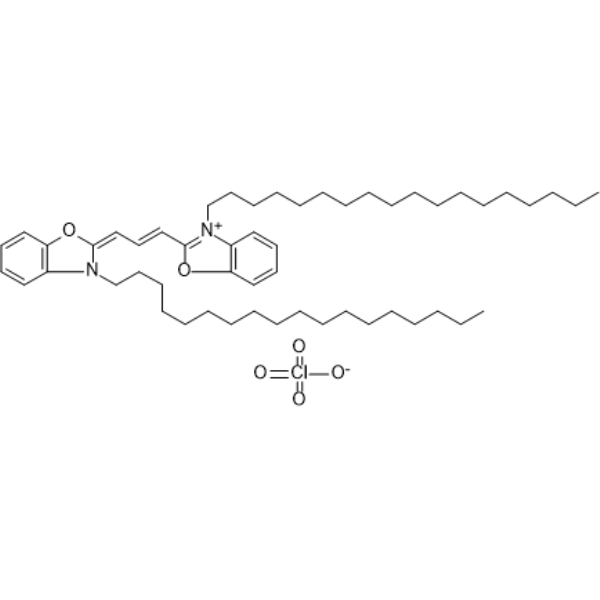
Synonyms: DiOC18(3); 3,3'-Dioctadecyloxacarbocyanine perchlorate
DiO is a long-chain carbocyanine dye. Carbocyanine dyes are widely used as Di to label cells, organelles, liposomes, viruses and lipoproteins .
loading...
    loading...
1
1 Cited Publications
Cat. No.: HY-D0084
CAS No.: 53213-82-4
Synonyms: DiOC6(3) iodide
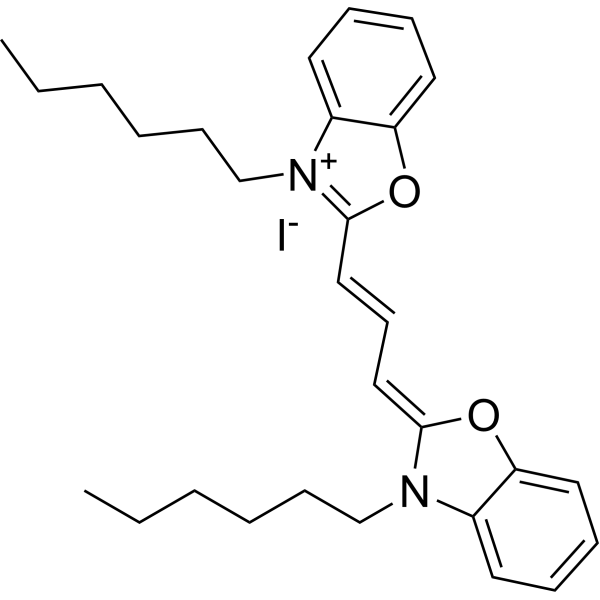
3,3'-Dihexyloxacarbocyanine iodide is a carbocyanine dye which can be used to monitor changes in mitochondrial membrane potential.
loading...
    loading...
Cat. No.: HY-D0987
CAS No.: 7423-31-6
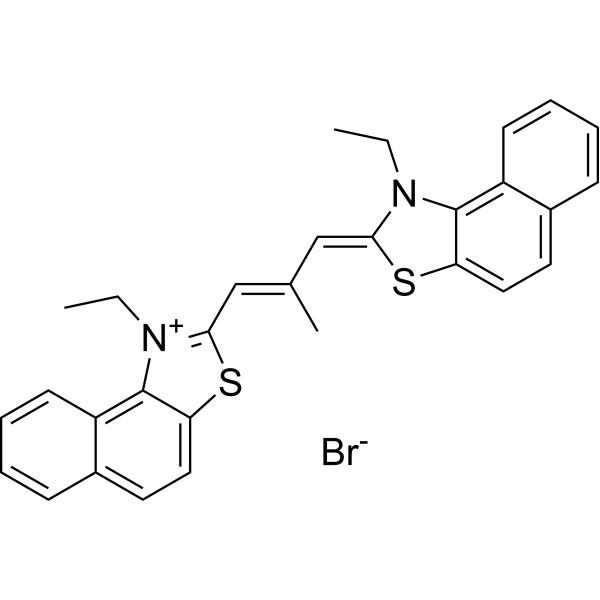
Stains-All, a cationic carbocyanine dye, is a convenient probe to study the structural features of the individual calcium-binding sites of calmodulin (CaM) and related calcium-binding proteins (CaBP) .
loading...
    loading...
Cat. No.: HY-DY1012
CAS No.: 41085-99-8
DiI (solution) is a long-chain carbocyanine dye. Carbocyanine dyes are widely used as Di to label cells, organelles, liposomes, viruses and lipoproteins .
Solvent and concentration: DMSO: 5 mM
loading...
    loading...
Cat. No.: HY-DY1013
CAS No.: 100068-60-8
DiR (solution) is a long-chain carbocyanine dye. Carbocyanine dyes are widely used as Di to label cells, organelles, liposomes, viruses and lipoproteins .
Solvent and concentration: DMSO: 5 mM
loading...
    loading...
Cat. No.: HY-D1076
CAS No.: 84109-11-5
DiIC16(3) is a long-chain carbocyanine dye. Carbocyanine dyes are widely used as Di to label cells, organelles, liposomes, viruses and lipoproteins .
loading...
    loading...
Cat. No.: HY-D1075
CAS No.: 36536-22-8
Synonyms: HIDC
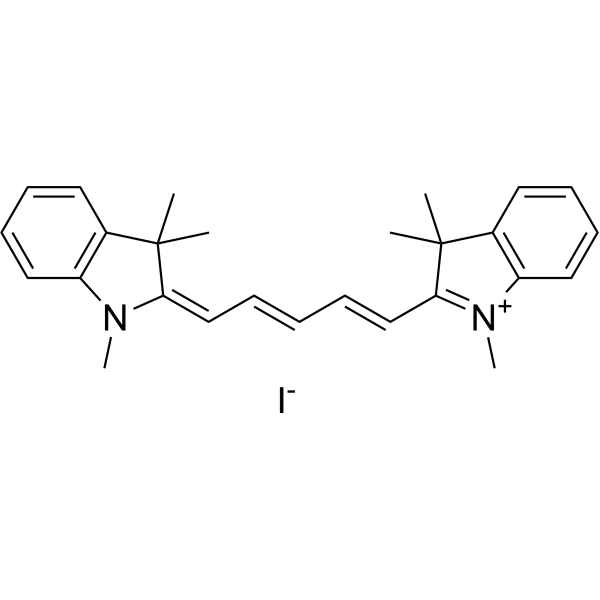
1,1',3,3,3',3'-Hexamethylindodicarbocyanine iodide is a carbocyanine dye that stains mitochondria of live cells.
loading...
    loading...
Cat. No.: HY-DY1010
CAS No.: 34215-57-1
DiO (solution) is a long-chain carbocyanine dye. Carbocyanine dyes are widely used as Di to label cells, organelles, liposomes, viruses and lipoproteins .
Solvent and concentration: DMSO: 5 mM
loading...
    loading...
Cat. No.: HY-D1626
CAS No.: 53533-50-9
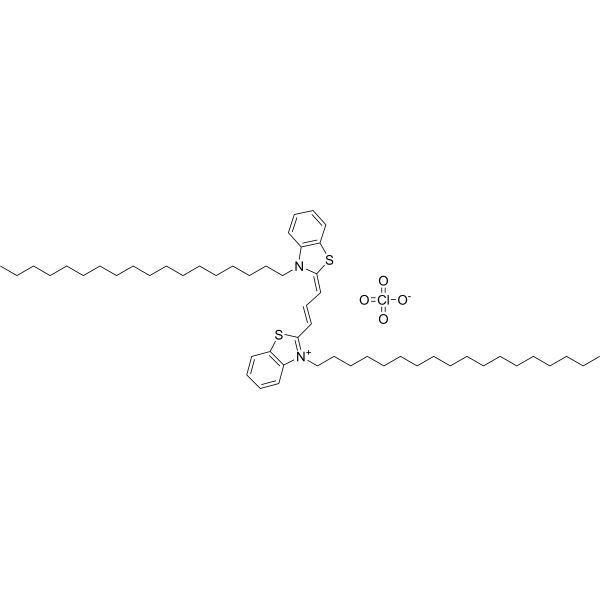
Synonyms: 3,3'-Dioctadecylthiacarbocyanine perchlorate
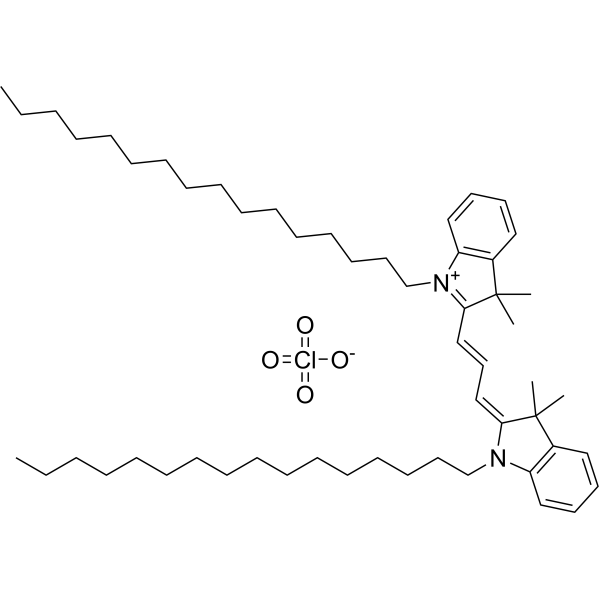
DiSC18(3) is a lipophilic carbocyanine dye for membrane labelling .
loading...
    loading...
Cat. No.: HY-D1741
CAS No.: 161433-32-5
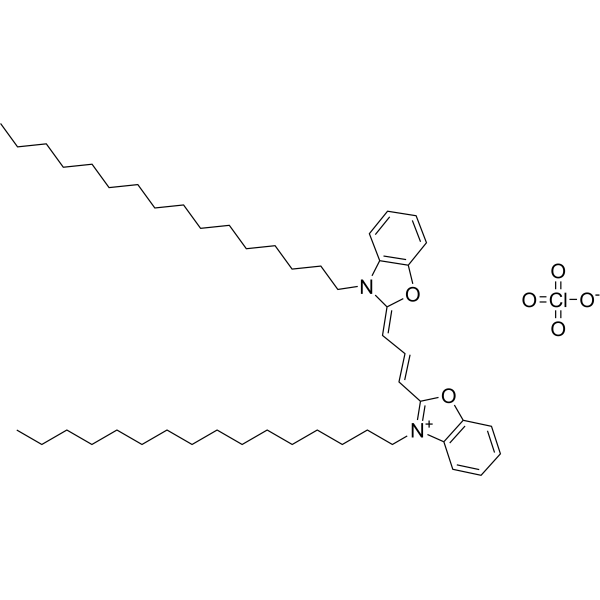
Synonyms: 3,3'-Dihexadecyloxacarbocyanine
DiOC16(3) (3,3'-Dihexadecyloxacarbocyanine) is a lipophilic carbocyanine dye used primarily for optical recordings of membrane voltage and studies of membrane fluidity.
loading...
    loading...
Cat. No.: HY-D3305
CAS No.: 362596-00-7
DiD is a long-chain carbocyanine dye. Carbocyanine dyes are widely used as Di to label cells, organelles, liposomes, viruses and lipoproteins (Ex/Em = 633/665 nm) .
loading...
    loading...
Cat. No.: HY-W559684
CAS No.: 75539-51-4
Synonyms: Cy5 DIC18
DiD is a long-chain carbocyanine dye. Carbocyanine dyes are widely used as Di to label cells, organelles, liposomes, viruses and lipoproteins (Ex/Em = 633/665 nm) .
loading...
    loading...
Cat. No.: HY-DY1084
CAS No.: 127274-91-3
DiD perchlorate (solution)is a long-chain carbocyanine dye. Carbocyanine dyes are widely used as Di to label cells, organelles, liposomes, viruses and lipoproteins .
Solvent and concentration: DMSO: 5 mM
loading...
    loading...
Cat. No.: HY-D3417
CAS No.: 157199-57-0
Target:  

Fluorescent Dye

Research Areas:  

Others

BO-TAP-1 is a cell-impermeable cyan fluorescent carbocyanine monomeric nucleic acid dye that can be used for microarray nucleic acid staining, multicolor fluorescent labeling of cell nuclei and chromosomes, cell detection and counting, and flow cytometry. BO-TAP-1 is non-fluorescent in the absence of nucleic acids, but its fluorescence is significantly enhanced upon binding to double-stranded DNA. The maximum excitation and emission wavelengths of the BO-TAP-1–DNA complex are 454 nm and 487 nm, respectively. BO-TAP-1 can be used in research related to nucleic acid detection and cell analysis.
loading...
    loading...
Cat. No.: HY-D3379
Neuro-DiO trifluoromethanesulfonate is a green Fluorescent carbocyanine dye and also a vascular labeling agent. Neuro-DiO trifluoromethanesulfonate can be used for confocal microscopy imaging of cerebral blood vessels in mice (Mus musculus) .
loading...
    loading...
Cat. No.: HY-D3421
CAS No.: 3083251-08-2
Target:  

Fluorescent Dye

Research Areas:  

Others

DiOC14 (3) (hydroxyethanesulfonate) is a water-soluble lipophilic carbocyanine green fluorescent membrane dye used as a fluorescent probe for living cell membranes and lipid bilayers. DiOC14 (3) (hydroxyethanesulfonate) acts as a lipophilic tracer that integrates into cell membranes, with its fluorescence generated upon membrane integration independent of enzymatic hydrolysis, pH, or membrane potential. The Ex/Em of DiOC14 (3) (hydroxyethanesulfonate) is 477/525 nm.
loading...
    loading...
Cat. No.: HY-D3405
CAS No.: 173357-16-9
BO-TAP-3 is an orange fluorescent carbocyanine monomer dye, and it is also a cell impermeable nucleic acid staining agent. When there is no nucleic acid present, BO-TAP-3 shows a non-fluorescent state. However, when it binds to double-stranded DNA, it exhibits multiple fluorescence enhancement effects. BO-TAP-3 can be used for cell nucleus and cytoplasm imaging, bacterial and sperm labeling, and can also be applied in nucleic acid detection and amplification research. It can also be used as a temperature sensor (Ex/Em = 564/600 nM).
loading...
    loading...

