
1. Search Result
Search Result
Pathways Recommended: Stem Cell/Wnt Cell Cycle/DNA Damage
Results for "

cell clone

" in MedChemExpress (MCE) Product Catalog:

56

Inhibitors & Agonists

17

Peptides

3

MCE Kits

2

Inhibitory Antibodies

11

Natural
Products

1

Recombinant Proteins

2

Antibodies

Cat. No. Product Name Target Research Areas Chemical Structure
  • HY-402410
    TETi76
    1 Publications Verification

    TET Protein Cancer
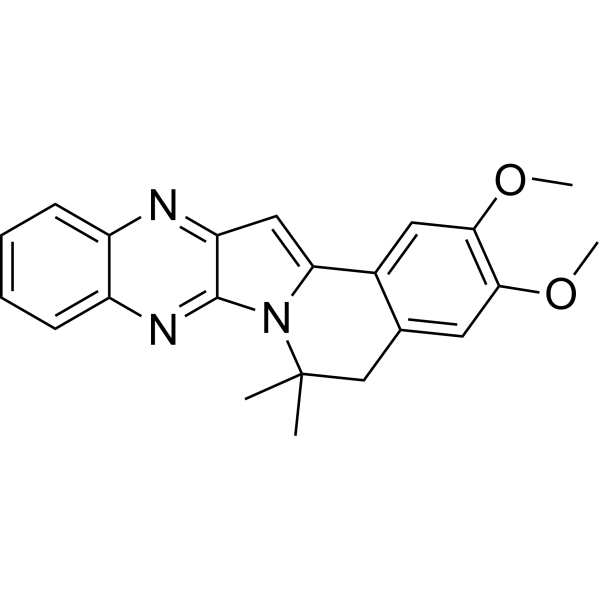
    TETi76 is an orally active TET family inhibitor with IC50 values ??of 1.5, 9.4 and 8.8 μM for TET1, TET2 and TET3, respectively. TETi76 competitively binds to the active site of TET enzymes, reduces cytosine hydroxymethylation and restricts clonal growth of TET2 mutants in vitro and in vivo, but does not affect the growth of normal hematopoietic precursor cells. TETi76 can be used for leukemia research .
    TETi76
  • HY-19969
    YM-90709
    1 Publications Verification

    Interleukin Related Inflammation/Immunology
    YM-90709 is a novel IL-5 inhibitor which selectively blocks the binding of IL-5 to the IL-5 receptor (IL-5R).YM-90709 potently inhibits the binding of [ 125I]-IL-5 to IL-5R on human peripheral eosinophils and eosinophilic HL-60 clone 15 cells with IC50 values of 1.0 and 0.57 μM .
    YM-90709
  • HY-P1745

    Insulin B chain (9-23)

    MHC Insulin Receptor IFNAR Inflammation/Immunology
    InsB (9-23) (Insulin B chain (9-23)) is an HLA-DQ8-restricted insulin B-chain peptide composed of amino acid residues 9-23. InsB (9-23) serves as a major MHC II class-restricted antigen. InsB (9-23) supports the recognition and activation of T cells, stimulates the secretion of IFN-γ and cytokines, and induces cross-reactive immune responses. InsB (9-23)-specific CD4 T cells can initiate diabetes . InsB (9-23) can be used in research related to type 1 diabetes and autoimmune diabetes .
    InsB (9-23)
  • HY-176444A

    Molecular Glues CDK Cancer
    (R)-CDK2 degrader 6 is the R-enantiomer of CDK2 degrader 6 (HY-176444), a cereblon-based molecular glue degrader of CDK2 with a DC50 of 27 nM. (R)-CDK2 degrader 6 induces ubiquitination and proteasomal degradation of CDK2 by bridging cereblon and CDK2. (R)-CDK2 degrader 6 is applicable for cancer research .
    (R)-CDK2 degrader 6
  • HY-137265

    Flavivirus Infection
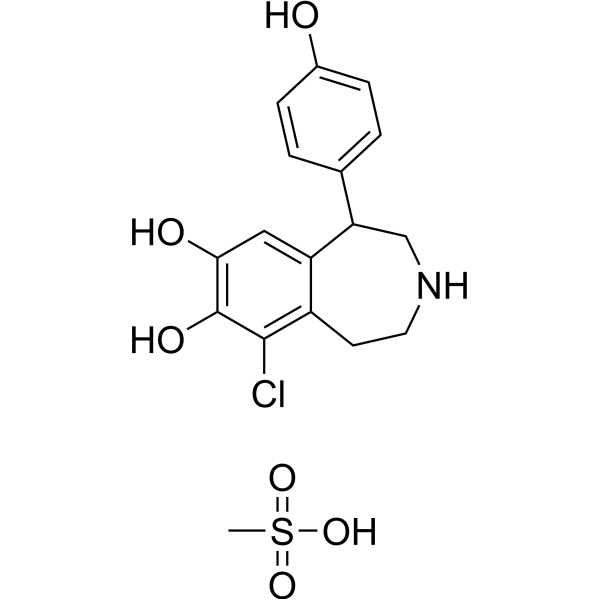
    Aminomethyltrioxsalen hydrochloride is a psoralen derivative and nucleic acid intercalator. Aminomethyltrioxsalen hydrochloride can penetrate intact cells and react with nucleic acid secondary structures in vivo without disrupting the tissue structure of natural nucleoproteins. Aminomethyltrioxsalen hydrochloride inactivates viruses by crosslinking nucleic acid pyrimidine residues after exposure to UV-A radiation. Aminomethyltrioxsalen hydrochloride can be used in research related to dengue virus infection .
    Aminomethyltrioxsalen hydrochloride
  • HY-144448
    FAK-IN-2
    1 Publications Verification

    FAK Apoptosis Cancer
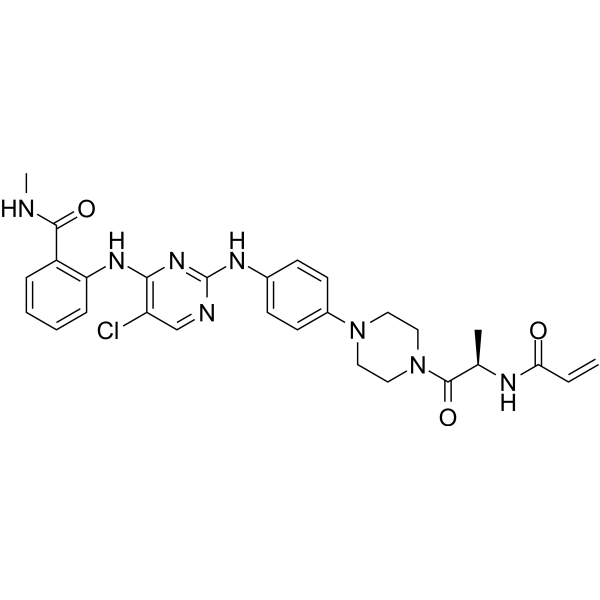
    FAK-IN-2 is a potent and orally active focal adhesion kinase (FAK) inhibitor, with anticancer activity (FAK IC50= 35 nM). FAK-IN-2 covalently inhibits the autophosphorylation of FAK in a dose-dependent manner, and inhibits the clone formation and migration of tumor cells, inducing apoptosis .
    FAK-IN-2
  • HY-107721

    Opioid Receptor Neurological Disease
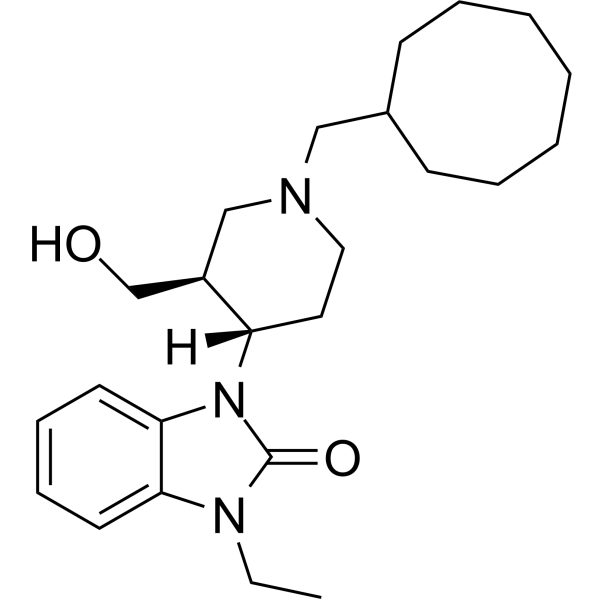
    (±)-J-113397 is a potent and selective non-peptidyl ORL1 receptor antagonist with a Ki of 1.8 nM for cloned human ORL1. J-113397 inhibited nociceptin/orphanin FQ-stimulated GTPγS binding to CHO cells expressing ORL1 with an IC50 value of 5.3 nM. J-113397 can be used for researching the physiological roles of nociceptin/orphanin FQ .
    (±)-J-113397
  • HY-N3434

    Drug Derivative Reactive Oxygen Species (ROS) Cancer
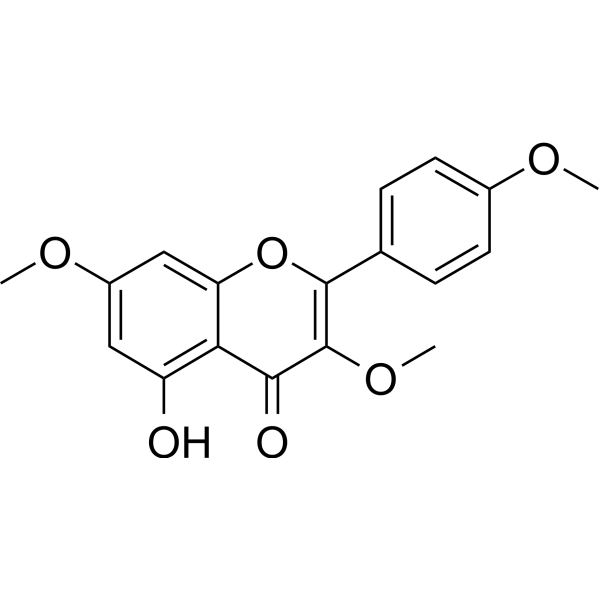
    Kaempferol 3,7,4'-trimethyl ether is an O-methylated kaempferol flavonol aglycone distributed in Siparuna gigantotepala, Aframomum arundinaceum and Siparuna guianensis. Kaempferol 3,7,4'-trimethyl ether exhibits antioxidant activity. Kaempferol 3,7,4'-trimethyl ether suppresses the proliferation of leukemia cells and exerts selective cytotoxicity against both drug‑sensitive and multi‑factorial drug‑resistant cancer cells. Kaempferol 3,7,4'-trimethyl ether can be applied in the research of multidrug‑resistant cancers .
    Kaempferol 3,7,4'-trimethyl ether
  • HY-150084

    (±)14(15)-EET

    Cytochrome P450 Mitosis Cancer
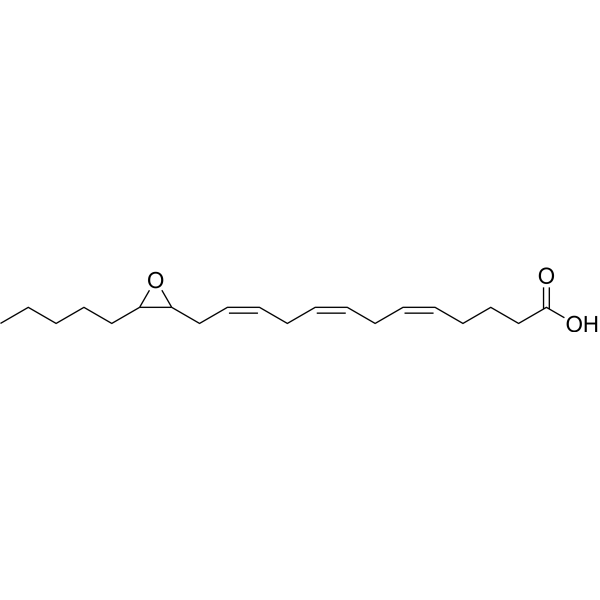
    (±)14,15-Epoxyeicosatrienoic acid ((±)14(15)-EET) is the Cytochrome P450 metabolite of arachidonic acid. While CYP3A4 may be involved in breast cancer cell growth, (±)14,15-Epoxyeicosatrienoic acid may promote mitosis and anchorage-dependent cloning through STAT3 affected by CYP3A4. (±)14,15-Epoxyeicosatrienoic acid exhibits STAT3-dependent cell growth promotion and may also participate in the autocrine/paracrine pathway that drives cell growth .
    (±)14,15-Epoxyeicosatrienoic acid
  • HY-162934

    Apoptosis Connective Peptide Cancer
    TFCP2L1-IN-1 is a specific small molecule targeting TFCP2L1’s active domain with anti-cancer activity. TFCP2L1-IN-1 synergizes with Sorafenib (HY-10201) to induce Apoptosis and reduces cell proliferation, invasion, metastasis, clonal formation and sphere-forming capacity in hepatocellular carcinoma cells .
    TFCP2L1-IN-1
  • HY-116057

    Apoptosis Others
    Stemazole is a protective agent that promotes stem cell survival. Stemazole has the protective effect of human embryonic stem cells (hESCs). Stemazole enhances clonal expansion of single cells and decreases apoptosis. Stemazole for the study of stem cell survival in starvation culture .
    Stemazole
  • HY-155363

    AMPK Metabolic Disease
    AMPK activator 13 is a potent activator of AMPK. AMPK activator 13 inhibits mitotic clonal expansion of 3T3-L1 cells by activating AMPK pathway and enhances cell mitochondrial oxygen consumption rate. AMPK activator 13 can be used in study obesity .
    AMPK activator 13
  • HY-17563R

    Deoxyguanosine (Standard); Guanine deoxyriboside (Standard)

    Reference Standards Endogenous Metabolite Cancer
    2'-Deoxyguanosine (Standard) is the analytical standard of 2'-Deoxyguanosine. This product is intended for research and analytical applications. 2’-Deoxyguanosine (Deoxyguanosine) is a purine nucleoside with a variety of biological activities. 2’-Deoxyguanosine can induce DNA division in mouse thymus cells. 2’-Deoxyguanosine is a potent cell division inhibitor in plant cells . In Vitro: 2'-Deoxyguanosine inhibits the clonal growth of HL-60 and K562 leukemia cells with IC50 values of 50 and 80 μM, respectively .
    2'-Deoxyguanosine (Standard)
  • HY-P990303

    Nuclear Factor of activated T Cells (NFAT) Others
    Anti-Mouse 2C TCR Antibody (1B2) is a mouse-derived IgG1 type antibody inhibitor, targeting to mouse 2C TCR. Anti-Mouse 2C TCR Antibody (1B2) recognizes determinants on the variable regions of both the α and β subunits of the TCR (T cell receptor) expressed by the mouse cytotoxic T lymphocyte clone 2C. Anti-Mouse 2C TCR Antibody (1B2) can be used for the detections of immunofluorescence and flow cytometry .
    Anti-Mouse 2C TCR Antibody (1B2)
  • HY-P1822

    Transmembrane Glycoprotein Metabolic Disease
    BDC2.5 mimotope 1040-31, a BDC2.5 TCR reactive peptide, is a strong agonistic peptide for diabetogenic T cell clone BDC2.5, and the 1040-31 peptide is specific for BDC 2.5 TCR Tg + T cells .
    BDC2.5 mimotope 1040-31
  • HY-P3742

    Tyrosinase MHC Cancer
    Tyrosinase (192-200), human mouse is a HLA-B*4403-restricted tyrosinase epitope with affinity for HLA-B4403 and HLA-B4402. Tyrosinase (192-200), human mouse binds to HLA-B*4403 to form a complex, which is recognized by the autologous cytotoxic T lymphocyte clone 22/31 derived from melanoma. Tyrosinase (192-200), human mouse binds to HLA-B4402 to form a complex, which is recognized by the CTL clone 329B/5 derived from healthy HLA-B4402 donors. Tyrosinase (192-200), human mouse is applicable to melanoma-related research .
    Tyrosinase (192-200), human mouse
  • HY-P5396A

    Amino Acid Decarboxylase Others
    GAD65 (524-543) acetate is a biological active peptide with amino acids 524 to 543 fragment of glutamic acid decarboxylase 65 (GAD65). GAD65 (524-543) acetate is one of the first fragments of the islet antigen to induce proliferative T cell responses in the non-obese diabetic (NOD) mouse model of spontaneous autoimmune diabetes. GAD65 (524-543) acetate is a specific, possibly low affinity, stimulus for the spontaneously arising diabetogenic T cell clone BDC2.5. Immunization with GAD65 (524-543) acetate increases the susceptibility of the NOD mice to type 1 diabetes induced by the adoptive transfer of BDC2.5 T cells .
    GAD65 (524-543) acetate
  • HY-118944

    Adrenergic Receptor Endocrinology
    L-748328 is a potent and selective human β3-adrenergic receptor antagonist. L-748328 has a Ki of 3.7 nM against human cloned β3-AR expressed in Chinese hamster ovary (CHO) cells. In addition, L-748328 inhibits the lipolytic response induced by the β3-AR agonist L-742791 in isolated non-human primate adipocytes .
    L-748328
  • HY-N6576

    p38 MAPK ERK JNK IAP PARP Apoptosis Caspase Cancer
    Hellebrigenin is an inhibitor that selectively targets the MAPK signaling pathway (ERK, p38, JNK) and XIAP, and can inhibit Akt expression and phosphorylation. Hellebrigenin can activate endogenous apoptosis pathways (such as mitochondrial membrane potential disruption, Caspase family activation, PARP cleavage), downregulate anti-apoptotic proteins (Bcl-2, Bcl-xL) and upregulate pro-apoptotic proteins (Bax, Bak). Hellebrigenin can also induce DNA double-strand breaks to activate the ATM pathway. Hellebrigenin can inhibit tumor cell proliferation and clone formation, and is mainly used in the study of oral squamous cell carcinoma, liver cancer and other cancers .
    Hellebrigenin
  • HY-W014004

    CBHA

    HDAC Apoptosis Others Cancer
    m-Carboxycinnamic acid bishydroxamide (CBHA) is a histone deacetylase inhibitor. m-Carboxycinnamic acid bishydroxamide modulates histone acetylation sites, alters DNA methylation and epigenetic status, increases global histone acetylation, alleviates transcription repression, and facilitates chromatin remodelling. m-Carboxycinnamic acid bishydroxamide can be used for the research of cloned embryo development and epigenetic regulation .
    m-Carboxycinnamic acid bishydroxamide
  • HY-P3747

    Influenza Virus Infection
    Hemagglutinin (48-68) is the 48-68 fragment of influenza virus hemagglutinin. Hemagglutinin (48-68) can induce proliferation of the peptide specific T-cell clones .
    Hemagglutinin (48-68)
  • HY-141830

    Histone Acetyltransferase Cancer
    SYY-B029-2 is a potent histone acetyltransferase (HAT) inhibitor with an IC50 of 1.4 nM. SYY-B029-2 cell growth of human mantle cell lymphoma (MCL) cell line MAVER-1 and human castration resistant prostate cancer cell line LNCaP clone FGC, with IC50 values of 15 nM and 13 nM, respectively .
    SYY-B029-2
  • HY-145035

    MAP4K Inflammation/Immunology Cancer
    HPK1-IN-9 is potent inhibitor of HPK1. HPK1 is a serine/threonine protein kinase cloned from hematopoietic progenitor cells and belongs to the MAP4K family of mammalian Ste-20-related protein kinases. HPK1-IN-9 has the potential for the research of HPK1 related diseases (extracted from patent WO2021213317A1, compound 112) .
    HPK1-IN-9
  • HY-129656

    GCGR Metabolic Disease
    GLP-1 receptor agonist 3 (compound (R)-4A-1) is a GLP-1 receptor agonist (WO2018109607A1), used for diabetes research. compound (S)-4A-1 shows EC50s of 1.1 nM and 13 nM in Clone H6 and Clone C6 cell lines assay, respectively .
    GLP-1 receptor agonist 3
  • HY-P11127

    Transmembrane Glycoprotein MHC Inflammation/Immunology
    MBP (111-129) is a polypeptide that constitutes an immunodominant epitope cluster restricted by HLA-DRB1*0401. MBP (111-129) is an antagonist for the clone HD4-1C2 TCR and an agonist for clone MS2-3C8 TCR. MBP (111-129) can be used for on multiple sclerosis and T cell biology .
    MBP (111-129)
  • HY-176703

    Deubiquitinase Cancer
    USP1-IN-12 (compound 4) is a potent and orally activeUSP1 inhibitor with an IC50 value of 0.00366 µM. USP1-IN-12 inhibits cell clone formation .
    USP1-IN-12
  • HY-P1822A

    Transmembrane Glycoprotein Metabolic Disease
    BDC2.5 mimotope 1040-31 TFA, a BDC2.5 TCR reactive peptide, is a strong agonistic peptide for diabetogenic T cell clone BDC2.5, and the 1040-31 peptide is specific for BDC 2.5 TCR Tg + T cells .
    BDC2.5 mimotope 1040-31 TFA
  • HY-156526

    HIF/HIF Prolyl-Hydroxylase Others
    PHD-IN-1 (compound 80) is a potent inhibitor of PHD2,with an IC50 value of ≤5 nM. PHD-IN-1 shows EC50s of 2.5 μM in EPO Elisa assay both in Caco2-HIFla-HiBiT-clone-1 cells and Hep3B cells,respectively .
    PHD-IN-1
  • HY-124099

    Leukotriene Receptor Inflammation/Immunology
    SCH 40120 is a potent leukotriene inhibitor with antiinflammatory effects. SCH 40120 suppresses T cell proliferative responses, antigen-specific and poly-clonally-induced in vitro antibody responses. SCH 40120 suppresses an edematous response and inhibits the recruitment of circulating neutrophils into sites of inflammation. SCH 40120 is proming for rasearch of anti-psoriatic agents .
    SCH 40120
  • HY-172112

    VEGFR Apoptosis Cancer
    VEGFR-2-IN-64 (Compound 28) is the inhibitor for VEGFR2 with IC50 of 27.8 nM. VEGFR-2-IN-64 inhibits the proliferation of cancer cell A549, T-47D and Caco-2, exhibits anti-migration and anti-cloning activities in cell T-47D, induces apoptosis in T-47D .
    VEGFR-2-IN-64
  • HY-N7661

    PPAR Metabolic Disease
    4β-Hydroxywithanolide E, isolated from Physalis peruviana L., inhibits adipocyte differentiation of 3T3-L1 cells through modulation of mitotic clonal expansion. 4β-Hydroxywithanolide E is an adipogenesis inhibitor and inhibits PPARγ, C/EBPα, and the adipocyte-specific molecule aP2 mRNA expression .
    4β-Hydroxywithanolide E
  • HY-N14344

    Bacterial Infection
    Manumycin G has anti-Gram-positive bacteria and Escherichia coli effects, but the effect is very weak against other anti-Gram-negative bacteria, and has no effect on fungi. Manumycin G inhibits RAS Faraday base transfer and has weak cytotoxic activity against human cloned cancer cell lines HCT-116 (IC50 is 15.6 μg/mL) .
    Manumycin G
  • HY-145039

    MAP4K Inflammation/Immunology Cancer
    HPK1-IN-13 is potent inhibitor of HPK1. HPK1 is a serine/threonine protein kinase cloned from hematopoietic progenitor cells and belongs to the MAP4K family of mammalian Ste-20-related protein kinases. HPK1-IN-13 has the potential for the research of HPK1 related diseases (extracted from patent WO2021213317A1, compound 64) .
    HPK1-IN-13
  • HY-145038

    MAP4K Inflammation/Immunology Cancer
    HPK1-IN-12 is potent inhibitor of HPK1. HPK1 is a serine/threonine protein kinase cloned from hematopoietic progenitor cells and belongs to the MAP4K family of mammalian Ste-20-related protein kinases. HPK1-IN-12 has the potential for the research of HPK1 related diseases (extracted from patent WO2021213317A1, compound 85) .
    HPK1-IN-12
  • HY-145040

    MAP4K Inflammation/Immunology Cancer
    HPK1-IN-14 is potent inhibitor of HPK1. HPK1 is a serine/threonine protein kinase cloned from hematopoietic progenitor cells and belongs to the MAP4K family of mammalian Ste-20-related protein kinases. HPK1-IN-14 has the potential for the research of HPK1 related diseases (extracted from patent WO2021213317A1, compound 79) .
    HPK1-IN-14
  • HY-145037

    MAP4K Inflammation/Immunology Cancer
    HPK1-IN-11 is potent inhibitor of HPK1. HPK1 is a serine/threonine protein kinase cloned from hematopoietic progenitor cells and belongs to the MAP4K family of mammalian Ste-20-related protein kinases. HPK1-IN-11 has the potential for the research of HPK1 related diseases (extracted from patent WO2021213317A1, compound 2) .
    HPK1-IN-11
  • HY-145036

    MAP4K Inflammation/Immunology Cancer
    HPK1-IN-10 is potent inhibitor of HPK1. HPK1 is a serine/threonine protein kinase cloned from hematopoietic progenitor cells and belongs to the MAP4K family of mammalian Ste-20-related protein kinases. HPK1-IN-10 has the potential for the research of HPK1 related diseases (extracted from patent WO2021213317A1, compound 103) .
    HPK1-IN-10
  • HY-145041

    MAP4K Inflammation/Immunology Cancer
    HPK1-IN-15 is a potent and selective inhibitor of HPK1. Hematopoietic progenitor kinase 1 (HPKl) originally cloned from hematopoietic progenitor cells is a member of MAP kinase kinase kinase kinases (MAP4Ks) family. HPK1-IN-15 is useful in researching, preventing or ameliorating diseases or disorders associated with HPK1 activity such as cancer (extracted from patent WO2018049200A1, compound 50) .
    HPK1-IN-15
  • HY-162601

    Histone Methyltransferase HIF/HIF Prolyl-Hydroxylase Cancer
    D-01 is a dual-targeting inhibitor of HIF-1α and EZH2 (IC50: 4.86 μM and 0.99 μM respectively). D-01 inhibits the expression of H3K27me3 protein. D-01 inhibits the migration, clone and the invasion of A549 cells, and also inhibits tube formation of HUVECs. D-01 can be used for research of lung cancer .
    D-01
  • HY-145044

    MAP4K Inflammation/Immunology Cancer
    HPK1-IN-17 is a potent and selective inhibitor of HPK1. Hematopoietic progenitor kinase 1 (HPKl) originally cloned from hematopoietic progenitor cells is a member of MAP kinase kinase kinase kinases (MAP4Ks) family. HPK1-IN-17 is useful in researching, preventing or ameliorating diseases or disorders associated with HPK1 activity such as cancer (extracted from patent WO2019238067A1, compound 73) .
    HPK1-IN-17
  • HY-145045

    MAP4K Inflammation/Immunology Cancer
    HPK1-IN-18 is a potent and selective inhibitor of HPK1. Hematopoietic progenitor kinase 1 (HPKl) originally cloned from hematopoietic progenitor cells is a member of MAP kinase kinase kinase kinases (MAP4Ks) family. HPK1-IN-18 is useful in researching, preventing or ameliorating diseases or disorders associated with HPK1 activity such as cancer (extracted from patent WO2019238067A1, compound 1) .
    HPK1-IN-18
  • HY-145042

    MAP4K Inflammation/Immunology Cancer
    HPK1-IN-16 is a potent and selective inhibitor of HPK1. Hematopoietic progenitor kinase 1 (HPKl) originally cloned from hematopoietic progenitor cells is a member of MAP kinase kinase kinase kinases (MAP4Ks) family. HPK1-IN-16 is useful in researching, preventing or ameliorating diseases or disorders associated with HPK1 activity such as cancer (extracted from patent WO2019051199A1, compound 39) .
    HPK1-IN-16
  • HY-P5396

    Amino Acid Decarboxylase Others
    GAD65 (524-543) is a biological active peptide with amino acids 524 to 543 fragment of glutamic acid decarboxylase 65 (GAD65). GAD65 (524-543) is one of the first fragments of islet antigen to induce proliferative T cell responses in the non-obese diabetic (NOD) mouse model of spontaneous autoimmune diabetes. GAD65 (524-543) is a specific, possibly low affinity, stimulus for the spontaneously arising diabetogenic T cell clone BDC2.5. Immunization with GAD65 (524-543) increases the susceptibility of the NOD mice to type 1 diabetes induced by the adoptive transfer of BDC2.5 T cells .
    GAD65 (524-543)
  • HY-P11145

    Influenza Virus Infection Inflammation/Immunology
    Influenza HA (529-537) is the amino acid sequence (IYATVAGSL) at positions 529-537 of the hemagglutinin (HA) of the influenza A virus. Influenza HA (529-537) can be recognized by three different specificities (H1-specific, H2-specific, H1/H2 cross-reactive) of CD8 + cytotoxic T-lymphocyte (CTL) clones. Influenza HA (529-537) can be used to understand T-cell immune specificity and to design new vaccines .
    Influenza HA (529-537)
  • HY-156094

    HDAC Histone Demethylase Apoptosis Cancer
    JMJD3/HDAC-IN-1 (compound A5b) is a dual inhibitor targeting Jumonji domain-containing protein demethylase 3 (JMJD3) and histone deacetylase (HDAC1, IC50=16 nM). JMJD3/HDAC-IN-1 promotes hypermethylation of histone H3K27 and hyperacetylation of H3K9, and also cleaves caspase-7 and PARP to induce apoptosis. JMJD3/HDAC-IN-1 effectively inhibits cancer cell cloning, migration, and invasion .
    JMJD3/HDAC-IN-1
  • HY-126914

    Parasite Infection
    Diacetylcercosporin is a perylenequinone produced by Cercospora and Septoria that has diverse biological activities. Diacetylcercosporin inhibits the growth of P. falciparum strains that are sensitive and resistant to chloroquine (IC50s=2.75 and 1.94 μM for D6 and W2 clones, respectively) and L. donovani parasites (IC50=3.1 μM) in vitro. Diacetylcercosporin exhibits cytotoxicity against SK-MEL, KB, BT549, and SKOV3 human cancer cell lines (IC50s=4.8-8.7 μM). Diacetylcercosporin is also a phytotoxin that inhibits the growth of lettuce and bentgrass at a concentration of 1.62 mM.
    Diacetylcercosporin
  • HY-116504

    EGFR Akt ERK Apoptosis Cancer
    WB-308 is a novel small molecule that was identified as an inhibitor of EGFR by an in vitro EGFR kinase activity system. WB-308 was able to reduce the proliferation and clonogenicity of NSCLC cells, causing G2/M phase arrest and apoptosis. In addition, WB-308 inhibited tumor growth in two in vivo animal models (lung orthotopic transplantation model and patient-derived clonal mouse model). WB-308 impaired the phosphorylation of EGFR, AKT, and ERK1/2 proteins. Compared with Gefitinib, WB-308 had lower cytotoxicity. This study showed that WB-308 is a new EGFR-TKI that may be considered as an alternative to Gefitinib in the clinical treatment of NSCLC.
    WB-308
  • HY-179103

    Polo-like Kinase (PLK) Apoptosis Cancer
    PLK4-IN-5 (compound 5f) is a PLK4 (IC50 = 0.8 nM) inhibitor. PLK4-IN-5 can inhibit MCF-7 cell clone formation, induce cell cycle arrest (S/G2 phase), and apoptosis. PLK4-IN-5 has anti proliferative activity against MCF-7 cells (IC50 = 0.48 μM). PLK4-IN-5 can be used in the research of cancer such as breast cancer .
    PLK4-IN-5
  • HY-N18294

    Parasite Infection Cancer
    (R,R)-Polysphorin is a neolignan antimalarial agent that is isolated from the dried leaves and stems of Rhaphidophora decursiva. (R,R)-Polysphorin inhibits the growth of chloroquine-sensitive and chloroquine-resistant Plasmodium falciparum clones in vitro by mediating free radical damage to key cellular components via conjugated double bonds. (R,R)-Polysphorin also exhibits cytotoxicity against human oral epidermoid carcinoma cells .
    (R,R)-Polysphorin
  • HY-E71042

    Biochemical Assay Reagents Others
    Cytosolic 5'-nucleotidase II, Huamn (EC 3.1.3.5) is a pure and active protein cloned by RT-PCR amplification of mRNA extracted from human hepatoma cells and expressed in E.coli.
    Cytosolic 5'-nucleotidase II, Huamn

Inquiry Online

Your information is safe with us. * Required Fields.

Salutation


Country or Region *

Applicant Name *


Organization Name *

Department *


Email Address *


Product Name *

Cat. No.


Requested quantity *

Phone Number *


Remarks

Inquiry Online

Inquiry Information

Product Name:
Cat. No.:
Quantity:
MCE Japan Authorized Agent:

