Search Result
Results for "
chemical intermediate
" in MedChemExpress (MCE) Product Catalog:
58
Biochemical Assay Reagents
16
Isotope-Labeled Compounds
| Cat. No. |
Product Name |
Target |
Research Areas |
Chemical Structure |
-
- HY-N0420
-
|
Wormwood acid
|
Environmental Pollutants
Endogenous Metabolite
|
Neurological Disease
|
|
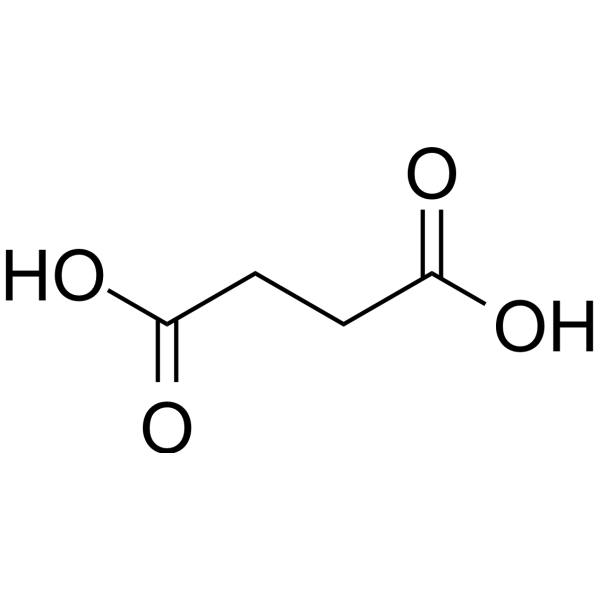
Succinic acid is an anti-anxiety agent with oral activity. Disodium succinate is the salt form of Succinic acid. Succinic acid is an intermediate product of the tricarboxylic acid cycle. Succinic acid is an important platform chemical. Succinic acid can be used as surfactant, additive, ion chelating agent, flavoring agent and other applications in chemical, pharmaceutical and food fields .
|
-
-
- HY-W015410
-
|
|
Endogenous Metabolite
|
Inflammation/Immunology
|
|
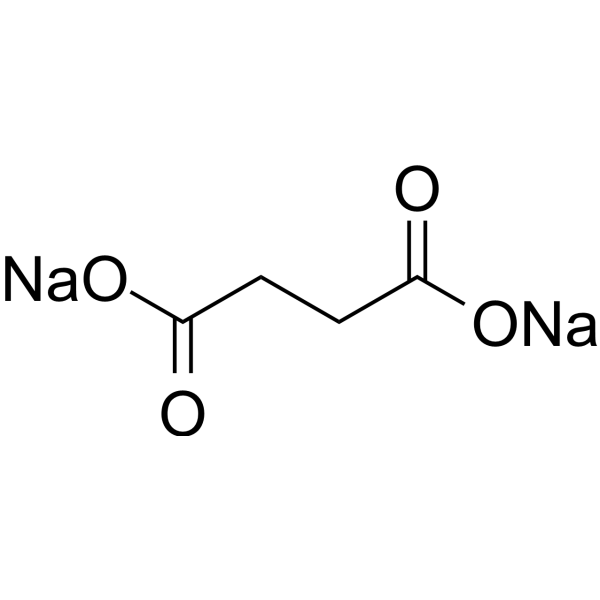
Disodium succinate is an anti-anxiety agent with oral activity. Disodium succinate is the salt form of Succinic acid. Disodium succinate is an intermediate product of the tricarboxylic acid cycle. Disodium succinate is an important platform chemical. Disodium succinate can be used as surfactant, additive, ion chelating agent, flavoring agent and other applications in chemical, pharmaceutical and food fields .
|
-
-
- HY-W007752
-
-
-
- HY-116956
-
|
|
Biochemical Assay Reagents
|
Others
|
|
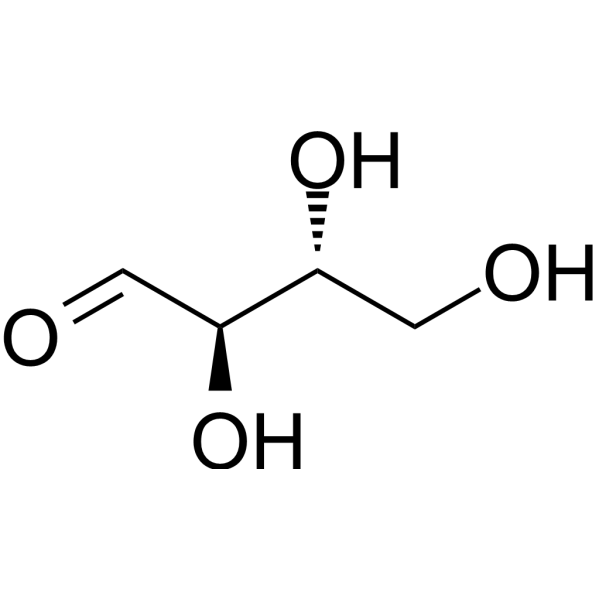
D-Erythrose is a four-carbon sugar classified as an aldose. D-Erythrose has unique chemical properties that make it an important intermediate in various metabolic pathways, especially in the biosynthesis of amino acids and nucleotides. It also plays a role in the pentose phosphate pathway, which generates reducing equivalents for biosynthetic reactions and cellular defense against oxidative damage.
|
-
-
- HY-Y1332
-
|
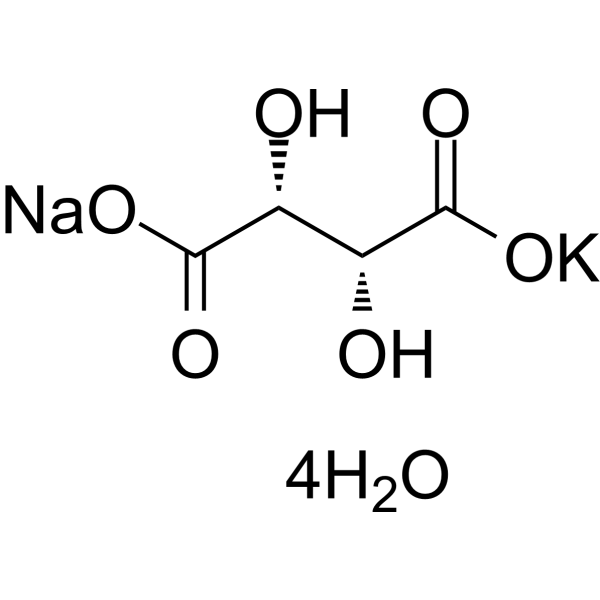
L-Tartaric acid potassium sodium salt tetrahydrate; Potassium sodium tartrate tetrahydrate; Sodium potassium tartrate tetrahydrate
|
Biochemical Assay Reagents
|
Others
|
|
Rochelle salt is an organic-inorganic compound commonly used as a catalyst and complexing reagent. It can be used to catalyze or promote certain chemical reactions, and is widely used in batteries, pharmaceuticals and food industries. In addition, this compound is also used as a substrate or intermediate in some biochemical reactions.
|
-
-
- HY-W010589
-
|
H-Abu-OH
|
Endogenous Metabolite
Drug Intermediate
|
Metabolic Disease
|
|
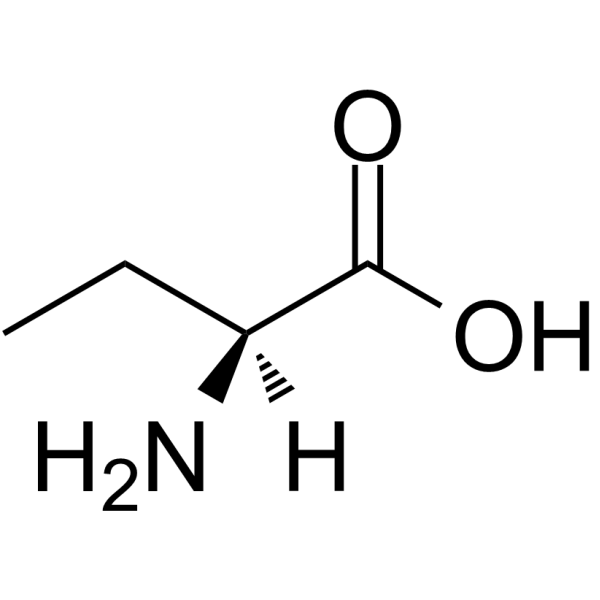
L-2-Aminobutyric acid (H-Abu-OH) is a non-proteinogenic amino acid that exists in human tissues and body fluids. L-2-Aminobutyric acid is formed by the transamination of oxobutyric acid. L-2-Aminobutyric acid can serve as a precursor for anticonvulsant and anti-tuberculosis agents and is a key intermediate in the chemical and pharmaceutical industries.
|
-
-
- HY-W015591
-
|
(±)-Mandelic acid; DL-Mandelic acid
|
Bacterial
Endogenous Metabolite
|
Infection
|
|
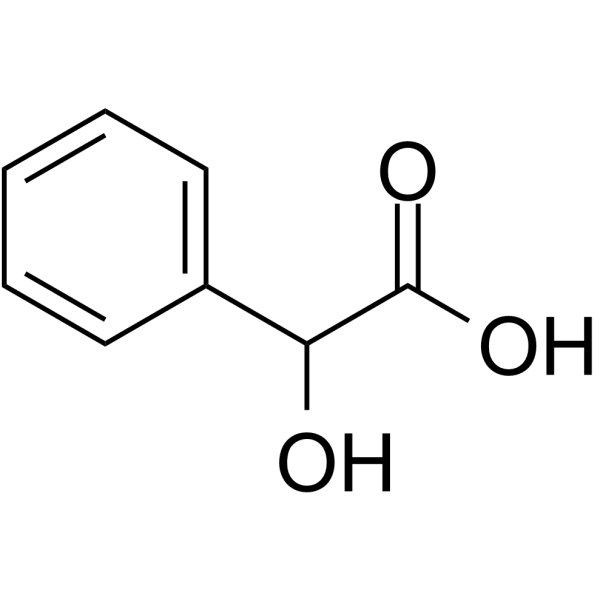
Mandelic acid ((±)-Mandelic acid), an alpha-hydroxycarboxylic acid, has been widely used as an intermediate of pharmaceutical and fine chemicals. Mandelic acid shows antimicrobial activity and has been used for the research of urinary tract infections and vaginal trichomoniasis. Mandelic acid exhibits high sperm-immobilizing activity and low vaginal irritation .
|
-
-
- HY-34614
-
|
Tricyclohexylphosphane
|
Drug Intermediate
Reactive Oxygen Species (ROS)
|
Cancer
|
|
Tricyclohexylphosphine (Tricyclohexylphosphane) is a chemical intermediate. The Tricyclohexylphosphine gold (I) n-mercaptobenzoate complex synthesized from Tricyclohexylphosphine induces ROS production and exhibits antiproliferative activity against breast cancer cells .
|
-
-
- HY-Y1131
-
|
Ethyl (R)-3-hydroxybutanoate
|
Biochemical Assay Reagents
|
Others
|
|
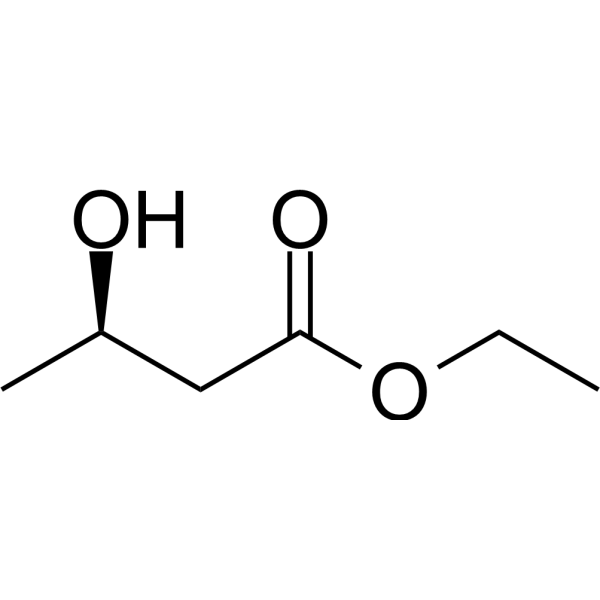
Ethyl (R)-3-hydroxybutyrate is an organic compound commonly used as a starting material for chiral chemical synthesis. It can be used in the preparation of medicines, spices, fine chemicals and food additives, etc., and is widely used in medicine, cosmetics and food industries. In addition, this compound is also used as a substrate or intermediate in some biochemical reactions
|
-
-
- HY-W040971
-
-
-
- HY-76025S
-
|
p-Dibromobenzene-d4
|
Isotope-Labeled Compounds
|
Inflammation/Immunology
|
|
1,4-Dibromobenzene-d4 is a deuterium labeled 1,4-Dibromobenzene. 1,4-Dibromobenzene is used as a fumigant and as a chemical intermediate for pharmaceuticals. Inhalation exposure gives rise to dizziness and chokingwhereas contact with skin or eye produces inflammation and burning in humans .
|
-
-
- HY-W008510
-
|
|
Drug Intermediate
STAT
|
Others
|
|
2-Chloro-5-(trifluoromethyl)pyrimidine is a chemical intermediate. It can be used in the synthesis of inducers of intracellular STAT1 phosphorylation .
|
-
-
- HY-21226
-
|
|
Biochemical Assay Reagents
|
Others
|
|
Levoglucosenone Levoglucosenone has unique chemical properties that make it an important intermediate in the production of a wide variety of chemicals, including pharmaceuticals, fragrances and flavorings. Due to its ability to dissolve polar and non-polar compounds, it can also be used as a solvent or fuel additive.
|
-
-
- HY-N0420S2
-
|
Wormwood acid-13C4
|
Endogenous Metabolite
|
Neurological Disease
|
|
Succinic acid- 13C4 is the 13C labeled Succinic acid . Succinic acid is a potent and orally active anxiolytic agent. Succinic acid is an intermediate product of the tricarboxylic acid cycle. Succinic acid can be used as a precursor of many industrially important chemicals in food, chemical and pharmaceutical industries .
|
-
-
- HY-118292
-
|
1,4-Diacetoxybenzene
|
Drug Intermediate
|
Others
|
|
Hydroquinone diacetate (1,4-Diacetoxybenzene) is a diester product and also a commonly used synthetic intermediate for agrochemicals and fine chemicals. Hydroquinone diacetate can be produced via the acetylation of hydroquinone (HY-B0951) with acetic anhydride .
|
-
-
- HY-W127604
-
|
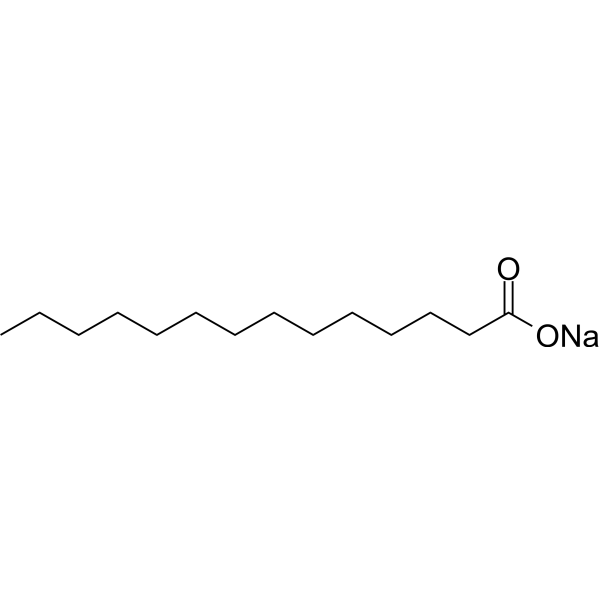
Myristic acid sodium
|
Biochemical Assay Reagents
|
Others
|
|
Sodium myristate is a salt-like compound commonly used as a surfactant or emulsifier in a variety of industrial applications, including the production of detergents, soaps, and personal care products. In addition, it can be used as an intermediate in the synthesis of various organic compounds, including fragrances and pharmaceuticals. Its unique chemical properties make it an important ingredient in a variety of industrial processes, especially in the manufacture of textiles and paper products.
|
-
-
- HY-W040269
-
|
DHPT
|
Fluorescent Dye
|
Others
|
|
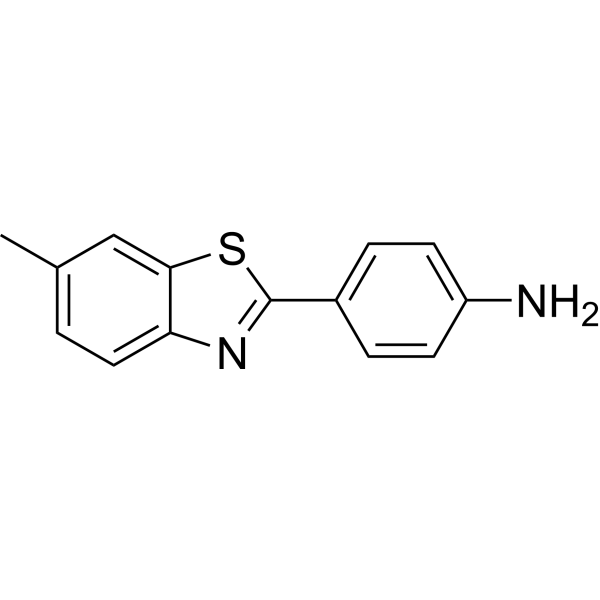
Dehydrothio-p-toluidine (DHPT) is a chemical intermediate used in dyestuff production. Dehydrothio-p-toluidine shows inhalation toxicity in acute and subchronic conditions .
|
-
-
- HY-32951
-
|
|
Drug Intermediate
|
Others
|
|
2-Fluoropyridine-4-boronic acid is a coupling reagent and chemical intermediate. 2-Fluoropyridine-4-boronic acid facilitates the synthesis of Rho kinase (ROCK) inhibitor Compound 37 .
|
-
-
- HY-W019321
-
|
|
Biochemical Assay Reagents
|
Others
|
|
3-Butenylamine hydrochloride can be used as an intermediate in the production of polymers, adhesives, resins and other chemicals. 3-Butenylamine hydrochloride may cause skin and eye irritation or burns, severe eye damage, and breathing problems .
|
-
-
- HY-B0891S
-
|
17-Hydroxyprogesterone-d8; 17-OHP-d8
|
Isotope-Labeled Compounds
Progesterone Receptor
Endogenous Metabolite
|
Others
|
|
17α-Hydroxyprogesterone-d8 is the deuterium labeled 17α-Hydroxyprogesterone. 17α-Hydroxyprogesterone (17-Hydroxyprogesterone) is an endogenous progestogen as well as chemical intermediate in the biosynthesis of other steroid hormones, including the corticosteroids and the androgens and the estrogens.
|
-
-
- HY-W007577
-
|
|
Drug Metabolite
|
Others
|
|
4-Nitrobenzaldehyde is a widely used industrial chemical intermediate and also the main photodegradation product of the broad-spectrum antibiotic Chloramphenicol (HY-B0239). 4-Nitrobenzaldehyde has genotoxic and mutagenic effects and poses a certain threat to human health and ecosystems .
|
-
-
- HY-W127507
-
|
|
Environmental Pollutants
Biochemical Assay Reagents
|
Others
|
|
cis-11-Hexadecenal has a fatty, waxy odor and is commonly used as a flavoring agent in the food and beverage industry. In addition, it can be used as an intermediate in the synthesis of various organic compounds, including fragrances, pharmaceuticals, and agrochemicals. Its unique chemical properties make it an important ingredient in a variety of industrial processes, notably in the production of perfumes and air fresheners.
|
-
-
- HY-W001942
-
-
-
- HY-41465
-
|
|
Drug Intermediate
|
Others
|
|
4-Chlorobenzoic acid is a halogenated aromatic compound that can be used as an industrial chemical and an intermediate in drug synthesis. 4-Chlorobenzoic acid is a persistent organic micropollutant and can be biodegraded through a direct dehalogenation pathway .
|
-
-
- HY-66053
-
|
|
Fungal
|
Infection
|
|
5-Bromo-3-pyridinol is a chemical and pharmaceutical intermediate that can be used in the research of biological activities. Chlorinated derivatives of 5-Bromo-3-pyridinol are potential fungicides [1] .
|
-
-
- HY-W032014
-
|
n-Octylamine
|
Biochemical Assay Reagents
|
Others
|
|
Octylamine (n-Octylamine) is a chemical reagent featuring a primary amine and a saturated C8 tail. The primary amine is a versatile substrate which can be used to build a wide variety of bonds. Compounds such as this may be used as intermediates in building lipids for use in lipid nanoparticles.
|
-
-
- HY-W094516
-
|
Wormwood acid disodium hexahydrate
|
Endogenous Metabolite
|
Neurological Disease
Inflammation/Immunology
|
|
Disodium succinate hexahydrate (Wormwood acid disodium hexahydrate) is an anti-anxiety agent with oral activity. Disodium succinate hexahydrate is an intermediate product of the tricarboxylic acid cycle. Disodium succinate hexahydrate is an important platform chemical. Disodium succinate hexahydrate can be used as surfactant, additive, ion chelating agent, flavoring agent and other applications in chemical, pharmaceutical and food fields .
|
-
-
- HY-W004879
-
|
|
Drug Intermediate
|
Others
|
|
Dimethyl pyridine-2,5-dicarboxylate is a chemical intermediate. Dimethyl pyridine-2,5-dicarboxylate can be used to synthesize Compound 5. Compound 5 has three conventional hydrogen bonds with SER293, SER251, and SER252 .
|
-
-
- HY-N0420R
-
|
Wormwood acid (Standard)
|
Reference Standards
Endogenous Metabolite
|
Neurological Disease
|
|
Succinic acid (Standard) is the analytical standard of Succinic acid. This product is intended for research and analytical applications. Succinic acid is an anti-anxiety agent with oral activity. Disodium succinate is the salt form of Succinic acid. Succinic acid is an intermediate product of the tricarboxylic acid cycle. Succinic acid is an important platform chemical. Succinic acid can be used as surfactant, additive, ion chelating agent, flavoring agent and other applications in chemical, pharmaceutical and food fields .
|
-
-
- HY-W105359
-
|
ω-Decen-1-ol
|
Environmental Pollutants
Biochemical Assay Reagents
|
Others
|
|
9-Decen-1-ol has a fatty odour. This compound is used in the flavor and fragrance industry for its pleasant smell, which is often described as sweet, floral and fruity. It can also be used as an intermediate in the synthesis of various organic compounds, including medicine, agricultural chemicals and polymer materials. Its unique chemical properties make it an important ingredient in many commercial products, including soaps, detergents and cosmetics.
|
-
-
- HY-W007410
-
|
|
Drug Intermediate
|
Others
|
|
2,4-Difluorobenzaldehyde is an organic chemical, that can be used in medicine, pesticide, liquid crystal materials intermediate.
|
-
-
- HY-100061A
-
|
|
Drug Intermediate
|
Others
|
|
2-(Dimethylamino)acetaldehyde hydrochloride is a chemical intermediate. 2-(Dimethylamino)acetaldehyde hydrochloride can be used to synthesis Muscarine analogues .
|
-
-
- HY-Y0247
-
|
6-Chloro-9H-purine
|
Drug Intermediate
|
Cancer
|
|
6-Chloropurine is a building block in chemical synthesis. Intermediate in the preparation of 9-alkylpurines and 6-rnercaptopurine. Antitumor activities .
|
-
-
- HY-W014937
-
|
|
Drug Intermediate
|
Cancer
|
|
4-Hydroxybenzophenone is an intermediate for synthesizing Tamoxifen (HY-13757A) and can be used as a source for chemical synthesis, UV protection products, and UV-absorbing ingredients in cosmetics .
|
-
-
- HY-34419
-
|
Di-n-octylamine
|
Biochemical Assay Reagents
|
Others
|
|
Dioctylamine (Di-n-octylamine) is a chemical reagent featuring a secondary amine linked to two saturated C8 tails. The secondary amine is a versatile substrate which can be used to build a wide variety of bonds. Compounds such as this may be used as intermediates in building lipids for use in lipid nanoparticles.
|
-
-
- HY-32100
-
|
Quinolin-5(1H)-one
|
Biochemical Assay Reagents
|
Others
|
|
5-Hydroxyquinoline is an organic compound commonly used in certain chemical reactions and biological research. It can be used in the manufacture of dyes, cellulase, oxidants and passivators, etc., and is widely used in the pigment, paint and rubber industries. In addition, the compound is also used as the precursor, intermediate and metal ion complexing agent of certain drugs.
|
-
-
- HY-W105734
-
|
|
Biochemical Assay Reagents
|
Others
|
|
15-Hydroxypentadecanoic acid is a long-chain fatty acid found in various plant and animal sources and also produced by bacteria and fungi. It has potential health benefits and is used as an intermediate in the synthesis of other organic compounds, including pharmaceuticals, agrochemicals and surfactants. Its unique chemical properties make it an essential ingredient in several industrial processes, especially in the fields of food science and nutrition.
|
-
-
- HY-W127653
-
|
Dimethylditetradecylammonium bromide
|
Biochemical Assay Reagents
|
Others
|
|
Dimethyldimyristylammonium bromide is a quaternary ammonium compound commonly used as a surfactant or emulsifier in a variety of industrial applications, including the production of detergents, fabric softeners and hair conditioners. In addition, it can also be used as an intermediate in the synthesis of various organic compounds. Its unique chemical properties make it an important ingredient in a variety of industrial processes, especially in the manufacture of personal care products and pharmaceuticals.
|
-
-
- HY-W099583
-
|
Myristic acid amide
|
Drug Intermediate
|
Metabolic Disease
|
|
Myristic amide (Myristic acid amide) is an ester product. Myristic amide can be used as a chemical additive, lubricant and pharmaceutical intermediate.
|
-
-
- HY-W015591R
-
|
(±)-Mandelic acid (Standard); DL-Mandelic acid (Standard)
|
Reference Standards
Bacterial
Endogenous Metabolite
|
Infection
|
|
Mandelic acid (Standard) is the analytical standard of Mandelic acid. This product is intended for research and analytical applications. Mandelic acid ((±)-Mandelic acid), an alpha-hydroxycarboxylic acid, has been widely used as an intermediate of pharmaceutical and fine chemicals. Mandelic acid shows antimicrobial activity and has been used for the research of urinary tract infections and vaginal trichomoniasis. Mandelic acid exhibits high sperm-immobilizing activity and low vaginal irritation .
|
-
-
- HY-W009970
-
|
|
Cholinesterase (ChE)
|
Neurological Disease
|
|
N-Benzylglycine ethyl ester is an N-substituted glycine derivative. N-Benzylglycine ethyl ester is bound to PDB code: 1B41. N-Benzylglycine ethyl ester can be used in Alzheimer's disease research .
|
-
-
- HY-W015761
-
-
-
- HY-W339545A
-
|
|
Biochemical Assay Reagents
|
Others
|
|
α-Ketoglutaric acid disodium hydrate, an important dicarboxylic acid, is an intermediate in the tricarboxylic acid cycle (TCC) and amino acid metabolism. α-Ketoglutaric acid disodium hydrate can be used as building block chemical for the chemical synthesis of heterocycles, dietary supplement, component of infusion solutions and wound healing compounds, or as main component of new elastomers with a wide range of interesting mechanical and chemical properties .
|
-
-
- HY-W099600
-
|
Bisdodecanoic anhydride
|
Biochemical Assay Reagents
|
Others
|
|
Lauric anhydride is a white waxy solid used as an intermediate in the production of various chemicals. It is primarily used in the synthesis of surfactants, emulsifiers, and lubricants, and as a raw material for other important industrial chemicals such as plasticizers and flavoring agents. It can be obtained from natural sources such as palm kernel oil and coconut oil, and its unique chemical structure allows it to be used to create compounds with specific surface and interfacial properties.
|
-
-
- HY-21626
-
|
p-Tolylboronic acid
|
Biochemical Assay Reagents
|
Others
|
|
4-Tolylboronic acid is an organoboron compound with important chemical applications. It can be used as an important intermediate in organic synthesis for the synthesis of organic compounds such as drugs, pesticides, and cosmetics, as well as for the research of coordination chemistry and material science. Due to its high chemical reactivity, 4-Tolylboronic acid has become a widely used reagent in organic synthesis.
|
-
-
- HY-W127489
-
|
|
Biochemical Assay Reagents
|
Others
|
|
3-PentadecylphenolIt is an organic compound belonging to the phenolic class. It is attached to the phenolic ring by 15Carbon pentadecyl chain composition, with a touch of sweetness.3-Pentadecylphenol has various applications in the chemical and pharmaceutical industries, especially as an intermediate in the synthesis of various chemicals and pharmaceuticals. In addition, it can be used as an antioxidant for plastics and rubber.
|
-
-
- HY-W017077
-
|
4-Phenyltoluene
|
Drug Intermediate
|
Inflammation/Immunology
|
|
4-Methylbiphenyl (4-Phenyltoluene) is an organic compound. 4-Methylbiphenyl has excellent chemical stability and antioxidant properties, and is widely used in industry. 4-Methylbiphenyl can serve as a solvent, coating additive, plastic additive and dye intermediate .
|
-
-
- HY-B0891S1
-
|
17-Hydroxyprogesterone-13C3; 17-OHP-13C3
|
Isotope-Labeled Compounds
Progesterone Receptor
Endogenous Metabolite
|
Others
|
|
17α-Hydroxyprogesterone- 13C3 is the 13C-labeled 17α-Hydroxyprogesterone. 17α-Hydroxyprogesterone (17-Hydroxyprogesterone) is an endogenous progestogen as well as chemical intermediate in the biosynthesis of other steroid hormones, including the corticosteroids and the androgens and the estrogens.
|
-
-
- HY-W127637
-
|
Tetrapentylammonium chloride
|
Biochemical Assay Reagents
|
Others
|
|
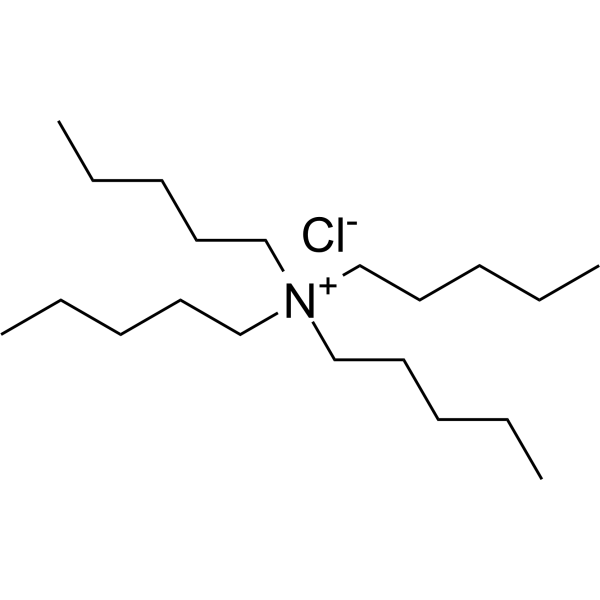
Tetraamylammonium chloride is an organic compound containing ammonium and chloride ions. It is commonly used as a phase transfer catalyst in organic synthesis, especially in the production of pharmaceuticals and agrochemicals. Tetraamylammonium Chloride has a strong base that facilitates the transfer of reactants between immiscible solvents, resulting in more efficient chemical reactions. In addition, it can also be used as an intermediate in the synthesis of other quaternary ammonium compounds.
|
-
-
- HY-W005507
-
|
2-imidazolidinone, 1-methyl-
|
Biochemical Assay Reagents
|
Others
|
|
1-Methylimidazolidin-2-one is an organic compound commonly used as a solvent and intermediate. It can play a buffering and stabilizing role in some organic synthesis reactions, and can be used as a solvent in some chemical reactions and industrial production processes. In addition, the compound also has good toxicity and biocompatibility, and is widely used in some medical fields.
|
-
- HY-N3994
-
|
|
Drug Intermediate
|
Others
|
|
16α,17α-Epoxyprogesterone is an important steroid, serving as an intermediate for many hormonal drugs such as Hydrocortisone (HY-N0583) and Megestrol (HY-B1834). 16α,17α-Epoxyprogesterone can further biotransform into another significant intermediate, 11α-hydroxy-16α,17α-epoxyprogesterone, to manufacture additional compounds .
|
-
- HY-W009169
-
|
BTDA
|
Drug Intermediate
|
Others
|
|
Benzophenonetetracarboxylic dianhydride is widely used in the synthesis of high-performance polyimides and other polymer materials. Benzophenonetetracarboxylic dianhydride reacts with various diamine compounds to form oligoimide chains. These oligimide chains can modify graphene oxide (Go) and enhance its properties .
|
-
- HY-78571
-
|
|
Biochemical Assay Reagents
|
Others
|
|
3-Methylbenzoic acid is a weakly acidic compound and an important intermediate for the synthesis of various chemicals, drugs and agrochemicals, including the insect repellent DEET .
|
-
- HY-133651
-
|
|
Fungal
|
Infection
|
|
2,2-Dibromopropanoic acid is a dibromo product based on propionic acid. Propionic acid is a short chain fatty acid and acts as chemical intermediate. Propionic acid is also a mold inhibitor and widely used in food preservative .
|
-
- HY-N0420S3
-
|
Wormwood acid-13C2
|
Endogenous Metabolite
|
Neurological Disease
|
|
Butanedioic acid- 13C2 is the 13C labeled Succinic acid[1]. Succinic acid is a potent and orally active anxiolytic agent. Succinic acid is an intermediate product of the tricarboxylic acid cycle. Succinic acid can be used as a precursor of many industrially important chemicals in food, chemical and pharmaceutical industries[2][3].
|
-
- HY-W802699
-
|
|
Biochemical Assay Reagents
|
Others
|
|
α-Ketoglutaric acid disodium dihydrate, an important dicarboxylic acid, is an intermediate in the tricarboxylic acid cycle (TCC) and amino acid metabolism. α-Ketoglutaric acid disodium dihydrate can be used as building block chemical for the chemical synthesis of heterocycles, dietary supplement, component of infusion solutions and wound healing compounds, or as main component of new elastomers with a wide range of interesting mechanical and chemical properties .
|
-
- HY-W127671
-
|
|
Biochemical Assay Reagents
|
Others
|
|
Tetramethylammonium perchlorate is used as an intermediate in organic and chemical synthesis. It is used as mobile phase in HPLC analysis and quantification of olanzapine, clozapine and N-desmethylclozapine. It acts as a supporting electrolyte in the electrochemical reduction of 1-bromodecane, 1-iodododecane, 2-iodooctane, and 2-bromooctane on a mercury cathode.
|
-
- HY-W088320
-
|
p-Anilinophenol; 4-Hydroxy-DPA
|
Drug Intermediate
|
Others
|
|
4-Hydroxydiphenylamine (p-Anilinophenol; 4-Hydroxy-DPA) is an aromatic amine organic compound. 4-Hydroxydiphenylamine has antioxidant activity and is also used as a catalyst or intermediate in some chemical reactions to synthesize other compounds. 4-Hydroxydiphenylamine can be used in the research of environmental science and toxicology .
|
-
- HY-W127654
-
|
|
Biochemical Assay Reagents
|
Others
|
|
(Ferrocenylmethyl)trimethylammonium bromide is an organic compound containing ammonium and bromide ions. It is commonly used as a phase transfer catalyst in organic synthesis, especially in the production of pharmaceuticals and agrochemicals. (Ferrocenylmethyl)trimethylammonium Bromide has a strong base that facilitates the transfer of reactants between immiscible solvents for more efficient chemical reactions. In addition, it can also be used as an intermediate in the synthesis of other organic compounds.
|
-
- HY-20587
-
|
|
CRAC Channel
|
Inflammation/Immunology
|
|
CRAC intermediate 1 is a key intermediate in the chemical synthesis of a series of CRAC channel inhibitors, detailed information can be found in Patent WO 2010122089 A1, intermediate 9.
|
-
- HY-W004758
-
|
|
Drug Intermediate
|
Others
|
|
1-(4-Chlorophenyl)piperazine is a chemical intermediate, and can be used for synthesis of D2R ligand .
|
-
- HY-W087892
-
|
|
Biochemical Assay Reagents
|
Others
|
|
Barium diphenylamine-4-sulfonate can be employed as an intermediate in pharmaceutical manufacturing and in chemical research, and serves as a dosing agent in analytical testing .
|
-
- HY-W035155
-
|
|
Drug Intermediate
Endogenous Metabolite
|
|
|
(1,5-Cyclooctadiene)bis(methyldiphenylphosphine)iridium(I) hexafluorophosphate is a highly efficient catalyst with excellent hydrogenation activity. It can catalyze the reaction of hydrogen and organic substrates in various chemical reactions. This compound is often used to synthesize important chemical intermediates and compounds.
|
-
- HY-W127471
-
|
Margaroyl chloride
|
Biochemical Assay Reagents
|
Others
|
|
Heptadecanoyl chlorideIt is an organic compound belonging to the category of acid chlorides. It reacts with heptadecanoic acid and thionyl chloride to produce a colorless transparent liquid with a pungent odor. Heptadecanoyl chlorideIt has various applications in the chemical and pharmaceutical industries, especially as an intermediate in the synthesis of various chemicals and drugs. In addition, it can be used in organic chemical reactions as a reagent for introducing heptadecanoyl groups into various molecules.
|
-
- HY-180121
-
|
|
Drug Intermediate
|
Others
|
|
tBu-MTX-CO-NH-C2-O-C2-N3 (Compound 4a) is an azide compound, which can be used as a drug intermediate for the construction of chemical inducers of dimerisation.
|
-
- HY-122426
-
|
n-Undecyl bromide
|
Biochemical Assay Reagents
|
Others
|
|
1-Bromoundecane (n-Undecyl bromide) is a chemical reagent featuring a bromide along a saturated C11 chain. Bromide is easily displaced by nucleophiles such as alcohols or amines. Compounds such as this may be used as intermediates in building lipids for use in lipid nanoparticles.
|
-
- HY-W127524
-
|
|
Biochemical Assay Reagents
|
Others
|
|
8-Methylnonanoic acidIt is an organic compound belonging to fatty acids. It has a faint waxy smell and is commonly found in a variety of foods, such as cheese and butter. 8-Methylnonanoic acidIt has various applications in the chemical and pharmaceutical industries, especially as an intermediate in the synthesis of various chemicals and pharmaceuticals. In addition, it can also be used as a flavoring agent in food.
|
-
- HY-179099
-
|
|
WDR5
Drug Intermediate
|
Cancer
|
|
Multi-target kinase-IN-8 (compound 16) is an efficient and highly selective WDR5 chemical probe. Multi-target kinase-IN-8 is a pharmaceutical intermediate. Multi-target kinase-IN-8 can be used for cancer research .
|
-
- HY-W127562
-
|
|
Biochemical Assay Reagents
|
Others
|
|
2-Tridecenoic acid is an organic compound belonging to the class of fatty acids. It has a slightly rancid smell and is commonly found in a variety of foods, such as dairy products and meats. 2-Tridecenoic acid has various applications in the chemical and pharmaceutical industries, especially as an intermediate in the synthesis of various chemicals and pharmaceuticals. Additionally, it has potential utility in inhibiting bacterial infections and inflammation-related diseases.
|
-
- HY-W142525
-
|
N-Dodecyldodecan-1-amine
|
Biochemical Assay Reagents
|
Others
|
|
Didodecylamine (N-Dodecyldodecan-1-amine) is a chemical reagent featuring a secondary amine linked to two saturated C12 tails. The secondary amine is a versatile substrate which can be used to build a wide variety of bonds. Compounds such as this may be used as intermediates in building lipids for use in lipid nanoparticles.
|
-
- HY-W127535
-
|
|
Biochemical Assay Reagents
|
Others
|
|
Propyl n-octanoate is an ester compound with a fruity odor commonly used as a flavoring agent in the food and beverage industry. Furthermore, it can also be used as a solvent or intermediate in various industrial applications. Its unique chemical properties make it an important ingredient in a variety of commercial products, including perfumes, lotions and hair care products.
|
-
- HY-W127573
-
|
|
Biochemical Assay Reagents
|
Others
|
|
Ethyl trans-2-decenoate has a fruity and floral aroma and is commonly used as a flavoring agent in the food and beverage industry. In addition, it can be used as an intermediate in the synthesis of various organic compounds, including fragrances and pharmaceuticals. Its unique chemical properties make it an important ingredient in a variety of industrial processes, notably in the production of perfumes and air fresheners.
|
-
- HY-133652
-
|
|
Drug Intermediate
|
Others
|
|
2,3-Dibromoacrylic acid is dibromo product based on acrylic acid. Acrylic acid is the simplest unsaturated carboxylic acid and can be used as a chemical intermediate.
|
-
- HY-12395
-
|
|
Bacterial
|
Cancer
|
|
Ecteinascidin analog-1 is a useful intermediate for chemical sythesis of Ecteinascidin analogues; Ecteinascidins is a family of tetrahydroisoquinoline alkaloids with wide range of antitumor and antimicrobial activities.
|
-
- HY-W722305
-
|
|
Drug Intermediate
|
Others
|
|
N1,N4-Di-P-tolylbenzene-1,4-diamine is a chemical intermediate. It acts as a catalyst in various chemical reactions, facilitating the formation of specific molecular structures.
|
-
- HY-N0420A
-
|
Wormwood acid tromethamine
|
Endogenous Metabolite
|
Neurological Disease
|
|
Succinic acid tromethamine is a potent and orally active anxiolytic agent. Succinic acid tromethamine is an intermediate product of the tricarboxylic acid cycle. Succinic acid tromethamine can be used as a precursor of many industrially important chemicals in food, chemical and pharmaceutical industries .
|
-
- HY-W127692
-
|
Tetra-n-butylammonium salicylate
|
Biochemical Assay Reagents
|
Others
|
|
Tetrabutylammonium salicylate is an organic-inorganic compound commonly used as a catalyst and chemical reagent. It can be used to catalyze or promote certain chemical reactions, and is widely used in medicine, cosmetics and surfactants. In addition, this compound is also used as a substrate or intermediate in some biochemical reactions.
|
-
- HY-W018677S
-
|
|
Antibiotic
|
Infection
|
|
Quinoxaline-d4 is the deuterium labeled Quinoxaline . Quinoxaline is a chemical compound that acts as an intermediate for anti-tuberculosis agent Pyrazinamide. Quinoxaline presents a structure that is similar to quinolone antibiotics .
|
-
- HY-N0420S4
-
|
Wormwood acid-13C2
|
Endogenous Metabolite
|
Neurological Disease
|
|
Succinic acid- 13C2 is the 13C labeled Succinic acid[1]. Succinic acid is a potent and orally active anxiolytic agent. Succinic acid is an intermediate product of the tricarboxylic acid cycle. Succinic acid can be used as a precursor of many industrially important chemicals in food, chemical and pharmaceutical industries[2][3].
|
-
- HY-W412215
-
|
|
Biochemical Assay Reagents
Endogenous Metabolite
|
|
|
TTMAPP is a photocatalyst with the activity of promoting organic reactions. TTMAPP is widely used in chemical synthesis, especially in oxidation and reduction reactions. TTMAPP can also be used as a synthetic intermediate for bioactive molecules, which is of great significance for compound development.
|
-
- HY-W127476
-
|
|
Biochemical Assay Reagents
|
Others
|
|
3-Nonenoic AcidIt is an organic compound belonging to the class of unsaturated fatty acids. It is a colorless liquid with a pungent smell and is commonly found in various foods such as cheese and butter. 3-Nonenoic AcidIt has various applications in the chemical and pharmaceutical industries, especially as an intermediate in the synthesis of various chemicals and drugs. In addition, it can also be used as a flavoring agent in food.
|
-
- HY-161040
-
|
|
MDM-2/p53
|
Cancer
|
|
MDM2-p53-IN-19 (Compound A-8d) is a chemical intermediate that can be used to synthesize inhibitors of the MDM2-p53 interaction with anticancer activity .
|
-
- HY-W440809
-
|
|
Biochemical Assay Reagents
|
Others
|
|
Nonyl 8-bromooctanoate is a chemical reagent featuring a bromide linked to a larger ester chain consisting of a C8 ester coupled to a C9 chain. Bromide is easily displaced by nucleophiles in substitution reactions.Nonyl 8-bromooctanoate can be used as an intermediate in building lipids for use in lipid nanoparticles.
|
-
- HY-W127447
-
|
Maleic acid sodium
|
Biochemical Assay Reagents
|
Others
|
|
Maleate trihydrate sodiumIt is an organic compound belonging to the salt class. It is formed from the neutralization reaction between maleic acid and sodium hydroxide and has a slightly bitter taste. Maleate trihydrate sodiumIt has a variety of applications in industrial settings, especially as an intermediate in the synthesis of various chemicals and polymers. Additionally, it is used in the food and beverage industry as a buffer, flavor enhancer and preservative.
|
-
- HY-Y1332R
-
|
L-Tartaric acid potassium sodium salt tetrahydrate (Standard); Potassium sodium tartrate tetrahydrate (Standard); Sodium potassium tartrate tetrahydrate (Standard)
|
Biochemical Assay Reagents
Reference Standards
|
Others
|
|
Rochelle salt (Standard) is the analytical standard of Rochelle salt. This product is intended for research and analytical applications. Rochelle salt is an organic-inorganic compound commonly used as a catalyst and complexing reagent. It can be used to catalyze or promote certain chemical reactions, and is widely used in batteries, pharmaceuticals and food industries. In addition, this compound is also used as a substrate or intermediate in some biochemical reactions.
|
-
- HY-W015410R
-
|
|
Reference Standards
Endogenous Metabolite
|
Inflammation/Immunology
|
|
Disodium succinate (Standard) is the analytical standard of Disodium succinate. This product is intended for research and analytical applications. Disodium succinate is an anti-anxiety agent with oral activity. Disodium succinate is the salt form of Succinic acid. Disodium succinate is an intermediate product of the tricarboxylic acid cycle. Disodium succinate is an important platform chemical. Disodium succinate can be used as surfactant, additive, ion chelating agent, flavoring agent and other applications in chemical, pharmaceutical and food fields .
|
-
- HY-41465R
-
|
|
Reference Standards
Drug Intermediate
|
Others
|
|
4-Chlorobenzoic acid (Standard) is the analytical standard of 4-Chlorobenzoic acid (HY-41465). This product is intended for research and analytical applications. 4-Chlorobenzoic acid is a halogenated aromatic compound that can be used as an industrial chemical and an intermediate in drug synthesis. 4-Chlorobenzoic acid is a persistent organic micropollutant and can be biodegraded through a direct dehalogenation pathway .
|
-
- HY-W127444
-
|
|
Biochemical Assay Reagents
|
Others
|
|
N,N-Dimethyldodecanamide is an organic compound belonging to amides. It consists of a dodecyl chain attached to a nitrogen atom and two methyl groups, forming a white crystalline solid with a faint waxy odour. N,N-Dimethyldodecanamide has several applications in industrial settings, notably as a solvent, lubricant and surfactant. In addition, it can also be used as an intermediate in the synthesis of various chemicals and drugs.
|
-
- HY-W012454
-
-
- HY-180319
-
|
|
Drug Intermediate
|
Others
|
|
Benzyl m-hydroxycarbanilate (Compound 9) is a biologically active chemical substance and also an intermediate .
|
-
- HY-N15132
-
|
|
Biochemical Assay Reagents
|
Others
|
|
Stephalonine N (compound 3) is a natural product that can be used as an industrial chemical raw material and an intermediate in organic synthesis.
|
-
- HY-165058
-
|
|
Others
|
Others
|
|
Himandridine (compound I) is a compound synthesized by a specific chemical reaction and is an intermediate in the synthesis of related alkaloids. The success of its key reaction is sensitive to substrate structure and solvent.
|
-
- HY-W726070
-
|
|
Drug Intermediate
Endogenous Metabolite
|
Others
|
|
Sedoheptulose is a heptulose. Sedoheptulose, in the form of phosphate esters, functions as a metabolic intermediate in the pentose phosphate pathway. Sedoheptulose serves as a starting material for the chemical synthesis of pseudoaminosugars and chiral substituted furans .
|
-
- HY-186077
-
|
|
Drug Intermediate
Biochemical Assay Reagents
|
Others
|
|
PEDA is a chemical intermediate. PEDA can participate in the CuAAC reaction to synthesize ethylenediamine analogs including Biot-EDA, Cy3-EDA, EDA-AG and EDA-m 7Gp3G, which are used for RNA modification .
|
-
- HY-W800743
-
|
|
Biochemical Assay Reagents
|
Others
|
|
Heptyl 6-bromohexanoate is a chemical reagent featuring a bromide linked to a larger ester chain consisting of a C6 ester coupled to a C7 alcohol. Bromide is easily displaced by nucleophiles in substitution reactions. Compounds such as this may be used as intermediates in building lipids for use in lipid nanoparticles.
|
-
- HY-182089A
-
|
|
Drug Intermediate
|
Others
|
|
γ-Glutamyl-S-(2-carboxypropyl) cysteine TFA is a chemical intermediate. γ-Glutamyl-S-(2-carboxypropyl) cysteine can be used in the synthesis of Alliin (HY-N0661) and Isoalliin (HY-111825A) .
|
-
- HY-W007752R
-
|
|
Endogenous Metabolite
Reference Standards
Drug Intermediate
|
Others
|
|
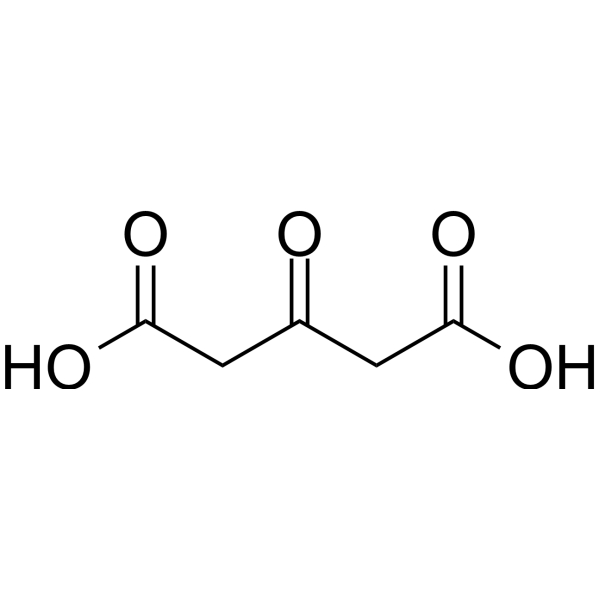
3-Oxopentanedioic acid (Standard) is the analytical standard of 3-Oxopentanedioic acid (HY-W007752). This product is intended for research and analytical applications. 3-Oxopentanedioic acid is a dicarboxylic acid that is easily brominated. 3-Oxopentanedioic acid can be used as an intermediate in organic chemical synthesis .
|
-
- HY-W401062
-
|
1,2-Epoxytridecane
|
Biochemical Assay Reagents
|
Others
|
|
2-Undecyloxirane (1,2-Epoxytridecane) is a chemical reagent featuring an epoxy group on a C11 chain. The epoxy group undergoes ring opening in the presence of nucleophiles to form a branched structure containing a secondary alcohol. Compounds such as this may be used as intermediates in building lipids for use in lipid nanoparticles.
|
-
- HY-W087892R
-
|
|
Reference Standards
Biochemical Assay Reagents
|
Others
|
|
Barium diphenylamine-4-sulfonate (Standard) is the analytical standard of Barium diphenylamine-4-sulfonate. This product is intended for research and analytical applications. Barium diphenylamine-4-sulfonate can be employed as an intermediate in pharmaceutical manufacturing and in chemical research, and serves as a dosing agent in analytical testing .
|
-
- HY-W800742
-
|
|
Biochemical Assay Reagents
|
Others
|
|
Heptadecan-9-yl 6-bromohexanoate is a chemical reagent featuring a bromide linked to a larger ester chain consisting of a C6 ester coupled to the central position of a C17 chain. Bromide is easily displaced by nucleophiles in substitution reactions. Compounds such as this may be used as intermediates in building lipids for use in lipid nanoparticles.
|
-
- HY-W127681
-
|
Tetra-n-butylammonium dichlorobromide
|
Biochemical Assay Reagents
|
Others
|
|
Tetrabutylammonium dichlorobromide is an organic compound containing ammonium, chloride, and bromide ions. It is commonly used as a phase transfer catalyst in organic synthesis, especially in the production of pharmaceuticals and agrochemicals. Tetrabutylammonium Dichlorobromide has a strong base that facilitates the transfer of reactants between immiscible solvents, resulting in more efficient chemical reactions. In addition, it can also be used as an intermediate in the synthesis of other quaternary ammonium compounds.
|
-
- HY-W002105
-
|
|
Endogenous Metabolite
Biochemical Assay Reagents
|
Others
|
|
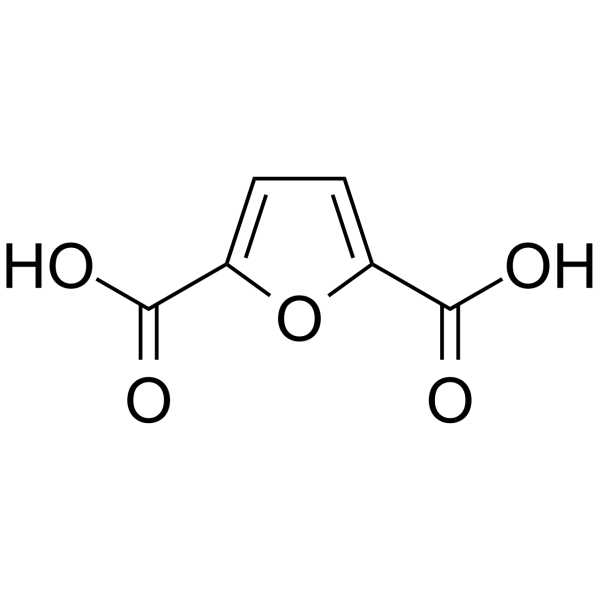
2,5-Furandicarboxylic acid, detected in human urine, is an important renewable biotechnological building block because it serves as an environmentally friendly substitute for terephthalic acid in the production of polyesters. 2,5-Furandicarboxylic acid can be used as the raw material for various chemical intermediates to synthesize polymers, polyurethanes, thermosetting resins, plasticizers, fungicides, macrocyclic ligands and other products .
|
-
- HY-W127375
-
|
Sodium pelargonate
|
Biochemical Assay Reagents
|
Others
|
|
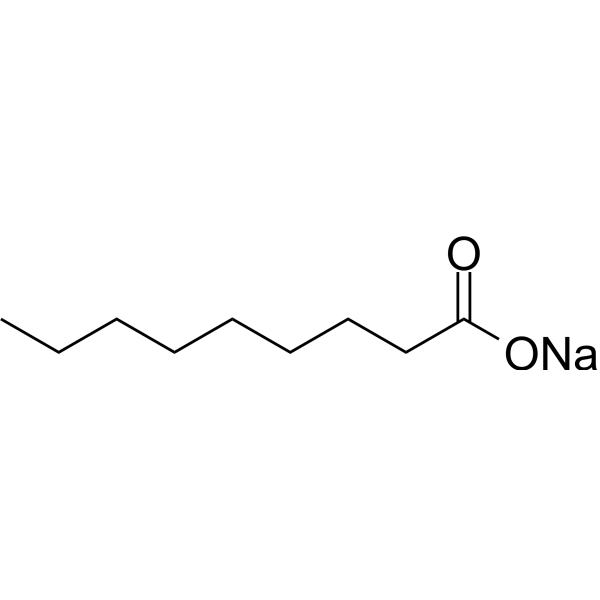
Sodium nonanoate is a salt-like compound commonly used as a surfactant or emulsifier in a variety of industrial applications, including the production of detergents, soaps and personal care products. In addition, it can be used as an intermediate in the synthesis of various organic compounds, including pharmaceuticals and agrochemicals. Its unique chemical properties make it an important ingredient in a variety of industrial processes, especially in the manufacture of textiles and paper products.
|
-
- HY-121855
-
|
Glycerol 1-monoelaidate; α-Monoelaidin
|
Biochemical Assay Reagents
|
Others
|
|
Monoeladin is an ester derivative of glycerin and oleic acid, which are commonly found in various vegetable and animal fats. Monoeladin has unique chemical properties that make it an important intermediate in the biosynthesis of other lipid molecules, especially in the formation of triglycerides and phospholipids. It also plays a role in food science as a partial replacement for saturated fat, which has been linked to an increased risk of heart disease.
|
-
- HY-W003165
-
|
|
Biochemical Assay Reagents
|
Others
|
|
3-Bromo-5-chloropyridine is a widely used heterocyclic compound that can be used to synthesize compounds. 3-Bromo-5-chloropyridine can be used as an intermediate in the production of crop protectants in the agricultural chemicals industry. 3-Bromo-5-chloropyridine can participate in cross-coupling reactions .
|
-
- HY-W114581
-
|
|
Biochemical Assay Reagents
|
Others
|
|
Ethyl2-hydroxy-4-methylpentanoate has a fruity odor and is commonly used as a flavoring agent in the food and beverage industry. In addition, it can be used as an intermediate in the synthesis of various organic compounds, including pharmaceuticals and agrochemicals. Its unique chemical properties make it an important ingredient in a variety of industrial processes, including the production of cosmetics and personal care products.
|
-
- HY-W325356
-
|
|
Fluorescent Dye
|
Cancer
|
|
Tert-butyl 3,5-dinitrobenzoate is an intermediate or reactant in organic synthesis and can also play a role in drug synthesis, dye preparation and other chemical fields.The nitro functional group of Tert-butyl 3,5-dinitrobenzoate has certain reactivity in organic chemistry and can participate in various reactions, such as electrophilic substitution, aromatic amine reaction, etc .
|
-
- HY-W127475
-
|
|
Biochemical Assay Reagents
|
Others
|
|
6-Hepten-1-ol has a floral and green odor and is commonly used as a flavoring agent in the food and beverage industry. In addition, it can be used as an intermediate in the synthesis of various organic compounds, including fragrances, pharmaceuticals, and agrochemicals. Its unique chemical properties make it an important ingredient in a variety of industrial processes, notably in the production of perfumes, air fresheners and cleaning agents.
|
-
- HY-W674002
-
|
1-(2-Phosphaethynyl)adamantane
|
Apoptosis
|
|
|
1-Adamantylphosphaethyne (1-(2-Phosphaethynyl)adamantane) is a compound with potential biological activity and can be used as a catalyst in organic synthesis. 1-Adamantylphosphaethyne has shown the ability to induce cell apoptosis in compound development, which helps in anti-tumor inhibition. 1-Adamantylphosphaethyne can also be used as an efficient reaction intermediate to promote the progress of various chemical reactions.
|
-
- HY-40041
-
|
|
Biochemical Assay Reagents
Drug Intermediate
|
Cancer
|
|
(R)-1-Boc-3-methyl-piperazine (Compound I3-1) is a chemical intermediate. (R)-1-Boc-3-methyl-piperazine can be used for the preparation of Compound I3. Compound I3 exhibits anticancer activity against colorectal adenocarcinoma with BRCA2 gene deletion .
|
-
- HY-W017077S
-
|
4-Phenyltoluene-d3
|
Isotope-Labeled Compounds
Drug Intermediate
|
Inflammation/Immunology
|
|
4-Methylbiphenyl (4-Phenyltoluene)-d3 is the deuterium labeled 4-Methylbiphenyl (HY-W017077). 4-Methylbiphenyl is an organic compound. 4-Methylbiphenyl has excellent chemical stability and antioxidant properties, and is widely used in industry. 4-Methylbiphenyl can serve as a solvent, coating additive, plastic additive and dye intermediate .
|
-
- HY-W107869
-
|
|
Biochemical Assay Reagents
|
Others
|
|
2-Heptenoic acid is an unsaturated fatty acid. It is a clear, colorless liquid with a strong odour, and is commonly used in the flavor and fragrance industry for its pungent, anise-like odor. In addition, it can be used as an intermediate in the synthesis of other organic compounds, including pharmaceuticals and agrochemicals. Its unique chemical properties make it an important ingredient in a variety of industrial applications, including food and beverage production, cosmetics and personal care products.
|
-
- HY-W127443
-
|
|
Biochemical Assay Reagents
|
Others
|
|
3-Heptenoic acidIt is an organic compound belonging to the class of unsaturated fatty acids. It has a strong, unpleasant smell and is commonly found in a variety of foods, such as beer and dairy products. 3-Heptenoic acidIt has various applications in the fragrance and fragrance industry, especially as a fragrance and flavoring agent in products such as perfume, cologne and food additives. In addition, it can also be used as an intermediate in the synthesis of various chemicals and drugs.
|
-
- HY-W017077R
-
|
4-Phenyltoluene (Standard)
|
Reference Standards
Drug Intermediate
|
Inflammation/Immunology
|
|
4-Methylbiphenyl (4-Phenyltoluene) (Standard) is an analytical standard of 4-Methylbiphenyl (HY-W017077). This product is intended for research and analytical applications. 4-Methylbiphenyl is an organic compound. 4-Methylbiphenyl has excellent chemical stability and antioxidant properties, and is widely used in industry. 4-Methylbiphenyl can serve as a solvent, coating additive, plastic additive and dye intermediate .
|
-
- HY-W596000
-
|
|
Biochemical Assay Reagents
|
Others
|
|
3-(3-Methyl-3H-diazirin-3-yl)propan-1-ol (The second compound in Fig. 1B) is a chemical intermediate. 3-(3-Methyl-3H-diazirin-3-yl)propan-1-ol can be used in the synthesis of the SDASO linker (SDASO-M) .
|
-
- HY-W040971R
-
-
- HY-W040971S
-
-
- HY-I0169
-
|
|
Drug Metabolite
|
Neurological Disease
|
|
(R)-Amino-N-benzyl-3-methoxypropionamide is a key intermediate for the synthesis of the antiepileptic agent (R)-Lacosamide. To improve its chiral purity and chemical stability, (R)-Amino-N-benzyl-3-methoxypropionamide can react with phosphoric acid to form a phosphate salt. Detected by high performance liquid chromatography (HPLC), this phosphate salt exhibits extremely high chiral purity, with the content of the R-enantiomer reaching up to 99.37% .
|
-
- HY-W106762
-
|
3,4,9,10-Perylenetetracarboxylic acid
|
Drug Intermediate
Biochemical Assay Reagents
|
Others
|
|
Perylene-3,4,9,10-tetracarboxylic acid (3,4,9,10-Perylenetetracarboxylic acid) is a chemical intermediate. Derivatives formed from Perylene-3,4,9,10-tetracarboxylic acid can serve as colorimetric and fluorescent chemosensors with selectivity for fluoride ions, and also act as charge generation materials in electrophotographic photoreceptors, organic electrophotographic photoreceptors, optoelectronic and photonic devices .
|
-
- HY-W015591S
-
|
(±)-Mandelic acid-2,3,4,5,6-d5; DL-Mandelic acid-2,3,4,5,6-d5
|
Isotope-Labeled Compounds
Bacterial
Endogenous Metabolite
|
Infection
|
|
Mandelic acid-2,3,4,5,6-d5 is the deuterium labeled Mandelic acid. Mandelic acid ((±)-Mandelic acid), an alpha-hydroxycarboxylic acid, has been widely used as an intermediate of pharmaceutical and fine chemicals. Mandelic acid shows antimicrobial activity and has been used for the research of urinary tract infections and vaginal trichomoniasis. Mandelic acid exhibits high sperm-immobilizing activity and low vaginal irritation .
|
-
- HY-W007577R
-
|
|
Reference Standards
Drug Metabolite
|
Others
|
|
4-Nitrobenzaldehyde (Standard) is the analytical standard of 4-Nitrobenzaldehyde (HY-W007577). This product is intended for research and analytical applications. 4-Nitrobenzaldehyde is a widely used industrial chemical intermediate and also the main photodegradation product of the broad-spectrum antibiotic Chloramphenicol (HY-B0239). 4-Nitrobenzaldehyde has genotoxic and mutagenic effects and poses a certain threat to human health and ecosystems .
|
-
- HY-W010589S2
-
|
H-Abu-OH-d6
|
Isotope-Labeled Compounds
Endogenous Metabolite
Drug Intermediate
|
Metabolic Disease
|
|
L-2-Aminobutyric acid-d6 is the deuterium labeled L-2-Aminobutyric acid. L-2-Aminobutyric acid is a non-proteinogenic amino acid that exists in human tissues and body fluids. L-2-Aminobutyric acid is formed by the transamination of oxobutyric acid. L-2-Aminobutyric acid can serve as a precursor for anticonvulsant and anti-tuberculosis agents and is a key intermediate in the chemical and pharmaceutical industries.
|
-
- HY-W010589S
-
|
H-Abu-OH-d3
|
Isotope-Labeled Compounds
Endogenous Metabolite
Drug Intermediate
|
Metabolic Disease
|
|
L-2-Aminobutyric acid-d3 is the deuterium labeled L-2-Aminobutyric acid. L-2-Aminobutyric acid is a non-proteinogenic amino acid that exists in human tissues and body fluids. L-2-Aminobutyric acid is formed by the transamination of oxobutyric acid. L-2-Aminobutyric acid can serve as a precursor for anticonvulsant and anti-tuberculosis agents and is a key intermediate in the chemical and pharmaceutical industries.
|
-
- HY-182885
-
|
EPEMA
|
Drug Intermediate
Biochemical Assay Reagents
|
Metabolic Disease
|
|
2-(Ethyl (propyl) amino) ethyl methacrylate (EPEMA) is an acid-responsive reagent and chemical intermediate. 2-(Ethyl (propyl) amino) ethyl methacrylate can be used for the synthesis of pDMA-pEPEMA. The protonation of 2-(Ethyl (propyl) amino) ethyl methacrylate in pDMA-pEPEMA under acidic conditions triggers the responsive release of Cortistatin. 2-(Ethyl (propyl) amino) ethyl methacrylate can be used in the research of diabetic ulcers .
|
-
- HY-W127515
-
|
Violet leaf aldehyde
|
Environmental Pollutants
Biochemical Assay Reagents
|
Others
|
|
Trans-2, cis-6-NonadienalIt is an organic compound belonging to aldehydes. It has a strong, pungent smell and is commonly found in a variety of foods, including fruits and vegetables. Trans-2, cis-6-NonadienalIt has a variety of applications in the flavor and fragrance industry, especially as a fragrance agent in products such as perfume, cologne and air fresheners. In addition, it can also be used as an intermediate in the synthesis of various chemicals and drugs.
|
-
- HY-145942
-
|
|
Biochemical Assay Reagents
|
Others
|
|
Octenyl succinic anhydride is a versatile chemical intermediate. Octenyl succinic anhydride can undergo esterification with polysaccharides such as starch and Inulin (HY-N7075). Octenyl succinic anhydride affects the intermolecular interactions on the outer surfaces of two starch granules by altering the molecular surface structure. Octenyl succinic anhydride modifies the properties of polysaccharides. Octenyl succinic anhydride can be used for starch esterification to produce OS-starch, an amphiphilic hydrocolloid .
|
-
- HY-W654255
-
|
(±)-Mandelic acid-13C8; DL-Mandelic acid-13C8
|
Isotope-Labeled Compounds
Bacterial
Endogenous Metabolite
|
Infection
|
|
Mandelic Acid- 13C8 ((±)-Mandelic acid- 13C8) is the 13C-labeled Mandelic acid (HY-W015591). Mandelic acid ((±)-Mandelic acid), an alpha-hydroxycarboxylic acid, has been widely used as an intermediate of pharmaceutical and fine chemicals. Mandelic acid shows antimicrobial activity and has been used for the research of urinary tract infections and vaginal trichomoniasis. Mandelic acid exhibits high sperm-immobilizing activity and low vaginal irritation .
|
-
- HY-W130901
-
|
Pent-4-ynylbenzene
|
Bacterial
|
Infection
Cancer
|
|
5-Phenyl-1-pentyne (Pent-4-ynylbenzene) is a compound with antibacterial and antitumor activity, which can effectively inhibit the growth of certain cancer cells. 5-Phenyl-1-pentyne is often used as a reaction intermediate in organic synthesis to promote a variety of chemical reactions. 5-Phenyl-1-pentyne is also used in the synthesis of new compounds to improve the bioavailability and inhibitory effect of the compounds.
|
-
- HY-W010589R
-
|
H-Abu-OH (Standard)
|
Reference Standards
Endogenous Metabolite
Drug Intermediate
|
Metabolic Disease
|
|
L-2-Aminobutyric acid (Standard) is the analytical standard of L-2-Aminobutyric acid. This product is intended for research and analytical applications. L-2-Aminobutyric acid is a non-proteinogenic amino acid that exists in human tissues and body fluids. L-2-Aminobutyric acid is formed by the transamination of oxobutyric acid. L-2-Aminobutyric acid can serve as a precursor for anticonvulsant and anti-tuberculosis agents and is a key intermediate in the chemical and pharmaceutical industries.
|
-
- HY-W111375
-
|
|
Biochemical Assay Reagents
|
Others
|
|
(E)-Pent-2-enal has a pungent fruity odor. This compound is commonly used in the flavor and fragrance industry because of its strong aroma, often described as fresh and green. Furthermore, (E)-Pent-2-enal can be used as an intermediate in the synthesis of various organic compounds, including pharmaceuticals and agrochemicals. Its unique chemical properties make it an important ingredient in many commercial products, including perfumes, air fresheners and cleaners.
|
-
- HY-133971
-
|
5α,6α-Epoxycholesterol
|
Liposome
|
Others
|
|
Cholesterol-5α,6α-epoxide is an epoxide derivative of cholesterol formed by the enzymatic oxidation of cholesterol in the liver and other tissues. Cholesterol-5α,6α-epoxide has unique chemical properties that make it an important intermediate in the biosynthesis of bile acids, which play a key role in the digestion and absorption of dietary fats. It also has a potential physiological role in regulating cholesterol metabolism and transport, although its biological function is not fully understood.
|
-
- HY-77785
-
|
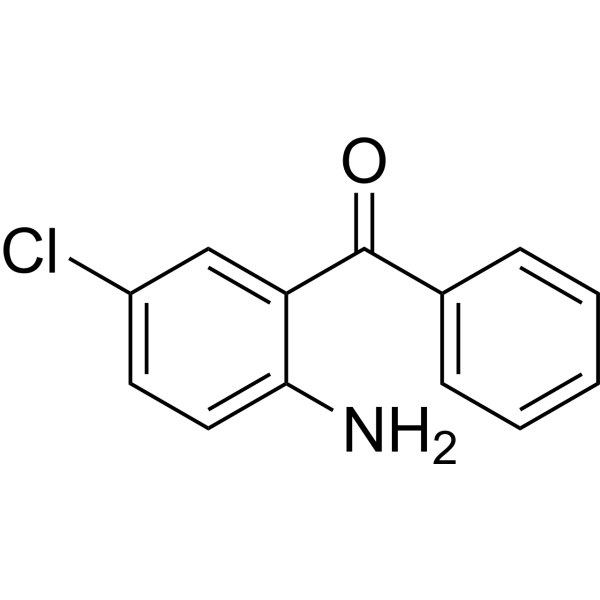
5-Chloro-2-aminobenzophenone
|
Drug Intermediate
|
Infection
Neurological Disease
|
|
2-Amino-5-chlorobenzophenone (5-Chloro-2-aminobenzophenone) is a chemical intermediate. Derivatives of 2-Amino-5-chlorobenzophenone serve as skeletal muscle relaxants. 2-Amino-5-chlorobenzophenone acts as a starting material for the synthesis of anti-biofilm 2-amino-5-chlorobenzophenone Schiff bases. 2-Amino-5-chlorobenzophenone is applicable to research related to bacterial infections .\n
|
-
- HY-W127505S
-
|
|
Biochemical Assay Reagents
Isotope-Labeled Compounds
|
Others
|
|
trans-2-Undecenal-d5 is deuterated labeled trans-2-Undecenal (HY-W127505). Trans-2-UndecenalIt is an organic compound belonging to aldehydes. It has a strong, pungent smell and is commonly found in a variety of foods, including fruits and vegetables. Trans-2-UndecenalIt has a variety of applications in the flavor and fragrance industry, especially as a fragrance agent in products such as perfume, cologne and air fresheners. In addition, it can also be used as an intermediate in the synthesis of various chemicals and drugs.
|
-
- HY-Y0543
-
|
|
Biochemical Assay Reagents
COX
|
Inflammation/Immunology
Cancer
|
|
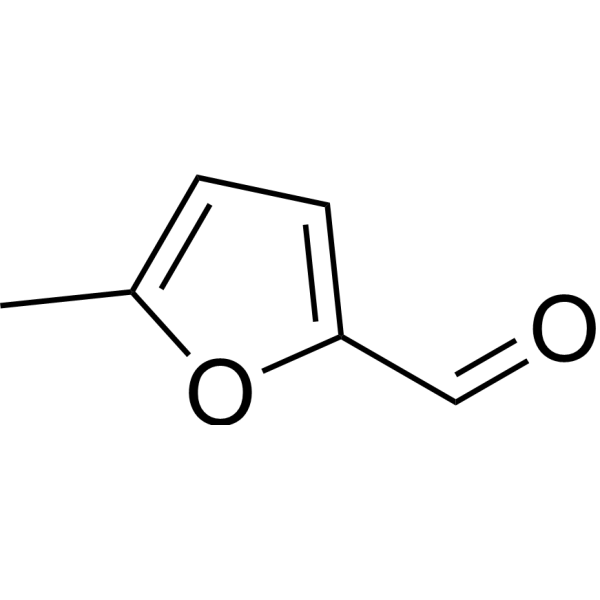
5-Methylfurfural is a chemical that can be utilized as food additive, intermediate in the production of agrochemicals, and precursor of certain anti-cancer natural products. 5-Methylfurfural is formed during the photoexposition of ranitidine hydrochloride. 5-Methylfurfural is an organic compound. 5-Methylfurfural has a strong tendency to be further hydrogenated to 2,5-dimethylfuran (DMF). 5-Methylfurfural can predominantly evoke skin inflammation and barrier disintegration. 5-Methylfurfural degrades native DNA through the formation of single-strand breaks .
|
-
- HY-W145699
-
|
|
Biochemical Assay Reagents
Endogenous Metabolite
|
Others
|
|
D-myo-Inositol 4-mono-phosphate, also known as IMP, is a phosphorylated form of inositol that is commonly found in various metabolic pathways, especially in the biosynthesis of phospholipids and cell signaling molecules. D-myo-Inositol 4-mono-phosphate has unique chemical properties that make it an important intermediate in the production of second messengers, such as inositol triphosphate (IP3) and diacylglycerol (DAG), which signal in cells plays a key role in. D-myo-Inositol 4-mono-phosphate is also used in dietary supplements and pharmaceuticals because of its potential health benefits, including improved insulin sensitivity and cognitive function.
|
-
- HY-W002105R
-
|
|
Reference Standards
Biochemical Assay Reagents
|
Others
|
|
2,5-Furandicarboxylic acid (Standard) is the analytical standard of 2,5-Furandicarboxylic acid (HY-W002105). This product is intended for research and analytical applications. 2,5-Furandicarboxylic acid can be used as the monomer for synthesis of biodegradable polymers such as polyethylene furandicarboxylate (PEF) and polybutylene furandicarboxylate (PBF). 2,5-Furandicarboxylic acid improves the polymers' rigidity, heat resistance and barrier properties, that can be used for food packaging. 2,5-Furandicarboxylic acid can be used as the raw material for various chemical intermediates to synthesize polymers, polyurethanes, thermosetting resins, plasticizers, fungicides, macrocyclic ligands and other products.
|
-
- HY-W142618
-
|
|
Biochemical Assay Reagents
|
Others
|
|
D-Glucal is an organic compound belonging to the family of aldoses, which are monosaccharides containing an aldehyde functional group. It has a six-carbon structure and is derived from glucose by oxidation of the primary alcohol group at carbon 1 to an aldehyde group. D-Glucal is a white crystalline solid that is soluble in water and has a sweet taste. It is an important intermediate in the chemical synthesis of a wide variety of compounds, including pharmaceuticals, agrochemicals, and natural products. D-Glucal can be converted into other carbohydrate derivatives such as glycosides, glycoconjugates and amino sugars. It also plays a role in the study of carbohydrate chemistry, where it is used as a chiral building block for the synthesis of complex structures.
|
-
- HY-W014159
-
|
|
Biochemical Assay Reagents
|
Others
|
|
1-Bromo-2-methyl-3-nitrobenzene is an organic synthesis intermediate. 1-Bromo-2-methyl-3-nitrobenzene participates in chemical reactions such as electrophilic substitution and coupling through the bromine atom and nitro group in the molecule, and acts as a synthetic precursor. 1-Bromo-2-methyl-3-nitrobenzene can construct complex molecular structures by relying on the leaving property of bromine and the electron-withdrawing property of nitro group, and can be used in the synthesis of benzimidazole VISTA inhibitors in medicinal chemistry .
|
-
- HY-Y0543R
-
|
|
Biochemical Assay Reagents
Reference Standards
COX
|
Inflammation/Immunology
Cancer
|
|
5-Methylfurfural (Standard) is the analytical standard of 5-Methylfurfural. This product is intended for research and analytical applications. 5-Methylfurfural is a chemical that can be utilized as food additive, intermediate in the production of agrochemicals, and precursor of certain anti-cancer natural products. 5-Methylfurfural is formed during the photoexposition of ranitidine hydrochloride. 5-Methylfurfural is an organic compound. 5-Methylfurfural has a strong tendency to be further hydrogenated to 2,5-dimethylfuran (DMF). 5-Methylfurfural can predominantly evoke skin inflammation and barrier disintegration. 5-Methylfurfural degrades native DNA through the formation of single-strand breaks .
|
-
- HY-W127515R
-
|
Violet leaf aldehyde (Standard)
|
Biochemical Assay Reagents
Reference Standards
|
Others
|
|
trans-2,cis-6-Nonadienal (Standard) is the analytical standard of trans-2,cis-6-Nonadienal. This product is intended for research and analytical applications. Trans-2, cis-6-NonadienalIt is an organic compound belonging to aldehydes. It has a strong, pungent smell and is commonly found in a variety of foods, including fruits and vegetables. Trans-2, cis-6-NonadienalIt has a variety of applications in the flavor and fragrance industry, especially as a fragrance agent in products such as perfume, cologne and air fresheners. In addition, it can also be used as an intermediate in the synthesis of various chemicals and drugs.
|
-
- HY-W769547
-
|
|
Isotope-Labeled Compounds
Biochemical Assay Reagents
|
Others
|
|
trans-2,cis-6-Nonadienal-d5 is the deuterium labeled Trans-2,cis-6-Nonadienal (HY-W127515). Trans-2, cis-6-NonadienalIt is an organic compound belonging to aldehydes. It has a strong, pungent smell and is commonly found in a variety of foods, including fruits and vegetables. Trans-2, cis-6-NonadienalIt has a variety of applications in the flavor and fragrance industry, especially as a fragrance agent in products such as perfume, cologne and air fresheners. In addition, it can also be used as an intermediate in the synthesis of various chemicals and drugs.
|
-
- HY-W127515S
-
|
Violet leaf aldehyde-13C2
|
Biochemical Assay Reagents
Isotope-Labeled Compounds
|
Others
|
|
trans-2,cis-6-Nonadienal- 13C2 is 13C labeled trans-2,cis-6-Nonadienal (HY-W127515). Trans-2, cis-6-NonadienalIt is an organic compound belonging to aldehydes. It has a strong, pungent smell and is commonly found in a variety of foods, including fruits and vegetables. Trans-2, cis-6-NonadienalIt has a variety of applications in the flavor and fragrance industry, especially as a fragrance agent in products such as perfume, cologne and air fresheners. In addition, it can also be used as an intermediate in the synthesis of various chemicals and drugs.
|
-
- HY-W127434A
-
|
(12R)-Octadecane-1,12-diol
|
Biochemical Assay Reagents
|
Others
|
|
(12R)-1,12-Octadecanediol ((12R)-Octadecane-1,12-diol) is a compound characterized by a linear chain of 18 carbon atoms with two hydroxyl groups (C18H38O2). This colorless substance has unique properties owing to the presence of two hydroxyl groups in its molecular structure.
Whether derived from natural sources or synthesized chemically, 12-Octadecanediol finds applications in various industries. It is often utilized in the formulation of cosmetics, personal care products, and pharmaceuticals due to its emollient properties, enhancing moisturization and conditioning effects in different formulations. The compound's distinctive structure may make it suitable for specific uses in research or industrial processes.
In industrial contexts, 12-Octadecanediol serves as a valuable chemical intermediate for synthesizing other compounds. Its specialized structure and adaptability in formulations make it a significant component across diverse industries, contributing to the development of products for various purposes.
|
-
-
-
HY-L231
-
|
|
26 compounds
|
|
The TCA cycle (tricarboxylic acid cycle)—is also known as the Krebs cycle or the citric acid cycle (CAC). The TCA cycle is a series of chemical reactions that release stored energy through the oxidation of acetyl-CoA in carbohydrates, fats, and proteins.
For decades, the TCA cycle has been considered as the central pathway for cell oxidative phosphorylation to produce energy and biosynthesis. Research shows that TCA cycle is associated with many diseases, especially cancer. In colon carcinoma, liver cancer and other cancers, there are mutations that lead to the imbalance of TCA cycle metabolites, indicating that TCA cycle may be related to the occurrence of cancer. Understanding the role and molecular mechanism of TCA cycle in inhibiting or promoting cancer progression will promote the development of new metabolite-based cancer treatment methods in the future.
MCE supplies a unique collection of 26 key intermediates of the TCA cycle, which can be utilized for TCA-related research and metabolomics identification studies.
|
| Cat. No. |
Product Name |
Type |
-
- HY-116956
-
|
|
Biochemical Assay Reagents
|
|
D-Erythrose is a four-carbon sugar classified as an aldose. D-Erythrose has unique chemical properties that make it an important intermediate in various metabolic pathways, especially in the biosynthesis of amino acids and nucleotides. It also plays a role in the pentose phosphate pathway, which generates reducing equivalents for biosynthetic reactions and cellular defense against oxidative damage.
|
-
- HY-145942
-
|
|
Biochemical Assay Reagents
|
|
Octenyl succinic anhydride is a versatile chemical intermediate. Octenyl succinic anhydride can undergo esterification with polysaccharides such as starch and Inulin (HY-N7075). Octenyl succinic anhydride affects the intermolecular interactions on the outer surfaces of two starch granules by altering the molecular surface structure. Octenyl succinic anhydride modifies the properties of polysaccharides. Octenyl succinic anhydride can be used for starch esterification to produce OS-starch, an amphiphilic hydrocolloid .
|
-
- HY-Y1332
-
|
L-Tartaric acid potassium sodium salt tetrahydrate; Potassium sodium tartrate tetrahydrate; Sodium potassium tartrate tetrahydrate
|
Biochemical Assay Reagents
|
|
Rochelle salt is an organic-inorganic compound commonly used as a catalyst and complexing reagent. It can be used to catalyze or promote certain chemical reactions, and is widely used in batteries, pharmaceuticals and food industries. In addition, this compound is also used as a substrate or intermediate in some biochemical reactions.
|
-
- HY-Y1131
-
|
Ethyl (R)-3-hydroxybutanoate
|
Biochemical Assay Reagents
|
|
Ethyl (R)-3-hydroxybutyrate is an organic compound commonly used as a starting material for chiral chemical synthesis. It can be used in the preparation of medicines, spices, fine chemicals and food additives, etc., and is widely used in medicine, cosmetics and food industries. In addition, this compound is also used as a substrate or intermediate in some biochemical reactions
|
-
- HY-133971
-
|
5α,6α-Epoxycholesterol
|
Biochemical Assay Reagents
|
|
Cholesterol-5α,6α-epoxide is an epoxide derivative of cholesterol formed by the enzymatic oxidation of cholesterol in the liver and other tissues. Cholesterol-5α,6α-epoxide has unique chemical properties that make it an important intermediate in the biosynthesis of bile acids, which play a key role in the digestion and absorption of dietary fats. It also has a potential physiological role in regulating cholesterol metabolism and transport, although its biological function is not fully understood.
|
-
- HY-21226
-
|
|
Biochemical Assay Reagents
|
|
Levoglucosenone Levoglucosenone has unique chemical properties that make it an important intermediate in the production of a wide variety of chemicals, including pharmaceuticals, fragrances and flavorings. Due to its ability to dissolve polar and non-polar compounds, it can also be used as a solvent or fuel additive.
|
-
- HY-W127604
-
|
Myristic acid sodium
|
Biochemical Assay Reagents
|
|
Sodium myristate is a salt-like compound commonly used as a surfactant or emulsifier in a variety of industrial applications, including the production of detergents, soaps, and personal care products. In addition, it can be used as an intermediate in the synthesis of various organic compounds, including fragrances and pharmaceuticals. Its unique chemical properties make it an important ingredient in a variety of industrial processes, especially in the manufacture of textiles and paper products.
|
-
- HY-32951
-
|
|
Biochemical Assay Reagents
|
|
2-Fluoropyridine-4-boronic acid is a coupling reagent and chemical intermediate. 2-Fluoropyridine-4-boronic acid facilitates the synthesis of Rho kinase (ROCK) inhibitor Compound 37 .
|
-
- HY-W019321
-
|
|
Biochemical Assay Reagents
|
|
3-Butenylamine hydrochloride can be used as an intermediate in the production of polymers, adhesives, resins and other chemicals. 3-Butenylamine hydrochloride may cause skin and eye irritation or burns, severe eye damage, and breathing problems .
|
-
- HY-W007577
-
|
|
Biochemical Assay Reagents
|
|
4-Nitrobenzaldehyde is a widely used industrial chemical intermediate and also the main photodegradation product of the broad-spectrum antibiotic Chloramphenicol (HY-B0239). 4-Nitrobenzaldehyde has genotoxic and mutagenic effects and poses a certain threat to human health and ecosystems .
|
-
- HY-W127507
-
|
|
Biochemical Assay Reagents
|
|
cis-11-Hexadecenal has a fatty, waxy odor and is commonly used as a flavoring agent in the food and beverage industry. In addition, it can be used as an intermediate in the synthesis of various organic compounds, including fragrances, pharmaceuticals, and agrochemicals. Its unique chemical properties make it an important ingredient in a variety of industrial processes, notably in the production of perfumes and air fresheners.
|
-
- HY-W003165
-
|
|
Biochemical Assay Reagents
|
|
3-Bromo-5-chloropyridine is a widely used heterocyclic compound that can be used to synthesize compounds. 3-Bromo-5-chloropyridine can be used as an intermediate in the production of crop protectants in the agricultural chemicals industry. 3-Bromo-5-chloropyridine can participate in cross-coupling reactions .
|
-
- HY-41465
-
|
|
Biochemical Assay Reagents
|
|
4-Chlorobenzoic acid is a halogenated aromatic compound that can be used as an industrial chemical and an intermediate in drug synthesis. 4-Chlorobenzoic acid is a persistent organic micropollutant and can be biodegraded through a direct dehalogenation pathway .
|
-
- HY-66053
-
|
|
Biochemical Assay Reagents
|
|
5-Bromo-3-pyridinol is a chemical and pharmaceutical intermediate that can be used in the research of biological activities. Chlorinated derivatives of 5-Bromo-3-pyridinol are potential fungicides [1] .
|
-
- HY-W094516
-
|
Wormwood acid disodium hexahydrate
|
Biochemical Assay Reagents
|
|
Disodium succinate hexahydrate (Wormwood acid disodium hexahydrate) is an anti-anxiety agent with oral activity. Disodium succinate hexahydrate is an intermediate product of the tricarboxylic acid cycle. Disodium succinate hexahydrate is an important platform chemical. Disodium succinate hexahydrate can be used as surfactant, additive, ion chelating agent, flavoring agent and other applications in chemical, pharmaceutical and food fields .
|
-
- HY-W105359
-
|
ω-Decen-1-ol
|
Biochemical Assay Reagents
|
|
9-Decen-1-ol has a fatty odour. This compound is used in the flavor and fragrance industry for its pleasant smell, which is often described as sweet, floral and fruity. It can also be used as an intermediate in the synthesis of various organic compounds, including medicine, agricultural chemicals and polymer materials. Its unique chemical properties make it an important ingredient in many commercial products, including soaps, detergents and cosmetics.
|
-
- HY-W114581
-
|
|
Biochemical Assay Reagents
|
|
Ethyl2-hydroxy-4-methylpentanoate has a fruity odor and is commonly used as a flavoring agent in the food and beverage industry. In addition, it can be used as an intermediate in the synthesis of various organic compounds, including pharmaceuticals and agrochemicals. Its unique chemical properties make it an important ingredient in a variety of industrial processes, including the production of cosmetics and personal care products.
|
-
- HY-W111375
-
|
|
Biochemical Assay Reagents
|
|
(E)-Pent-2-enal has a pungent fruity odor. This compound is commonly used in the flavor and fragrance industry because of its strong aroma, often described as fresh and green. Furthermore, (E)-Pent-2-enal can be used as an intermediate in the synthesis of various organic compounds, including pharmaceuticals and agrochemicals. Its unique chemical properties make it an important ingredient in many commercial products, including perfumes, air fresheners and cleaners.
|
-
- HY-77785
-
|
5-Chloro-2-aminobenzophenone
|
Biochemical Assay Reagents
|
|
2-Amino-5-chlorobenzophenone (5-Chloro-2-aminobenzophenone) is a chemical intermediate. Derivatives of 2-Amino-5-chlorobenzophenone serve as skeletal muscle relaxants. 2-Amino-5-chlorobenzophenone acts as a starting material for the synthesis of anti-biofilm 2-amino-5-chlorobenzophenone Schiff bases. 2-Amino-5-chlorobenzophenone is applicable to research related to bacterial infections .\n
|
-
- HY-32100
-
|
Quinolin-5(1H)-one
|
Biochemical Assay Reagents
|
|
5-Hydroxyquinoline is an organic compound commonly used in certain chemical reactions and biological research. It can be used in the manufacture of dyes, cellulase, oxidants and passivators, etc., and is widely used in the pigment, paint and rubber industries. In addition, the compound is also used as the precursor, intermediate and metal ion complexing agent of certain drugs.
|
-
- HY-W105734
-
|
|
Biochemical Assay Reagents
|
|
15-Hydroxypentadecanoic acid is a long-chain fatty acid found in various plant and animal sources and also produced by bacteria and fungi. It has potential health benefits and is used as an intermediate in the synthesis of other organic compounds, including pharmaceuticals, agrochemicals and surfactants. Its unique chemical properties make it an essential ingredient in several industrial processes, especially in the fields of food science and nutrition.
|
-
- HY-W127653
-
|
Dimethylditetradecylammonium bromide
|
Biochemical Assay Reagents
|
|
Dimethyldimyristylammonium bromide is a quaternary ammonium compound commonly used as a surfactant or emulsifier in a variety of industrial applications, including the production of detergents, fabric softeners and hair conditioners. In addition, it can also be used as an intermediate in the synthesis of various organic compounds. Its unique chemical properties make it an important ingredient in a variety of industrial processes, especially in the manufacture of personal care products and pharmaceuticals.
|
-
- HY-W127475
-
|
|
Biochemical Assay Reagents
|
|
6-Hepten-1-ol has a floral and green odor and is commonly used as a flavoring agent in the food and beverage industry. In addition, it can be used as an intermediate in the synthesis of various organic compounds, including fragrances, pharmaceuticals, and agrochemicals. Its unique chemical properties make it an important ingredient in a variety of industrial processes, notably in the production of perfumes, air fresheners and cleaning agents.
|
-
- HY-40041
-
|
|
Biochemical Assay Reagents
|
|
(R)-1-Boc-3-methyl-piperazine (Compound I3-1) is a chemical intermediate. (R)-1-Boc-3-methyl-piperazine can be used for the preparation of Compound I3. Compound I3 exhibits anticancer activity against colorectal adenocarcinoma with BRCA2 gene deletion .
|
-
- HY-W127515
-
|
Violet leaf aldehyde
|
Biochemical Assay Reagents
|
|
Trans-2, cis-6-NonadienalIt is an organic compound belonging to aldehydes. It has a strong, pungent smell and is commonly found in a variety of foods, including fruits and vegetables. Trans-2, cis-6-NonadienalIt has a variety of applications in the flavor and fragrance industry, especially as a fragrance agent in products such as perfume, cologne and air fresheners. In addition, it can also be used as an intermediate in the synthesis of various chemicals and drugs.
|
-
- HY-W142618
-
|
|
Biochemical Assay Reagents
|
|
D-Glucal is an organic compound belonging to the family of aldoses, which are monosaccharides containing an aldehyde functional group. It has a six-carbon structure and is derived from glucose by oxidation of the primary alcohol group at carbon 1 to an aldehyde group. D-Glucal is a white crystalline solid that is soluble in water and has a sweet taste. It is an important intermediate in the chemical synthesis of a wide variety of compounds, including pharmaceuticals, agrochemicals, and natural products. D-Glucal can be converted into other carbohydrate derivatives such as glycosides, glycoconjugates and amino sugars. It also plays a role in the study of carbohydrate chemistry, where it is used as a chiral building block for the synthesis of complex structures.
|
-
- HY-W015761
-
|
Benzoic acid, ammonium
|
Biochemical Assay Reagents
|
|
Ammonium benzoate is the ammonium salt of benzoic acid, which is used as a preservative in some adhesives and rubber emulsions, and is also a commonly used chemical synthesis intermediate.
|
-
- HY-W339545A
-
|
|
Biochemical Assay Reagents
|
|
α-Ketoglutaric acid disodium hydrate, an important dicarboxylic acid, is an intermediate in the tricarboxylic acid cycle (TCC) and amino acid metabolism. α-Ketoglutaric acid disodium hydrate can be used as building block chemical for the chemical synthesis of heterocycles, dietary supplement, component of infusion solutions and wound healing compounds, or as main component of new elastomers with a wide range of interesting mechanical and chemical properties .
|
-
- HY-W099600
-
|
Bisdodecanoic anhydride
|
Biochemical Assay Reagents
|
|
Lauric anhydride is a white waxy solid used as an intermediate in the production of various chemicals. It is primarily used in the synthesis of surfactants, emulsifiers, and lubricants, and as a raw material for other important industrial chemicals such as plasticizers and flavoring agents. It can be obtained from natural sources such as palm kernel oil and coconut oil, and its unique chemical structure allows it to be used to create compounds with specific surface and interfacial properties.
|
-
- HY-21626
-
|
p-Tolylboronic acid
|
Biochemical Assay Reagents
|
|
4-Tolylboronic acid is an organoboron compound with important chemical applications. It can be used as an important intermediate in organic synthesis for the synthesis of organic compounds such as drugs, pesticides, and cosmetics, as well as for the research of coordination chemistry and material science. Due to its high chemical reactivity, 4-Tolylboronic acid has become a widely used reagent in organic synthesis.
|
-
- HY-W127489
-
|
|
Biochemical Assay Reagents
|
|
3-PentadecylphenolIt is an organic compound belonging to the phenolic class. It is attached to the phenolic ring by 15Carbon pentadecyl chain composition, with a touch of sweetness.3-Pentadecylphenol has various applications in the chemical and pharmaceutical industries, especially as an intermediate in the synthesis of various chemicals and pharmaceuticals. In addition, it can be used as an antioxidant for plastics and rubber.
|
-
- HY-W127637
-
|
Tetrapentylammonium chloride
|
Biochemical Assay Reagents
|
|
Tetraamylammonium chloride is an organic compound containing ammonium and chloride ions. It is commonly used as a phase transfer catalyst in organic synthesis, especially in the production of pharmaceuticals and agrochemicals. Tetraamylammonium Chloride has a strong base that facilitates the transfer of reactants between immiscible solvents, resulting in more efficient chemical reactions. In addition, it can also be used as an intermediate in the synthesis of other quaternary ammonium compounds.
|
-
- HY-W005507
-
|
2-imidazolidinone, 1-methyl-
|
Biochemical Assay Reagents
|
|
1-Methylimidazolidin-2-one is an organic compound commonly used as a solvent and intermediate. It can play a buffering and stabilizing role in some organic synthesis reactions, and can be used as a solvent in some chemical reactions and industrial production processes. In addition, the compound also has good toxicity and biocompatibility, and is widely used in some medical fields.
|
-
- HY-W014159
-
|
|
Biochemical Assay Reagents
|
|
1-Bromo-2-methyl-3-nitrobenzene is an organic synthesis intermediate. 1-Bromo-2-methyl-3-nitrobenzene participates in chemical reactions such as electrophilic substitution and coupling through the bromine atom and nitro group in the molecule, and acts as a synthetic precursor. 1-Bromo-2-methyl-3-nitrobenzene can construct complex molecular structures by relying on the leaving property of bromine and the electron-withdrawing property of nitro group, and can be used in the synthesis of benzimidazole VISTA inhibitors in medicinal chemistry .
|
-
- HY-78571
-
|
|
Biochemical Assay Reagents
|
|
3-Methylbenzoic acid is a weakly acidic compound and an important intermediate for the synthesis of various chemicals, drugs and agrochemicals, including the insect repellent DEET .
|
-
- HY-W802699
-
|
|
Biochemical Assay Reagents
|
|
α-Ketoglutaric acid disodium dihydrate, an important dicarboxylic acid, is an intermediate in the tricarboxylic acid cycle (TCC) and amino acid metabolism. α-Ketoglutaric acid disodium dihydrate can be used as building block chemical for the chemical synthesis of heterocycles, dietary supplement, component of infusion solutions and wound healing compounds, or as main component of new elastomers with a wide range of interesting mechanical and chemical properties .
|
-
- HY-W127671
-
|
|
Biochemical Assay Reagents
|
|
Tetramethylammonium perchlorate is used as an intermediate in organic and chemical synthesis. It is used as mobile phase in HPLC analysis and quantification of olanzapine, clozapine and N-desmethylclozapine. It acts as a supporting electrolyte in the electrochemical reduction of 1-bromodecane, 1-iodododecane, 2-iodooctane, and 2-bromooctane on a mercury cathode.
|
-
- HY-W127375
-
|
Sodium pelargonate
|
Biochemical Assay Reagents
|
|
Sodium nonanoate is a salt-like compound commonly used as a surfactant or emulsifier in a variety of industrial applications, including the production of detergents, soaps and personal care products. In addition, it can be used as an intermediate in the synthesis of various organic compounds, including pharmaceuticals and agrochemicals. Its unique chemical properties make it an important ingredient in a variety of industrial processes, especially in the manufacture of textiles and paper products.
|
-
- HY-W127654
-
|
|
Biochemical Assay Reagents
|
|
(Ferrocenylmethyl)trimethylammonium bromide is an organic compound containing ammonium and bromide ions. It is commonly used as a phase transfer catalyst in organic synthesis, especially in the production of pharmaceuticals and agrochemicals. (Ferrocenylmethyl)trimethylammonium Bromide has a strong base that facilitates the transfer of reactants between immiscible solvents for more efficient chemical reactions. In addition, it can also be used as an intermediate in the synthesis of other organic compounds.
|
-
- HY-W145699
-
|
|
Biochemical Assay Reagents
|
|
D-myo-Inositol 4-mono-phosphate, also known as IMP, is a phosphorylated form of inositol that is commonly found in various metabolic pathways, especially in the biosynthesis of phospholipids and cell signaling molecules. D-myo-Inositol 4-mono-phosphate has unique chemical properties that make it an important intermediate in the production of second messengers, such as inositol triphosphate (IP3) and diacylglycerol (DAG), which signal in cells plays a key role in. D-myo-Inositol 4-mono-phosphate is also used in dietary supplements and pharmaceuticals because of its potential health benefits, including improved insulin sensitivity and cognitive function.
|
-
- HY-W087892
-
|
|
Biochemical Assay Reagents
|
|
Barium diphenylamine-4-sulfonate can be employed as an intermediate in pharmaceutical manufacturing and in chemical research, and serves as a dosing agent in analytical testing .
|
-
- HY-W127524
-
|
|
Biochemical Assay Reagents
|
|
8-Methylnonanoic acidIt is an organic compound belonging to fatty acids. It has a faint waxy smell and is commonly found in a variety of foods, such as cheese and butter. 8-Methylnonanoic acidIt has various applications in the chemical and pharmaceutical industries, especially as an intermediate in the synthesis of various chemicals and pharmaceuticals. In addition, it can also be used as a flavoring agent in food.
|
-
- HY-W127562
-
|
|
Biochemical Assay Reagents
|
|
2-Tridecenoic acid is an organic compound belonging to the class of fatty acids. It has a slightly rancid smell and is commonly found in a variety of foods, such as dairy products and meats. 2-Tridecenoic acid has various applications in the chemical and pharmaceutical industries, especially as an intermediate in the synthesis of various chemicals and pharmaceuticals. Additionally, it has potential utility in inhibiting bacterial infections and inflammation-related diseases.
|
-
- HY-W127535
-
|
|
Biochemical Assay Reagents
|
|
Propyl n-octanoate is an ester compound with a fruity odor commonly used as a flavoring agent in the food and beverage industry. Furthermore, it can also be used as a solvent or intermediate in various industrial applications. Its unique chemical properties make it an important ingredient in a variety of commercial products, including perfumes, lotions and hair care products.
|
-
- HY-W127573
-
|
|
Biochemical Assay Reagents
|
|
Ethyl trans-2-decenoate has a fruity and floral aroma and is commonly used as a flavoring agent in the food and beverage industry. In addition, it can be used as an intermediate in the synthesis of various organic compounds, including fragrances and pharmaceuticals. Its unique chemical properties make it an important ingredient in a variety of industrial processes, notably in the production of perfumes and air fresheners.
|
-
- HY-W127681
-
|
Tetra-n-butylammonium dichlorobromide
|
Biochemical Assay Reagents
|
|
Tetrabutylammonium dichlorobromide is an organic compound containing ammonium, chloride, and bromide ions. It is commonly used as a phase transfer catalyst in organic synthesis, especially in the production of pharmaceuticals and agrochemicals. Tetrabutylammonium Dichlorobromide has a strong base that facilitates the transfer of reactants between immiscible solvents, resulting in more efficient chemical reactions. In addition, it can also be used as an intermediate in the synthesis of other quaternary ammonium compounds.
|
-
- HY-121855
-
|
Glycerol 1-monoelaidate; α-Monoelaidin
|
Biochemical Assay Reagents
|
|
Monoeladin is an ester derivative of glycerin and oleic acid, which are commonly found in various vegetable and animal fats. Monoeladin has unique chemical properties that make it an important intermediate in the biosynthesis of other lipid molecules, especially in the formation of triglycerides and phospholipids. It also plays a role in food science as a partial replacement for saturated fat, which has been linked to an increased risk of heart disease.
|
-
- HY-W107869
-
|
|
Biochemical Assay Reagents
|
|
2-Heptenoic acid is an unsaturated fatty acid. It is a clear, colorless liquid with a strong odour, and is commonly used in the flavor and fragrance industry for its pungent, anise-like odor. In addition, it can be used as an intermediate in the synthesis of other organic compounds, including pharmaceuticals and agrochemicals. Its unique chemical properties make it an important ingredient in a variety of industrial applications, including food and beverage production, cosmetics and personal care products.
|
-
- HY-W127692
-
|
Tetra-n-butylammonium salicylate
|
Biochemical Assay Reagents
|
|
Tetrabutylammonium salicylate is an organic-inorganic compound commonly used as a catalyst and chemical reagent. It can be used to catalyze or promote certain chemical reactions, and is widely used in medicine, cosmetics and surfactants. In addition, this compound is also used as a substrate or intermediate in some biochemical reactions.
|
-
- HY-W127476
-
|
|
Biochemical Assay Reagents
|
|
3-Nonenoic AcidIt is an organic compound belonging to the class of unsaturated fatty acids. It is a colorless liquid with a pungent smell and is commonly found in various foods such as cheese and butter. 3-Nonenoic AcidIt has various applications in the chemical and pharmaceutical industries, especially as an intermediate in the synthesis of various chemicals and drugs. In addition, it can also be used as a flavoring agent in food.
|
- HY-W127447
-
|
Maleic acid sodium
|
Biochemical Assay Reagents
|
|
Maleate trihydrate sodiumIt is an organic compound belonging to the salt class. It is formed from the neutralization reaction between maleic acid and sodium hydroxide and has a slightly bitter taste. Maleate trihydrate sodiumIt has a variety of applications in industrial settings, especially as an intermediate in the synthesis of various chemicals and polymers. Additionally, it is used in the food and beverage industry as a buffer, flavor enhancer and preservative.
|
- HY-Y1332R
-
|
L-Tartaric acid potassium sodium salt tetrahydrate (Standard); Potassium sodium tartrate tetrahydrate (Standard); Sodium potassium tartrate tetrahydrate (Standard)
|
Biochemical Assay Reagents
|
|
Rochelle salt (Standard) is the analytical standard of Rochelle salt. This product is intended for research and analytical applications. Rochelle salt is an organic-inorganic compound commonly used as a catalyst and complexing reagent. It can be used to catalyze or promote certain chemical reactions, and is widely used in batteries, pharmaceuticals and food industries. In addition, this compound is also used as a substrate or intermediate in some biochemical reactions.
|
- HY-41465R
-
|
|
Biochemical Assay Reagents
|
|
4-Chlorobenzoic acid (Standard) is the analytical standard of 4-Chlorobenzoic acid (HY-41465). This product is intended for research and analytical applications. 4-Chlorobenzoic acid is a halogenated aromatic compound that can be used as an industrial chemical and an intermediate in drug synthesis. 4-Chlorobenzoic acid is a persistent organic micropollutant and can be biodegraded through a direct dehalogenation pathway .
|
- HY-W127444
-
|
|
Biochemical Assay Reagents
|
|
N,N-Dimethyldodecanamide is an organic compound belonging to amides. It consists of a dodecyl chain attached to a nitrogen atom and two methyl groups, forming a white crystalline solid with a faint waxy odour. N,N-Dimethyldodecanamide has several applications in industrial settings, notably as a solvent, lubricant and surfactant. In addition, it can also be used as an intermediate in the synthesis of various chemicals and drugs.
|
- HY-W127443
-
|
|
Biochemical Assay Reagents
|
|
3-Heptenoic acidIt is an organic compound belonging to the class of unsaturated fatty acids. It has a strong, unpleasant smell and is commonly found in a variety of foods, such as beer and dairy products. 3-Heptenoic acidIt has various applications in the fragrance and fragrance industry, especially as a fragrance and flavoring agent in products such as perfume, cologne and food additives. In addition, it can also be used as an intermediate in the synthesis of various chemicals and drugs.
|
- HY-W007577R
-
|
|
Biochemical Assay Reagents
|
|
4-Nitrobenzaldehyde (Standard) is the analytical standard of 4-Nitrobenzaldehyde (HY-W007577). This product is intended for research and analytical applications. 4-Nitrobenzaldehyde is a widely used industrial chemical intermediate and also the main photodegradation product of the broad-spectrum antibiotic Chloramphenicol (HY-B0239). 4-Nitrobenzaldehyde has genotoxic and mutagenic effects and poses a certain threat to human health and ecosystems .
|
- HY-W087892R
-
|
|
Biochemical Assay Reagents
|
|
Barium diphenylamine-4-sulfonate (Standard) is the analytical standard of Barium diphenylamine-4-sulfonate. This product is intended for research and analytical applications. Barium diphenylamine-4-sulfonate can be employed as an intermediate in pharmaceutical manufacturing and in chemical research, and serves as a dosing agent in analytical testing .
|
- HY-W127515R
-
|
Violet leaf aldehyde (Standard)
|
Biochemical Assay Reagents
|
|
trans-2,cis-6-Nonadienal (Standard) is the analytical standard of trans-2,cis-6-Nonadienal. This product is intended for research and analytical applications. Trans-2, cis-6-NonadienalIt is an organic compound belonging to aldehydes. It has a strong, pungent smell and is commonly found in a variety of foods, including fruits and vegetables. Trans-2, cis-6-NonadienalIt has a variety of applications in the flavor and fragrance industry, especially as a fragrance agent in products such as perfume, cologne and air fresheners. In addition, it can also be used as an intermediate in the synthesis of various chemicals and drugs.
|
| Cat. No. |
Product Name |
Target |
Research Area |
-
- HY-W009970
-
|
|
Cholinesterase (ChE)
|
Neurological Disease
|
|
N-Benzylglycine ethyl ester is an N-substituted glycine derivative. N-Benzylglycine ethyl ester is bound to PDB code: 1B41. N-Benzylglycine ethyl ester can be used in Alzheimer's disease research .
|
| Cat. No. |
Product Name |
Category |
Target |
Chemical Structure |
-
- HY-N0420
-
-
-
- HY-W015410
-
-
-
- HY-W007752
-
-
-
- HY-116956
-
|
|
Source Classification
|
Biochemical Assay Reagents
|
|
D-Erythrose is a four-carbon sugar classified as an aldose. D-Erythrose has unique chemical properties that make it an important intermediate in various metabolic pathways, especially in the biosynthesis of amino acids and nucleotides. It also plays a role in the pentose phosphate pathway, which generates reducing equivalents for biosynthetic reactions and cellular defense against oxidative damage.
|
-
-
- HY-W010589
-
-
-
- HY-W015591
-
-
-
- HY-W040971
-
-
-
- HY-W002105
-
|
|
Structural Classification
Classification of Application Fields
Ketones, Aldehydes, Acids
Other Diseases
Endogenous metabolite
Disease Research Fields
Source Classification
|
Endogenous Metabolite
Biochemical Assay Reagents
|
|
2,5-Furandicarboxylic acid, detected in human urine, is an important renewable biotechnological building block because it serves as an environmentally friendly substitute for terephthalic acid in the production of polyesters. 2,5-Furandicarboxylic acid can be used as the raw material for various chemical intermediates to synthesize polymers, polyurethanes, thermosetting resins, plasticizers, fungicides, macrocyclic ligands and other products .
|
-
-
- HY-W001942
-
-
-
- HY-N0420R
-
-
-
- HY-Y0543
-
-
-
- HY-W015591R
-
|
(±)-Mandelic acid (Standard); DL-Mandelic acid (Standard)
|
Structural Classification
Ketones, Aldehydes, Acids
Endogenous metabolite
Source Classification
|
Reference Standards
Bacterial
Endogenous Metabolite
|
|
Mandelic acid (Standard) is the analytical standard of Mandelic acid. This product is intended for research and analytical applications. Mandelic acid ((±)-Mandelic acid), an alpha-hydroxycarboxylic acid, has been widely used as an intermediate of pharmaceutical and fine chemicals. Mandelic acid shows antimicrobial activity and has been used for the research of urinary tract infections and vaginal trichomoniasis. Mandelic acid exhibits high sperm-immobilizing activity and low vaginal irritation .
|
-
-
- HY-W017077
-
-
-
- HY-W145699
-
-
-
- HY-N0420A
-
-
-
- HY-W015410R
-
|
|
Structural Classification
Ketones, Aldehydes, Acids
Endogenous metabolite
Source Classification
|
Reference Standards
Endogenous Metabolite
|
|
Disodium succinate (Standard) is the analytical standard of Disodium succinate. This product is intended for research and analytical applications. Disodium succinate is an anti-anxiety agent with oral activity. Disodium succinate is the salt form of Succinic acid. Disodium succinate is an intermediate product of the tricarboxylic acid cycle. Disodium succinate is an important platform chemical. Disodium succinate can be used as surfactant, additive, ion chelating agent, flavoring agent and other applications in chemical, pharmaceutical and food fields .
|
-
-
- HY-W040971R
-
-
-
- HY-W010589R
-
-
-
- HY-Y0543R
-
-
-
- HY-N15132
-
-
-
- HY-165058
-
-
-
- HY-W726070
-
-
-
- HY-182089A
-
-
-
- HY-W007752R
-
-
-
- HY-W017077R
-
-
-
- HY-W002105R
-
|
|
Structural Classification
Ketones, Aldehydes, Acids
Endogenous metabolite
Source Classification
|
Reference Standards
Biochemical Assay Reagents
|
|
2,5-Furandicarboxylic acid (Standard) is the analytical standard of 2,5-Furandicarboxylic acid (HY-W002105). This product is intended for research and analytical applications. 2,5-Furandicarboxylic acid can be used as the monomer for synthesis of biodegradable polymers such as polyethylene furandicarboxylate (PEF) and polybutylene furandicarboxylate (PBF). 2,5-Furandicarboxylic acid improves the polymers' rigidity, heat resistance and barrier properties, that can be used for food packaging. 2,5-Furandicarboxylic acid can be used as the raw material for various chemical intermediates to synthesize polymers, polyurethanes, thermosetting resins, plasticizers, fungicides, macrocyclic ligands and other products.
|
-
| Cat. No. |
Product Name |
Chemical Structure |
-
- HY-76025S
-
|
|
|
1,4-Dibromobenzene-d4 is a deuterium labeled 1,4-Dibromobenzene. 1,4-Dibromobenzene is used as a fumigant and as a chemical intermediate for pharmaceuticals. Inhalation exposure gives rise to dizziness and chokingwhereas contact with skin or eye produces inflammation and burning in humans .
|
-
-
- HY-N0420S2
-
|
|
|
Succinic acid- 13C4 is the 13C labeled Succinic acid . Succinic acid is a potent and orally active anxiolytic agent. Succinic acid is an intermediate product of the tricarboxylic acid cycle. Succinic acid can be used as a precursor of many industrially important chemicals in food, chemical and pharmaceutical industries .
|
-
-
- HY-B0891S
-
|
|
|
17α-Hydroxyprogesterone-d8 is the deuterium labeled 17α-Hydroxyprogesterone. 17α-Hydroxyprogesterone (17-Hydroxyprogesterone) is an endogenous progestogen as well as chemical intermediate in the biosynthesis of other steroid hormones, including the corticosteroids and the androgens and the estrogens.
|
-
-
- HY-W015591S
-
|
|
|
Mandelic acid-2,3,4,5,6-d5 is the deuterium labeled Mandelic acid. Mandelic acid ((±)-Mandelic acid), an alpha-hydroxycarboxylic acid, has been widely used as an intermediate of pharmaceutical and fine chemicals. Mandelic acid shows antimicrobial activity and has been used for the research of urinary tract infections and vaginal trichomoniasis. Mandelic acid exhibits high sperm-immobilizing activity and low vaginal irritation .
|
-
-
- HY-B0891S1
-
|
|
|
17α-Hydroxyprogesterone- 13C3 is the 13C-labeled 17α-Hydroxyprogesterone. 17α-Hydroxyprogesterone (17-Hydroxyprogesterone) is an endogenous progestogen as well as chemical intermediate in the biosynthesis of other steroid hormones, including the corticosteroids and the androgens and the estrogens.
|
-
-
- HY-N0420S3
-
|
|
|
Butanedioic acid- 13C2 is the 13C labeled Succinic acid[1]. Succinic acid is a potent and orally active anxiolytic agent. Succinic acid is an intermediate product of the tricarboxylic acid cycle. Succinic acid can be used as a precursor of many industrially important chemicals in food, chemical and pharmaceutical industries[2][3].
|
-
-
- HY-W654255
-
|
|
|
Mandelic Acid- 13C8 ((±)-Mandelic acid- 13C8) is the 13C-labeled Mandelic acid (HY-W015591). Mandelic acid ((±)-Mandelic acid), an alpha-hydroxycarboxylic acid, has been widely used as an intermediate of pharmaceutical and fine chemicals. Mandelic acid shows antimicrobial activity and has been used for the research of urinary tract infections and vaginal trichomoniasis. Mandelic acid exhibits high sperm-immobilizing activity and low vaginal irritation .
|
-
-
- HY-W018677S
-
|
|
|
Quinoxaline-d4 is the deuterium labeled Quinoxaline . Quinoxaline is a chemical compound that acts as an intermediate for anti-tuberculosis agent Pyrazinamide. Quinoxaline presents a structure that is similar to quinolone antibiotics .
|
-
-
- HY-N0420S4
-
|
|
|
Succinic acid- 13C2 is the 13C labeled Succinic acid[1]. Succinic acid is a potent and orally active anxiolytic agent. Succinic acid is an intermediate product of the tricarboxylic acid cycle. Succinic acid can be used as a precursor of many industrially important chemicals in food, chemical and pharmaceutical industries[2][3].
|
-
-
- HY-W010589S2
-
|
|
|
L-2-Aminobutyric acid-d6 is the deuterium labeled L-2-Aminobutyric acid. L-2-Aminobutyric acid is a non-proteinogenic amino acid that exists in human tissues and body fluids. L-2-Aminobutyric acid is formed by the transamination of oxobutyric acid. L-2-Aminobutyric acid can serve as a precursor for anticonvulsant and anti-tuberculosis agents and is a key intermediate in the chemical and pharmaceutical industries.
|
-
-
- HY-W010589S
-
|
|
|
L-2-Aminobutyric acid-d3 is the deuterium labeled L-2-Aminobutyric acid. L-2-Aminobutyric acid is a non-proteinogenic amino acid that exists in human tissues and body fluids. L-2-Aminobutyric acid is formed by the transamination of oxobutyric acid. L-2-Aminobutyric acid can serve as a precursor for anticonvulsant and anti-tuberculosis agents and is a key intermediate in the chemical and pharmaceutical industries.
|
-
-
- HY-W127505S
-
|
|
|
trans-2-Undecenal-d5 is deuterated labeled trans-2-Undecenal (HY-W127505). Trans-2-UndecenalIt is an organic compound belonging to aldehydes. It has a strong, pungent smell and is commonly found in a variety of foods, including fruits and vegetables. Trans-2-UndecenalIt has a variety of applications in the flavor and fragrance industry, especially as a fragrance agent in products such as perfume, cologne and air fresheners. In addition, it can also be used as an intermediate in the synthesis of various chemicals and drugs.
|
-
-
- HY-W127515S
-
|
|
|
trans-2,cis-6-Nonadienal- 13C2 is 13C labeled trans-2,cis-6-Nonadienal (HY-W127515). Trans-2, cis-6-NonadienalIt is an organic compound belonging to aldehydes. It has a strong, pungent smell and is commonly found in a variety of foods, including fruits and vegetables. Trans-2, cis-6-NonadienalIt has a variety of applications in the flavor and fragrance industry, especially as a fragrance agent in products such as perfume, cologne and air fresheners. In addition, it can also be used as an intermediate in the synthesis of various chemicals and drugs.
|
-
-
- HY-W017077S
-
|
|
|
4-Methylbiphenyl (4-Phenyltoluene)-d3 is the deuterium labeled 4-Methylbiphenyl (HY-W017077). 4-Methylbiphenyl is an organic compound. 4-Methylbiphenyl has excellent chemical stability and antioxidant properties, and is widely used in industry. 4-Methylbiphenyl can serve as a solvent, coating additive, plastic additive and dye intermediate .
|
-
-
- HY-W040971S
-
|
|
|
Creosol-d4 (2-Methoxy-4-methylphenol-d4) is the deuterium labeled Creosol (HY-W040971). Creosol (2-Methoxy-4-methylphenol) is an endogenous metabolite that acts as an important chemical intermediate and potential biofuel mainly derived from lignocellulosic biomass. Creosol is blood brain barrier penetrable .
|
-
-
- HY-W769547
-
|
|
|
trans-2,cis-6-Nonadienal-d5 is the deuterium labeled Trans-2,cis-6-Nonadienal (HY-W127515). Trans-2, cis-6-NonadienalIt is an organic compound belonging to aldehydes. It has a strong, pungent smell and is commonly found in a variety of foods, including fruits and vegetables. Trans-2, cis-6-NonadienalIt has a variety of applications in the flavor and fragrance industry, especially as a fragrance agent in products such as perfume, cologne and air fresheners. In addition, it can also be used as an intermediate in the synthesis of various chemicals and drugs.
|
-
| Cat. No. |
Product Name |
|
Classification |
-
- HY-W130901
-
|
Pent-4-ynylbenzene
|
|
Alkynes
|
|
5-Phenyl-1-pentyne (Pent-4-ynylbenzene) is a compound with antibacterial and antitumor activity, which can effectively inhibit the growth of certain cancer cells. 5-Phenyl-1-pentyne is often used as a reaction intermediate in organic synthesis to promote a variety of chemical reactions. 5-Phenyl-1-pentyne is also used in the synthesis of new compounds to improve the bioavailability and inhibitory effect of the compounds.
|
-
- HY-180121
-
|
|
|
Azide
|
|
tBu-MTX-CO-NH-C2-O-C2-N3 (Compound 4a) is an azide compound, which can be used as a drug intermediate for the construction of chemical inducers of dimerisation.
|
-
- HY-179099
-
|
|
|
Alkynes
|
|
Multi-target kinase-IN-8 (compound 16) is an efficient and highly selective WDR5 chemical probe. Multi-target kinase-IN-8 is a pharmaceutical intermediate. Multi-target kinase-IN-8 can be used for cancer research .
|
-
- HY-186077
-
|
|
|
Alkynes
|
|
PEDA is a chemical intermediate. PEDA can participate in the CuAAC reaction to synthesize ethylenediamine analogs including Biot-EDA, Cy3-EDA, EDA-AG and EDA-m 7Gp3G, which are used for RNA modification .
|
| Cat. No. |
Product Name |
|
Classification |
-
- HY-N0420
-
|
Wormwood acid
|
|
Cosolvents
pH Modifiers
|
|
Succinic acid is an anti-anxiety agent with oral activity. Disodium succinate is the salt form of Succinic acid. Succinic acid is an intermediate product of the tricarboxylic acid cycle. Succinic acid is an important platform chemical. Succinic acid can be used as surfactant, additive, ion chelating agent, flavoring agent and other applications in chemical, pharmaceutical and food fields .
|
-
- HY-133971
-
|
5α,6α-Epoxycholesterol
|
|
Cholesterol
|
|
Cholesterol-5α,6α-epoxide is an epoxide derivative of cholesterol formed by the enzymatic oxidation of cholesterol in the liver and other tissues. Cholesterol-5α,6α-epoxide has unique chemical properties that make it an important intermediate in the biosynthesis of bile acids, which play a key role in the digestion and absorption of dietary fats. It also has a potential physiological role in regulating cholesterol metabolism and transport, although its biological function is not fully understood.
|
-
- HY-W127653
-
|
Dimethylditetradecylammonium bromide
|
|
Cationic Lipids
|
|
Dimethyldimyristylammonium bromide is a quaternary ammonium compound commonly used as a surfactant or emulsifier in a variety of industrial applications, including the production of detergents, fabric softeners and hair conditioners. In addition, it can also be used as an intermediate in the synthesis of various organic compounds. Its unique chemical properties make it an important ingredient in a variety of industrial processes, especially in the manufacture of personal care products and pharmaceuticals.
|
Your information is safe with us. * Required Fields.
Inquiry Information
- Product Name:
- Cat. No.:
- Quantity:
- MCE Japan Authorized Agent:

