



5-Methylfurfural
Based on 1 publication(s) in Google Scholar
5-Methylfurfural is a chemical that can be utilized as food additive, intermediate in the production of agrochemicals, and precursor of certain anti-cancer natural products. 5-Methylfurfural is formed during the photoexposition of ranitidine hydrochloride. 5-Methylfurfural is an organic compound. 5-Methylfurfural has a strong tendency to be further hydrogenated to 2,5-dimethylfuran (DMF). 5-Methylfurfural can predominantly evoke skin inflammation and barrier disintegration. 5-Methylfurfural degrades native DNA through the formation of single-strand breaks.
Nur für Forschungszwecke. Wir verkaufen nicht an Patienten.
- Reinheit : 99.98%
- CAS. Nr.: 620-02-0
- Formel: C6H6O2
- Molecular Weight:110.11
-
Speicherung:Pure form -20°C, 3 years ; In solvent -80°C, 6 months , -20°C, 1 month

To place orders, for customer services and technical support, please contact: MedChemExpress USA
Tel: 609-228-6898 E-mail: [email protected] [email protected]


-
 Biologische Aktivität
-
Chemical Information
-
Lösungsmittel & Löslichkeit
- Protokoll
- Reinheit & Dokumentation
- Verweise
-
 Help & FAQs


-

HY-Y0543R
5-Methylfurfural (Standard)Biochemical Reagent -

HY-W012813
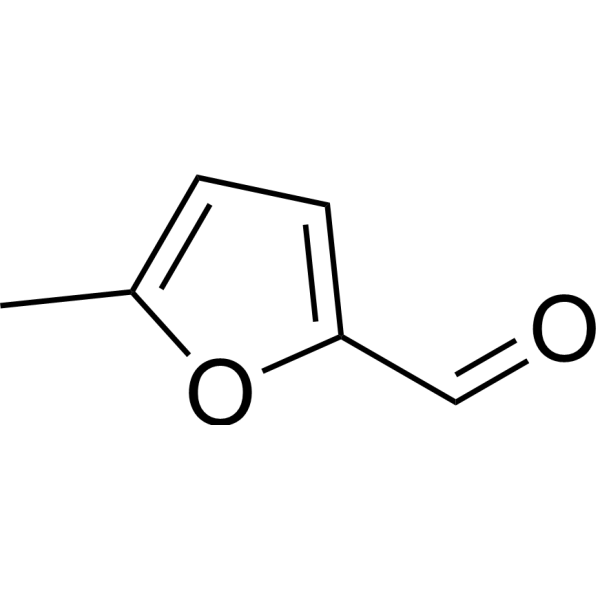
2-Acetyl-5-methylfuranAnti-tuberculous bacillus Agent -
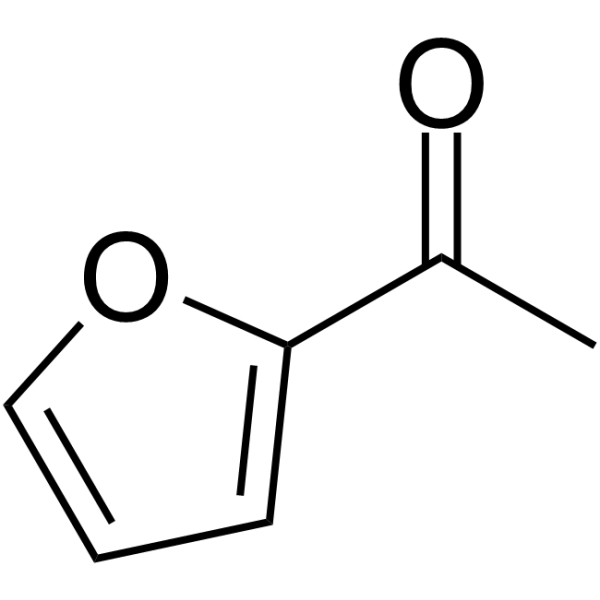
HY-W015912
2-AcetylfuranIntermediate In Foods -

HY-W111881
FurfurylideneacetoneDiluent -
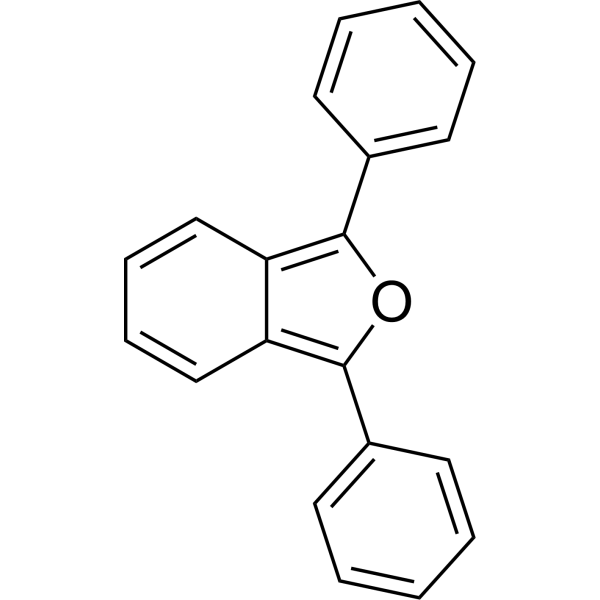
HY-W011664
1,3-DiphenylisobenzofuranFluorochrome -
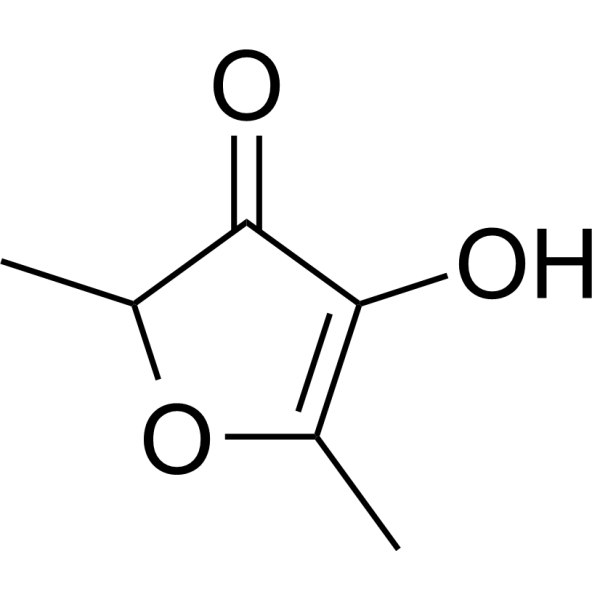
HY-N7093
FuraneolAntimicrobial Agent -
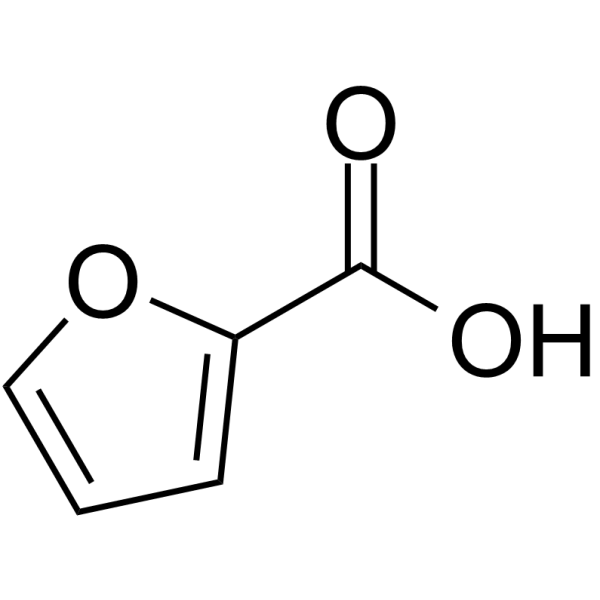
HY-W012946
2-Furoic acid -
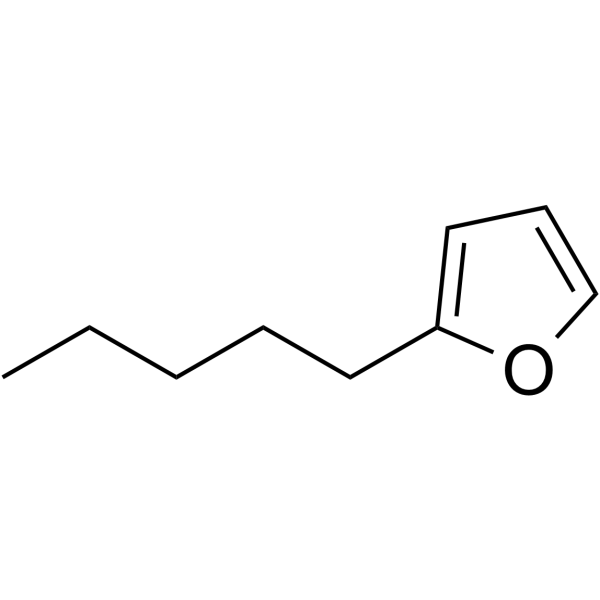
HY-N7398
2-PentylfuranNatural Product -
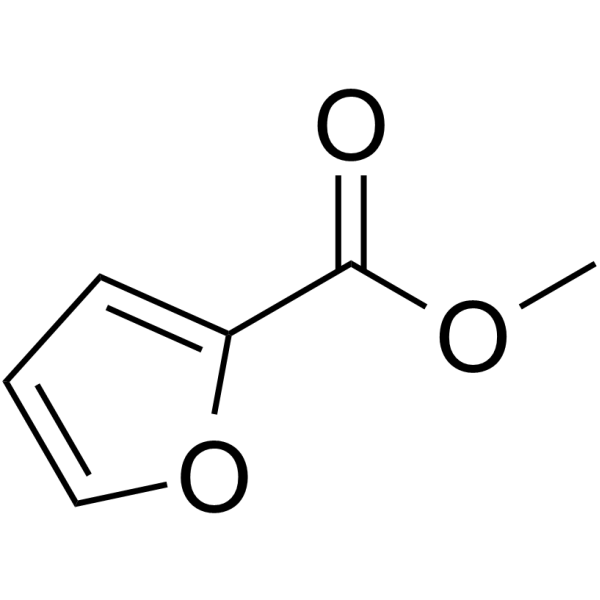
HY-Y0949
Methyl 2-furoateEster of Furan-2-carboxylic acid -
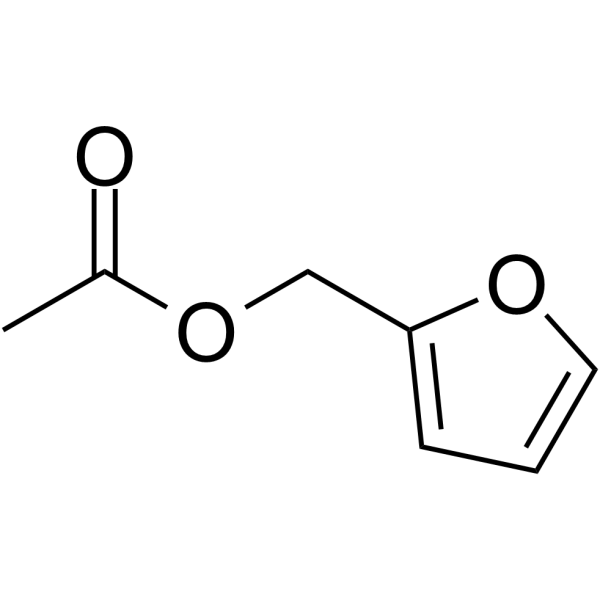
HY-W010321
Furfuryl acetate -
HY-Y0051
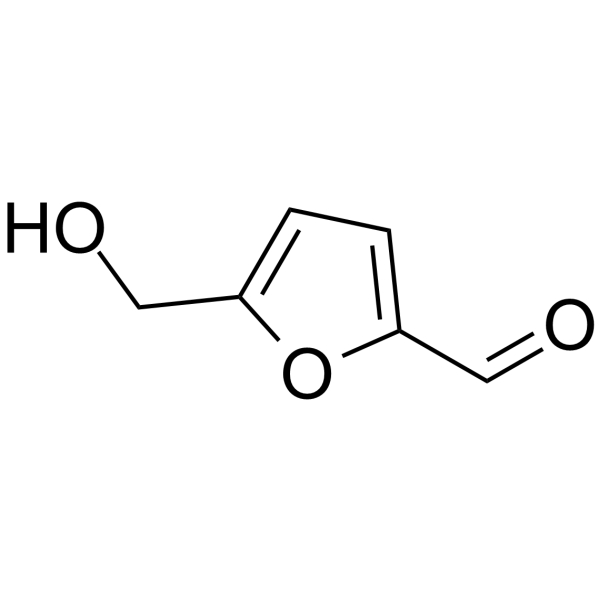
5-Hydroxymethylfurfural -
HY-W007708
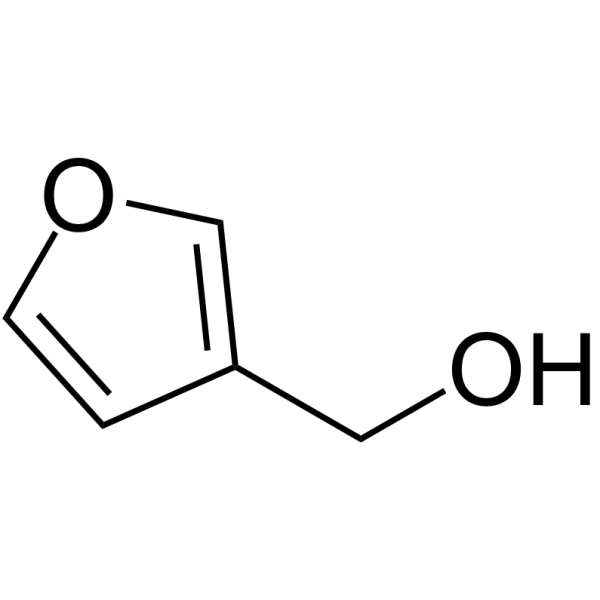
3-FuranmethanolFlavor Compound
Publications Citing Use of MedChemExpress (MCE) 5-Methylfurfural
More

Biologische Aktivität
Beschreibung
In Vitro
5-Methylfurfural (5 mM) exhibits the greatest absoption with increased skin deposition in pig skin in vitro[4].
5-Methylfurfural (500 μM, 24 h) increases COX-2 level in COX-2 and PGE2 as well as uprelates PGE2 in keratinocytes[4].
5-Methylfurfural (Compound MF) increases the number of breaks formed per unit DNA and causes the degradation of native DNA through the formation of single-strand breaks[5].
5-Methylfurfural (1.6 mM, 2 h) completely protects the DNA from cleavage by EcoRI after reaction with 1.2 mM or higher concentration[5].
MedChemExpress (MCE) has not independently confirmed the accuracy of these methods. They are for reference only.
In Vivo
MedChemExpress (MCE) has not independently confirmed the accuracy of these methods. They are for reference only.
-
Animal Model:Male nude mice (7 weeks)[4]
-
Dosage:5 mM
-
Administration:Topically for 7 days
-
Result:Significantly increased the transepidermal water loss.
Insignificantly increased the distribution of Ki67 in mice.


Chemical Information
-
CAS. Nr. 620-02-0
-
Appearance Liquid (Density: 1.107 g/cm3 )
-
Molecular Weight 110.11
-
Formel C6H6O2
-
Color Light yellow to brown
-
SMILES
O=CC1=CC=C(C)O1
-
Structure Classification
-
Initial Source
-
Versand
Room temperature in continental US; may vary elsewhere.
-
Speicherung
Pure form -20°C 3 years In solvent -80°C 6 months -20°C 1 month


Publications (1)
-
Journal Impact Factor
-
Most Recent


Lösungsmittel & Löslichkeit
In Vitro:
DMSO : 100 mg/mL (908.18 mM; Need ultrasonic; Hygroscopic DMSO has a significant impact on the solubility of product, please use newly opened DMSO)
Please refer to the solubility information to select the appropriate solvent. Once prepared, please aliquot and store the solution to prevent product inactivation from repeated freeze-thaw cycles.
Storage method and period of stock solution: -80°C, 6 months; -20°C, 1 month. When stored at -80°C, please use it within 6 months. When stored at -20°C, please use it within 1 month.
Please refer to the solubility information to select the appropriate solvent. Once prepared, please aliquot and store the solution to prevent product inactivation from repeated freeze-thaw cycles.
Storage method and period of stock solution: -80°C, 6 months; -20°C, 1 month. When stored at -80°C, please use it within 6 months. When stored at -20°C, please use it within 1 month.
Konzentration (Stammlösung) × Volumen (Stammlösung) = Konzentration (Ziellösung) × Volumen (Ziellösung)
In Vivo:
Select the appropriate dissolution method based on your experimental animal and administration route.
- For the following dissolution methods, please ensure to first prepare a clear stock solution using an In Vitro approach and then sequentially add co-solvents:
- To ensure reliable experimental results, the clarified stock solution can be appropriately stored based on storage conditions. As for the working solution for In Vivo experiments, it is recommended to prepare freshly and use it on the same day.
- The percentages shown for the solvents indicate their volumetric ratio in the final prepared solution. If precipitation or phase separation occurs during preparation, heat and/or sonication can be used to aid dissolution.
Add each solvent one by one: 10% DMSO 40% PEG300 5% Tween-80 45% Saline
Solubility: ≥ 2.5 mg/mL (22.70 mM); Clear solution
This protocol yields a clear solution of ≥ 2.5 mg/mL (saturation unknown).
Taking 1 mL working solution as an example, add 100 μL DMSO stock solution (25.0 mg/mL) to 400 μL PEG300, and mix evenly; then add 50 μL Tween-80 and mix evenly; then add 450 μL Saline to adjust the volume to 1 mL.
Preparation of Saline: Dissolve 0.9 g sodium chloride in ddH₂O and dilute to 100 mL to obtain a clear Saline solution.
Add each solvent one by one: 10% DMSO 90% (20% SBE-β-CD in Saline)
Solubility: ≥ 2.5 mg/mL (22.70 mM); Clear solution
This protocol yields a clear solution of ≥ 2.5 mg/mL (saturation unknown).
Taking 1 mL working solution as an example, add 100 μL DMSO stock solution (25.0 mg/mL) to 900 μL 20% SBE-β-CD in Saline, and mix evenly.
Preparation of 20% SBE-β-CD in Saline (4°C, storage for one week): 2 g SBE-β-CD powder is dissolved in 10 mL Saline, completely dissolve until clear.
In Vivo Dissolution Calculator
Please enter the basic information of animal experiments:
-
-
-
-
Recommended: Prepare an additional quantity of animals to account for potential losses during experiments.
Please enter your animal formula composition:
-
%DMSO +
Recommended: Keep the proportion of DMSO in working solution below 2% if your animal is weak.
-
%+
-
+%Tween-80 + +
-
%Saline +
The co-solvents required include: DMSO, . All of co-solvents are available by MedChemExpress (MCE). , Tween 80. All of co-solvents are available by MedChemExpress (MCE).
Working solution concentration: 0.22 mg/mL
Method for preparing stock solution: mg drug dissolved in μL DMSO. Stock solution concentration: mg/mL.
1. Take μL DMSO stock solution;
2. Add μL .
μL , mix evenly;
3. Then add μL Tween 80, mix evenly;
4. Then add μL
Please ensure that the stock solution in the first step is dissolved to a clear state, and add co-solvents in sequence. You can use ultrasonic heating (ultrasonic cleaner, recommended frequency 20-40 kHz), vortexing, etc. to assist dissolution.


Reinheit & Dokumentation
-
Data Sheet (287 KB)
-
SDS (394 KB)
- English - EN (394 KB)
- Français - FR (394 KB)
- Deutsch - DE (394 KB)
- Norwegian - NO (394 KB)
- Español - ES (394 KB)
- Swedish - SV (394 KB)
- Italian - IT (394 KB)
- Korean - KR (394 KB)
- Portuguese - PT (394 KB)
-
Handling Instructions (2659 KB)
Verweise
[3]. Li, S., et al., (2021). Selective hydrogenation of 5-(hydroxymethyl)furfural to 5-methylfurfural over single atomic metals anchored on Nb2O5. Nature communications, 12(1), 584. [Content Brief]
[4]. Lin, Y. K., et al., (2024). Systematic establishment of the relationship between skin absorption and toxicity of furanoids via in silico, in vitro, and in vivo assessments. Environmental research, 261, 119757. [Content Brief]
[5]. Shahabuddin, Rahman, A., & Hadi, S. M. (1990). Specificity of the in vitro interaction of methylfurfural with DNA. Mutagenesis, 5(2), 131–136. [Content Brief]


Complete Stock Solution Preparation Table
Please refer to the solubility information to select the appropriate solvent. Once prepared, please aliquot and store the solution to prevent product inactivation from repeated freeze-thaw cycles.
Storage method and period of stock solution: -80°C, 6 months; -20°C, 1 month. When stored at -80°C, please use it within 6 months. When stored at -20°C, please use it within 1 month.
| Optional Solvent | Concentration Solvent Mass | 1 mg | 5 mg | 10 mg | 25 mg |
|---|---|---|---|---|---|
| DMSO | 1 mM | 9.0818 mL | 45.4091 mL | 90.8183 mL | 227.0457 mL |
| 5 mM | 1.8164 mL | 9.0818 mL | 18.1637 mL | 45.4091 mL | |
| 10 mM | 0.9082 mL | 4.5409 mL | 9.0818 mL | 22.7046 mL | |
| 15 mM | 0.6055 mL | 3.0273 mL | 6.0546 mL | 15.1364 mL | |
| 20 mM | 0.4541 mL | 2.2705 mL | 4.5409 mL | 11.3523 mL | |
| 25 mM | 0.3633 mL | 1.8164 mL | 3.6327 mL | 9.0818 mL | |
| 30 mM | 0.3027 mL | 1.5136 mL | 3.0273 mL | 7.5682 mL | |
| 40 mM | 0.2270 mL | 1.1352 mL | 2.2705 mL | 5.6761 mL | |
| 50 mM | 0.1816 mL | 0.9082 mL | 1.8164 mL | 4.5409 mL | |
| 60 mM | 0.1514 mL | 0.7568 mL | 1.5136 mL | 3.7841 mL | |
| 80 mM | 0.1135 mL | 0.5676 mL | 1.1352 mL | 2.8381 mL | |
| 100 mM | 0.0908 mL | 0.4541 mL | 0.9082 mL | 2.2705 mL |


5-Methylfurfural Related Classifications
HY-Y0543 Related Classifications
 Powered by Bioz