



Furfuryl acetate

Based on 1 Customer Validation
Furfuryl acetate is a skin-absorbable furan-ring-containing ester compound. Furfuryl acetate upregulates COX-2 expression in keratinocytes and activates the MAPK/JNK signaling pathway, thereby inducing the proliferation of keratinocytes and skin fibroblasts. Furfuryl acetate has a strong volatile aroma and is commonly used in food flavorings and food additives. Furfuryl acetate can also serve as an organic synthesis intermediate for constructing more complex furan-containing heterocyclic compounds.
Nos produits utilisent uniquement pour la recherche. Nous ne vendons pas aux patients.
- Pureté : 98.30%
- CAS No.: 623-17-6
- Formule: C7H8O3
- Masse moléculaire:140.14
-
Stockage:Pure form -20°C, 3 years , 4°C, 2 years ; In solvent -80°C, 6 months , -20°C, 1 month

To place orders, for customer services and technical support, please contact: MedChemExpress USA
Tel: 609-228-6898 E-mail: [email protected] [email protected]


-
 Activité biologique
-
Chemical Information
-
Solvant et solubilité
- Protocole
- Pureté et documentation
- Références
-
 Help & FAQs


-
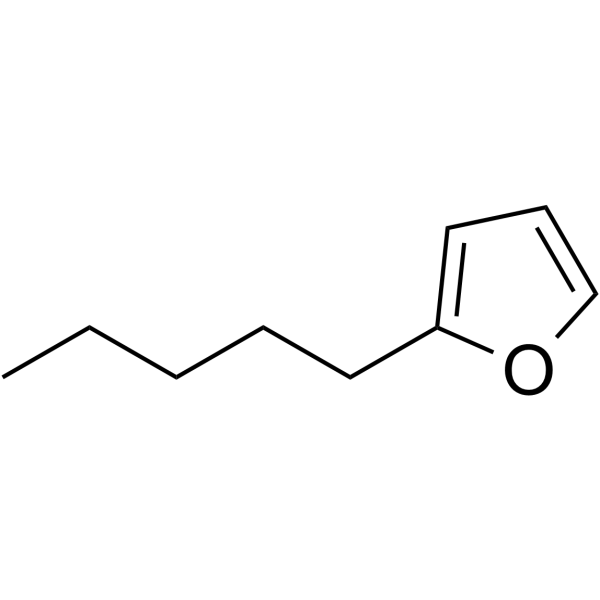
HY-N7398
2-PentylfuranNatural Product -
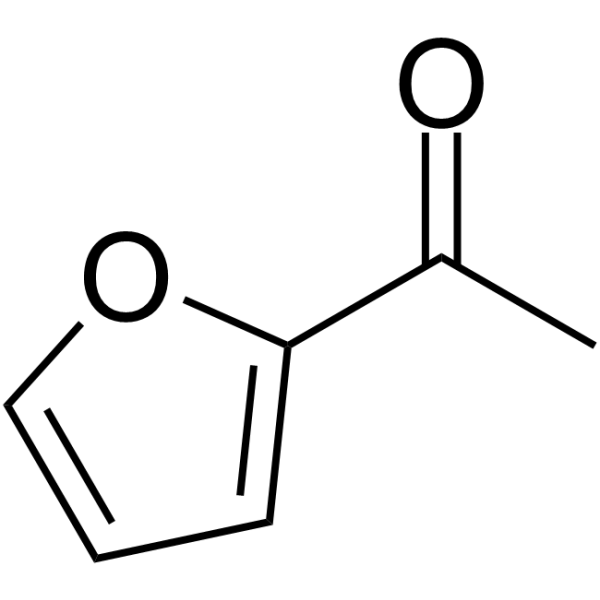
HY-W015912
2-AcetylfuranIntermediate In Foods -

HY-W010321R
Furfuryl acetate (Standard)Reference Standard -
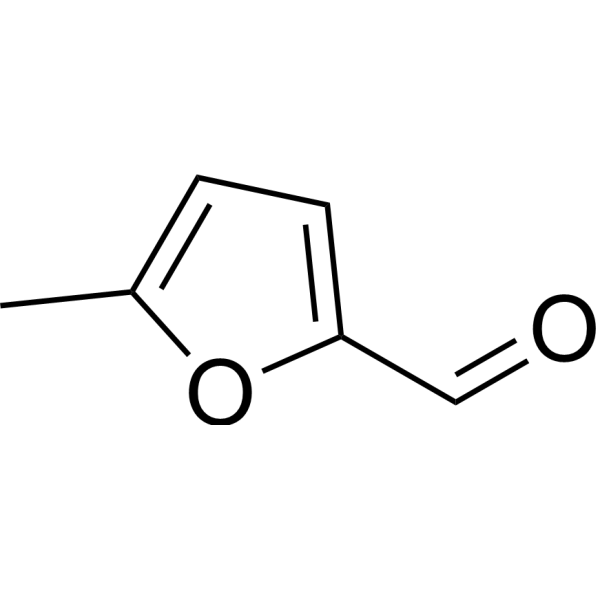
HY-Y0543
5-MethylfurfuralBiochemical Reagent -
HY-W011664
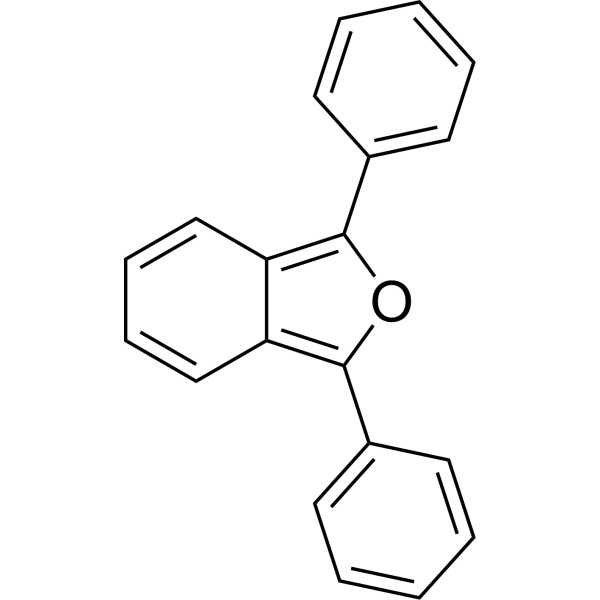
1,3-DiphenylisobenzofuranFluorochrome -
HY-W007708
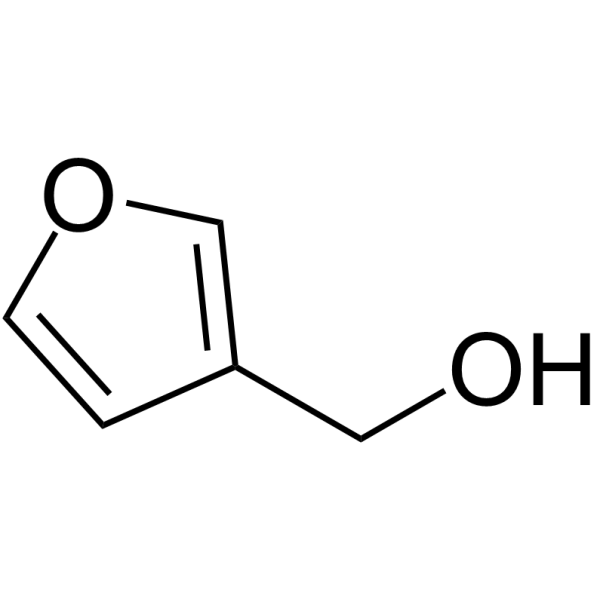
3-FuranmethanolFlavor Compound -

HY-W012813
2-Acetyl-5-methylfuranAnti-tuberculous bacillus Agent -
HY-21075
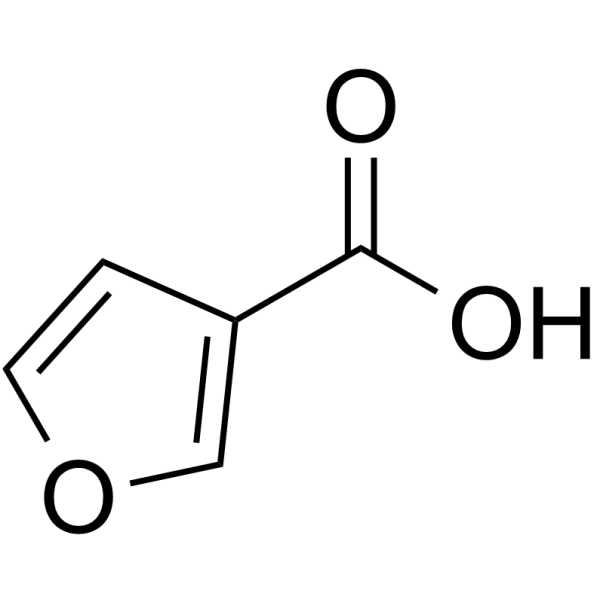
3-Furanoic acidEndogenous Metabolite -
HY-W012946
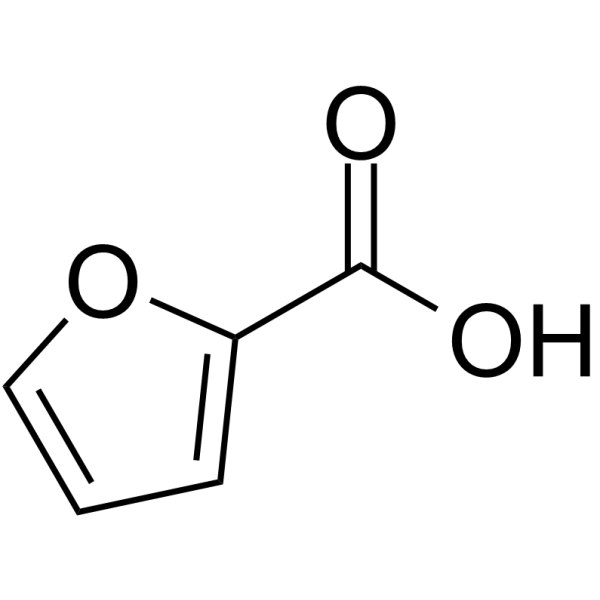
2-Furoic acid -

HY-W111881
FurfurylideneacetoneDiluent -

HY-N7398R
2-Pentylfuran (Standard)Reference Standard -

HY-W012927
4-Hydroxy-5-methylfuran-3(2H)-oneLuxP Activator


Activité biologique
Description
IC50 & Target
[1]|
COX-2 |
In Vitro
Furfuryl acetate (500 μM; 24 h) has a pro-inflammatory effect in keratinocytes (HaCaT) by activating the MAPK signaling pathway (increasing p-JNK levels) and upregulating COX-2 protein expression[3].
Furfuryl acetate (pure liquid or 5 mM; 24 h) exhibits high skin permeability and percutaneous absorption into the receptor fluid in isolated porcine skin and nude mouse skin[3].
MedChemExpress (MCE) has not independently confirmed the accuracy of these methods. They are for reference only.
-
Cell Line:HaCaT keratinocytes and Hs68 skin fibroblasts
-
Concentration:10, 50, 100, 500, 1000 µM
-
Incubation Time:24 h
-
Result:Produced a concentration-dependent increase in HaCaT keratinocyte viability, indicating cell proliferation.
Showed no cytotoxicity and induced Hs68 fibroblast proliferation, but no dose-dependent proliferation was observed.
The 50 and 100 µM concentrations were responsible for the greatest increase in viability.
-
Cell Line:HaCaT keratinocytes
-
Concentration:500 µM
-
Incubation Time:24 h
-
Result:Increased COX-2 protein levels by 1.5-fold compared with control in HaCaT keratinocytes.\n
Increased phosphorylated JNK, while phosphorylated ERK was unchanged in HaCaT keratinocytes.
Increased phosphorylated p38, but this change was not statistically significant compared with control.
In Vivo
Furfuryl acetate (100 μl, 5 mM; topical skin application; single administration; 6 h) has the effect of percutaneous absorption into the systemic blood circulation in the nude mouse model[3].
MedChemExpress (MCE) has not independently confirmed the accuracy of these methods. They are for reference only.
-
Animal Model:nude mice (male, seven weeks old)[3]
-
Dosage:100 μl, 5 mM (dissolved in 30% PG/pH 7.4 buffer)
-
Administration:topical skin application; replaced every 24 hours; continuous exposure for 7 days
-
Result:Significantly increased transepidermal water loss (TEWL), indicating impaired skin barrier function.
Increased Ki67 expression in the basal layer of the skin in immunohistochemical analysis (indicating hyperproliferation).
Caused mild injury to peripheral organs, including mild necrosis and inflammatory cell infiltration in the brain parenchyma, mild vascular congestion and immune cell infiltration in the myocardium, mild interstitial vascular congestion in the renal parenchyma, and mild central vein dilation in the liver.
-
Animal Model:nude mice (male, seven weeks old)[3]
-
Dosage:100 μl, 5 mM
-
Administration:topical application; single dose; treated for 6 h
-
Result:Produced a local skin deposition of 0.18 nmol/mg.
Absorbed transdermally into the blood in large amounts, resulting in a plasma concentration of 5.04 nmol/ml.


Chemical Information
-
CAS No. 623-17-6
-
Appearance Liquid (Density: 1.120±0.06 g/cm3)
-
Masse moléculaire 140.14
-
Formule C7H8O3
-
Color Colorless to light yellow
-
SMILES
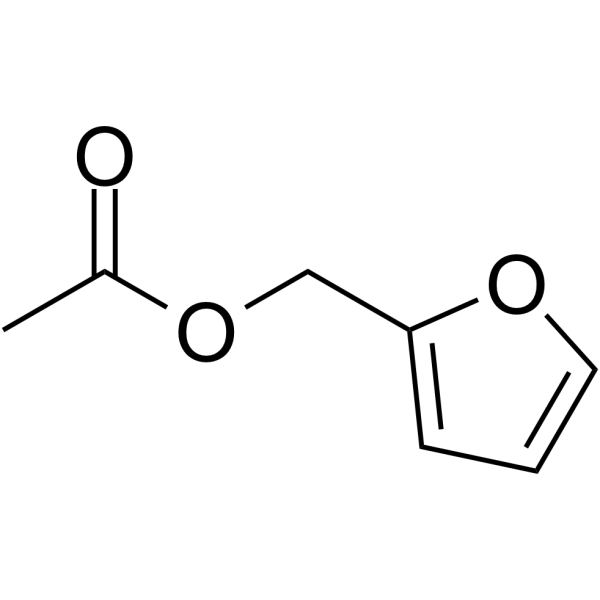
CC(=O)OCC1=CC=CO1
-
Livraison
Room temperature in continental US; may vary elsewhere.
-
Stockage
Pure form -20°C 3 years 4°C 2 years In solvent -80°C 6 months -20°C 1 month


Solvant et solubilité
In Vitro:
DMSO : ≥ 100 mg/mL (713.57 mM; Hygroscopic DMSO has a significant impact on the solubility of product, please use newly opened DMSO)
* "≥" means soluble, but saturation unknown.
Please refer to the solubility information to select the appropriate solvent. Once prepared, please aliquot and store the solution to prevent product inactivation from repeated freeze-thaw cycles.
Storage method and period of stock solution: -80°C, 6 months; -20°C, 1 month. When stored at -80°C, please use it within 6 months. When stored at -20°C, please use it within 1 month.
Concentration (start) × Volume (start) = Concentration (final) × Volume (final)
In Vivo Dissolution Calculator
Please enter the basic information of animal experiments:
-
-
-
-
Recommended: Prepare an additional quantity of animals to account for potential losses during experiments.
Working solution concentration: 0.22 mg/mL


Pureté et documentation


Références

Complete Stock Solution Preparation Table
Please refer to the solubility information to select the appropriate solvent. Once prepared, please aliquot and store the solution to prevent product inactivation from repeated freeze-thaw cycles.
Storage method and period of stock solution: -80°C, 6 months; -20°C, 1 month. When stored at -80°C, please use it within 6 months. When stored at -20°C, please use it within 1 month.
| Optional Solvent | Concentration Solvent Mass | 1 mg | 5 mg | 10 mg | 25 mg |
|---|---|---|---|---|---|
| DMSO | 1 mM | 7.1357 mL | 35.6786 mL | 71.3572 mL | 178.3930 mL |
| 5 mM | 1.4271 mL | 7.1357 mL | 14.2714 mL | 35.6786 mL | |
| 10 mM | 0.7136 mL | 3.5679 mL | 7.1357 mL | 17.8393 mL | |
| 15 mM | 0.4757 mL | 2.3786 mL | 4.7571 mL | 11.8929 mL | |
| 20 mM | 0.3568 mL | 1.7839 mL | 3.5679 mL | 8.9197 mL | |
| 25 mM | 0.2854 mL | 1.4271 mL | 2.8543 mL | 7.1357 mL | |
| 30 mM | 0.2379 mL | 1.1893 mL | 2.3786 mL | 5.9464 mL | |
| 40 mM | 0.1784 mL | 0.8920 mL | 1.7839 mL | 4.4598 mL | |
| 50 mM | 0.1427 mL | 0.7136 mL | 1.4271 mL | 3.5679 mL | |
| 60 mM | 0.1189 mL | 0.5946 mL | 1.1893 mL | 2.9732 mL | |
| 80 mM | 0.0892 mL | 0.4460 mL | 0.8920 mL | 2.2299 mL | |
| 100 mM | 0.0714 mL | 0.3568 mL | 0.7136 mL | 1.7839 mL |


Furfuryl acetate Related Classifications
HY-W010321 Related Classifications
 Powered by Bioz