
42 Results for "

chemical material synthesis

" in MedChemExpress (MCE) Product Catalog:
Products (42)

42 Results for "chemical material synthesis" in MCE Product Catalog:

2
2 Cited Publications
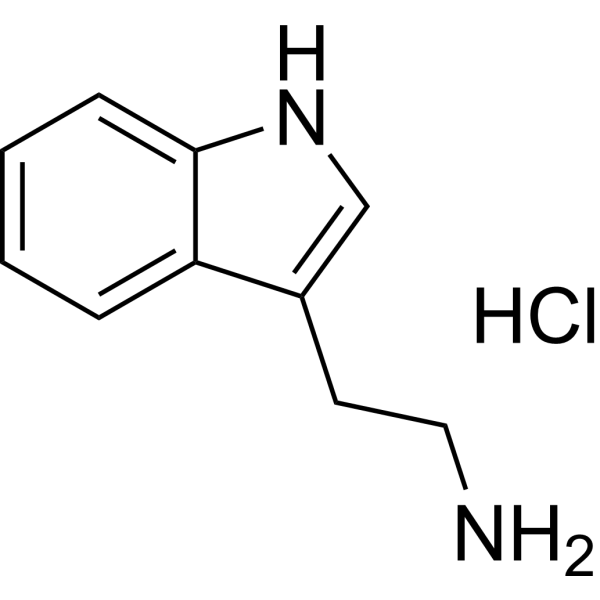
Cat. No.: HY-W014971
CAS No.: 343-94-2
Tryptamine hydrochloride belongs to the class of indole alkaloids and is a derivative of the amino acid tryptophan. Tryptamine hydrochloride is psychoactive and acts as a neurotransmitter in the body, affecting mood, perception and cognition. In its hydrochloride form, Tryptamine hydrochloride hydrochloride, it is commonly used as a research chemical and as a starting material for the synthesis of other organic compounds. It can also occur naturally in certain plants and animals, including fungi and mammals. Due to the psychoactive properties of Tryptamine hydrochloride and its derivatives, its use and possession are controlled substances in many countries.
loading...
    loading...
1
1 Cited Publications
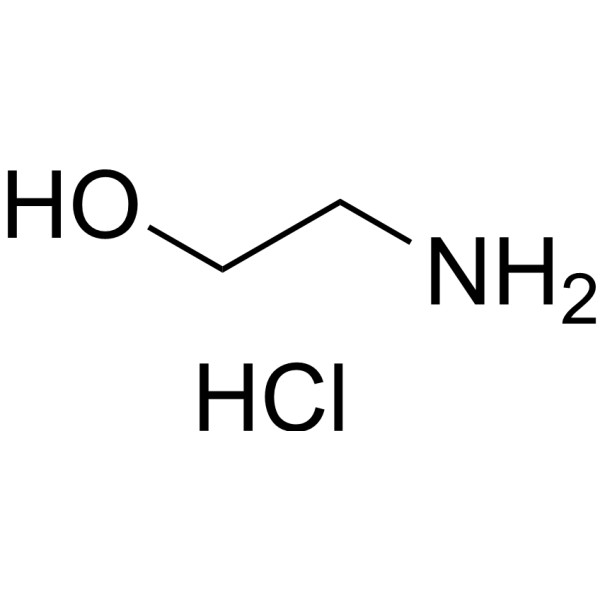
Cat. No.: HY-W035903
CAS No.: 2002-24-6
Synonyms: 2-Aminoethanol hydrochloride
Ethanolamine hydrochloride, is an organic compound used in various industrial applications. It is a white or colorless solid that is soluble in water and has a faint odor. One of the major uses of Ethanolamine hydrochloride is in the production of detergents and surfactants. Used as a raw material in the manufacture of compounds such as ethylenediaminetetraacetic acid (EDTA) and diethanolamine, which are commonly used in household and industrial cleaning products. Ethanolamine hydrochloride is also used in the synthesis of pharmaceuticals, agrochemicals and rubber processing agents. It acts as a buffer in certain chemical reactions, helping to adjust pH and maintain stability. Ethanolamine hydrochloride can be used for gas purification and metal corrosion inhibitor. Its ability to react with acid gases such as carbon dioxide and sulfur dioxide makes it useful for removing impurities from natural gas and other industrial gases. Overall, Ethanolamine hydrochloride is a multifunctional compound with many potential industrial applications. Its ability to act as a buffer, chelating agent, and corrosion inhibitor makes it an important tool in a variety of industries.
loading...
    loading...
1
1 Cited Publications
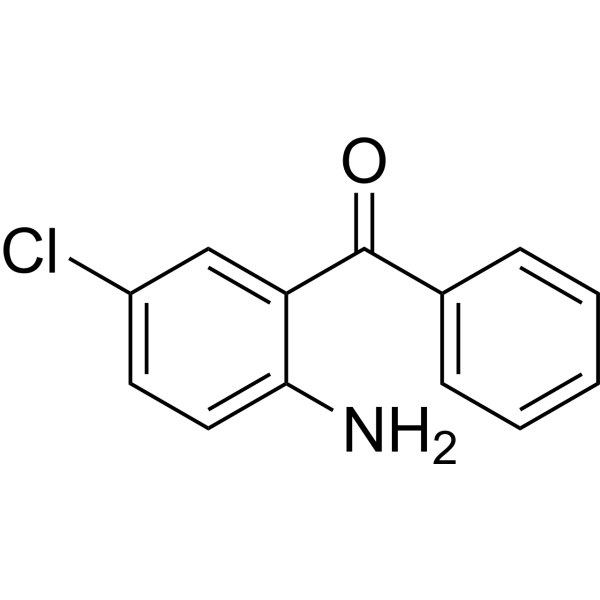
Cat. No.: HY-77785
CAS No.: 719-59-5
Synonyms: 5-Chloro-2-aminobenzophenone
2-Amino-5-chlorobenzophenone (5-Chloro-2-aminobenzophenone) is a chemical intermediate. Derivatives of 2-Amino-5-chlorobenzophenone serve as skeletal muscle relaxants. 2-Amino-5-chlorobenzophenone acts as a starting material for the synthesis of anti-biofilm 2-amino-5-chlorobenzophenone Schiff bases. 2-Amino-5-chlorobenzophenone is applicable to research related to bacterial infections .\n

loading...
    loading...
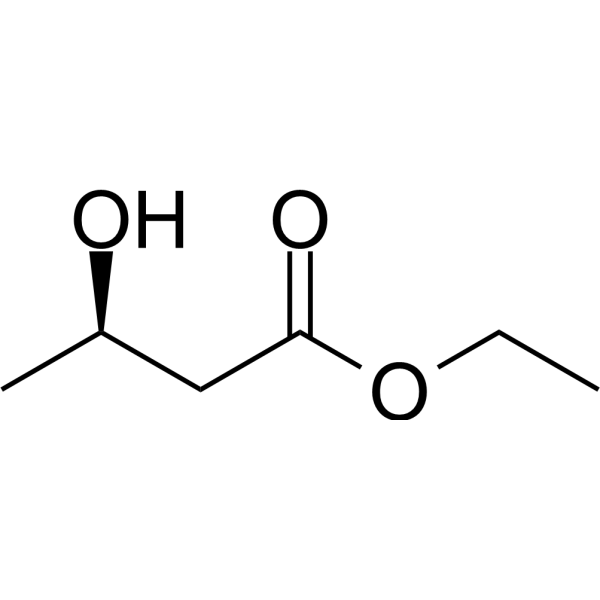
Cat. No.: HY-Y1131
CAS No.: 24915-95-5
Synonyms: Ethyl (R)-3-hydroxybutanoate
Ethyl (R)-3-hydroxybutyrate is an organic compound commonly used as a starting material for chiral chemical synthesis. It can be used in the preparation of medicines, spices, fine chemicals and food additives, etc., and is widely used in medicine, cosmetics and food industries. In addition, this compound is also used as a substrate or intermediate in some biochemical reactions
loading...
    loading...
Cat. No.: HY-140651
Purity:  ≥93.0%
Research Areas:  

Cancer

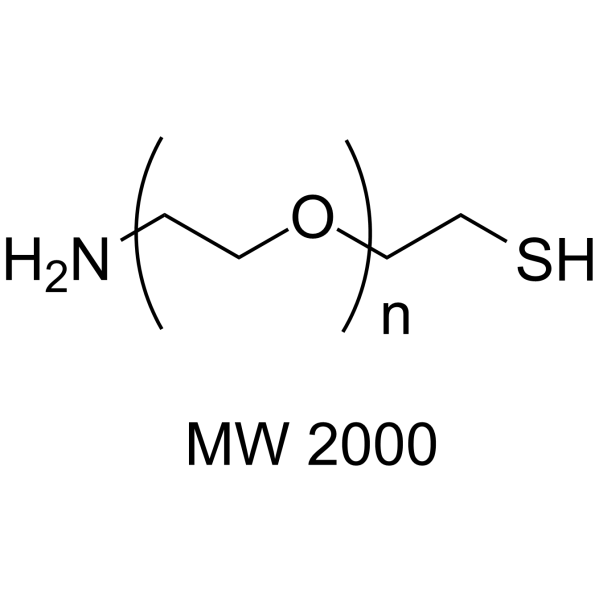
Amine-PEG2000-thiol is a conjugate containing amino, PEG and thiol groups, used for drug delivery, material modification and chemical synthesis.
loading...
    loading...
Cat. No.: HY-134599
CAS No.: 1580501-97-8
Research Areas:  

Cancer

(2E)-TCO-PNB ester is an active reaction substrate with the properties of trans-cyclooctene derivatives. The core chemical property of (2E)-TCO-PNB ester is its ability to undergo efficient inverse electron-demand Diels-Alder (IEDDA) cycloaddition with tetrazine groups. (2E)-TCO-PNB ester can be used in ligation reactions to verify the integrity of tetrazine groups, and also serves as a key synthetic raw material for the preparation of the prodrug TCO-DOX. (2E)-TCO-PNB ester is applied in research related to drug synthesis and bioorthogonal chemistry .
loading...
    loading...
Cat. No.: HY-W015936
CAS No.: 928-95-0
Synonyms: trans-Hex-2-en-1-ol
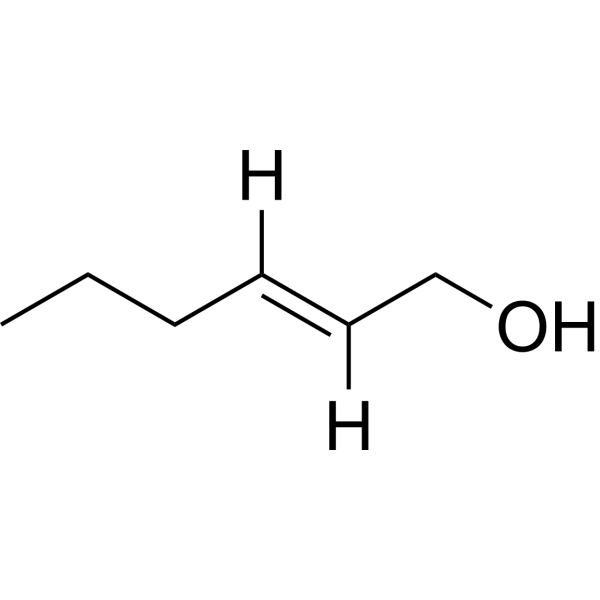
(E)-Hex-2-en-1-ol belongs to the class of unsaturated alcohols consisting of a six-carbon chain with a double bond between carbon atoms 2 and 3 and a hydroxyl group attached to carbon atom 1. The compound has a grassy or herbaceous smell and is commonly used as a flavoring in foods such as baked goods, candy and beverages. It can also be used as a fragrance ingredient in personal care products and as a starting material for the synthesis of other organic compounds. Furthermore, (E)-hex-2-en-1-ol can be used as a solvent or reagent in various chemical reactions.
loading...
    loading...
Cat. No.: HY-ER010
CAS No.: 1467-16-9
Synonyms: Imidazole hydrochloride
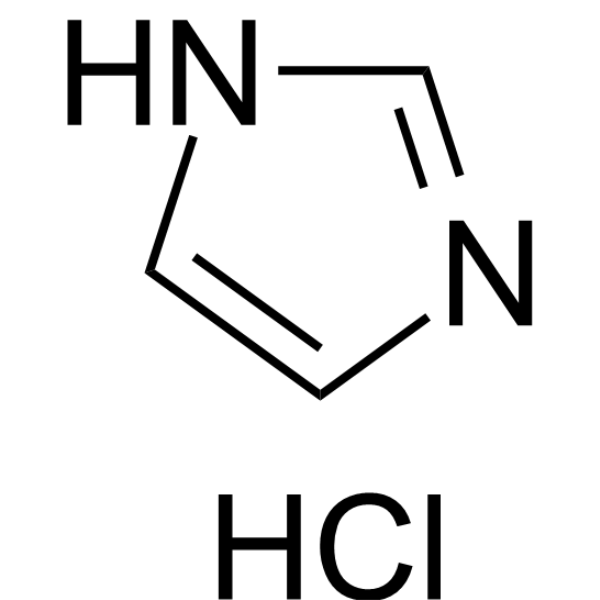
1H-Imidazole hydrochloride can be used as ligand, buffer and catalyst, etc., and also plays an important role in the process of drug synthesis and extraction of natural products. In addition, the compound is widely used in certain industrial fields, such as in the manufacturing process of plastics, coatings, textiles and electronic materials. Although the compound has no direct medical applications, it plays an important role in chemical research and laboratory studies.
loading...
    loading...
Cat. No.: HY-W008145
CAS No.: 13820-53-6
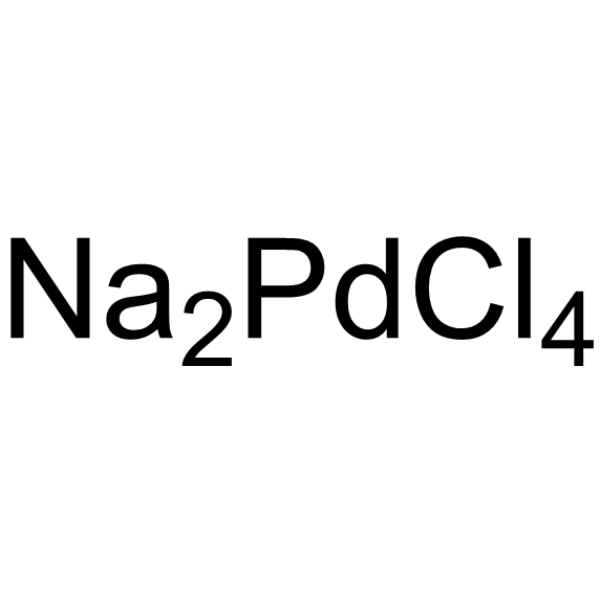
Sodium tetrachloropalladate(II) is an organic compound commonly used as a catalyst and as a raw material for dye production. It can be used to catalyze or promote reactions in certain chemical reactions, and is widely used in the fields of organic synthesis and dye preparation. In addition, the compound is also used for metallization, silver plating and electroplating of circuit boards.
loading...
    loading...
Cat. No.: HY-W141394
CAS No.: 85079-00-1
Synonyms: N-Benzoyl-2′-O-methyladenosine
Bz-OMe-rA (N-Benzoyl-2′-O-methyladenosine) is a nucleoside analog with an N-benzoyl protecting group and a 2'-O-methyladenosine phosphoramidite unit. Bz-OMe-rA serves as a starting material for the chemical synthesis of the 5'-terminal cap structure of cytoplasmic polyhedrosis virus mRNA and also acts as a building block for solid-phase RNA oligonucleotide synthesis .
loading...
    loading...
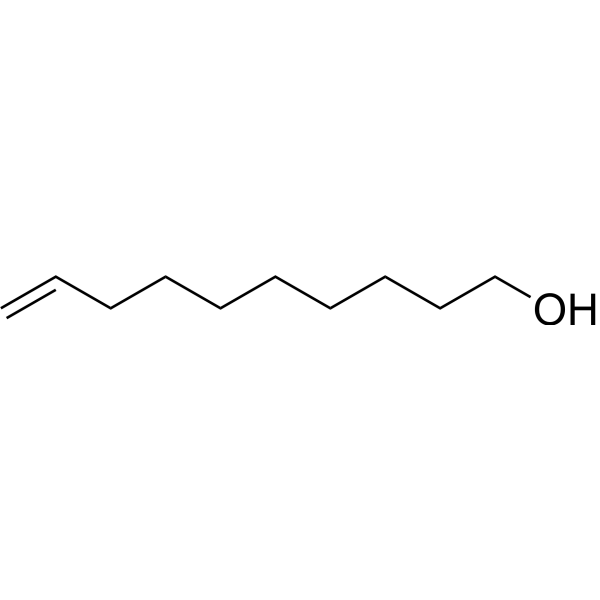
Cat. No.: HY-W105359
CAS No.: 13019-22-2
Synonyms: ω-Decen-1-ol
9-Decen-1-ol has a fatty odour. This compound is used in the flavor and fragrance industry for its pleasant smell, which is often described as sweet, floral and fruity. It can also be used as an intermediate in the synthesis of various organic compounds, including medicine, agricultural chemicals and polymer materials. Its unique chemical properties make it an important ingredient in many commercial products, including soaps, detergents and cosmetics.
loading...
    loading...
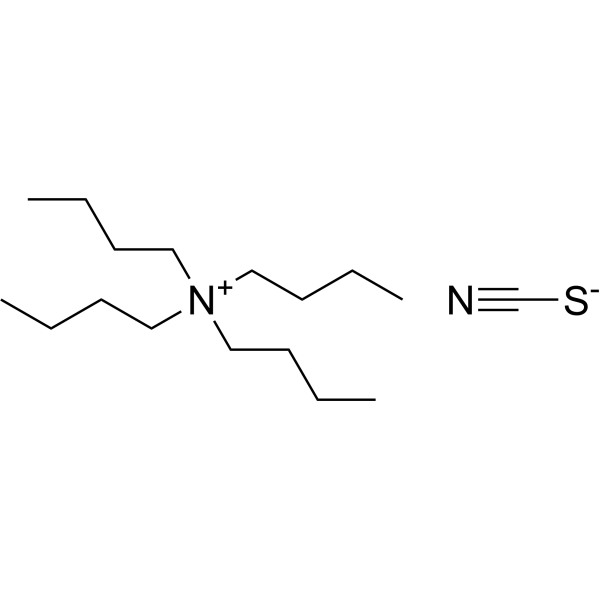
Cat. No.: HY-W111461
CAS No.: 3674-54-2
Tetrabutylammonium thiocyanateIt is a quaternary ammonium salt and belongs to the category of alkyl ammonium salts. This compound is widely used as a reagent in organic chemistry, especially for the synthesis of various organic compounds, including pharmaceuticals and agrochemicals. also, Tetrabutylammonium thiocyanateIt can also be used as an electrolyte in electrochemical devices and as a phase transfer catalyst in organic synthesis. Its unique chemical properties make it an important ingredient in a variety of industrial processes, including petrochemical refining and materials science.
loading...
    loading...
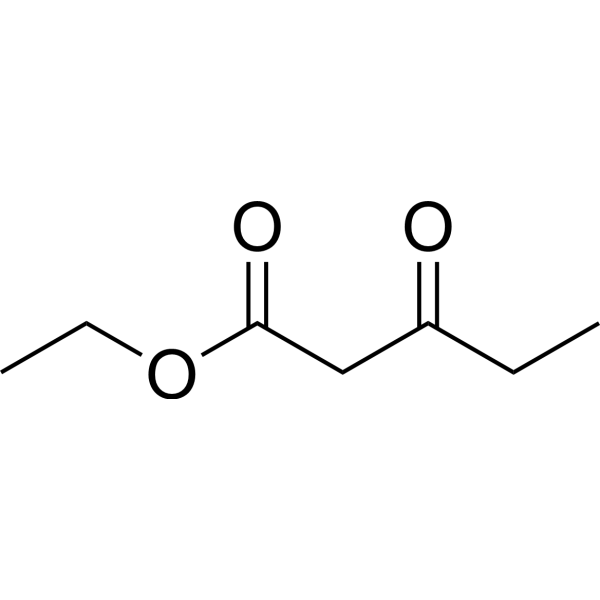
Cat. No.: HY-78211
CAS No.: 4949-44-4
Synonyms: Ethyl Propionylacetate
Ethyl 3-oxopentanoate is an organic ester compound commonly used as a reactant or solvent in organic synthesis. It can be used as an important raw material for the preparation of pharmaceuticals, food flavors, spices and other products. In addition, because of its stability and reactivity in certain chemical reactions, it is also widely used in some industrial productions. Although Ethyl 3-oxopentanoate has no direct application in the medical field, it still plays an important role in chemical research and industry.
loading...
    loading...
Cat. No.: HY-W101255
CAS No.: 10052-47-8
Synonyms: MTEACl
Triethylmethylammonium chloride is a quaternary ammonium salt belonging to the class of alkylammonium salts. This compound is widely used as a phase transfer catalyst in organic synthesis to facilitate the transfer of reactants between immiscible phases. In addition, it can be used as an electrolyte in electrochemical devices, a surfactant in emulsion polymerization, and a corrosion inhibitor. Its unique chemical properties make it an important ingredient in a variety of industrial applications, including pharmaceuticals, agrochemicals, and materials science.
loading...
    loading...
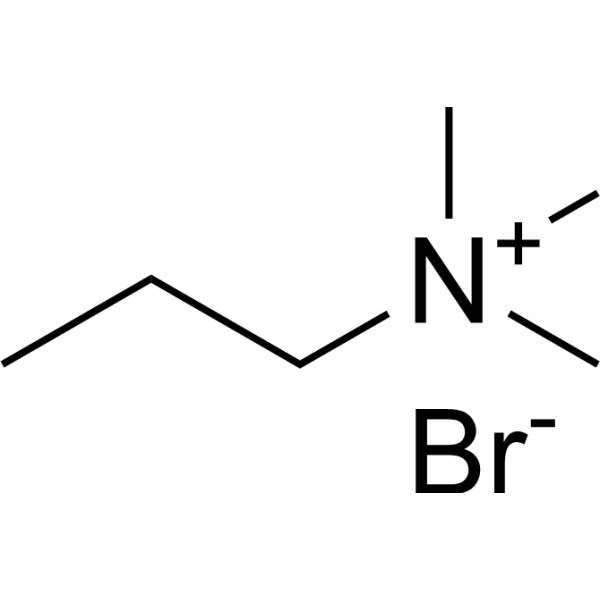
Cat. No.: HY-W099930
CAS No.: 2650-50-2
Synonyms: Trimethylpropylammonium bromide
N,N,N-Trimethylpropan-1-aminium bromide is a quaternary ammonium compound belonging to the class of alkylammonium salts. This compound is widely used as a phase transfer catalyst in organic synthesis, facilitating the transfer of reactants between immiscible phases. It can also be used as a surfactant, corrosion inhibitor or antimicrobial. Due to its unique chemical properties, N,N,N-Trimethylpropan-1-aminium bromide has applications in various industries such as pharmaceuticals, agrochemicals, and materials science.
loading...
    loading...
Cat. No.: HY-Y0075
CAS No.: 66-99-9
2-Naphthaldehyde belongs to naphthalene-based bis-aromatic aldehyde compounds. 2-Naphthaldehyde scavenges DPPH and ABTS + free radicals, and exerts reductive effects by donating hydrogen atoms to interrupt free radical chain reactions. 2-Naphthaldehyde inhibits the growth and proliferation of colon cancer cells. 2-Naphthaldehyde serves as a substrate for NAD +-dependent salicylaldehyde dehydrogenase from Pseudomonas strain C6 and is catalytically oxidized. 2-Naphthaldehyde acts as a precursor material for the chemical synthesis of antioxidant Schiff bases .
loading...
    loading...
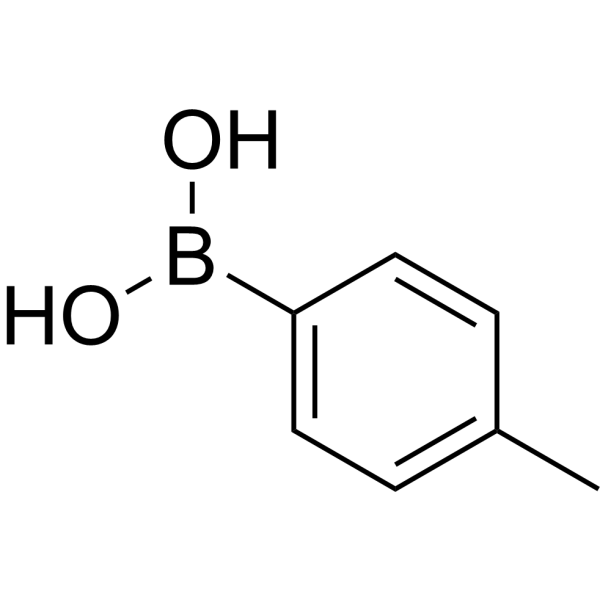
Cat. No.: HY-21626
CAS No.: 5720-05-8
Synonyms: p-Tolylboronic acid
4-Tolylboronic acid is an organoboron compound with important chemical applications. It can be used as an important intermediate in organic synthesis for the synthesis of organic compounds such as drugs, pesticides, and cosmetics, as well as for the research of coordination chemistry and material science. Due to its high chemical reactivity, 4-Tolylboronic acid has become a widely used reagent in organic synthesis.
loading...
    loading...
Cat. No.: HY-W099600
CAS No.: 645-66-9
Synonyms: Bisdodecanoic anhydride
Lauric anhydride is a white waxy solid used as an intermediate in the production of various chemicals. It is primarily used in the synthesis of surfactants, emulsifiers, and lubricants, and as a raw material for other important industrial chemicals such as plasticizers and flavoring agents. It can be obtained from natural sources such as palm kernel oil and coconut oil, and its unique chemical structure allows it to be used to create compounds with specific surface and interfacial properties.
loading...
    loading...
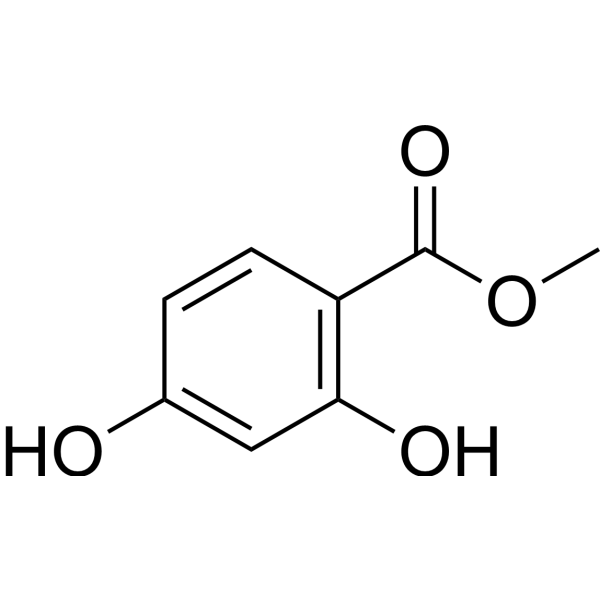
Cat. No.: HY-W010076
CAS No.: 2150-47-2
Target:  

Fungal

Research Areas:  

Infection

Methyl 2,4-dihydroxybenzoate is an antifungal agent and plant defense activator. Methyl 2,4-dihydroxybenzoate disrupts the fungal antioxidant system, induces oxidative stress, interferes with N-glycosylation and protein synthesis, inhibits energy metabolism, and impairs transport function. Methyl 2,4-dihydroxybenzoate exhibits potent antifungal activity against the causal agent of banana Panama disease (Fusarium oxysporum f. sp. cubense) . Methyl 2,4-dihydroxybenzoate can also serve as a cosmetic raw material and is used in the synthesis of fine chemical raw materials. Methyl 2,4-dihydroxybenzoate is applicable to research related to Panama disease (Fusarium wilt) .
loading...
    loading...
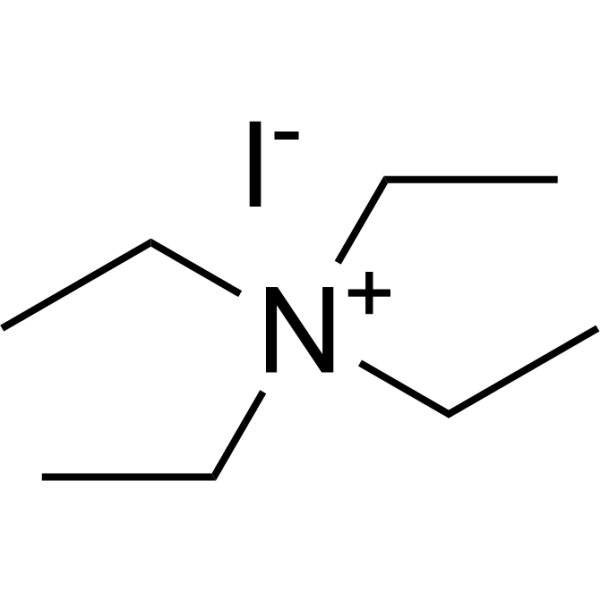
Cat. No.: HY-W101253
CAS No.: 68-05-3
Tetraethylammonium (iodide) is a quaternary ammonium compound belonging to the class of alkylammonium salts. This compound is commonly used as a phase-transfer catalyst in organic synthesis because it facilitates the transfer of reactants between immiscible phases. It can also be used as an electrolyte in electrochemical devices and as a surfactant in detergent formulations. Its unique chemical properties make it an important ingredient in a variety of industrial applications, including pharmaceuticals, agrochemicals, and materials science.
loading...
    loading...

