
1. Search Result
Search Result
Results for "

combined therapy

" in MedChemExpress (MCE) Product Catalog:

22

Inhibitors & Agonists

2

Screening Libraries

3

Fluorescent Dyes

3

Biochemical Assay Reagents

3

Inhibitory Antibodies

1

Natural
Products

3

GMP Molecules

Cat. No. Product Name Target Research Areas Chemical Structure
  • HY-P99144A
    Anti-Mouse PD-1 Antibody (S-5001)
    1 Publications Verification

    PD-1/PD-L1 Inflammation/Immunology Cancer
    Anti-Mouse PD-1 Antibody (S-5001) is a selective inhibitor targeting PD-1, blocking the PD-1/PD-L1 immune checkpoint axis through competitive binding to PD-1. Anti-Mouse PD-1 Antibody (S-5001) works by reversing the tumor immunosuppressive microenvironment and reactivating the anti-tumor activity of cytotoxic T lymphocytes. It can be used in research on tumors such as melanoma and HPV-positive oropharyngeal squamous cell carcinoma. Anti-Mouse PD-1 Antibody (S-5001) is often combined with photothermal therapy, chemotherapy, etc., to enhance efficacy .
    Anti-Mouse PD-1 Antibody (S-5001)
  • HY-100138

    Radionuclide-Drug Conjugates (RDCs) ADC Linker Cancer
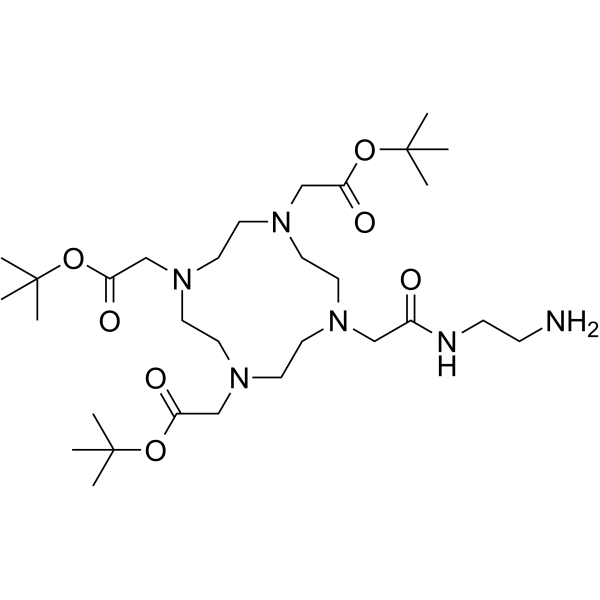
    2-Aminoethyl-mono-amide-DOTA-tris(tBu ester) is a metal chelator precursor containing a DOTA macrocyclic structure. DOTA can form highly stable complexes with metal ions (such as 68Ga, 177Lu) through four nitrogen atoms and four carboxylic acid groups to mediate targeted delivery of radionuclides. The tert-butyl ester group (tBu ester) of 2-Aminoethyl-mono-amide-DOTA-tris(tBu ester) also protects the carboxylic acid group during synthesis, and forms a free carboxyl group after deprotection reaction for coupling with targeting molecules (such as antibodies, peptides). 2-Aminoethyl-mono-amide-DOTA-tris(tBu ester) may be combined with tumor pre-targeting systems through bioorthogonal reactions (such as reverse electron demand Diels-Alder reaction) to study radioactive imaging or therapy of tumor tissues, and is mainly used in tumor pre-targeting research in the field of nuclear medicine .
    2-Aminoethyl-mono-amide-DOTA-tris(tBu ester)
  • HY-P99916

    AMG-427

    FLT3 CD3 TNF Receptor Inflammation/Immunology Cancer
    Emirodatamab (AMG-427) is a bispecific T-cell engager (BiTE). Emirodatamab simultaneously binds FLT3 on the surface of acute myeloid leukemia (AML) cells and CD3 on the surface of T cells, thereby precisely recruiting immune effector cells to tumor sites. Emirodatamab potently induces T cell activation, secretion of proinflammatory cytokines (such as IFNγ, TNFα), and specific cytotoxicity, effectively lysing FLT3-positive tumor cells and inhibiting their growth. Emirodatamab not only significantly prolongs survival in mouse xenograft models and eliminates diseased cells in primates, but also exhibits a synergistic enhancement effect when combined with PD-1 blockade therapy. Emirodatamab is used in studies of acute myeloid leukemia, especially relapsed or refractory cases .
    Emirodatamab
  • HY-W035709

    Dihydrocinchonine

    P-glycoprotein Apoptosis Cancer
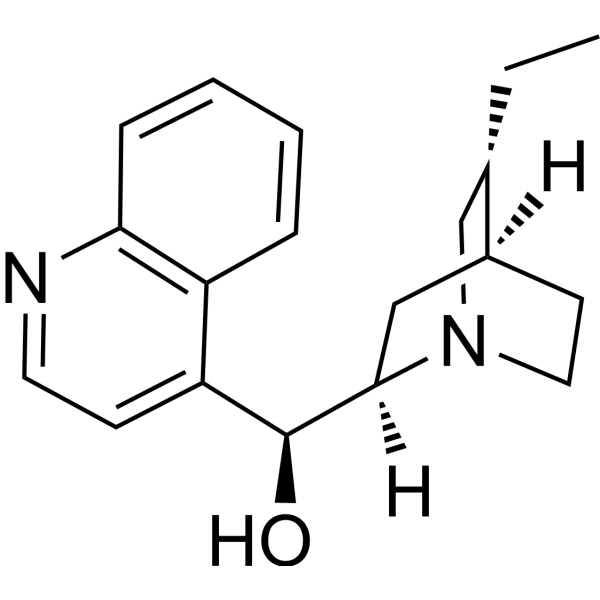
    Hydrocinchonine (Dihydrocinchonine) is a multidrug resistance (MDR)-reversal agent. Hydrocinchonine directly inhibits the function and expression of P-gp, which is the mechanism by which it reverses MDR. Hydrocinchonine exerts synergistic apoptotic effect with Paclitaxel (HY-B0015) in MES-SA/DX5 cells. Hydrocinchonine can be used for the study of gynecological malignant tumors (such as uterine sarcoma) with drug resistance caused by excessive expression of P-gp .
    Hydrocinchonine
  • HY-W040270

    PROTAC Linkers Cancer
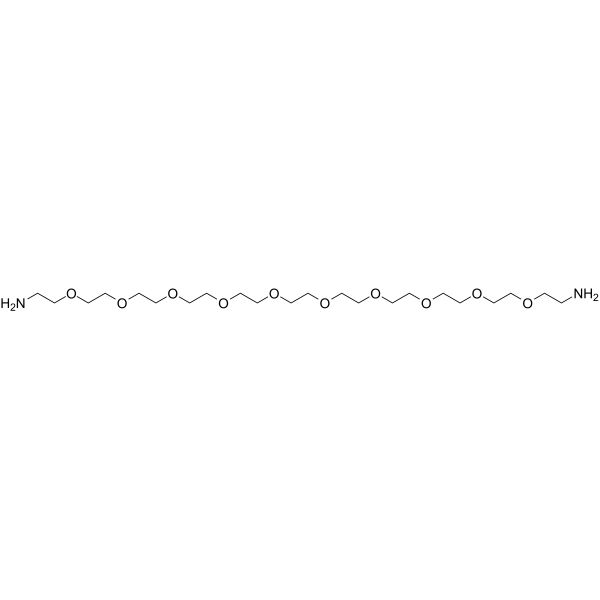
    Amino-PEG10-amine, a PEG-based PROTAC linker used to combine two mono diethylstilbestrol (DES)-based ligands, provides an alternative strategy for preparing more selective and active ER antagonists for endocrine therapy of breast cancer .
    Amino-PEG10-amine
  • HY-112005GL

    Dioleoylphosphatidylethanolamine (GMP Like); 1,2-Dioleoyl-sn-glycero-3-phosphoethanolamine (GMP Like)

    Liposome Endogenous Metabolite Inflammation/Immunology
    DOPE (GMP Like) is the GMP Like class DOPE (HY-112005), and can be used as pharmaceutical excipients. GMP small molecules works appropriately as an auxiliary reagent for cell therapy manufacture. DOPE is a neutral helper lipid for cationic liposome and combines with cationic phospholipids to improve transfection efficiency of naked siRNA .
    DOPE (GMP Like)
  • HY-128879

    Phosphodiesterase (PDE) GSK-3 Neurological Disease
    VP3.15 is a potent, orally bioavailable and CNS-penetrant dual phosphodiesterase (PDE)7- glycogen synthase kinase (GSK)3 inhibitor, with IC50s of 1.59 μM and 0.88 μM for PDE7 and GSK-3, respectively. VP3.15 has neuroprotective and neuroreparative activities, thus as potential combined anti-inflammatory and pro-remyelinating therapies for multiple sclerosis (MS) .
    VP3.15
  • HY-130411

    PROTAC Linkers Cancer
    Amino-PEG11-amine, a PEG-based (12 units) PROTAC linker used to combine two mono diethylstilbestrol (DES)-based ligands, provides an alternative strategy for preparing more selective and active ER antagonists for endocrine therapy of breast cancer .
    Amino-PEG11-amine
  • HY-157529

    Microtubule/Tubulin Fluorescent Dye Cancer
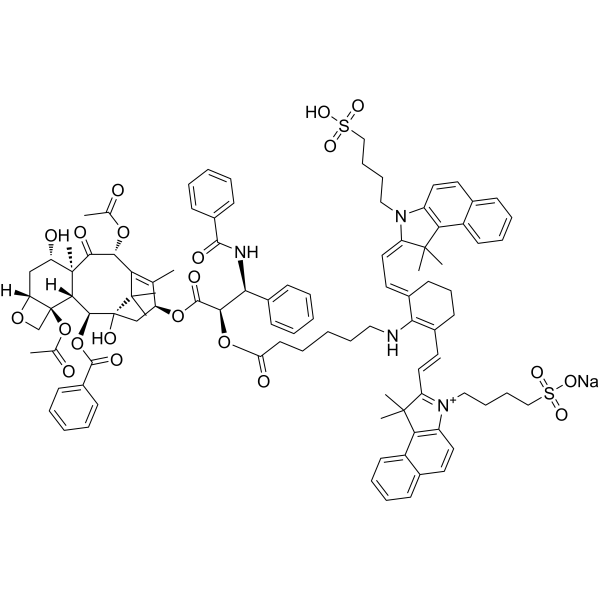
    IR820-PTX, an IR-820 (HY-136886)-Paclitaxel (HY-B0015) conjugate, is an amphipathic small molecule prodrug. IR820-PTX effectively inhibits tumor growth via combined photothermal therapy (PTT) and chemotherapy .
    IR820-PTX
  • HY-179415

    Dihydrofolate reductase (DHFR) Bacterial Infection
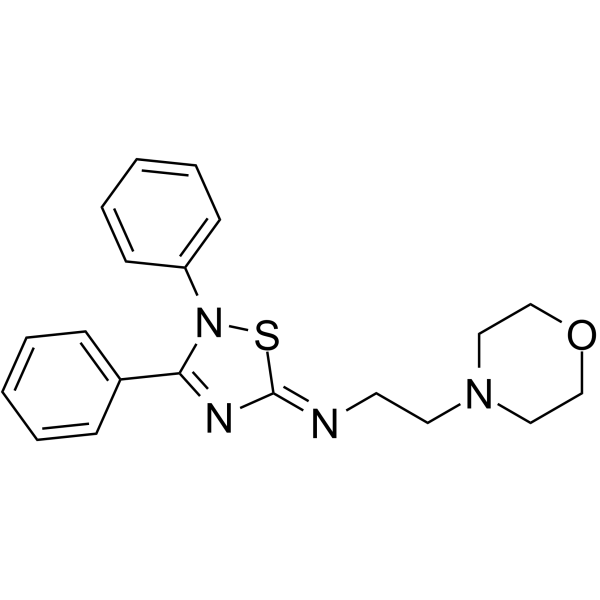
    DHFR-IN-24, a benzothiazole derivative, is a dihydrofolate reductase (DHFR) inhibitor. DHFR-IN-24 has intrinsic antibacterial activity against both Gram-positive and Gram-negative strains. DHFR-IN-24 synergistically combines DHFR inhibition with photodynamic therapy (PDT) for enhanced antibacterial activity against multidrug-resistant pathogens .
    DHFR-IN-24
  • HY-173116

    Carbonic Anhydrase Cancer
    DOTA-XYIMSR-01 is a molecular probe targeting CAIX that can be labeled with 177Lu for the inhibition and localization of malignant gliomas. The uptake of [177Lu] Lu-XYIMSR-01 in U87MG tumors is 6.19 % of the injected dose per gram (% ID/g), and the tumor-to-muscle uptake ratio is 20.14. In the orthotopic glioma model, combined injection with Temozolomide (HY-17364) can significantly improve the survival rate of mice and inhibit tumor growth. DOTA-XYIMSR-01 shows promise for research in the field of anti-cancer therapy .
    DOTA-XYIMSR-01
  • HY-128952G

    SG3249

    Drug-Linker Conjugates for ADC DNA Alkylator/Crosslinker Cancer
    Tesirine (GMP) (SG3249 (GMP)) is Tesirine (HY-128952) produced by using GMP guidelines. GMP small molecules works appropriately as an auxiliary reagent for cell therapy manufacture. Tesirine (SG3249) is an antibody-drug conjugate (ADC) pyrrolobenzodiazepine (PBD) dimer payload. Tesirine combines potent antitumor activity with desirable physicochemical properties such as favorable hydrophobicity and improved conjugation characteristics. SG3199 (HY-101161) is the released warhead component of the ADC payload Tesirine. SG3199 retains picomolar activity in a panel of cancer cell lines. PBD dimers are highly efficient DNA minor groove cross-linking agents with potent cytotoxicity .
    Tesirine
  • HY-116497

    FAK Cancer
    PH11 is a novel focal adhesion kinase (FAK) inhibitor that rapidly induces apoptosis in TRAIL-resistant PANC-1 cells when combined with TRAIL, but has no effect on normal human fibroblasts. The study found that PH11 downregulates c-FLIP through inhibition of FAK and phosphatidylinositol-3-kinase (PI3K)/AKT pathways, thereby restoring the TRAIL apoptotic pathway, suggesting that this combination therapy may provide an attractive therapeutic strategy for the safe and effective treatment of pancreatic cancer. PH11 selectively inhibits c-FLIP expression by modulating upstream signaling pathways and may represent an innovative therapeutic strategy. Although further work is needed to fully elucidate the mechanism of PH11-induced TRAIL sensitization, we believe that our results will provide a new approach to target c-FLIP without the risk of interfering with caspase-8 processing, which could potentially lead to TRAIL resistance. This study also suggests a role for the FAK/AKT signaling pathway in regulating c-FLIP expression in TRAIL-induced apoptosis, and this understanding will provide important clues to control the resistance mechanism to optimize the potential of TRAIL-based pancreatic cancer treatment.
    PH11
  • HY-117980

    AB 132

    DNA/RNA Synthesis Cancer
    Meturedepa (AB 132) functions as a radiation sensitizer, enhancing the biological effects of radiation. When combined with suboptimal doses of X-ray radiation, this combined therapy achieves better outcomes in terms of tumor shrinkage compared to Meturedepa used alone. Meturedepa is applicable in the research of bronchogenic carcinoma .
    Meturedepa
  • HY-169187

    Bacterial Cancer
    Antibacterial agent 247 (compund 30b) is a bacterial antagonist that significantly inhibits the formation of Pseudomonas aeruginosa biofilm (IC50=5.8 μM) and multiple virulence phenotypes, and enhances its interaction with Tob Antibacterial activity of combined therapy with ampicillin and polymyxin B .
    Antibacterial agent 247
  • HY-106072

    LY 104208

    Microtubule/Tubulin Cancer
    Vinzolidine is a semisynthetic derivative of the catharanthus alkaloid. Vinzolidine exerts its cytotoxic effect on tumor cells by interfering with microtubulin polymerization, thereby inhibiting cell division. Vinzolidine can be utilized in research to investigate synergistic effects when combined with other chemotherapeutic agents or biologic therapies, as well as to study cancer cells' tolerance or resistance to these treatments, and to explore approaches to overcome such obstacles .
    Vinzolidine
  • HY-178097

    MAP4K Cancer
    HPK1-IN-62 is a selective and orally active HPK-1 inhibitor with an IC50 of 1.22 nM. HPK1-IN-62 significantly improves GLK selectivity (> 665-fold) and LCK selectivity (> 1095-fold). HPK1-IN-62 enhances T-cell activation and demonstrated synergistic effects when combined with anti-mPD-1 therapy in the MC38 tumor model, inhibiting a tumor growth. HPK1-IN-62 can be used in the researchs of colon cancer and cancer immunotherapy .
    HPK1-IN-62
  • HY-117947

    Histone Methyltransferase Cancer
    (R)-OR-S1 is an isomer of OR-S1. The dual ZH1/2 inhibitors OR-S1 and OR-S2 exhibit strong inhibitory activity against both EZH1 and EZH2. OR-S1 and OR-S2 are highly selective methyltransferase inhibitors against EZH1 and EZH2, and they have very similar molecular features. Therefore, we investigated the effect of OR-S1 on acute myeloid leukemia (AML). We found that OR-S1 was able to induce cell differentiation and apoptosis in AML cells. These findings encouraged us to investigate whether functional LT-HSCs could survive PRC2-targeted therapy with OR-S1 or OR-S1 combined with cytarabine. The results showed that OR-S1 did not cause significant myelosuppression, and BM cells treated with the combination therapy were able to undergo normal hematopoiesis even 4 months after treatment. Therefore, temporary inhibition of EZH1 and EZH2 is clinically tolerable, making this combination therapy suitable for AML patients. AML is generally believed to originate from myeloid progenitor cells that inherit a large number of biological properties.
    (R)-OR-S1
  • HY-162816

    PROTACs MAP4K Cancer
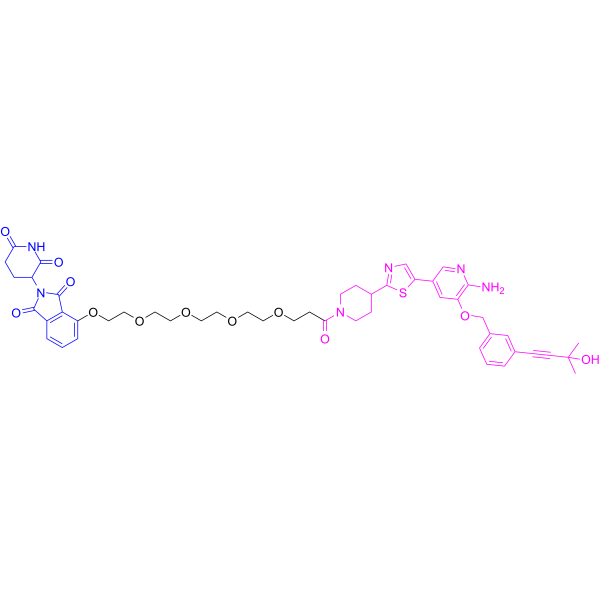
    PROTAC HPK1 Degrader-3 (compound C3) is an orally effective PROTAC targeting HPK1 (DC50=21.26 nM). HPK1 is a negative regulator of T cell receptors, which can lead to T cell dysfunction after abnormal activation. PROTAC HPK1 Degrader-3 can inhibit SLP76 and NF-κB signaling pathways and inhibit MAPK signal transduction, and has anticancer activity and immune activation. PROTAC HPK1 Degrader-3 has a certain oral bioavailability and can be combined with PD-L1 antibody therapy to achieve a tumor growth inhibition rate of 65.58%. PROTAC HPK1 Degrader-3 is composed of E3 ligase ligand Thalidomide (HY-14658; blue part), PROTAC linker tert-Butyl 3-oxoazetidine-1-carboxylate (HY-40146; black part), and target protein ligand HPK1-IN-51 (HY-162842; red part); the activity control of the target protein ligand can be HPK1 ligand 1 (HY-162841) [1] .
    PROTAC HPK1 Degrader-3
  • HY-P992353

    LILRB Cancer
    ES009 is a high-affinity LILRB2 antagonist, with IC50 values of 14.07 nM and 18.61 nM for inhibiting hLILRB2-huANGPTL3 and hLILRB2-huANGPTL4, respectively. ES009 specifically blocks the interactions between LILRB2 and MHC class I as well as non-MHC ligands, thereby effectively inhibiting receptor activation. ES009 can reprogram anti-inflammatory myeloid cells and induce their conversion to a pro-inflammatory phenotype, and also reverse the T cell suppression mediated by macrophages. When combined with anti-PD-1 blockade therapy, ES009 synergistically enhances T cell activation. ES009 can be used in research related to advanced solid tumors and ovarian cancer .
    ES009
  • HY-15947G

    GDC-0994

    ERK c-Myc Hexokinase Lactate Dehydrogenase Cancer
    Ravoxertinib GMP is Ravoxertinib (HY-15947) produced by using GMP guidelines. GMP small molecules works appropriately as an auxiliary reagent for cell therapy manufacture. Ravoxertinib (GDC-0994) is an orally active ERK1/2 inhibitor. Ravoxertinib inhibits the ERK1/2 MAPK signaling pathway and reduces the expression levels of c-Myc, HK2 and LDHA. Ravoxertinib decreases mammosphere formation, and exerts additive and/or superadditive cytotoxicity when combined with Ipatasertib (HY-15186) in 3D tumor sphere models. Ravoxertinib can be used in research related to various cancers including breast cancer, melanoma, head and neck cancer, non-small cell lung cancer, ovarian cancer and Merkel cell carcinoma .
    Ravoxertinib
  • HY-100138R

    Radionuclide-Drug Conjugates (RDCs) ADC Linker Reference Standards Cancer
    2-Aminoethyl-mono-amide-DOTA-tris(tBu ester) (Standard) is the analytical standard of 2-Aminoethyl-mono-amide-DOTA-tris(tBu ester) (HY-100138). This product is intended for research and analytical applications. 2-Aminoethyl-mono-amide-DOTA-tris(tBu ester) is a metal chelator precursor containing a DOTA macrocyclic structure. DOTA can form highly stable complexes with metal ions (such as 68Ga, 177Lu) through four nitrogen atoms and four carboxylic acid groups to mediate targeted delivery of radionuclides. The tert-butyl ester group (tBu ester) of 2-Aminoethyl-mono-amide-DOTA-tris(tBu ester) also protects the carboxylic acid group during synthesis, and forms a free carboxyl group after deprotection reaction for coupling with targeting molecules (such as antibodies, peptides). 2-Aminoethyl-mono-amide-DOTA-tris(tBu ester) may be combined with tumor pre-targeting systems through bioorthogonal reactions (such as reverse electron demand Diels-Alder reaction) to study radioactive imaging or therapy of tumor tissues, and is mainly used in tumor pre-targeting research in the field of nuclear medicine .
    2-Aminoethyl-mono-amide-DOTA-tris(tBu ester) (Standard)

Inquiry Online

Your information is safe with us. * Required Fields.

Salutation


Country or Region *

Applicant Name *


Organization Name *

Department *


Email Address *


Product Name *

Cat. No.


Requested quantity *

Phone Number *


Remarks

Inquiry Online

Inquiry Information

Product Name:
Cat. No.:
Quantity:
MCE Japan Authorized Agent:

