Search Result
Results for "
cryptococcus neoformans
" in MedChemExpress (MCE) Product Catalog:
| Cat. No. |
Product Name |
Target |
Research Areas |
Chemical Structure |
-
- HY-B0504
-
|
NSC13123
|
Endogenous Metabolite
GABA Receptor
iGluR
|
Infection
Neurological Disease
Metabolic Disease
Cancer
|
|
Creatinine (NSC13123) is an orally active, blood-brain barrier-permeable modulator of GABAA and NMDA receptors, with activities of antioxidation and metabolic regulation. Creatinine is generated via non-enzymatic conversion of creatine and phosphocreatine in muscle. Creatinine serum levels correlate with muscle mass, glomerular filtration rate, and extrarenal clearance, serving as an evaluation biomarker for renal function, muscle mass, and clinical outcomes, and used for perioperative renal risk assessment. In addition, Creatinine can induce specific Cryptococcus species to produce creatinine deiminase and act as their nitrogen source, while it can be secreted via renal tubules. Creatinine is widely used in research related to various diseases such as neurodegenerative diseases, psychiatric disorders, acute kidney injury, chronic kidney disease, and renal failure .
|
-
-
- HY-113205
-
|
15-keto-PGE2
|
Endogenous Metabolite
Prostaglandin Receptor
STAT
PPAR
Fungal
Drug Metabolite
|
Cardiovascular Disease
Infection
Endocrinology
Cancer
|
|
15-keto-Prostaglandin E2 (15-keto-PGE2) is an endogenous PGE2 metabolite. 15-keto-Prostaglandin E2 inhibits STAT3 activation by binding to the Cys259 residue of STAT3. 15-keto-Prostaglandin E2 binds to and stabilizes EP2 and EP4 receptors. 15-keto-Prostaglandin E2 inhibits the growth and progression of breast cancer cells. 15-keto-Prostaglandin E2 activates PPAR-γ and promotes fungal growth. 15-keto-Prostaglandin E2 disrupts glomerular vascularization during zebrafish development and reduces the surface area of the glomerular filtration barrier .
|
-
-
- HY-114220
-
|
|
Fungal
|
Infection
|
|
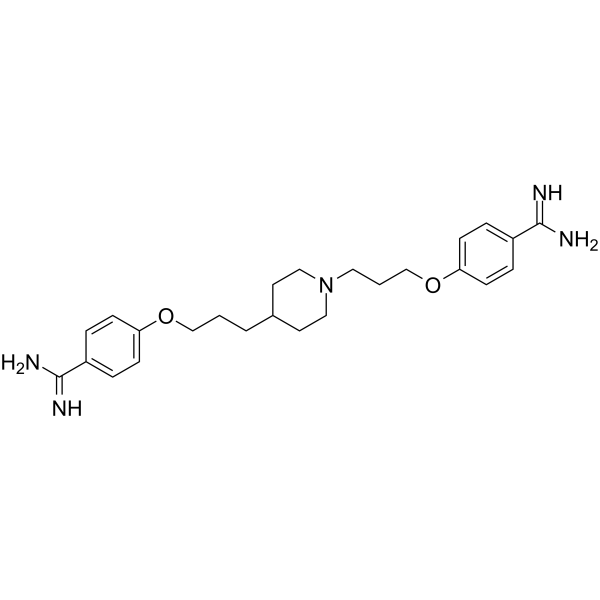
T-2307, an arylamidine, has antifungal activities in vitro and in vivo. T-2307 exhibits broad-spectrum activity against clinically significant pathogens, including Candida species (MIC range, 0.00025 to 0.0078 μg/ml), Cryptococcus neoformans (MIC range, 0.0039 to 0.0625 μg/ml), and Aspergillus species (MIC range, 0.0156 to 4 μg/mL) .
|
-
-
- HY-147110
-
|
|
Fungal
|
Infection
Inflammation/Immunology
|
|
APX2039 is a brain-penetrant and orally active Gwt1 protein inhibitor. APX2039 inhibits an early step in fungal glycosylphosphatidylinositol anchor biosynthesis. APX2039 can be used for the research of cryptococcal meningitis and invasive mycosis caused by Talaromyces marneffei .
|
-
-
- HY-109040
-
|
VT-1129
|
Fungal
Cytochrome P450
|
Infection
Inflammation/Immunology
|
|
Quilseconazole (VT-1129) is an orally active, highly selective fungal cytochrome P450 enzyme Cyp51 inhibitor that can cross the blood-brain barrier. Quilseconazole prevents the synthesis of ergosterol, an important component of the fungal cell membrane, by inhibiting Cyp51. Quilseconazole has minimal effects on human CYP enzymes. Quilseconazole has antifungal activity and can be used in the study of cryptococcal meningitis and other diseases .
|
-
-
- HY-133157
-
|
5-Formamidoimidazole-4-carboxamide ribotide
|
DNA/RNA Synthesis
|
Infection
|
|
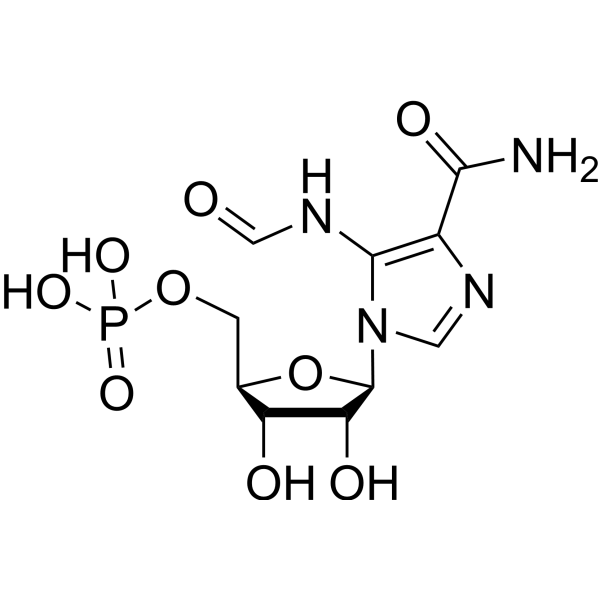
FAICAR (5-Formamidoimidazole-4-carboxamide ribotide) is a purine nucleotide and the IMP cyclohydrolase substrate of Cryptococcus neoformans ATIC. It is a key intermediate in the de novo purine synthesis pathway. FAICAR can be used in studies related to Cryptococcus neoformans infection .
|
-
-
- HY-N7626
-
|
|
Fungal
Glycosidase
|
Infection
|
|
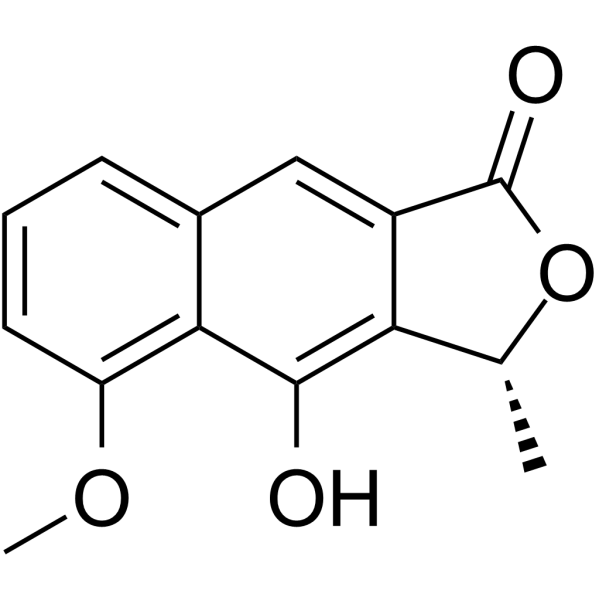
Eleutherol is a naphthalene isolated from E. americana with antifungal activities . Eleutherol is against yeasts Candida albicans, C. tropicalis, Saccharomyces cerevisiae and Cryptococcus neoformans with MIC values between 7.8 µg/mL and 250 µg/mL . Eleutherol inhibits α-glucosidase function with an IC50>1.00 mM .
|
-
-
- HY-136153
-
|
|
Fungal
|
Infection
|
|
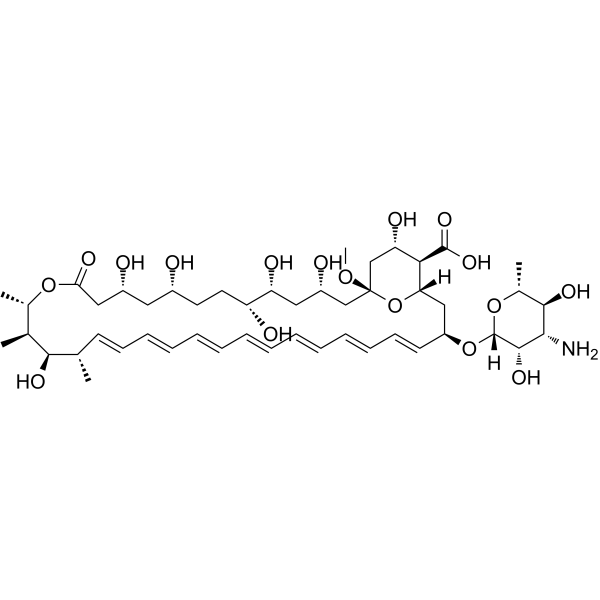
Amphotericin X1 is an 13-O-methyl derivative of Amphotericin B with good antifungal activity. Amphotericin X1 inhibits Candida albicans 33/079, C.parapsilosis 937A, Cryptococcus neoformans 451, Aspergillus niger 57A and A.fumigatus with MIC values of 1 μg/mL, 8 μg/mL, 1 μg/mL, 2 μg/mL and 2 μg/mL, respectively .
|
-
-
- HY-170616
-
|
|
Fungal
Interleukin Related
|
Infection
Inflammation/Immunology
|
|
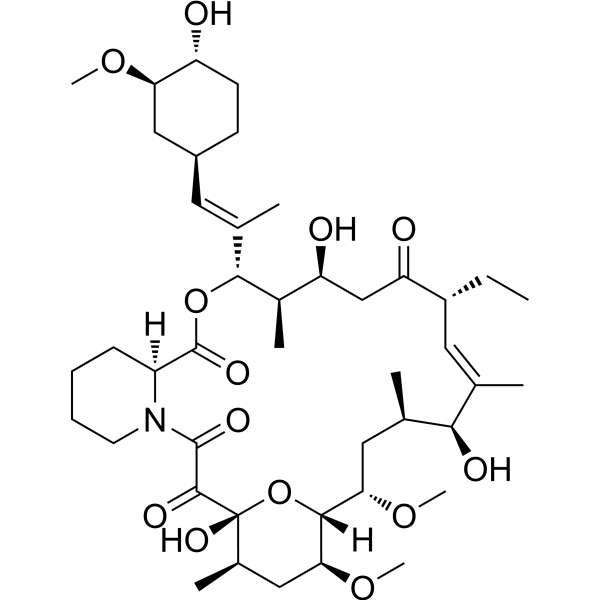
JH-FK-08 is an inhibitor for the serine/threonine-specific phosphatase calcineurin. JH-FK-08 exhibits antifungal activity that inhibits C. neoformans with MIC80 of 0.8 µg/mL. JH-FK-08 exhibits immunosuppressive activity and inhibits the IL-2 expression with an IC50 of 42.6 nM. JH-FK-08 exhibits anti-infectious activity in mouse models .
|
-
-
- HY-153410
-
|
|
Fungal
|
Infection
|
|
Antifungal agent 49 (Example 112) is an antifungal agent. Antifungal agent 49 is active against Cryptococcus neoformans with a MIC value of 49 μM .
|
-
-
- HY-P2450
-
|
Antibiotic P168
|
Fungal
Antibiotic
|
Infection
Cancer
|
|
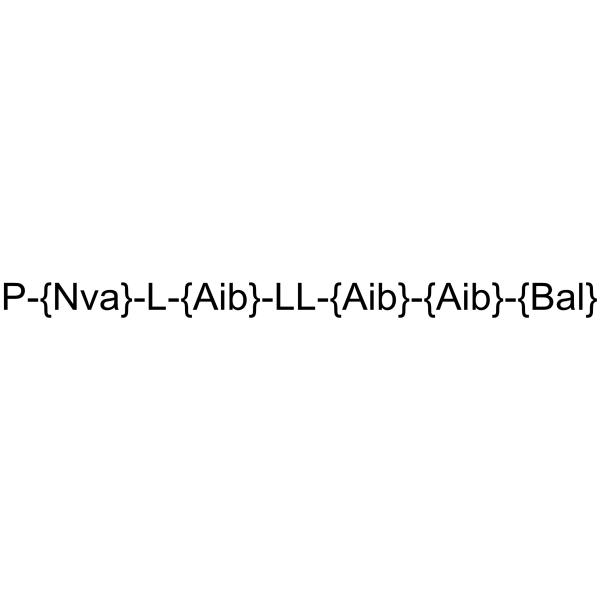
Leucinostatin A (Antibiotic P168) is a nonapeptide exerting a remarkable activity especially against Candida albicans and Cryptococcus neoformans. Leucinostatin A is a hydrophobic nonapeptide antibiotic. Leucinostatin A inhibits prostate cancer growth through reduction of insulin-like growth factor-I expression in prostate stromal cells. Antiprotozoal activies .
|
-
-
- HY-125693
-
|
|
Fungal
|
Infection
Neurological Disease
|
|
L685818 is a specific immunophilin ligand. L685818 was neuroregenerative and non-neuroprotective in primary brain cultures. L685818 protects dopaminergic neurons from toxic inhibition of MPP+ and 6-OHDA, reduces tyrosine hydroxylase (TH) loss, and promotes neuronal process regeneration. L685818 is also an antifungal reagent for Cryptococcus neoformans .
|
-
-
- HY-153409
-
|
|
Fungal
|
Infection
|
|
Antifungal agent 48 (Example 308) is an antifungal agent. Antifungal agent 48 is active against Cryptococcus neoformans with a MIC value of 11 μM .
|
-
-
- HY-176417
-
|
|
Fungal
|
Infection
|
|
Antifungal agent 132 (compound 25) is a selective and potent antifungal agent. Antifungal agent 132 inhibits Cryptococcus neoformans May1 with a Ki of 180 pM .
|
-
-
- HY-N1817
-
|
|
Fungal
|
Infection
|
|
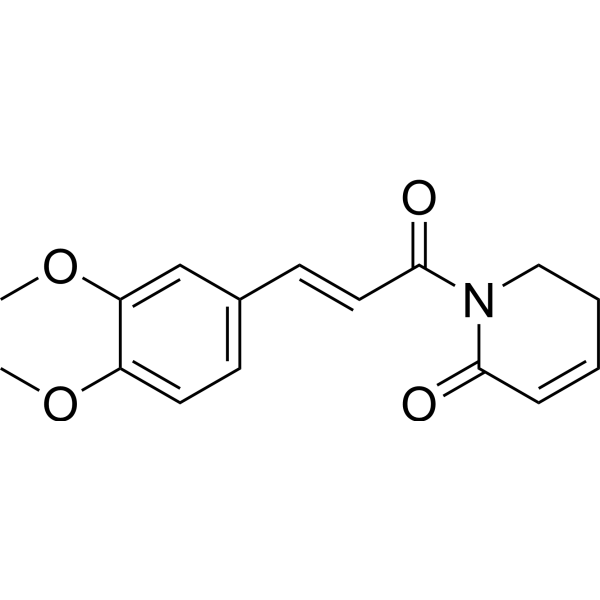
Demethoxypiplartine is an amide alkaloids which can be isolated from Piper flaviflorum and Piper sarmentosum. Demethoxypiplartine has antifungal activity against Cryptococcus neoformans with the IC50 of 18.1 μg/mL .
|
-
-
- HY-169919
-
|
|
Histone Demethylase
Fungal
|
Infection
|
|
HDM-IN-1 (Compound A4) is an inhibitor for fungal histone demethylase (HDM), that inhibits the H3K27me3 in Cryptococcus neoformans and in Candida auris with IC50s of 134 and 12 nM. HDM-IN-1 exhibits inhibitory efficacy against C. neoformans and C. auris with MIC80 of 0.5-2 μg/mL, through inhibition of the biofilm and capsule formation. HDM-IN-1 exhibits antifungal activity in ICR mouse model .
|
-
-
- HY-146060
-
|
|
Bacterial
Fungal
|
Infection
|
|
Antibacterial agent 100 (Compound 7c) is an antibacterial and antifungal agent. Antibacterial agent 100 shows promising activity with MIC values of 4, 4 and 8 μg/mL against Staphylococcus aureus, Candida albicans and Cryptococcus neoformans, respectively .
|
-
-
- HY-169119
-
|
|
Cytochrome P450
Fungal
|
Infection
|
|
Antifungal agent 114 (Compound 19g) is an inhibitor for Cytochrome P450, that inhibits CYP1A2, CYP2C9, CYP2C19 CYP2D6 and CYP3A4 at 10 μM. Antifungal agent 114 exhibits antifungal activity against Cryptococcus neoformans, Candida and Aspergillus, with MIC <0.0625 μg/mL. Antifungal agent 114 exhibits good metabolic stability in human liver microsomes with a half-time of 107 minutes .
|
-
-
- HY-146427
-
|
|
Fungal
|
Infection
|
|
Antifungal agent 29 (compound 9d) is a potent, selective and non-toxic antifungal agent. Antifungal agent 29 shows antifungal activity towards Cryptococcus neoformans (MIC ≤ 0.23 μM) .
|
-
-
- HY-19404
-
|
CS-758; R-120758
|
Fungal
|
Infection
|
|
Embeconazole (CS-758; R-120758) is an antifungal agent against Candida albicans, Cryptococcus neoformans, Aspergillus fumigatus and Aspergillus flavus, with MICs of 8, 16, 63 and 250 μM, respectively .
|
-
-
- HY-P10410
-
|
|
Fungal
|
Infection
|
|
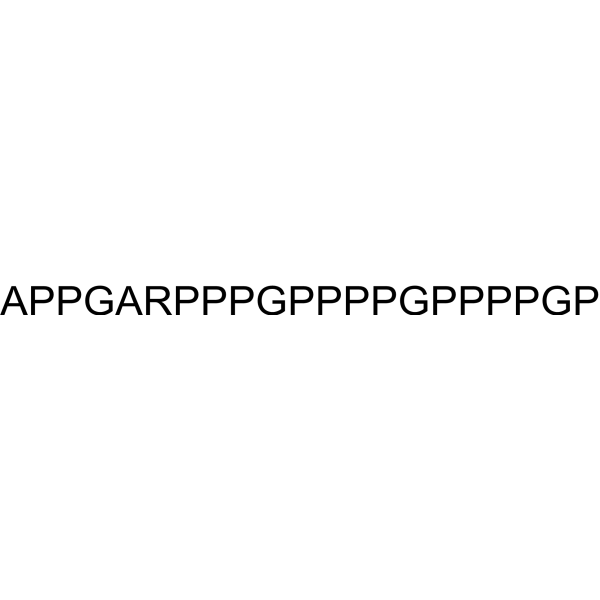
AEC5 is a Lipopeptoid with antifungal activity against Cryptococcus neoformans. AEC5 has no observable cytotoxicity against human lung, liver, or red blood cells at the MIC value (6.3 μg/mL) for Cryptococcus neoformans .
|
-
-
- HY-173428
-
|
|
Fungal
|
Infection
|
|
Antifungal agent 130 (Compound A7) is an orally active antifungal agent. Antifungal agent 130 has good antifungal activity against Candida albicans (MIC = 0.12 ng/mL) and Cryptococcus neoformans (MIC = 0.12 ng/mL) and has excellent antivirulence effect. Antifungal agent 130 exerts its antifungal effect by disrupting the iron homeostasis of fungal cells and inducing oxidative stress damage. Antifungal agent 130 can inhibit the formation of fungal virulence factors (such as biofilm, capsule, urease and melanin). Antifungal agent 130 has good antifungal effect and can be used in the study of drug-resistant fungal infections .
|
-
-
- HY-156195
-
|
|
Fungal
|
Infection
|
|
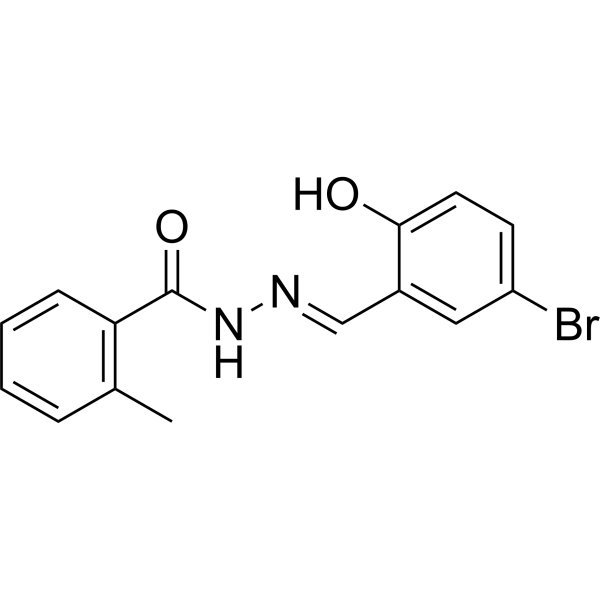
BHBM (compound 1) is an aromatic acylhydrazone antifungal agent with high bactericidal activity against Cryptococcus neoformans .
|
-
-
- HY-P5569
-
|
|
Fungal
|
Infection
|
|
SP-B peptide is an antimicrobial peptide. SP-B peptide has antifungal activity against strains of Cryptococcus neoformans, Candida albicans and Aspergillus fumigatus
|
-
-
- HY-161049
-
|
|
Fungal
|
Infection
|
|
Antifungal agent 89 (compound 28) is a antifungal agent against Cryptococcus neoformans with minimum inhibitory concentration value ranging from 0.8 to 52.17 μM .
|
-
-
- HY-118847
-
|
|
Fungal
|
Infection
|
|
Antifungal agent 86 (Compound 41F5) is an antifungal agent. Antifungal agent 86 is highly active
against Histoplasma yeast and Cryptococcus neoformans (MIC50: 0.4-0.8 μM) .
|
-
-
- HY-152896
-
|
|
Fungal
|
Infection
|
|
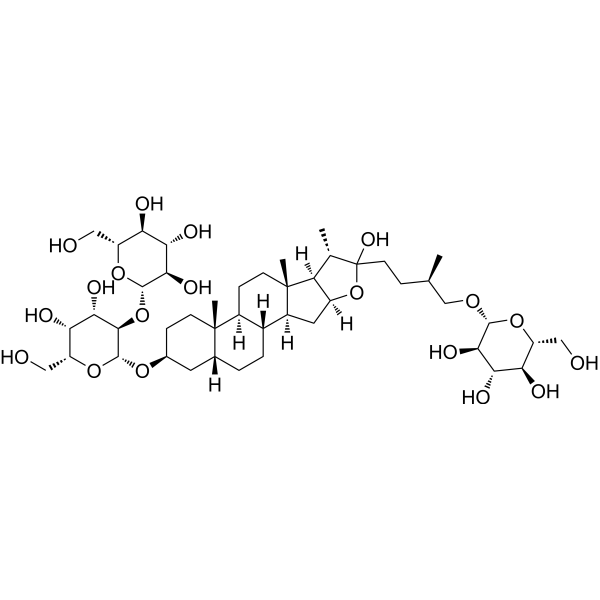
Ys-II (Compound 1) is a spirostanol glycoside that can be isolated from the stem of Yucca elephantipe. Ys-II has antifungal activity against the growth of Candida albicans and Cryptococcus neoformans (IC50: 5 and 6 μg/mL respectively) .
|
-
-
- HY-150972
-
|
|
Fungal
|
Infection
|
|
P163-0892 is a potent and selective antifungal agent against Cryptococcus species. P163-0892 is predicted to show medium BBB penetration .
|
-
-
- HY-173452
-
|
|
Fungal
|
Infection
|
|
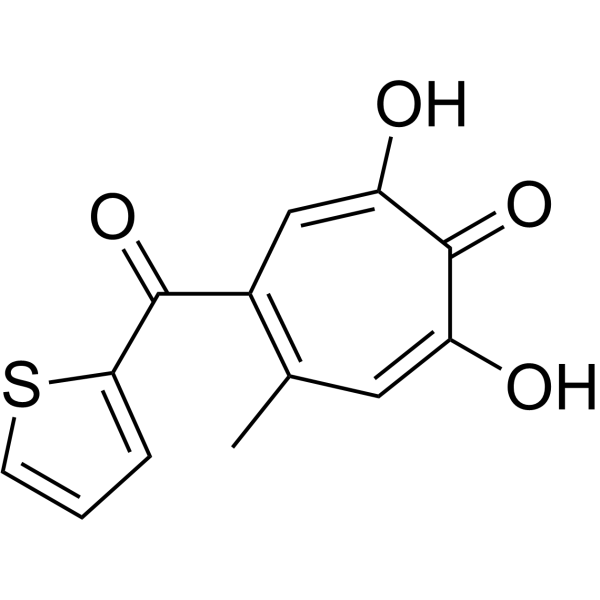
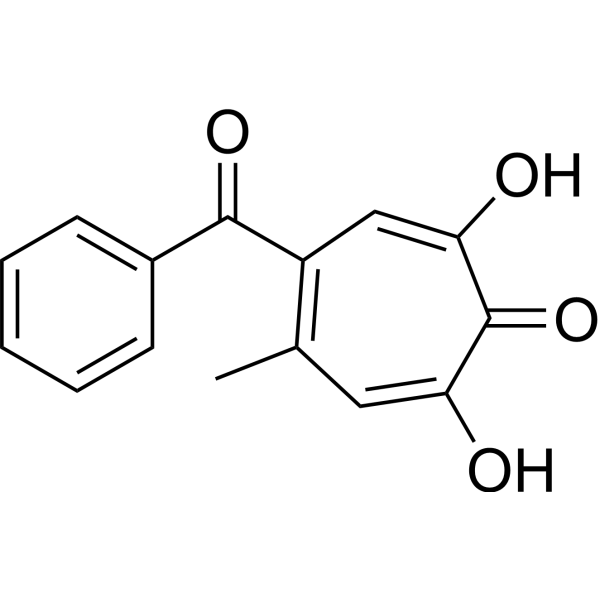
DT-23 is a potent antifungal agent with an MIC50 of 15 μg/mL. DT-23 inhibits recombinant Arg1 and Kcs1 with IC50s of 0.6 and 0.68 μM, respectively .
|
-
-
- HY-N16051
-
|
CJ-19784
|
Bacterial
Fungal
|
Infection
|
|
Bromoflavone (CJ-19784) is a flavone that can be isolated from Aspergillus candidus. Bromoflavone shows anti-Mtb activity with an MIC90 value of 1.2 μM. Bromoflavone is also an antifungal agent. Bromoflavone inhibits the growth of pathogenic fungi, Candida albicans, Cryptococcus neoformans and Aspergillus fumigatus with IC50 values of 0.11, 20 and 0.54 μg/mL, respectively. .
|
-
-
- HY-181101
-
|
|
Fungal
|
Infection
|
|
Antifungal agent 151 is a Prp8 intein inhibitor that inhibits the self-splicing process of the Prp8 intein, preventing maturation of the Prp8 protein. Antifungal agent 151 exerts in vitro antifungal activity against Cryptococcus neoformans and Cryptococcus gattii. Antifungal agent 151 can be used for the research of cryptococcus pneumonia .
|
-
-
- HY-144632
-
|
|
Fungal
|
Infection
|
|
Antifungal agent 22 (compound D16) is a potential and orally active antifungal agent for CM (cryptococcal meningitis), with an IC50 of 0.5 μg/mL. Antifungal agent 22 can penetrate the blood-brain barrier and kill the C. neoformans H99 cells by destroying the integrity of fungal cell membranes. Antifungal agent 22 shows selective anti-Cryptococcus activity with good metabolic stability and low cytotoxicity .
|
-
-
- HY-124384
-
|
Soudanone A
|
Fungal
|
Infection
|
|
Pseudoanguillosporin A (Soudanone A) (Compound 3) is an isochromanone that can be isolated from the fungus Cadophora sp.. Pseudoanguillosporin A has significant antifungal activity against Cryptococcus neoformans with a MIC50 of 40 μg/mL. Pseudoanguillosporin A can be used for fungal infection research .
|
-
-
- HY-117092
-
|
|
Antibiotic
Fungal
|
Infection
|
|
BE-31405 is an antifungal antibiotic. BE-31405 can be isolated from the culture broth of the fungal strains such as Penicillium minioluteum F31405, Talaromyces siamensis FKA-61, and Phomopsis sp. FKA-62. BE-31405 exhibits potent growth inhibitory activity against pathogenic fungal strains including Candida albicans, Candida glabrata, and Cryptococcus neoformans. BE-31405 shows no cytotoxicity against mammalian cells .
|
-
-
- HY-E70120
-
|
|
Fungal
|
Infection
|
|
Phosphomannose isomerase is the first enzyme involved in the biosynthesis pathway of GDP-Man. Phosphomannose isomerase catalyzes the conversion between fructose-6-phosphate (Fru6P) and mannose-6-phosphate (Man6P). Phosphomannose isomerase is important for cell wall synthesis and protein glycosylation. Phosphomannose isomerase is a potent antifungal target to curb the threats posed by A. flavus .
|
-
-
- HY-N19644
-
|
|
Fungal
|
Infection
|
|
(-)-Oxysporidinone is an antifungal agent. (-)-Oxysporidinone inhibits the growth of Aspergillus fumigatus and Cryptococcus neoformans. (-)-Oxysporidinone can be used in studies related to fungal infections .
|
-
-
- HY-181784
-
|
|
Fungal
|
Infection
|
|
Ac-CoA-IN-1 is an acyl-AMP phosphate analog and weak inhibitor of Candida albicans acetyl-CoA synthetase 2, with no activity against Cryptococcus neoformans acetyl-CoA synthetase 1. Ac-CoA-IN-1 crystallizes with Cryptococcus neoformans ACS1 enzyme to yield structural insight for inhibitor design. Ac-CoA-IN-1 can be used for the research of fungal infections .
|
-
-
- HY-179704
-
|
|
Drug Derivative
Fungal
|
Infection
|
|
Antifungal agent 141, a Phenoxazine (HY-34463) derivative, is an antifungal agent. Antifungal agent shows potent antifungal activity in Cryptococcus neoformans and Candida albicans with MIC values of 2 and 4 µg/mL. Antifungal agent 141 can be used for the research of cryptococcal meningitis .
|
-
-
- HY-183249
-
|
|
Acetyl-CoA synthetase
Fungal
|
Infection
|
|
Ac-CoA Synthase-IN-2 is an Ac-CoA Synthase (ACS) inhibitor and antifungal agent. Ac-CoA Synthase-IN-2 binds in the ATP/acetyl-AMP pocket of fungal and human ACS enzymes to exert competitive inhibition with ATP, and inhibits Cryptococcus neoformans CnKbc1-mediated acetoacetate-to-aceto-acetyl CoA conversion. Ac-CoA Synthase-IN-2 can be used for the research of fungal infections .
|
-
-
- HY-153624
-
|
|
Fungal
|
Infection
|
|
Antifungal agent 59 is an antifungal agent, with MIC values of 0.01-1 μg/mL. Antifungal agent 59 prevents the formation of fungi biofilms, but also has safety .
|
-
-
- HY-N18222
-
|
|
Bacterial
Fungal
|
Infection
|
|
Dihydroavicine is a benzophenanthridine alkaloid antibacterial agent isolated from the stem bark of Zanthoxylum rhoifolium. Dihydroavicine inhibits the growth of Gram-positive bacteria, Gram-negative bacteria, and Candida albicans. Dihydroavicine shows no activity against Saccharomyces cerevisiae and Cryptococcus neoformans. Dihydroavicine can be used for the research of bacterial infections and candidal infections .
|
-
-
- HY-119726B
-
|
|
Fungal
|
Infection
|
|
Fosmanogepix TFA (APX001 TFA) is an orally active APX001A (HY-18233) prodrug and antifungal agent. Fosmanogepix TFA is effective against Cryptococcus neoformans, Fluconazole (HY-B0101)-resistant C. auris. Fosmanogepix TFA is effective in the treatment of invasive pulmonary aspergillosis and pulmonary murine mucormycosis .
|
-
-
- HY-N9869
-
|
|
Bacterial
|
Infection
|
|
(E,Z)-Platanoside is a flavonoid glycoside. (E,Z)-Platanoside is a potent and highly selective MRSA inhibitor; it exhibits low activity against other tested strains, including Gram-negative bacteria, intracellular Mycobacterium intracellulare, Candida albicans, Cryptococcus neoformans, and Aspergillus fumigatus. (E,Z)-Platanoside can be used in research on MRSA infections .
|
-
-
- HY-136753
-
|
|
Fungal
|
Infection
|
|
Antifungal agent-162 (Compound 1c) is an Antifungal agent. Antifungal agent-162 exhibits potent in vitro antifungal activity against Candida albicans, Cryptococcus neoformans, Candida parapsilosis, Candida tropicalis, Candida krusei, and Microsporum gypseum (with MIC80 values ranging from 0.0156 to 0.25 μg/mL), while shows no activity against Aspergillus fumigatus .
|
-
-
- HY-W069116
-
|
|
Fungal
|
Infection
|
|
Antifungal agent 146 (Compound 19l) is a broad-spectrum antifungal agent. Antifungal agent 146 has inhibitory effects on the main dermatophytes that cause onychomycosis (Trichophyton rubrum, Trichophyton mentagrophytes) and other fungi (Candida albicans, Cryptococcus neoformans and Aspergillus fumigatus) with MIC values of 16, 16, 64, 32, and 32 μg/mL. Antifungal agent 146 can be used for the research of infection .
|
-
-
- HY-180672
-
|
|
Fungal
|
Infection
|
|
Antifungal agent 145 (Compound 14') is a highly effective fungicide. Antifungal agent 145 exhibits MICs against Candida albicans, Candida tropicalis, and Cryptococcus neoformans of 4, 8, and 8 μg/mL respectively. Antifungal agent 145 exerts a potent and rapid bactericidal effect by disrupting the fungal cell membrane, and can effectively inhibit and destroy biofilms. Antifungal agent 145 has improved safety and can be used in antifungal research .
|
-
-
- HY-125459
-
|
|
Fungal
|
Infection
|
|
L-705589 is a semi-synthetic penicillin-type antifungal agent. L-705589 exerts its antifungal effect by inhibiting the 1,3-β-D-glucan synthase in the fungal cell wall. L-705589 exhibits potent bactericidal activity against various Candida species (such as Candida albicans, Candida glabrata, Candida krusei, etc.) (MFC: 0.06 - 8 μg/mL), but has relatively weak activity against Cryptococcus neoformans (MFC: 32 - 64 μg/mL). L-705589 remains active against drug-resistant Candida strains and is not prone to inducing drug resistance. L-705589 significantly improves survival rates in the model of minor invasive aspergillosis .
|
-
-
- HY-N13858
-
|
|
Drug Derivative
|
Others
|
|
Petalostemumol G is a flavonol derivative present in Petalostemum purpureum. Petalostemum G has no antibacterial activity. Petalostemumol G is formed by air oxidation of petalostemumol .
|
-
-
- HY-136760
-
|
|
Cytochrome P450
Fungal
|
Infection
|
|
CYP51-IN-10 is cytochrome P450 14a-demethylase (CYP51) inhibitor with antifungal activity. CYP51-IN-10 can be used for the research of fungal infection .
|
-
-
- HY-N19881
-
|
|
Fungal
|
Infection
|
|
Drimenal is a pimarane-type natural sesquiterpene with antifungal activity. Drimenal inhibits the growth of yeasts and dermatophytes. Drimenal can be used for the development of pesticide candidates and in research related to fungal infections .
|
-
- HY-N18269
-
|
|
Fungal
|
Infection
|
|
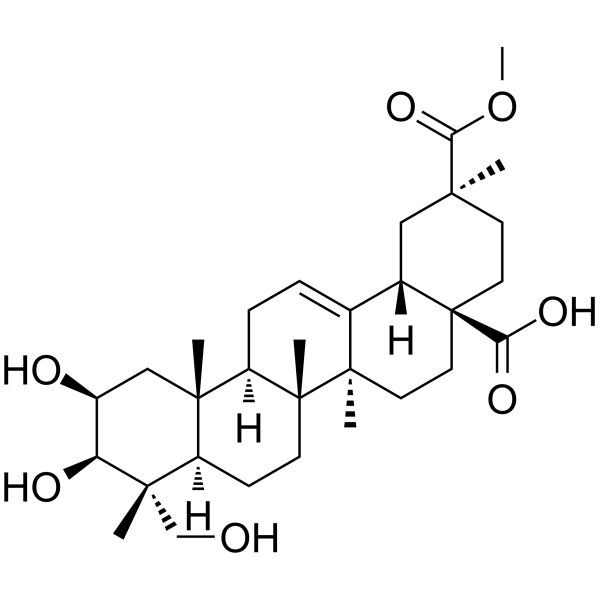
3-O-α-L-Arabinopyranosyl hederagenin 28-O-α-L-rhamnopyranosyl ester is an anti-fungal triterpene saponin. 3-O-α-L-Arabinopyranosyl hederagenin 28-O-α-L-rhamnopyranosyl ester can be isolated from the aerial parts of Clematis tangutica. 3-O-α-L-Arabinopyranosyl hederagenin 28-O-α-L-rhamnopyranosyl ester exhibits antifungal activity against fungal strains (P. avellaneum, C. glabrata, S. cerevisiae, T. beigelii), with the strongest activity against S. cerevisiae .
|
-
| Cat. No. |
Product Name |
Target |
Research Area |
-
- HY-P10410
-
|
|
Fungal
|
Infection
|
|
AEC5 is a Lipopeptoid with antifungal activity against Cryptococcus neoformans. AEC5 has no observable cytotoxicity against human lung, liver, or red blood cells at the MIC value (6.3 μg/mL) for Cryptococcus neoformans .
|
-
- HY-P5569
-
|
|
Fungal
|
Infection
|
|
SP-B peptide is an antimicrobial peptide. SP-B peptide has antifungal activity against strains of Cryptococcus neoformans, Candida albicans and Aspergillus fumigatus
|
| Cat. No. |
Product Name |
Category |
Target |
Chemical Structure |
-
- HY-B0504
-
|
NSC13123
|
Infection
Structural Classification
Natural Products
Classification of Application Fields
Disease markers
Endocrine diseases
Metabolic Disease
Nervous System Disorder
Endogenous metabolite
Disease Research Fields
Source Classification
|
Endogenous Metabolite
GABA Receptor
iGluR
|
|
Creatinine (NSC13123) is an orally active, blood-brain barrier-permeable modulator of GABAA and NMDA receptors, with activities of antioxidation and metabolic regulation. Creatinine is generated via non-enzymatic conversion of creatine and phosphocreatine in muscle. Creatinine serum levels correlate with muscle mass, glomerular filtration rate, and extrarenal clearance, serving as an evaluation biomarker for renal function, muscle mass, and clinical outcomes, and used for perioperative renal risk assessment. In addition, Creatinine can induce specific Cryptococcus species to produce creatinine deiminase and act as their nitrogen source, while it can be secreted via renal tubules. Creatinine is widely used in research related to various diseases such as neurodegenerative diseases, psychiatric disorders, acute kidney injury, chronic kidney disease, and renal failure .
|
-
-
- HY-113205
-
-
-
- HY-133157
-
|
5-Formamidoimidazole-4-carboxamide ribotide
|
Source Classification
|
DNA/RNA Synthesis
|
|
FAICAR (5-Formamidoimidazole-4-carboxamide ribotide) is a purine nucleotide and the IMP cyclohydrolase substrate of Cryptococcus neoformans ATIC. It is a key intermediate in the de novo purine synthesis pathway. FAICAR can be used in studies related to Cryptococcus neoformans infection .
|
-
-
- HY-N7626
-
-
-
- HY-P2450
-
-
-
- HY-N1817
-
-
-
- HY-152896
-
-
-
- HY-N16051
-
|
CJ-19784
|
Flavonoids
Flavones
Marine natural products
Marine microorganism
Source Classification
|
Bacterial
Fungal
|
|
Bromoflavone (CJ-19784) is a flavone that can be isolated from Aspergillus candidus. Bromoflavone shows anti-Mtb activity with an MIC90 value of 1.2 μM. Bromoflavone is also an antifungal agent. Bromoflavone inhibits the growth of pathogenic fungi, Candida albicans, Cryptococcus neoformans and Aspergillus fumigatus with IC50 values of 0.11, 20 and 0.54 μg/mL, respectively. .
|
-
-
- HY-124384
-
-
-
- HY-N19644
-
-
-
- HY-N18222
-
-
-
- HY-N9869
-
-
-
- HY-N13858
-
-
-
- HY-N19881
-
-
-
- HY-N18269
-
-
Your information is safe with us. * Required Fields.
Inquiry Information
- Product Name:
- Cat. No.:
- Quantity:
- MCE Japan Authorized Agent:

