



1. Search Result
Search Result
Pathways Recommended: Antibody-drug Conjugate/ADC Related
Results for "

drug release

" in MedChemExpress (MCE) Product Catalog:

162

Inhibitors & Agonists

10

Screening Libraries

5

Fluorescent Dyes

74

Biochemical Assay Reagents

9

Peptides

5

Inhibitory Antibodies

9

Natural
Products

3

Isotope-Labeled Compounds

3

Click Chemistry

16

Oligonucleotides

2

GMP Molecules

Cat. No. Product Name Target Research Areas Chemical Structure
  • HY-112624B

    Dextran 70; Dextran D70; Dextran T70(MW 64000-76000)

    Bacterial Others
    Dextran 70,000 is a high molecular weight polysaccharide formed by glucose linked by α-(1→6) glycosidic bonds. Dextran 70,000 can expand blood volume through colloidal osmotic pressure effect and inhibit cell adhesion and platelet aggregation through steric hindrance. At the same time, Dextran 70,000 can be used as a drug carrier to achieve targeted delivery through endocytosis. Dextran 70,000 is biologically inert and has low immunogenicity. It can be used for clinical blood volume expansion, anti-thrombotic research, and evaluation of vascular permeability in in vitro experiments. It can also be combined with fluorescent dyes for cell tracking and drug delivery research. The Dextran series of compounds are also natural polysaccharide drug carriers that can be connected to drugs through covalent bonding methods such as ester bonds, amide bonds or click chemistry, or self-assembled to form carriers such as nanoparticles and hydrogels. Dextran is biodegradable and biocompatible, and can achieve targeted delivery and controlled release of drugs. Dextran derivatives can prolong the half-life of drugs, increase local concentrations, and reduce the activity of immune clearance.
    Dextran T70 (MW 70,000)
  • HY-B2247A
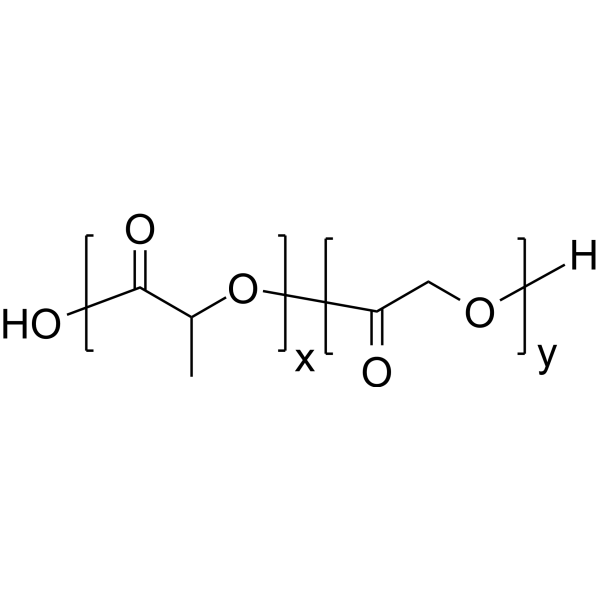
    PLGA (75:25)
    5+ Cited Publications

    poly(lactic-co-glycolic acid) (75:25)

    Biochemical Assay Reagents Others
    PLGA (75:25) is a low toxicity, biocompatible and biodegradable controlled drug delivery carrier, can achieve slow release in the organism. PLGA (75:25) is a copolymer of 75% poly lactic acid (PLA) and 25% poly glycolic acid (PGA). PLGA (75:25) has been extensively studied as delivery vehicles for agents, proteins and various other macromolecules such as DNA, RNA and peptides .
    PLGA (75:25)
  • HY-42990

    HSPC; Hydrogenated soybean phosphatidylcholine

    Liposome Metabolic Disease
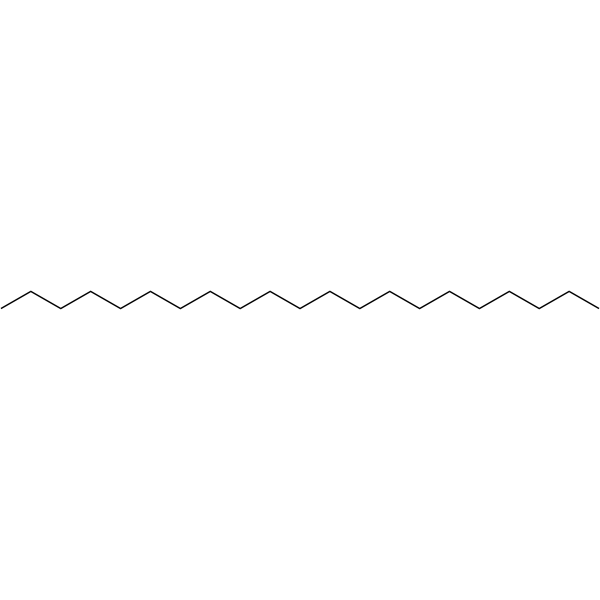
    Hydrogenated soya phosphatidylcholine (hydrogenated soybean phosphatidylcholine) is a natural product. Hydrogenated soya phosphatidylcholine can extend drug release in regard to drug loading and solubility for oral drug delivery of watersoluble drugs .
    Hydrogenated soya phosphatidylcholine
  • HY-W250313

    PLA

    Biochemical Assay Reagents Others Cancer
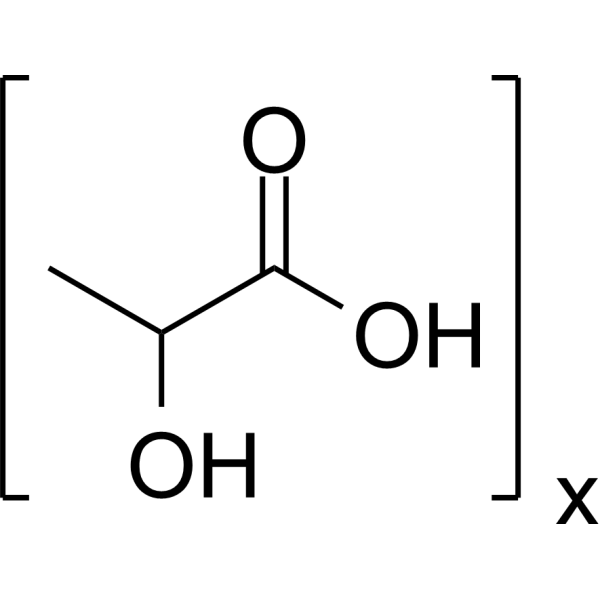
    Polylactic acid (PLA) is a biodegradable and biocompatible polymer widely used as a carrier for drug delivery systems and a structural material for tissue engineering and medical implants. Polylactic acid acts as a controlled release matrix through the hydrolysis mechanism of ester bonds, gradually releasing the encapsulated drug and metabolizing to non-toxic lactic acid. Polylactic acid has adjustable degradation rate, mechanical properties and the ability to composite with other polymers, and can be used in local or systemic drug delivery, orthopedic fixation devices and 3D printed bone regeneration scaffolds .
    Polylactic acid
  • HY-W008034

    Fmoc-L-Trp(Boc)-OH

    Amino Acid Derivatives Cancer
    Fmoc-Trp(Boc)-OH (Fmoc-L-Trp(Boc)-OH) is an amino acid derivative with protective groups. Fmoc-Trp(Boc)-OH can self-assemble into stable and pH-responsive spherical nanoparticles, which can load and release bioactive molecules, with good biocompatibility and high cell uptake rate. Fmoc-Trp(Boc)-OH can be used in research on drug delivery .
    Fmoc-Trp(Boc)-OH
  • HY-P99956

    VLS-101; MK-2140

    Antibody-Drug Conjugates (ADCs) Apoptosis Cancer
    Zilovertamab vedotin (VLS-101) is a novel antibody-drug conjugate comprising the humanized monoclonal antibody zilovertamab and and the anti-microtubule cytotoxin monomethyl vedotin. Zilovertamab vedotin binding to tumor cell ROR1 results in rapid internalization, trafficking to lysosomes, antibody–agent conjugate cleavage, and monomethyl vedotin release. Zilovertamab vedotin induces apoptosis. Zilovertamab vedotin can be used in research of cancer .
    Zilovertamab vedotin
  • HY-Y0873A1

    Polyethylene glycol 100000

    Environmental Pollutants Biochemical Assay Reagents Others
    PEG100000 (Polyethylene glycol 100000) is a polymer compound with good biocompatibility and biodegradability, and is widely used in drug controlled release systems and bioadhesive materials .
    PEG100000
  • HY-A0104K

    Hypromellose (Type II,Viscosity:3mPa.s); (Hydroxypropyl)methyl cellulose (Type II,Viscosity:3mPa.s); Celacol HPM 5000 (Type II,Viscosity:3mPa.s)

    Environmental Pollutants Biochemical Assay Reagents Others
    HPMC (Type II, Viscosity: 3 mPa.s) is a nonionic polymer prepared via synthetic modification of cellulose. As a hydrophilic matrix material, HPMC prolongs drug release through non-Fickian diffusion, which includes the diffusion of drugs in the hydrated matrix and the polymer relaxation process .
    HPMC (Type II,Viscosity:3mPa.s)
  • HY-Y0873B1

    Polyethylene glycol 8000000

    Biochemical Assay Reagents Others
    PEG8000000 (Polyethylene glycol 8000000) is a polymer compound with good biocompatibility and biodegradability, and is widely used in drug controlled release systems and bioadhesive materials .
    PEG8000000
  • HY-Y0873A3

    Polyethylene glycol 1000000

    Biochemical Assay Reagents Others
    PEG1000000 (Polyethylene glycol 1000000) is a polymer compound with good biocompatibility and biodegradability, and is widely used in drug controlled release systems and bioadhesive materials .
    PEG1000000
  • HY-A0104B

    Hypromellose (Type I,Viscosity:100mPa.s); (Hydroxypropyl)methyl cellulose (Type I,Viscosity:100mPa.s); Celacol HPM 5000 (Type I,Viscosity:100mPa.s)

    Environmental Pollutants Biochemical Assay Reagents Others
    HPMC (Type I, Viscosity: 100 mPa·s) is a nonionic polymer obtained via synthetic modification of cellulose. As a hydrophilic matrix material, HPMC prolongs drug release through non-Fickian diffusion, including the diffusion of drugs within the hydrated matrix and the polymer relaxation process .
    HPMC (Type I,Viscosity:100mPa.s)
  • HY-A0104E

    Hypromellose (Type II,Viscosity:100mPa.s); (Hydroxypropyl)methyl cellulose (Type II,Viscosity:100mPa.s); Celacol HPM 5000 (Type II,Viscosity:100mPa.s)

    Environmental Pollutants Biochemical Assay Reagents Others
    HPMC (Hypromellose; (Hydroxypropyl)methyl cellulose; Celacol HPM 5000) (Type II,Viscosity:100mPa.s) is a non-ionic polymer obtained via synthetic modification of cellulose. As a hydrophilic matrix material, HPMC prolongs drug release through non-Fickian diffusion, including the diffusion of drugs in the hydrated matrix and the polymer relaxation process .
    HPMC (Type II,Viscosity:100mPa.s)
  • HY-W134328

    Dextran blue (MW 2000000)

    Biochemical Assay Reagents Others
    Blue dextran (Dextran blue) (MW 2000000) is a high-molecular-weight long-chain polymer of D-glucose. Blue dextran (MW 2000000) serves as an important model macromolecular drug and molecular weight estimation marker, and can be used as a standard for gel permeation chromatography. The release of Blue dextran (MW 2000000) from alginate microspheres is regulated by preparation conditions; its release rate in a pH 6.8 environment is significantly faster than that in pH 1.2, and it exhibits release characteristics close to zero-order kinetics under this condition .
    Blue dextran (MW 2000000)
  • HY-112624K

    Dextran 5; Dextran D5; Dextran T5(MW 4500-5500)

    Apoptosis Autophagy Others
    Dextran T5 (MW 5,000) is a sulfated polysaccharide anti-apoptotic and autophagic agent. Dextran T5 (MW 5,000) has sulfated groups and interacts with cell membranes by mimicking endogenous glycosaminoglycans, inhibiting the mitochondrial apoptotic pathway and delaying DNA fragmentation to exert anti-apoptotic activity. Dextran T5 (MW 5,000) also promotes the conversion of LC3-I to LC3-II and the formation of autophagosomes to activate the autophagic pathway. Dextran T5 (MW 5,000) can prolong the survival cycle of CHO cells and increase the production of recombinant erythropoietin (EPO). The Dextran series of compounds are also natural polysaccharide drug carriers that can be connected to drugs through covalent bonding methods such as ester bonds, amide bonds or click chemistry, or self-assembled to form carriers such as nanoparticles and hydrogels. Dextran is biodegradable and biocompatible, and can achieve targeted delivery and controlled release of drugs. Dextran derivatives can prolong drug half-life, increase local concentration and reduce immune clearance activity. The Dextran series of compounds are also natural polysaccharide drug carriers that can be connected to drugs through covalent bonding methods such as ester bonds, amide bonds or click chemistry, or self-assembled to form carriers such as nanoparticles and hydrogels. Dextran is biodegradable and biocompatible, and can achieve targeted delivery and controlled release of drugs. Dextran derivatives can prolong the half-life of drugs, increase local concentrations, and reduce the activity of immune clearance .
    Dextran T5 (MW 5,000)
  • HY-W250721

    CBM 980

    Biochemical Assay Reagents Others
    Carbomer 980 (CBM 980) is an acrylic acid polymer, which can be used as a thickening agent. Carbomer 980 provides a stable gel matrix, exhibits good heat, light and microbial contamination resistance. Carbomer 980 facilitates the drug release and local application, which can be used in the pharmaceutical industry .
    Carbomer 980
  • HY-112624H

    Dextran 2; Dextran D2; Dextran T2(MW 1600-2400)

    Biochemical Assay Reagents Others
    Dextran T2 (Dextran 2; Dextran T2(MW 1600-2400)) is a natural high molecular weight polysaccharide, the glycosidic bonds in its structure can be recognized by endo-dextranase and exo-dextranase. Dextran T2 (MW 2,000) breaks the glycosidic bonds in the enzymatic hydrolysis mechanism, releasing products such as D-glucose, Isomaltose (IM2), and Isomaltotriose (IM3). Dextran T2 (MW 2,000) can be used as a model substrate to characterize the catalytic properties of dextranase (such as optimal pH, temperature and product specificity), and to study enzymatic mechanism research and polysaccharide degradation pathways in glycobiology. The Dextran series of compounds are also a natural polysaccharide drug carrier, which can be connected to drugs through covalent bonding methods such as ester bonds, amide bonds or click chemistry, or self-assembled to form carriers such as nanoparticles and hydrogels. Dextran is biodegradable and biocompatible, and can achieve targeted delivery and controlled release of drugs. Dextran derivatives can prolong drug half-life, increase local concentration and reduce immune clearance activity .
    Dextran T2 (MW 2,000)
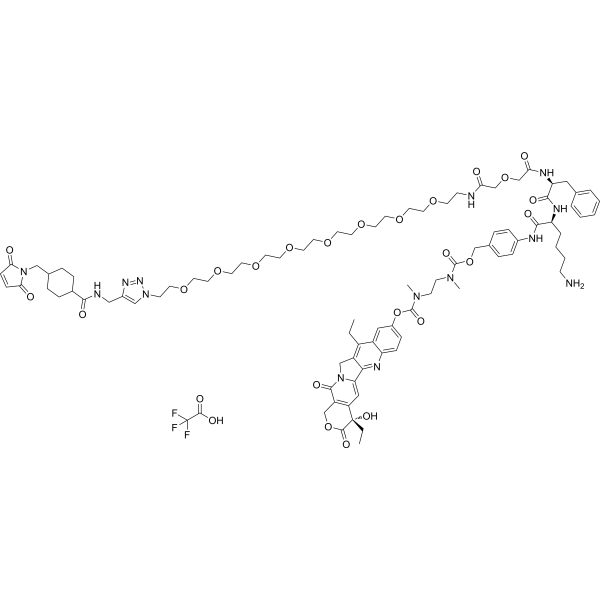
  • HY-139909A
    CL2E-SN38 TFA
    1 Publications Verification

    Drug-Linker Conjugates for ADC Cancer
    CL2E-SN-38 TFA, a highly releasable and structurally stable antibody-SN-38-conjugate, is a part of the antibody drug conjugate (ADC). SN-38, the active metabolite of Irinotecan from camptothecins, is an Topoisomerase I inhibitor .
    CL2E-SN38 TFA
  • HY-112624E

    Dextran 0.8; Dextran D0.8; Dextran T0.8(MW 640-960)

    Biochemical Assay Reagents Others
    Dextran T0.8 (Dextran 0.8; Dextran T0.8(MW 640-960)) is a food additive with a porous network structure that exhibits strong hydration capacity and low browning activity. Dextran T0.8 (MW 800) can improve the coagulation of dairy products and is used as a prebiotic in baked goods. Dextran T0.8 (MW 800) is non-toxic to HeLa cells at a concentration of ~500 μg/mL and has a low relative browning rate in the Maillard reaction. The Dextran series of compounds are also natural polysaccharide drug carriers that can be connected to drugs through covalent bonding methods such as ester bonds, amide bonds or click chemistry, or self-assembled to form carriers such as nanoparticles and hydrogels. Dextran is biodegradable and biocompatible, and can achieve targeted delivery and controlled release of drugs. Dextran derivatives can prolong the half-life of drugs, increase local concentrations, and reduce the activity of immune clearance .
    Dextran T0.8 (MW 800)
  • HY-A0104I

    Hypromellose (Type II,Viscosity:100000mPa.s); (Hydroxypropyl)methyl cellulose (Type II,Viscosity:100000mPa.s); Celacol HPM 5000 (Type II,Viscosity:100000mPa.s)

    Biochemical Assay Reagents Others
    HPMC (Hypromellose; (Hydroxypropyl)methyl cellulose; Celacol HPM 5000) (Type II,Viscosity:100000mPa.s) is a non-ionic polymer obtained via synthetic modification of cellulose. As a hydrophilic matrix material, HPMC prolongs drug release through non-Fickian diffusion, including the diffusion of drugs in the hydrated matrix and the polymer relaxation process .
    HPMC (Type II,Viscosity:100000mPa.s)
  • HY-W250721B

    CBM 934

    Biochemical Assay Reagents Others
    Carbomer 934 (CBM 934) is an acrylic acid polymer, which can be used as a thickening agent. Carbomer 934 which forms a high viscosity gel, provides a stable gel matrix, and exhibits good heat, light and microbial contamination resistance. Carbomer 934 facilitates the drug release and local application, which can be used in the pharmaceutical industry .
    Carbomer 934
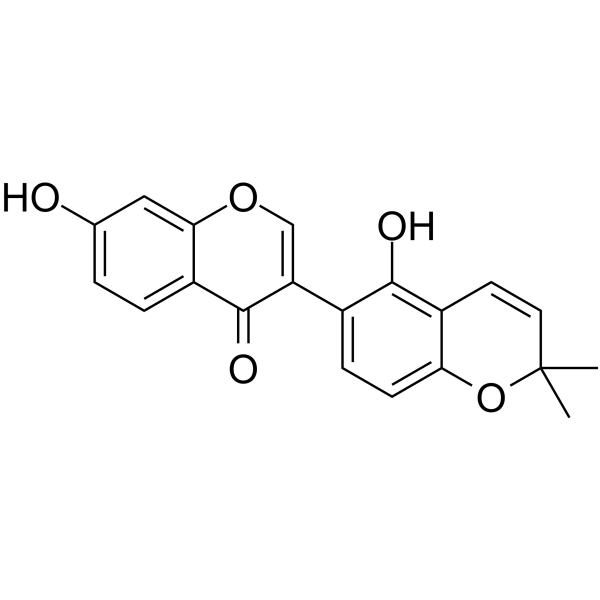
  • HY-N4194
    Glabrone
    1 Publications Verification

    PPAR Influenza Virus Infection Metabolic Disease
    Glabrone is an isoflavone found in Glycyrrhiza glabra roots. Glabrone exhibits significant PPAR-γ ligand binding activity. Glabrone is a specific UGT1A9 probe substrate, and its metabolites can block influenza virus release by inhibiting neuraminidase (NA). Glabrone can be used to screen for herb-drug interactions and for anti-influenza virus activity .
    Glabrone
  • HY-W129513

    Biochemical Assay Reagents Others
    Sorbitan monopalmitate is a food-grade, non-ionic emulsifier that exhibits oral activity. Sorbitan monopalmitate functions as a crystallization modifier, promoting the aggregation of spherical mango butter crystals, introducing lattice defects, and regulating the crystallization rate of mango butter. Sorbitan monopalmitate serves as a component of precursor vesicle gels, enabling the controlled and sustained release of drugs and facilitating the preparation of stable transdermal delivery formulations .
    Sorbitan monopalmitate
  • HY-Y0873A5

    Polyethylene glycol 200000

    Biochemical Assay Reagents Others
    PEG200000 (Polyethylene glycol 200000) is a polymer compound with good biocompatibility and biodegradability, and is widely used in drug controlled release systems and bioadhesive materials .
    PEG200000
  • HY-Y0873A8

    Polyethylene glycol 5000000

    Biochemical Assay Reagents Others
    PEG5000000 (Polyethylene glycol 5000000) is a polymer compound with good biocompatibility and biodegradability, and is widely used in drug controlled release systems and bioadhesive materials .
    PEG5000000
  • HY-W250721C

    CBM 941

    Biochemical Assay Reagents
    Carbomer 941 (CBM 941) is an acrylic acid polymer, which can be used as a thickening agent. Carbomer 941 provides a stable gel matrix, exhibits good heat, light and microbial contamination resistance. Carbomer 941 facilitates the drug release and local application, which can be used in the pharmaceutical industry .
    Carbomer 941
  • HY-42709

    Carbobenzoxy-L-valyl-L-alanine

    Amino Acid Derivatives Cancer
    Z-Val-Ala-OH is a dipeptide derivative of valine and alanine. Z-Val-Ala-OH undergoes cleavage by cathepsin B and other lysosomal proteases to enable payload release following lysosomal internalization. Z-Val-Ala-OH can be used for the research of antibody-drug conjugate (ADC) development[1] .
    Z-Val-Ala-OH
  • HY-Y0873A6

    Polyethylene glycol 400000

    Biochemical Assay Reagents Others
    PEG400000 (Polyethylene glycol 400000) is a polymer compound with good biocompatibility and biodegradability, and is widely used in drug controlled release systems and bioadhesive materials .
    PEG400000
  • HY-156829A

    Biochemical Assay Reagents Cancer
    PLGA-PEG-PLGA (1500-1500-1500) (LA/GA 15:1) is a matrix materia, with lactic acid (LA):glycolic acid (GA) = 15:1, that acts as anti-cancer drug delivery. PLGA-PEG-PLGA (1500-1500-1500) (LA/GA 15:1) can improve a drug's bioavailability, efficacy, water solubility, drug encapsulation efficiency, sustained drug release, and to minimize undesirable toxicity .
    PLGA-PEG-PLGA (1500-1500-1500) (LA/GA 15:1)
  • HY-W588717

    Biochemical Assay Reagents Others
    DBCO-Tetraacetyl mannosamine is an organic compound commonly used for chemical alteration and modification in biological research. It can be used to modify glycoproteins, cell surface molecules, and other biomolecules, and is widely used in biomarking and purification techniques. In addition, this compound is used as a carrier for drugs in certain drug controlled release systems. DBCO-Tetraacetyl mannosamine is a click chemistry reagent, it contains a DBCO group that can undergo strain-promoted alkyne-azide cycloaddition (SPAAC) with molecules containing Azide groups.
    DBCO-Tetraacetyl mannosamine
  • HY-W1048661E

    Biochemical Assay Reagents Others
    Biotin-PEG2000-maleimide is a PEG derivative consisting of a linear PEG chain with biotin attached to one end and maleimide modified to the other end. Biotin-PEG2000-maleimide anchors drugs or targeting ligands to liposomes or polymer nanocarriers through the maleimide end, and the biotin end is used for in vitro purification or in vivo targeted release .
    Biotin-PEG2000-maleimide
  • HY-B0967

    Bacterial Infection
    Phthalylsulfacetamide is a sulfa drug, after oral administration, slowly decompose in the intestine,and release sulfacetamide ,generating antibacterial effect.
    Phthalylsulfacetamide
  • HY-Y0873A9

    Polyethylene glycol 2000000

    Biochemical Assay Reagents Others
    PEG2000000 (Polyethylene glycol 2000000) is a polymer compound with good biocompatibility and biodegradability, and is widely used in drug controlled release systems and bioadhesive materials .
    PEG2000000
  • HY-Y0873A2

    Polyethylene glycol 600000

    Biochemical Assay Reagents Others
    PEG600000 (Polyethylene glycol 600000) is a polymer compound with good biocompatibility and biodegradability, and is widely used in drug controlled release systems and bioadhesive materials .
    PEG600000
  • HY-Y0873A7

    Polyethylene glycol 900000

    Biochemical Assay Reagents Others
    PEG900000 (Polyethylene glycol 900000) is a polymer compound with good biocompatibility and biodegradability, and is widely used in drug controlled release systems and bioadhesive materials .
    PEG900000
  • HY-Y0873A4

    Polyethylene glycol 4000000

    Biochemical Assay Reagents Others
    PEG4000000 (Polyethylene glycol 4000000) is a polymer compound with good biocompatibility and biodegradability, and is widely used in drug controlled release systems and bioadhesive materials .
    PEG4000000
  • HY-156829

    Biochemical Assay Reagents Cancer
    PLGA-PEG-PLGA (1500-1500-1500) (LA/GA 1:1) is a matrix materia, with lactic acid (LA):glycolic acid (GA) = 1:1, that acts as anti-cancer drug delivery. PLGA-PEG-PLGA (1500-1500-1500) (LA/GA 1:1) can improve a drug's bioavailability, efficacy, water solubility, drug encapsulation efficiency, sustained drug release, and to minimize undesirable toxicity .
    PLGA-PEG-PLGA (1500-1500-1500) (LA/GA 1:1)
  • HY-W250721D

    Carboxy polymethylene

    Biochemical Assay Reagents Others
    Carbomer (Carboxy polymethylene) is an acrylic acid polymer, which can be used as a thickening agent. Carbomer provides a stable gel matrix, exhibits good heat, light and microbial contamination resistance. Carbomer facilitates the drug release and local application, which can be used in the pharmaceutical industry .
    Carbomer
  • HY-W250721G

    Carboxy polymethylene (interpolymer)

    Others
    Carbomer interpolymer (Carboxy polymethylene (interpolymer)) is an acrylic acid polymer, which can be used as a thickening agent. Carbomer interpolymer provides a stable gel matrix, exhibits good heat, light and microbial contamination resistance. Carbomer interpolymer facilitates the drug release and local application, which can be used in the pharmaceutical industry .
    Carbomer interpolymer
  • HY-W250721F

    Carboxy polymethylene (homopolymer)

    Biochemical Assay Reagents Others
    Carbomer homopolymer (Carboxy polymethylene (homopolymer)) is an acrylic acid polymer, which can be used as a thickening agent. Carbomer homopolymer provides a stable gel matrix, exhibits good heat, light and microbial contamination resistance. Carbomer homopolymer facilitates the drug release and local application, which can be used in the pharmaceutical industry .
    Carbomer homopolymer
  • HY-W250721J

    CBM 960

    Biochemical Assay Reagents Others
    Carbomer 960 is an acrylic acid polymer, which can be used as a thickening agent. Carbomer 960 which forms a high viscosity gel, provides a stable gel matrix, and exhibits good heat, light and microbial contamination resistance. Carbomer 960 facilitates the drug release and local application, which can be used in the pharmaceutical industry .
    Carbomer 960
  • HY-177083

    AVA-6000

    FAP Cancer
    Faridoxorubicin (AVA-6000) is a prodrug targeting fibroblast activation protein α (FAPα). Faridoxorubicin releases active doxorubicin through FAPα-mediated cleavage, enhancing intratumoral drug exposure and reducing cardiac toxicity. Faridoxorubicin is promising for research of solid tumors (e.g., colorectal cancer liver metastasis) .
    Faridoxorubicin
  • HY-178819

    Integrin Drug Intermediate Cancer
    NM-001 is a theranostic prodrug that targets ανβ3 integrin. NM-001 consists of cRGD and GFLG peptides, a DCM fluorophore and Chlorambucil (HY-13593). NM-001 internalizes into lysosomes of tumor cells via the cRGD peptide, and generates NM-002 (HY-178820) and Chlorambucil through intracellular cleavage at the GFLG peptide by overexpressed Cathepsin B (CTSB). NM-001 exhibits green fluorescence under physiological conditions, and converts to NIR fluorescence by CTSB activation. NM-001 has significant antitumor activity with low toxicity in HeLa cell xenografts mouse models. NM-001 can be used for real-time drug release monitoring research .
    NM-001
  • HY-127125

    COX Inflammation/Immunology
    Diclofenac ethyl ester is the prodrug of Diclofenac (HY-15036), that is encapsulated in polymer micelles in vitro, and released with prolonged circulation time and reduced drug concentrations in the heart and kidneys in vivo .
    Diclofenac ethyl ester
  • HY-103385

    NO-Aspirin

    Apoptosis Inflammation/Immunology Cancer
    NCX4040 (NO-Aspirin), a non-steroidal anti-inflammatory drug (NSAID), is a nitric oxide (NO) releasing form of Aspirin. NCX4040 induces apoptosis in PC3 metastatic prostate cancer cells. NCX4040 has anti-inflammatory and anti-cancer effects .
    NCX4040
  • HY-139909

    Drug-Linker Conjugates for ADC Cancer
    CL2E-SN-38, a highly releasable and structurally stable antibody-SN-38-conjugate, is a part of the antibody drug conjugate (ADC). SN-38, the active metabolite of Irinotecan from camptothecins, is an Topoisomerase I inhibitor .
    CL2E-SN38
  • HY-W250721K

    CBM 996

    Biochemical Assay Reagents Others
    Carbomer 996 is an acrylic acid polymer, which can be used as a thickening agent. Carbomer 996 which forms a high viscosity gel, provides a stable gel matrix, and exhibits good heat, light and microbial contamination resistance. Carbomer 996 facilitates the drug release and local application, which can be used in the pharmaceutical industry .
    Carbomer 996
  • HY-W250721H

    CBM 970

    Biochemical Assay Reagents Others
    Carbomer 970 is an acrylic acid polymer, which can be used as a thickening agent. Carbomer 970 which forms a high viscosity gel, provides a stable gel matrix, and exhibits good heat, light and microbial contamination resistance. Carbomer 970 facilitates the drug release and local application, which can be used in the pharmaceutical industry .
    Carbomer 970
  • HY-W250721L

    CBM 676

    Biochemical Assay Reagents Others
    Carbomer 676 is an acrylic acid polymer, which can be used as a thickening agent. Carbomer 676 which forms a high viscosity gel, provides a stable gel matrix, and exhibits good heat, light and microbial contamination resistance. Carbomer 676 facilitates the drug release and local application, which can be used in the pharmaceutical industry .
    Carbomer 676
  • HY-15578G

    Maleimidocaproyl monomethylauristatin F

    Drug-Linker Conjugates for ADC Cancer
    McMMAF GMP is a GMP grade McMMAF (HY-15578). McMMAF is a protective group (maleimidocaproyl)-conjugated MMAF, which is a potent tubulin polymerization inhibitor. McMMAF can be used as a agent-linker for antibody-drug conjugates (ADC). McMMAF is uncleavable, and must be internalized and degraded within a cell, releasing cysteine-McMMAF as the active agent .
    McMMAF
  • HY-W888521

    Biochemical Assay Reagents Others
    mPEG-PLLA is a diblock copolymer. mPEG-PLLA can be used to synthesize block copolymer micelle for drug-releasing .
    mPEG-PLLA

Inquiry Online

Your information is safe with us. * Required Fields.

Salutation


Country or Region *

Applicant Name *


Organization Name *

Department *


Email Address *


Product Name *

Cat. No.


Requested quantity *

Phone Number *


Remarks

Inquiry Online

Inquiry Information

Product Name:
Cat. No.:
Quantity:
MCE Japan Authorized Agent:

